
What if the most critical phase of your vehicle's transit isn't the thousand-mile journey itself, but the final thirty minutes spent in your driveway? For many owners, the arrival of a high-value asset brings a complex blend of relief and logistical apprehension. You've likely invested significant time into selecting the right transport partner, yet the closing moments of the process often remain shrouded in uncertainty. Understanding exactly what to expect on car delivery day is the definitive way to replace that uncertainty with the calm confidence of a seasoned collector or corporate professional.
We recognize that a successful delivery is more than just a drop-off; it's a managed professional event where meticulous physical inspection meets rigorous documentation. You'll likely feel a sense of urgency to get behind the wheel, but the final handover requires a disciplined approach to ensure asset integrity. This guide promises to navigate you through the professional protocols for vehicle arrival, from decoding the Bill of Lading to managing carrier access in residential areas. We'll preview the essential steps required for a damage-free delivery and a sophisticated, efficient handover that respects both your time and your investment.
Key Takeaways
- Manage the delivery window with precision by understanding the standard notification protocols used to coordinate a seamless arrival.
- Prepare for the physical arrival of large-scale carriers by assessing residential access and identifying alternative meeting points for a professional handover.
- Master the inspection process by learning exactly what to expect on car delivery day when cross-referencing the Bill of Lading with your vehicle's initial condition report.
- Finalize the transaction with confidence by clarifying accepted payment methods and the specific administrative requirements for a formal delivery.
- Leverage the reliability of a licensed and insured carrier network to ensure the safety and integrity of your vehicle throughout the final stage of transport.
The Lead-Up to Delivery: Coordination and Real-Time Visibility
The final hours of vehicle transit require a symphony of coordination between the driver, the dispatcher, and the client. While digital interfaces provide a window into the journey, understanding what to expect on car delivery day begins with recognizing that the arrival time is a dynamic target. Professional carriers operate within a delivery window shaped by real-time variables such as regional weather patterns, traffic density, and route efficiency. This window isn't a lack of precision; it's a reflection of the complex logistics involved in moving a high-value asset across state lines with the highest safety standards.
Sophisticated logistics platforms now synchronize driver locations with client availability, offering GPS tracking that serves as a cornerstone of psychological security. Seeing your vehicle's progress in real-time mitigates the anxiety of the unknown. However, technology is most effective when paired with established communication protocols. Knowing what to expect on car delivery day allows you to prepare for the tiered notification system that professional carriers utilize to ensure you're ready for the handover without unnecessary waiting.
The Role of the Professional Dispatcher
The dispatcher acts as the vital intelligence hub for your shipment. While many services rely solely on automated pings, our team at GAATCO prioritizes human oversight to interpret the data. A dispatcher manages the delicate balance between the driver's mandatory rest periods and your personal schedule. When transit timelines shift in high-traffic corridors like Miami or Houston, the dispatcher provides proactive communication that a computer script cannot replicate. This human-centric approach ensures that you aren't just receiving data, but actionable insights regarding your vehicle's arrival. Human oversight remains superior to purely automated tracking because a professional can navigate the nuances of a delay and provide context that an algorithm misses.
Setting Realistic Arrival Expectations
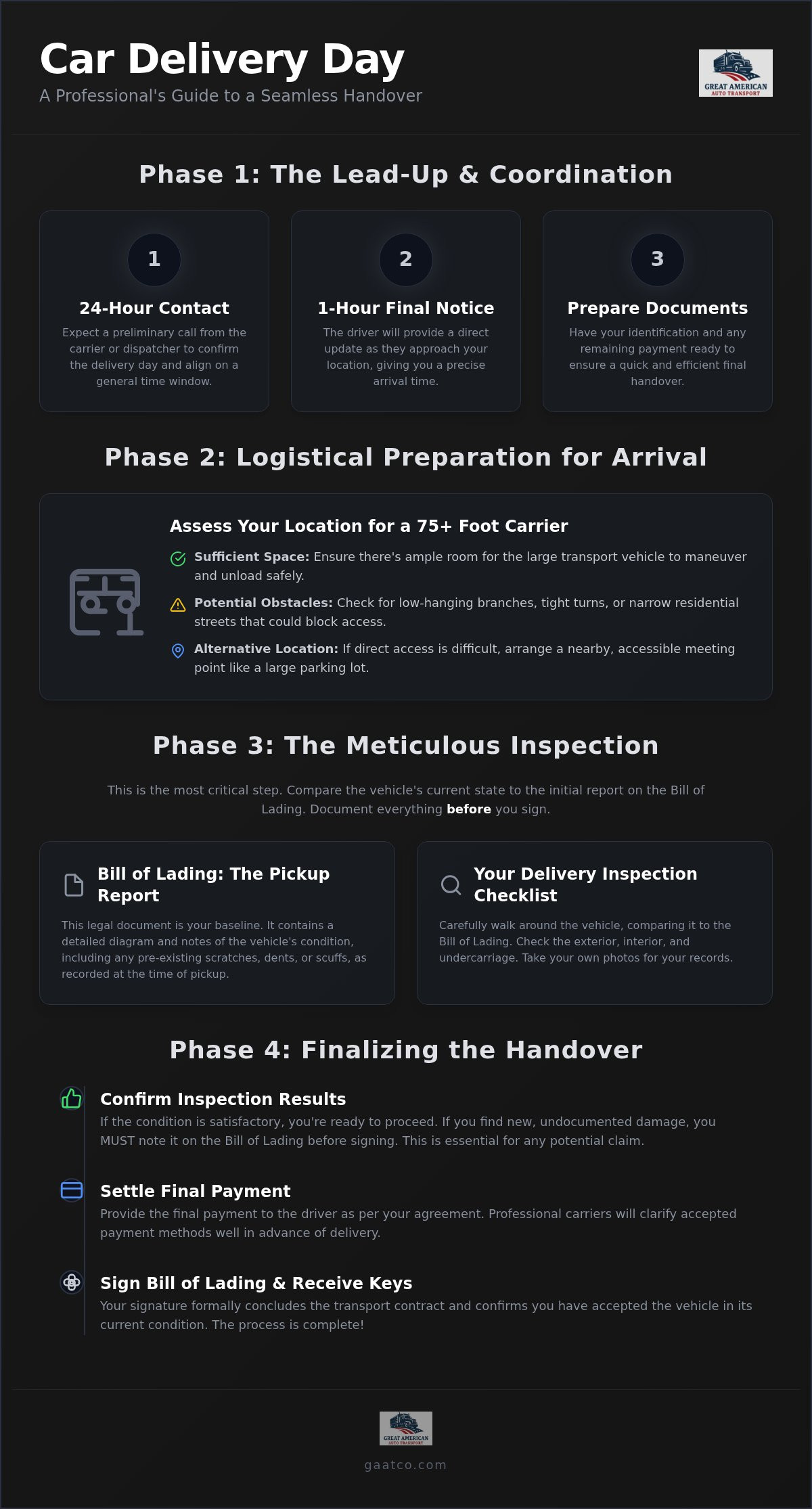
Distinguishing between an estimated window and a guaranteed date is essential for a stress-free experience. In professional interstate logistics, a delivery window represents a calculated range of time during which a carrier is projected to arrive at the destination, accounting for the inherent variables of long-haul transit. Factors influencing the last mile in major hubs like Atlanta or San Diego include local zoning ordinances and peak traffic hours. Preparing for the arrival also involves understanding the legal framework of the transport. The Uniform Bill of Lading Act establishes the standard for the documentation you'll sign upon arrival, reinforcing the importance of the final inspection. To ensure a seamless handover, carriers typically follow these notification steps:
- 24-Hour Preliminary Contact: A courtesy call to confirm the projected arrival day and align schedules.
- 1-Hour Final Notice: A direct update from the driver as they exit the main thoroughfare and approach your specific drop-off location.
- Documentation Review: A brief period to prepare your identification and any remaining balance required for the handover.
Logistical Preparation for the Arrival of Your Vehicle
While digital tracking provides peace of mind, the physical arrival of a multi-car carrier requires proactive spatial planning. These specialized vehicles, often exceeding 75 feet in length, don't easily navigate narrow cul-de-sacs or residential streets with low-hanging branches. Understanding what to expect on car delivery day involves assessing your local infrastructure to ensure the carrier can safely station itself for unloading. If your residence is located within a gated community or a restricted zone, identifying a nearby commercial parking lot or a wide secondary street serves as an elegant solution to potential logistical friction.
If you can't be present for the handover, appointing a designated representative is a necessary step to maintain the delivery schedule. This individual must be empowered to conduct the inspection and sign the legal documentation on your behalf. To ensure you're working with a reputable partner who values transparency, we recommend reviewing this FTC consumer advisory regarding industry standards and reviews. This level of diligence ensures that every aspect of the arrival, from physical access to administrative finality, aligns with the high standards of a professional transport experience.
Navigating Urban Delivery Constraints
In high-density environments like Houston or Boston, local parking regulations and low-clearance obstacles present unique challenges for large-scale equipment. Carriers must plan routes that avoid bridge height restrictions and narrow one-way streets common in historic districts. By utilizing real-time tracking data, you can time your arrival at a pre-arranged secondary meeting location, such as a large retail plaza or a transit hub. Knowing exactly what to expect on car delivery day helps you prepare for these urban nuances. This coordination prevents unnecessary idling and ensures that the unloading process remains discreet and efficient, even in the busiest metropolitan areas.
Ensuring a Safe Handover Environment
A safe unloading environment is the foundation of a damage-free delivery. Clearing a wide path on even ground allows the driver to deploy ramps safely and manage the vehicle's descent from upper decks without obstruction. If the arrival occurs during evening hours, adequate lighting is non-negotiable. High-intensity portable lights or a well-lit commercial area are essential for a meticulous inspection of the paintwork and undercarriage. For specialized deliveries in complex areas, our team coordinates with local authorities to manage temporary street access. This meticulous attention to detail is why many clients request a quote for our bespoke transport solutions, knowing that safety protocols are never compromised.
The Meticulous Inspection: Mastering the Bill of Lading
The Bill of Lading (BOL) represents the most significant administrative element of the entire transport process. It serves as both a formal receipt and a legally binding condition report that governs the transition of liability. When evaluating what to expect on car delivery day, you must view the BOL as your primary protection against transit-related discrepancies. It's essential to cross-reference the vehicle's current state with the initial inspection report generated during the pick-up phase to ensure total accuracy.
A methodical walk-around inspection is the industry standard for verifying asset integrity. Begin at the driver-side front fender and proceed clockwise, examining each exterior panel under clear light. While most focus remains on the paintwork, a brief verification of the vehicle’s internal electronic systems and basic mechanical functions is prudent. This ensures that the specialized handling required for high-value or military vehicle relocation has been executed without affecting the vehicle’s operational flow.
Documenting Discrepancies Professionally
Should you identify any new damage, it must be documented explicitly on the Bill of Lading before you provide a final signature. Professional drivers within the GAATCO network prioritize transparency and will support a thorough review of the vehicle. High-resolution photography is your most effective tool during this phase; capture any concerns from multiple perspectives to provide context and depth for insurance adjusters. Following the official vehicle inspection requirements ensures your documentation adheres to federal safety and reporting standards, providing a clear path for resolution if an issue arises.
Enclosed vs. Open Carrier Inspection Nuances
Open carriers expose vehicles to the elements, meaning a light layer of road dust is common upon arrival. It's vital to distinguish between surface grime and actual finish damage; a gentle wipe with a clean cloth can often clarify a suspected scratch. Vehicles arriving via enclosed transport are held to a higher standard of cleanliness. For classic or luxury assets, the expectation is a pristine arrival. Pay close attention to the lower valances and undercarriage components, as these areas are most susceptible to contact with ramp systems during the technical offloading process. This nuanced understanding of what to expect on car delivery day ensures you can differentiate between normal transit wear and preventable damage.
Once the inspection is complete and the vehicle is in your possession, maintaining that pristine finish becomes the priority. For owners seeking high-end surface preservation, ATD Detailing offers specialized vehicle protection services to ensure your asset remains in peak condition long after it leaves the carrier.
Finalizing the Transaction: Payment and Documentation
Finalizing the administrative details is just as critical as the physical inspection. When considering what to expect on car delivery day, the financial handover and document verification represent the final seal on a successful transit. Most carriers operate on specific financial protocols to ensure security for both the driver and the client. For Cash on Delivery (COD) shipments, drivers typically require certified funds, such as a cashier's check or money order. Personal checks are rarely accepted in professional transport due to the high value of the cargo and the immediate nature of the handover.
Pre-paid shipments are generally managed through the carrier's central office via wire transfer or credit card before the journey begins. Conversely, COD protocols require the remaining balance to be settled at the destination. For corporate executives and those undergoing military vehicle shipping, maintaining a digital archive of these transactions is essential for administrative compliance. Once payment is settled, you must receive a signed, legible copy of the final Bill of Lading. This document is your primary evidence of the vehicle's condition and serves as a formal closing of the carrier's liability.
Understanding Payment Protocols
Certified funds remain the industry standard for driver payments because they offer immediate verification. To ensure a hassle-free experience, confirm the final balance with your dispatcher during the 24-hour notification window. This prevents logistical friction at the curb and allows the driver to maintain their strict operational schedule. If you are uncertain about the specific requirements for your high-value transport, you can request a quote that details all financial expectations upfront.
Post-Delivery Responsibilities
The handover is complete only after you've verified the presence of all keys and specialized accessories, such as custom fobs or charging hardware. If the shipment allowed for personal items, perform a quick inventory to ensure everything is accounted for. Professional carriers value the reputation they've built over decades; therefore, providing detailed feedback regarding the service is a vital final step. This helps maintain the elite standards expected by corporate and affluent clients alike. Once the carrier departs, your vehicle is officially back in your care, ready for the road ahead. To keep your vehicle performing at its best after its journey, you can find out more about professional maintenance and repair services.
The GAATCO Standard: Reliability from Pick-up to Delivery
GAATCO leverages over 20 years of expertise to transform vehicle transport from a logistical chore into a refined, high-touch experience. When you understand what to expect on car delivery day, you realize that the success of that moment is built on weeks of meticulous planning and a robust infrastructure. We maintain an elite, licensed, and insured carrier network that prioritizes the safety of your asset above all else. This commitment ensures that the final handover is the culmination of a hassle-free journey, whether you're receiving a vintage collector piece or a standard corporate fleet vehicle.
Our approach to Door-to-Door Auto Shipping maximizes client convenience by removing the need for terminal drop-offs or secondary transit arrangements. We invite you to experience a sophisticated approach to national vehicle logistics where every detail is managed by seasoned experts who are calm under pressure. By bridging the gap between global standards and local service nuances, we provide a reassuring emotional style for affluent and corporate audiences alike.
A Legacy of Professionalism
The trust thousands of clients place in GAATCO is a testament to our unwavering commitment to operational excellence across the United States. We've spent two decades refining our processes to ensure transparent pricing and reliable timelines. Our dedicated support team acts as a bridge between the client's needs and complex operational realities, providing a reassuring presence during the critical delivery phase. This human-centric service operates behind a sophisticated infrastructure to ensure that what to expect on car delivery day is nothing short of an efficient and professional handover.
Secure Your Next Shipment
Initiating a professional transport plan is a seamless process with our expert team. We remain the preferred choice for Military Vehicle Shipping and luxury relocations because we understand the nuances of high-end service and the critical urgency required for specialized transport. We handle the complex logistics so you don't have to, providing a discreet and dependable partnership that extends from the initial quote to the final signature on the Bill of Lading.
To experience the GAATCO standard for yourself, we invite you to Request Your Customized Auto Transport Quote today. Our team is ready to coordinate your next shipment with the meticulous attention to detail your vehicle deserves.
Transitioning to Ownership with Confidence
The successful arrival of your vehicle is the final milestone in a journey defined by precision and care. By mastering the nuances of logistical preparation and the critical details of the Bill of Lading, you transform a potentially stressful event into a managed professional handover. Understanding exactly what to expect on car delivery day ensures that every panel is inspected and every document is finalized with the authority your investment deserves. This disciplined approach protects the integrity of your asset and provides the administrative closure necessary for peace of mind.
At GAATCO, we bring 20+ years of professional logistics expertise to every shipment. Our fully licensed and insured carrier network specializes in both enclosed and open transport solutions tailored to your specific requirements. You don't have to navigate these complexities alone; we handle the intricate details of national transit so you can focus on the road ahead. We invite you to Secure Your Professional Transport Quote with GAATCO and experience the reliability of a partner dedicated to your vehicle's safety. Your next journey begins with a seamless delivery.
Frequently Asked Questions
What should I do if the carrier cannot reach my front door?
If a large carrier cannot safely navigate your residential street, you'll need to coordinate a meeting at a nearby accessible location. Retail parking lots or wide secondary roads are often utilized for these handovers. This ensures the driver can deploy the ramps on level ground without obstructing local traffic. Proactive communication with your dispatcher helps identify these suitable meeting points well before the vehicle arrives.
Is it necessary to wash my car before the delivery inspection?
While you don't need to wash the vehicle immediately upon arrival, it's beneficial for the paint to be clear of heavy road grime. This allows for a more precise comparison against the initial pickup report. If you're wondering what to expect on car delivery day regarding open transport, a light layer of dust is common, but it shouldn't obscure your ability to identify new surface discrepancies.
What happens if I discover damage after the driver has departed?
Discovering damage after the driver has departed makes securing an insurance settlement extremely difficult because the Bill of Lading was signed as clear. This document serves as the final legal record of the vehicle's condition at handover. If you sign without noting discrepancies, you're verifying that the car arrived safely. You should contact the carrier immediately, but resolution is much harder without documented evidence from the delivery site.
Can someone else accept the vehicle delivery on my behalf?
You can certainly appoint a designated representative to accept the delivery if you're unavailable. This individual must be at least 18 years old and authorized to conduct a thorough inspection and sign the legal documentation. Ensure your representative understands the importance of the Bill of Lading, as their signature carries the same legal weight as your own during the final handover of your automotive asset.
How long does the typical delivery and inspection process take?
The typical delivery and inspection process requires approximately 30 to 45 minutes to complete. This timeframe allows the driver to safely offload the vehicle and provides you with sufficient time for a systematic walk-around. Rushing this phase is inadvisable. A disciplined approach ensures that all administrative details and physical checks are handled with the meticulous attention to detail required for high-value asset relocation.
What forms of payment do drivers typically accept for COD shipments?
Drivers typically require certified funds for Cash on Delivery (COD) shipments to ensure immediate financial security. Cashier's checks and money orders are the industry standard for these transactions. Most professional carriers don't accept personal checks or credit cards at the curb. Confirming the exact balance with your dispatcher 24 hours in advance helps you prepare for a seamless financial transition during the vehicle arrival.
Will I receive a digital copy of the Bill of Lading?
Most modern transport providers furnish a digital copy of the Bill of Lading immediately following the signature process. This electronic record is typically sent to your registered email address for your permanent files. Having a digital version is particularly useful for corporate or military relocations where detailed record-keeping is a non-negotiable requirement for professional reimbursement or organizational compliance.
Does the driver provide a specific time for the delivery arrival?
Drivers provide an estimated arrival window rather than a specific, fixed time. When considering what to expect on car delivery day, remember that transit schedules are influenced by variable factors like traffic and weather. You'll generally receive a 24-hour preliminary call followed by a more precise one-hour notification as the driver nears your location. This tiered system helps synchronize the arrival with your personal schedule.


