
What happens when your lease-return appointment is at a distant dealership, but driving the vehicle there would add miles and complicate your schedule? An end-of-lease vehicle return transport service can move the vehicle to its designated return location, but the transport plan needs to fit the appointment, not the other way around.
Pickup and delivery timing, the return destination, and a clear record of the vehicle’s condition all affect how manageable the handoff will be. Carrier transport offers an alternative to making the trip yourself, while door-to-door auto shipping can simplify pickup and delivery logistics.
This guide explains how to plan transport around your lease-return date, prepare the vehicle for pickup, and document its condition through the handoff. You’ll also learn how open and enclosed transport differ and which responsibilities belong to the transport process versus the lease inspection and account settlement. Organizing the route and records in advance can help you approach the return with greater clarity.
Key Takeaways
- Use the leasing company’s official instructions to confirm the return destination and appointment details before arranging transport.
- An end-of-lease vehicle return transport service moves the vehicle to its designated location. Lease inspections and account settlement remain separate.
- Compare open and enclosed transport based on the vehicle’s needs and how much exposure you are comfortable with.
- Photograph the vehicle from multiple angles before pickup, keep dated records, and remove personal belongings before the carrier arrives.
- Prepare the route, vehicle details, and return timing to coordinate a door-to-door shipment around your lease handoff.
When Does an End-of-Lease Vehicle Return Transport Service Make Sense?
An end-of-lease vehicle return transport service arranges carrier transport from your location to the designated return destination. The service moves the vehicle; it does not perform the lease inspection or settle the lease account. Transport can be useful when the return location is far away, a long drive does not fit your schedule, or reaching the destination is inconvenient.
Before arranging a shipment, confirm the return destination and any appointment requirements in your leasing company’s official instructions. If you are new to leasing, Vehicle leasing provides background on concepts such as mileage limits and end-of-term options.
The following video from Toyota USA covers the leased-vehicle return process:
What does transport for a lease return include?
Transport involves coordinating vehicle pickup, loading it onto a carrier, transit, and delivery at the agreed destination. With door-to-door auto shipping, pickup and delivery are arranged at accessible points near the addresses provided. If a carrier cannot safely reach a particular address, a nearby practical meeting point can make the handoff possible.
Carrier paperwork records the vehicle’s movement and condition at handoff. Keep those records separate from the leasing company’s inspection and return paperwork, which govern the lease-end process. GAATCO’s door-to-door auto shipping services help coordinate pickup and delivery.
When is shipping more practical than driving the vehicle back?
Consider the whole trip, not just the distance. Driving to a return facility can take time away from work, require lodging or other travel arrangements, and leave you needing another way home. Carrier transport may be practical when a leased vehicle must move between cities, such as from Atlanta to Miami or Chicago.
For a short trip to a nearby return location, driving may be simpler, especially if you can manage the appointment and arrange transportation afterward. Weigh your schedule, route, and plans after the vehicle is returned. Transport supports the handoff logistics; the leasing company remains responsible for the inspection and account settlement.
How to Coordinate Vehicle Transport with Your Lease Return Appointment
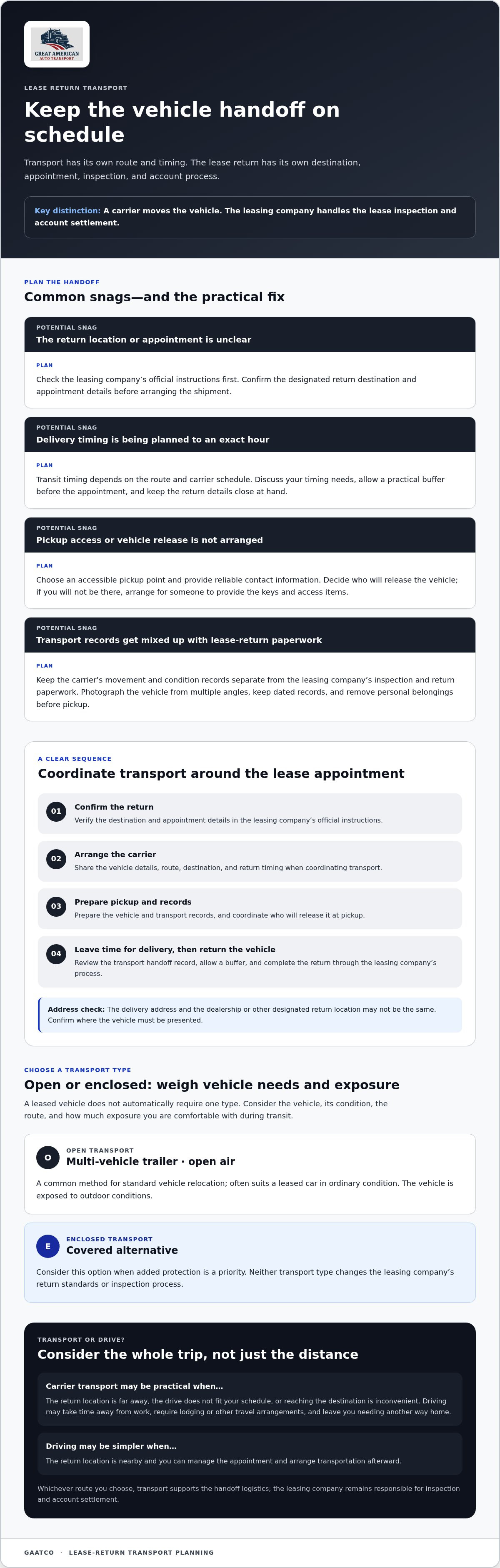
Start with the leasing company’s return instructions, then plan transport around the appointment. An end-of-lease vehicle return transport service involves two separate schedules: the carrier’s route and delivery coordination, and the leasing company’s return requirements. Leave a practical buffer between expected delivery and the appointment so a change in route timing does not immediately disrupt the handoff.
What should be arranged before the carrier pickup?
Use the leasing company’s official instructions to confirm the return destination, appointment details, and required return paperwork. The FTC consumer advice on leasing also offers background on reviewing lease terms. Keep those instructions separate from carrier arrangements, which are about moving the vehicle.
Before pickup, organize the vehicle details, destination address, return timing, and reliable contact information. Choose an accessible pickup point and identify who will release the vehicle. If you will not be there, arrange for someone else to provide the keys and vehicle access items and follow the agreed pickup plan.
How should delivery timing fit the return appointment?
Allow enough time to receive the vehicle, review the transport handoff record, and proceed to the return appointment. Transit timing depends on the route and carrier schedule, so do not plan around an exact delivery hour. Discuss your timing needs when arranging transport and keep the leasing company’s appointment details close at hand.
For an Atlanta return, for example, the delivery address and the dealership or other designated return location may not be the same. Confirm where the vehicle must be presented, then coordinate delivery accordingly. GAATCO’s vehicle transport services include open, enclosed, and door-to-door options for planned delivery coordination.
Lease-return transport planning sequence:
- Confirm the destination and appointment details in the leasing company’s official instructions.
- Arrange carrier transport using the vehicle, route, and return timing details.
- Prepare the vehicle and transport records, and coordinate who will release it at pickup.
- Allow a buffer for delivery, then complete the lease return using the leasing company’s process.
This sequence keeps transport arrangements clear while leaving inspection and account settlement with the leasing company. If appointment details change, update the delivery coordination so the handoff plan reflects the current return instructions.
Open or Enclosed Transport: Which Fits a Leased Vehicle Return?
A leased vehicle does not automatically require one transport type over the other. Choose based on the vehicle, its condition, the route, and how much exposure you are comfortable with during transit. Open transport is a practical option for many standard vehicle moves. Enclosed transport provides a covered alternative when added protection is a priority. Neither method changes the leasing company’s return standards or inspection process.
What should lessees know about open car transport?
Open carriers are multi-vehicle trailers that carry cars in the open air. This is a common method for standard vehicle relocation and often suits a leased car in ordinary condition. The vehicle is exposed to outdoor conditions during transit, so open transport does not prevent exposure to weather or road debris. Document the vehicle’s condition before pickup and at delivery.
When might enclosed vehicle transport be appropriate?
Enclosed carriers move vehicles inside a covered trailer, offering added protection from weather and road debris. Consider this option for a high-value vehicle, one in particularly well-preserved condition, or when you prefer a covered setup. The lease status itself does not determine the choice. Enclosed transport also does not change inspection requirements or the condition standards in the lease agreement.
| Transport type | Suitable considerations | Practical trade-offs |
|---|---|---|
| Open | Standard vehicles and routine relocation | Open-air transit means exposure to weather and road debris |
| Enclosed | Vehicles needing added environmental protection | Covered carrier setup; the lease return requirements remain unchanged |
For many ordinary lease returns, open transport offers a straightforward way to move the car without driving it to the return destination. Base your choice on the vehicle’s value and condition, as well as your comfort with open-air transit. An end-of-lease vehicle return transport service handles the vehicle’s movement, not the lease inspection or account settlement.
Whichever method you select, keep the transport handoff record separate from the leasing company’s inspection paperwork. Record the vehicle’s condition before carrier pickup and review the transport documentation at handoff. This gives you a record of the shipment while leaving the leasing company’s process as the authority for assessing the lease return.
How to Prepare and Document a Leased Vehicle Before Carrier Pickup
Preparation creates a clear record of the vehicle’s condition as it enters transport. Before pickup, photograph the exterior from several angles, take close-ups of visible marks, and capture the interior and odometer. Keep the images with the date, vehicle details, pickup paperwork, and carrier communications. These records support the transport handoff, but they do not replace the leasing company’s return inspection.
What records should you keep before transport?
Store your photos, pickup documentation, and relevant messages together so they are easy to retrieve at delivery. Note visible scratches, dents, or other existing marks, and review the carrier’s handoff paperwork for accuracy at pickup. Retain the transport documents through delivery and lease return. Carrier records document the shipment; the leasing company’s paperwork governs its inspection and account process.
What should be removed or prepared before pickup?
Remove personal belongings and check compartments, the trunk, and storage areas before pickup. Set aside the keys and any items needed to access or move the vehicle. Follow the carrier’s preparation instructions, and accurately disclose operating limitations, such as a vehicle that does not start or cannot be driven. Use the leasing company’s instructions separately for return documents, equipment, and accessories.
Save this pre-pickup checklist:
- Photograph the vehicle from multiple exterior angles and document visible marks.
- Keep dated photos, vehicle details, pickup paperwork, and transport communications together.
- Remove personal belongings and check the cabin, trunk, and storage areas.
- Prepare keys and required vehicle access items for the person releasing the car.
- Tell the carrier about operating limitations and follow its vehicle-readiness instructions.
- Review the leasing company’s separate requirements for return documents, equipment, and accessories.
At pickup, compare your records with the carrier handoff documentation and retain a copy. At delivery, review the vehicle and record any transport-related observations on the appropriate paperwork. This creates a useful timeline without confusing transport notes with the leasing company’s assessment of wear, mileage, or lease-end charges.
Preparing these details in advance helps an end-of-lease vehicle return transport service fit into your wider return plan. To arrange transport for a lease handoff, request vehicle transport with the route, vehicle details, and intended return timing.
Arrange a Lease Return Shipment with GAATCO
GAATCO coordinates planned lease-return shipments through open vehicle transport and door-to-door auto shipping. These services move a leased vehicle from its current location to the return destination without requiring you to make the drive yourself. Licensed and insured carriers handle the transport, while the lease inspection, return assessment, and account settlement remain part of the leasing company’s process.
Clear details at the outset help align the shipment with your return plan. Keep the leasing company’s official instructions and appointment information available as you organize the route and timing. An end-of-lease vehicle return transport service manages the vehicle’s movement, while you remain responsible for completing the required lease-return steps after delivery.
What information helps organize a return shipment?
Prepare the pickup address and designated return location, the vehicle’s make and model, and your preferred timing. Share relevant access details, including where the carrier can safely meet you, who will release the vehicle, and any operating limitations that could affect pickup. Accurate information helps shape practical arrangements for the shipment.
Keep the return appointment and leasing company’s instructions close at hand while planning. The carrier’s delivery plan and the leasing company’s handoff requirements are related, but they are not the same process. GAATCO’s open transport and door-to-door service support delivery coordination around your route and return destination.
What should happen after delivery?
Once the vehicle arrives, follow the leasing company’s instructions for presenting it, completing its inspection, handing over keys or required items, and submitting return paperwork. Retain the carrier’s delivery documents alongside your lease-return records until the process is complete. The transport handoff documents the shipment; it does not finalize the lease or settle account obligations.
Keeping these responsibilities distinct helps prevent confusion: GAATCO coordinates vehicle transport, while the leasing company directs the return inspection and settlement. With the route, vehicle details, access information, and appointment timing prepared, you can begin arranging the shipment with a clear operational brief.
Request a vehicle transport quote to start planning your lease-return shipment with GAATCO.
Plan Your Lease Return with Confidence
A smooth lease return begins with a clear transport plan. Confirm the designated return location and appointment through your leasing company, then coordinate delivery with enough time to complete the handoff. Before pickup, photograph the vehicle, prepare its keys, and keep transport records separate from lease inspection and settlement paperwork.
The right carrier option depends on the vehicle and your preferences: open transport suits many standard moves, while enclosed transport offers added protection from environmental exposure. An end-of-lease vehicle return transport service can simplify a distant or inconvenient trip while leaving lease assessments and account matters to the leasing company.
GAATCO brings more than 20 years of industry experience, works with licensed and insured carriers, and provides door-to-door transport for individual owners and dealerships. Share your route, vehicle details, and return timing to begin planning. Request a vehicle transport quote and take the next step toward a more manageable handoff.
Frequently Asked Questions
Can I ship a leased car to its return location?
Yes. A leased car can be transported by carrier to its designated return location. Review your lease agreement and the leasing company’s official return instructions for the destination, appointment, and any shipping requirements. GAATCO arranges open and enclosed transport, including door-to-door delivery. Confirming the handoff details in advance helps align the shipment with the return process, while the leasing company remains responsible for inspection and account settlement.
How do I arrange transport for an end-of-lease vehicle return?
To arrange an end-of-lease vehicle return transport service, prepare the pickup and return addresses, vehicle make and model, preferred timing, and any access or operating details. Use the leasing company’s instructions to confirm the destination and appointment, then plan delivery with a buffer rather than relying on an exact arrival time. GAATCO coordinates transport for routes involving Atlanta, Miami, New York, Houston, Dallas, San Diego, San Francisco, Seattle, Orlando, Boston, Nashville, Denver, Austin, Chicago, Las Vegas, and Phoenix.
Is it better to drive or ship a leased car back?
Neither option is right for every return. Driving may be simpler for a short trip to a nearby location, especially if your schedule allows and you have a way home afterward. Shipping may be more practical for a distant return, limited time away from work, or an inconvenient route. Compare the journey, appointment timing, and your plans after delivery, then choose the option that fits your circumstances.
How much does end-of-lease vehicle transport cost?
The cost depends on shipment details, including distance, vehicle size, transport type, and current fuel surcharges. Open and enclosed transport use different carrier setups, which can affect the quote. Provide accurate pickup and return locations, vehicle information, and timing when requesting a quote so the shipment can be assessed against its specific requirements. A tailored quote is the best way to understand the cost for your route and vehicle.
Can an inoperable leased vehicle be transported for return?
Yes, GAATCO arranges inoperable vehicle transport. Share the vehicle’s condition clearly, including whether it starts, steers, or rolls, since operating limitations can affect pickup and loading arrangements. Confirm that the leasing company’s return location can receive the vehicle in its current condition and keep the transport handoff record. Carrier delivery moves the vehicle to the destination, but it does not replace the leasing company’s inspection or return requirements.
What should I do before a carrier picks up my leased car?
Photograph the vehicle from multiple angles, capture existing visible marks, and keep the images dated with your pickup records. Remove personal belongings, prepare the keys and vehicle access items, and share any operating limitations with the carrier. Follow carrier instructions for vehicle readiness, and use the leasing company’s separate directions for required documents, equipment, and accessories. Keep transport paperwork accessible through delivery and completion of the lease return.
Does vehicle delivery complete my lease return?
No. Carrier delivery completes the transport portion, but it does not complete your lease return or settle the account. Follow the leasing company’s instructions for the inspection, key handoff, return paperwork, and any remaining account steps. Retain both the carrier’s delivery documentation and the leasing company’s records until the return process is complete. Keeping these responsibilities distinct clarifies which records relate to vehicle movement and which govern your lease.


