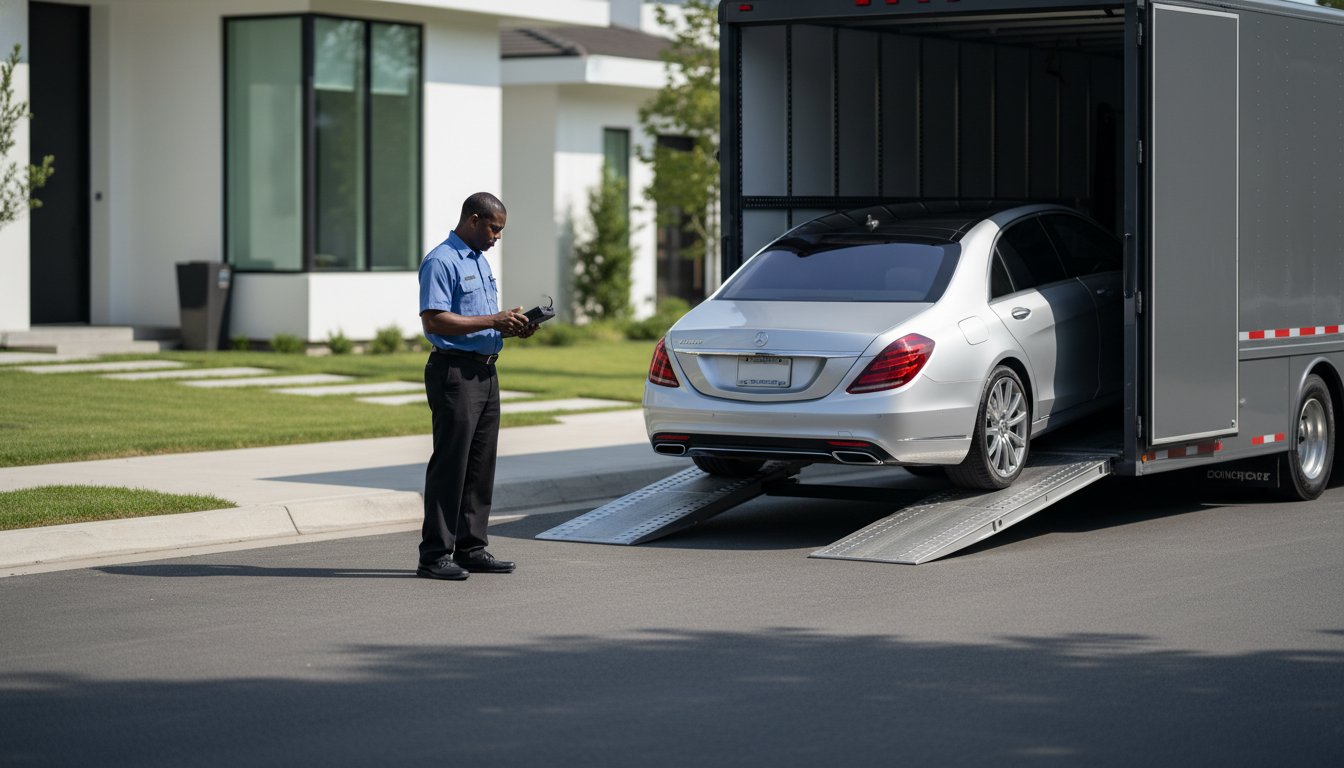
What if the most demanding logistical hurdle of your relocation could be resolved without you ever stepping foot outside your own driveway? For many discerning vehicle owners, the transition to a new location is often clouded by the anxiety of multiple handoffs and the potential for hidden terminal fees. You likely seek a solution that prioritizes the safety of your asset while respecting the scarcity of your time. Understanding exactly what does door to door auto transport mean is the first step toward securing a seamless, professional experience that aligns with your expectations of excellence.
We recognize that your vehicle is more than just transport; it's a significant investment that requires meticulous care. This definitive 2026 guide will demonstrate how door-to-door services provide unparalleled convenience by facilitating direct communication with carriers and ensuring your vehicle remains in professional hands from start to finish. We'll examine the legal boundaries of doorstep delivery, the impact of new FMCSA regulations regarding USDOT identifiers, and how this bespoke model eliminates the traditional friction of terminal-based shipping.
Key Takeaways
- Understand how modern logistics have shifted from terminal-based models to personalized, address-specific transport.
- Learn exactly what does door to door auto transport mean and how it facilitates a direct, professional handover between you and the carrier.
- Discover why reducing vehicle handoffs significantly lowers the risk of cosmetic damage while eliminating hidden terminal storage fees.
- Gain a professional checklist for preparing your vehicle, including meticulous documentation and high-resolution photography for peace of mind.
- Explore how sophisticated dispatch teams navigate urban complexities to ensure a seamless relocation of your most valuable assets.
Defining Door-to-Door Auto Transport in 2026
Door-to-door auto transport represents the pinnacle of logistical convenience in the vehicle relocation industry. At its core, this service ensures that a professional carrier retrieves your vehicle from a specific residential or commercial address and delivers it directly to your chosen destination. This model effectively bypasses the traditional reliance on centralized shipping hubs, which often introduce unnecessary delays and risks to the transport process. By prioritizing direct movement, this service caters to those who value both their time and the pristine condition of their assets.
When clients ask, "what does door to door auto transport mean," they're often seeking a solution that respects their schedule and the integrity of their vehicle. The process is typically facilitated by an auto transport broker, who serves as the vital link between the vehicle owner and the specialized carrier. This partnership ensures that every logistical detail, from route planning to carrier vetting, is handled with meticulous precision. It's a bespoke approach that replaces the "one-size-fits-all" mentality of terminal shipping with a tailored experience.
To better understand this concept, watch this helpful video:
The Evolution of Residential Vehicle Logistics
The industry has undergone a significant transformation over the last two decades. Leveraging over 20 years of expertise, our team has observed a clear shift from terminal-based logistics to high-precision, address-specific transport. Historically, vehicles were dropped off at industrial terminals, which often exposed them to multiple handoffs and potential cosmetic damage. Today, sophisticated clients demand a decentralized approach. By utilizing residential pickup and delivery, we minimize the number of times a vehicle is handled, thereby increasing safety and reducing the logistical burden on the owner. This evolution reflects a broader trend toward personalized car transport services in the global shipping market.
Key Components of a Standard Door-to-Door Contract
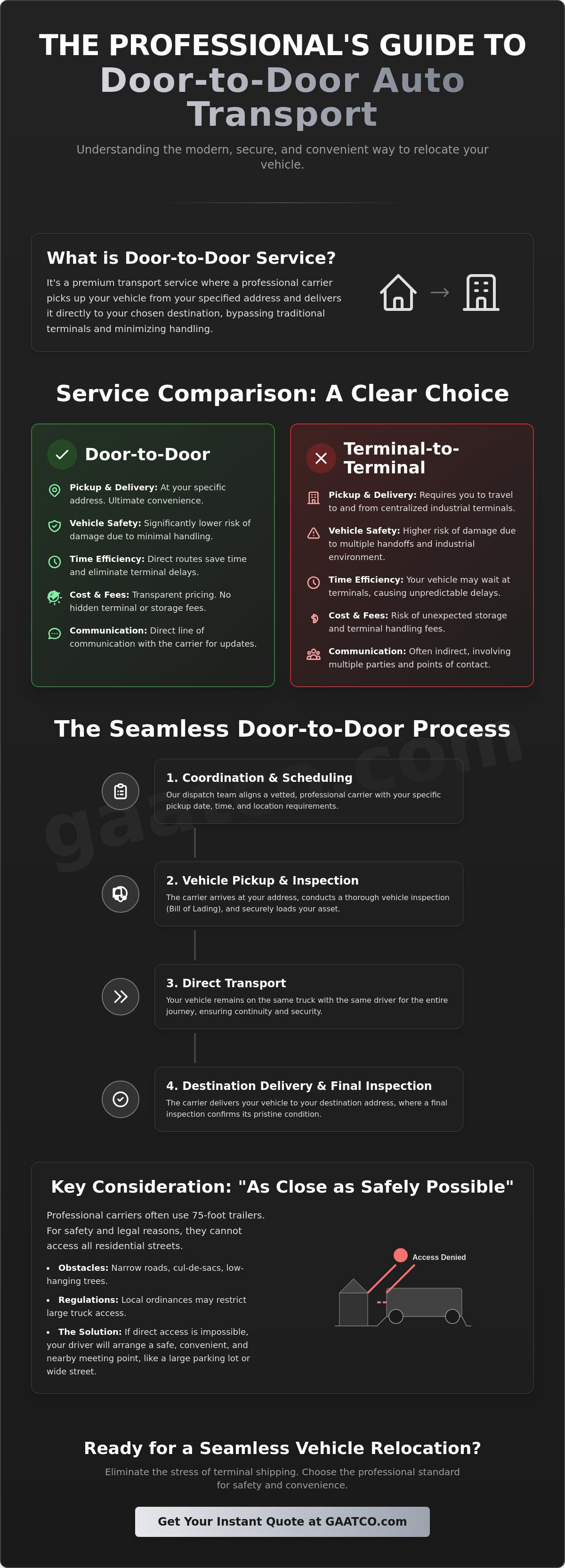
A professional door-to-door contract is built upon several non-negotiable pillars. The most critical of these are the specified pickup and delivery locations, which serve as the primary contractual anchors. Additionally, these agreements include comprehensive insurance coverage that protects the asset from the moment of origin until it reaches its final destination. It's also vital to understand the "as close as safely possible" clause. While the goal is doorstep delivery, professional carriers must adhere to local safety regulations and physical constraints, such as narrow streets or low-hanging trees. In these rare instances, a nearby, secure location is arranged to maintain the highest safety standards for both the vehicle and the transport equipment.
The Logistics of Convenience: How Door-to-Door Shipping Operates
The operational flow of a premium transport service begins with a sophisticated coordination phase. Our dispatch team serves as the central architect for your vehicle’s journey, aligning the schedules of vetted carriers with your specific requirements. To truly grasp what does door to door auto transport mean in a functional capacity, it's necessary to look past the simple pickup. It's a complex dance of timing and spatial awareness. In sprawling metropolitan areas like Atlanta or Houston, the logistical challenge involves navigating dense traffic patterns while maintaining a strict timeline.
The primary constraint in residential delivery is the physical size of the transport equipment. Most professional carriers utilize 75-foot trailers that require significant clearance for turns and overhead obstacles. While the goal is always a doorstep handover, certain legal and physical realities may dictate an alternative meeting point. For instance, a cul-de-sac might not accommodate the turning radius of a multi-car carrier. In these scenarios, our drivers identify a secure, nearby location, such as a large parking lot or a wide commercial thoroughfare, to ensure the safety of your asset. This adherence to safety is echoed in the official Consumer Advisory guidelines provided by the FMCSA, which emphasize the importance of understanding carrier limitations.
Urban Navigation and Local Access Restrictions
Maneuvering through historic or dense cities like Boston or Seattle requires a nuanced understanding of local infrastructure. Low-hanging trees, weight-restricted bridges, and narrow one-way streets often present significant hurdles for large commercial vehicles. Beyond physical barriers, many Homeowners Associations (HOAs) and local ordinances strictly prohibit the entry of heavy trucks into residential zones. A seasoned logistics partner anticipates these restrictions. We proactively identify safe loading zones that comply with local laws while minimizing the distance you must travel.
Real-Time Communication and Driver Coordination
Reliability is built on transparent communication. You'll receive a notification window approximately 24 hours before the carrier arrives at your location. This allows for final adjustments and ensures you're prepared for the inspection process. Direct contact with the driver is established to finalize the exact handoff point, providing a layer of security and personal service. This level of coordination is vital when managing schedule shifts caused by unpredictable weather or heavy traffic in hubs like Chicago or Dallas. If you're ready to experience this level of precision, you may request a customized quote to begin your relocation.
Door-to-Door vs. Terminal-to-Terminal: A Comparative Analysis
Choosing between delivery models requires a clear understanding of the operational trade-offs involved. While terminal-to-terminal shipping is often marketed as a budget-conscious alternative, the true cost frequently exceeds the initial quote. When you analyze what does door to door auto transport mean in terms of value, it becomes clear that the direct-to-address model eliminates several layers of logistical friction. Terminal shipping requires you to drop off and retrieve your vehicle from industrial hubs, which are often located in remote areas far from residential centers. This introduces the need for secondary transportation, such as rental cars or ride-shares, which adds both expense and complexity to your schedule.
Professional owners recognize that the safety of their asset is paramount. Every time a vehicle is moved, loaded, or unloaded, the statistical probability of cosmetic damage increases. Door-to-door logistics minimize these "touchpoints" by utilizing a single, dedicated carrier from the point of origin to the final destination. This streamlined approach is a core component of how sophisticated clients manage their high-value assets. Before finalizing your decision, reviewing a guide on how to ship a car can provide additional context on why direct service remains the industry standard for excellence.
The Hidden Risks of Terminal Storage
Terminal facilities are typically high-volume environments where vehicles are stored in open-air lots for days or weeks. This exposure leaves your car vulnerable to environmental elements and incidental contact from other vehicles being moved within the yard. Unlike the personalized oversight provided during door-to-door auto shipping, terminal storage lacks a dedicated point of contact. The absence of a single responsible party during the storage phase can complicate insurance claims and diminish the overall security of your vehicle.
Economic Efficiency for the Modern Owner
The higher upfront cost of a door-to-door contract often translates into significant net savings when you account for the value of your time. Professionals cannot afford to spend hours traveling to industrial ports or coordinating pickups at restricted facilities. By choosing a direct service, you secure a predictable timeline and a higher level of professional handling. This model protects your investment by ensuring the vehicle remains on one trailer, under the care of one driver, until it safely reaches your driveway. It's a premium solution that prioritizes long-term asset protection over short-term, perceived savings.
Preparing for Your Vehicle’s Arrival: A Professional Checklist
Preparation is the final architectural layer of a successful relocation. While we have explored what does door to door auto transport mean in terms of logistics and comparative value, the execution of the service depends on a meticulous partnership between the owner and the carrier. This preparation phase is not merely a task; it's a strategic process designed to safeguard your asset during its journey. A clean vehicle is essential for an accurate inspection, as dust or debris can obscure minor imperfections that must be documented before the carrier takes possession.
We recommend capturing high-resolution photography from multiple angles, including the undercarriage and interior. These images serve as a definitive record of the vehicle's condition at the moment of handover. Additionally, Federal Motor Carrier Safety Administration (FMCSA) regulations strictly prohibit the transport of personal items within the vehicle. Removing these belongings ensures compliance with weight limits and eliminates the risk of internal damage or theft, as carrier insurance typically does not cover household goods.
The Bill of Lading: Your Primary Legal Safeguard
The Bill of Lading serves as the foundational legal document for your shipment. It's more than a receipt; it's a formal record of the vehicle's condition and the agreed-upon terms of service. You should conduct a joint inspection with the driver, ensuring that every existing scratch, dent, or paint chip is accurately noted on the form. Whether the carrier uses a digital interface or a traditional paper document, your signature confirms your agreement with the recorded state of the vehicle. This document is the primary evidence required for any potential insurance claims, making your attention to detail during this phase non-negotiable.
Mechanical Preparation for Safe Transit
A vehicle's mechanical state influences the safety of the entire load. We advise maintaining approximately a quarter-tank of fuel, which provides enough weight for stability without adding unnecessary mass to the trailer. Checking tire pressure and fluid levels before the carrier arrives ensures the vehicle is ready for the loading process. For specialized needs, such as inoperable vehicle transport, specific winching requirements must be coordinated in advance to ensure the carrier arrives with the appropriate equipment. If you are ready to secure a professional partner for your next relocation, you can request a personalized quote to begin the process.
Why GAATCO is the Premier Choice for Door-to-Door Logistics
Selecting a logistics partner for a high-value asset is a decision that requires both trust and verification. With over 20 years of established expertise in the specialized auto transport market, our team has refined a process that prioritizes the security of your vehicle above all else. When evaluating what does door to door auto transport mean for your specific situation, it's essential to look beyond the basic service definition. At GAATCO, this model represents a commitment to transparent pricing and a meticulously vetted carrier network that adheres to our non-negotiable operational pillars.
We've built our reputation on a foundation of reliability and safety, positioning ourselves as a discreet partner rather than a mere service provider. Our expansive reach across major US metropolitan areas allows us to manage complex logistics with a level of local nuance that is often missing from less attentive organizations. We take a human-centric approach to every relocation, ensuring that the sophisticated infrastructure of our operations serves your specific needs without losing the personal touch that high-end service demands. Understanding what does door to door auto transport mean in the hands of experts is the key to a stress-free experience.
Bespoke Solutions for Every Vehicle Type
Every vehicle requires a customized approach to ensure its safe arrival. For many clients, our Open Car Transport provides a reliable and efficient solution for standard relocations across the country. However, for those possessing classic or exotic models, we offer enclosed options that provide a higher degree of seclusion and protection from environmental elements. Our team also manages the specific nuances of military PCS moves and dealer-to-dealer transfers with the same level of discretion and precision. We understand the unique requirements of high-end automotive collections and ensure that every transport plan is as unique as the vehicle itself.
The GAATCO Assurance: Reliability and Safety
Reliability is the cornerstone of our service model. We conduct a rigorous insurance verification process for every carrier within our network, ensuring that your investment is protected by professionals who share our commitment to safety. Our support team maintains a calm confidence, providing a steady point of contact throughout the entire transit period. This steady rhythm of communication ensures you're never left wondering about the status of your vehicle. If you're ready to experience a relocation defined by professional excellence and meticulous attention to detail, the next step is to request a tailored quote for your upcoming move.
Securing the Future of Your Vehicle Relocation
Understanding exactly what does door to door auto transport mean allows you to move past the inherent risks and inefficiencies of traditional shipping hubs. By prioritizing direct communication and minimizing unnecessary vehicle handling, you ensure that your most valuable assets remain protected throughout their journey. This guide has detailed how a meticulous inspection process and a clear understanding of carrier limitations form the basis of a successful, high-end transport experience.
GAATCO leverages over 20 years of industry expertise to deliver a service defined by reliability and safety. Our network consists exclusively of licensed and fully insured carriers, with specialized protocols for luxury and classic car handling. We invite you to transition from the anxiety of terminal logistics to the calm confidence of a premium partnership. Please Request a Professional Door-to-Door Transport Quote to begin your seamless transition today. We look forward to facilitating your next successful move with the precision and care your vehicle deserves.
Frequently Asked Questions
Is door-to-door auto transport more expensive than terminal shipping?
Door-to-door services generally command a higher initial price point than terminal-to-terminal alternatives due to the personalized nature of the logistics. This model accounts for the carrier's fuel and time required to reach specific residential addresses. However, when you factor in the costs of rental cars, ride-shares, or terminal storage fees, the net expenditure often balances out. It remains the preferred choice for those seeking to minimize vehicle handling and maximize personal convenience.
What happens if the transport truck cannot fit on my street?
If a 75-foot trailer cannot safely navigate your residential street due to narrow lanes or low-hanging trees, the driver will coordinate a nearby meeting point. This location is typically a large, open parking lot or a wide commercial thoroughfare that allows for secure loading. Professional drivers prioritize the safety of your asset and the transport equipment above all else. This ensures that even when a doorstep is inaccessible, the handover remains professional and controlled.
Do I need to be present for the pickup and delivery of my vehicle?
You or a designated representative must be present at both the pickup and delivery locations to facilitate the mandatory vehicle inspection. This presence is critical for reviewing and signing the Bill of Lading, which documents the vehicle's condition at the time of transfer. If you cannot attend personally, your representative should be someone you trust to meticulously inspect the asset. This ensures that the legal and operational requirements of the transport contract are fully satisfied.
How long does door-to-door car shipping typically take?
Transit times vary based on the total distance of the relocation and the specific route requirements. For shorter distances under 500 miles, delivery often occurs within one to three days. Cross-country shipments may require seven to ten days. Factors such as weather conditions, traffic in major urban hubs, and federal driver rest requirements also influence the timeline. Our team provides realistic windows to ensure you can plan your schedule with confidence and clarity.
Is my vehicle insured during door-to-door transport?
Every carrier in our network is required by law to maintain comprehensive liability and cargo insurance. This coverage protects your vehicle against damage during the loading, transit, and unloading phases of the journey. To fully grasp what does door to door auto transport mean for your protection, we recommend reviewing the carrier's specific policy limits. Our team verifies these credentials for every shipment, providing a layer of security that reflects our commitment to professional excellence.
Can I ship personal items inside my car during door-to-door transport?
Carriers generally prohibit the transport of personal items within the vehicle to comply with Federal Motor Carrier Safety Administration regulations. These items add weight that can lead to fines at weigh stations and are not covered by the carrier's cargo insurance. Additionally, loose objects can shift during transit and cause internal damage to your vehicle. We advise removing all personal belongings and aftermarket accessories to ensure a safe and compliant shipping process from start to finish.
What is a Bill of Lading and why is it important for door-to-door shipping?
The Bill of Lading serves as the foundational legal contract and receipt for your vehicle shipment. It documents the exact condition of your asset at the moment of pickup and serves as a point of reference during delivery. Understanding what does door to door auto transport mean involves recognizing this document as your primary safeguard. If any discrepancies arise regarding the vehicle's condition, the signed Bill of Lading is the essential piece of evidence required for insurance claims.
How do I prepare my vehicle for a residential pickup?
Preparing for a residential pickup involves ensuring your vehicle is clean enough for a thorough inspection. You should maintain approximately a quarter-tank of fuel to optimize weight while allowing for necessary movement on and off the trailer. Checking tire pressure and fluid levels is also recommended to prevent mechanical issues during loading. Finally, ensure all alarms are disabled and that you have a spare set of keys ready for the professional driver upon their arrival.


