Transporting a standard vehicle is a simple transaction, but shipping a custom-modified truck is a meticulous engineering exercise. When your vehicle features a significant lift, the margin for error disappears. The primary challenges of shipping a lifted truck often stem from a lack of specialized equipment and a failure to account for the precise dimensional shifts that accompany modifications. You've likely felt the tension of wondering if a carrier truly understands the height of your roofline or the vulnerability of your undercarriage during the loading process.
We understand that your vehicle represents both a significant investment and a personal statement. Our team recognizes that you require more than just a service; you need a discreet and dependable partner who handles complex logistics so you don't have to. This guide offers a transparent look into the logistics of oversized transport, ensuring you can move your truck with absolute confidence. We'll examine the critical 2026 federal height regulations, such as the 13 feet 6 inch limit, the necessity of state-level permits, and how to identify carriers with the sophisticated infrastructure required for a damage-free delivery.
Key Takeaways
- Identify the specific dimensional thresholds that classify a vehicle as oversized and necessitate specialized logistical planning.
- Address the primary challenges of shipping a lifted truck by matching vehicle dimensions with the appropriate carrier type for optimal clearance.
- Learn how to perform a meticulous dimensional audit to ensure the deployment of specialized transport equipment suited to your truck’s height and width.
- Gain insights into the limitations of enclosed transport for oversized vehicles and the advantages of utilizing high-clearance open carriers.
- Discover the essential protocols for securing custom modifications to maintain the integrity of your vehicle’s exterior components during transit.
Understanding Why Lifted Trucks Require Specialized Logistics
A truck transcends the category of standard auto transport the moment its modifications exceed the physical constraints of a conventional multi-car carrier. While a factory-spec pickup might fit comfortably on a standard open trailer, the challenges of shipping a lifted truck begin when the roofline crosses the seven-foot threshold. This transition requires a shift in perspective from routine shipping to specialized logistics. Beyond simple dimensions, the physics of transport play a critical role. A vehicle with a significantly higher center of gravity affects the lateral stability of the trailer, necessitating precise placement to ensure the safety of the entire load.
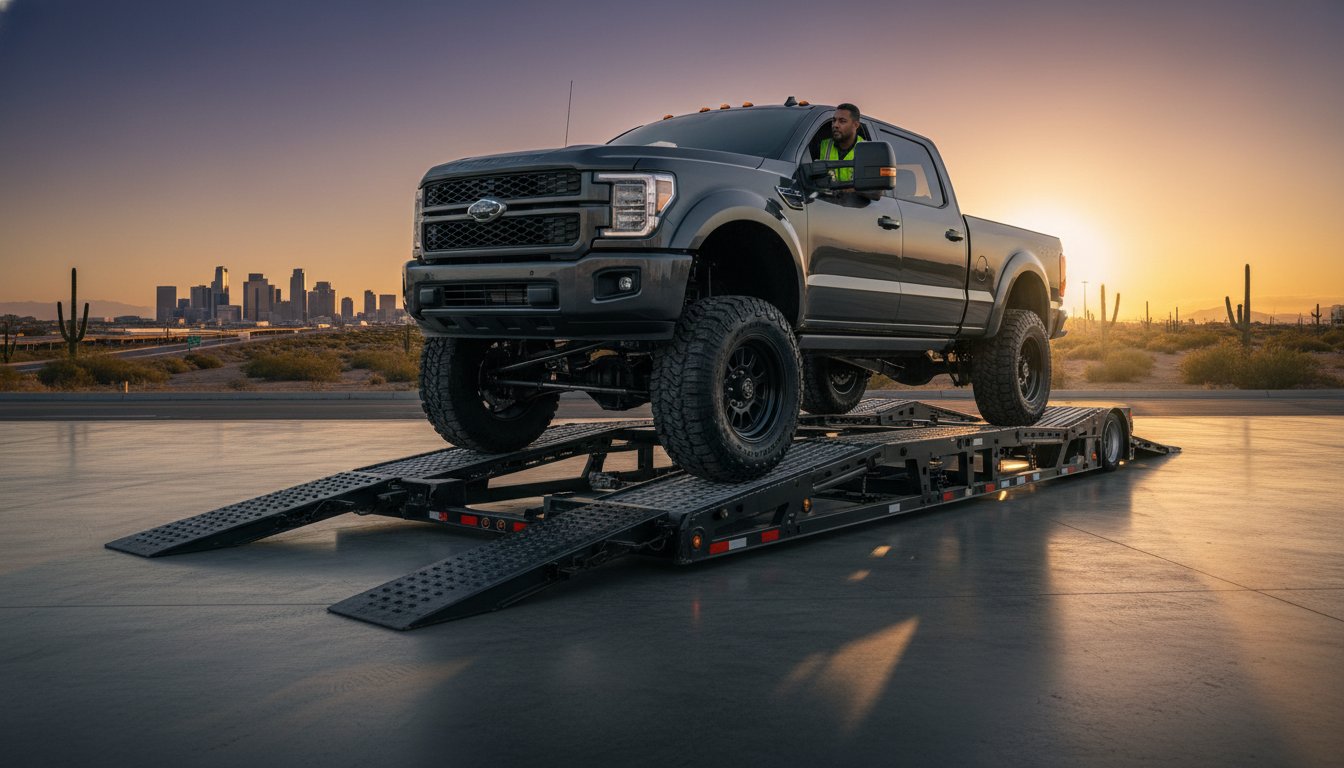
To visualize the physical scale and unique presence of these modified vehicles, consider the following demonstration:
Aftermarket additions such as steel bull bars, heavy-duty winches, and reinforced skid plates significantly increase the curb weight of the vehicle. This added mass requires the logistics team to recalibrate the weight distribution of the carrier to remain within federal safety guidelines. Our team at GAATCO provides a range of specialized transport services designed to handle these exact complexities with meticulous attention to detail.
The Departure from Standard Auto Transport
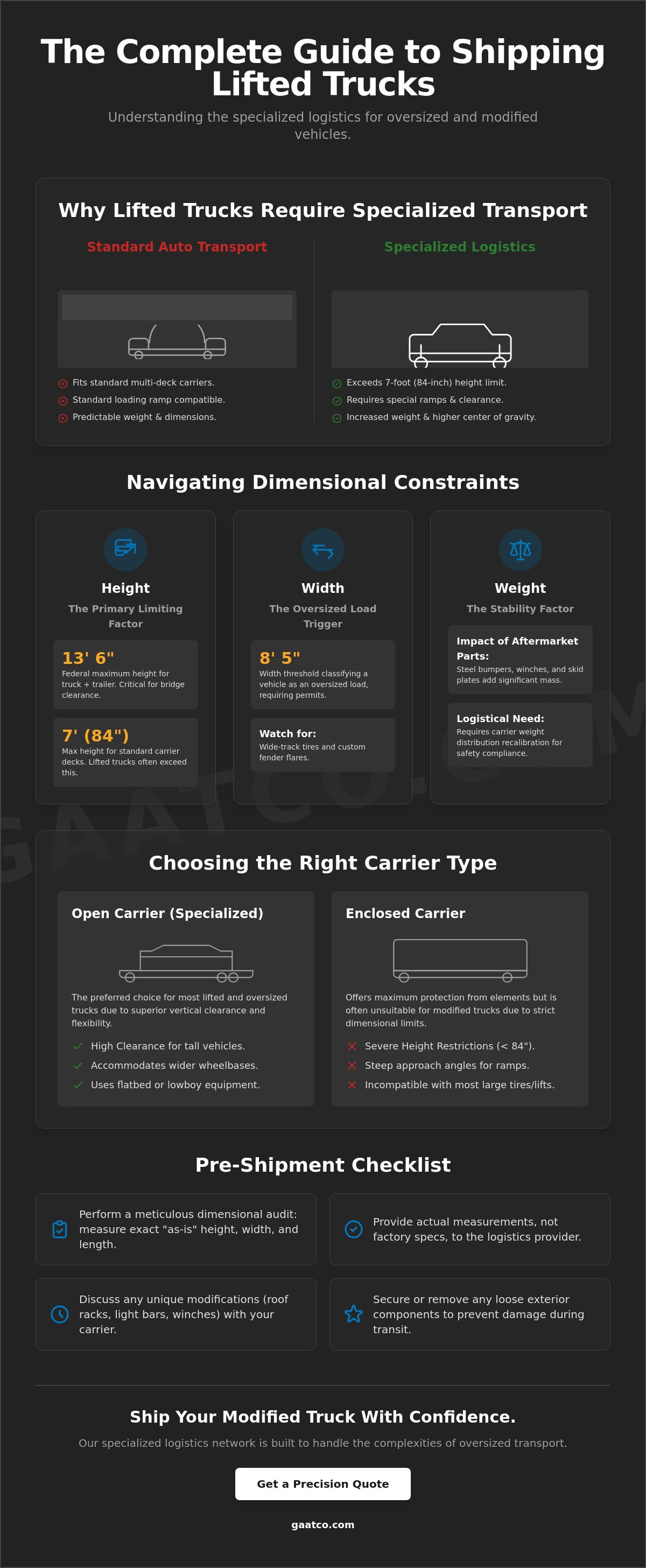
Standard carriers utilize a multi-deck system where vertical clearance is often restricted to less than 84 inches. This makes the top deck inaccessible for most modified pickups. Beyond height, the approach angle is a frequent hurdle. Custom bumpers and high-clearance winches can make loading onto steep ramps difficult without specialized equipment. Additionally, vehicles with extreme suspension travel require more overhead space to account for the vertical movement that occurs during transit. Understanding Suspension Lifts helps explain why these vehicles require a greater buffer zone to prevent contact with the trailer's upper structure. Specialized ramps are often necessary to accommodate these unique suspension geometries safely.
Regulatory Considerations for Oversized Vehicles
The Department of Transportation enforces a maximum legal height of 13 feet 6 inches for vehicles on the road. When a lifted truck is placed on a trailer, the combined height must not exceed this limit to avoid bridge and overpass strikes. In states such as Texas or Arizona, specific permits are required if the vehicle exceeds standard width or height parameters. Width modifications, including wide-track tires and fender flares, often push a vehicle beyond the 8 feet 5 inch threshold. This classifies it as an oversized load, requiring a carrier with specialized flatbed or lowboy equipment. Navigating these regional nuances is a core component of our operational expertise.
Navigating Dimensional Constraints: Height, Width, and Weight
Precise measurements are the bedrock of specialized logistics. When a vehicle undergoes significant modification, its original factory specifications become obsolete; relying on them can lead to costly operational delays or rejected pickups. One of the primary challenges of shipping a lifted truck involves the delicate balance between vehicle height and trailer clearance. We require "as-is" dimensions, which include the measurement from the ground to the highest point of the cab or roof rack, to ensure the selected carrier has the appropriate infrastructure. To ensure every variable is accounted for, you may wish to request a precision quote tailored to your truck's specific modifications.
The 7-foot rule remains a critical threshold in the industry. Most standard multi-car carriers are designed with a maximum vertical clearance of 84 inches for their internal decks. If your suspension lift and tire combination push the vehicle beyond this height, it can no longer be accommodated on a conventional trailer. Beyond the physical fit, heavy-duty suspension systems and oversized tires add substantial mass to the vehicle. This increased weight often triggers fuel surcharges, as the carrier must account for the higher energy consumption required to transport the load safely across long distances.
Vertical Clearance and Overpass Safety
The Department of Transportation maintains a strict federal height limit of 13 feet 6 inches for vehicles traveling on the interstate highway system. While this seems generous, the combined height of the transport trailer and your lifted truck must remain under this ceiling. Our logistics team meticulously plans routes to avoid low-clearance obstacles. This is especially vital when traveling through historic metropolitan areas like Boston or New York, where older infrastructure often features overpasses significantly lower than the modern federal standard. A failure to account for these inches can result in catastrophic roof damage.
Width and Tread Considerations
Width modifications present their own set of logistical hurdles. Standard trailer decks are typically 102 inches wide, but the usable space between the structural rails is often narrower. If your truck features wide-offset wheels, "dually" rear axles, or expansive fender flares, it may exceed the width of a standard car hauler. Vehicles exceeding 8 feet 5 inches in width are legally classified as oversized loads. Shipping these vehicles safely often requires specialized flatbed trailers to prevent tire sidewall damage on narrow loading ramps. We prioritize the use of equipment that provides ample lateral space, ensuring your custom wheels remain pristine throughout the journey.
Choosing the Right Carrier: Open vs. Enclosed for Oversized Vehicles
Selecting the ideal transport method involves balancing the desire for protection with the physical realities of a vehicle's dimensions. This creates what we define as the "Enclosed Paradox." While owners of high-value, customized trucks often prefer the pristine environment of an enclosed cabin, the primary challenges of shipping a lifted truck usually stem from the fact that these premium trailers simply cannot accommodate the vehicle’s height. The physical constraints are rigid. Identifying the right equipment is one of the key challenges of shipping a lifted truck, requiring a sophisticated understanding of trailer architecture.
Open car transport remains the standard for the majority of oversized shipments. These trailers offer superior vertical clearance and are more conducive to the wide tire profiles common on modified builds. For extremely tall custom projects that exceed the safety margins of standard haulers, our team often deploys "Low-Boy" trailers. These specialized platforms sit lower to the ground, providing the necessary overhead space to navigate highway infrastructure safely. Regardless of the carrier type, confirming that the insurance policy covers high-value aftermarket modifications is a non-negotiable step in our vetting process. This ensures that every component, from custom suspension to specialty lighting, is fully protected.
The Limitations of Enclosed Trailers
The physical constraints of an enclosed carrier are often insurmountable for modified vehicles. Most standard enclosed units feature a rear door header height ranging between 75 and 82 inches. If your truck’s roofline exceeds these dimensions, it's physically impossible to load it without risking structural damage. While soft-sided trailers might offer a few additional inches of flexibility compared to hard-shell units, they still fall short for most vehicles with a six-inch lift or greater. For luxury builds that demand protection but exceed these limits, we suggest alternative solutions such as dedicated single-car transport on open flatbeds with precision-fitted protective covers.
Flatbed and Single-Car Hotshot Options
A single-car hotshot carrier is an excellent choice for clients seeking expedited, door-to-door delivery. These smaller, more agile setups are ideal for vehicles with non-standard wheelbases or extreme widths that would be difficult to maneuver on a multi-car trailer. Utilizing such specialized equipment inevitably influences the auto transport prices for lifted vehicles, as it involves dedicated resources and specific routing expertise. Choosing a flatbed ensures that even the most aggressive tire offsets are accommodated without the risk of scuffing or rim damage on narrow loading tracks. This bespoke approach provides the quiet confidence that your investment is handled with the precision it deserves.
Essential Preparation Steps for Shipping Your Modified Truck
Preparation serves as the final safeguard against the operational variables inherent in oversized transport. While previous sections detailed the logistical framework, the physical readiness of your vehicle determines the fluidity of the loading process. Addressing the challenges of shipping a lifted truck requires a transition from high-level planning to hands-on meticulousness. Every modification, from suspension geometry to external lighting, demands specific attention to ensure the vehicle remains secure during transit across varying terrains and climates.
A meticulous approach to the Bill of Lading is your most significant protection. This document acts as a legal blueprint of your vehicle’s condition at the moment of exchange. We recommend a comprehensive walkthrough with the carrier to document every custom component and existing finish. Beyond the paperwork, verify that the battery is firmly mounted and that there are no active fluid leaks. Even minor drips can become significant issues when a vehicle is positioned on an upper deck above other high-value cargo. To begin your seamless transport experience, we invite you to request a precision quote from our specialized logistics team.
The Precision Measurement Guide
Accuracy during the measurement phase prevents the risk of on-site rejection by the carrier. You must measure the total height from the absolute highest point, which is frequently an aftermarket light bar or a roof rack rather than the cab itself. Similarly, width should be calculated from the outermost edges of the mirrors or the tire sidewalls; whichever is wider. Maintaining tire pressure at factory-recommended levels ensures the vehicle's height remains consistent during measurement and transit. Any external accessories that can be easily removed, such as CB antennas or oversized flags, should be stowed internally to reduce the vehicle's vertical profile.
Handling Specialty Suspensions
Vehicles equipped with adjustable air or hydraulic suspension systems require specific configuration before they are loaded onto a trailer. You should set the suspension to its standard "ride height" and disable the system to prevent it from self-leveling or shifting during transport. Long-distance transit subjects the vehicle to constant vibrations, so it's vital to inspect your lift kit for any loose bolts or worn bushings before the carrier arrives. A fully functioning parking brake is also a non-negotiable requirement. The carrier relies on the parking brake to work in tandem with heavy-duty wheel chocks and tie-down straps to keep the truck stationary on the trailer deck.
GAATCO’s Approach to Reliable Lifted Truck Transportation
We view every vehicle as a unique logistical assignment rather than a routine shipment. Our commitment to white-glove service means we look beyond the surface to the specific engineering requirements of your custom build. Managing the challenges of shipping a lifted truck requires more than just a trailer; it demands a network of vetted professionals who understand the nuances of oversized loads and specialized handling. We prioritize safety and reliability as non-negotiable pillars of our operation, ensuring that your investment is protected by a team that understands the high-stakes nature of specialized transport.
To provide accurate auto transport quotes, we insist on transparent communication regarding your vehicle's exact specifications. This data allows our team to pre-plan routes and secure the necessary permits before the carrier ever arrives at your door. We maintain a robust operational presence in major logistics hubs such as Houston, Dallas, and Phoenix. Our specialized truck routes in these regions are optimized for the unique demands of the landscape, allowing us to bridge the gap between global standards and local service nuances with quiet confidence.
Bespoke Logistics Solutions
Our seasoned dispatchers are experts at matching your truck’s dimensional profile to the ideal trailer type. Whether your vehicle requires a low-boy trailer for extreme height clearance or a specialized flatbed for wide-track stability, we ensure the equipment matches the mission. We navigate regional transit hurdles by leveraging our geographic advantages and established relationships with carriers who specialize in oversized vehicle logistics. We don't compete on the basis of "cheap" shipping alternatives; instead, we offer a stable and controlled environment where your vehicle’s safety is the primary metric of success. This meticulous attention to detail is what allows us to function as a discreet and dependable partner for our clients.
Experience the GAATCO Difference
With over 20 years of experience in the specialized transport industry, our team has refined the process of handling complex vehicle relocations. We act as your trusted advisor, managing the intricate operational realities so you don't have to. Our personality is that of a seasoned expert, calm under pressure and meticulously attentive to every detail of the transport flow. Choosing our team means choosing a partner that values precision and discretion above all else. We invite you to Request a customized quote for your lifted truck today to experience the peace of mind that comes with elite, specialized service.
Securing Your Investment for the Journey Ahead
Successfully transporting a modified vehicle requires a shift from standard shipping to strategic logistics. You now understand that precision dimensional audits and matching your truck to specialized equipment, such as low-boy trailers, are the foundations of a safe arrival. While the challenges of shipping a lifted truck are significant, they are entirely manageable when handled by a team that prioritizes safety over speed. We recognize that your vehicle is more than just a machine; it's a significant investment that deserves meticulous attention to detail at every stage of the process.
GAATCO serves as a bridge between your vehicle's specific needs and the complex operational realities of the modern road. With over 20 years of logistics expertise and a specialized oversized vehicle network of licensed and insured nationwide carriers, we provide the discretion and reliability your high-value cargo requires. We handle the intricacies of route planning and equipment matching so you can focus on the road ahead. Request a Specialized Quote for Your Lifted Truck today to begin a partnership built on transparency and elite service. Your vehicle is a statement of personal excellence; let us ensure it arrives in pristine condition.
Frequently Asked Questions
How much more does it cost to ship a lifted truck compared to a standard one?
Transporting a lifted truck involves a surcharge to account for the additional space and weight capacity required on the trailer. Industry standards suggest that oversized vehicles can be significantly more expensive to transport than factory-spec sedans or small SUVs. This adjustment ensures the carrier can maintain operational safety while managing the unique footprint of a modified vehicle.
Can I ship my lifted truck in an enclosed trailer?
Enclosed transport is often restricted by a rear door header height that averages between 75 and 82 inches. Most trucks with significant suspension lifts exceed these physical limits, making open transport the only viable option. We recommend verifying your vehicle's absolute height before requesting an enclosed carrier to avoid loading conflicts at the point of pickup.
Will my oversized tires cause issues during the loading process?
Wide-track tires and aggressive offsets frequently exceed the usable width of standard multi-car hauler ramps. This is one of the common challenges of shipping a lifted truck, as it may necessitate the use of specialized flatbed trailers with wider decks. Ensuring your tires fit within a 102-inch total width is a critical factor for a successful and damage-free loading experience.
Do I need a special permit to ship a truck with a 10-inch lift?
Permits are required whenever the combined height of the truck and the transport trailer exceeds the federal limit of 13 feet 6 inches. Each state maintains its own regulations for oversized loads, and our logistics team manages these permitting requirements on your behalf. A 10-inch lift almost certainly pushes a full-sized truck into the category requiring special routing and state-level documentation.
What happens if my truck is too tall for the assigned carrier?
If a vehicle exceeds the physical clearance of the dispatched trailer, the carrier must legally decline the shipment to prevent bridge strikes or structural damage. This scenario underscores the challenges of shipping a lifted truck without providing a meticulous dimensional audit during the booking phase. Accurate data prevents these costly on-site delays and ensures the correct equipment is dispatched initially.
Is insurance coverage different for trucks with aftermarket modifications?
Standard carrier insurance typically covers the base value of a vehicle but may exclude high-value aftermarket modifications like custom suspension or lighting. We ensure that our network of carriers maintains enhanced coverage limits suitable for specialized vehicles. You should always confirm that your specific modifications are documented on the Bill of Lading to maintain full protection throughout the journey.
How do I accurately measure the height of my lifted truck for a quote?
To obtain an accurate height, place a long level across the highest point of the vehicle and measure the vertical distance from the ground to that level. This highest point is often an aftermarket roof rack or an LED light bar rather than the roof of the cab itself. Using a laser measure or a rigid tape measure ensures the precision required for our specialized logistics team to plan your route.
Does GAATCO ship inoperable lifted trucks?
We provide inoperable vehicle transport for modified trucks that cannot move under their own power. This service requires specialized winching equipment and a carrier experienced in handling the weight distribution of non-running oversized vehicles. Please notify our dispatchers if your lifted truck is inoperable so we can assign a team with the sophisticated infrastructure required for your specific relocation.


