The true cost to ship an oversized vehicle isn't merely a reflection of its physical dimensions, but a sophisticated calculation of the specialized infrastructure and trailer space it commands. You likely recognize that transporting a non-standard asset requires more than a standard carrier; it demands a meticulous logistical strategy that prioritizes safety and regulatory compliance. It's often frustrating to encounter hidden surcharges or vague quotes when you require precision and transparency for your heavy-duty truck or modified SUV. We understand the concern that improper equipment or a lack of specialized knowledge can lead to unnecessary delays or operational friction.
This 2026 logistics guide provides a transparent breakdown of how professional pricing structures are formed, from Federal Highway Administration height regulations to the technical requirements of specialized equipment. You'll gain a clear understanding of why certain premiums are applied and how to navigate the complexities of state-specific permits and escort requirements. We've outlined a comprehensive checklist to ensure your vehicle is prepared for a seamless transit experience, giving you the confidence to select a partner who treats your substantial assets with the technical expertise they deserve.
Key Takeaways
- Identify the specific dimensional and weight thresholds that classify a vehicle as oversized to ensure accurate initial logistics planning.
- Evaluate the "opportunity cost" pricing model to better understand the total cost to ship an oversized vehicle based on trailer footprint and specialized hardware.
- Account for geographic complexities, such as urban height restrictions and rural accessibility, which influence route selection and operational flow.
- Learn how to effectively reduce your vehicle’s physical footprint to minimize surcharges and streamline the loading process.
- Discover the importance of a detailed Bill of Lading and professional documentation in maintaining the integrity of substantial automotive assets during transit.
Defining the Oversized Category: When Does a Vehicle Require Specialized Transport?
The logistics industry maintains a rigorous distinction between standard passenger cars and assets that exceed traditional footprint constraints. While a factory-standard SUV fits within the specifications of most multi-car carriers, modified vehicles or commercial-grade equipment require a more sophisticated, bespoke approach. Defining the Oversized Category is the essential first step in understanding the specialized infrastructure required for safe transit. The Federal Highway Administration (FHWA) sets the baseline for these standards, typically classifying any load exceeding 8 feet 6 inches in width or 13 feet 6 inches in height as oversized. When calculating the cost to ship an oversized vehicle, our team of professionals evaluates how these specific dimensions impact the carrier's total load capacity and the necessity for specialized hardware.
To better understand how these variables influence the logistical process, watch this detailed breakdown:
Dimensional Thresholds: Height, Width, and Length
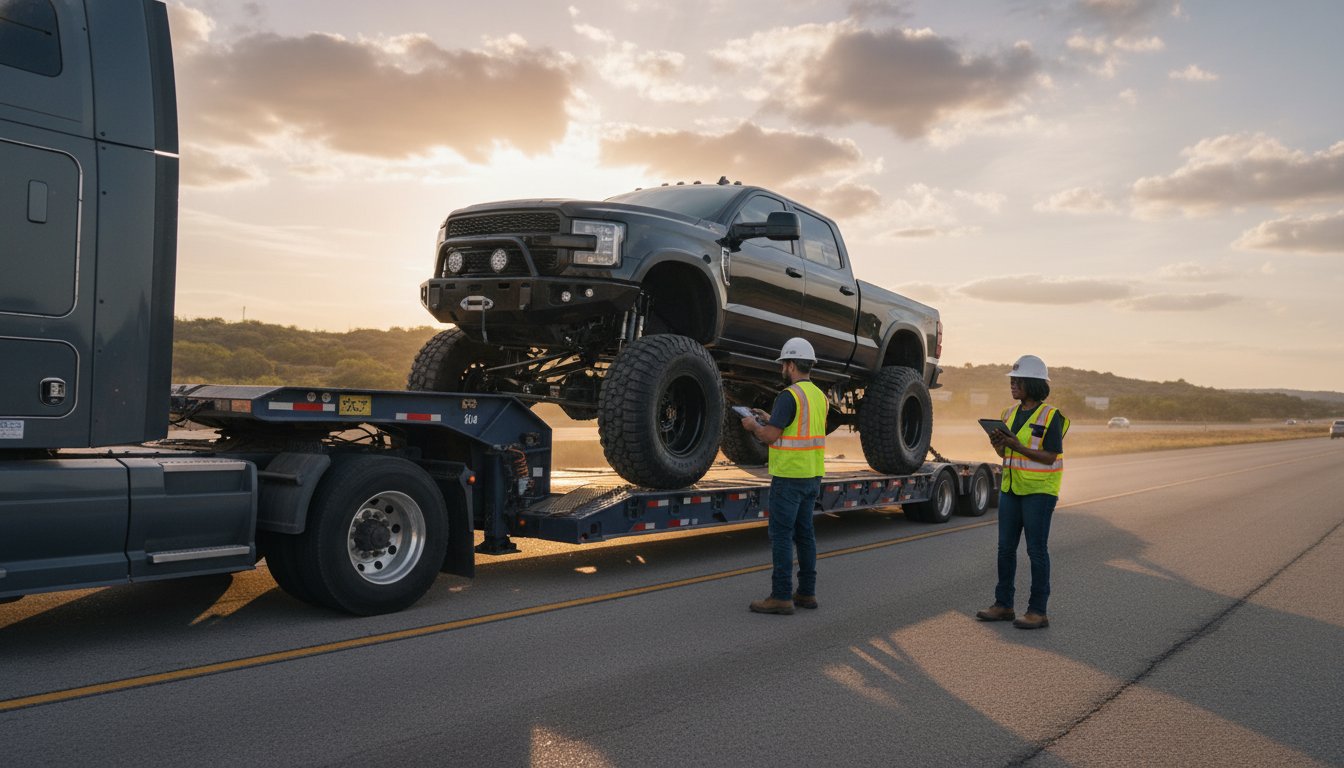
Operational height serves as the most frequent constraint in specialized carrier selection. Most standard trailers are designed for vehicles under 7 feet tall. Once a vehicle, such as a lifted off-road truck or a high-roof commercial van, exceeds this threshold, it often requires a low-profile trailer or a dedicated flatbed to clear highway overpasses safely. Width is equally critical. Dually trucks and vehicles with wide-body modifications often occupy more than a single lane's worth of space on a multi-car hauler, requiring the carrier to leave adjacent spots empty. Length and overhang also play a significant role. Extended cabs and long beds can prevent the loading of other vehicles, effectively doubling the space required for a single asset and influencing the final quote.
Weight and the Law: DOT Regulations for Oversized Loads
The Gross Vehicle Weight Rating (GVWR) is a non-negotiable pillar of transport safety and compliance. Federal Department of Transportation (DOT) regulations limit the total weight of a loaded multi-car carrier to 80,000 pounds. A single heavy-duty vehicle or a modern electric vehicle with a dense battery pack can displace two standard sedans. This displacement is a primary driver of the cost to ship an oversized vehicle, as it accounts for the lost revenue from other potential cargo. For extreme dimensions, specialized permits are required for every state the vehicle traverses. These permits, which can cost between $20 and $100 per state, ensure that the selected route is cleared for the specific weight and height of your load. This meticulous planning prevents damage to infrastructure and ensures a secure, elite service experience for your most substantial automotive assets.
The Primary Drivers of Oversized Vehicle Shipping Costs
Calculating the cost to ship an oversized vehicle requires a deep understanding of logistical displacement and operational risk. Unlike standard sedan transport, where pricing is relatively uniform, non-standard assets require a bespoke calculation. The Primary Drivers of Oversized Vehicle Shipping Costs are rooted in the physical reality of trailer capacity and the specialized hardware needed to secure substantial cargo. Carriers must account for the space an asset occupies, the fuel consumed by pulling a high-profile load, and the specific insurance premiums required for high-value, non-standard dimensions. It's a complex equation where safety and reliability are the non-negotiable variables.
The "Two-Slot" Rule: Understanding Space Displacement
In the logistics sector, trailer space is the primary currency. When a vehicle exceeds standard width or height, it often renders adjacent or vertical slots unusable for other cargo. This "space-taken" model means you aren't just paying for the weight of your vehicle, but for the revenue-generating capacity it displaces. Modifications such as oversized roof racks, significant lift kits, or external equipment often push a vehicle into this secondary pricing tier. It's a logical transition from volume-based shipping to a customized logistical solution that respects the technical constraints of the carrier's equipment.
Equipment Requirements: Beyond the Standard Multi-Car Carrier
Standard multi-car haulers aren't always suitable for oversized assets. Wide-body vehicles or those with low ground clearance often necessitate specialized ramps or flatbed trailers to prevent damage during the loading phase. For vehicles that are inoperable, the technical requirement for heavy-duty winches adds another layer of complexity to the operation. Flatbed transport provides the necessary deck space for wide wheelbases, while lowboy trailers offer the vertical clearance needed for particularly tall loads. If you are unsure which configuration your vehicle requires, you can review our specialized transport services for more technical details.
Fuel consumption and insurance coverage represent the final pillars of the pricing structure. High-profile vehicles act as wind sails, significantly increasing the aerodynamic drag on the carrier's truck. This resistance forces the engine to work harder, consuming more diesel per mile compared to a load of aerodynamic sedans. Additionally, the insurance profile for an oversized vehicle is typically more complex. Because these assets often represent a higher market value or carry a greater risk of incidental contact due to their size, carriers must adjust their coverage limits. This meticulous attention to detail ensures the cost to ship an oversized vehicle reflects a commitment to the highest standards of protection and professional care.
Geographic and Route Complexity in Oversized Logistics
Geographic variables represent a critical pillar in the logistics of substantial assets. While the physical dimensions of the vehicle set the baseline, the specific route determines the operational difficulty and the final cost to ship an oversized vehicle. Cross-country transit across major corridors like I-10 or I-80 is relatively straightforward; however, the complexity escalates as the carrier approaches dense metropolitan hubs or remote rural destinations. High-profile vehicles also face unique seasonal challenges. Strong crosswinds in the plains or icing on mountain passes can destabilize a lifted truck or commercial van, requiring drivers to take slower, more cautious routes to ensure the safety of the cargo.
Metropolitan Obstacles: Tunnels, Bridges, and Low Clearances
Urban environments like Manhattan, Chicago, and Boston present significant hurdles for oversized loads. Many historic parkways and tunnels feature clearances as low as 12 feet, which is insufficient for a large carrier hauling a lifted vehicle. This necessitates advanced route planning to avoid infrastructure that could cause catastrophic damage. The "Last Mile" challenge often dictates the delivery method. If a 75-foot trailer cannot safely navigate a narrow residential street in Seattle or a historic neighborhood in Boston, we often recommend a strategic terminal-to-terminal delivery. This approach preserves the vehicle's integrity by avoiding tight turns and low-hanging tree limbs that pose a risk to non-standard dimensions.
Route Optimization and Fuel Surcharges
Fuel efficiency is a critical factor in the pricing of oversized logistics. Because these vehicles significantly increase aerodynamic drag, carriers must account for the higher diesel consumption required to maintain highway speeds. This effect is most pronounced on long-distance, cross-country shipments where even a small decrease in miles per gallon adds up over 2,000 miles. Strategic route optimization helps mitigate these costs by selecting paths with fewer elevation changes and more favorable clearances. For a precise assessment of your specific journey, you should Request a Quote to receive route-specific pricing tailored to your vehicle's unique profile.
Regional variations in state permitting and escort requirements also influence the logistical flow. Each state has its own Department of Transportation regulations regarding when a pilot car is necessary, typically triggered when a load exceeds 10 or 12 feet in width. These regulations aren't just administrative hurdles; they're essential safety protocols that ensure your oversized asset moves through public infrastructure without incident. Our team manages these complexities behind the scenes, coordinating with local authorities to secure the necessary permits and ensuring the cost to ship an oversized vehicle remains transparent and inclusive of all regional requirements.
Preparing Your Oversized Vehicle for Professional Transport
Meticulous preparation is a critical juncture where technical foresight directly influences the final cost to ship an oversized vehicle. While standard vehicle transport requires minimal effort from the owner, non-standard assets demand a more involved strategy to ensure safety and cost-efficiency. Reducing the physical footprint of your vehicle is not just a safety measure; it's a financial tactic. By minimizing external dimensions, you can often clear specific height or width thresholds that would otherwise trigger significant surcharges. Our team of professionals recommends a proactive approach to modification management to ensure your asset is ready for a seamless loading process.
The Height Reduction Strategy
The vertical clearance of your vehicle is often the most significant factor in carrier selection. Removing non-essential modifications such as roof racks, light bars, and oversized antennas can potentially lower the vehicle's profile enough to utilize more common trailer configurations. If your vehicle is equipped with an adjustable air suspension system, it should be set to the lowest transport setting and secured to prevent shifting during transit. We suggest consulting with a specialist to determine if the temporary removal of these items is more cost-effective than paying the premiums associated with extreme height. This small investment of time can result in a more streamlined logistical flow and a lower overall invoice.
Safety and Security Protocols
Ensuring the structural stability of your vehicle is paramount for a secure journey. Tire pressure must be verified and maintained at factory specifications to ensure stable winching and tie-down procedures on the trailer deck. Any oversized mirrors should be folded inward or securely taped to prevent incidental contact during the "Last Mile" of the journey. Additionally, federal regulations and insurance protocols mandate the removal of all personal items from the cabin. This weight management is essential for maintaining the carrier's Gross Vehicle Weight Rating (GVWR) compliance and protecting your asset from internal damage during movement.
Documentation serves as the bedrock of professional accountability. A detailed Bill of Lading is essential, providing a comprehensive record of the vehicle's condition prior to pick-up. We recommend taking high-resolution photographs of all angles, including specialized modifications and the undercarriage, to ensure a transparent baseline for the transport. This level of detail reflects the high-stakes nature of specialized logistics and provides peace of mind for both the client and the carrier. For those ready to begin this process, we invite you to request a specialized transport quote to receive a customized assessment of your vehicle's requirements.
Fuel management also plays a subtle yet important role in the preparation phase. We advise maintaining approximately one-quarter tank of fuel. This amount is sufficient for loading and unloading maneuvers while minimizing unnecessary weight that could impact the carrier's total load capacity. By following these professional standards, you ensure that your vehicle is treated as a high-value asset rather than just cargo, facilitating a discreet and dependable transport experience from door to door.
The GAATCO Standard: Specialized Care for Substantial Assets
With over twenty years of established expertise in complex vehicle logistics, our team has refined a process that treats every non-standard transport as a bespoke operation. We recognize that the cost to ship an oversized vehicle isn't merely a reflection of distance, but a calculation of the meticulous care required to manage a high-stakes asset. We operate as a discreet bridge between your specific requirements and the complex operational realities of the modern shipping industry. By maintaining a curated network of licensed and insured specialized carriers, we ensure that every trailer and driver meets our rigorous internal standards for safety and reliability.
Bespoke Logistics Solutions
Our approach begins with a technical analysis of your vehicle's unique dimensions. We don't rely on generic make and model data; instead, our logistics experts evaluate the specific height, width, and weight variables to select the optimal carrier configuration. Whether you require door-to-door auto shipping for a modified SUV or a heavy-duty commercial truck, we tailor the route and equipment to the asset's footprint. This level of customization ensures that you can explore our full range of services with the confidence that your logistics are being handled by seasoned professionals who understand the nuances of oversized transport.
Quiet Luxury in Auto Transport
Reliability and discretion are the non-negotiable pillars of our brand identity. We present ourselves as a dedicated advisor rather than just a service provider, handling the technical burdens of DOT compliance and route optimization so you don't have to. This commitment to quiet luxury means providing a seamless, elite experience where communication is steady and measured. You'll find that our pricing structures are transparent and all-inclusive, eliminating the frustration of hidden surcharges that often arise during non-standard shipments. Visit the GAATCO homepage to learn about our heritage and our unwavering focus on protecting your most significant automotive investments.
Ultimately, the cost to ship an oversized vehicle with a professional partner reflects a commitment to operational excellence and human-centric service. We believe that specialized handling is a non-negotiable requirement for substantial assets, and our controlled professional environment reflects that belief. By choosing a partner with two decades of experience, you secure the peace of mind that comes from meticulous attention to detail and a unified team of experts dedicated to a successful, secure outcome.
Secure the Technical Integrity of Your Next Specialized Transport
Navigating the intricacies of non-standard automotive transport requires more than just a service provider; it demands a partnership rooted in technical precision and operational excellence. You now understand how dimensional thresholds and geographic constraints dictate the final cost to ship an oversized vehicle. By prioritizing footprint reduction and rigorous documentation, you ensure your asset is prepared for the sophisticated infrastructure of professional shipping. This proactive approach minimizes surcharges and facilitates a seamless transition from your door to the trailer deck.
GAATCO leverages over 20 years of specialized logistics experience to handle these complex requirements on your behalf. Our fully licensed and insured carrier network is specifically curated for high-value and modified vehicle transport, ensuring every detail is managed with a sense of quiet luxury and authoritative care. We invite you to Request a Bespoke Oversized Transport Quote to begin your journey with a trusted advisor who values safety and reliability as non-negotiable pillars. Your substantial assets deserve a logistical strategy that is as refined and customized as the vehicles themselves.
Frequently Asked Questions
How much more does it cost to ship an oversized vehicle compared to a sedan?
Transporting a larger vehicle generally incurs surcharges based on the physical space it displaces on a trailer. In 2026, shipping a standard SUV or truck typically adds $150 to $250 to the baseline rate compared to a sedan. For significantly larger units, such as lifted trucks or dual-wheel models, the premium often ranges from 35% to 40% above standard pricing to account for the specialized handling required.
What dimensions officially classify a vehicle as "oversized" for shipping?
A vehicle is officially classified as oversized when it exceeds the standard footprint defined by the Federal Highway Administration. This typically includes a width over 8 feet 6 inches, a height exceeding 13 feet 6 inches, or a Gross Vehicle Weight Rating over 80,000 pounds. These thresholds trigger mandatory requirements for specialized equipment and state-issued permits to ensure the asset moves safely across public infrastructure.
Can I ship a lifted truck or an SUV with a roof rack on a standard carrier?
Most standard multi-car carriers are designed for vehicles under 7 feet in height, meaning a lifted truck or an SUV with a roof rack often requires a specialized flatbed. If modifications push the vehicle beyond the trailer's vertical clearance, it cannot be safely loaded. We often recommend removing detachable accessories to reduce the cost to ship an oversized vehicle and clear standard height thresholds.
Do I need special insurance for shipping an oversized or modified vehicle?
Professional carriers provide cargo insurance, but you should verify that the policy limits cover the full market value of your modified asset. High-value modifications or significant dimensions may require a specialized rider or a policy adjustment. It is essential to review the carrier's insurance certificate to confirm comprehensive protection for the vehicle's unique profile before the loading process begins at your door.
How does vehicle weight affect the total cost of auto transport?
Vehicle weight directly impacts the total cost by reducing the carrier's remaining payload capacity for other cargo. Because heavy-duty trucks or modern electric vehicles can displace the weight of two standard sedans, carriers adjust their pricing to account for this lost revenue. This weight-based calculation ensures the transport remains compliant with federal weight limits while maintaining the operational stability required for a secure journey.
Are there specific height restrictions for car carriers in cities like New York or Chicago?
Urban hubs like New York and Chicago feature numerous historic bridges and tunnels with clearances as low as 12 feet. These restrictions necessitate advanced route planning for any oversized load to avoid infrastructure damage. Carriers must often utilize designated truck routes or terminal-to-terminal options when a high-profile vehicle cannot safely navigate the low-clearance obstacles found in dense metropolitan neighborhoods or historic districts.
How long does it take to arrange transport for an oversized vehicle?
Arranging transport for a non-standard asset typically requires more lead time than a standard sedan due to the need for specialized equipment. While standard shipments might be scheduled within a few days, oversized logistics often require a week or more for coordination. This period allows our professionals to secure necessary state permits and align your vehicle with a carrier possessing the specific hardware for a safe transit.
What happens if my oversized vehicle is too large for a standard residential delivery?
If a residential neighborhood cannot accommodate the dimensions of a large carrier, we arrange for delivery at a nearby commercial lot or strategic terminal. Narrow streets and low-hanging trees often pose risks to both the trailer and your vehicle. A professional driver will coordinate a mutually convenient meeting point that ensures a safe, damage-free transfer of your substantial automotive asset in a controlled environment.


