
Your PCS orders may cover one vehicle, but a second needs its own transport plan. For an overseas PCS, current rules generally cover government shipment of one privately owned vehicle. For a move within the continental United States, the government does not ship your vehicle. That distinction can make shipping a second vehicle on military PCS orders an unexpected task, especially when reporting dates, household arrangements, and vehicle pickup all compete for attention.
If you are unsure whether your orders cover the second car, the key details are whether your move is CONUS or OCONUS, along with the current rules and your specific authorization. This guide explains how to distinguish an official vehicle entitlement from a privately arranged shipment, compare transport options, and plan around your PCS schedule.
Route, timing, and vehicle needs can all affect whether open or enclosed transport is the better fit. Door-to-door delivery may also help with a tightly coordinated move. GAATCO arranges military vehicle shipping with licensed and insured carriers, drawing on more than 20 years of industry experience to help coordinate the transport plan.
Key Takeaways
- Plan vehicle transport separately from household moves so pickup and delivery fit your PCS schedule.
- Before arranging shipping a second vehicle on military PCS orders, review current entitlement guidance alongside your assignment details and orders.
- Compare driving with shipping based on the route, available drivers, timing, and vehicle condition.
- Coordinate pickup availability with your reporting date, travel plans, and other scheduled move tasks.
- Choose open or enclosed transport based on your vehicle and preferences, and consider whether door-to-door delivery suits your move logistics.
Why shipping a second vehicle on military PCS orders takes separate planning
A PCS brings several moving parts into a short window: orders, household logistics, travel arrangements, and a reporting date. If your household has two vehicles, deciding how each one will reach the new duty station becomes another task to coordinate. Shipping a second vehicle on military PCS orders means arranging transport for that car separately, with its own pickup plan, delivery expectations, and budget.
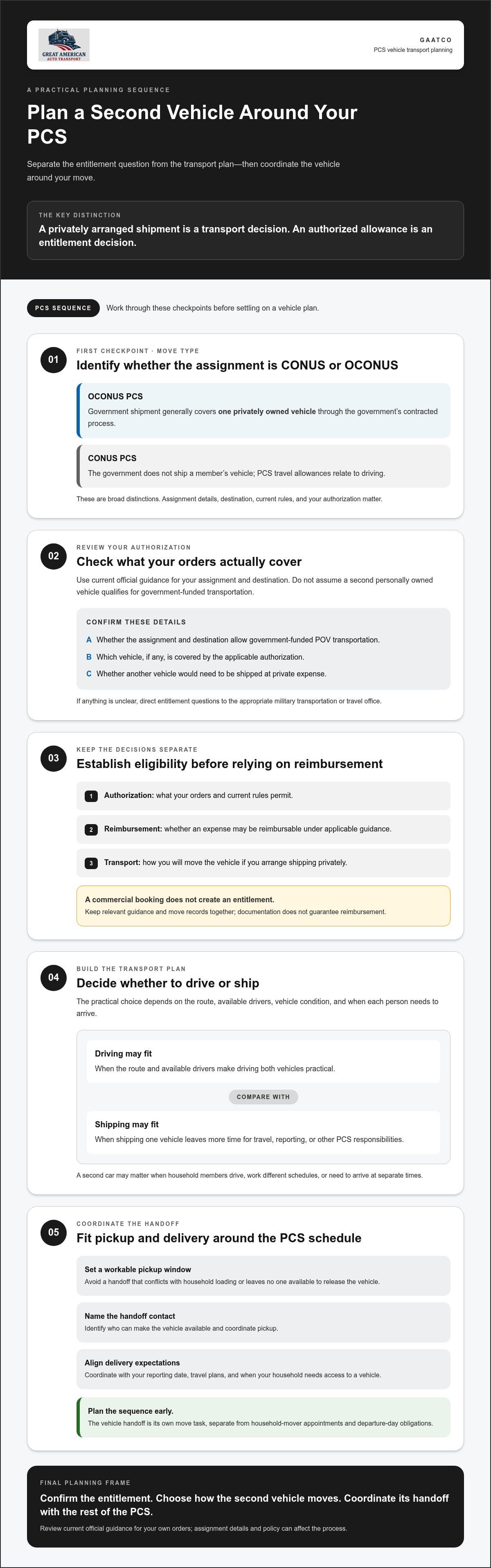
A Permanent Change of Station (PCS) is a relocation tied to a service member’s assignment. The transport plan for a second vehicle and the question of military-funded eligibility are separate matters. A privately arranged shipment is a transport decision; an authorized allowance is an entitlement decision.
Before choosing how to move the vehicle, consider when your household will need access to it. For example, a pickup during household loading may leave no one available to coordinate the handoff. Planning the sequence early helps you set realistic expectations for both the vehicle and the rest of the move.
Why a family may need to move a second car
A second car may be important when two household members drive, work different schedules, or need to arrive at separate times. Depending on the route and family’s plans, driving both vehicles may be practical. Shipping one may leave more time for travel, reporting, or other PCS responsibilities. The right choice depends on the number of available drivers, the vehicle’s condition, and when each person needs to arrive.
Planning the second vehicle separately helps keep its handoff from competing with household-mover appointments or a departure day already full of obligations. It also gives the family time to decide who will have access to a vehicle during the transition and when.
What a PCS order does and does not tell you about vehicle shipping
Your orders establish assignment details that help determine eligibility, but you should not assume a second personally owned vehicle qualifies for government-funded POV transportation. Entitlements depend on factors such as assignment type, destination, and current military policy. You can arrange transport privately, but that does not by itself make the expense an authorized allowance.
Before committing to a plan, compare your orders with current official guidance and direct entitlement questions to the appropriate military transportation or travel office. Establish:
- Whether the assignment and destination allow government-funded POV transportation.
- Which vehicle, if any, is covered under the applicable authorization.
- Whether another vehicle would need to be shipped at private expense.
Keeping these questions separate clarifies the next steps: confirm eligibility through official channels, then coordinate any additional shipment around your reporting date, household schedule, and vehicle access needs.
Second POV on PCS orders: separate shipping plans from military entitlements
Before arranging transport for another car, separate three questions: what your orders authorize, whether an expense may be reimbursable, and how you will move the vehicle if you arrange shipping privately. These decisions are related but not interchangeable. A commercial booking does not create an entitlement, and a general description of PCS benefits cannot determine what applies to your orders.
As of October 2026, the broad distinction is between overseas and domestic moves. For an OCONUS PCS, government-funded shipment generally covers one POV through the government’s contracted process. For a CONUS PCS, the government does not ship a member’s vehicle; PCS travel allowances relate to driving. Rules and authorizations depend on the individual move, so review the applicable guidance rather than assuming a second vehicle is covered or categorically ineligible.
Confirm eligibility before relying on reimbursement for transport. Treat this as a planning checkpoint, not an afterthought. A second vehicle may require a privately funded arrangement even when another POV is covered under the PCS authorization.
How to check POV shipment eligibility for your orders
Start with your current orders and the official guidance for your assignment and destination. Identify the type of move, which vehicle the authorization covers, and whether the applicable rules distinguish between driving a POV and shipping it. If anything is unclear, use the appropriate official military transportation or relocation channel for guidance specific to your orders. Keep the information you relied on with your move documents.
Do not treat a general online explanation as a substitute for reviewing your own authorization. Military policy can change, and details such as destination or assignment type can affect the process. The U.S. Army’s vehicle preparation guidelines for PCS can help with shipment preparation. Establish eligibility and funding through current official guidance.
Planning for a privately arranged second-vehicle shipment
If your second car is outside the shipment authorization, add its transport as a separate item in your PCS plan. Set a workable pickup window, identify who can release the vehicle, and align delivery expectations with your travel and reporting schedule. Keep booking documents, receipts, and related records, particularly if official guidance makes them relevant. Documentation helps keep records clear, but it does not guarantee reimbursement.
For a private shipment, choose the transport arrangement based on the vehicle and move logistics. Open transport may suit an everyday car, while enclosed transport is another option. Door-to-door delivery may also help coordinate the vehicle handoff with other scheduled tasks. Once entitlement questions are resolved, plan private vehicle transport as a separate operational step.
Keep the decisions in order: establish what the PCS authorizes, determine whether reimbursement rules apply, then book privately if needed. This makes the budget clearer and reduces the risk of mistaking a transport reservation for official approval.
Ship or drive the second car? Compare the practical PCS options
The right choice depends on more than mileage. Consider who can drive, when each household member must travel, whether the car is ready for a long trip, and how much flexibility your schedule allows. Shipping a second vehicle on military PCS orders can reduce the driving burden. Driving may make sense when a qualified driver is available and the route fits your travel plans.
Use the comparison below to weigh the practical trade-offs. Neither option is automatically simpler. The best fit depends on your route, vehicle, and PCS commitments.
| Factor | Drive the vehicle | Arrange transport |
|---|---|---|
| People and schedule | Requires a driver and time for the road journey. | Requires someone to make the vehicle available for pickup and receive it at delivery. |
| Travel demands | Plan for driving time, rest, lodging, and coordination with other travelers. | Lets the driver focus on other travel or move responsibilities, while pickup and delivery dates still need coordination. |
| Vehicle condition | The car must be suitable for the intended route and road conditions. | Transport may be practical when a long drive is not, but vehicle readiness still matters. |
| Exposure preference | The vehicle is driven on the road. | Open transport carries the vehicle on an open carrier; enclosed transport uses an enclosed carrier. |
When driving the second vehicle may be the better fit
Driving can work well if a household member can make the trip without disrupting arrival or reporting plans. Look beyond the map: account for time behind the wheel, fatigue, overnight stops, and whether the driver needs to travel with the rest of the household. The vehicle’s maintenance condition and expected route conditions also matter. If either raises concerns, reassess before committing to a long drive.
When arranging open or enclosed transport may make sense
Transport may suit a long route, a tight travel schedule, or a household without another available driver. Open transport is a practical option for many everyday vehicles, although the car is exposed to weather and road conditions during transit. Enclosed transport may suit a vehicle when you prefer an enclosed carrier. Consider the vehicle’s value, your exposure preference, and your budget priorities.
GAATCO arranges both open and enclosed vehicle transport, so you can consider the carrier type alongside your move schedule. Compare the effort and route-related expenses of driving with the shipment plan, then factor in who can manage pickup and delivery. For either method, allow enough flexibility to coordinate vehicle access with travel and reporting commitments.
PCS second-vehicle shipping checklist: coordinate dates, handoff, and contingencies
A sound plan for shipping a second vehicle on military PCS orders starts with the calendar, not the pickup appointment. Reporting dates, household-move milestones, travel plans, and vehicle availability all affect when the car can be released and who can receive it. Map those commitments first, then share accurate details about the route and vehicle so the transport arrangement reflects the actual move.
Build the shipment timeline around PCS dates
Start with the dates you know, then decide where the vehicle shipment fits. A pickup that overlaps with household loading or departure can leave no one available to hand over the car. Delivery also needs a contact at the destination, especially if the service member will be traveling or reporting soon after arrival. Choose locations that are practical and accessible for the carrier rather than assuming a narrow street, gated area, or restricted lot will work.
- Confirm the plan. Establish that the vehicle will be shipped, identify the origin and destination, and keep entitlement decisions separate from the private transport schedule.
- Map the PCS calendar. Record the reporting date, household-mover appointments, planned departure, and the last date you will need the vehicle.
- Set realistic availability. Identify who can provide access at pickup and receive the vehicle at delivery. Build in flexibility instead of relying on one fixed date or assuming travel plans will not change.
- Share accurate shipment details. Provide vehicle information, route, location access details, and availability when arranging transport. Clear details help align the plan with the route and handoff requirements.
- Review delivery and inspect. Arrange for someone to be present at the destination, review the transport paperwork, and document the vehicle’s condition at pickup and delivery.
Prepare the vehicle and plan the handoff
Before pickup, follow the carrier’s instructions for vehicle condition, keys, and access. Confirm where the car can be presented safely and practically, and make sure the person meeting the carrier knows the plan. Photograph the vehicle from several angles and note any existing damage so you have a record to compare at delivery.
- Keep PCS orders, travel documents, and other essential paperwork with you rather than inside the vehicle.
- Remove personal items unless the transport instructions specifically address them.
- Have the keys and required vehicle information ready for the handoff.
- Review the condition record and transport paperwork at pickup and delivery.
Plans can change. If orders, household arrangements, or travel dates shift, promptly communicate the updated information through the transport arrangement and discuss the available options. A change may affect coordination, so do not assume a planned pickup or delivery date will remain workable.
For a move with several scheduled tasks, plan second-vehicle transport around the route, access, and timing.
Arrange second-vehicle shipping for your PCS with GAATCO
Once you have reviewed the applicable entitlement, chosen whether to drive or ship, and identified a workable schedule, the remaining decisions become more focused. For shipping a second vehicle on military PCS orders, start with the route, vehicle details, preferred availability, and carrier service that suits your needs.
GAATCO arranges military vehicle shipping with open and enclosed transport options, as well as door-to-door delivery. Open transport can be a practical choice for an everyday vehicle, while enclosed transport offers an alternative when limiting exposure is a priority. With more than 20 years of industry experience and licensed and insured carriers supporting its services, GAATCO coordinates vehicle transport as a distinct part of your move.
What information helps shape a PCS vehicle transport plan
Useful details help shape a transport plan around your vehicle and PCS schedule. Gather the vehicle’s year, make, model, and condition, along with the pickup origin, destination, and preferred availability. If your reporting date, household-mover appointment, or departure creates a narrow handoff window, share that constraint early. Accurate information supports a clearer plan and transparent pricing.
- Vehicle: Year, make, model, and condition.
- Route: Pickup origin and delivery destination, including practical access details.
- Schedule: Pickup and delivery availability, plus relevant PCS commitments.
- Service preference: Open or enclosed transport, and whether door-to-door delivery suits the locations.
These details keep the shipment discussion specific. For example, a vehicle needed until shortly before departure has a different pickup constraint from one that can be released earlier. Sharing that distinction at the outset helps shape a plan around the wider schedule.
Set clear expectations before the vehicle is picked up
Before pickup, review the arranged service, locations, timing details, and transport paperwork. Confirm who will provide access and receive the vehicle, and keep essential PCS documents separate from the car. Route conditions and shipment coordination can affect timing, so leave room for flexibility and communicate promptly if orders or travel plans change.
GAATCO arranges vehicle transport. Military-funded POV eligibility is determined by current official guidance and your orders. Household-goods arrangements are separate from the vehicle shipment plan. Keeping these responsibilities distinct helps clarify who is coordinating each part of the PCS.
When you are ready to plan the vehicle’s route and handoff, review vehicle shipping options with the vehicle and schedule details available. A well-defined starting point makes the next transport decisions more straightforward.
Give your PCS vehicle plan a clear next step
A smoother transition often comes down to having one person responsible for shipment details and handoff communication. Once your move dates and vehicle availability are taking shape, capture the route, vehicle information, and scheduling constraints in one place. That gives you a practical starting point for shipping a second vehicle on military PCS orders without letting transport become another moving-day unknown.
With those details ready, you can arrange transport that suits your vehicle and schedule. GAATCO brings more than 20 years of vehicle transport experience and works with licensed and insured carriers, with open and enclosed transport options.
Request a vehicle shipping quote for your PCS move with your route and vehicle details. A considered plan can help you approach the next stage of your PCS with greater clarity.
Frequently Asked Questions
Will the military pay to ship a second vehicle during a PCS move?
Usually, government-funded shipment is limited to one POV for an overseas PCS, while a CONUS move does not include government shipment of a vehicle. Budget for a second car as a private shipment unless your orders and current official guidance specifically authorize otherwise. A driving allowance or transport booking does not establish shipment reimbursement eligibility, so verify the applicable rules before making financial plans.
Can I ship a second car if my PCS orders authorize one POV shipment?
Yes, you can arrange private transport for another car, subject to the destination’s requirements and the transport arrangement. Authorization for one POV does not automatically extend government funding to a second vehicle. Before booking, clarify which car the authorization covers and whether a separate policy applies to your assignment. Treat the second shipment as privately funded unless official guidance for your orders states otherwise.
Is it better to drive or ship a second vehicle during a PCS?
Choose based on who can drive, the route, and the vehicle’s readiness. For example, if both adults need to travel together and no other driver is available, shipping may avoid splitting the household’s travel plan. Driving can work if a driver has enough time and the car is ready for the route. Consider fatigue, overnight stops, and commitments soon after arrival.
How far in advance should I arrange second-vehicle shipping for a PCS?
During peak PCS season, May through August, plan to arrange private transport about five to six weeks ahead when possible. This allows more time to coordinate around busy schedules, but does not guarantee a particular pickup date. At other times, begin once your route and vehicle availability are clear. Share any firm departure or reporting constraints when requesting a quote.
Can my second vehicle be picked up before I leave for my new duty station?
Yes, pickup can be planned before your departure if the vehicle is available and someone can complete the handoff. Choose a date that does not conflict with household loading, final errands, or travel preparations. If you will be away, arrange in advance for a trusted person to provide access and handle the pickup paperwork. Include the preferred pickup window in the shipment plan.
Is open-carrier transport suitable for a daily-use vehicle during a PCS move?
Open-carrier transport is a practical option for many everyday vehicles. The car travels on an open carrier, so it is exposed to weather and road conditions during transport. If you prefer an enclosed carrier or have a vehicle with particular value or care considerations, compare enclosed transport as well. The choice depends on your vehicle and exposure preference, not a universal rule.
What information do I need to arrange transport for a second PCS vehicle?
Have the vehicle’s year, make, model, and condition ready, along with pickup and delivery locations and your preferred availability. Note access restrictions, who can meet the carrier, and any PCS dates that limit the handoff. GAATCO arranges transport for PCS moves involving Atlanta, Miami, New York, Houston, Dallas, San Diego, San Francisco, Seattle, Orlando, Boston, Nashville, Denver, Austin, Chicago, Las Vegas, and Phoenix. Share accurate details to help define the transport plan.


