

Hiring someone to drive your car may seem like the more direct choice, but it can leave you coordinating the journey as well as the vehicle. The decision between shipping a car vs hiring a long-distance driver comes down to how you want the car moved, whether you need it along the way, and how each option fits your schedule. Either can work, depending on your priorities.
Look beyond the initial quote or the apparent simplicity of a drive. A driving plan involves coordinating the driver, the route, and travel arrangements. Shipping means arranging pickup and delivery, then planning around the vehicle’s arrival. This guide compares the practical effort, vehicle use, and cost considerations of both arrangements so you can make an informed choice. You’ll also learn how nationwide auto transport, door-to-door service, open transport, and shipment tracking can support a more manageable relocation.
Key Takeaways
- A carrier transports your vehicle, while a hired driver takes it on the road.
- Compare shipping a car vs hiring a long-distance driver based on your route, schedule, and full travel arrangements, not a mileage rule.
- Include coordination and vehicle use in your decision, not just the initial transport quote or driving plan.
- Decide whether you need the car during the journey or would prefer it transported separately.
- GAATCO’s nationwide carrier service, door-to-door pickup and delivery, and real-time shipment tracking can support a more manageable relocation.
Shipping a Car vs. Hiring a Long-Distance Driver: What Is the Difference?
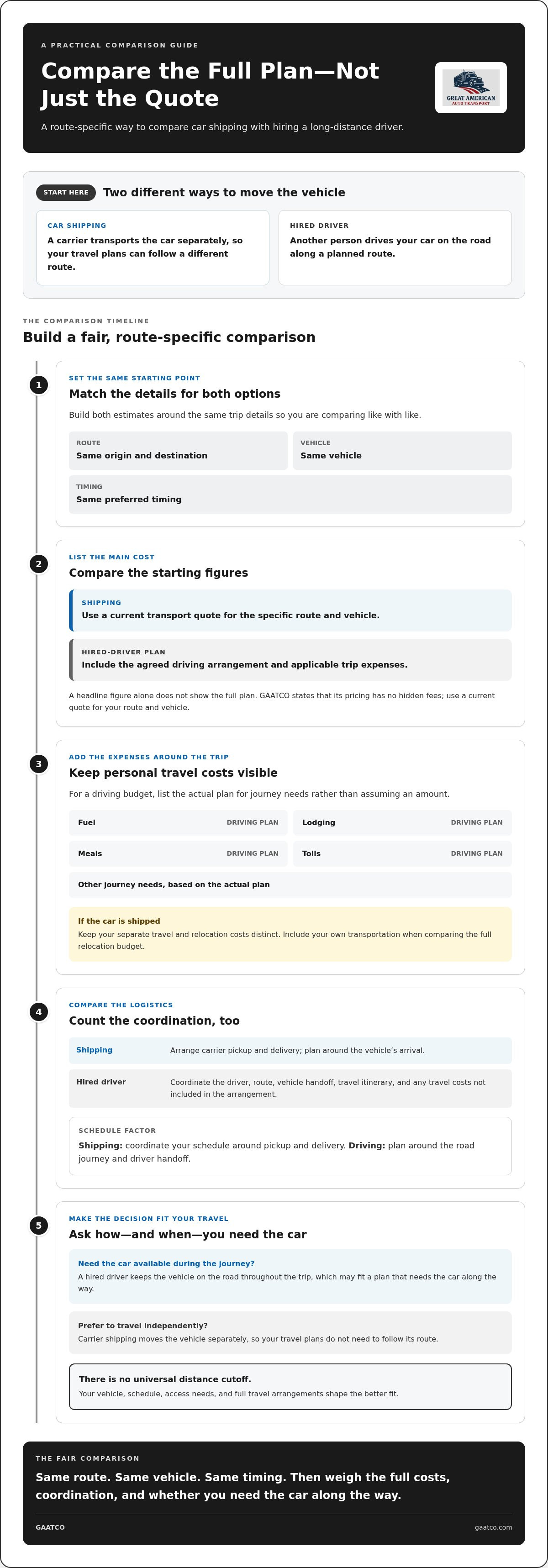
The core difference is how the vehicle gets to its destination: a carrier transports it separately, or another person drives it along your route. These are two different logistics plans, not simply two ways to make the same road trip. Much like evaluating dedicated haulage vs shared freight in broader transport planning, deciding between an exclusive driver and a multi-vehicle carrier comes down to balancing control, timing, and shared capacity. With carrier transport, you and the vehicle can travel independently. With a hired driver, the vehicle is driven on the road throughout the journey.
This distinction matters when you are relocating, coordinating travel for a household, or moving a car you would rather not drive across the country. To compare shipping a car vs hiring a long-distance driver, start with three questions: Will you need the car during the trip? How do you want to travel? How much of the route and handoff coordination do you want to manage? Your answers help narrow down the arrangement that fits.
What happens when you ship a car?
Car shipping moves a vehicle on an open or enclosed carrier. Open carriers have visible vehicle platforms, while enclosed carriers surround the vehicles during transport. A car carrier trailer transports the vehicle rather than having it driven under its own power, so you can make separate travel arrangements. GAATCO provides nationwide transport through licensed and insured carriers, and vehicles are fully insured during transport.
GAATCO’s Open Car Transport Services are suited to standard vehicle relocation, while enclosed transport is another option. The right arrangement depends on your vehicle and priorities. Door-to-door service provides pickup and delivery without terminal visits, helping you plan the handoff around your move. Explore GAATCO’s vehicle transport services to compare the carrier options.
What does hiring a long-distance driver involve?
Hiring a long-distance driver means arranging for another person to drive your vehicle along a planned route. The defining point is that someone other than you makes the trip in your car. This differs from self-driving, where you control the route and driving schedule yourself.
The vehicle remains on the road throughout the journey. That can suit a plan where you want the car available along the way, but it also means coordinating the driver, vehicle handoff, and travel itinerary. With carrier shipping, the vehicle moves separately, so your own travel plans do not need to follow its route.
Consider a relocation where you are flying to a new city. A carrier can move the car while you travel independently. If you hire a driver, the car travels by road and you will need to coordinate your own travel around that arrangement. If having the vehicle available during the journey is central to your plans, a driver may fit better. Compare the options based on how you intend to travel and use the car, rather than assuming one is always preferable.
Compare the Overall Cost of Shipping a Car vs. Hiring a Driver
A fair comparison starts with the complete plan, not a headline figure. A carrier quote covers the vehicle transport arrangement. A driving budget should reflect the agreed driving plan and the travel expenses assigned to you. Keep your own travel costs separate if you will be making the journey independently.
GAATCO provides transparent pricing with no hidden fees. Use a current quote for your route and vehicle rather than relying on an online average that may not reflect your plans. The GAATCO auto transport services page outlines the carrier options you can compare.
Which expenses belong in a fair comparison?
Separate the transport quote from the expenses attached to your travel plan. A driver’s arrangement may include agreed compensation and trip-related costs, depending on the terms. For a driving budget, list the actual plan for fuel, lodging, meals, tolls, and other journey needs instead of relying on an assumed amount. For road-trip preparation and vehicle safety guidance, consult the National Highway Traffic Safety Administration (NHTSA).
Use the same categories for both options where possible, but do not combine unrelated costs just to produce one figure. If you will travel separately while the vehicle is shipped, include your transportation only when comparing the full relocation budget. If you will travel with the hired driver, account for how that changes your personal travel arrangements.
How should you compare options for your route?
Build both estimates around the same origin, destination, vehicle, and preferred timing. Then compare the arrangements side by side:
| Factor | Car shipping | Hired-driver plan |
|---|---|---|
| Starting figure | Current transport quote for the route and vehicle | Agreed driving arrangement and applicable trip expenses |
| Personal budget | Your separate travel and relocation costs | Travel costs not included in the driving arrangement |
| Time | Coordinate your schedule around vehicle pickup and delivery | Plan around the road journey and driver handoff |
| Coordination | Arrange carrier pickup and delivery | Align route, access to the vehicle, and travel plans |
A route-specific comparison is more useful than a universal distance cutoff because your vehicle, schedule, and travel arrangements shape the overall plan. The same route can lead to different decisions depending on whether you need the car during the trip or can travel separately. Compare the figures alongside the coordination each option requires, then request a tailored vehicle transport quote to assess the shipping option.
Compare the Logistics, Vehicle Use, and Peace of Mind
Both arrangements move a car to a new location, but they differ in access and coordination. With a hired driver, the vehicle is part of the road journey and follows the planned route. With carrier transport, the car travels separately, allowing you to make your own travel arrangements without driving it across the route.
How do the options differ in day-to-day coordination?
A hired-driver plan involves coordinating the driver, vehicle handoff, route, and timing. If your move includes several stops or your schedule changes, you will need to align those details with the road journey. The key question is whether you need the car available during the trip, not only at your destination.
Carrier transport shifts the coordination to pickup and delivery rather than managing a road trip. GAATCO’s door-to-door service provides pickup and delivery without terminal visits, which can simplify the handoff. GAATCO also provides real-time shipment tracking, so you can follow shipment progress without traveling alongside the vehicle.
Think through a typical day during your move. If you need the car to carry belongings or make stops along the way, having someone drive it may fit your plan. For coordinating smaller loads separately rather than packing the vehicle, moving resources from Fool Movers offer helpful tips on organizing a streamlined move. If you are flying or using another form of transportation and do not need the vehicle en route, carrier pickup and delivery can fit more easily around your itinerary. GAATCO offers open and enclosed carrier options.
What does peace of mind mean in each arrangement?
Reassurance can come from different parts of the plan. A driver arrangement puts someone behind the wheel, while your experience depends on the agreed itinerary and communication. Before the journey, make the handoff, route, and update expectations clear with the person driving.
GAATCO arranges nationwide vehicle transport through a network of licensed and insured carriers, and vehicles are fully insured during transport. This provides a defined framework for carrier transport. For broader context on transportation policy and oversight, readers can consult the U.S. Department of Transportation (DOT).
Shipment tracking lets you follow the vehicle’s transport progress. With a hired driver, the vehicle travels on the road, but you do not necessarily accompany it. That difference can guide your decision if you value independent travel, access to the car along the route, or a separation between your journey and the vehicle’s movement. In the comparison of shipping a car vs hiring a long-distance driver, choose the arrangement that provides the right balance of access and coordination for your move.
Choose the Right Option for Your Route, Schedule, and Vehicle
Use the details of your move to make the decision instead of treating distance as a rule. A route between Atlanta and Miami, for example, can suit either arrangement depending on your schedule, travel plans, and need for the car along the way.
Work through these questions in order:
- Set the route. Identify the pickup and destination locations, plus any stops that matter. A driver follows a planned road itinerary, while carrier transport is arranged around vehicle pickup and delivery.
- Fix your schedule. Consider when you need to travel and when you need access to the car. If you choose shipping, plan your travel separately from the vehicle’s movement.
- Decide whether you need the car en route. If you need it at intermediate stops, a driver may fit your plan. If you can travel separately and only need the vehicle at the destination, compare carrier transport.
- Account for the vehicle’s needs. Consider whether open or enclosed transport is relevant to your vehicle and priorities. Compare the options against those needs instead of choosing a transport type by default.
When might a hired driver fit your move?
A hired driver may suit an itinerary where the vehicle needs to remain available at each stop, such as a move that includes visits to several locations before reaching the destination. Set out a clear road plan: who will drive, where the car needs to go, and how the journey fits your schedule. The choice rests on that practical need, not on an assumption that driving is cheaper, faster, or safer.
When might shipping fit your move?
Shipping may fit if you prefer your car to travel separately while you make your own journey by air or another means. GAATCO provides door-to-door pickup and delivery, along with real-time shipment tracking, to support a coordinated relocation. Compare the available auto transport services with your route and vehicle requirements.
For an Atlanta-to-Miami move, ask whether you will need the car for stops between those cities or whether reaching your destination independently works better. If the vehicle’s needs make carrier type relevant, include open and enclosed transport in your comparison. The right choice in shipping a car vs hiring a long-distance driver is the one that fits how you intend to travel and use the vehicle.
Once you know your route, schedule, and vehicle priorities, request a tailored transport quote to compare the shipping option with your driving plan.
Arrange Nationwide Car Shipping with GAATCO
Carrier transport may suit your plans if you would rather not put the full journey on your vehicle, do not need it at stops along the route, or prefer to travel separately. The choice depends on how you want to manage your schedule, vehicle access, and logistics.
GAATCO provides nationwide vehicle transport through licensed and insured carriers. Vehicles are fully insured during transport, and door-to-door pickup and delivery helps organize the handoff without terminal visits. Real-time shipment tracking lets you follow shipment progress while your own itinerary remains separate.
What should you expect when arranging GAATCO transport?
Start with the vehicle and route you have in mind. GAATCO provides a tailored quote with transparent pricing and no hidden fees. To move from comparing options to reviewing a transport plan, request an auto transport quote.
Have a few practical details ready to make your request specific. Note the vehicle’s make, model, and condition, along with the pickup and delivery locations and your preferred timing. If you are weighing open and enclosed transport, consider whether the vehicle’s characteristics or your priorities make that distinction relevant. The goal is to assess an arrangement that fits your circumstances, not to select a carrier option by default.
How can readers take the next step?
Before requesting a quote, gather the key information you have already used to compare shipping with a driver:
- The vehicle you need transported and any relevant details about its condition
- The origin and destination for pickup and delivery
- Your preferred schedule and whether you need the car during the journey
- Any preference for open or enclosed transport based on the vehicle’s needs
This gives your comparison a practical foundation. If carrier transport fits your priorities, GAATCO’s nationwide service, door-to-door coordination, and real-time shipment tracking can support a relocation in which the vehicle travels separately from you.
The choice between shipping a car vs hiring a long-distance driver depends on the role you need the vehicle to play in your move. If you are ready to consider carrier transport, explore nationwide auto transport and take the next step with your route and vehicle details in hand.
Make Your Next Move with Confidence
Before committing to either arrangement, write down what matters most for this move: keeping the car available along the way, keeping your own travel plans flexible, or reducing the coordination you manage. That priority can make the choice clearer than a mileage rule. With shipping a car vs hiring a long-distance driver, the best fit is the plan that works with how you intend to travel and use your vehicle.
If transporting the car separately aligns with your plans, review the route and vehicle details you have gathered. A considered choice can make the move easier to organize and reduce competing logistics as your plans come together.
Explore nationwide auto transport with GAATCO and move forward with a plan that suits your needs.
Frequently Asked Questions
Is shipping a car better than hiring a long-distance driver?
Neither option is best for every trip. When deciding shipping a car vs hiring a long-distance driver, consider whether you want the vehicle available for stops or prefer to travel separately, then match that preference to your schedule. Compare the same origin, destination, vehicle, and timing for both plans. A mileage rule cannot account for the details of your arrangements.
Can I hire someone to drive my car across the country?
Yes, you can arrange for another person to drive your car across the country. The person takes the road route rather than transporting the vehicle on a carrier, so the arrangement and timing depend on your itinerary and coordination. This is separate from GAATCO’s carrier-based auto transport service. Moves involving Atlanta, Miami, New York, Houston, Dallas, San Diego, San Francisco, Seattle, Orlando, Boston, Nashville, Denver, Austin, Chicago, Las Vegas, or Phoenix can be planned around your transport needs.
How much does it cost to ship a car compared with hiring a driver?
A useful comparison requires your route, vehicle, and specific driving arrangement alongside a current transport quote. A general online figure cannot account for the details of your trip or the terms arranged with a driver. GAATCO provides transparent pricing with no hidden fees. Compare both plans using the same route and timing, and consider the complete arrangements rather than relying on a broad average.
Is shipping a car easier during a long-distance move?
Shipping can simplify your own travel if you do not need the car along the way, while a hired driver makes the road journey in your vehicle. The easier option depends on whether you need the car for stops and how you prefer to coordinate travel. GAATCO’s door-to-door pickup and delivery can organize the vehicle handoff without terminal visits while you make separate travel arrangements.
Can I track my car while it is being shipped with GAATCO?
Yes, GAATCO provides real-time shipment tracking. You can follow the shipment’s progress while your vehicle travels separately, which is useful if you are already at your destination or managing a move from another location.
Is my vehicle insured during transport with GAATCO?
Yes, vehicles are fully insured during transport with GAATCO. The company works with a nationwide network of licensed and insured carriers. If you are comparing arrangements, include this transport detail alongside your own priorities and travel plans.
Should I choose open or enclosed transport for a long-distance move?
GAATCO offers both open and enclosed transport, and the suitable option depends on your vehicle and preferences. Consider the vehicle’s needs and which transport arrangement aligns with them, rather than assuming one type is right for every move. When requesting a route-specific quote, include your vehicle details and whether you are considering open or enclosed transport.


