
Could a small piece of road debris leave a lasting mark on your windshield during transport? If you're asking what is the risk of windshield damage on an open car carrier, the practical answer is that exposure to road debris and weather creates a real possibility of a chip or crack, but damage is not inevitable. The risk cannot be judged from the transport method alone. If you notice a mark at delivery, a clear record of the vehicle’s condition can help you compare it with its pre-shipment state.
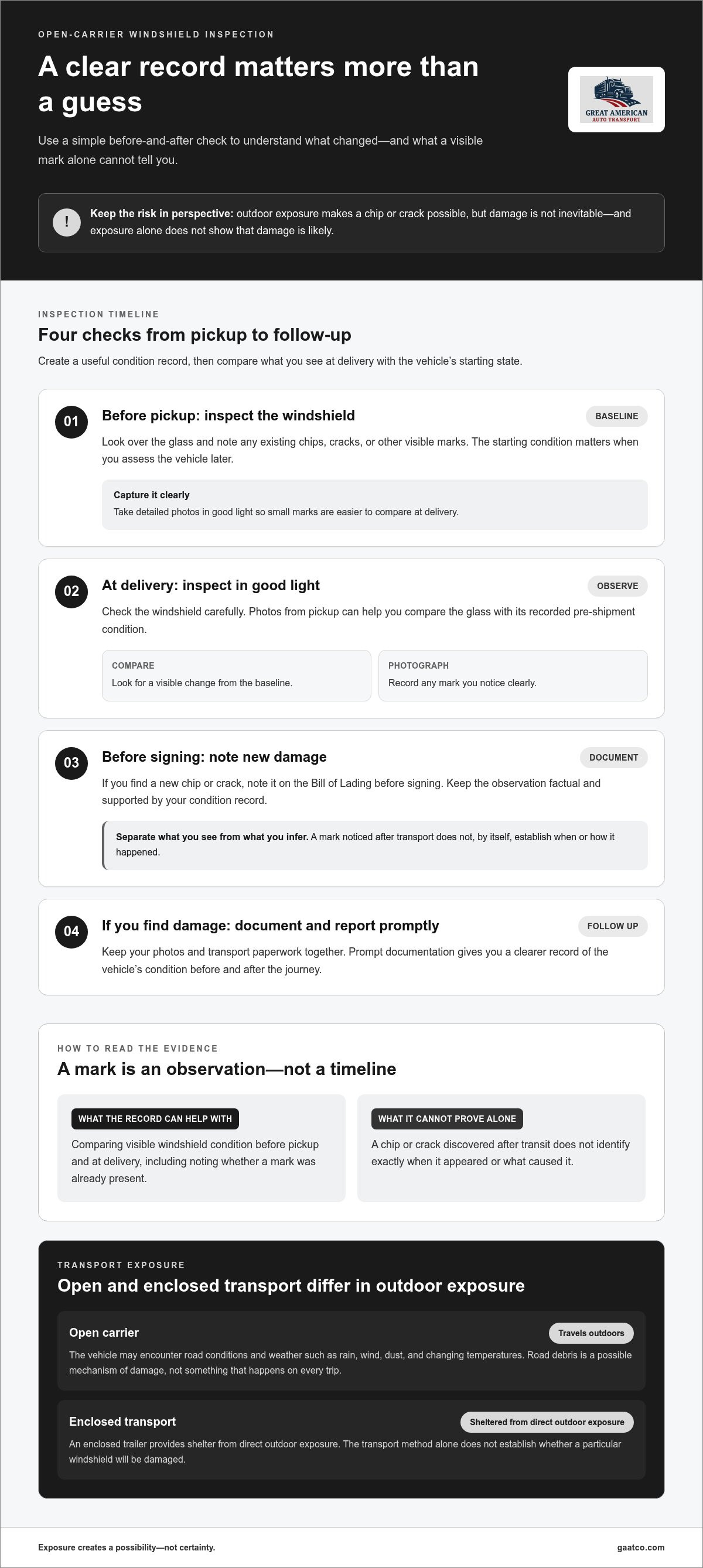
Before pickup, inspect the windshield and take detailed photos to establish a baseline. At delivery, compare the glass with that record, inspect it in good light, and note any new damage on the Bill of Lading before signing. If you find a chip or crack, document and report it promptly.
This article explains how road debris, weather, and existing damage factor into open-carrier exposure, and what to do if you notice a change. It also compares open transport with enclosed transport, which shelters a vehicle from direct outdoor exposure.
Key Takeaways
- Understand what is the risk of windshield damage on an open car carrier, and why outdoor exposure creates a possibility rather than a prediction of damage.
- Learn how to distinguish visible windshield damage from assumptions about when or how it occurred.
- Compare open and enclosed transport to decide which level of exposure protection better suits your vehicle.
- Follow a clear inspection sequence before pickup and at delivery to create a useful record of your vehicle’s condition.
- See how GAATCO’s nationwide open transport uses licensed and insured carriers, with vehicles fully insured during transport.
What Is the Risk of Windshield Damage on an Open Car Carrier?
An open carrier transports vehicles on an exposed trailer, where they encounter outdoor weather and road conditions. That exposure means a windshield could be struck by a road object, but it does not mean damage will occur. If you're asking what is the risk of windshield damage on an open car carrier, the answer depends on the vehicle’s condition and the circumstances of its journey, not simply on the fact that it travels on an open trailer.
A chip or crack discovered after delivery does not, by itself, establish when it happened. A clear inspection record from pickup, compared with the vehicle’s condition at delivery, can help distinguish existing marks from changes noticed after transport. The Windshield reference offers background on windshield construction and safety, which can be useful context when assessing visible glass damage.
What does an open car carrier expose a vehicle to?
The vehicle travels outdoors rather than inside an enclosed trailer. Depending on the journey, it may encounter rain, wind, dust, changing temperatures, and ordinary road conditions. The windshield shares this general exposure with other outward-facing surfaces, though glass damage may appear as a chip or crack rather than a mark on the paint.
Road conditions vary along a route. For example, a small object from the roadway could strike the windshield, but this is a possible mechanism, not something that happens on every trip. Weather and road conditions also differ from one journey to another, so it would be inaccurate to assume every carrier encounters debris or severe weather.
Does open transport mean windshield damage is likely?
No. Exposure alone does not establish that a windshield will be damaged. A vehicle can complete an open-carrier journey without a chip or crack, while the possibility of damage remains part of traveling outdoors. Without a documented basis for estimating the likelihood of damage on an individual trip, a percentage would create false precision.
Exposure creates a possibility of windshield damage, not certainty.
Assessing a particular vehicle requires more than noting that it traveled on an open carrier. Its starting condition matters: a small existing chip, for instance, should be recorded so it is not later mistaken for a new mark. The journey’s circumstances matter too, although a newly observed crack alone cannot identify exactly when or why it appeared.
That is why inspection records are useful. A thorough pickup inspection establishes the condition noted before transit; a careful delivery inspection lets you compare that record with what is visible afterward. Photos taken in good light add detail, especially when a mark is small or difficult to see from one angle. These records do not predict damage, but they provide a clearer basis for understanding the vehicle’s condition before and after the journey.
In short, open transport involves outdoor exposure, while the windshield’s actual condition must be assessed vehicle by vehicle. A measured view of the risk recognizes both points: damage is possible, but exposure alone is not evidence that it is likely or inevitable.
How Can a Windshield Be Damaged During Open Vehicle Transport?
Windshield damage can have several possible explanations, but a mark noticed after delivery does not identify its cause by itself. During open vehicle transport, the car travels outdoors, so the windshield is exposed to surrounding road and weather conditions. A road object could strike the glass, for example, but without supporting evidence, it would be premature to conclude that a particular object, weather event, loading step, or handling action caused a crack or chip.
Road debris, weather, and other possible exposures
Loose material on a roadway may be displaced by passing traffic and, in some circumstances, reach a vehicle’s windshield. This is one possible exposure, not an event to expect on every route. Rain, wind, dust, and temperature changes are also part of outdoor travel, but their presence alone does not show that they caused glass damage.
Consider a vehicle that arrives with a small mark near the edge of the windshield. The mark is observable, but its timing and cause may not be apparent. It could have been present before pickup or appeared during the journey. The mark’s position and appearance, along with the condition recorded at pickup and delivery, can help clarify what changed. A visual observation alone may not establish how it happened.
For the same reason, do not treat the transport sequence as proof of cause. A chip found after transit does not establish that loading or handling created it. Nor does a rainy day, by itself, establish that weather caused a crack. Keeping observations separate from conclusions makes the condition record more precise and any later discussion more constructive.
Why pre-existing chips and cracks matter
A small chip can be easy to overlook before a vehicle is shipped, yet it matters when comparing the vehicle’s condition later. If a mark already existed, a delivery inspection may show that it remains unchanged, looks different, or is accompanied by additional visible damage. The inspection record and clear images provide context, not a diagnosis of how the glass changed.
Before pickup and again at delivery, photograph the windshield in good light. Take a wider photo showing where a mark sits in relation to the vehicle, followed by closer views from more than one angle. Keep the images dated and retain them with the transport paperwork. If there is no visible damage, clear photographs can still help document the windshield’s condition at that point in time.
Photographs support a condition record, but they do not independently determine responsibility. Their value comes from making a comparison possible alongside inspection documentation and other available information. If you are planning an open-carrier shipment, GAATCO’s open car transport is available nationwide across the United States, with vehicles fully insured during transport.
Open vs. Enclosed Car Transport: How Do Windshield Risks Differ?
Choosing between open and enclosed transport is a decision about exposure, not a promise of a damage-free journey. An open carrier moves vehicles in the open air, while an enclosed carrier transports them inside a trailer. The practical difference is how much the vehicle is sheltered from outdoor conditions during transit.
| Consideration | Open car transport | Enclosed car transport |
|---|---|---|
| Transport format | Vehicle travels on an open trailer. | Vehicle travels inside an enclosed trailer. |
| Exposure | Exposed to outdoor weather and road conditions. | Sheltered from direct outdoor exposure during transit. |
| Owner priority | May suit owners comfortable with the vehicle traveling outdoors. | May suit owners who place greater importance on shelter from outdoor conditions. |
When may open transport suit your needs?
Open transport may be a reasonable fit if you are comfortable with your vehicle traveling outdoors and accept that weather and road conditions are part of the journey. The relevant question is not whether an open carrier eliminates the possibility of a chip or crack. It does not. Instead, consider the vehicle’s condition, its value to you, and your comfort with that exposure.
For example, an owner moving a regularly driven vehicle may weigh the open-air format differently from someone transporting a vehicle whose original finish and condition are especially important to preserve. These are individual priorities, not fixed rules about which method suits a particular type of car. If outdoor exposure feels acceptable for your circumstances, open transport is an option to consider.
When should you consider enclosed transport?
Enclosed transport is an alternative for owners who want their vehicle carried inside a trailer and sheltered from outdoor exposure. That shelter may matter if you are transporting a high-value, classic, or carefully maintained vehicle and prefer to reduce direct exposure to weather and road conditions.
Enclosed transport should not be understood as eliminating every possible source of damage. The choice is about the level of exposure you are comfortable with, balanced against the vehicle’s condition and your protection priorities. For readers asking what is the risk of windshield damage on an open car carrier, this comparison clarifies that the open format involves outdoor exposure, while an enclosed trailer provides shelter from it.
GAATCO offers both open and enclosed transport nationwide across the United States. Reviewing the available car transport service options can help you align the transport format with your priorities. Consider the vehicle’s current condition, how much shelter you prefer, and which trade-off feels right for your shipment.
What Should You Do Before Pickup and When Your Car Is Delivered?
A consistent inspection process gives you a clearer record of the windshield’s condition at both ends of the journey. Before pickup, photograph the glass and review the condition record. At delivery, inspect the windshield before completing the paperwork, document any change you see, and keep the records together. This sequence helps separate what you observed from assumptions about when damage may have occurred.
How to document windshield condition before pickup
Before pickup, take clear, dated photos in good light. Include one image that identifies the vehicle and shows the full windshield, then take closer views of any existing chips or cracks from several angles. Review the pickup inspection record to ensure it reflects the visible condition. If you notice an omission or discrepancy, raise it before the vehicle departs so the record can be addressed at pickup.
Keep the original image files and a copy of the pickup record. A useful set of photographs shows both context and detail: a close-up may reveal a small mark, while a wider view indicates its location on the windshield. If a mark is already present, record it plainly rather than describing it as new or predicting whether it will change.
What to do if you find damage at delivery
Before signing the delivery paperwork, inspect the windshield in good light. Compare it with your pickup photos and inspection record. If you see a chip, crack, or other change, photograph it clearly from more than one angle and make a factual note in the delivery record before signing, where applicable. Describe what you can observe, such as the location and appearance, without guessing at the cause.
Then report the concern through the appropriate transport contact and retain copies of the delivery record, pickup inspection, photographs, and related transport documents. Keep the original files where possible. A calm, organized account makes it easier to explain what you noticed and when. Photographs and paperwork support the record, but they do not by themselves establish the cause of damage or determine responsibility.
If you are weighing what is the risk of windshield damage on an open car carrier, documentation is one practical way to manage uncertainty. It cannot prevent a chip or prove exactly when one appeared, but it gives you a meaningful before-and-after comparison. Follow the same steps even if the windshield looks unchanged at delivery: complete the inspection, retain the paperwork, and store the photos with your shipment records.
For open car transport with clear planning and vehicle condition documentation, plan your vehicle transport with GAATCO.
How GAATCO Helps You Plan Open Car Transport with Clear Expectations
Understanding what is the risk of windshield damage on an open car carrier helps set realistic expectations, but transport planning matters too. GAATCO offers Open Car Transport Services nationwide across the United States, with door-to-door pickup and delivery. Vehicles travel on open carriers and remain exposed to outdoor conditions, so consider that format alongside your vehicle’s condition and your preferences.
What to expect from GAATCO's open transport service
GAATCO works with a nationwide network of licensed and insured carriers, and vehicles are fully insured during transport. These facts are useful context for planning, but they do not determine the outcome of a damage concern. Careful condition documentation before pickup and at delivery remains a practical step for owners.
Real-time shipment tracking is provided, giving customers visibility into the shipment as it progresses. Tracking helps you follow transport progress; it is not a promise of a particular delivery time or protection against damage. Door-to-door service and tracking make the logistics easier to follow, while a clear inspection record keeps the vehicle’s condition in view.
GAATCO also offers Enclosed Car Transport for customers who prefer their vehicle to travel inside a trailer, sheltered from direct outdoor exposure. The right format depends on your priorities. Reviewing the open and enclosed transport services can help you compare the options and decide which better suits your vehicle and comfort with outdoor exposure.
How to take the next step with confidence
Before requesting a quote, gather the information needed to describe your shipment accurately: the vehicle’s make and model, its current condition, pickup and delivery locations, and your preference for open or enclosed transport. Mentioning a windshield chip or crack at the outset keeps the vehicle’s starting condition clear as you plan. You can also prepare photos and inspection notes for your records.
GAATCO provides transparent pricing with no hidden fees. A quote lets you review the transport details and understand the proposed arrangement without relying on a generic estimate.
To plan your vehicle shipment, request an auto transport quote and share your transport needs. With the service format, route, and vehicle condition clearly in view, you can make an informed decision and prepare for the journey with measured expectations.
Plan Your Shipment with Confidence
Knowing what is the risk of windshield damage on an open car carrier can help you make a considered transport decision, but no general explanation can predict the outcome of an individual journey. Match the transport format to your vehicle and your comfort with outdoor exposure, then make time for a careful handoff. A clear record of the vehicle’s condition gives you a practical reference throughout the process.
For added confidence in planning, GAATCO works with a nationwide network of licensed and insured carriers, provides full insurance for vehicles during transport, and offers real-time shipment tracking. These features support a more informed shipping experience without replacing the importance of your own inspection and records.
Share your route, vehicle details, and transport preferences to begin planning. Request a transparent auto transport quote and take the next step toward a shipment arranged around your needs.
Frequently Asked Questions
Is windshield damage common on an open car carrier?
Windshield damage is possible, but the available information does not establish a reliable rate for open-carrier shipments. The question of what is the risk of windshield damage on an open car carrier cannot be answered with a single likelihood that applies to every vehicle or trip. Route conditions and the windshield’s condition before pickup are relevant context. A newly noticed mark alone does not show when it appeared.
Can road debris crack a windshield during car transport?
Yes. An object displaced on the road could strike a windshield and cause a chip or crack. That is a possible cause, not proof that debris caused a particular mark during transit. If you notice damage, record its location and appearance, then compare it with the vehicle’s earlier inspection information. Avoid attributing the damage to a specific object without supporting evidence.
What happens if I notice a windshield crack after my car is delivered?
Document the crack and report your concern through the appropriate transport contact. If you are still completing delivery paperwork, note the visible damage there before signing, where applicable. Keep copies of the paperwork and photos. Finding a crack after delivery does not establish when it occurred or determine the outcome of a claim. Should repair or replacement become necessary, industry resources like pinnacleautoglassusa.com detail safety standards and installation technology for damaged glass.
Should I photograph my windshield before open car transport?
Yes. Photos taken before pickup give you a useful reference if you later notice a change. Photograph the full windshield and any existing marks, and include a wider view that identifies the vehicle. Keep the original files with their date information rather than relying only on edited or cropped copies. At delivery, matching views make a side-by-side comparison easier, especially for a small chip near the edge of the glass.
Does enclosed car transport prevent windshield damage?
No transport format should be treated as a guarantee against all damage. An enclosed trailer shelters a vehicle from direct outdoor exposure, unlike an open carrier, but that does not establish that every possible source of damage is eliminated. If reducing exposure to weather and road conditions is important to you, enclosed transport is an option to consider. Your vehicle’s condition and protection priorities can help guide that choice.
Can a pre-existing windshield chip become relevant during a transport damage claim?
Yes. A chip documented before pickup can help distinguish an existing mark from damage first observed at delivery. If the chip’s appearance seems different afterward, record what you see and retain both sets of photos and inspection paperwork. The prior mark may be relevant context, but it does not prove whether the glass changed during transport or determine responsibility. Keep descriptions factual and avoid guessing at a cause.
Are vehicles insured during GAATCO transport?
Yes. Vehicles are fully insured during transport with GAATCO. This does not define the handling or outcome of a particular damage concern, so retain your vehicle condition records and transport documents. GAATCO provides nationwide vehicle transport across the United States, including Atlanta, Miami, New York, Houston, Dallas, San Diego, San Francisco, Seattle, Orlando, Boston, Nashville, Denver, Austin, Chicago, Las Vegas, and Phoenix.


