

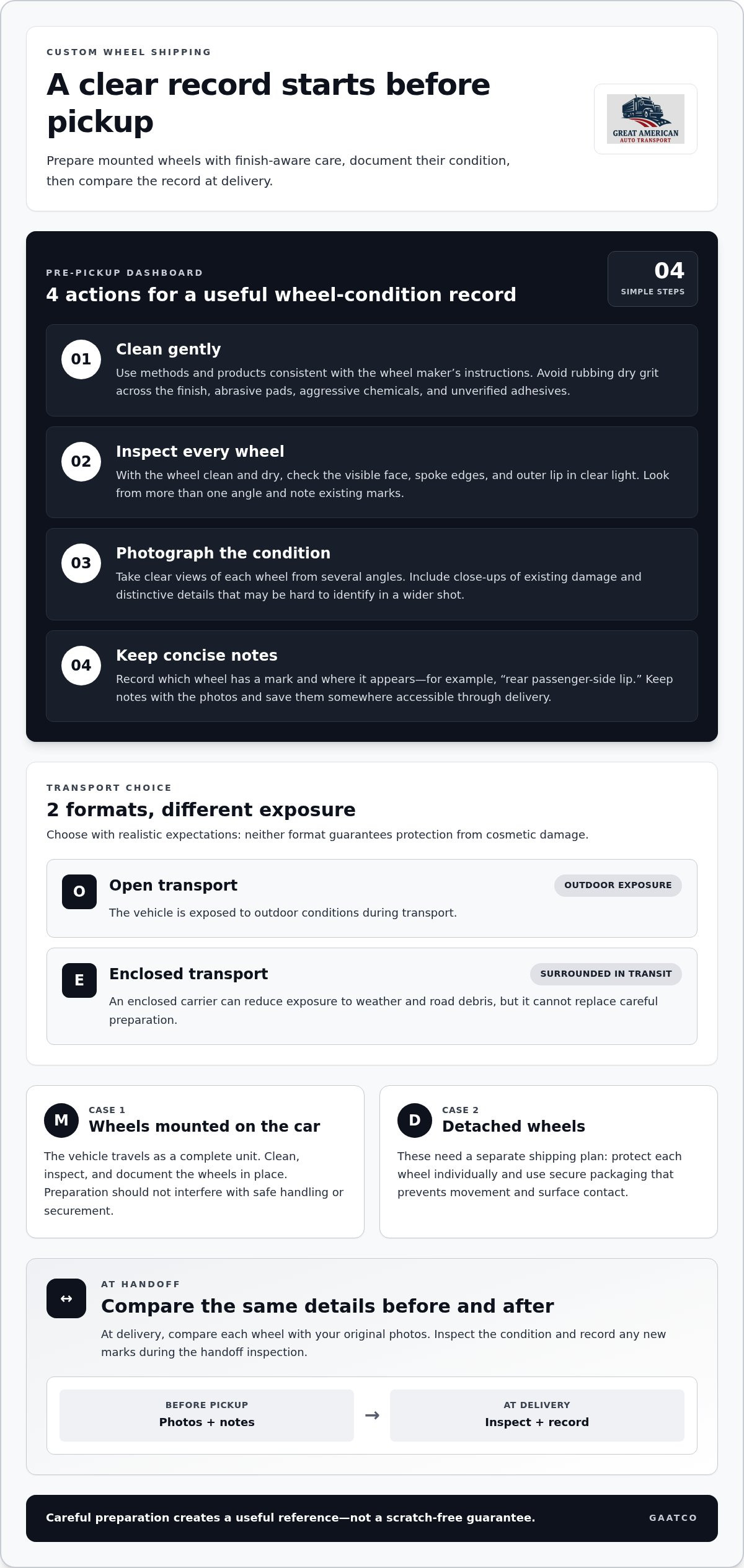
An enclosed carrier can reduce exposure to weather and road debris, but it cannot replace careful preparation. Protecting custom wheels and rims from scratches during shipping starts with understanding the finish, how the vehicle will be transported, and what to document at pickup and delivery.
Polished lips, intricate spokes, and delicate coatings deserve particular attention. Mounted wheels need finish-aware preparation before vehicle pickup, while loose wheels require individual padding and secure packaging. These are different shipping situations, and neither removes the need to consider how a vehicle will be handled in transit.
This guide covers gentle cleaning, what to weigh when choosing open or enclosed vehicle transport, and how to photograph and inspect wheel condition at handoff. A clear record and realistic expectations can help you make an informed transport choice and compare the wheels’ condition before and after the shipment.
Key Takeaways
- Protecting custom wheels and rims from scratches during shipping starts with a plan for mounted wheels. Detached wheels need separate, individual packaging.
- Clean gently, inspect each wheel, and photograph existing marks before pickup. Use only care materials appropriate for the wheel maker’s finish guidance.
- Open transport exposes a vehicle to outdoor conditions, while enclosed transport surrounds it. Neither format guarantees protection from cosmetic damage.
- Compare wheel condition at delivery with your original photos, and record any new marks during the handoff inspection.
- GAATCO arranges nationwide vehicle transport through licensed and insured carriers, with open and enclosed options. Vehicles are fully insured during transport.
Why Custom Wheels Need Their Own Shipping-Preparation Plan
Custom wheels can be a defining part of a vehicle’s appearance, and their shape or finish may make certain areas more noticeable than others. A polished lip, painted face, or sharply defined spoke edge can show a mark that would be less apparent on a standard wheel. Protecting custom wheels and rims from scratches during shipping therefore calls for a plan that considers the wheels, not only the vehicle’s bodywork.
This section focuses on wheels mounted on a car during vehicle transport. The vehicle travels as a complete unit, so preparation centers on documenting and caring for the wheels in place. That is different from shipping detached wheels in parcels. The Custom Wheel Overview provides general background on custom wheel designs and construction. For cleaning and surface care, follow the guidance for your specific wheel finish.
Mounted wheels and separately shipped wheels are different cases
With mounted wheels, the vehicle is transported on a carrier and the wheels remain attached. Before pickup, clean and inspect them, note existing marks, and make visible details easy to assess during the vehicle condition inspection. Preparation should not interfere with safe vehicle handling or securement.
Detached wheels need a separate shipping plan. Protect each wheel individually, use secure packaging that prevents movement and surface contact, and choose parcel handling suited to the wheels’ size and weight. When arranging separate transport for loose components, reliable courier providers such as Sameday Express Inc. can assist with dedicated delivery. Advice for boxing loose wheels does not automatically apply to a car being transported. Keeping these situations distinct helps avoid using packaging materials or techniques on mounted wheels without considering their finish or the vehicle’s transport requirements.
Which custom wheel surfaces are most exposed?
Start by identifying the areas you want to monitor. Depending on the design, these may include a polished outer lip, spoke edges and faces, painted sections, or other distinctive finish details. The wheel’s shape affects which surfaces protrude and are easiest to see, while the finish affects how a scuff, scratch, or change in appearance may stand out. There is no single protective approach that suits every wheel.
Use the wheel maker’s care guidance when choosing cleaning or protective materials. A product or adhesive that suits one finish may not suit another, so do not assume that a coating, film, or wrap is universally safe. If you cannot establish that a material is compatible, do not apply it simply because it is marketed for wheel protection.
Careful preparation can reduce avoidable risks and create a useful reference for the handoff, but it cannot promise scratch-free delivery. Vehicle transport involves loading, securement, and movement in transit. Cosmetic outcomes can depend on circumstances beyond an owner’s preparation. Distinguishing mounted from detached wheels, caring for the finish appropriately, and setting realistic expectations provide a sound starting point.
How to Prepare Custom Wheels Before the Vehicle Is Picked Up
A careful pre-pickup routine gives you a clean surface to inspect and a clear record of each wheel’s starting condition. Keep the process conservative. Wheel finishes vary, so follow the wheel maker’s care guidance instead of choosing a cleaner, polish, film, or cover simply because it is described as suitable for wheels. For vehicle owners seeking professional surface preparation and paint or wheel protection, detailing specialists such as A & M Hamadache Car Detailing illustrate how tailored care preserves sensitive automotive finishes.
Clean and inspect without risking the finish
Begin by removing loose dirt with a method approved for the specific finish. Avoid rubbing dry grit across a polished lip or painted face, and do not use abrasive pads, aggressive chemicals, or unverified adhesive products. Once the wheel is clean and dry, inspect its face, rim edge, and visible spoke surfaces in clear light. Note existing scratches, chips, scuffs, or discoloration before moving on.
- Clean gently. Use only products and methods consistent with the wheel maker’s instructions. If the guidance is unclear, avoid trying a new chemical or treatment just before pickup.
- Inspect each wheel. Check the full visible face, including spoke edges and the outer lip. Look from more than one angle to help distinguish existing marks from reflections or surface residue.
- Photograph the condition. Take clear images of every wheel from several angles. Add close-ups of existing damage and distinctive finish details that may be hard to recognize in a wider shot.
- Write concise notes. Record which wheel has a mark and where it appears, such as “rear passenger-side lip.” Keep the notes with the photos so you can review them later.
Create a clear wheel-condition record
Photographs work best as a consistent visual record, not as a substitute for inspection. Include a wider view that identifies each wheel’s position on the car, followed by closer images of the rim and any existing imperfections. Use steady lighting and enough detail to show the surface without digital enhancement. Save the files somewhere accessible through delivery, and keep your written notes with them.
Be cautious with temporary films, wraps, or covers. Adhesives and contact materials can interact differently with polished, painted, or distinctive finishes. Do not apply a product unless its compatibility is established by the wheel maker’s finish guidance. An unfamiliar protective layer can create its own concern if it shifts, traps debris, or is removed in a way the finish does not tolerate.
This preparation is for wheels that remain mounted on the vehicle. Detached wheels are a separate parcel-shipping case, where individual protection and secure packaging matter. Packaging Best Practices for Shipping Wheels and Rims addresses that distinct context. Keeping the two situations separate helps prevent loose-wheel packaging advice from being applied directly to a car in transit.
Once the wheels are clean, documented, and ready for handoff, plan the vehicle’s transport with a clear record in hand. GAATCO arranges nationwide vehicle transport through licensed and insured carriers, with open and enclosed options.
Open or Enclosed Transport: What Each Choice Means for Wheel Protection
Transport format affects a vehicle’s exposure during the journey, but neither option promises scratch-free delivery. Open transport carries the vehicle in the open air, while an enclosed carrier surrounds it. This distinction can help you weigh outdoor exposure against your priorities, but it does not remove the need for careful preparation and a condition inspection.
For custom wheels, consider the finish and design alongside your comfort with exposure. A polished lip or delicate painted surface may lead you to prefer an enclosed environment. The practical choice depends on the vehicle and your preferences, not on an assumption that one format eliminates every cosmetic risk.
What open transport means for custom wheels
Open transport moves a vehicle on a carrier without an enclosure surrounding it, leaving it exposed to outdoor conditions during transit. When assessing this option, weigh that exposure against your vehicle’s needs and the sensitivity of its wheel finishes. Open transport is a vehicle-shipping format, not a promise about the condition of individual surfaces. Careful preparation and a clear record of the starting condition matter whichever format you choose.
When enclosed transport may suit the owner's priorities
Enclosed transport surrounds the vehicle during transit, creating an enclosed shipping environment rather than direct exposure to outdoor conditions. If you are particularly concerned about a distinctive wheel finish, you may prefer that added separation from the elements. Enclosed transport does not make the vehicle immune to handling or all possible cosmetic damage. GAATCO offers both open and enclosed transport options, allowing owners to choose a format that aligns with their vehicle and preferences.
| Consideration | Open transport | Enclosed transport |
|---|---|---|
| Exposure | The vehicle is exposed to outdoor conditions. | The carrier surrounds the vehicle, creating an enclosed environment. |
| May suit | Owners comfortable with outdoor exposure and assessing transport based on their vehicle’s needs. | Owners who prefer an enclosed environment for a vehicle with distinctive or delicate finishes. |
| Realistic wheel-protection expectation | Does not eliminate handling or cosmetic-damage risk. | Reduces exposure to outdoor conditions, but does not guarantee scratch-free delivery. |
Use the comparison to clarify your priorities, not to infer a specific outcome. For example, an owner with a freshly refinished wheel may place greater value on an enclosed environment, while another may be comfortable with open transport after considering the finish and documenting its condition. Either way, the decision concerns the shipping format and its limits. It does not replace inspecting the wheels at pickup and delivery.
Protecting custom wheels and rims from scratches during shipping means combining preparation, a considered transport choice, and careful condition records. Enclosed transport changes the vehicle’s exposure; it does not remove every point of contact or handling involved in moving a car. Keep those expectations clear as you compare options and plan the handoff.
What to Record at Pickup and Check When the Vehicle Arrives
A consistent record makes it easier to compare wheel condition at the start and end of a vehicle shipment. Use the same wheel positions and photo angles at pickup and delivery, and keep the images and notes accessible throughout the journey. This gives you a practical reference during the handoff instead of relying on memory or a quick visual impression.
Document the wheels during pickup
Before the vehicle leaves, inspect each wheel and record its visible condition alongside the vehicle’s transport documentation. Take clear photographs in consistent lighting, including a wider view that identifies each wheel’s position and close-ups of existing marks or distinctive finish details. Save the files where you can retrieve them at delivery, and make sure your notes identify the specific wheel and the location of each mark.
- Photograph every wheel. Capture the wheel face and visible rim edge from several angles, with enough detail to distinguish existing marks.
- Describe current imperfections. Note the location and appearance of each visible scratch, chip, or scuff. For example, write “front driver-side spoke edge” rather than only “wheel damage.”
- Keep records together. Retain the photos and notes with your shipment paperwork so they are available for the arrival inspection.
Describe what you can see without guessing when or how a mark occurred. A factual note such as “short scuff on the outer lip” is more useful than an assumption about its cause. If the pickup inspection uses a condition document, make sure the relevant visible details are recorded there too.
Inspect the rims promptly at delivery
At arrival, compare each wheel with its original photos before the vehicle departs. Check the same areas and angles, including polished lips, spoke edges, and any distinctive finish details you documented earlier. Shipment tracking can provide updates while the vehicle is in transit, but it does not replace a direct inspection at pickup and delivery.
- Review the baseline images. Match each wheel to its position on the vehicle and compare the visible surfaces.
- Record any difference. If you notice a new mark or another discrepancy, describe its location and appearance in the applicable handoff documentation. Take a photo and note it promptly.
- Complete the inspection before sign-off. Review the condition record carefully and make sure any observed differences are documented before signing the delivery paperwork.
GAATCO vehicles are fully insured during transport, but that statement alone does not establish whether a particular cosmetic issue is covered. Keep the condition record specific and complete, and review the applicable transport documents for how to handle a concern. A clear comparison supports an orderly handoff without assuming an outcome.
Once your inspection process is in place, request a vehicle transport quote to begin planning your shipment with GAATCO.
Plan Custom-Wheel Vehicle Shipping with GAATCO
Once your wheels are prepared and their condition is documented, plan transport around the complete vehicle and your priorities. GAATCO arranges vehicle shipping nationwide across the USA, with open and enclosed options. Its network uses licensed and insured carriers, and vehicles are fully insured during transport. These are important parts of the shipment plan, alongside a clear record of your wheels before pickup.
Protecting custom wheels and rims from scratches during shipping does not depend on one service feature alone. Share accurate details about the vehicle and its wheels, choose a transport format that suits your comfort with exposure, and keep your condition photographs available for inspection. GAATCO also provides real-time shipment tracking for updates while the vehicle is in transit. Tracking does not replace a physical condition check at delivery.
Share the details that shape the transport plan
When planning a shipment, describe the vehicle accurately and mention details that could shape the transport arrangement. For example, note custom wheels with polished lips or distinctive finishes, and explain any existing marks shown in your condition record. Clear information keeps the conversation focused on the vehicle and your preferences without assuming a particular carrier setup or handling procedure.
GAATCO offers door-to-door auto shipping, with pickup and delivery at the specified locations rather than requiring terminal visits. Have your pickup and delivery details ready when arranging transport, and consider how the service fits your route and handoff plans. Choose an open or enclosed option based on your vehicle’s needs and your preference.
Move from preparation to a shipment quote
With the vehicle details, route, transport preference, and wheel-condition record prepared, you can move from general planning to a shipment quote. GAATCO provides transparent pricing with no hidden fees. Sharing accurate information from the outset helps make your quote request clearer and keeps the planning discussion focused on the vehicle and transport you have in mind.
Before requesting a quote, gather the practical details in one place: vehicle information, pickup and delivery locations, preferred transport format, and relevant notes about the custom wheels. Your wheel record does not replace the carrier’s vehicle documentation. Keep both available so the wheel condition can be reviewed at pickup and compared again at delivery.
To start planning, request a vehicle transport quote from GAATCO. Your preparation and clear records provide a useful foundation for arranging transport suited to your vehicle and priorities.
Set Your Shipment Plan in Motion
Custom wheels deserve considered attention, but preparation need not make shipping feel complicated. As you move from planning to booking, share the vehicle details that matter, choose the transport format that fits your comfort level, and have your condition record ready for the handoff. This gives you a practical foundation for protecting custom wheels and rims from scratches during shipping without expecting any transport option to remove every cosmetic risk.
A well-planned shipment also gives you a clear point of reference at delivery. Compare the vehicle’s condition with your records and address any visible discrepancy promptly. The goal is not to control every moment in transit, but to make informed choices and approach each handoff with confidence.
When you are ready to plan the next step, request a transparent vehicle transport quote from GAATCO. Request your vehicle transport quote and move forward with a plan suited to your vehicle and priorities.
Frequently Asked Questions
Can I protect custom wheels from scratches during vehicle shipping?
Yes. Finish-appropriate cleaning, careful inspection, and a clear condition record can reduce avoidable risk, though no preparation can promise scratch-free delivery. Avoid improvised wraps or cleaning products that could affect the finish. If a wheel has recently been refinished, follow its maker’s care guidance and prepare the surface for transport as directed. At delivery, pay particular attention to those sensitive areas during your inspection.
Does enclosed car transport prevent scratches on custom rims?
No. Enclosed transport surrounds the vehicle, reducing direct exposure to outdoor conditions, but it does not eliminate handling or every possible source of cosmetic damage. Think of it as a transport environment that may better match your exposure preferences, not as a scratch-proof barrier. A detailed condition record remains useful with either format, especially if your wheels have distinctive finishes or existing marks that need to be distinguished from later changes.
Should I put protective film on custom wheels before shipping?
Only use film if it is compatible with your wheel’s specific finish. Adhesive can behave differently on polished, painted, or coated surfaces, and a product intended for one type of wheel may not suit another. Follow the wheel maker’s guidance before applying film or a cover. If compatibility is uncertain, avoid experimenting before pickup. A clean, documented surface is preferable to adding a protective layer that could affect the finish.
How should I document custom wheels before a car is shipped?
Photograph each wheel and save the original, unedited files. Use a consistent naming method, such as “front driver-side,” and pair each image with a short note describing existing marks. Keep a copy somewhere accessible beyond your phone so the record is available at delivery. For pickups or deliveries in Atlanta, Miami, New York, Houston, Dallas, San Diego, San Francisco, Seattle, Orlando, Boston, Nashville, Denver, Austin, Chicago, Las Vegas, or Phoenix, document the condition at the actual handoff.
Are loose wheels protected the same way as wheels mounted on a car?
No. Mounted wheels travel as part of the complete vehicle, while detached wheels need individual parcel packaging and handling. Keep loose wheels from rubbing against one another or moving inside their packaging, and protect each finish separately. The vehicle-shipping inspection process does not replace parcel preparation. If wheels are traveling separately, treat them as individual items and retain a record of their condition before packing.
Are custom wheels covered by vehicle shipping insurance?
Vehicles are fully insured during transport, but that statement alone does not determine whether a specific scratch or other cosmetic issue is covered. Coverage depends on the applicable transport terms and the circumstances of the reported damage. Keep your pre-shipment photos and written condition notes, inspect the wheels at delivery, and promptly record any visible discrepancy in the handoff documentation. Review the relevant transport documents for the process that applies to your shipment.


