

Finding damage days after delivery does not prove when it happened, but it does call for prompt, careful action. If you are deciding what to do if you find new damage days after car delivery, take clear close-up and wide-angle photos, record when you noticed it, and notify the dealer in writing. Ask for an explanation and any repair records, and contact your insurer if the damage may involve a claim.
It is understandable to worry that waiting could weaken your position. The priority is to create a clear record now and avoid assumptions about when or how the damage occurred. Possible pre-delivery damage includes scratches, dents, paint inconsistencies, interior marks, or signs of body repairs. An independent inspection can help assess the extent of the damage and the quality of any repairs.
This guide explains how to document the damage, approach the dealer and insurer, understand claim timelines, and consider possible remedies and common dealer responses. It also covers which details matter when deciding whether the issue is cosmetic or could affect the vehicle’s condition or value.
Key Takeaways
- Photograph damage from close and wide angles, note when you found it, and preserve the original images and related messages.
- Describe the damage precisely, including paint, panel alignment, bodywork, and interior condition, so its scope is easier to assess.
- Notify the dealer in writing, request an explanation and repair records, and keep a dated record of every conversation.
- When an insurance claim is involved, provide clear documentation and respond to requests for information promptly.
- Review your purchase documents and consider an independent inspection to assess repair quality and support a practical remedy.
Cooperating with insurance adjusters and investigators
Can you get a repair estimate before the dealer or insurer inspects the damage? Yes. Ask a repair shop for a written preliminary estimate, but keep it separate from the insurer’s assessment and avoid authorizing repairs before the damage is documented.
- Report the claim promptly. Contact your insurer and explain when you took delivery, when you first noticed the damage, and what you have done since. If an accident caused the damage in California, notify your agent or insurance company immediately. Give the adjuster your policy and claim details, then ask which documents or inspection arrangements are needed.
- Prepare a factual timeline. Record the delivery date, when you first noticed the damage, and any relevant use or events. For example, note whether the vehicle was parked in a garage between delivery and discovery. Separate what you observed yourself from what someone else told you. This helps an investigator assess the sequence without speculation.
- Organize evidence for the adjuster. Keep original photos and videos, purchase paperwork, delivery documents, and repair estimates together. Label each image with its date and the location on the car. Save emails and texts, and note each dealership contact’s name, role, and the date of the conversation.
- Make the vehicle available for inspection. Ask the adjuster how they want to examine the car and whether they need access before repairs begin. Point out every area of concern, including damage that may be hard to see in photos. Share the dealer’s explanation and any repair records, while keeping those documents distinct from your own observations.
- Track claim communications and deadlines. In California, insurers must acknowledge a claim, begin an investigation, provide forms and instructions, and offer reasonable assistance within 15 days after receiving notice. They must respond to claimant communications within 15 days. California insurers must accept or deny a claim within 40 days after receiving proof of claim.
- Keep repair decisions documented. Obtain any estimate in writing and ask whether it covers parts, paint, labor, or related damage. Compare its stated scope with the adjuster’s inspection findings. In California, an insurer cannot require repairs at a specific shop under §758.5. Keep copies of approvals and any agreed changes before work starts.
- Follow through after settlement. Confirm the settlement amount and terms in writing, then retain the final repair invoice and payment records. In California, an insurer must pay within 30 days after the settlement date. If the adjuster requests further evidence, respond with the relevant dated document and keep a copy of what you sent.
Cosmetic, structural, paint, and interior damage
Classify each mark by its location and appearance before deciding what assessment it may need. A surface scratch and an unevenly aligned panel call for different kinds of inspection.
-
Identify the Types of Damage
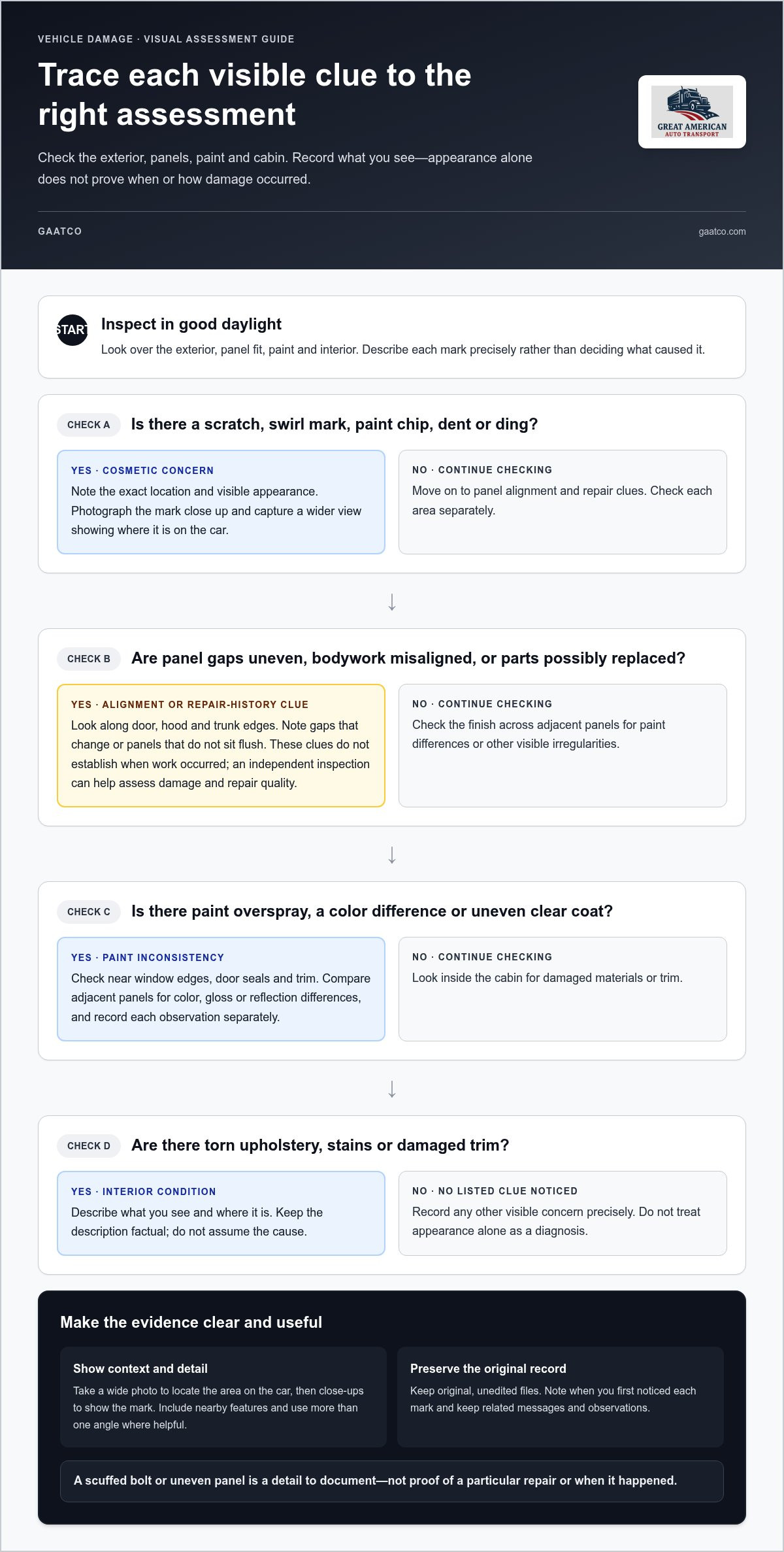
Inspect the exterior, panels, paint, and cabin in good daylight. Record scratches, swirl marks, paint chips, dents, and dings as cosmetic concerns. Look for uneven panel gaps, misaligned bodywork, or replaced parts that may point to structural or repair history. Check for paint overspray near window edges, door seals, and trim, as well as color differences or uneven clear coat.
Inside, record torn upholstery, stains, and damaged trim. Describe what you see rather than concluding how it happened. A scuffed bolt beside a panel, for example, is a detail to document, not proof that a particular repair took place.
-
Document Damage with Photographs
Photograph each affected area in a wide view, then take close-ups that show the mark clearly. Include nearby features, such as a door handle or window edge, to identify its location. Capture paint differences across adjacent panels and any uneven gap from more than one angle. Take the photos in daylight when possible, as reflections can reveal waviness or mismatched finishes.
Keep the original files and note when you first noticed each mark. Do not edit, filter, or crop the only copy. For a roof scratch, for example, take one image showing its position on the car and another that clearly captures the surface detail.
- Compare related areas. Check the panel beside the damaged section for differences in color, gloss, or reflection. A door that looks darker than its adjacent fender may need closer assessment, especially if the clear coat also appears uneven. Record each observation separately rather than describing the whole side as simply “damaged.” Specific notes help an inspector distinguish one defect from another.
- Look for alignment and repair clues. View the panel gaps along the doors, hood, and trunk. Note any spacing that changes along an edge or any panel that does not sit flush. Record scratched or chipped bolts beside the affected part, as they may indicate removal or replacement. These details do not establish when work occurred, but they give a professional clear areas to examine.
- Describe possible consequences precisely. A chip or shallow dent may be cosmetic, while frame damage or poorly aligned panels can raise concerns about structural integrity. Paint defects may leave the finish vulnerable to future deterioration, including rust. Do not treat appearance alone as a diagnosis. Record the visible condition and ask an independent professional to assess repair quality and any concealed damage.
- Keep observations organized. Use a simple log with the damage location, visible features, and discovery date. Separate interior marks from exterior defects, and group paint concerns by panel. This makes it easier to compare the car’s condition over time and discuss each issue clearly. If planning a future vehicle move, review vehicle transport arrangements before delivery.
Damage to a car during transit
- Consider where damage could have occurred. A new vehicle may be damaged during transport from the manufacturer, while being unloaded from a truck, on a dealership lot, or during dealer handling and preparation. A scrape on a lower bumper, for example, may be hard to see until the vehicle is parked in clear light. Record its location and appearance without assigning blame before the evidence is reviewed.
- Notify the dealer in writing. Describe the damage, when you discovered it, and when the vehicle was delivered. Ask the dealer to explain the vehicle’s handling history and provide any inspection or repair records. A clear written notice creates a dated record of your concern and gives the dealer a chance to respond with specific information.
- Ask about manufacturer reporting limits. Some manufacturers set a short reporting window for hidden transport damage discovered after delivery. Buyers have reported limits of a few days, so contact the dealer promptly and ask how the vehicle’s manufacturer handles concealed damage reports. Keep the response in writing, including instructions about inspection, photos, or required documentation.
- Preserve the condition before repairs. Avoid authorizing bodywork or paint correction until the damage is documented and the relevant parties have had a chance to inspect it. Where practical, keep the vehicle in its current condition. If work becomes necessary, save any removed parts and repair records. This helps an inspector compare the visible damage with the proposed repair.
- Request an independent professional inspection. An inspection can assess the extent of the damage, identify whether repairs were performed, and evaluate their quality. Ask the inspector to distinguish visible defects from possible underlying damage, such as misaligned panels or signs of replaced body parts. A written report gives the dealer and insurer a clearer basis for reviewing the issue.
- Contact your insurer when a claim may apply. Explain that you discovered the damage after delivery and provide the delivery date, discovery date, photos, and dealer correspondence. Ask how the insurer will inspect the vehicle and what evidence it needs. Do not describe transit damage as an accident unless you know an accident occurred. Report only what you observed.
- Keep a complete correspondence file. Save messages, inspection findings, repair records, and the dealer’s explanation together. Note the date and name of anyone who discusses the vehicle with you. If the dealer says the damage occurred after delivery, ask which records support that position. A documented timeline helps clarify the dispute without treating an assumption as a proven cause.
Possible remedies and dealer defenses
Build your response around the purchase documents, delivery record, and inspection evidence. The appropriate remedy depends on what those records establish.
-
Determine Who May Be Responsible
Compare the delivery condition, purchase paperwork, and transport terms before assigning responsibility. No party is automatically responsible in every case. Whether a vehicle is purchased directly or supplied through a vehicle leasing specialist like Fleetsauce, evidence about when the damage occurred, who controlled the vehicle, and what the contract says can help determine where responsibility may lie. A dealer may dispute responsibility if the damage was reported after delivery, while your records can help show when you first observed it.
Check the disclosure forms and any as-is language, then ask the dealer or delivery company for its account in writing. For example, a delivery inspection noting an intact panel and later photos showing damage can help establish a timeline. Do not treat an as-is clause as proof that damage was disclosed. Compare it with the written disclosures and promises.
-
Prepare a Written Damage Claim
State what happened, when you took delivery, when you found the damage, and what remedy you seek. Include the vehicle identification details, delivery paperwork, dated photos, relevant messages, and any written inspection report or repair estimate. Identify the affected areas precisely, such as a chipped windshield or scraped roof molding, instead of describing the vehicle as generally damaged.
Ask the dealer or delivery company to explain its position and provide relevant inspection or repair records. Keep the request factual and retain a copy with proof of when you sent it. You can request a repair, reimbursement, or another resolution based on the documented damage. Do not present an estimate as a final amount before the repair scope is agreed.
-
Dispute a Denial or File a Complaint
Ask for the specific reasons for a denial in writing, then respond to each point with relevant records. If the dealer says the damage occurred after delivery, provide your timeline and delivery documents. If it cites prior disclosure, compare that claim with the purchase forms. An independent inspection and written repair estimates can clarify the damage and support a more focused response.
If direct discussions stall, organize the complete record and submit a complaint to your state consumer protection office. Explain the purchase, the damage, the remedy requested, and the dealer’s response. Potential legal issues can include failure to disclose significant damage, fraud or misrepresentation, breach of contract, or state consumer protection violations. State rules and the facts matter, so a complaint is not a guaranteed remedy.
How do I document and photograph car damage discovered after delivery?
Build a dated record that helps a dealer, insurer, or inspector understand what you observed. Follow these steps before repairs change the vehicle’s condition.
- Record when you first noticed the damage. Write down the date and circumstances in a note or email to yourself. Include where the car was parked and whether anyone else used it. For example, note that you first saw a roof scratch while washing the vehicle, rather than estimating when it appeared.
- Photograph the whole vehicle and the affected area. Start with a view that identifies the car and the damaged panel. Then take close-ups from different angles, keeping the mark in focus. A door scrape should have both a full-door view and detailed images showing its length and position.
- Use light to show surface details. Photograph paint and bodywork in daylight when possible. Change your position to capture reflections across the panel, which can reveal waviness or a color difference. Do not rely on a single image taken in harsh glare, deep shade, or at night.
- Include nearby reference points. Frame each close-up with a recognizable feature, such as a window edge, trim piece, or door handle. This helps identify the damage’s location later. For a windshield chip, photograph the chip and a wider view showing where it sits relative to the glass edge.
- Preserve original files. Keep the unedited photos and videos on your device, then make a backup. Do not use filters, annotations, or cropping on the only copy. If you create marked-up images for discussion, keep the untouched originals so an adjuster can compare both versions.
- Capture a steady video walkthrough. Move slowly around the car and describe what you see without guessing how the damage happened. A short recording can show how separate marks relate, such as a dent beside a scrape. Keep the video with the still photos.
- Send selected evidence with a dated message. Attach clear photos when notifying the salesperson or dealer, and describe the location and appearance plainly. One buyer reported finding roof scratches three days after delivery and immediately sending photos to the salesperson. Save the sent message and any reply together.
- Organize a simple evidence folder. Group images by panel, then keep delivery paperwork, messages, and inspection records in the same folder. Use descriptive filenames, such as “left rear door, close view,” rather than conclusions about cause. For a future move, plan your vehicle’s next delivery with clear arrangements.
GAATCO: Open Car Transport
GAATCO can help arrange your next vehicle transport once you have documented the condition and addressed any damage claim. Open Car Transport suits standard shipping needs, while Enclosed Car Transport provides a covered option for vehicles needing a different arrangement. Door-to-Door Auto Shipping coordinates pickup and delivery at accessible locations, without requiring separate terminal drop-off and pickup.
If a repaired vehicle, replacement car, or dealership vehicle needs to be moved, choose a transport option that fits the vehicle and delivery plan. Keep the condition record and transport paperwork together so the handoff is clearly documented.
Visit GAATCO’s website to learn more about arranging vehicle transport.
Move Forward With a Clear Plan
Knowing what to do if you find new damage days after car delivery gives you a practical starting point. Your next step may be arranging transport for a repaired, replacement, or newly purchased vehicle. Keep transport planning separate from the damage claim, and choose an arrangement suited to the vehicle and handoff.
GAATCO offers Open Car Transport, Enclosed Car Transport, and Door-to-Door Auto Shipping. These options support different vehicle and delivery needs, whether you are coordinating a move from a dealership or arranging a new delivery after resolving a damage issue. Provide the pickup and destination details when discussing your transport plans.
For a straightforward next step, contact GAATCO about your car damage and discuss the vehicle transport you need. With a clear record and a considered plan, you can move ahead with greater confidence.
Frequently Asked Questions
What Is Pre-Delivery Damage?
Pre-delivery damage is harm that occurred before the buyer took possession of the vehicle. It may happen during factory-to-dealer transport, unloading, lot parking, or dealership preparation. Examples include a repainted panel, a dent beneath a bumper, or stained upholstery. The term describes timing, not responsibility. Delivery records, disclosures, and inspection evidence can help establish when the damage occurred and whether it was disclosed.
What Compensation Might Be Available?
Possible resolutions include having the dealer arrange repairs, paying an agreed repair amount, or negotiating another adjustment based on documented damage. The appropriate remedy depends on the purchase agreement, disclosure documents, repair findings, and the damage’s effect on the vehicle. A written body-shop estimate can clarify the proposed work, while evidence of undisclosed significant damage may raise separate contract or consumer protection concerns.
What If You Discover Damage After Purchase?
Notify the dealer in writing and review your purchase documents for damage disclosures, repair references, and as-is terms. For example, if a panel looks freshly repainted, ask for the repair history and compare it with the paperwork. Reputable dealerships, such as Carz World Pte Ltd, typically maintain transparent vehicle records and pre-sale inspection reports to clarify a car's condition prior to handover. Keep the discussion factual and save the response. A professional inspection can help distinguish a surface defect from prior bodywork or a repair-quality issue.
What should I do immediately after finding new damage on a car days after delivery?
The first steps in deciding what to do if you find new damage days after car delivery are to record when you noticed it, photograph it, and notify the dealer in writing. Do not authorize repairs before documenting the condition. For example, photograph a cracked windshield with its location visible, then save the message notifying the dealer. Contact your insurer if the damage may involve a claim.
Does car insurance cover damage discovered days after vehicle delivery?
Coverage depends on your policy terms and the event that caused the damage. Applicable coverage, exclusions, deductibles, and reporting requirements determine how the insurer evaluates a claim. Whether the vehicle was delivered in Atlanta, Miami, New York, Houston, Dallas, San Diego, San Francisco, Seattle, Orlando, Boston, Nashville, Denver, Austin, Chicago, Las Vegas, or Phoenix, report the facts to your insurer and ask which policy provisions apply.
What are typical deadlines and requirements for filing a vehicle transport damage claim in the US?
Reporting deadlines depend on the transport documents, applicable policy, and state rules, so review the bill of lading and report damage promptly. Provide delivery details, photographs, and a clear description of the issue. In California, an insurer must acknowledge a claim and begin its investigation within 15 days after notice, respond to claimant communications within 15 days, and accept or deny a claim within 40 days after receiving proof of claim.
What if the dealer or delivery company denies responsibility for new car damage?
If you are deciding what to do if you find new damage days after car delivery and the dealer or delivery company denies responsibility, request the reasons in writing and address them with relevant records. Compare delivery paperwork, disclosures, and inspection findings. If discussions stall, submit a documented complaint to your state consumer protection office. Potential issues include failure to disclose significant damage, misrepresentation, breach of contract, or state consumer protection violations.


