
What if driving across the country between seasonal hubs is quietly draining your most valuable professional asset: uninterrupted focus? It is understandable why many location-independent professionals initially assume a solo road trip is the default path. Yet losing several days of billable output to highway fatigue, mechanical strain in unfamiliar corridors, and erratic roadside Wi-Fi takes an unnecessary toll on client commitments. Opting for professional coordination when shipping a car for a digital nomad lifestyle transforms vehicle ownership from an exhausting operational burden into a seamless productivity advantage.
You shouldn't have to sacrifice your earnings or physical energy simply to enjoy your personal vehicle in your next temporary home base. In this comprehensive guide, we show you how dedicated auto transport supports a flexible remote career, preserves your work calendar, and streamlines relocations between key hubs such as Denver, Austin, and Phoenix. We will also examine open versus enclosed carriers, carrier insurance verifications, and flexible handover logistics designed specifically around a mobile schedule without permanent property ties.
Key Takeaways
- Discover how shipping a car for a digital nomad lifestyle protects billable hours and eliminates the mechanical wear of multi-day highway travel.
- Compare open and enclosed auto transport options to match your vehicle's protection requirements with seasonal weather conditions.
- Learn proactive route planning strategies across prominent nomad corridors connecting regional centers such as Denver, Austin, and Phoenix.
- Master vehicle preparation protocols, including crucial cargo regulations regarding mobile workstations and personal equipment.
- Identify reputable motor carriers by verifying active FMCSA licensing and comprehensive cargo insurance policies for total transit security.
Why Location-Independent Professionals Choose to Ship Their Vehicles
For modern remote workers, vehicle relocation represents far more than moving physical steel across state boundaries. Nomadic vehicle shipping is a fully managed logistics coordination that conveys your automobile between seasonal residences, letting you bypass grueling highway travel entirely. Embracing modern work flexibility as a digital nomad allows you to live anywhere, yet long-distance driving directly conflicts with high-value output. By delegating vehicle transit to established logistics specialists, you preserve focus while ensuring continuous access to your primary car.
To better understand the realities of mobility expenses while working remotely, watch this breakdown of real-world transit planning:
Arranging transport through professional auto shipping services changes how you plan extended stays. Coordinating door-to-door transit between major hubs like Austin, Denver, or Seattle lets you step off a brief domestic flight and drive your personal vehicle directly to your rental. Relying on rideshare programs or navigating volatile rental fleets often leads to unpredictable vehicle availability and restrictive mileage caps. Shipping your car offers a reliable baseline of autonomous movement wherever your projects take you.
The Real Cost of Driving: Time, Energy, and Billable Hours
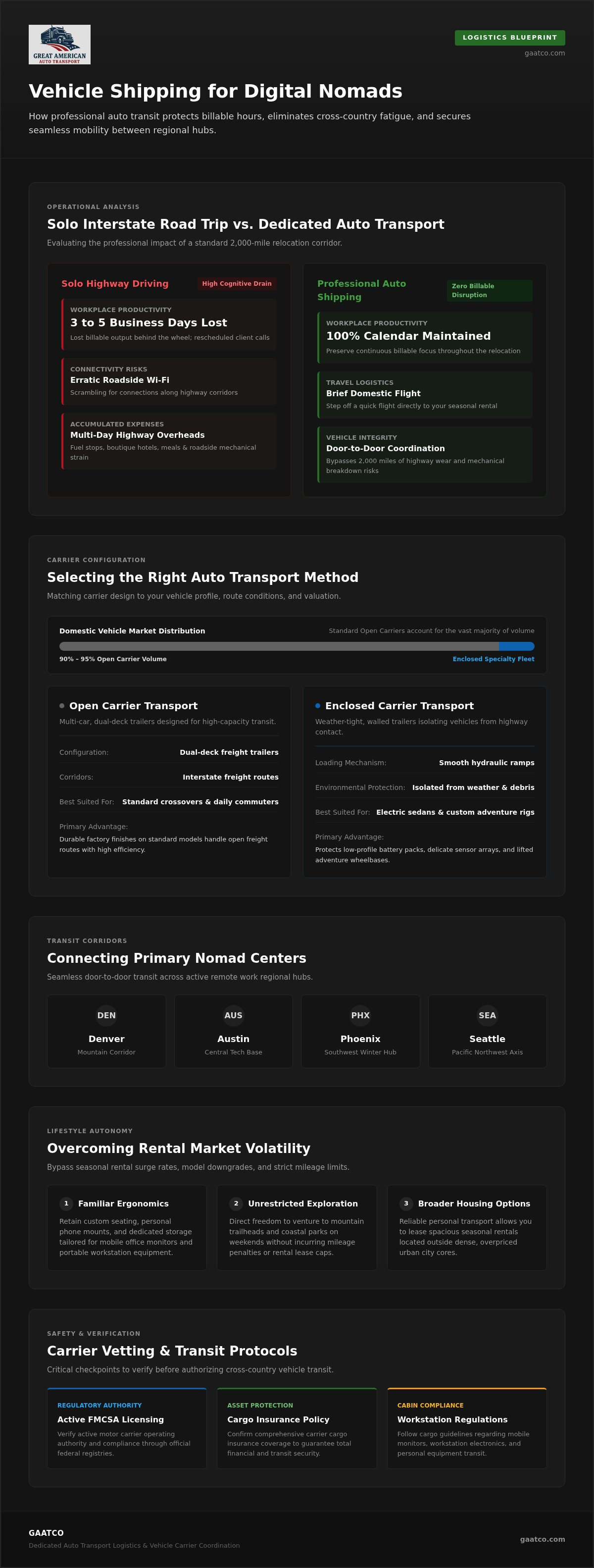
The surface expense of an interstate road trip hides substantial operational drains. Fuel stops, boutique hotels, meals, and unexpected roadside repairs accumulate rapidly across a 2,000-mile journey. More critically, losing three to five business days behind the wheel forces you to reschedule client presentations or scramble for unreliable roadside Wi-Fi. Multi-day highway driving causes profound mental fatigue. Selecting door-to-door transport eliminates that cognitive drain, letting you maintain predictable billing and arrive well-rested.
Local Freedom Without Rental Market Volatility
Securing long-term vehicle rentals during peak seasons often brings surge rates and unexpected model downgrades. Driving your personal car eliminates these headaches entirely while unlocking practical mobility benefits:
- Familiar ergonomics: You retain customized seating, phone mounts, and dedicated storage suited for mobile office monitors.
- Access to nature: Personal vehicles give you direct freedom to explore mountain trailheads or coastal parks on weekends without mileage penalties.
- Expanded accommodation choices: Reliable transport allows you to lease spacious rentals located outside dense, overpriced urban centers.
Ultimately, shipping a car for a digital nomad lifestyle protects both your professional revenue and your weekend independence across regional stays.
Selecting the Right Auto Transport Method: Open vs. Enclosed Carriers
Choosing an appropriate carrier configuration is the primary operational decision when arranging vehicle transport between remote living bases. Open transport utilizes multi-car, dual-deck trailers designed for high-capacity transit across interstate freight lanes. Enclosed transit places vehicles inside weather-tight, walled trailers that isolate machinery from highway contact. While approximately 90 to 95 percent of domestic vehicles travel on open carriers, selecting the optimal configuration depends on your automobile's profile, route conditions, and valuation.
When shipping a car for a digital nomad lifestyle, align your selection with these practical vehicle categories:
- Daily Commuters and Mid-Size Crossovers: Durable finishes on standard fleet models handle open transit without special requirements.
- High-Value Electric Sedans: Low-profile battery packs and delicate sensor arrays benefit from the smooth hydraulic ramps of enclosed carriers.
- Custom Adventure Vehicles: Lifted wheelbases and aftermarket camper additions require precise physical clearances that enclosed bays reliably provide.
Open Carrier Auto Transport: The Economical Nomad Standard
Open transport remains the baseline for nationwide carrier networks. Because these haulers accommodate seven to ten vehicles simultaneously, dispatchers fill routes quickly between major hubs like Phoenix and Atlanta. Your vehicle encounters normal highway airflow, rain, and dust, mirroring the environmental exposure of a standard afternoon drive. For location-independent professionals seeking cost-conscious logistical balance, booking established auto transport services delivers dependable door-to-door transit without unnecessary overhead.
Enclosed Carrier Transport: Maximum Protection for Specialized Rides
Enclosed trailers utilize solid metal or heavy-duty reinforced vinyl side curtains to establish an impervious cocoon around your cargo. This configuration eliminates road gravel impacts, seasonal industrial fallout, and extreme alpine slush entirely. Carriers operating enclosed routes utilize specialized soft-tie strapping across the tires rather than frame chains, protecting delicate suspensions.
Federal shipping regulations require all licensed freight haulers to maintain active cargo insurance, but coverage tiers differ markedly by carrier type. Open carriers typically carry cargo limits between $100,000 and $250,000 per load. Enclosed carriers regularly hold policy limits extending from $250,000 to upwards of $1,000,000, ensuring complete financial recovery for rare, classic, or heavily modified builds.
If you're planning your upcoming seasonal relocation and need help evaluating the best trailer format for your car, connecting with GAATCO ensures experienced guidance tailored to your remote itinerary.
Mapping Key Nomad Routes and Managing Seasonal Climate Logistics
Strategic route planning forms the backbone of seasonal vehicle relocation. Remote professionals frequently shift between high-altitude retreats and sunbelt metropolises, establishing predictable corridors between tech centers like Seattle, Austin, Denver, San Diego, and Phoenix. Yet transitioning a vehicle across distinct climate zones involves variables that static mileage calculators overlook. Understanding how topography and seasonal weather shape domestic freight networks ensures your automobile arrives precisely when your temporary lease begins.
Winter passages across major continental divides present significant operational hurdles. Heavy snowfall through Interstate 70 in Colorado or Snoqualmie Pass along Interstate 90 regularly triggers mandatory tire-chain laws and sudden commercial closures. Professional freight haulers monitor Department of Transportation advisories closely, intentionally rerouting around severe storms to safeguard their trailers. Factoring in a buffer of two to three business days during winter relocations prevents unneeded stress when coordinating your departure flight against carrier schedules.
Aligning Shipments with Seasonal Destination Shifts
Nomad migration patterns align heavily with seasonal weather windows, creating predictable demand cycles along key freight corridors:
- Autumn Sunbelt Migrations: Relocations from Pacific Northwest markets toward Phoenix or Austin surge between September and November. Booking three to four weeks early secures preferred dispatch windows.
- Late Spring Mountain Runs: Heading toward Denver or Salt Lake City for alpine summers picks up heavily in May. Early reservations prevent delays caused by crowded carrier schedules.
- Cross-Country Coastal Shifts: Coast-to-coast hauls between California and Atlantic hubs operate continuously, though summer months experience the highest overall freight competition.
Industry analyses comparing carrier methods, such as this guide to Open vs. Enclosed Carriers, demonstrate that weather vulnerability directly dictates trailer suitability during these major interstate transitions.
Overcoming Urban Delivery and Accessibility Hurdles
While door-to-door auto shipping remains the standard delivery model, true curbside handoffs are not always feasible in tight urban cores. Fully loaded commercial car carriers measure roughly 75 to 80 feet in total length. These industrial rigs cannot legally or safely maneuver through narrow residential side streets, steep mountain inclines, or congested apartment cul-de-sacs with low-hanging utility wires.
Direct communication with your hauler resolves these geographic bottlenecks easily. When shipping a car for a digital nomad lifestyle into high-density neighborhoods, plan to meet the driver at a nearby commercial property. Wide department store parking lots, suburban transit centers, or rest areas just off the highway interchange provide safe staging ground for loading ramps. This proactive coordination guarantees an efficient vehicle inspection while keeping your remote work transition completely frictionless.
Preparing Your Vehicle for Safe Transport Between Remote Hubs
Meticulous vehicle preparation establishes the baseline for a smooth logistics handover. While commercial freight operations run on strict mechanical standards, personal preparation dictates how quickly a driver completes pickup. A clean, properly inspected vehicle guarantees transparency during carrier check-in, preventing misunderstandings at destination. Washing your car thoroughly before the transport truck arrives is an essential first step. Removing road film and dust exposes existing paint chips, rock dings, or minor bumper scuffs so both parties record the vehicle's true starting condition.
Executing an intentional staging sequence protects your schedule. When shipping a car for a digital nomad lifestyle, treat vehicle handoff with the same discipline applied to managing your client deliverables.
Mechanical Preparation and Fluid Guidelines
Carriers enforce specific mechanical parameters to keep multi-car trailers within federal gross weight limits and maintain deck stability:
- Maintain a quarter-tank of fuel: Keep the gas gauge around one-quarter full. This provides sufficient fuel for loading maneuvers while reducing unnecessary hauler ballast.
- Verify mechanical integrity: Check that tires are inflated to door-jamb specifications, confirm the starter battery holds a full charge, and verify the undercarriage is free of active fluid leaks.
- Deactivate toll transponders: Remove or bag highway toll tags in foil sleeves. Electronic gantries along interstate corridors frequently detect and bill mounted passes inside transport trailers.
- Silence onboard security systems: Disable passive anti-theft alarms to prevent continuous horn blaring and battery drain over rough pavement.
Protecting Nomad Tech Gear and Documenting Vehicle Condition
Federal regulations explicitly prohibit auto carriers from operating as household moving vans. Standard motor cargo insurance covers the automobile itself; it does not protect loose personal property inside the cabin. Never leave external monitors, portable laptop docking stations, camera equipment, or Starlink terminals in the vehicle. Carry these sensitive professional tools in your personal flight luggage to maintain workflow continuity.
Once the car is washed and cleared, conduct your own condition walkaround in bright daylight. Take clear, timestamped photos of every panel, glass surface, wheel face, and odometer reading. When the carrier arrives, you or your appointed representative will complete the physical inspection with the operator.
Review the driver's initial Bill of Lading (BOL) line by line before signing. This receipt acts as the binding legal inventory of pre-existing blemishes. Retain a digital copy so you can verify the vehicle's condition with complete precision upon delivery. If you are ready to arrange your next seasonal transfer, request a quote from GAATCO to secure vetted transport coordination across your target travel corridor.
How to Choose a Reputable Auto Carrier for Peace of Mind
Entrusting a vehicle to an interstate logistics provider requires absolute operational confidence. The domestic vehicle shipping market includes both direct motor haulers and logistics management brokers. Digital aggregators often promise instant rate calculations, yet they routinely release contracts onto open load boards without rigorous oversight. Selecting an experienced logistics partner ensures every carrier assigned to your route undergoes stringent administrative vetting before handling your car.
When shipping a car for a digital nomad lifestyle, thorough verification prevents transit delays and safeguards your personal assets across state lines.
Essential Carrier Credentials: FMCSA, USDOT, and Insurance
Every legitimate domestic hauler must operate under verified federal credentials. Before authorizing a transport contract, request the carrier's operating identifiers and confirm their standing:
- FMCSA Operating Authority: Search the Federal Motor Carrier Safety Administration's public SAFER portal using the carrier's USDOT or Motor Carrier (MC) number to ensure active interstate operating authority.
- Primary Cargo Coverage: Demand a recent Certificate of Insurance (COI) issued directly by the underwriter. Verify that the policy designates the carrier as the primary insurer, rather than a contingent policy that shifts liability during a claim.
- Safety and Violation History: Review federal safety audit ratings and crash records to confirm the hauler maintains an exceptional safety history.
Seamless Booking and Door-to-Door Coordination with GAATCO
For remote professionals managing fast-moving itineraries, logistics coordination should alleviate friction rather than create it. With over two decades of domestic transport logistics experience, GAATCO provides dedicated oversight across vital remote hubs including Denver, Austin, Phoenix, Seattle, and Atlanta. Instead of leaving you to navigate driver schedules or regulatory hurdles alone, our team manages route logistics and continuous carrier communication directly.
This managed approach ensures your door-to-door auto shipping proceeds on schedule while you remain focused on your client commitments. If you want a dependable auto transport partner to support your flexible career, visit GAATCO to coordinate your next seasonal relocation with complete peace of mind.
Elevate Your Seasonal Transition With Professional Transport
Maintaining career momentum while embracing regional mobility requires reliable operational systems. Entrusting your vehicle to a dedicated freight specialist eliminates highway exhaustion, keeps your billable calendar intact, and delivers your personal car directly to your next residence. By pairing the appropriate carrier configuration with proactive scheduling, you ensure every seasonal move remains completely effortless.
Adopting professional logistics when shipping a car for a digital nomad lifestyle allows you to work without interruption while seasoned haulers manage interstate miles. Backed by over 20 years of nationwide vehicle logistics expertise, GAATCO provides rigorous vetting of licensed and insured commercial carriers, paired with white-glove door-to-door coordination across premier nomad hubs.
Ready to coordinate seamless vehicle transport for your next seasonal stay? Request a personalized auto transport quote from GAATCO. Your journey to your next workstation should be as refined and productive as the work you deliver.
Frequently Asked Questions
Can I ship personal belongings or remote work gear inside my car?
No, you shouldn't pack personal belongings or high-value remote work gear inside your vehicle during transit. Federal freight regulations prohibit auto carriers from operating as household moving companies. Carrier cargo policies only protect the automobile itself, leaving electronics and personal items completely uncovered. Transporting monitors and computer equipment in your flight luggage avoids potential theft, customs holdups, and weight compliance issues across interstate routes.
How far in advance should a digital nomad book vehicle transport?
You should book your vehicle transport two to three weeks before your desired pickup date. Reserving your window early guarantees carrier availability along high-demand interstate corridors, especially during seasonal migrations toward hubs like Phoenix, Miami, or San Diego. While expedited dispatch options can accommodate tighter departures, planning ahead ensures you secure preferred trailer space without disrupting your remote work schedule or housing timeline.
Can someone else hand over or accept the vehicle on my behalf?
Yes, you can designate a trusted proxy to hand over or accept your vehicle at either destination. If your flight itinerary or work commitments keep you from being present in cities like Seattle or Atlanta, an authorized adult can manage the handoff. Your representative simply needs a valid photo identification to walk the vehicle with the driver, note any existing exterior blemishes, and sign the official Bill of Lading.
How long does cross-country vehicle shipping typically take?
Coast-to-coast vehicle transport typically takes between seven and ten business days from the moment of pickup. When coordinating transit between distant markets, such as Boston to San Francisco, transit times depend on total mileage, mandatory driver rest intervals, and regional weather patterns. Incorporating this delivery window into your itinerary ensures that shipping a car for a digital nomad lifestyle remains seamless and predictable.
What happens if my vehicle arrives before my rental lease starts?
You should coordinate directly with your driver to adjust the delivery window or arrange an accessible commercial meeting point. Commercial auto carriers don't provide long-term vehicle storage services because their trucks must maintain active transit schedules. If your car reaches hubs like Las Vegas or Denver before your move-in date, having a designated proxy receive the keys preserves your schedule without incurring secondary tow fees.
How does cargo insurance work while my car is on the carrier?
Your vehicle is covered under the motor carrier's primary commercial cargo policy throughout loading, transit, and unloading. When shipping a car for a digital nomad lifestyle, always confirm that the carrier holds an active certificate designating them as the primary insurer rather than a secondary provider. Noting all cosmetic details on the initial Bill of Lading ensures straightforward claim resolution in the rare event of transit damage.


