
What if the greatest variable in vehicle transport isn't highway mileage, but the dialogue between dispatch and delivery? Understanding how to communicate effectively with the assigned car carrier transforms an otherwise opaque process into a controlled, sophisticated operation that respects your schedule.
It's entirely natural to feel hesitant about whether to call your logistics coordinator or reach out directly to the truck operator on the road. Frustration over broad arrival windows, intermittent check-ins, and uncertainty regarding vehicle inspection paperwork can introduce friction into an important transit milestone. You shouldn't have to guess where your vehicle stands or who holds operational accountability at any given moment.
By establishing structured communication standards, you can master coordination with your carrier to ensure seamless transit, precise delivery, and complete peace of mind. Ahead, you'll learn industry-standard contact timelines, practical methods to navigate en route delays calmly, and how to execute an accurate inspection report alongside your transport specialist.
Key Takeaways
- Clarify operational boundaries early by directing contract adjustments to your logistics coordinator while learning how to communicate effectively with the assigned car carrier for real-time delivery coordination.
- Exchange essential driver credentials, dispatch contact numbers, and alternate receiver details well before pickup to ensure a smooth handoff.
- Establish structured en route check-in intervals that respect mandatory commercial driving schedules while maintaining clear transit visibility.
- Address tight metropolitan delivery constraints by arranging accessible commercial staging areas and conducting a systematic walk-around inspection on the bill of lading.
- Rely on seasoned logistics management to oversee comprehensive carrier vetting and ensure seamless door-to-door transport execution.
Understanding the Communication Hierarchy: Logistics Coordinator vs. Assigned Carrier
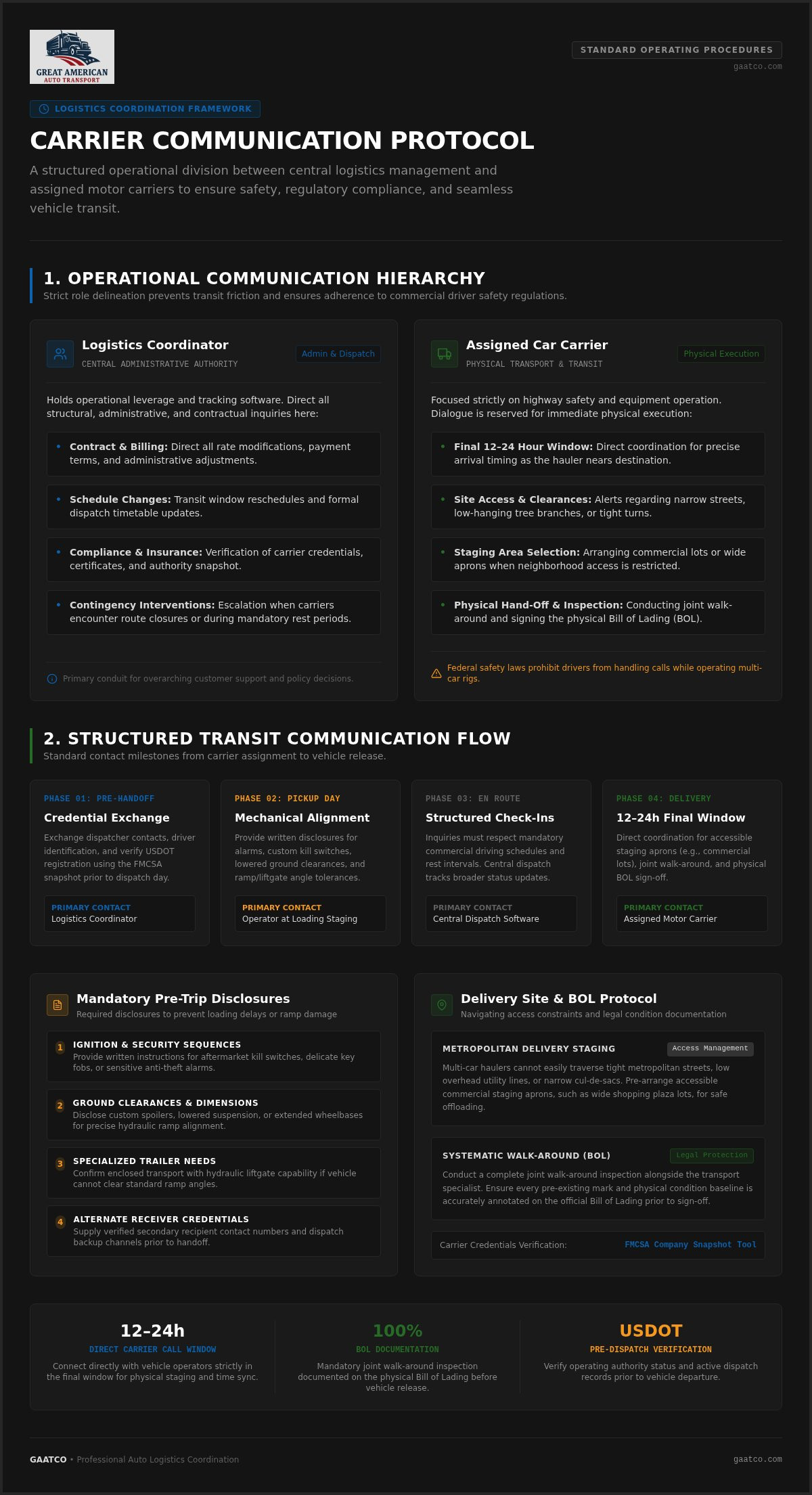
A flawless vehicle delivery relies on a clear division of operational responsibilities. Many shippers mistakenly treat truck drivers as customer service representatives, expecting constant updates from the road. In reality, the role of an auto transport broker focuses on administrative logistics, contract administration, and carrier compliance, while the motor carrier focuses strictly on highway safety and physical handling. Understanding this boundary is fundamental when learning how to communicate effectively with the assigned car carrier without creating unnecessary transit delays.
Federal regulations strictly prohibit commercial haulers from taking calls while operating heavy multi-car equipment. Expecting continuous telephone access creates real safety hazards and compromises driver focus. Recognizing who to contact for specific needs maintains operational discipline and ensures each professional can perform their specialized role without distraction.
To visualize how disciplined communication protects both parties throughout the transport lifecycle, review this brief overview:
When to Contact Your Dedicated Logistics Coordinator
Administrative adjustments belong exclusively to your logistics coordinator. Direct all contract modifications, billing questions, transit window reschedules, and carrier insurance inquiries to your central coordinator. If a transport driver encounters an unexpected highway closure or becomes unreachable during required off-duty rest breaks, your coordinator holds the operational leverage and dispatch software needed to obtain status updates on your behalf.
When to Speak Directly with Your Assigned Carrier
Direct dialogue with the vehicle operator is best reserved for immediate physical execution. Connect directly with your driver during the final twelve to twenty-four hours before scheduled delivery to coordinate arrival timing. This communication channel is ideal for discussing local road clearances, low-hanging trees, or narrow residential streets. Knowing how to communicate effectively with the assigned car carrier means using direct calls to establish accessible staging aprons, such as wide commercial parking lots, when residential access proves restrictive.
Essential Information to Exchange Before the Scheduled Vehicle Handoff
Before a multi-car transporter arrives at the curb, an exchange of core operational data sets the tone for a frictionless transport experience. Professional auto logistics demands proactive alignment rather than reactive troubleshooting. Prior to dispatch day, verify your carrier's credentials, active dispatch contact numbers, and USDOT registration status using the official FMCSA Company Snapshot tool. This verification ensures your vehicle enters the care of a properly authorized operator and establishes the foundation for how to communicate effectively with the assigned car carrier throughout transit.
Vehicle Operational Disclosures and Key Information
Precision transit requires complete transparency regarding your automobile's physical and mechanical baseline. Unforeseen mechanical quirks can disrupt loading schedules and risk equipment damage during ramp operations. Prepare your driver ahead of time with practical vehicle details:
- Provide written instructions for delicate ignition sequences, aftermarket kill switches, or touchy anti-theft alarms.
- Disclose lowered ground clearances, custom spoilers, or wider wheelbases so operators can position hydraulic ramps accurately.
- Confirm that enclosed car transport trailers with liftgate capabilities are assigned if your vehicle cannot clear standard incline angles.
- Highlight tight local access hurdles in dense metropolitan hubs like New York, Chicago, or Atlanta, where municipal codes or narrow streets prevent large multi-car haulers from entering.
Secondary Receiver and Emergency Contact Protocols
Interstate journeys are subject to highway conditions, DOT weigh station inspections, and mandatory driver rest cycles. Because transit timing can adjust en route, designating an authorized secondary receiver prevents needless logistical bottlenecks upon arrival. Supply your carrier with the full name and mobile number of a trusted representative who holds legal authority to conduct the final inspection and sign release paperwork if your availability changes.
Establishing active mobile text channels allows drivers to transmit rolling arrival updates as they cross regional corridors. If orchestrating complex municipal deliveries feels overwhelming, working with a seasoned freight management partner like GAATCO provides dedicated oversight, ensuring all driver vetting and pre-trip scheduling details are handled with quiet precision. Learning how to communicate effectively with the assigned car carrier begins with this disciplined, thorough pre-trip preparation.
Step-by-Step Protocol for Professional En Route Inquiries
Maintaining clear visibility during transit requires courtesy, precision, and realistic expectations. Once your vehicle is loaded, direct communication shifts toward monitoring progress without disrupting safe transit. Knowing how to communicate effectively with the assigned car carrier during long-haul stretches means adopting structured, low-friction habits that respect the driver's focus on the road.
Begin by establishing the operator's preferred contact method during dispatch handoff. Most over-the-road haulers prefer text messaging over voice calls. A brief text allows an operator to review updates safely during scheduled fuel stops rather than juggling inbound calls while navigating high-speed interstates. Keep inquiries concise, referencing your vehicle year, model, and assigned order number for immediate context.
Establishing Structured Communication Windows
Timing matters just as much as tone. Restrict check-in inquiries to designated operational windows rather than sending frequent ad-hoc messages:
- Transmit location check-ins during conventional early morning dispatch hours (between 7:00 AM and 9:00 AM) or early evening rest periods.
- Grant drivers a reasonable buffer of three to four hours to reply; they may be negotiating heavy regional traffic, undergoing mandatory weigh station inspections, or resting.
- Refrain from repetitive calling if a message goes unanswered during severe weather patterns or across isolated mountain passes where cellular signals drop.
Managing Road Delays and Federal Rest Requirements
Professional auto shipping is governed by strict federal safety mandates. The Federal Motor Carrier Safety Administration enforces rigid Hours of Service regulations that mandate daily rest periods and cap driving hours. When highway construction, intense weather, or mechanical precautions cause transit delays, these interruptions represent necessary commitments to highway safety rather than service failures.
Approaching route delays collaboratively preserves a productive working relationship with your hauler. If an unannounced transit discrepancy exceeds twenty-four hours without word from the driver, escalate the inquiry to your freight management team at GAATCO. Experienced freight coordinators maintain direct commercial dispatch contacts to clarify driver whereabouts calmly, ensuring you stay fully informed without friction. This balanced approach exemplifies how to communicate effectively with the assigned car carrier throughout the transit lifecycle.
Mastering Delivery Logistics, Site Access, and Inspection Documentation
The arrival phase represents the definitive operational milestone of your transport experience. Delivering an automobile safely requires synchronized staging and meticulous documentation. Understanding how to communicate effectively with the assigned car carrier at delivery ensures that physical handoffs and inspection procedures remain transparent, professional, and completely stress-free.
Overcoming Neighborhood Access and Staging Restrictions
Eighty-foot multi-car carriers face severe mechanical constraints in tight residential environments. Narrow cul-de-sacs, low-hanging tree branches, and overhead utility lines can severely damage equipment and vehicles. If your delivery street cannot accommodate a heavy tractor-trailer, take initiative by proposing a practical staging location:
- Select large retail shopping plazas, wide commercial park-and-ride lots, or industrial park aprons near major interstate ramps.
- Transmit verified staging addresses via text message at least two hours prior to the driver's projected arrival.
- Arrive punctually at the staging site so the operator can drop ramps and unload without blocking active municipal traffic.
The Bill of Lading: Professional Review Etiquette
The Bill of Lading, whether rendered on paper or issued as an electronic eBOL, serves as the binding legal record of your vehicle's physical condition. Conduct a methodical walk-around alongside the transport operator, examining all body panels, glass, and wheels in clear lighting against the origin condition report.
Should you observe any fresh blemishes or road wear, maintain an objective, courteous tone. Resolving transit discrepancies requires clear documentation rather than roadside confrontation. Request that the driver note each specific mark directly on the delivery manifest, take clear photographs on site, and sign the document together. Retain a digital or physical duplicate of the signed receipt before the truck departs.
Professional transport execution relies on rigorous preparation and clear standards at every checkpoint. If you want structured freight management supported by experienced logistics coordinators, request a vehicle shipping quote to experience seamless auto transport from origin through delivery.
Partnering with GAATCO for Seamless Auto Logistics Coordination
Managing vehicle relocation independently often leaves owners balancing technical carrier updates against demanding daily schedules. Partnering with an experienced freight management team bridges that gap. Backed by over two decades of national auto logistics experience, GAATCO serves as your dedicated advisor, orchestrating carrier coordination so you never have to decipher operational jargon alone. Understanding how to communicate effectively with the assigned car carrier becomes effortless when professional logistics coordinators manage route milestones on your behalf.
Vetted Carrier Networks and Rigorous Safety Standards
Every successful vehicle journey rests on carrier accountability. Instead of exposing clients to unverified regional operators, we match each shipment with thoroughly vetted, licensed, and insured motor carriers across major urban corridors. Our team reviews active operating authorities, cargo insurance thresholds, and historical safety metrics before equipment is dispatched. Whether you require open car transport for a family SUV, enclosed transport for classic automobiles, or door-to-door military vehicle shipping, our rigorous carrier standards ensure your vehicle receives uncompromising care.
Initiating Your Hassle-Free Transport Consultation
Direct driver communication requires balance, but professional freight management ensures you never bear the administrative burden alone. Complex door-to-door drop-offs in dense metropolitan markets like New York or Chicago frequently demand rapid staging adjustments. Our logistics advisors actively supervise these touchpoints, coordinating staging sites and confirming driver timelines directly so your schedule remains undisturbed.
Mastering how to communicate effectively with the assigned car carrier begins with choosing a logistics partner who values precision as much as you do. Secure dedicated operational support for your upcoming relocation when you request a shipping quote with GAATCO today.
Elevate Your Vehicle Relocation with Seamless Coordination
Mastering vehicle transit comes down to clarity, preparation, and operational respect. By establishing distinct boundaries between central freight dispatch and road operators, scheduling status checks thoughtfully, and executing methodical delivery inspections, you transform a complex haul into a predictable, stress-free experience. Knowing how to communicate effectively with the assigned car carrier safeguards your schedule while protecting your valuable automotive investment.
You don't have to navigate specialized transit logistics alone. Drawing on over 20 years of proven auto shipping reliability, GAATCO pairs you with thoroughly vetted, licensed, and insured carriers nationwide. Our logistics specialists deliver white-glove coordination from dispatch to final delivery, ensuring every milestone aligns with your standards. When you are ready for a refined, dependable transport experience, Request a Professional Auto Transport Quote and embark on your next vehicle move with total confidence.
Frequently Asked Questions
How should I contact my car carrier driver while they are driving?
Send a concise text message rather than attempting a phone call. Federal safety regulations forbid commercial drivers from operating mobile devices while driving heavy haulers. Texting lets the operator review your message safely during their next scheduled fuel stop or mandatory rest break. Include your vehicle make, model, and delivery city so the driver immediately recognizes your order details without having to pull up extensive records.
What should I do if my assigned auto carrier does not answer my calls?
Contact your central freight coordinator immediately if a driver remains unreachable for several consecutive hours. Truck operators regularly encounter remote cellular dead zones across mountain corridors near Denver or long stretches outside Las Vegas, or they may be completing mandatory ten-hour sleeper berth cycles. Learning how to communicate effectively with the assigned car carrier involves knowing when to let your dedicated logistics manager locate the hauler through professional dispatch channels.
Can an oversized car transport hauler deliver directly to my residential front door?
Multi-car haulers provide door-to-door delivery whenever municipal street widths and overhead clearance permit. In dense metropolitan centers such as Boston, Chicago, or San Francisco, narrow neighborhood roads, low trees, and parking bans often prevent eighty-foot trucks from accessing residential driveways safely. When local conditions restrict physical access, coordinate with the driver to stage the vehicle handoff at a nearby commercial retail plaza or wide parking apron.
How much advance notice will the carrier give me before delivery?
Commercial haulers typically provide an estimated arrival window twelve to twenty-four hours prior to reaching your destination, followed by a secondary call one to two hours before arrival. This graduated timeline allows you or your designated secondary receiver ample time to arrive at the staging address. If transit traverses congested urban arteries like Houston, Dallas, or Atlanta, timing updates may adjust dynamically to reflect local rush-hour traffic conditions.
What happens if weather or road closures delay the vehicle transport carrier?
Severe winter blizzards, mountain pass closures, or hurricane warnings force professional haulers to prioritize asset safety over rigid timetables. When hazardous weather halts transit, the driver will seek safe roadside parking until routes reopen. Your freight management team tracks weather advisories across major transport corridors, working closely with the operator to provide updated arrival windows so you remain completely informed without roadside uncertainty.
How do I handle pre-existing vehicle damage noted during the origin inspection?
Review the origin Bill of Lading alongside the driver and verify that all pre-existing paint chips, scratches, or glass cracks are recorded accurately. Capture high-resolution, date-stamped photographs of your vehicle in daylight before loading begins. A thorough initial assessment establishes clear baseline documentation, protecting both parties and ensuring complete transparency when comparing post-trip conditions at the final delivery destination.
Who do I notify if vehicle damage occurs during transit?
Document any new transit blemishes directly on the final delivery Bill of Lading before the driver departs, ensuring both parties sign the manifest. Take clear photographs immediately. Once documented on the receipt, notify your dedicated logistics coordinator at GAATCO to initiate the claims resolution process. Understanding how to communicate effectively with the assigned car carrier ensures you address physical discrepancies calmly, professionally, and with full legal backing.


