The assumption that a transport carrier's insurance policy covers every item tucked into your trunk is a frequent and costly misconception among vehicle owners. You likely appreciate the efficiency of transporting personal items alongside your vehicle, yet it's common to feel concerned about hidden weight surcharges or the security of your possessions during transit. Mastering the specific rules for shipping a car with personal belongings in 2026 is essential to maintaining the integrity of your logistics and avoiding unnecessary operational friction.
Our team has distilled the complex regulatory landscape into a clear framework to ensure your peace of mind. You will gain a definitive understanding of the 100 pound weight thresholds that govern industry standards, the strict packing protocols required to maintain driver visibility, and the critical distinction between vehicle protection and cargo liability. This guide serves as a comprehensive checklist for a secure transport experience, ensuring that your vehicle and its contents are handled with the meticulous attention to detail that your requirements demand.
Key Takeaways
- Master the essential rules for shipping a car with personal belongings, including the critical distinction between Department of Transportation guidelines and specific carrier policies.
- Understand the industry-standard 100-pound weight allowance to avoid unexpected surcharges and preserve the mechanical integrity of your vehicle’s suspension.
- Recognize that carrier cargo insurance typically excludes personal items, requiring a strategic assessment of risk for any belongings left in the vehicle.
- Learn the precise protocols for securing items within the trunk or cargo area to ensure driver visibility and maintain operational safety during transit.
- Identify strictly prohibited materials, such as hazardous or perishable items, to ensure your transport remains in full compliance with federal safety standards.
Understanding the Regulations for Shipping a Car with Personal Items
The regulatory framework governing vehicle transport is often misunderstood by clients who view their car as an extension of personal storage. While it's tempting to fill a vehicle with packed boxes, the rules for shipping a car with personal belongings are dictated by a rigorous set of federal safety standards and carrier-specific insurance protocols. The Department of Transportation (DOT) focuses primarily on public safety and the integrity of highway infrastructure, while individual carriers must manage their own licensing limitations and liability risks. Our team prioritizes these standards to ensure that every transport remains in full legal compliance.
Most auto transport companies operate under specific Federal Motor Carrier Safety Administration (FMCSA) authorizations that permit the movement of motor vehicles but don't extend to "household goods." Transporting furniture, clothing, or electronics requires a different class of license and a more comprehensive insurance structure. If a carrier without this specific designation is found hauling significant personal cargo, they risk substantial fines and potential impoundment of the entire load. This distinction is why professional transporters are often hesitant to allow items beyond a certain threshold.
To better understand how these regulations manifest in daily operations, watch this helpful video:
Federal vs. Carrier Rules
The DOT doesn't explicitly forbid placing a suitcase in a trunk, yet it strictly regulates the gross weight of the car carrier trailer. A standard commercial transport configuration is legally capped at 80,000 pounds. When individual vehicles are overloaded, the carrier risks exceeding these federal limits at highway weigh stations. These stations utilize precise scales to ensure safety, and a driver found with an inaccurate cargo manifest or an overweight trailer faces penalties that can reach thousands of dollars. We maintain strict internal policies to protect our operational status and ensure timely delivery for all clients on the manifest.
The Industry Standard 100lb Limit
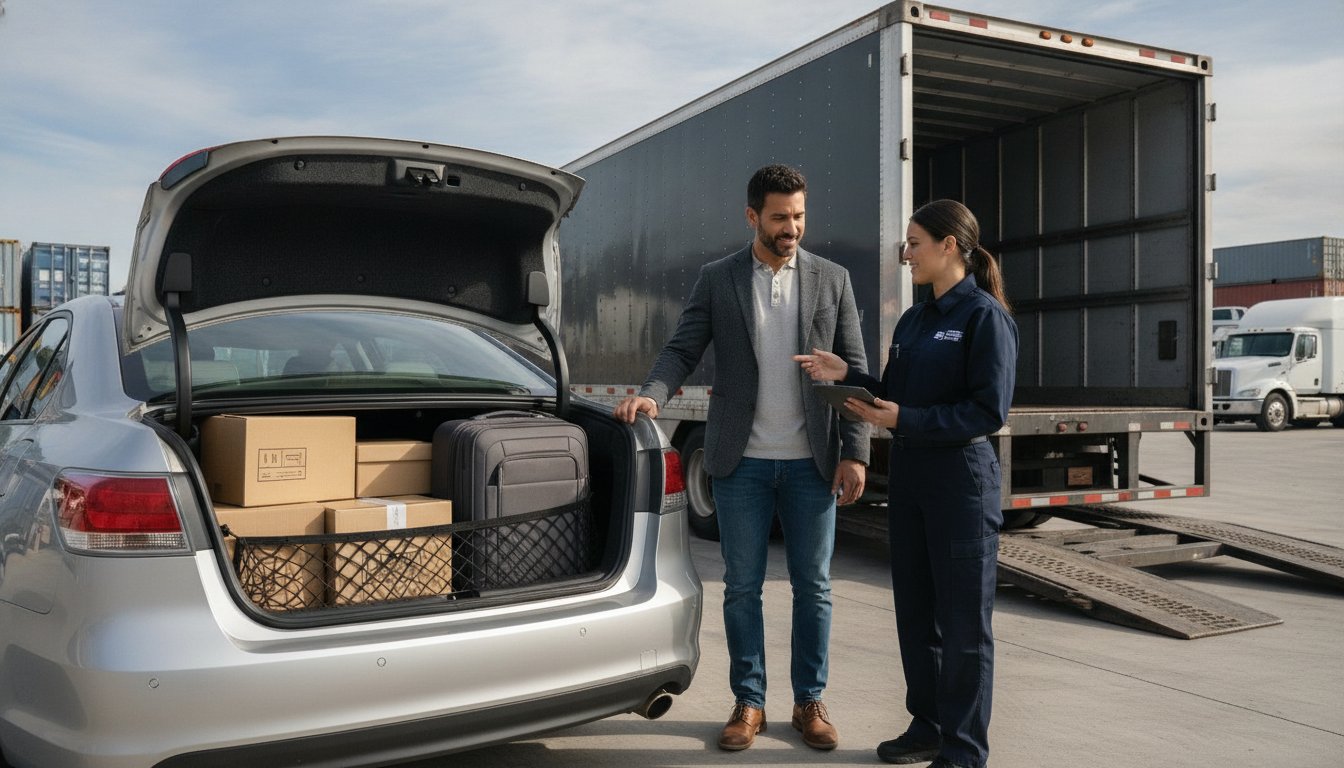
The "100-pound rule" has emerged as the de facto industry standard to balance client convenience with legal compliance. Most carriers permit up to 100 pounds of personal items, provided they're secured in the trunk or stored below the window line to maintain the driver's rear visibility. This weight limit isn't arbitrary; it accounts for the collective impact of multiple vehicles on a single trailer. Excessive weight doesn't just invite legal scrutiny; it alters fuel consumption and places additional strain on the carrier's equipment. By adhering to these established rules for shipping a car with personal belongings, you ensure the transport remains within safe operational parameters while avoiding the surcharges often applied to overweight shipments.
Weight Limits and Operational Constraints for Auto Carriers
The mechanical reality of auto transport requires a sophisticated understanding of weight distribution and structural integrity. While a few extra boxes might seem inconsequential, an overweight vehicle fundamentally alters the center of gravity for the entire transport rig. Adhering to the rules for shipping a car with personal belongings is not merely a matter of following protocol; it's a vital step in ensuring the safety of the entire transport rig. When a vehicle exceeds its registered curb weight, it introduces variables that can compromise the stability of the trailer, especially during high-speed transit or sudden maneuvers.
Carriers must account for every pound to remain within the federal 80,000-pound limit. If your vehicle is heavier than reported, it can trigger "overweight" surcharges, which industry data suggests typically range from $75 to $100 for every additional 100 pounds. These fees reflect the increased fuel consumption and the logistical complexity of managing a non-standard load. Precision in reporting is the only way to maintain the seamless operational flow our clients expect.
Impact on Trailer Logistics
A standard 10-car trailer is a masterclass in balanced engineering. Our logistics specialists meticulously calculate the placement of each vehicle based on its specific weight and dimensions to ensure the trailer remains level and stable. One vehicle that significantly exceeds its weight allowance can disrupt this delicate balance, potentially forcing a driver to leave another vehicle behind to remain within legal weight thresholds. We prioritize this level of precision to ensure on-time delivery across our expansive network, from the busy corridors of Houston to the coastal routes of Seattle. For those requiring a tailored approach to their transport needs, you may explore our specialized transport solutions to see how we manage these complex variables.
Risks to Your Vehicle Suspension
The physical toll on your vehicle during long-distance transit is often overlooked. Throughout the journey, your car is subjected to constant micro-vibrations from the road. When a car is loaded with heavy personal items, its struts and shocks are placed under continuous, excessive pressure. This strain is compounded by the "tie-down" process, where the vehicle is secured to the trailer by its chassis or wheels, effectively compressing the suspension. If the car is already heavy with internal cargo, this compression can lead to permanent damage or premature wear on high-end suspension components. We strongly advise removing heavy items to preserve the mechanical integrity of classic or luxury vehicles. Following the rules for shipping a car with personal belongings ensures that your vehicle arrives in the same pristine condition in which it was collected.
Insurance Limitations and the Risks of Unsecured Cargo
The distinction between protecting a vehicle and insuring its contents is a critical point of liability that many clients overlook. When you review the legal framework for transport, you'll find that standard carrier cargo insurance is strictly limited to the motor vehicle itself. Any personal items left within the cabin or trunk are transported at your sole risk. This policy isn't a lack of service; it's a fundamental industry standard based on the carrier's primary licensing and operational scope. Understanding the rules for shipping a car with personal belongings is the first step in protecting your high-value assets from unforeseen complications.
The Bill of Lading serves as the official contract between the shipper and the carrier, documenting the vehicle's condition at both pickup and delivery. Because most auto transporters aren't licensed as household goods movers, personal items are rarely listed as insured assets on this document. If an item is lost or damaged, the absence of a detailed inventory on the Bill of Lading makes a successful recovery claim nearly impossible. We advise our clients to view the vehicle's interior as a restricted zone to maintain the highest standards of security and professional accountability.
What Cargo Insurance Actually Covers
While a carrier’s insurance provides robust protection against external damage or total loss of the vehicle, it offers no recourse for the contents. If a shifting box strikes a window from the inside or an unsecured item mars the leather upholstery, the carrier isn't liable for the repair costs. The physics of long-haul transport involve constant vibration; even on smooth highways, the centrifugal force of a trailer can cause unsecured items to shift. We strongly suggest contacting your homeowners or renters insurance provider to determine if your policy includes off-premises coverage for personal property during transit. This proactive step ensures your assets are protected by a policy specifically designed for personal effects.
The Vulnerability of Open vs. Enclosed Transport
Choosing the right transport method is a strategic decision that directly impacts the security of your belongings. Open Car Transport is a highly efficient and common choice, yet it offers greater visibility to third parties at rest stops or transfer hubs. For those transporting high-value classic cars or vehicles containing essential items, Enclosed Car Transport provides a discreet and secure environment. This elite service shields the vehicle from both the elements and prying eyes, which is essential for maintaining the aesthetic preservation of a luxury interior. Adhering to the rules for shipping a car with personal belongings helps mitigate these risks, but selecting an enclosed trailer remains the most dependable option for comprehensive security and peace of mind.

Best Practices for Preparing Your Vehicle and Belongings
Adherence to the rules for shipping a car with personal belongings is the hallmark of a prepared client. Proper preparation doesn't just satisfy regulatory requirements; it protects the interior of your vehicle from the physical realities of long-haul transit. While we've discussed the weight thresholds and insurance limitations, the actual execution of packing requires a disciplined approach. Every item left in the cabin represents a potential projectile during a sudden braking event or a source of friction against delicate upholstery during the vibrations of the journey.
The cabin should remain clear of obstructions above the window line. This isn't merely a preference; it's a safety necessity. Drivers must have an unobstructed view through the rear and side windows to navigate the vehicle onto the transport trailer safely. We recommend that any permitted items are confined to the trunk or the cargo area of SUVs. If you're utilizing the passenger area, items must be secured below the seat level to prevent shifting. This level of detail ensures that the rules for shipping a car with personal belongings are followed while maintaining the highest standards of operational safety.
The Professional Packing Checklist
To ensure your vehicle is ready for pickup, we recommend following this definitive protocol:
- Maintain visibility: Pack all items below the window line to ensure the driver has a clear line of sight during the loading process.
- Remove electronic tags: Toll tags, parking passes, and garage door openers should be removed to prevent accidental charges or theft.
- Clear the spare tire area: Ensure the spare tire and jack are easily accessible in case of a roadside emergency during the loading or unloading phases.
- Secure loose components: Remove or retract any non-permanent external fixtures like custom antennas or bike racks.
Items Strictly Prohibited from Transport
Certain materials are strictly forbidden due to federal safety regulations and carrier liability policies. Hazardous materials, including gasoline cans, propane tanks, ammunition, and fire extinguishers, are never permitted on a transport rig. These items pose a significant fire risk and can lead to the immediate impoundment of the trailer at weigh stations. We also advise against leaving high-value or irreplaceable items such as jewelry, original vehicle titles, or essential medications in the car. Perishables and plants are similarly prohibited, as they attract pests and cannot survive the temperature fluctuations of cross-country routes. To begin your seamless transport experience, we invite you to request a personalized quote from our logistics experts.
Seamless Logistics: How GAATCO Manages Your Transport Needs
GAATCO positions itself as more than a service provider; we're a discreet partner in your transition. Managing the intricate rules for shipping a car with personal belongings requires a level of meticulous attention that only comes from two decades of specialized expertise. Our team navigates the regional nuances from Miami to New York, ensuring that every carrier in our network is fully licensed and insured. We prioritize transparent pricing, eliminating the anxiety of hidden fees that often accompany less professional logistics operations.
Our door-to-door auto shipping solution is designed for the busy professional who values time and reliability above all else. We handle the complex operational realities so you don't have to. By consulting with our logistics experts early in your planning process, you ensure that every detail, from weight thresholds to packing protocols, is managed with precision. This proactive consultation allows us to identify potential challenges before the transport begins, ensuring a controlled and professional environment throughout the journey.
Regional Expertise and Custom Solutions
Our expansive operational reach includes significant hubs like Dallas, Atlanta, and San Diego. This geographic advantage allows us to offer tailored solutions for diverse needs, including military vehicle shipping for personnel relocating under orders and comprehensive corporate relocation packages. We understand that a military POV or a high-end corporate asset requires a customized outcome. Our sophisticated approach minimizes the friction of complex logistics, providing a stable and controlled environment for your vehicle's journey. Whether you're moving a single vehicle or managing a fleet transfer, our regional experts bridge the gap between global standards and local service nuances.
Getting Started with a Professional Quote
A successful transport begins with clear communication. When you request a customized quote, we take the time to understand the specific requirements of your route and the nature of any items you intend to include. Providing accurate details about your vehicle's contents ensures that we can apply the rules for shipping a car with personal belongings effectively, resulting in a hassle-free experience. This transparency is vital for ensuring that the chosen carrier is prepared for the specific weight and dimensions of your load.
We invite you to experience a service where reliability and safety are non-negotiable pillars. Our unified team of professionals is ready to facilitate a seamless transition for your vehicle, whether it's a daily driver or a cherished classic car. Our commitment to excellence means we treat every transport with the same level of seriousness, maintaining a unified voice across all our service lines. Visit GAATCO to plan your vehicle transport and discover the confidence that comes from working with a seasoned expert who handles the details so you can focus on your move.
Secure Your Transition with Professional Expertise
Navigating the logistical nuances of vehicle transport requires a balance of regulatory compliance and proactive preparation. You now understand that adhering to the 100 pound weight threshold and maintaining clear visibility through the window line are non-negotiable pillars of a successful shipment. By recognizing the specific insurance exclusions for personal items, you've taken a vital step toward mitigating risk and ensuring the security of your high-value assets during transit.
Mastering the rules for shipping a car with personal belongings allows you to approach your relocation with absolute confidence. Our team brings over 20 years of industry expertise to every shipment, utilizing a network of licensed and fully insured carriers. We provide specialized handling for luxury and classic vehicles, ensuring that your most prized assets receive the discreet and meticulous care they deserve. We're here to manage the complex operational realities so you can focus on the next chapter of your journey.
Request a Professional Auto Transport Quote today and let our seasoned advisors facilitate a seamless, secure journey for your vehicle. We look forward to providing the reliable service you expect.
Frequently Asked Questions
Can I put household items in my car when shipping it?
You may include a limited amount of personal property, but most carriers are strictly prohibited from transporting "household goods" under FMCSA regulations. Professional transporters lack the specific licenses required for moving furniture or large quantities of domestic items. To remain compliant with the rules for shipping a car with personal belongings, you should limit your items to a single suitcase or a few small boxes stored securely in the trunk.
Does car shipping insurance cover personal belongings inside the vehicle?
Standard cargo insurance policies are designed to protect the motor vehicle itself and don't extend coverage to any personal effects left inside. Any items you choose to leave in the cabin or trunk are transported at your own risk. We strongly recommend checking your homeowners or renters insurance policy, as these sometimes provide off-premises protection for personal property while it's in transit.
What is the maximum weight of personal items allowed in a shipped car?
The industry standard for personal items is a maximum of 100 pounds. This limit ensures the carrier remains within federal gross vehicle weight restrictions and maintains the trailer's balance. If you exceed this threshold, you may face additional surcharges or the driver might refuse to load the vehicle. Always keep these items below the window line to ensure the driver's visibility isn't compromised during loading.
Can I ship a car with a roof rack or bike rack attached?
Factory-installed roof racks are generally acceptable, but removable bike racks or luggage carriers should be detached before pickup. These attachments increase the vehicle's height and length, which can interfere with the trailer's clearance levels. Removing them also prevents potential damage to the rack or the vehicle's exterior during the vibrations of long-distance transit.
Are there extra fees for shipping a car with stuff in it?
Most carriers apply a surcharge if the personal items exceed the standard 100 pound weight allowance. These fees typically range from $75 to $100 for each additional 100 pounds of weight. This cost accounts for the increased fuel consumption and the logistical complexity of managing an overweight vehicle on a multi-car manifest. Clear communication about your cargo helps avoid these unexpected expenses at the point of pickup.
What happens if the driver finds prohibited items in my car?
If a driver identifies prohibited items like hazardous materials, firearms, or perishables, they'll require their immediate removal before the vehicle is loaded. Federal law mandates strict adherence to safety protocols, and drivers face significant fines at weigh stations for carrying unauthorized cargo. In some cases, the presence of prohibited items can lead to a total refusal of service to protect the integrity of the entire shipment.
Is it safer to ship personal items in an enclosed carrier?
Shipping personal items in an enclosed carrier is significantly more secure than using an open trailer. Enclosed transport provides a discreet environment that shields your vehicle's interior from public view and protects it from road debris. While the rules for shipping a car with personal belongings still apply regarding weight, the added privacy of a hard-sided trailer reduces the risk of theft at rest stops or transfer hubs.
Can I leave my GPS or dashcam in the car during transport?
We advise removing all portable electronics, including GPS units and dashcams, prior to the arrival of the transport carrier. These items are highly visible and difficult to secure, making them primary targets for theft. Additionally, extreme temperature fluctuations inside the vehicle during transit can damage sensitive electronic components. Stowing these items in your personal luggage is the most reliable way to ensure their safety.


