If a transport carrier's liability coverage meets the federal minimum of $750,000, why do the most discerning brokers insist on a $1,000,000 policy before they will entrust a vehicle to their care? This discrepancy highlights a fundamental truth in logistics: the minimum requirement is rarely sufficient for the protection of a significant investment. We recognize that the ambiguity surrounding liability, cargo limits, and the fine print of a Bill of Lading can create unnecessary anxiety when arranging transport for a classic or high-value vehicle. In this guide, we provide auto transport insurance explained with precision, incorporating the latest 2026 FMCSA financial responsibility requirements that went into effect on January 16.
You deserve absolute clarity regarding who is responsible for your vehicle at every mile of its journey. We understand that your primary concern is not just transport, but the preservation of value and the mitigation of risk. By the end of this article, you will master the complexities of these layered safety nets to ensure your vehicle is meticulously protected during transit. We will clarify the distinct responsibilities of brokers versus carriers and provide a rigorous checklist for verifying that your provider maintains the sophisticated coverage your assets deserve.
Key Takeaways
- Understand the federal mandates requiring carriers to maintain specific liability and cargo insurance as a non-negotiable foundation for every shipment.
- Distinguish between the carrier's primary coverage and the broker's contingent cargo insurance to ensure a seamless safety net for your investment.
- Access a professional breakdown of auto transport insurance explained, including why enclosed transport is the preferred choice for securing higher coverage limits for classic vehicles.
- Learn to utilize the FMCSA SAFER system for real-time insurance verification and master the critical "5-Day Rule" to protect your right to a claim.
- Discover how two decades of logistics expertise facilitates a rigorous vetting process that selects only the most reliable and fully insured transport providers.
Understanding the Fundamentals of Auto Transport Insurance
Auto transport insurance isn't a standard policy; it's a specialized form of inland marine insurance designed to protect high-value assets while they're in motion across land. This category of coverage is essential because standard personal auto policies typically exclude coverage once a vehicle is handed over to a commercial carrier. To have auto transport insurance explained properly, one must first recognize that the federal government mandates two specific types of coverage for every interstate carrier: public liability and cargo insurance. These requirements ensure that both the public and the client's property are shielded from the inherent risks of long-distance logistics.
Public liability insurance protects the public from the transport truck itself, while cargo insurance is the specific protection for the vehicle itself while on the trailer. There is a distinct difference in protocols between damage sustained during transit, such as road debris impact, and damage occurring during the high-stakes moments of loading and unloading. Most comprehensive auto transport services ensure that the carrier’s policy specifically includes "on-hook" or loading coverage, which bridges the gap between the vehicle being stationary and being secured on the trailer. While transit damage is often attributed to external environment factors, damage during loading is usually viewed as a lapse in operational precision.
To better understand how these various insurance layers function in a real-world setting, please view this helpful overview:
The Legal Framework: FMCSA and DOT Requirements
The Federal Motor Carrier Safety Administration (FMCSA) serves as the primary regulatory body overseeing these requirements. Every legitimate carrier is assigned a Motor Carrier (MC) number, which acts as a digital fingerprint for their safety records and insurance filings. Verifying this number is the first step in any sophisticated vetting process. Understanding Auto Transport Broker Licensing is equally vital, as brokers must maintain their own financial safeguards, including a $75,000 surety bond as of 2026. While federal rules provide a baseline, state-level requirements can add layers of complexity, particularly when moving vehicles through regional corridors with unique transit laws that may demand higher local limits.
Why Basic Liability is Never Enough
Relying solely on a carrier's liability insurance is a precarious strategy. Liability coverage only addresses damage the transport vehicle causes to third parties, such as another driver's property or bodily injury; it offers zero protection for the cargo being hauled. This is where the concept of "care, custody, and control" becomes central to having auto transport insurance explained. Once a carrier signs the Bill of Lading, they assume legal responsibility for the asset. High-limit cargo insurance is the only mechanism that ensures the full value of a classic or luxury vehicle is recoverable if an unforeseen event occurs. We prioritize carriers who exceed the standard $100,000 cargo minimums, often requiring limits that align with the total value of the entire trailer load to ensure every client's investment remains meticulously protected.
The Three Pillars of Vehicle Shipping Coverage
Securing a vehicle for transit requires more than a mere agreement; it necessitates a robust, multi-tiered insurance structure. To have auto transport insurance explained effectively, one must view the protection as three distinct, overlapping pillars. The Carrier Pillar is your primary line of defense. As the entity with physical possession of the asset, the carrier’s cargo policy is the first source of recovery for any physical damage. The carrier holds the vehicle. They hold the risk. Consequently, they hold the primary insurance responsibility.
The Broker Pillar serves as a critical fail-safe. Professional logistics partners maintain contingent cargo insurance, which provides an additional layer of security if a carrier’s primary policy is unexpectedly cancelled or denied due to a technicality. Finally, the Personal Pillar involves your own automotive policy. While often viewed as a secondary safety net, it can bridge gaps in coverage, provided your specific policy does not exclude commercial transit. The order of operations for filing a claim always begins with the carrier, followed by the broker’s contingency, and finally your personal provider if necessary. For those seeking a partner who meticulously manages these details, exploring bespoke transport offerings can provide the necessary peace of mind.
Carrier Cargo Insurance vs. Broker Contingency
The carrier is the entity with the physical responsibility for the asset during every mile of the journey. Their cargo insurance is designed to cover the vehicle itself, but these policies can sometimes be complex or subject to sudden changes in status. This is why the broker’s contingent insurance matters so deeply for logistics. If a carrier’s policy fails for any reason, the broker’s coverage acts as a secondary shield for the client. We recommend requesting a Certificate of Insurance (COI) before any shipment. A professional provider will ensure this document is current and reflects the high-value nature of the cargo being moved.
The Role of Your Personal Auto Policy
You should never assume your personal insurance remains active while your vehicle is on a trailer. Many providers explicitly exclude coverage for vehicles handled by commercial haulers. We advise clients to call their insurance agent and ask a specific question: "Does my policy cover my car while on a commercial hauler?" While "Comprehensive" coverage is the most likely candidate for transit protection, it is not a guarantee. It's also vital to recognize that if you must lean on your own policy, your personal deductible will likely apply, even if the carrier is technically at fault for the incident. Having auto transport insurance explained with this level of detail ensures you aren't left with unexpected out-of-pocket expenses during a claim.
Coverage Limits and the Critical Bill of Lading
Discerning owners must recognize that a carrier's cargo limit often applies to the entire trailer load rather than an individual vehicle. If a multi-car carrier has a $150,000 cargo limit while transporting ten vehicles, the protection for any single asset is mathematically diluted. This nuance is a vital part of having auto transport insurance explained for those with high-value investments. We prioritize transparency regarding these aggregate limits to ensure your asset is never under-insured while in our care. The Bill of Lading (BOL) acts as the primary gatekeeper for these limits. It's the most significant document in the logistics process. An unsigned or poorly documented BOL can immediately invalidate an insurance claim, regardless of the carrier’s coverage depth.
Open vs. Enclosed Transport Insurance Limits
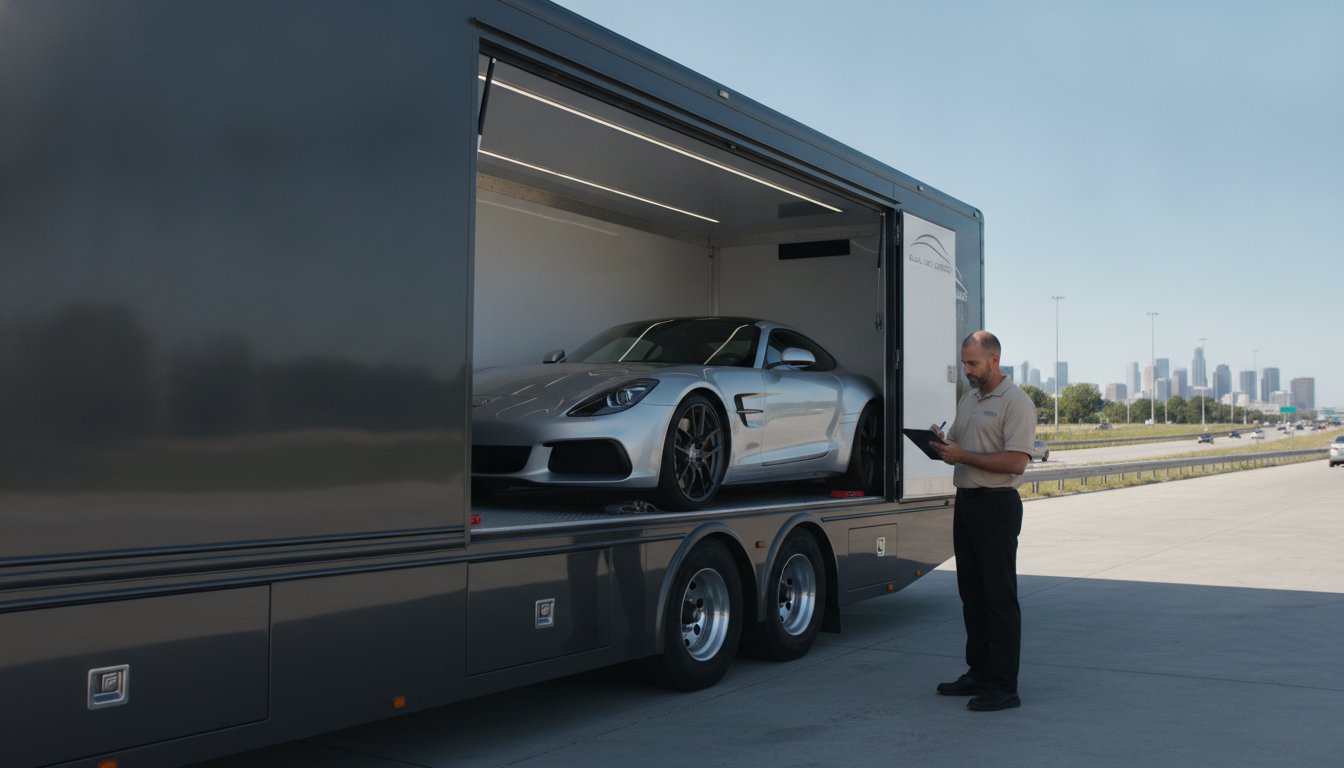
The choice between transport methods is often dictated by the required insurance ceiling. Open carriers typically maintain cargo limits between $100,000 and $150,000. This is generally sufficient for standard daily drivers, but it's rarely enough for luxury or vintage assets. In contrast, Enclosed Car Transport providers carry significantly higher premiums because they offer insurance ceilings ranging from $250,000 to over $1,000,000. These elevated limits are essential for addressing "diminished value." This legal concept accounts for the loss in market appeal a vehicle suffers even after a perfect repair. For rare or high-performance vehicles, ensuring the policy covers this loss of value is as important as the repair coverage itself.
The Bill of Lading: Your Primary Insurance Document
The Bill of Lading serves three critical roles: it is a receipt, a legal contract, and a definitive condition report. It's the primary evidence used by insurance adjusters to determine when and where damage occurred. We guide our clients through a meticulous two-stage process to safeguard their interests.
- Pre-Shipment Inspection: Before the vehicle is loaded, the carrier will note any existing imperfections. You should take high-resolution, time-stamped photographs of the vehicle from all angles, including the undercarriage and interior.
- Post-Shipment Inspection: Upon delivery, you must inspect the vehicle before signing the document. Any damage not noted on the Bill of Lading at the time of delivery is legally assumed to have happened after the transport was completed.
It's vital to remain calm and thorough during this final stage. If you discover new damage, it must be documented clearly on the BOL before the driver departs. This signature is your formal acceptance of the vehicle's condition. Without a specific notation of damage on the delivery receipt, the carrier’s insurance provider will almost certainly deny any subsequent claims. We act as your advocate in these moments, ensuring that the documentation matches the reality of the vehicle’s condition.

Verification and Claims: Safeguarding Your Investment
Verification is the definitive step that separates a secure logistics arrangement from a high-stakes gamble. While we've already explored the theoretical layers of coverage, the practical application of auto transport insurance explained requires a rigorous approach to real-time data. The Federal Motor Carrier Safety Administration (FMCSA) provides a public portal known as the SAFER system, which serves as a transparent ledger for every registered carrier. This database allows you to confirm that a provider’s credentials aren't just claimed, but active and compliant with current federal mandates. Trust, in this industry, is always built upon verifiable evidence.
Once a shipment is underway, the role of the insurance adjuster becomes paramount if an incident occurs. These professionals act as neutral evaluators who reconcile the pre-shipment condition reports with the current state of the vehicle. To facilitate their work, high-resolution photography is your most potent tool. We advise capturing every panel and interior detail under clear lighting before the vehicle is loaded. This visual evidence, combined with a meticulous post-shipment inspection, forms the foundation of any successful recovery effort. If you're ready to partner with a team that prioritizes this level of due diligence, you can request a customized transport quote today and speak with our specialists.
How to Verify a Carrier’s Insurance Credentials
To verify a carrier’s status, enter their Motor Carrier (MC) number into the FMCSA SAFER portal and navigate to the "Insurance/History" tab. You must confirm that the policy status is listed as "Active" rather than "Pending" or "Dismissed." A critical warning sign is a carrier that maintains "Liability Only" status. Without a specific "Cargo" filing, the insurance provider has no legal obligation to reimburse you for damage to the vehicle itself. A professional partner will always be willing to provide a Certificate of Insurance (COI) that mirrors the data found in the federal registry, ensuring total alignment between their claims and their coverage.
The Step-by-Step Claims Process
The "5-Day Rule" is a standard industry expectation where immediate action is required to maintain the integrity of a claim. If you discover an issue, you must follow this precise sequence to ensure your rights are protected:
- Step 1: Note the specific damage on the Bill of Lading before the driver departs the delivery site. A signature without a notation is a legal admission of satisfaction that's difficult to overturn.
- Step 2: Take clear, timestamped photographs of the specific damage and the odometer. This proves the vehicle wasn't driven after delivery and that the damage is fresh.
- Step 3: Contact your transport broker and the carrier’s insurance agent immediately to initiate the claim. Prompt notification prevents the "delayed discovery" defense that many adjusters use to deny claims.
We believe that a proactive approach is the only way to ensure your investment remains meticulously protected. By following these steps, you transform a stressful situation into a managed process with a clear path to resolution. Our team remains at your disposal to assist with documentation should the need arise, providing the expert advocacy you expect from a premier logistics partner.
The GAATCO Standard: Bespoke Protection for Every Mile
Two decades of operational excellence have allowed our team to refine what we call the GAATCO Standard. This protocol is a commitment to precision that transcends basic logistics, positioning us as a discreet partner for those who require absolute certainty. We recognize that having auto transport insurance explained is only the first step toward a successful relocation. The true value lies in having a seasoned expert who proactively manages these complexities on your behalf. By assuming the role of an authoritative advisor, we handle the rigorous insurance logistics and carrier verifications, allowing you to focus on your broader objectives while we secure your assets with quiet confidence.
Our Meticulous Carrier Vetting Process
Our vetting process is governed by rigorous standards that far exceed industry minimums. We don't simply verify a carrier's initial filing; we actively monitor insurance renewals and safety ratings for every provider within our exclusive network. This level of scrutiny applies across all service lines, from the reliability required for Open Car Transport to the high-limit exclusivity of Enclosed Car Transport. By selecting only highly rated carriers with proven track records, we mitigate risk before the first mile is even traveled. Our commitment to core operational values is a non-negotiable pillar of our service, ensuring that every vehicle is entrusted to professionals who respect the high-stakes nature of specialized transport.
Seamless Logistics from Coast to Coast
Our expansive reach connects key economic and luxury hubs, including Houston, New York, and San Diego. This geographic advantage allows us to offer sophisticated Door-to-Door Auto Shipping solutions that maintain a strict chain of custody from pickup to final delivery. We believe that a hassle-free experience is the hallmark of true luxury service. By prioritizing transparency and providing clear, hierarchical information regarding your shipment's status, we bridge the gap between complex operational realities and your personal peace of mind. Having auto transport insurance explained through our professional lens ensures you understand that we leave nothing to chance.
We invite you to Request a customized quote from GAATCO today for secure vehicle relocation that reflects your standards of excellence. Our human-centric approach ensures that behind every sophisticated logistics plan, there is a dedicated team of professionals working to protect your investment with meticulous attention to detail and a commitment to your absolute satisfaction.
Securing Your Automotive Legacy with Confidence
We've examined how the Bill of Lading serves as your primary condition report and why verifying a carrier’s cargo limit is a non-negotiable step in the logistics process. Understanding these technical layers ensures that your asset isn't just moved, but meticulously shielded from the inherent risks of the road. Having auto transport insurance explained in such detail empowers you to choose a partner who values your investment as much as you do. With over 20 years of industry experience in specialized logistics, we've developed specialized protocols for high-value classic and luxury vehicles that go far beyond standard requirements.
Our exclusively licensed and insured carrier network is built on a foundation of reliability and elite service. We take pride in acting as your trusted advisor, managing every operational nuance so you don't have to. Experience the peace of mind that comes with GAATCO’s professional vehicle transport services. Your vehicle deserves a journey defined by safety and sophistication, and we're here to ensure it arrives exactly as expected.
Frequently Asked Questions
Do I need my own insurance to ship my car?
You aren't required to maintain a separate policy for transit, as the carrier’s cargo insurance serves as the primary source of protection for your vehicle. While your personal automotive policy might offer secondary coverage, many providers explicitly exclude damage sustained while a vehicle is in the custody of a commercial hauler. We recommend confirming with your insurance agent whether your comprehensive coverage remains active during professional transport to provide an additional layer of security.
What is the difference between a broker and a carrier in terms of insurance?
Carriers provide the primary cargo and liability insurance that covers the physical asset during its journey. Brokers maintain a separate, sophisticated fail-safe known as contingent cargo insurance, which protects the client if the carrier’s primary policy is unexpectedly denied or cancelled. This multi-tiered structure is a vital part of having auto transport insurance explained, as it ensures a continuous safety net regardless of the carrier’s individual policy status.
Does auto transport insurance cover personal items left inside the car?
Carrier insurance policies strictly exclude any personal belongings or household goods left inside the vehicle during transit. These items are not considered part of the automotive cargo and are not covered if they are lost or damaged. Furthermore, the presence of personal effects can interfere with the carrier's weight compliance and safety protocols. We advise clients to remove all personal items to ensure the vehicle’s interior remains protected and the shipment stays within legal specifications.
What should I do if the carrier refuses to note damage on the Bill of Lading?
You should refuse to sign the delivery receipt and contact your transport broker immediately while the driver is still at the location. A signature on a clean Bill of Lading is a legal admission that the vehicle was received in good condition, which can invalidate future claims. Use your high-resolution, timestamped photography as definitive evidence of the new damage and insist that the discrepancies are documented before the carrier departs your property.
Are classic and luxury cars insured differently than standard vehicles?
High-value assets require significantly higher insurance ceilings that often exceed the standard $100,000 limits found on most open trailers. To ensure these investments are meticulously protected, we utilize specialized enclosed carriers that typically carry cargo coverage ranging from $250,000 to over $1,000,000. This increased indemnity is essential for rare or vintage vehicles where even minor repairs can be exceptionally costly and impact the vehicle's long-term market value.
How long do I have to file a claim after my car is delivered?
You should ideally initiate a claim immediately, as the industry standard follows a rigorous "5-day rule" for formal documentation and notification. The most critical step is noting the damage on the Bill of Lading at the exact moment of delivery. Any delay in reporting the incident to the insurance adjuster can lead to a denial, as it becomes increasingly difficult to prove that the damage occurred during the carrier's window of responsibility.
What is the maximum amount insurance will pay for a damaged vehicle?
The maximum recovery is strictly limited by the specific cargo insurance ceiling stated on the carrier's policy. This is why having auto transport insurance explained by a professional is so important; you must ensure the carrier's limit is sufficient to cover the full market value of your vehicle. If your asset’s value exceeds standard limits, we facilitate the selection of specialized carriers with higher indemnity thresholds to guarantee that your investment is never under-insured.
Does insurance cover "Acts of God" like hail or storms during transport?
Most standard carrier cargo policies exclude coverage for "Acts of God," which include natural events like hail, floods, or lightning strikes. These environmental risks are a primary reason why discerning clients choose enclosed transport, which provides a physical barrier against the elements. If you opt for an open trailer, your personal comprehensive insurance is typically the only mechanism for recovery if weather-related damage occurs during the journey.


