
Your PCS orders are in and household plans are taking shape, but your car’s pickup date may not fit your travel schedule. The logistics of shipping a car to a new duty station come down to coordinating these moving parts before they become last-minute complications.
It’s reasonable to weigh driving against carrier transport. Driving gives you direct control of the trip, while shipping may better suit a schedule with little room for a long drive. Either way, pickup, travel, and delivery need to work together, especially when housing arrangements or installation access affect where the vehicle can be handed off.
This guide explains the domestic PCS vehicle-shipping process and the decisions that shape a workable plan. You’ll learn how to compare driving with open or enclosed carrier transport, schedule around your orders and travel dates, and prepare for pickup and delivery. We’ll also cover door-to-door arrangements, including how route conditions and access can determine a practical handoff point, so you can set clear expectations for your vehicle’s arrival.
Key Takeaways
- Map orders, travel, housing, and vehicle availability before setting a shipment schedule.
- Understand how the logistics of shipping a car to a new duty station move from route planning and booking through pickup, transit, and delivery.
- Compare driving, open transport, and enclosed transport based on mileage, flexibility, vehicle exposure, and coordination needs.
- Prepare for pickup by gathering key documents, removing personal items, and recording your vehicle’s condition with dated photographs.
- Plan a realistic handoff point around route conditions and access, then align it with your travel and arrival arrangements.
Logistics of Shipping a Car to a New Duty Station: Start with the Move Plan
PCS orders set a move in motion, but they rarely settle every practical detail at once. Travel dates, housing arrangements, reporting requirements, and the day your vehicle becomes available may not align. Start the logistics of shipping a car to a new duty station by bringing those pieces into one plan, rather than treating vehicle transport as a separate task.
PCS means Permanent Change of Station, an assignment that relocates a service member to a new duty station. A POV is a privately owned vehicle. This guide focuses on domestic carrier transport within the United States, such as arranging a shipment from Atlanta to Houston or from San Diego to another U.S. destination. Overseas moves follow different procedures. For broader context, see Permanent Change of Station (PCS) on Wikipedia.
This video offers a practical introduction to vehicle shipping during a military move:
What should you decide before arranging a vehicle shipment?
Start with four practical details: the vehicle, its origin, its destination, and the period when it can be released for pickup. A working date range is more useful than choosing a date before travel and housing plans are clear. Note whether the vehicle is operable and identify any condition that could affect loading or handoff.
Then compare the vehicle’s arrival needs with your schedule. Will you need it immediately after reporting, or can delivery be coordinated around your housing move-in? Consider the full route and realistic handoff locations. Door-to-door transport can simplify coordination, but the agreed pickup or delivery point depends on route conditions and access. Do not assume the carrier can enter a military installation. Plan an accessible handoff point if needed.
How do PCS orders affect the transport plan?
Use your orders to establish the move context, destination, and reporting timeline, not as proof that a privately arranged shipment will be reimbursed. Domestic POV transport rules and entitlements can depend on the circumstances of the move. Before making financial decisions, consult current official guidance, including applicable Defense Department travel rules, and follow the instructions relevant to your orders.
When driving does not fit your PCS schedule, GAATCO provides domestic military vehicle shipping and door-to-door transport. Build flexibility into the plan for practical details that influence pickup and delivery, including vehicle readiness and access at each end.
Domestic transport planning starts with dates, route, and handoff access. Establishing those fundamentals gives you a sound basis for coordinating the vehicle with travel, reporting, and housing arrangements.
How Domestic PCS Car Shipping Works: From Scheduling to Delivery
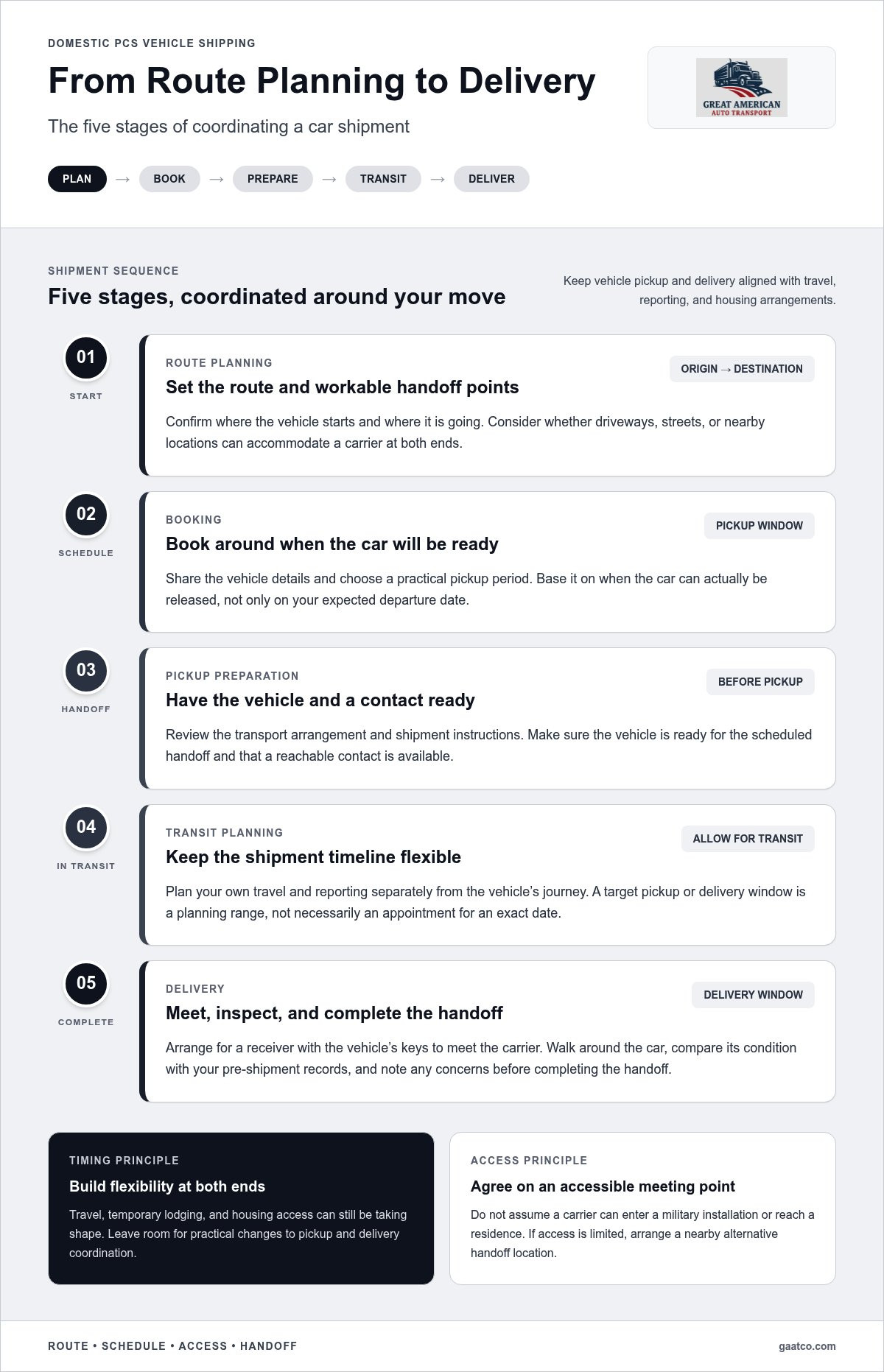
A domestic vehicle shipment moves through a series of coordinated stages. Add them to your PCS calendar so a missed pickup does not collide with travel or a delivery does not arrive before anyone can receive the car. The process is straightforward, but the dates and handoff arrangements need room to adapt.
- Plan the route. Set the vehicle’s origin and destination, then consider which driveways, streets, or nearby locations can accommodate a carrier at each end.
- Book around the move. Share the vehicle details and a practical pickup window that accounts for when the car will be ready, not only when you expect to depart.
- Prepare for pickup. Review the transport arrangement and instructions, then have the vehicle and a reachable contact ready for the scheduled handoff.
- Allow for transit. Keep your travel and reporting plans distinct from the vehicle’s journey. Avoid relying on an exact arrival day unless it has been specifically established.
- Coordinate delivery. Arrange for someone to meet the carrier, inspect the vehicle, and complete the handoff at the planned location or an agreed alternative.
The route and carrier schedule influence transit planning. A target pickup or delivery window is a planning range, not necessarily an appointment for a particular date. Build flexibility around both ends of the shipment, especially if your travel, temporary lodging, or housing access is still taking shape. The U.S. Army PCS Car Shipping Guide provides official context on shipping a privately owned vehicle during a PCS. Use current official guidance for applicable requirements or entitlements.
What happens between booking and vehicle pickup?
Before pickup, confirm the origin, destination, vehicle details, and a workable period when the car can be released. Review the transport arrangement and shipment instructions so there is no uncertainty about where to meet or what must be ready. Keep your phone available and designate a reachable contact if you will be traveling. If plans change, communicate promptly to keep coordination clear.
What should you expect at delivery?
Choose a receiver who can meet the carrier during the delivery window and has access to the vehicle’s keys. Walk around the car with the carrier, compare its condition with your pre-shipment records, and note any concerns before completing the handoff. If a carrier cannot reach the residence or installation, arrange an accessible nearby meeting point rather than assuming entry will be permitted. GAATCO provides domestic military vehicle shipping for PCS moves.
Drive or Ship Your Car to a New Duty Station? Compare the Trade-Offs
Choosing whether to drive or ship depends on how the vehicle fits into your wider PCS schedule. A long drive may work if you have time and want the car with you throughout the trip. Carrier transport may suit a schedule with little room for driving because of travel, reporting, or housing plans. Compare the logistics of shipping a car to a new duty station with your route, available time, vehicle, and preferred handoff arrangements.
When might driving the vehicle fit the move better?
Driving may suit a move when a driver has enough time, energy, and flexibility for the route, and keeping the car available during travel matters. Factor in added mileage, time on the road, and how the drive fits with reporting and housing dates. If household or reporting plans are tight, do not assume a long drive will be practical simply because the destination is reachable by car.
When should you compare open and enclosed transport?
Open transport is a common carrier format for everyday vehicles. Enclosed transport adds protection from exposure and may suit selected vehicles, such as a classic car or one whose condition warrants extra consideration. Match the method to the vehicle’s value, condition, exposure concerns, and your preferences. Neither option is universally faster, safer, or more appropriate. Review domestic vehicle transport services as you compare carrier options.
For many standard vehicles, open transport is a practical carrier option; enclosed transport provides more protection from exposure. Compare the vehicle’s needs and your move schedule, then consider whether you can coordinate the handoff comfortably. Open carrier fees are calculated based on mileage, vehicle size, and current fuel surcharges. Enclosed transport has separate premium service fees.
PCS Vehicle Shipping Checklist: Prepare the Car and Plan the Handoff
A prepared vehicle and clearly assigned handoff contacts make pickup and delivery easier to coordinate around PCS travel. Use this checklist to work through the practical details before the carrier arrives. Follow the shipment instructions for fuel level, personal belongings, and vehicle-specific preparation, since transport policies can vary.
How should you prepare the vehicle before pickup?
Complete these checks before the scheduled handoff. The goal is to document the vehicle’s condition and avoid preventable questions on pickup day.
- Record the vehicle’s condition. Take dated photographs of the exterior and interior, including existing scratches, dents, or other visible damage. Keep the images with your shipment paperwork so you can refer to them at delivery.
- Remove personal belongings. Clear the cabin, trunk, and storage compartments unless the agreed transport instructions expressly allow specific items. Do not assume personal-item transport is included.
- Follow preparation instructions. Use the provided guidance for fuel level and vehicle readiness. Follow the instructions for your shipment if they differ from general advice.
- Make the vehicle accessible. Have keys available and disclose any known operating, starting, or loading concerns before pickup. This gives the handoff contact and carrier useful information in advance.
- Organize relevant records. Keep the shipment instructions, vehicle details, and any requested paperwork together. Requirements can vary, so use the documents and directions associated with your arrangement rather than assuming a universal list.
How can you make pickup and delivery handoffs smoother?
Choose a safe, accessible meeting point with enough room for the carrier to approach and load or unload the vehicle. Residential streets, narrow driveways, parking restrictions, or installation access rules may make a nearby alternative more practical. Do not assume a carrier can enter a military installation. If gate procedures limit access, plan a suitable meeting location outside the gate in line with local instructions.
- Assign a responsible contact. If you cannot attend, arrange for someone you trust to meet the carrier at pickup or delivery. Share the contact’s details and make sure that person understands the agreed location and timing window.
- Keep communication available. Ensure the designated contact can be reached during the handoff period and respond to coordination updates. If the plan changes, communicate the update promptly.
- Review the condition at delivery. Walk around the vehicle with the carrier and compare its condition with your dated photographs and shipment record. Note concerns in the delivery paperwork before completing the handoff, and retain copies of the condition record and shipment documents.
Thoughtful preparation gives each handoff a clear point of reference, even when you are managing travel or reporting obligations. GAATCO provides domestic PCS vehicle transport. Coordinate your vehicle shipment with a clear preparation and handoff plan.
Arrange Domestic Military Vehicle Shipping Around Your PCS Dates
A sound plan turns the logistics of shipping a car to a new duty station into a sequence of manageable decisions: establish the route, choose a workable date window, select a transport method, and prepare the handoff. Carrier transport is a practical alternative when driving does not fit your PCS calendar. GAATCO provides domestic military vehicle shipping and door-to-door transport with licensed and insured carriers.
What details help shape a domestic transport plan?
Gather accurate information about the shipment. Include the vehicle’s origin and destination, year and model, operating condition, and preferred pickup window. Note access limits at either location and identify practical alternate handoff points. These details help shape a transport plan around your route and move dates without assuming a fixed schedule or guaranteed arrival day.
How do you move from planning to a shipment request?
Review the transport options against the vehicle, route, and PCS calendar. Share accurate details about the vehicle and handoff locations so the arrangement reflects the move as planned. Keep questions about official PCS authorization or reimbursement separate from the carrier arrangement, and refer to current official guidance for those matters.
- Confirm the route. Identify where the vehicle will be released and where it needs to arrive. Consider whether access, parking, or local restrictions could affect either handoff.
- Set a workable window. Compare the vehicle’s availability with travel and reporting dates. Leave flexibility where plans are still taking shape rather than building the shipment around an assumed exact date.
- Select transport. Consider open or enclosed carrier transport based on the vehicle’s condition, exposure concerns, and personal preference. Door-to-door service can simplify coordination, with the agreed meeting point shaped by route conditions and access. Expedited shipping fees apply for guaranteed pickup dates or shortened delivery windows.
- Prepare the handoff. Follow the shipment instructions, gather relevant paperwork, and make sure a responsible contact can meet the carrier if you cannot attend.
Domestic military vehicle shipping is one part of the PCS plan, not a substitute for reviewing your orders or applicable travel guidance. Keeping those processes distinct helps you make carrier arrangements with a clear understanding of the vehicle’s route, timing needs, and handoff expectations. GAATCO’s vehicle transport services include domestic military, open, enclosed, and door-to-door transport.
Have your route and vehicle details ready? Request a transport quote to begin shaping a domestic shipment around your PCS dates.
Set Your PCS Vehicle Plan in Motion
Once your move dates begin to take shape, turn your vehicle plan into a practical next step. A clear route, realistic pickup window, and agreed handoff point give you a stronger foundation for coordinating transport alongside the rest of your PCS. The logistics of shipping a car to a new duty station are easier to manage when the shipment reflects your actual schedule, rather than a best-case assumption.
If driving would add strain to an already demanding move, domestic carrier transport offers an alternative. GAATCO provides vehicle transport with licensed and insured carriers, door-to-door delivery solutions, and military vehicle shipping. Its services are backed by over 20 years of industry experience. Plan the handoff around route conditions and access, without assuming a carrier can enter an installation.
When you are ready to discuss your route and vehicle, request a domestic vehicle transport quote. A well-coordinated shipment can help you approach your next duty station with one important detail already in motion.
Frequently Asked Questions
Does the military pay to ship a car for every PCS move?
No. For domestic moves within the continental United States, government payment for shipping a privately owned vehicle generally isn’t provided, so don’t assume your orders cover a carrier shipment. Before committing funds, review current Joint Travel Regulations and the guidance for your specific orders with your transportation or travel office. Overseas moves follow different rules, and any applicable authorization should be established through official channels.
Can I pack personal belongings inside a car being shipped?
Usually, plan to remove personal belongings unless the specific shipment instructions expressly allow them. A carrier shipment is arranged for the vehicle, and personal items may affect handling or fall outside the transport arrangement. Clear the cabin, trunk, and compartments before pickup, then follow the instructions for your shipment rather than relying on advice from a different move or carrier arrangement.
What does POV mean in military car shipping?
POV means “privately owned vehicle,” the term commonly used in military travel and transportation discussions for a personal vehicle. It distinguishes your own car from a government-owned vehicle or a rental. In shipment paperwork, check that the listed vehicle details match the car being moved, especially if a household has more than one vehicle or the owner’s name differs from the registered owner.
Can I ship an inoperable car to my new duty station?
Yes, inoperable vehicle transport is an available carrier option, but the vehicle’s condition affects loading and handling arrangements. Describe whether it starts, steers, rolls, or brakes, and disclose any known mechanical or access issue before the shipment is planned. For example, a car that cannot roll may need different loading arrangements from one that starts but cannot be driven safely.
Will a car carrier deliver my vehicle onto a military base?
Do not assume a carrier can enter an installation or pass its security procedures. Access rules differ by destination and may affect where the vehicle can be exchanged. Plan an accessible meeting point outside the gate if installation entry is restricted, and ensure the person receiving the car understands the location and can legally access it. Confirm local handoff procedures through the appropriate installation channels.
Can I ship a second vehicle during a PCS move?
You can arrange transport for an additional vehicle, but do not assume government payment or authorization applies to it. For domestic moves, privately arranged vehicle transport is generally not covered by the government. GAATCO provides domestic transport across routes connecting locations such as Atlanta, Miami, New York, Houston, Dallas, San Diego, San Francisco, Seattle, Orlando, Boston, Nashville, Denver, Austin, Chicago, Las Vegas, and Phoenix.
Is this guide relevant to an overseas duty station?
This guide focuses on domestic carrier transport within the United States, so its planning steps should not be treated as overseas shipping instructions. Moves to or from an overseas location may involve different military authorizations, documentation, and procedures; for broader international relocation and moving support, resources like asiaticrelo.com can provide assistance. Consult current official guidance for the destination and your orders before making arrangements. A domestic shipment plan alone does not establish eligibility or requirements for an overseas move.
For domestic vehicle transport around your PCS dates, request a quote from GAATCO with your route and vehicle details.


