
What if the greatest risk to a vehicle’s undercarriage comes before the journey even begins? For low-clearance cars, loading and unloading can be just as important to consider as road conditions. Understanding how to prevent undercarriage damage on a transport truck starts with identifying vulnerable areas and sharing relevant vehicle details before pickup.
It’s reasonable to want a clear record of your vehicle’s condition and a careful handoff, particularly if it sits close to the ground. Preparation and precise communication can help reduce avoidable issues, though no transport method removes every risk. This guide explains common causes of undercarriage damage during vehicle transport and how to prepare for a well-documented pickup and delivery.
You’ll learn what to share about ground clearance and existing wear, which areas to photograph safely, and what to inspect when the vehicle arrives. We’ll also cover how to record newly noticed damage promptly, so you can compare it with marks documented before pickup. Whether you choose open or enclosed transport, a clear record before and after the journey supports a more informed shipping experience.
Key Takeaways
- Undercarriage damage can result from a sudden scrape or impact, while corrosion from moisture and road salt develops over time.
- Vehicle design, existing condition, and transport circumstances all influence risk. No single factor means damage is inevitable.
- Learn how to prevent undercarriage damage on a transport truck by preparing the vehicle, sharing clearance and modification details, and keeping clear condition records.
- Use a numbered pre- and post-transport checklist to photograph accessible areas and document any newly noticed damage at delivery.
- GAATCO supports a clear handoff with licensed and insured carriers, door-to-door service, and real-time shipment tracking.
How undercarriage damage can happen during vehicle transport
Undercarriage damage is harm to components or protective surfaces beneath a vehicle. It may result from a sudden scrape or impact during loading, unloading, or transit, but not every mark or worn part is transport-related. Previous use, vehicle age, and exposure to moisture or road salt can all affect the underside before pickup.
It helps to distinguish an acute event from gradual deterioration. Transport impact damage occurs suddenly through scraping or contact; underbody corrosion develops over time as moisture and road salt affect susceptible materials. This distinction matters when comparing a vehicle’s condition before and after shipment. A low-clearance car, modified suspension, or existing damage can also affect what to note during the handoff.
Which underbody areas may be vulnerable in transit?
Depending on the vehicle’s design, the underside may include structural elements such as the vehicle chassis, as well as protective panels and mechanical components. Their position and exposure vary by make, model, and modifications. A lowered vehicle, for example, may have less clearance at a bumper or underbody panel than the same model in its standard configuration.
Some concerns are visible during a walk-around, such as a hanging panel, fresh scrape, or fluid on the ground. Other issues may not be apparent without a professional inspection. Existing dents, corrosion, loose parts, or previous repairs are useful context to record. Their presence alone does not establish when or how they occurred.
How loading and road conditions can contribute
Loading and unloading involve transitions between the ground and the carrier deck. If a vehicle has limited ground clearance, its approach angle and movement through that transition are worth considering. Sharing accurate clearance and modification details before pickup gives the transport team useful context about the vehicle’s configuration.
During transit, road debris such as stones or fragments from damaged tires may strike exposed areas, while uneven road surfaces can create additional contact risks. Consider these possibilities alongside the vehicle’s existing condition and the journey, rather than treating them as inevitable. Open and enclosed transport are both options, but neither eliminates undercarriage risk.
For owners researching how to prevent undercarriage damage on a transport truck, start with a clear condition record and an accurate description of the vehicle. Note low clearance, aftermarket changes, and known underbody issues before pickup. This gives you a useful baseline for the delivery inspection, when you can document any newly noticed marks and compare them with pre-existing wear.
What increases the risk of undercarriage damage on a transport truck?
Risk depends on a combination of vehicle design, existing condition, and transport circumstances. A low-slung car may need particular attention at loading transitions, while an older vehicle with loose or previously damaged underbody parts may have different vulnerabilities from a well-maintained vehicle. Neither factor means damage is inevitable. Identifying relevant details early helps make the transport plan and condition record more specific.
Why low-clearance vehicles need specific attention
A vehicle with limited ground clearance has less space between its underside and the surface beneath it. During loading or unloading, a change in elevation may make clearance especially relevant if the front or rear sits low. There is no single clearance figure that serves as a universal safe threshold for every vehicle and loading situation.
Low clearance is not a prediction of damage; it is a reason to communicate the vehicle’s specifications and configuration clearly before pickup. If available, record the manufacturer-provided ground-clearance information and share it alongside the make, model, and any relevant changes. This gives more useful context than a general description such as “low car.”
How existing condition and modifications affect risk
Changes to a vehicle can alter its clearance or the position of components beneath it. A lowered suspension, for example, may reduce the available space below the body. Modified or loose underbody parts may also merit attention. The precise effect depends on the vehicle and modification, so don’t assume that a particular model or change creates the same risk in every case.
Before pickup, disclose known modifications and existing underbody concerns, including visible scrapes, corrosion, loose panels, or prior repairs. Share what you know without trying to diagnose hidden mechanical issues yourself. For broader background on vehicle design and transportation safety, SAE International’s transportation safety journal provides technical context. Check vehicle-specific clearance figures and mechanical details against reliable technical information.
Keep existing condition separate from anything first noticed after delivery. A mark seen at arrival may be new, pre-existing, or difficult to date from appearance alone. Clear before-and-after records help establish what was visible at each handoff. A qualified inspection can assess concerns that are not apparent during a visual check, which is particularly useful if the vehicle already has wear or prior repairs.
As you consider how to prevent undercarriage damage on a transport truck, treat accurate disclosure as part of preparation, not as an assumption that the vehicle will be harmed. Explore Great American Transport services to plan vehicle transport and pickup arrangements.
Which prevention measures help protect a vehicle’s undercarriage?
Prevention works best when each measure is matched to the risk it can address. Preparing the vehicle and recording its condition support the transport handoff. Cleaning and corrosion care address longer-term exposure to road salt and moisture. Neither routine maintenance nor a protective coating can rule out scraping or impact during loading and transit.
| Measure | What it helps address | Limitation |
|---|---|---|
| Share clearance and condition details before pickup | Supports a more informed transport plan and handoff | Does not prevent every incident |
| Photograph accessible areas before and after transport | Creates a record for comparing vehicle condition | Photos may not show hidden damage |
| Clean off road salt and maintain corrosion protection | Helps manage gradual salt-related corrosion | Does not protect against loading or road impacts |
| Choose enclosed transport | Limits exposure to outside conditions during transit | Does not eliminate undercarriage damage risk |
Transport preparation versus long-term corrosion protection
Before pickup, focus on the handoff: record the vehicle’s condition, disclose low clearance or modifications, and describe known underbody concerns. These steps help you compare existing wear with anything noticed after delivery. They do not replace a mechanical inspection if a concern cannot be assessed visually.
Cleaning serves a different purpose. Regularly removing accumulated road salt can help limit corrosion, but it is general vehicle maintenance, not a way to prevent a sudden scrape. Follow the vehicle manufacturer’s care guidance, especially around sensitive components. Underbody coatings may help address particular corrosion risks, depending on the product and application. They are not a substitute for inspection and do not guarantee protection from impact damage.
When an enclosed transport option may be relevant
Enclosed transport is an option for owners who wish to limit exposure to outside conditions such as road debris and weather. It is not a dedicated undercarriage safeguard: loading, unloading, and other transit circumstances can still present risks. Open transport is also available, and the right choice depends on the vehicle and the owner’s priorities. Compare vehicle transport service options in light of those needs, and share relevant clearance and condition information for either option.
For a practical approach to how to prevent undercarriage damage on a transport truck, combine preparation, clear records, and ongoing corrosion care rather than relying on a single protective measure. Each serves a distinct purpose: information supports the handoff, documentation records condition, and maintenance addresses gradual deterioration over time.
How to prepare and inspect your vehicle before and after transport
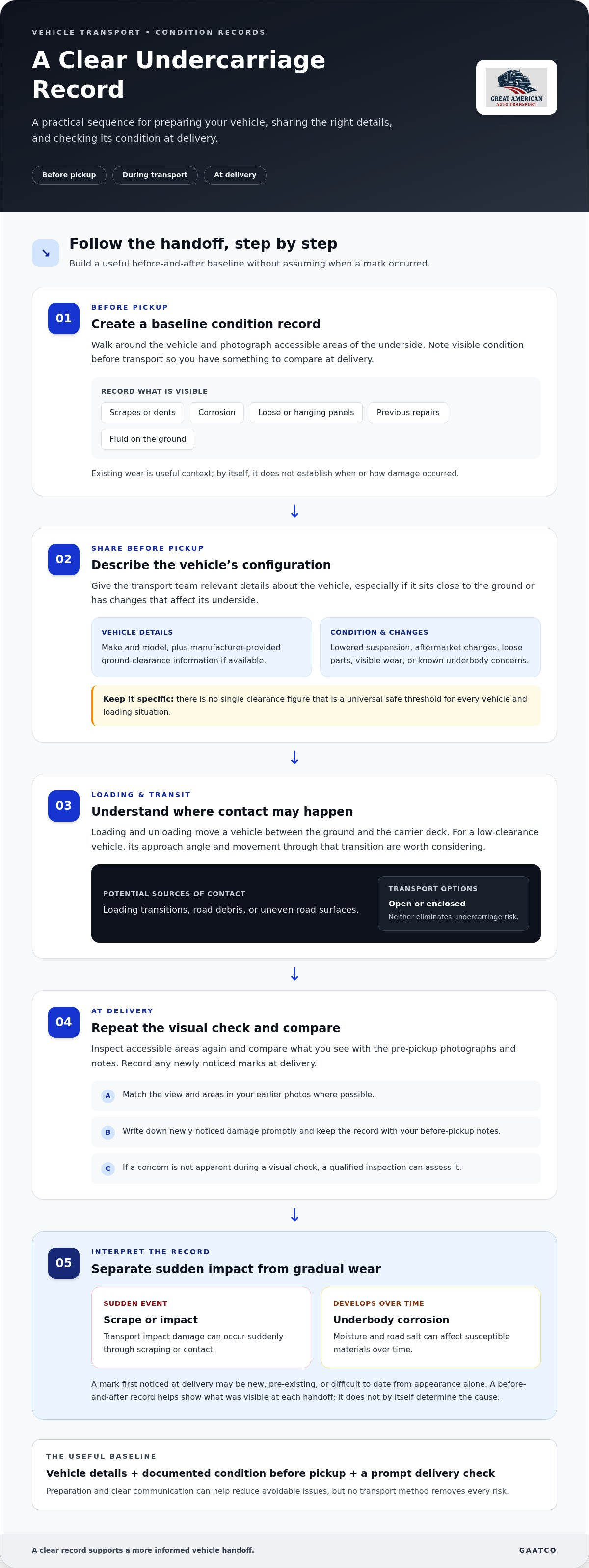
A consistent record helps make pickup and delivery handoffs clearer. Focus on what you can observe safely, describe the vehicle accurately, and keep the same notes and photographs available at both ends of the journey. You do not need to inspect hidden components yourself.
Before pickup: record condition and share relevant details
Photograph the vehicle in good light, including accessible views of the lower body and underbody. Do not crawl beneath a vehicle or use an unstable support to reach areas that are difficult to see. Images are most useful when they are clear, dated, and paired with concise notes about what they show.
- Take baseline photographs. Capture the vehicle from several exterior angles and photograph visible underbody areas only where you can do so safely. Include close-ups of existing marks or damage.
- Write down known condition issues. Note existing scrapes, corrosion, loose or previously repaired parts, and other concerns. Describe their location and appearance without guessing when they occurred or what caused them.
- Share vehicle-specific details. Tell the transport team about low clearance, lowered suspension, or other modifications that may affect the vehicle’s configuration. If you have manufacturer-provided clearance information, include it.
- Keep the record together. Save photographs, notes, and transport documents in one place so you can refer to them during the delivery inspection.
At delivery: inspect safely and document concerns
Choose a safe, well-lit place to look over the vehicle. Inspect visible areas without going underneath it, and compare what you see with your pre-pickup photographs and notes. If lighting or access makes an area difficult to assess, record that limitation rather than treating an incomplete view as proof of its condition.
- Walk around the vehicle. Check the exterior and accessible lower areas for marks, loose panels, or other changes you can see safely.
- Compare like with like. Match delivery observations against your baseline images, using similar angles where possible. Note differences, but avoid assuming their cause from appearance alone.
- Document concerns promptly. Photograph any newly observed issue clearly and describe its location. Raise it during the transport handoff and ensure the concern is recorded on the delivery condition paperwork where applicable.
- Retain all records. Keep both sets of photographs, notes, and transport documents together. If an issue is not clearly visible or appears mechanical, arrange a professional inspection rather than trying to diagnose it from a photograph.
This sequence supports how to prevent undercarriage damage on a transport truck by making relevant vehicle details and condition changes easier to identify. To arrange vehicle transport and share details for the handoff, request a vehicle transport quote.
How GAATCO supports a clear vehicle transport handoff
A clear handoff begins with useful, vehicle-specific information. Sharing known clearance limitations, modifications, and existing underbody concerns gives the transport team relevant context for pickup. Pair those details with condition notes or photographs, and describe what you know factually. For example, identify a visible scrape by location rather than guessing when it happened or whether it affects a hidden component.
What to communicate when arranging vehicle transport
Include details that may affect how the vehicle is handled, such as lowered suspension, limited ground clearance, or a previously repaired underbody area. If you have manufacturer-provided clearance information, share it. Otherwise, describe the concern plainly. A concise, accurate account helps establish the vehicle’s condition and configuration at the start of the shipment.
GAATCO provides door-to-door pickup and delivery, without terminal visits. The handoff takes place at the arranged pickup and delivery locations, so you don’t need to bring the vehicle to a terminal. Keep your pre-transport records available to refer to the same condition details at both points.
What to expect during shipment
GAATCO works with a nationwide network of licensed and insured carriers. Real-time shipment tracking is provided, so you can follow the shipment as it moves. Vehicles are fully insured during transport.
Open and enclosed transport are both available options. The choice of transport type does not remove the value of accurate disclosures, a condition record, and a careful inspection at delivery. Those steps help establish what was visible before pickup and make it easier to document a concern if something new is noticed upon arrival.
Preparation does not mean expecting damage. It means sharing relevant information before transport, keeping a reliable record, and making the delivery handoff clear. Together, these practices offer a measured approach to how to prevent undercarriage damage on a transport truck, while recognizing that no single step can eliminate every transit risk.
If you are planning vehicle transport, share the vehicle’s condition and clearance details when you request a vehicle transport quote.
Make your next transport handoff more informed
Before arranging a shipment, turn what you know about your vehicle into a concise handoff note. Include details that could affect loading, such as a lowered ride height, a modification, or a pre-existing concern, and keep your condition record accessible. This preparation helps move the conversation from general precautions to the specific vehicle you’re shipping.
Understanding how to prevent undercarriage damage on a transport truck is not about eliminating every uncertainty. It is about making thoughtful choices with the information available, documenting condition clearly, and raising concerns promptly if something looks different at delivery. A well-documented process can make the transport experience easier to manage.
When you’re ready to plan your shipment, request a vehicle transport quote and share the details that matter to your vehicle.
Frequently Asked Questions
Can road salt damage a vehicle’s undercarriage after transport?
Yes. Road salt that remains on vehicle surfaces, including accessible areas underneath, can contribute to corrosion over time. This is a maintenance concern, not evidence by itself that transport caused damage. After travel on salted roads, follow the vehicle manufacturer’s care guidance and use an appropriate cleaning method. Salt noticed after delivery may have accumulated during earlier winter driving, so compare the vehicle’s condition records before drawing conclusions.
Is undercarriage damage always visible during a delivery inspection?
No. A walk-around may not reveal a condition hidden behind a panel or in an area that cannot be viewed safely. If you notice a new sound, fluid, or change in how the vehicle drives, record when it appeared and arrange a suitable professional inspection. Keep any inspection findings with your transport records. A visual check can document visible changes, but it cannot establish the condition of every concealed component.
Does enclosed transport prevent undercarriage damage?
No. Enclosed transport limits exposure to outside conditions, but it does not remove every risk associated with loading, clearance, or transit. The vehicle’s configuration and shipment circumstances still matter. GAATCO provides vehicle transport nationwide across the USA, including shipments involving Atlanta, Miami, New York, Houston, Dallas, San Diego, San Francisco, Seattle, Orlando, Boston, Nashville, Denver, Austin, Chicago, Las Vegas, and Phoenix. Share relevant low-clearance or modification details before pickup so they are part of the transport handoff.
Is an underbody coating enough to prevent damage during vehicle transport?
No. A coating may be intended to address a particular environmental or corrosion concern, but it should not be treated as protection against every type of damage. Scraping or impact is a different risk. If you’re considering how to prevent undercarriage damage on a transport truck, treat coatings as one part of vehicle maintenance, follow manufacturer guidance, and keep an accurate record of the vehicle’s existing condition.
How can I tell whether undercarriage damage existed before shipping?
Compare dated pre-pickup photographs and written notes with what you observe after delivery. Look for matching features such as location, shape, and surrounding marks, while recognizing that appearance alone may not establish when damage occurred. If the images do not show the area clearly, don’t infer its earlier condition. A qualified inspection can help assess an issue that is hidden or difficult to distinguish from prior wear.
What should I do if I notice possible undercarriage damage after delivery?
Record where and when you noticed it, take clear photographs if you can do so safely, and compare them with your pre-transport records. Raise the concern promptly during the transport handoff and retain any related documents. If the condition is not clearly visible or may affect vehicle operation, arrange an appropriate inspection. Vehicles are fully insured during transport, but an observation alone does not determine coverage or an outcome.


