
The integrity of a vehicle transport operation rests entirely upon the strength of its paperwork. While some view the administrative phase as a mere formality, the specific documents needed to ship a car serve as the legal architecture that safeguards your high-value asset during transit. We recognize that for the discerning owner, the priority isn't just movement; it's the absolute protection of an investment. It's natural to feel a sense of anxiety when navigating ownership verification or the fear of a denied insurance claim due to incomplete records.
This professional guide provides a meticulous checklist to ensure your transport experience is secure, seamless, and fully compliant with 2026 standards. We've distilled the complex requirements into a clear framework, allowing you to master the logistical heavy lifting with quiet confidence. You'll gain a comprehensive understanding of the Bill of Lading's critical role as a condition report, the nuances of lienholder authorizations for financed vehicles, and the essential identification required for a frictionless transition from pickup to delivery. By aligning with these established protocols, we ensure your vehicle remains legally protected throughout its journey.
Key Takeaways
- Master the legal architecture of vehicle transport by identifying the specific documents needed to ship a car, ensuring your high-value asset remains protected throughout the journey.
- Understand the pivotal role of the Bill of Lading as both a formal contract of carriage and a meticulous record of your vehicle's condition.
- Determine when proof of ownership, such as a title or registration, is required to meet carrier protocols and state legal mandates.
- Learn the specialized requirements for financed or military vehicles, including the critical Lienholder Authorization Letter for leased assets.
- Establish a professional handover process by consolidating your records into a secure folder for a frictionless transition from pickup to delivery.
The Critical Role of Documentation in Professional Auto Transport
The administrative phase of vehicle transport is frequently underestimated by casual shippers, yet it represents the foundational layer of security for any high-value move. Establishing a clear chain of custody from the moment of pickup to the final delivery requires more than just a signature. It demands a suite of precise legal records that serve as the definitive history of the transit. By prioritizing the specific documents needed to ship a car, owners mitigate the inherent risks of logistics and ensure that every transition is accounted for with professional rigor. This meticulous approach transforms a simple move into a controlled, secure operation.
Proper documentation acts as the primary catalyst for insurance claim validity. Without a detailed vehicle condition report, proving the origin of a cosmetic or mechanical discrepancy becomes nearly impossible. While many carriers treat these records as a cursory requirement, our team views them as non-negotiable pillars of operational safety. We go beyond basic industry norms to implement specialized protocols for high-value enclosed transport, ensuring that every detail is captured with care. Our commitment to professional auto transport services means we manage the logistical heavy lifting so you don't have to worry about the finer points of liability.
Regulatory Compliance and the FMCSA
The Federal Motor Carrier Safety Administration (FMCSA) maintains strict oversight to ensure the safety and accountability of interstate shipping. As of 2026, the FMCSA requires freight brokers and forwarders to maintain a $75,000 bond or trust in liquid assets to ensure financial responsibility. Adhering to these federal standards is the baseline for any legitimate operation. The FMCSA serves as the primary regulatory body that grants and monitors the operating authority of all interstate motor carriers to ensure nationwide safety and financial compliance.
The Legal Shield: Protecting Your Asset
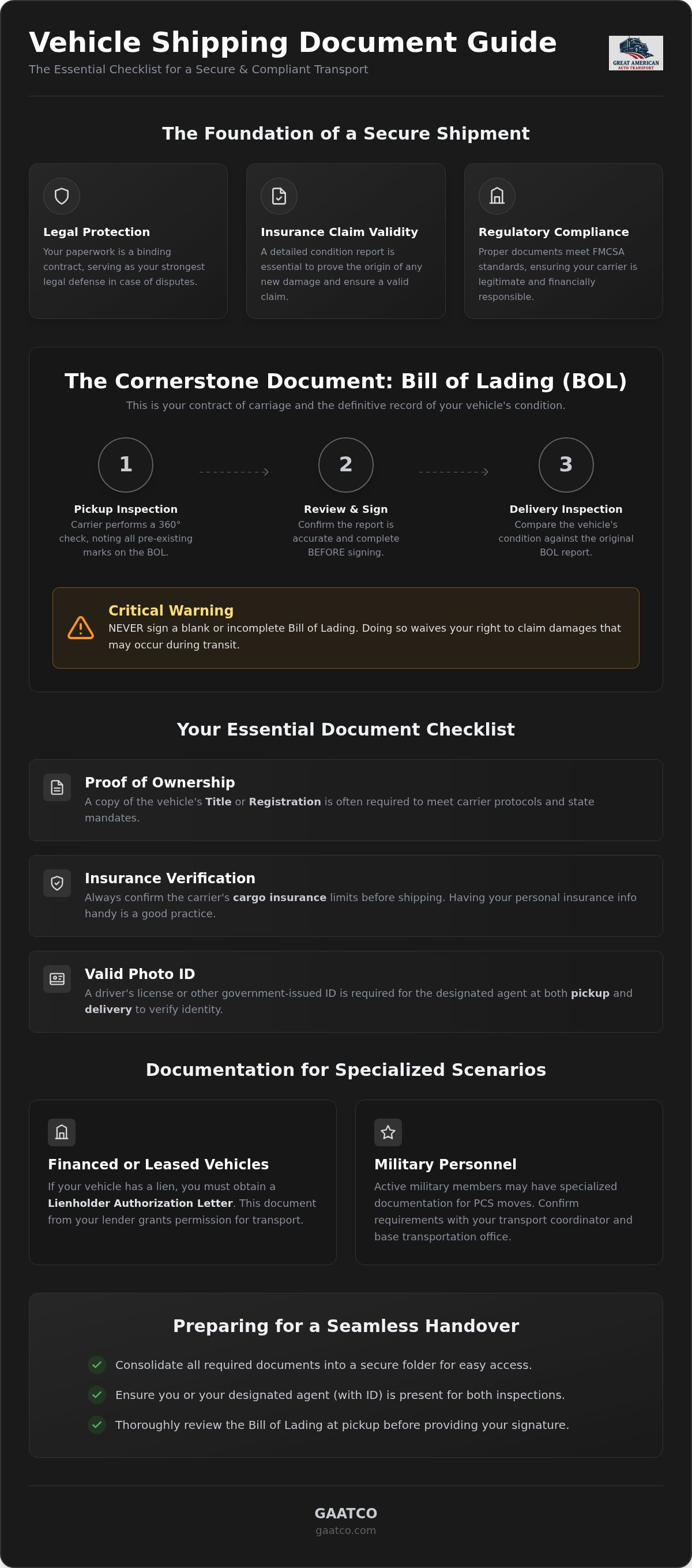
In the rare event of a dispute, your paperwork serves as your strongest legal defense. The most vital component of this defense is the Bill of Lading, which functions as both a receipt for services and a binding contract between the shipper and the carrier. It's the document that legally bridges the gap between your expectations and the carrier's responsibilities. We believe in providing a sense of quiet luxury. This means we handle the sophisticated details of logistics with a calm confidence that comes from established expertise. We transition from being a mere service provider to becoming a trusted logistics partner, allowing you to focus on your transition while we manage the complex operational realities of vehicle transport.
Mandatory Shipping Documents: The Bill of Lading and Insurance
The Bill of Lading (BOL) stands as the definitive legal instrument of the transport industry. Federal law, specifically 49 CFR § 373.101, mandates that every interstate motor carrier issue this document for every vehicle they transport. It isn't just a receipt; it's a binding contract of carriage that outlines the terms of service and provides a comprehensive record of the vehicle's condition. For owners, it remains the most vital of all documents needed to ship a car because it serves as the primary evidence in the event of an insurance claim. Without a properly executed BOL, the legal architecture of your shipment lacks its cornerstone.
The Bill of Lading (BOL) Explained
A professional handover begins with a meticulous pickup inspection. Our carriers perform a 360-degree assessment, documenting every pre-existing blemish with precision. You must never sign a blank or incomplete Bill of Lading. Doing so essentially waives your right to claim damages that might occur during transit. At the destination, the delivery inspection mirrors this initial process. You must confirm the vehicle arrived in the exact state recorded at pickup before providing your final signature. This rigor ensures a transparent chain of custody for every client, regardless of the distance traveled.
Insurance Verification and Terms
Confirming the carrier’s insurance limits is essential before the trailer ever arrives at your door. While the FMCSA requires a minimum liability of $1,000,000 for auto haulers, the specific cargo insurance—the policy that actually covers your vehicle—varies significantly between service tiers. Open transport typically provides standard coverage suitable for daily drivers. However, our enclosed transport services often feature enhanced cargo limits designed for high-value classic and luxury assets. This distinction is critical for those shipping a POV for a military PCS or moving a rare collectible, where the asset's value may exceed basic policy caps.
We ensure that insurance terms are transparent and accessible from the outset. Our team verifies that every carrier in our network maintains active, high-limit policies to provide you with absolute peace of mind. If you are ready to secure your vehicle’s journey with professional oversight, you can request a customized quote to begin the process. Learn more about our secure transport services to see how we prioritize safety through every mile of the logistics chain.
Verification of Ownership: When Title and Registration are Required
Ownership verification serves as the legal anchor of the transport process. While the Bill of Lading meticulously records the vehicle's physical state, ownership documentation confirms the carrier’s legal authority to move the asset across state lines. Understanding the distinction between carrier-specific protocols and state-level mandates is essential for a frictionless experience. Our team of professionals ensures that every verification step is handled with the discretion and precision expected in high-stakes logistics. We act as a bridge between your needs and the complex operational realities of interstate transit.
Standard Ownership Documents
For the majority of interstate transits, providing a clear copy of the vehicle registration is the primary requirement among the documents needed to ship a car. We also mandate that the person releasing the vehicle at the point of pickup presents valid photo identification to establish a secure chain of custody. This verification protects both the owner and the carrier from unauthorized transport. One non-negotiable standard we maintain is the security of your original title. We strongly recommend that you keep the original title on your person or send it via secure courier rather than leaving it inside the vehicle. This practice aligns with the security recommendations found in this Forbes guide to shipping a car, which emphasizes protecting sensitive ownership records during the transition.
State-Specific and Regional Nuances
Shipping into or out of major logistical hubs such as Miami, Houston, or San Diego introduces regional nuances that require expert navigation. For instance, pickups originating from dealerships or specialized auctions often require a "Gate Pass." This document serves as a specific release authorization and is non-negotiable for the carrier to exit the facility. Our deep regional expertise allows us to anticipate these requirements before the trailer arrives. By utilizing our Door-to-Door Auto Shipping service, you benefit from a simplified verification process where we manage the coordination between the pickup location and our specialized carriers. This level of service ensures that technical details are handled with the sophisticated edge of a seasoned expert, allowing you to remain focused on your broader objectives while we handle the logistical heavy lifting.
Documentation for Specialized Scenarios: Military and Financed Vehicles
The administrative requirements for specialized transport reflect the high-stakes nature of the assets involved. While standard documents needed to ship a car satisfy basic interstate hauls, specific scenarios like military reassignments or financed vehicle moves demand an elevated level of precision. We act as a discreet partner, managing these complex operational realities so you don't have to navigate the bureaucratic nuances alone. This meticulous attention to detail ensures that even the most complex logistical hurdles are cleared before the carrier arrives.
Military Vehicle Shipping Requirements
For service members, the POV (Privately Owned Vehicle) shipping orders are the primary catalyst for a move. These orders verify the authorization for military-contracted transport during a Permanent Change of Station (PCS). Our team understands the critical urgency required for these moves and ensures every detail aligns with Department of Defense standards. We provide a bridge between your service requirements and the sophisticated infrastructure of our Military Vehicle Shipping protocols, ensuring a secure and respectful transition for those who serve.
Financed, Leased, and Third-Party Logistics
Financed and leased vehicles introduce a third party into the legal equation. Securing the correct documents needed to ship a car that is still under a finance agreement prevents delays at state checkpoints. You must secure a formal Lienholder Authorization Letter from your lender before the vehicle is loaded. This document explicitly grants permission for the vehicle to be transported across state lines, which is vital since the lender remains the primary titleholder. Likewise, if you can't be present for the pickup or delivery, an Absent Owner Authorization is required. This grants your designated agent the authority to sign the Bill of Lading, ensuring the chain of custody remains legally sound.
Logistics for Inoperable Vehicle Transport require specific disclosures that go beyond standard paperwork. You must provide a detailed report on why the vehicle can't move under its own power, specifically noting if it can steer, brake, and roll. This ensures our carriers arrive with the necessary specialized equipment, such as winches or lift gates, to handle the asset safely. Providing these details upfront prevents logistical friction and ensures a seamless handover. If you're managing a specialized move, you can request a specialized transport quote to ensure your documentation and equipment needs are perfectly aligned.
Preparing for a Seamless Handover: Your Final Checklist
The transition from administrative preparation to physical execution is the final hallmark of a professional transport experience. While the previous sections have detailed the specific documents needed to ship a car, the actual handover is where these records are validated against the physical asset. We believe that a meticulous approach during this final phase ensures absolute clarity and reinforces the legal protections established by your paperwork. By following a structured protocol, you ensure that your vehicle's journey begins with the same level of sophistication and care that we apply to every mile of the transit.
Consolidating your records into a professional digital or physical folder allows for a frictionless exchange when the carrier arrives. This folder should contain your vehicle registration, insurance details, and any specialized authorizations discussed previously. Having these items ready demonstrates a level of readiness that mirrors our own operational standards. If you are beginning a new transport project, you can request a customized transport quote to see how our team coordinates these complex details on your behalf.
Physical Preparation for the Condition Report
A clean vehicle is a prerequisite for an accurate Bill of Lading inspection. Dirt or debris can obscure minor cosmetic details, making it difficult to establish a definitive baseline of the vehicle's state. Removing all personal items is equally critical, as this ensures compliance with FMCSA weight and safety regulations. Maintaining a fuel level of approximately one-quarter tank is the ideal standard for transport safety, as it provides sufficient mobility for loading while minimizing unnecessary weight on the carrier. These small details contribute to a precise condition report that serves as your primary safeguard during the move.
The Final Handover Protocol
The integrity of the handover rests on a final verification of credentials. You should verify the driver’s identification and confirm their insurance coverage one last time before the vehicle is loaded onto the trailer. We also encourage our clients to capture their own high-resolution, time-stamped photos of the vehicle from multiple angles to serve as supplemental records for their private files. This rigor provides an additional layer of security and peace of mind. Our Door-to-Door Auto Shipping service is designed to provide professional ease, where a dedicated coordinator manages the final communication to ensure a seamless transition from your driveway to the destination. This elite level of service allows you to remain a passive observer of a perfectly executed logistical plan.
Elevating Your Transport Standards Through Meticulous Documentation
Mastering the documents needed to ship a car ensures that your transition is defined by legal clarity rather than logistical friction. The Bill of Lading serves as more than a mere receipt; it's the definitive record of your vehicle's condition and the cornerstone of your insurance protection. Whether you're navigating the nuances of a military PCS move or securing lender authorization for a financed asset, precise documentation remains your most effective legal shield. By prioritizing these administrative details, you transform a complex interstate move into a controlled and predictable operation.
Our team brings 20+ years of logistics expertise to every shipment, utilizing fully licensed and insured carriers to maintain the highest safety standards. We provide an A+ rated door-to-door service that handles the sophisticated details of your move so you don't have to. When you're ready to move forward, Experience seamless, professional vehicle transport with GAATCO. We're committed to providing the quiet luxury of a move handled with established expertise and absolute care.
Frequently Asked Questions
Do I need to provide the original car title to the transport driver?
You aren't required to hand over the original vehicle title to the transport driver for domestic shipments. We recommend keeping the original document in your possession to ensure its security throughout the transition. A clear photocopy or digital scan is typically sufficient to verify ownership during the initial pickup process. This professional practice protects you from the risk of lost paperwork while providing the carrier with the necessary verification to proceed with the move.
Can I ship a car if the registration is currently expired?
You can ship a vehicle with an expired registration because the car is being transported as cargo rather than being driven on public roads. While the registration serves as one of the documents needed to ship a car to prove ownership, its current active status doesn't impact the carrier’s ability to move the asset. You should still provide a copy of the registration to verify you are the rightful owner or authorized agent for the transport.
What is a Bill of Lading, and why is it the most important document?
The Bill of Lading serves as a binding contract, a receipt for services, and a comprehensive condition report of your vehicle. It's the most important document because it establishes the legal chain of custody and provides the definitive record of the vehicle’s state at both pickup and delivery. If a discrepancy arises during transit, the Bill of Lading is the primary evidence used by insurance providers to resolve claims and verify liability.
Do I need a notarized power of attorney to ship a car I don’t own?
A notarized power of attorney is rarely required for standard domestic moves; however, an Absent Owner Authorization letter is necessary if you aren't present. This document grants your designated agent the specific authority to release the vehicle and sign the Bill of Lading on your behalf. This ensures the carrier has legal permission to take possession of the asset from a third party while maintaining a clear and professional record of the transaction.
What special documents are required for shipping a financed or leased vehicle?
Shipping a financed or leased vehicle requires a formal Lienholder Authorization Letter from your lender or leasing company. This document explicitly grants permission for the vehicle to be transported across state lines, which is essential since the lender holds the title. Ensuring you have this authorization included in your documents needed to ship a car prevents legal complications at state checkpoints and ensures the move complies with your financial agreement.
Is a condition report different from a Bill of Lading?
In the professional auto transport industry, the condition report is almost always integrated directly into the Bill of Lading. While they serve different functions, they're handled as a single document to streamline the handover process. The condition report portion specifically details any pre-existing blemishes or mechanical notes, while the Bill of Lading portion covers the contract terms and shipping details. You must review both sections carefully before providing your signature.
What happens if I don’t have the required documentation at the time of pickup?
Failing to have the required documentation at the time of pickup can result in significant logistical delays and potential dry-run fees. Carriers operate on strict schedules, and missing paperwork prevents them from legally accepting the vehicle for transit. If you're missing essential items like the registration or a lienholder letter, the driver may be forced to move to their next appointment. Preparing your paperwork folder in advance ensures a frictionless and professional transition.
Are the document requirements different for enclosed car transport?
Document requirements remain consistent across both open and enclosed car transport tiers, though insurance specifications may vary. For high-value assets moving in enclosed trailers, the Bill of Lading may reflect higher cargo insurance limits or specialized handling protocols. Regardless of the equipment used, the core requirements for ownership verification and condition reporting remain the same. Our team ensures that all paperwork reflects the elite level of care expected for specialized transport services.


