
The true value of professional vehicle relocation isn't found in a budget estimate, but in the hours of logistical coordination and the peace of mind preserved when an asset never leaves the sight of a dedicated professional. Entrusting a vehicle to a public terminal often introduces unnecessary risks, from surface damage to the sheer frustration of navigating metropolitan congestion in hubs like New York or Miami. For the discerning owner, door to door car shipping serves as the only viable solution that prioritizes both the integrity of the vehicle and the sanctity of the client's time.
It's natural to feel a sense of anxiety regarding the safety of your transport, especially as 2026 brings stricter federal driver qualifications and new digital verification platforms like Motus. You deserve a relocation process that's as refined as the vehicle being moved. This guide details how GAATCO provides a seamless, secure, and stress-free relocation experience across the United States. We will examine the operational specifications of modern logistics, the critical importance of verified cargo coverage, and the meticulous steps our team takes to ensure your vehicle arrives exactly as it was collected.
Key Takeaways
- Understand the operational distinctions between terminal-to-terminal transfers and bespoke door-to-door solutions that prioritize your vehicle's security.
- Learn how vehicle dimensions, weight, and 2026 fuel surcharge calculations directly influence the logistical planning and cost of your shipment.
- Master the essential preparation steps, from conducting a meticulous exterior inspection to documenting your vehicle's condition for a professional handover.
- Discover how door to door car shipping eliminates the risks of terminal storage while providing a seamless experience in complex metropolitan environments.
- Identify the critical insurance and licensing standards that define a premier logistics partner for high-value and military vehicle relocations.
Understanding Door-to-Door Car Shipping: Convenience vs. Terminal Delivery
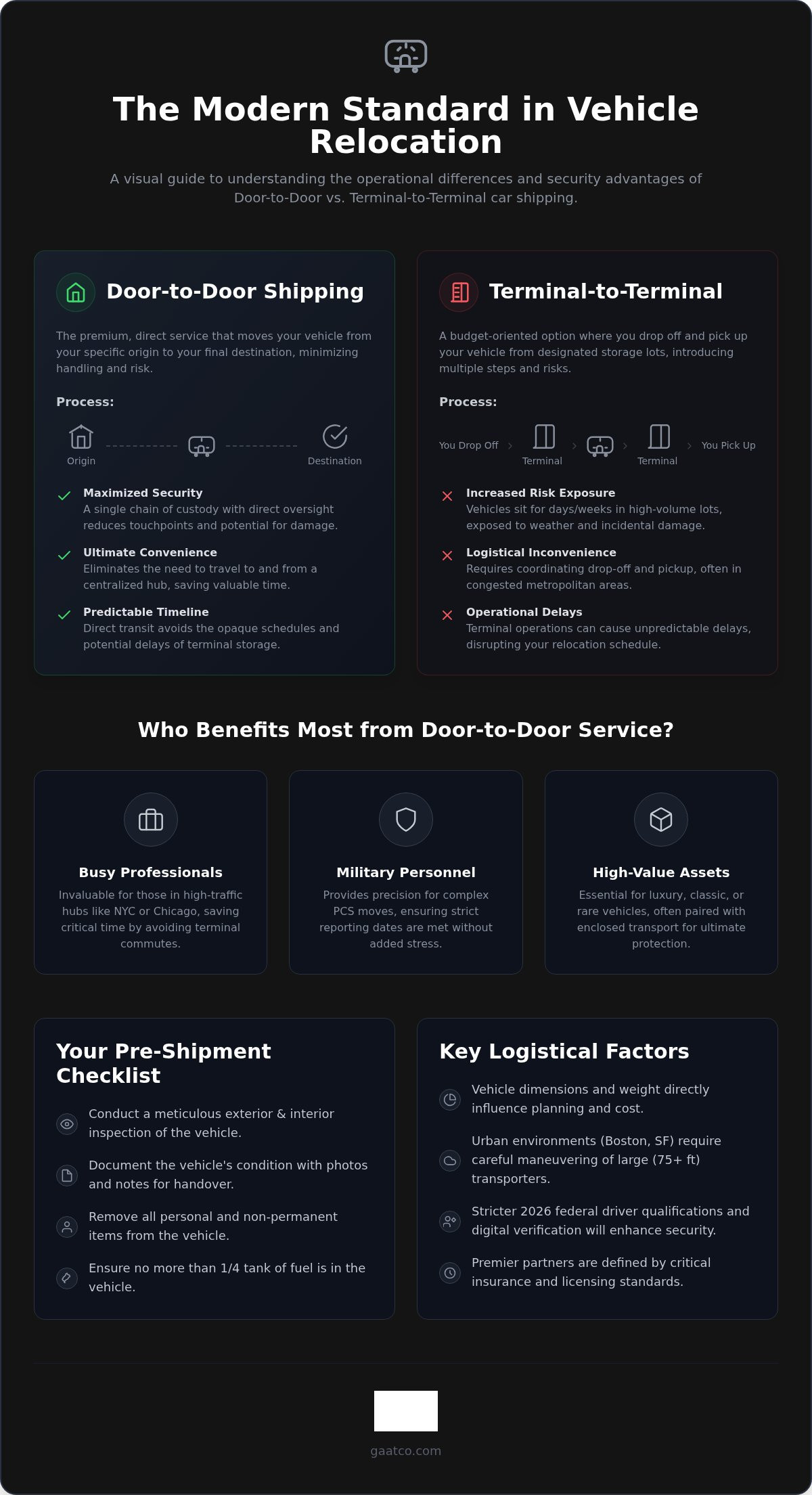
Door to door car shipping represents the pinnacle of modern vehicle logistics, moving beyond the limitations of traditional terminal-based systems. Unlike terminal delivery, which requires owners to drop off and collect their vehicles from centralized hubs, this bespoke service facilitates a direct transition from the point of origin to the final destination. A professional Auto transport broker or coordinator oversees this entire lifecycle, ensuring that the carrier navigates the complexities of local regulations and residential access. This approach minimizes the physical handling of the asset, preserving its mechanical integrity and aesthetic condition while respecting the client's schedule.
To better understand how this specialized service functions, watch this helpful video:
Choosing terminal-to-terminal shipping often introduces hidden risks that are rarely discussed in budget-tier quotes. Terminals are frequently unsecured lots where vehicles sit for days or weeks, exposed to environmental elements and the hazards of high-volume movement. These facilities often suffer from opaque scheduling and operational delays, which can disrupt a meticulously planned relocation. In contrast, door to door car shipping prioritizes a predictable timeline and a single chain of custody, which is essential for maintaining the quiet luxury of a stress-free move. Our team acts as a bridge between your specific needs and the complex operational realities of the road.
The Security Advantage of Professional Transport
The primary benefit of this model is the significant reduction in touchpoints. Every time a vehicle is loaded, unloaded, or moved within a terminal, the risk of incidental damage increases. By utilizing a direct pickup and delivery model, we ensure direct oversight from the moment the keys are handed over until the final inspection at the destination. This eliminates the uncertainty of long-term storage in communal yards and ensures that the vehicle remains under the care of a licensed, insured professional throughout its journey. Direct oversight isn't just a feature; it's a non-negotiable pillar of reliable transport.
Who Benefits Most from Door-to-Door Services?
Busy professionals in high-traffic hubs like New York, Chicago, or Houston often find that the time saved by avoiding terminal commutes is invaluable. Similarly, military personnel managing complex PCS moves rely on the precision of door-to-door logistics to meet strict reporting dates without the burden of coordinating local transport in a new city. For those relocating high-value assets, combining this level of convenience with Enclosed Car Transport provides the ultimate layer of protection against road debris and weather. This ensures that rare, classic, or luxury vehicles arrive in the same pristine condition in which they were collected.
The Logistics of Residential Pickup and Delivery: What to Expect
While the concept of door to door car shipping suggests a literal driveway-to-driveway experience, the operational reality requires a sophisticated understanding of urban infrastructure and local regulations. Professional carriers often utilize multi-car transporters that can reach lengths of 75 feet or more. These vehicles aren't always compatible with narrow residential cul-de-sacs or historic districts. Our team at GAATCO prioritizes transparency by evaluating these spatial constraints long before the carrier arrives, ensuring that the last-mile of your vehicle’s journey remains as seamless as the long-haul transit. For those unfamiliar with the broader process, consulting a step-by-step guide to shipping a car can provide helpful context for the initial planning stages.
Maneuvering in Urban Environments
Cities like Boston or San Francisco present unique challenges for heavy logistics equipment. Low-hanging trees, ancient power lines, and steep inclines can pose significant risks to high-profile trailers. To mitigate these hazards, carriers follow a protocol known as the "nearest safe legal point" for delivery. This involves identifying a nearby commercial lot or a wide thoroughfare where the vehicle can be safely unloaded without violating city ordinances or risking damage to the asset. Our coordinators work closely with drivers to scout these locations in advance, maintaining the quiet luxury of a service that anticipates obstacles before they become delays. If you're unsure about the accessibility of your specific location, you can request a tailored logistics assessment from our specialized team.
HOA and Local Ordinance Considerations
Residential logistics also require a careful navigation of social and legal boundaries. Many Homeowners Associations (HOAs) and gated communities enforce strict prohibitions against large commercial vehicles or limit their operation to specific daylight hours. We manage these nuances by:
- Verifying local noise ordinances to ensure pickup times don't conflict with neighborhood rest periods.
- Coordinating with community security to secure temporary access for the transport equipment.
- Establishing proactive communication between the carrier and the vehicle owner to confirm the final meeting point.
As of 2026, stricter enforcement of driver qualification records means our partners are more meticulous than ever regarding safety protocols. This includes adhering to the FMCSA’s updated safety-scoring methodology, which rewards carriers who prioritize legal and safe loading zones. By managing these intricate details, we allow our clients to focus on their relocation while we handle the complex reality of urban transport.
Calculating the Value: Factors Influencing Door-to-Door Shipping Costs
Understanding the financial landscape of vehicle relocation requires a shift from viewing shipping as a commodity to recognizing it as a specialized logistics service. The cost of door to door car shipping isn't a static figure; it's a dynamic calculation that accounts for equipment scarcity, fuel volatility, and the specific physical requirements of the asset. In 2026, fuel surcharge calculation methods have become increasingly sophisticated, often tied to real-time regional data rather than broad national averages. This ensures that the pricing remains fair and reflective of the actual operational costs incurred during transit.
Distance and Route Efficiency
Route efficiency remains the most significant driver of the final quote. Shipping between major metropolitan hubs like Atlanta, Dallas, or Houston typically offers better value because these cities sit along high-volume interstate corridors. Carriers can optimize their loads more effectively in these regions, which reduces the per-vehicle cost. Conversely, rural deliveries or routes that traverse difficult terrain often require specialized planning and higher fuel consumption. Weather patterns also play a role; winter transits through the northern plains or the Rockies may necessitate slower speeds and increased safety protocols, which can influence the logistical overhead. Before committing to a provider, it's prudent to verify a shipping company's credentials through official FMCSA channels to ensure they maintain the required $75,000 bond and active operating authority.
Vehicle Specifications and Equipment Requirements
The physical dimensions and weight of a vehicle directly impact carrier capacity. A standard sedan occupies less "real estate" on a trailer than a full-sized SUV or a heavy electric vehicle (EV). In 2026, the increasing weight of EVs is a critical consideration for carriers, as they must adhere to the 80,000-pound federal weight limit for loaded transporters. Beyond size, the operational status of the vehicle is paramount. If a vehicle cannot move under its own power, it requires Inoperable Vehicle Transport, which involves specialized winching equipment and additional labor during the loading process.
For owners of high-value assets, the choice between open and enclosed methods is a primary cost factor. While open transport is the industry standard for daily drivers, Enclosed Car Transport commands a premium, typically costing about 50% more. This investment provides a climate-controlled environment and protection from road debris, which is essential for classic or luxury vehicles. This specialized service also carries higher insurance limits, often reaching $1,000,000 in cargo coverage, to match the stakes of the relocation. When you choose door to door car shipping, you're investing in a controlled professional environment that prioritizes the safety of your investment over simple transit speed.
Preparing for Your Vehicle Shipment: A Professional Checklist
The transition from logistical planning to operational execution requires a final, meticulous phase of preparation. While our team handles the complex coordination of routes and regulatory compliance, the client’s role in readying the asset is a critical pillar of a successful relocation. This preparation ensures that the door to door car shipping process remains seamless and that the vehicle’s condition is documented with absolute clarity. Approaching this checklist with a sense of quiet discipline protects your investment and facilitates a professional handover to our seasoned carriers.
The Exterior Inspection and Documentation
A thorough exterior inspection is the first step in establishing a transparent chain of custody. We recommend washing the vehicle immediately prior to pickup. A clean surface is essential because road film or dust can easily obscure minor cosmetic abrasions or existing paint chips. Once the vehicle is clean, capture high-resolution photographs from every angle, including the roof, undercarriage, and wheel wells. These images serve as a digital record that complements the carrier's condition report. If your vehicle has existing mechanical nuances or specific cosmetic concerns, document these clearly to ensure the transport professional is fully informed before the loading process begins. This level of detail isn't just helpful; it's a non-negotiable standard for high-stakes transport.
Mechanical and Interior Readiness
Preparing the interior and mechanical systems of the vehicle is equally vital for a safe transit. In 2026, carriers adhere to strict weight configurations to stay within the 80,000-pound federal limit, making weight management a priority. We ask that you maintain approximately a quarter-tank of fuel, which provides enough for loading and unloading while minimizing unnecessary weight. To prepare your vehicle’s interior, please follow these steps:
- Remove all personal items and non-permanent fixtures to prevent interior damage and comply with insurance regulations.
- Disable all security alarms to prevent battery drain or accidental triggers during transit.
- Remove or deactivate toll tags and GPS devices to avoid incidental charges as the transporter passes through electronic gantries.
- Verify that tire pressures are at manufacturer-recommended levels and check for any active fluid leaks.
The final step in the preparation process is the Bill of Lading. This document acts as both a formal receipt and a legal contract between you and the carrier. You’ll review this document with the driver at the point of pickup, noting the vehicle’s condition and mileage. Once you're confident in the documentation and the vehicle’s readiness, you can request a professional relocation quote to begin your customized transport journey. This disciplined approach ensures that every detail is handled with the precision your vehicle deserves.
Why GAATCO is the Premier Choice for Nationwide Door-to-Door Logistics
Selecting a logistics partner is a decision of significant consequence. With over 20 years of industry experience, we've refined our operations to meet the exacting standards of corporate executives and private collectors alike. Our approach to door to door car shipping isn't merely about moving an asset from one coordinate to another; it's about the sophisticated management of a high-value investment. We prioritize transparent pricing and exclusively utilize licensed and insured carriers who adhere to the highest safety standards. This commitment to core operational values serves as the non-negotiable pillar of every relocation we manage. By operating behind a sophisticated infrastructure, our unified team of professionals ensures that your vehicle's journey is handled with the calm confidence that only established expertise can provide.
Specialized Expertise in Military Vehicle Shipping
Military moves, particularly Permanent Change of Station (PCS) relocations, require a specific type of logistical precision that many general providers fail to grasp. We understand that service members across all branches face sensitive timelines and unique requirements during a relocation. As a trusted advisor for complex military moves, our team provides the meticulous attention to detail necessary to ensure your vehicle arrives exactly when and where it's needed. We manage the coordination so you don't have to, providing a discreet and dependable service that respects the urgency of your mission. Our expansive operational reach allows us to navigate the nuances of local service at both origin and destination bases, ensuring a seamless transition regardless of the distance or complexity of the route.
Begin Your Seamless Transport Journey
Every journey begins with a clear understanding of the client's specific needs. We believe in the value of a personalized consultation, where our logistics experts can address the nuances of your transport, from residential restrictions to specialized equipment needs. Our commitment to hassle-free logistics means you'll receive an accurate, no-obligation request for a quote that reflects our dedication to transparent service. By bridging the gap between complex operational realities and your personal requirements, we ensure a relocation experience defined by quiet luxury and unwavering reliability. We don't just provide a service; we act as a dependable partner, handling the technical details regarding operational specifications so you can focus on the broader aspects of your move. When you choose GAATCO for your door to door car shipping needs, you're choosing a legacy of safety and a future of seamless relocation.
Elevating Your Vehicle Relocation Experience
Securing a seamless relocation for your vehicle requires more than simple transport; it demands a partnership with experts who prioritize safety and logistical precision. By choosing door to door car shipping, you eliminate the inherent risks of communal terminal storage and ensure a direct chain of custody from your driveway to your final destination. We've explored how meticulous preparation and a deep understanding of urban infrastructure serve as the foundation for a stress-free experience, particularly for those managing high-stakes corporate or military moves.
GAATCO brings over 20 years of vehicle transport expertise to every shipment, supported by a licensed and fully insured carrier network. Our A+ rated customer service team operates as a bridge between your specific needs and the complex realities of the road, providing a level of quiet luxury that respects both your asset and your time. When you're ready to experience a more refined approach to vehicle logistics, we invite you to Request a Professional Auto Transport Quote. Our team is prepared to guide you through a relocation process defined by stability, transparency, and a commitment to excellence.
Frequently Asked Questions
Is door-to-door car shipping more expensive than using a terminal?
Door-to-door service generally commands a higher price than terminal-to-terminal transport because of the personalized logistics and direct coordination involved. While terminal shipping might offer a lower initial quote, it often requires additional expenses like local transport or storage fees. Choosing door to door car shipping eliminates these hidden costs and prioritizes the safety of your vehicle by avoiding communal lots. The investment reflects the convenience of a bespoke, professionally managed relocation service.
Can a car shipping truck always reach my exact home address?
Not every residential street is accessible for a 75-foot multi-car carrier due to local ordinances, low-hanging trees, or narrow cul-de-sacs. If the carrier cannot safely navigate your street, the driver will coordinate a "nearest safe legal point" for the handover. This usually involves a nearby commercial parking lot or a wide thoroughfare. Our team scouts these locations in advance to maintain the quiet luxury of a seamless and professional experience for every client.
How long does door-to-door vehicle delivery typically take?
Delivery timelines depend primarily on the total distance of the route and current traffic or weather patterns. Short-range shipments under 500 miles often arrive within one to three days, while transcontinental routes can take seven to ten days. In 2026, stricter enforcement of driver hours-of-service through new digital platforms ensures that these timelines are realistic and safe. We provide regular updates to keep you informed throughout the vehicle's journey across the United States.
Is my vehicle insured during the entire door-to-door transport process?
Yes, reputable carriers provide full cargo insurance coverage from the moment they assume custody of the vehicle until the final inspection. While the FMCSA requires a minimum of $750,000 in public liability insurance, we partner with carriers who maintain industry-standard coverage of $1,000,000 for enclosed shipments. This ensures your asset is protected against unforeseen incidents during transit. You should always review the specific insurance terms before finalizing your professional transport agreement.
Do I need to be present for the pickup and delivery of my vehicle?
You or a designated representative over the age of 18 must be present to sign the Bill of Lading and conduct the condition inspection. This document is the official record of the vehicle's state at the time of handover. If you cannot be present, you can appoint a trusted advisor or family member to act on your behalf. This ensures that the professional documentation process is completed accurately for the protection of both parties.
Can I ship personal items inside my car during door-to-door transport?
Carriers generally discourage shipping personal items because they aren't covered by the transporter's cargo insurance policy and can add significant weight. Federal regulations also prohibit the transport of household goods on car carriers. If you must leave items in the car, they should be limited to 100 pounds and stored in the trunk. Removing non-permanent fixtures ensures compliance with the federal 80,000-pound weight limit for loaded transporters.
What happens if my vehicle is delivered while I am not at home?
If you aren't available for the scheduled delivery, the carrier will contact you to arrange an alternative meeting or identify a designated representative. In some cases, if the delay is significant, the vehicle may need to be temporarily stored at a secure local facility, which could incur additional fees. We prioritize proactive communication to ensure that the delivery window aligns with your schedule, maintaining the seamless nature of our specialized transport service.
How far in advance should I book my door-to-door shipping service?
We recommend booking your door to door car shipping at least two to three weeks before your desired pickup date. This lead time allows our logistics experts to secure a position with a premier carrier and optimize the route for maximum efficiency. If you're managing a time-sensitive military relocation or a corporate move, early booking ensures that we can accommodate your specific schedule during peak seasonal fluctuations in the national transport market.


