
The most practical choice for american auto transport depends on the vehicle and the move. Open transport suits many standard vehicle shipments, while an enclosed carrier may be a better fit when added protection from weather and road debris is a priority. Consider your vehicle’s condition, the route, and the handoff arrangements before choosing.
Before your vehicle leaves your possession, get clear answers about pickup and delivery. Pickup windows can be estimates rather than exact appointments, and delivery timing depends on the route and carrier schedule. Ask what insurance information applies to your shipment and how the vehicle’s condition will be documented. These details are just as important as comparing quotes.
This guide explains how U.S. auto transport works and how to compare open and enclosed shipping. You’ll learn what can affect a quote, how to prepare your vehicle, and what to confirm about carrier assignment, insurance, pickup and delivery, and the Bill of Lading. A clear plan for the route and handoff makes it easier to know what to expect.
Key Takeaways
- Understand how American auto transport coordinates a vehicle move between U.S. locations, including the roles of the transport coordinator and carrier.
- Compare open and enclosed transport by considering vehicle needs, exposure, and the level of protection you prefer.
- Assess how your route, vehicle size, transport type, and timing may affect a quote and delivery estimate.
- Prepare for handoff by documenting your vehicle’s condition and carefully reviewing the condition report.
- Before booking, clarify carrier assignment, insurance information, communication expectations, and shipment terms instead of relying on the headline quote alone.
What American Auto Transport Includes and How a Shipment Moves
American auto transport arranges a vehicle’s movement between locations in the United States using a carrier. The company coordinating your shipment may work with a separate carrier, which supplies the truck and handles the vehicle in transit. Before booking, clarify who will coordinate your move, who will transport the car, and how you’ll receive updates.
The process typically starts with a quote and confirmation of the shipment details. The carrier is then assigned, pickup is arranged, and the coordinator can provide updates as the vehicle moves along the route. At delivery, meet the carrier and inspect the vehicle. Before dispatch, confirm the route, contact arrangements, and pickup and delivery locations so everyone understands the plan.
This video offers a practical overview of arranging a car shipment:
Who uses American auto transport and when?
People arrange vehicle shipping for personal relocations, online vehicle purchases, dealership transfers, and military moves. Driving distance is one consideration, but timing, vehicle condition, and whether someone can be available at pickup and delivery also matter. If your vehicle cannot be driven, disclose its condition when requesting a quote so the coordinator can discuss suitable transport.
Auto transport moves vehicles, not household belongings, and it is not long-term vehicle storage. GAATCO works with individual owners, dealers, and military personnel and offers options through its vehicle transport services.
What does door-to-door vehicle shipping mean?
Door-to-door transport coordinates vehicle pickup and delivery near the addresses you request, where truck access and safety allow. Narrow streets, parking restrictions, or limited room to maneuver may prevent a carrier from reaching the exact address. In that case, you may need to meet at a nearby safe location. Confirm both handoff points with the coordinator before dispatch and ask how changes will be communicated.
For a domestic road shipment, the vehicle is transported by truck. Roll-on/roll-off (RORO) ships are a vessel-based method, which is different from standard road transport within the United States. Confirm the carrier, route, and handoff plan for your shipment so you know how the vehicle will travel.
Open vs. Enclosed American Auto Transport: Choose the Right Carrier
Choosing between open and enclosed shipping comes down to your vehicle’s needs and how much exposure you are comfortable with. Open transport is GAATCO’s primary service and is commonly used for standard vehicles. Enclosed transport may suit vehicles when added protection from weather and road debris is important.
The right choice in American auto transport depends on your protection priorities and the vehicle’s value, condition, and circumstances. Use this comparison to identify what to discuss before booking:
| Factor | Open transport | Enclosed transport |
|---|---|---|
| Exposure | Vehicle travels outdoors and may encounter ordinary weather and road conditions. | Enclosure provides an additional barrier from weather and road debris during transit. |
| Typical use | Standard vehicles and routine relocations. | Classic, luxury, or other high-value vehicles when their owners prefer additional protection. |
| Customer priority | A practical option when standard carrier transport fits the vehicle and shipment needs. | Added protection is a priority, and the vehicle’s circumstances support choosing an enclosed carrier. |
When is open car transport a practical choice?
Open carriers transport multiple vehicles on an exposed trailer, making this a common option for standard vehicle moves. Because the vehicle is not enclosed, it may encounter ordinary weather and road conditions during transit. That does not make open transport inherently unsuitable, but it does mean you should understand the exposure and review the assigned carrier’s insurance information before shipment.
Ask what coverage applies to your vehicle, request the relevant details in writing, and confirm how its condition will be recorded at pickup and delivery. These steps help you compare options without assuming either transport method is risk-free.
When should you consider enclosed car transport?
Enclosed transport may be worth considering if you want added protection from weather and road debris. Owners of classic, luxury, or other high-value vehicles may prefer it, especially when maintaining the vehicle’s condition is a central concern. Those vehicle types do not automatically require enclosed shipping. Consider the vehicle’s condition, intended use, and your comfort with outdoor exposure.
Before choosing a provider, ask which carrier type is being arranged and what insurance information is available for your shipment. The FMCSA consumer advisory offers additional guidance for evaluating auto transport arrangements. You can also review GAATCO transport services and discuss which option fits your vehicle and priorities.
What Shapes an Auto Transport Quote, Route, and Delivery Estimate?
An auto transport quote reflects the shipment details, not distance alone. Route mileage, vehicle size, carrier type, timing, and carrier availability can affect the plan and price. Fuel surcharges may also apply, so ask whether they are included in the quote or could change the total. If you need expedited handling, confirm whether it is available for your route and whether an additional charge applies. Expedited requests may involve prioritizing the shipment, but a requested schedule is not confirmed until the provider agrees to it.
Which details should you provide for an accurate quote?
Share the vehicle’s year, make, model, operability, pickup and delivery ZIP codes, and preferred timing. These details help a transport coordinator assess the shipment and discuss a suitable carrier. Vehicle dimensions and condition matter too: a larger vehicle may need different loading space, while an inoperable car may require equipment or handling beyond a standard shipment.
Be specific about modifications, such as a lift or other changes that affect the vehicle’s dimensions, and mention access limits at either address. Narrow streets, restricted parking, or limited maneuvering space may affect where loading can safely take place. Complete details upfront can help prevent avoidable changes after booking.
How do U.S. routes and scheduling affect delivery?
Pickup and delivery estimates depend on route planning and coordination with the assigned carrier. Distance is one factor. Pickup access, route demand, carrier schedules, and requested timing can also affect the plan. Treat estimates as planning guidance rather than guaranteed appointments unless the provider confirms otherwise for your shipment.
For example, if you are arranging a move between Atlanta and Chicago, ask whether that specific city pair is currently serviceable and how pickup and delivery will be coordinated. Naming two major cities does not confirm access to a particular address or carrier availability for a specific schedule. Provide ZIP codes and any location restrictions, then ask when you should expect updates if plans change.
Before accepting a quote, check that it describes the agreed route, vehicle, carrier type, timing expectations, and any potential surcharges. Clear shipment details make it easier to compare american auto transport quotes on equivalent terms and understand what a delivery estimate does, and does not, promise.
How to Prepare Your Vehicle and Confirm the Handoff
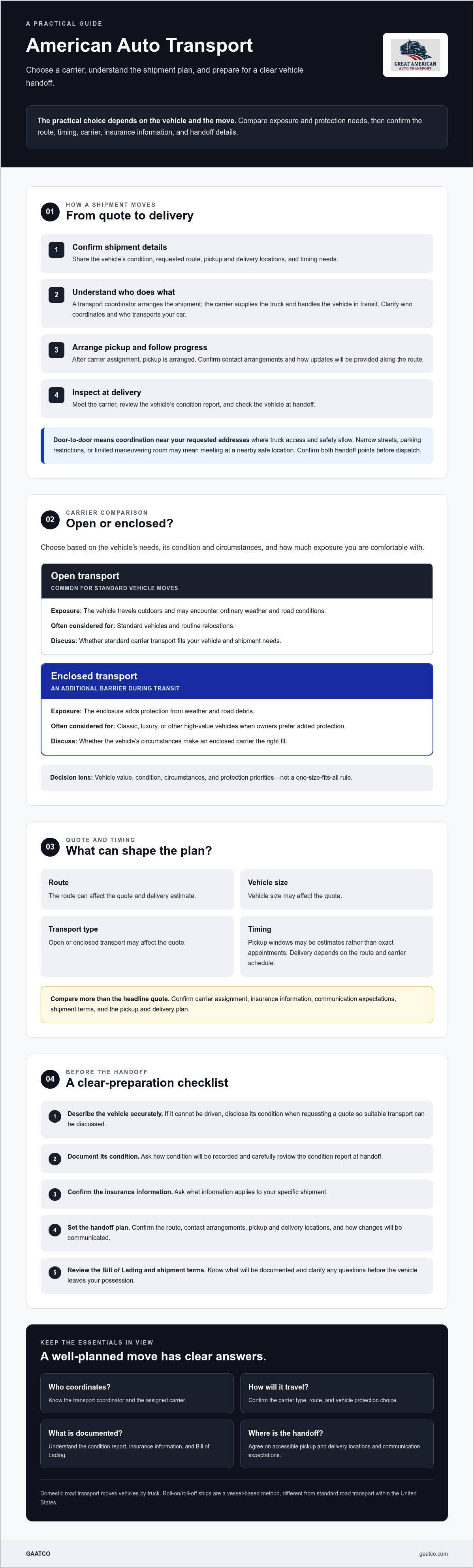
A well-documented handoff gives you and the carrier a shared record of the vehicle’s condition before and after transport. Use this checklist to confirm arrangements and prepare your car for pickup and delivery.
- Review your booking confirmation. Check the vehicle details, route, carrier type, pickup and delivery arrangements, and contact process. Ask the coordinator to clarify anything that differs from your understanding.
- Confirm access and contacts. Verify that the truck can safely reach each location or agree on a nearby meeting point. Make sure the person meeting the carrier has the coordinator’s contact details and can communicate directly.
- Disclose vehicle condition. Confirm whether the vehicle is operable and share known issues, modifications, or loading considerations. Arrange the keys and any information the carrier needs to handle the vehicle.
- Ask about personal items and preparation. Remove belongings unless the carrier has explicitly confirmed an exception. Personal-item policies and vehicle preparation requirements can vary, so confirm them with the coordinator rather than assuming a universal rule.
- Record condition before pickup. Photograph the exterior and interior in good light, including existing marks or damage. Keep dated images and note the mileage so you have a clear reference.
- Review the condition report at both handoffs. At pickup and delivery, inspect the vehicle with the carrier and compare the report with your photographs. Ask for existing damage or any new discrepancy to be recorded, and raise concerns promptly before completing the handoff.
What should you do before pickup?
Prepare the vehicle and be available at the agreed location, or make sure your designated representative is ready. Keep your photos accessible and verify that the carrier has the correct contact information. If access changes or the vehicle’s condition differs from what you disclosed, tell the coordinator before pickup so the plan can be reviewed.
What should you check at pickup and delivery?
Read the condition documentation carefully instead of treating it as a formality. At delivery, compare the vehicle with your dated photographs and note any differences on the report before the carrier departs. Confirm the delivery address and recipient availability in advance so there is time for an inspection.
Clear arrangements and careful records make each handoff more straightforward. To discuss a vehicle move and its coordination, contact GAATCO about auto transport.
How to Select an American Auto Transport Company with Confidence
A well-organized shipment starts with clear terms and a provider that can explain how your vehicle will move. Compare quotes using the same details, including the route, vehicle, carrier type, pickup expectations, and what is included. A low headline quote is difficult to assess if carrier assignment, insurance information, or possible changes remain unclear.
What should you ask before booking auto transport?
Use these questions to evaluate the service and understand your responsibilities before confirming:
- Who will transport the vehicle? Ask whether the company coordinates the shipment or operates the carrier, how the carrier will be assigned, and when you will receive its details.
- What insurance information applies? Request shipment-specific information about coverage, exclusions, and the process for reporting a concern or making a claim. Do not assume all carriers or shipments have identical terms.
- What documentation will you receive? Confirm how vehicle condition will be recorded at pickup and delivery, and which documents you should review or retain.
- How are pickup and delivery coordinated? Clarify whether the estimate is a window or an appointment, how access at each location is confirmed, and how schedule changes will be communicated.
- What are the payment terms? Ask when payment is due, which payment methods are accepted, and whether any circumstances could change the quoted amount.
Compare the answers, not just the initial figures. A useful quote explains the service scope and key terms well enough for you to compare providers fairly. If important details are vague, request clarification in writing before booking.
Which GAATCO services may fit your shipment?
For a standard vehicle move, open carrier transport is GAATCO’s primary service. Enclosed transport may fit when added protection from weather and road debris is a priority, such as for some classic or high-value vehicles. The right option depends on your vehicle and circumstances, so confirm the carrier type and shipment-specific insurance information.
Other needs may call for a specialized option: dealer-to-dealer transport for a dealership transfer, military vehicle shipping for a military move, classic car transport for a collector vehicle, motorcycle shipping for a two-wheeled vehicle, or inoperable vehicle transport when a car cannot be driven. GAATCO has more than 20 years of industry experience and works with licensed and insured carriers. Ask for current, shipment-specific carrier and coverage details as part of your evaluation.
For route-specific details and a quote based on your vehicle and requirements, request a vehicle shipping quote.
Plan Your Vehicle Move with Clarity
A well-coordinated shipment starts with matching the transport method to your vehicle and priorities. Open transport is a practical choice for many standard moves, while enclosed transport may suit vehicles that need added protection. Route, vehicle condition, carrier schedules, and pickup access can all shape the estimate, so confirm the details instead of relying on a headline quote alone.
Before handoff, document your vehicle’s condition, review the condition report, and confirm who will meet the carrier at pickup and delivery. These steps help you understand what to expect throughout your american auto transport arrangement.
GAATCO has more than 20 years of industry experience and works with licensed and insured carriers. Its transport options include open, enclosed, door-to-door, military, dealer-to-dealer, classic car, motorcycle, and inoperable vehicle shipping. Ask for route-specific details and current carrier information as you assess the right fit.
Request a route-specific auto transport quote to take the next step toward a carefully planned vehicle move.
Frequently Asked Questions
How much does American auto transport cost?
The cost depends on your route, vehicle size and condition, carrier type, timing, and carrier availability. Request a quote using the vehicle details and pickup and delivery ZIP codes, then confirm what is included and whether fuel surcharges or expedited requests affect the terms. For routes involving Atlanta, Miami, New York, Houston, Dallas, San Diego, San Francisco, Seattle, Orlando, Boston, Nashville, Denver, Austin, Chicago, Las Vegas, or Phoenix, verify current route availability directly.
Is open car transport safe for a standard vehicle?
Open transport is a common option for standard vehicles, but it does not eliminate exposure to ordinary weather and road conditions. Before booking, ask who will carry the vehicle and request current, shipment-specific insurance information, including relevant exclusions and claims steps. At pickup, review the condition report and take dated photographs. Compare those records with the vehicle at delivery, and raise any discrepancy promptly with the carrier.
How long does it take to ship a car across the United States?
There is no single delivery period for every cross-country shipment. Distance, route planning, carrier schedules, pickup access, and coordination all affect the estimate. Ask the transport coordinator for a route-specific pickup window and delivery estimate, and clarify how updates or schedule changes will be communicated. Treat estimates as planning guidance unless your provider confirms a specific appointment for your shipment.
Can I put personal belongings in a car during transport?
Do not assume personal belongings can remain in the vehicle. Policies may vary by carrier, and items left inside may not be covered by carrier insurance. Confirm any exception and its conditions with the transport coordinator before pickup. To avoid uncertainty, remove personal items and household belongings unless the carrier has explicitly approved otherwise. Ask about preparation requirements for your shipment as well.
What does door-to-door auto transport mean?
Door-to-door auto transport means the carrier coordinates pickup and delivery near the addresses you request, provided a truck can access the locations safely. Narrow streets, parking restrictions, or limited maneuvering space may require meeting at a nearby accessible location instead. Confirm both handoff points with the coordinator before dispatch, and make sure the recipient and carrier have clear contact details for delivery coordination.
What happens if my car is not running?
A vehicle that does not run may still be eligible for transport, but its condition must be disclosed before booking. Tell the coordinator whether it starts, steers, and rolls, and describe any known issues that could affect loading or unloading. The vehicle may need suitable handling or equipment, so confirm carrier suitability and any related terms in advance. GAATCO offers inoperable vehicle transport.
Should I choose open or enclosed auto transport?
Choose based on your vehicle and protection priorities. Open transport is practical for many standard vehicles, though they remain exposed to ordinary weather and road conditions. Enclosed transport provides an additional barrier from those conditions and may suit a classic, luxury, or other high-value vehicle. Neither option is automatic. Consider the vehicle’s condition and value, then confirm carrier and insurance details before booking.


