
Entrusting a high-value vehicle to a third party is not merely a logistical transaction; it is a profound exercise in trust that requires rigorous verification. In an industry where approximately 95 percent of providers act as intermediaries rather than direct carriers, the distinction between a standard broker and a dedicated logistics partner is found in the depth of their operational transparency. Establishing this clarity requires a strategic list of questions to ask your auto transport company before your vehicle ever leaves the safety of your driveway.
You likely understand that the most competitive price quote often conceals significant risks, such as inadequate cargo insurance or the absence of a verified surety bond. We recognize the anxiety that accompanies the movement of a classic or luxury asset, particularly regarding the potential for hidden fees and delivery delays. By mastering the art of professional vetting, you can transition from a position of uncertainty to one of controlled stewardship over your most valuable automotive investments.
This article provides a comprehensive checklist designed for the discerning vehicle owner in 2026. We will explore twelve essential inquiries covering the latest FMCSA regulatory updates, the specific security benefits of enclosed transport, and the methods for verifying a carrier's financial responsibility. By the conclusion of this guide, you will possess a reliable framework for ensuring your vehicle arrives safely, securely, and precisely on schedule.
Key Takeaways
- Learn how to verify a carrier's active operating authority using DOT and MC numbers to ensure your vehicle is handled by a legitimate, licensed professional.
- Identify the strategic questions to ask your auto transport company to expose hidden fees and avoid the significant risks associated with "low-ball" pricing.
- Understand the process for requesting a Certificate of Insurance (COI) to confirm that cargo coverage limits are appropriate for your specific high-value asset.
- Master the nuances of logistics planning by distinguishing between flexible pickup windows and guaranteed delivery timelines in the current regulatory landscape.
- Leverage a 20-year legacy of industry expertise to secure a reliable, door-to-door transport solution that prioritizes the safety of your investment.
Verifying Credentials: Is the Company Legitimate and Licensed?
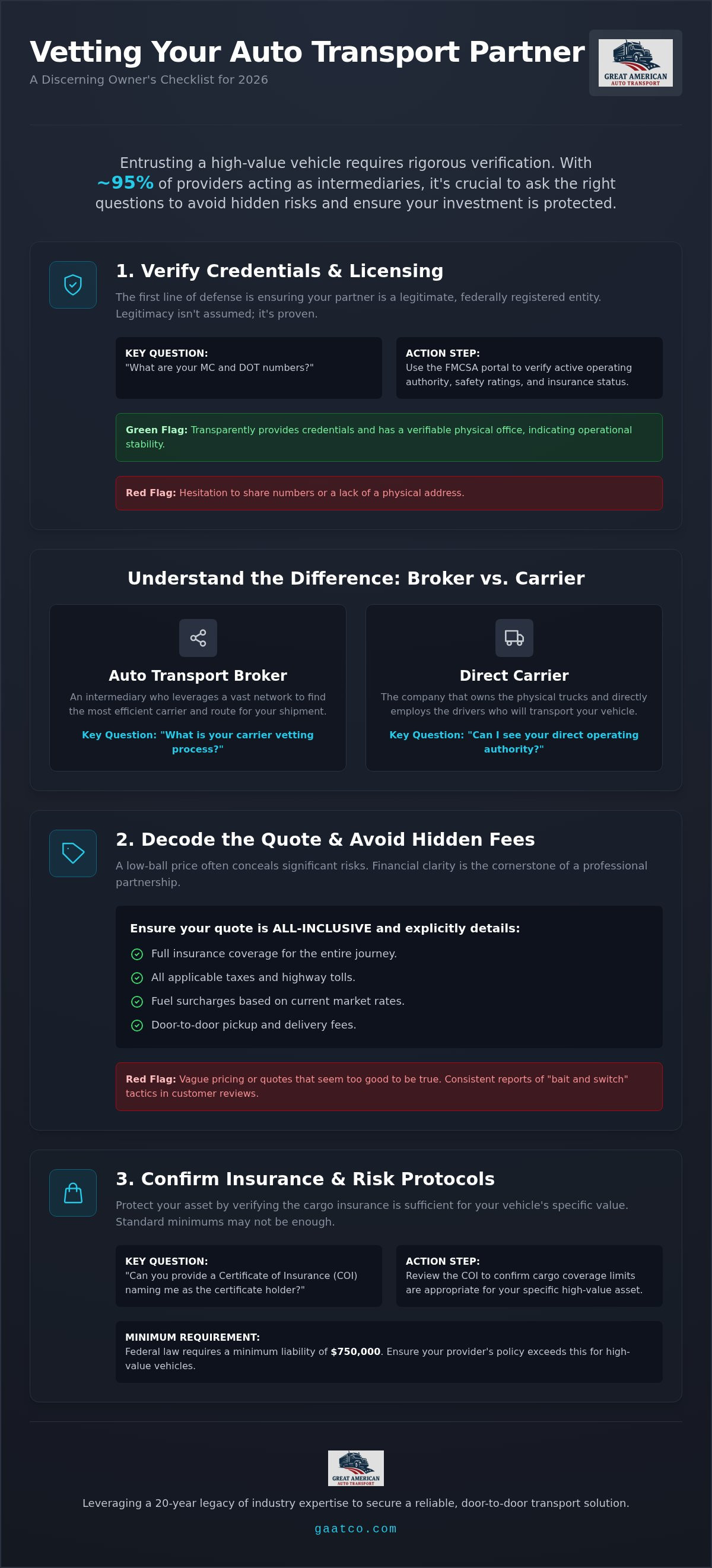
Verification of credentials serves as the first line of defense for any individual or corporation transporting a high-value asset. In a specialized industry, legitimacy is not assumed; it's proven through active federal registration and historical performance. One of the primary questions to ask your auto transport company is for their Motor Carrier (MC) and Department of Transportation (DOT) numbers. These identifiers are the keys to unlocking a provider's professional history and safety record.
You should utilize the Federal Motor Carrier Safety Administration (FMCSA) portal to confirm that a company's operating authority is currently active. This database provides an objective view of a carrier's safety ratings and insurance status, ensuring they meet the federal minimum liability requirement of $750,000. A provider that hesitates to share these credentials or lacks a verifiable physical office address often indicates a lack of operational stability. In contrast, GAATCO's twenty-year legacy provides a tangible anchor of accountability that digital-only entities simply cannot replicate.
To better understand how these logistical layers impact your vehicle's journey, watch this helpful video:
The Broker vs. Carrier Distinction
Understanding the operational structure of your chosen provider is essential for clear communication. An auto transport broker acts as a professional intermediary, leveraging a vast network to find the most efficient route and equipment for your needs. Conversely, a carrier owns the physical trucks and employs the drivers. If you are working with a broker, you must inquire about their specific carrier vetting process. Elite brokers maintain a dedicated network of partners who adhere to the same rigorous safety standards as the broker themselves, ensuring a seamless transition of responsibility from pickup to delivery.
Checking Professional References and Reputation
While digital reviews offer a general sentiment, sophisticated clients look for deeper markers of professional reputation. You should move beyond aggregate star ratings and request specific case studies or references from automotive dealers who specialize in luxury or classic vehicles. These industry professionals demand a level of precision that standard reviews might overlook. Red flags in customer feedback often include consistent reports of "bait and switch" pricing or a lack of communication during transit. Membership in professional logistics associations also serves as a hallmark of a company committed to industry-leading best practices and ethical operations.
Financial Transparency: Decoding the Quote and Avoiding Hidden Fees
Financial clarity is the cornerstone of a professional logistics partnership. When reviewing a quote, you aren't simply looking at a number; you're evaluating the reliability of the service provided. One of the most critical questions to ask your auto transport company is whether their pricing is truly all-inclusive or if it serves as a baseline that will escalate once the vehicle is in transit. To avoid surprises, ensure your written quote specifies the following components:
- Full insurance coverage for the duration of the journey
- All applicable taxes and tolls
- Fuel surcharges based on current 2026 market rates
- Door-to-door pickup and delivery fees
For additional guidance on identifying fair practices, consult the FMCSA Consumer Advisory regarding automobile transporters. A transparent provider will explicitly detail all potential costs within the initial agreement, ensuring that the price you are quoted is the price you pay upon delivery.
The allure of a "low-ball" quote is often a significant red flag in the 2026 market. While a lower price point might seem attractive, it frequently indicates that the provider intends to post your shipment at a rate that professional carriers won't accept. This leads to indefinite delays as your vehicle sits waiting for a driver willing to take the underpriced load. Reliability requires a fair market rate that respects the operational costs of high-tier equipment and skilled labor.
Specific vehicle conditions also influence the final investment. If your vehicle is unable to move under its own power, specialized winching equipment is required for loading and unloading. Professional logistics providers typically apply a surcharge for inoperable units to cover the additional labor and equipment wear. You should also clarify the terms of any deposit. Professional firms often require a deposit only after a carrier is assigned, and you should confirm if this amount is refundable should the logistics plan require adjustment.
Fuel Surcharges and Market Fluctuations
Operational costs in 2026 are heavily influenced by shifting energy prices and seasonal demand. During peak summer months or holiday periods, transport rates often see a premium of 10 to 20 percent due to increased volume, according to industry trends. It's essential to ask if your quote is "locked in" for a specific duration or if it's subject to market adjustments upon pickup. A reputable partner provides stability by honoring their commitments even when external market pressures fluctuate.
Door-to-Door vs. Terminal-to-Terminal
The distinction between pickup methods significantly impacts both convenience and the final cost. While terminal shipping might appear less expensive, it often involves hidden storage fees and the inconvenience of traveling to a distant hub. We prioritize seamless transitions by offering door-to-door auto shipping, ensuring your vehicle is collected and delivered as close to your specified locations as safety and local ordinances allow. If you live in a restricted residential area or a hard-to-reach rural location, you should ask about potential "last-mile" fees that may apply to accommodate the size of a standard multi-car carrier. If you are ready to secure a transparent estimate for your next shipment, you can request a customized quote from our team of specialists.
Risk Management: Deep-Diving into Insurance and Damage Protocols
Protecting a high-value asset involves more than a verbal assurance of coverage. One of the primary questions to ask your auto transport company is for a copy of their Certificate of Insurance (COI). This document provides tangible proof of their policy limits and expiration dates, moving beyond the standard claim of being insured. While federal law requires carriers to maintain a minimum of $750,000 in liability insurance, the cargo insurance limit is what truly protects your vehicle. Open carriers typically carry between $100,000 and $150,000 in cargo insurance per load. If your vehicle's value exceeds these standard figures, you must verify if the carrier has supplemental coverage or if an enclosed transport solution with higher limits is necessary. For those seeking a deeper understanding of regulatory standards, the FMCSA provides a resource for Verifying Credentials and insurance status.
The Bill of Lading (BOL) serves as the most important legal document in the transport process. It functions as both a receipt and a formal inspection report. You should explicitly ask who is responsible for the insurance deductible in the rare event of a claim. Reputable firms often cover the deductible themselves, ensuring that you aren't penalized for incidents that occur while the vehicle is in their professional care. This level of accountability is a hallmark of a seasoned logistics partner who understands the nuances of high-end service.
The Inspection Process: Pickup and Delivery
A meticulous inspection is your strongest safeguard. You must conduct a pre-transport walkthrough with the driver, documenting every existing mark or imperfection. We recommend taking high-resolution photos of the vehicle from all angles, including the undercarriage and interior, immediately before loading. These images, paired with detailed notations on the Bill of Lading, create an irrefutable record of the vehicle's condition. If you discover damage upon delivery, it must be noted on the BOL before you sign it. Without this notation, filing a successful insurance claim becomes significantly more difficult, as the signed BOL serves as a legal acknowledgement that the vehicle arrived in satisfactory condition.
Specialized Protection for Luxury and Classic Cars
For those transporting rare or high-value investments, enclosed transport is often the only appropriate choice. Enclosed carriers typically offer significantly higher cargo insurance limits, often reaching $500,000 to $1,000,000 per load, to accommodate the unique needs of the luxury market. You should inquire about specific handling protocols for low-clearance vehicles, such as the use of hydraulic lift gates rather than traditional ramps. These specialized measures reflect a commitment to professional reliability and ensure that the integrity of your asset remains uncompromised throughout its journey. For bespoke protection, you may explore our enclosed car transport options to ensure your vehicle receives the highest level of care.
Operational Logistics: Managing Timelines and Expectations
Precision in logistics is the hallmark of a professional transport service. When coordinating the movement of a vehicle, you must distinguish between a standard pickup window and a guaranteed pickup date. Most providers offer a window of three to five days to accommodate the complexities of multi-car route planning. Choosing this flexible window can often save you 10 to 20 percent on shipping costs, as it allows the carrier to optimize their operational flow. However, if your schedule is rigid, one of the essential questions to ask your auto transport company is whether they offer a premium service for specific, date-certain collection.
Transit times in 2026 are governed by strict federal safety regulations. On average, a professional driver covers between 400 and 500 miles per day. This pace is dictated by the Federal Motor Carrier Safety Administration (FMCSA) enforcement of Electronic Logging Devices (ELDs), which ensures drivers adhere to mandatory rest periods. For a cross-country journey, you should anticipate a timeline of seven to ten days. Understanding these constraints helps you maintain realistic expectations for the arrival of your asset without compromising the safety of the driver or the vehicle.
Proper preparation of the vehicle is equally vital for a seamless transition. To ensure a safe and efficient journey, we recommend adhering to the following standards:
- Maintain the fuel level at approximately one-quarter tank to reduce unnecessary weight while allowing for loading and unloading.
- Remove all personal belongings, as these items aren't covered by carrier insurance and can shift during transit.
- Disable all alarm systems or provide clear instructions to the driver on how to de-activate them.
- Ensure the vehicle is clean to facilitate a thorough and accurate condition report during the initial inspection.
Tracking Your Shipment
Modern logistics demand a high degree of transparency. You should inquire whether the company provides real-time GPS tracking or if they rely on daily status updates from a dedicated dispatcher. Having a primary point of contact ensures that you aren't left searching for answers should the driver encounter unforeseen weather or road delays. A seasoned expert remains calm under pressure, proactively communicating adjustments to the timeline so you don't have to manage the stress of the unknown.
Specialized Transport Requirements
Specialized needs require a tailored approach. For military personnel managing a Permanent Change of Station (PCS), it's important to work with a partner who understands the nuances of military vehicle shipping and the required documentation. Similarly, dealer-to-dealer transport requires a high level of coordination for multi-vehicle shipments. If time is the most critical factor, expedited shipping may be a viable investment to prioritize your vehicle's placement on the next available carrier. If you require a bespoke logistics plan that respects your unique timeline, we invite you to request a customized quote from our professional team.
The Sophisticated Choice: Why GAATCO Sets the Industry Standard
Selecting a logistics partner for a high-value asset requires an alignment of values that extends beyond mere transportation. Since 2004, GAATCO has cultivated a reputation for quiet luxury and professional reliability, positioning itself as a discreet advisor for affluent and corporate clients alike. Our twenty-year legacy is built upon the understanding that specialized transport is a high-stakes endeavor requiring meticulous attention to detail. By consistently refining the standards for safety and operational flow, we ensure that every vehicle is treated with the reverence it deserves, regardless of its destination.
The integrity of our service is rooted in a rigorous vetting process that distinguishes our carrier network from standard industry offerings. We don't simply verify that a carrier possesses active authority; we conduct a comprehensive evaluation of their safety history, equipment quality, and professional conduct. This commitment to excellence ensures that the answers to the questions to ask your auto transport company meet the highest possible benchmarks. Our team acts as a sophisticated bridge between your specific requirements and the complex operational realities of the modern logistics landscape.
Personalization is a non-negotiable pillar of our operational philosophy. Whether you are moving a daily driver or a museum-quality classic, our specialists tailor the logistics plan to the unique specifications of the vehicle. This bespoke approach allows us to manage complex requirements, such as low-clearance handling or expedited timelines, with a level of calm confidence that only comes from decades of experience. We respect your time and your assets, providing transparent communication that keeps you informed without adding to your administrative burden.
Our Reach Across the United States
Our operational infrastructure is strategically designed to provide geographic advantages across the United States. With significant presence in major hubs such as Atlanta, Houston, and San Diego, we offer seamless logistics for both cross-country routes and local door-to-door deliveries. This expansive reach allows us to maintain a steady and measured communication rhythm, ensuring that your vehicle remains within a controlled professional environment from pickup to delivery. If you are prepared to experience a higher standard of service, you may request a professional quote for your next transport through our secure portal.
Next Steps for a Stress-Free Move
Before finalizing your transport contract, we recommend a final review of your logistics plan to ensure absolute clarity. This checklist serves as your final safeguard:
- Confirm the specific cargo insurance limits for your vehicle type.
- Verify that the pickup and delivery points are accessible for a multi-car carrier.
- Ensure all existing vehicle conditions are documented on the Bill of Lading.
- Validate the primary point of contact for real-time status updates.
Initiating your journey with a GAATCO specialist is a straightforward process designed to provide immediate peace of mind. Our promise of professionalism, safety, and operational excellence remains the foundation of every relocation we manage. We invite you to partner with a team that understands the nuances of high-end service and possesses the established expertise to handle your most critical logistics needs with understated elegance.
Securing the Future of Your Automotive Investments
Navigating the complexities of vehicle transport in 2026 requires more than a cursory glance at a quote. It demands a rigorous commitment to due diligence. By verifying federal credentials and demanding comprehensive insurance documentation, you establish security for your high-value assets. Identifying the right questions to ask your auto transport company is the final step in transitioning from a standard shipment to a bespoke logistics experience that prioritizes safety over speed.
True peace of mind stems from a partnership with a provider that values transparency as much as you value your vehicle. Whether you require specialized enclosed transport for a classic car or a reliable door-to-door solution, the clarity of your communication dictates the success of the journey. Our team brings over 20 years of operational excellence and a licensed national carrier network to every engagement, ensuring your vehicle remains in a controlled environment. It's this level of meticulous care that defines our service and protects your investment.
We invite you to Secure Your Vehicle’s Journey with a Professional GAATCO Quote. Let our experts handle the intricate details of your next transport with the precision your asset deserves. Your vehicle's safe arrival is our non-negotiable pillar of service, and we look forward to facilitating a seamless transition for you.
Frequently Asked Questions
Can I put personal items in my car when shipping it?
You should remove all personal belongings from your vehicle before transport, as carrier insurance does not cover these items. Federal law prohibits auto carriers from transporting household goods, and excessive weight from personal items can lead to significant fines for the driver at weigh stations. Maintaining an empty cabin ensures the safety of your interior and prevents potential damage from objects shifting during the journey.
Is a deposit required before my vehicle is picked up?
Most reputable firms require a deposit only after a carrier has been officially assigned to your route and a pickup date is secured. It's one of the essential questions to ask your auto transport company to ensure you aren't paying upfront before a logistics plan is firmly in place. You should also verify if this amount is refundable if the carrier fails to meet the agreed-upon window, as this protects your financial interests.
How far in advance should I book my auto transport?
We recommend booking your transport at least two to four weeks in advance to secure your preferred timeline and equipment type. While last-minute arrangements are often possible, early coordination allows our specialists to optimize the route and identify the most qualified carrier for your specific needs. This lead time is particularly crucial during peak summer months when industry demand typically increases by 10 to 20 percent.
What documents do I need to provide to the transport company?
You must provide a copy of the vehicle's registration, proof of insurance, and a valid photo identification to facilitate the transport process. Additionally, the signed Bill of Lading serves as the primary legal document governing the shipment and must be completed at both pickup and delivery. Ensuring these documents are prepared in advance prevents delays and allows the driver to maintain a precise operational schedule.
Do you offer discounts for military vehicle shipping?
We specialize in military vehicle shipping and provide tailored solutions for personnel managing a Permanent Change of Station (PCS). You should inquire about specific military rates when requesting your initial quote from our professional coordinators. Our team understands the unique requirements of military relocations and prioritizes the secure, timely delivery of vehicles for those serving in the armed forces across the country.
What is the difference between open and enclosed transport for classic cars?
Enclosed transport provides a fully shielded environment that protects classic cars from weather and road debris, whereas open transport exposes the vehicle to the elements. While open transport accounts for approximately 93 percent of all vehicle shipments, the enclosed option is the preferred choice for high-value assets. This specialized service typically requires a premium over standard rates to account for the enhanced protection and specialized equipment used.
How is the final transport price calculated?
The final price is determined by a combination of total distance, vehicle dimensions, current fuel surcharges, and the chosen transport method. Larger vehicles like SUVs or trucks often incur a surcharge due to their increased weight and the physical space they occupy on the carrier. Seasonal demand also plays a role, as peak periods often see a premium over standard rates due to high volume across the national network.
What happens if my car is inoperable at the time of pickup?
If your vehicle cannot move under its own power, you must notify your coordinator in advance so they can assign a carrier equipped with a winch or forklift. This specialized requirement typically involves a surcharge to cover the additional labor and equipment wear required for loading. Providing accurate information about the vehicle's condition ensures that the driver arrives with the necessary tools to handle the process without complication.


