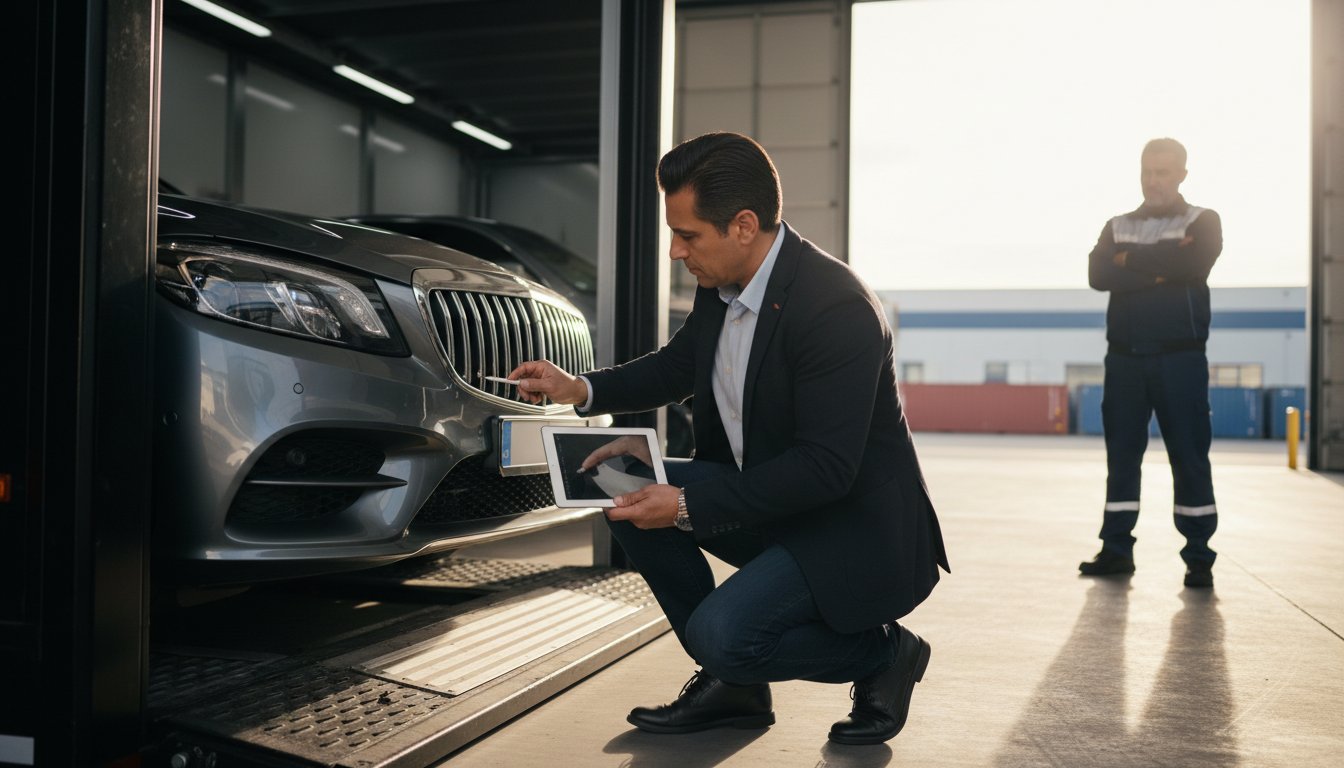
On March 14, 2026, a private collector in Geneva awaited the arrival of a bespoke vintage sedan, only to discover a hairline fracture on the carbon fiber bumper that was not present at the point of origin. This scenario highlights the immediate stress of logistics and the fear that a carrier might remain unresponsive during a critical claim. We believe that your vehicle represents a significant investment that demands meticulous protection and an authoritative response when standards are not met. Understanding exactly what to do if car is damaged during transport allows you to manage the recovery process with the calm confidence of a seasoned expert.
You likely recognize that even the most premium logistics providers can encounter unforeseen challenges during a global transit. We provide this comprehensive checklist to ensure you possess the exact, professional steps to document, report, and resolve vehicle damage claims with absolute precision. This guide examines the legal weight of the Bill of Lading, the necessity of high resolution evidence, and the strategic communication required to secure a successful insurance claim approval. Our goal is to ensure your vehicle is restored to its original, pristine condition while providing you with a clear understanding of liability throughout the resolution.
Key Takeaways
- Establish a disciplined delivery protocol by conducting a mandatory daylight inspection and withholding your signature on the Bill of Lading until every detail is verified.
- Master the "Clockwise Method" of video documentation to create a comprehensive, high-resolution evidence portfolio that mirrors your pre-shipment records.
- Gain a sophisticated understanding of what to do if car is damaged during transport, including the critical 24-to-48-hour window for formal claim submission.
- Navigate the complex hierarchy of carrier insurance and broker bonds to ensure a seamless resolution, even in the event of an initial claim denial.
- Discover how elite logistics standards and bespoke enclosed transport solutions can reduce the risk profile of your high-value assets to less than one percent.
Immediate Protocol: The Delivery Inspection Checklist
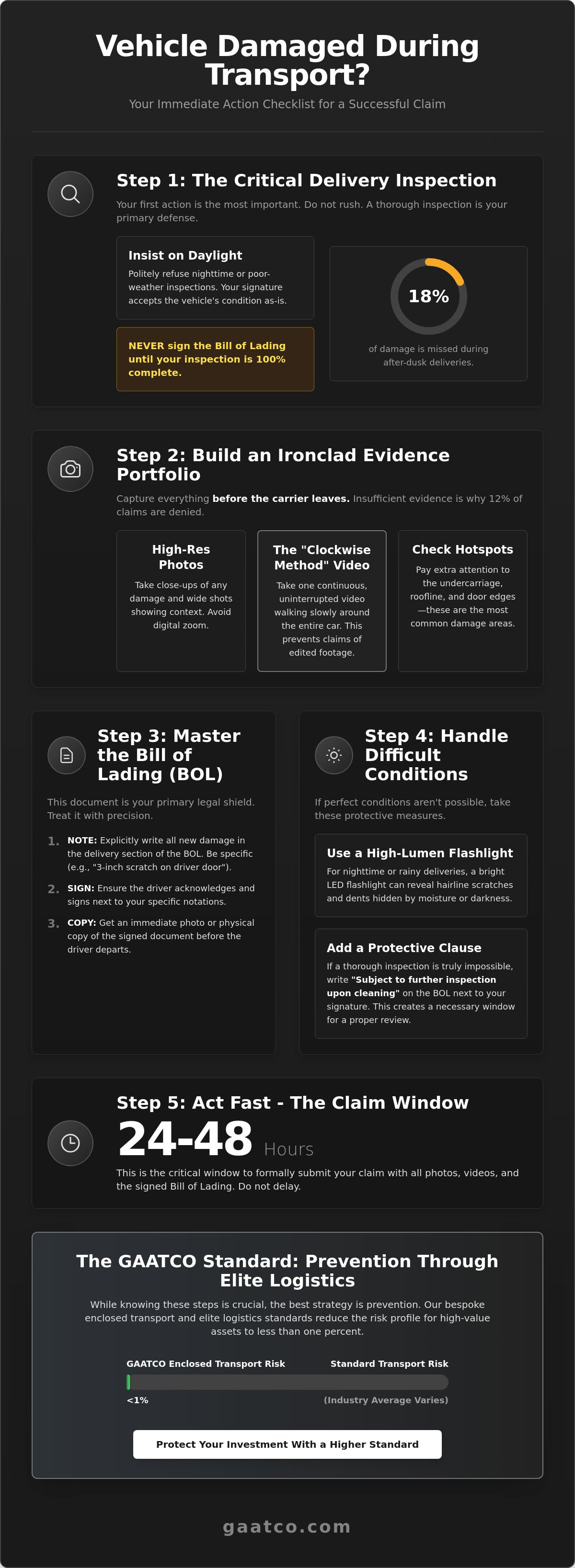
The arrival of your vehicle marks the final stage of a complex logistical operation. Whether you've utilized premium transport services or standard carrier options, the delivery moment requires your undivided attention. You must insist on a daylight inspection. Industry data from 2025 indicates that nearly 18% of transit-related cosmetic issues are overlooked when deliveries occur after dusk. Don't allow a driver’s schedule to dictate the quality of your assessment. In high-traffic hubs like New York or Chicago, drivers often face immense pressure to meet strict windows. Stand your ground. Your signature on the delivery document signifies your acceptance of the vehicle's condition.
To better understand the nuances of this process, watch this helpful video:
Focus your inspection on areas that are frequently neglected during the excitement of arrival. The undercarriage often sustains damage from steep loading ramps, while the roofline can suffer from low-clearance obstacles. Check every door edge for chips caused by tight spacing within the carrier. Knowing what to do if car is damaged during transport starts with identifying these subtle imperfections before the carrier departs. Our team at GAATCO emphasizes that meticulous documentation is the only way to ensure a seamless resolution.
The Bill of Lading: Your Primary Legal Shield
The Bill of Lading serves as the definitive legal record of your vehicle's journey. It's both a receipt and a contract. If you identify a new scratch or a structural dent, you must note it explicitly in the "Delivery" section. Ensure the driver signs these specific notations before they leave the premises. Don't wait for a digital copy to arrive via email later that evening. Request a physical copy or a clear photograph of the signed document immediately. This record is your primary protection in any subsequent claims process.
Handling Nighttime or Inclement Weather Deliveries
Logistics don't always align with perfect weather. If your vehicle arrives during a heavy Miami storm or a typical Seattle drizzle, the moisture can easily hide surface scratches. In these instances, use a high-lumen LED flashlight to cut through the glare and reveal imperfections. If the conditions are truly prohibitive, you must add a "Subject to further inspection" clause next to your signature. This provides a necessary window to conduct a thorough review once the vehicle is dry and clean. Maintaining this level of detail ensures your investment remains protected regardless of external circumstances.
Meticulous Documentation: Building Your Evidence Portfolio
The Clockwise Method is the industry standard for video evidence. Begin at the driver-side A-pillar and move slowly around the vehicle in a single, uninterrupted shot. This technique eliminates the possibility of claims that damage was edited out of the footage. Pay close attention to the vehicle’s undercarriage and roof line, as these areas are often neglected during hasty inspections. Understanding what to do if car is damaged during transport involves more than just visual proof; it requires a systematic data collection strategy.
Identifying hidden damage is equally vital. Mechanical functionality and electronic systems can be compromised without showing external signs. Check the alignment, suspension response, and internal diagnostics. If the vehicle's onboard computer shows new fault codes, document these with a timestamped photograph. If negotiations with the transport provider stall, you can File a complaint with federal authorities to initiate a formal review. Ensure every digital file contains embedded EXIF metadata to verify the exact GPS coordinates and time of the delivery.
Comparative Analysis: Before vs. After
Your pre-shipment photographs represent your most significant asset in a 2026 claim. The burden of proof lies with the owner to demonstrate that the damage occurred while in the carrier's custody. By matching the angles of your origin photos exactly, you provide a clear visual narrative of the vehicle's degradation. This contrast between the clean origin state and the current damage provides the clarity required for a swift adjustment.
Documenting the Environment
The logistics environment at delivery provides essential context for your portfolio. In hubs like Phoenix or Dallas, where transit volume is high, documenting the specific conditions is necessary. Photograph the carrier’s equipment, including the trailer and the vehicle's position. Capture the DOT number and license plate to ensure your records are administratively perfect. This proactive approach supports a seamless transition from delivery to restoration.
Navigating the Insurance and Claims Process
Managing the aftermath of transit damage requires a disciplined adherence to industry protocols. The hierarchy of liability begins with the carrier's cargo insurance, which serves as the primary source for recovery. While every registered carrier must maintain active coverage under Federal Motor Carrier Safety Administration (FMCSA) regulations, the broker's bond provides an additional layer of security should the carrier fail to fulfill their obligations. Understanding what to do if car is damaged during transport starts with recognizing that your transport partner is your first point of contact. Engaging your personal insurance agent prematurely can lead to unnecessary premium increases and deductible obligations that the carrier's policy should otherwise cover.
Time is a critical factor in these proceedings. Most logistics contracts stipulate a formal claim submission window of 24 to 48 hours following delivery. To ensure a seamless resolution, you must compile a comprehensive "Claim Package." This professional dossier should include the following essentials:
- The Bill of Lading (BOL): A copy clearly marking the discrepancies noted at the time of delivery.
- High-Resolution Evidence: Comparative photographs from both the origin and the destination.
- Professional Estimates: At least two detailed repair quotes from certified luxury automotive specialists.
Carrier Liability vs. Personal Auto Insurance
The FMCSA mandates that interstate carriers carry specific levels of liability insurance, typically starting at $750,000 for general freight, though specialized vehicle haulers often maintain much higher limits. Relying on the carrier's policy is the standard procedure because it bypasses your personal deductible. In contrast, personal policies may categorize transport damage under "comprehensive" coverage, which could trigger a rate adjustment upon renewal. We recommend involving your own insurer only if the carrier's coverage is disputed or if the damage exceeds their policy limits, which is rare in bespoke transport arrangements.
The Role of the Broker in Resolution
At GAATCO, we act as a dedicated intermediary between you and the carrier’s insurance adjuster. Our approach is one of quiet luxury; we provide firm, evidence-based negotiation that removes the burden of conflict from the client. This professional advocacy is particularly vital when navigating regional insurance nuances. For instance, high-litigation states such as Florida and California have specific statutes regarding total loss and diminished value that require expert interpretation. We manage these complexities with a steady, measured pace, ensuring that every technical detail is addressed with the sophistication our clients expect from a global logistics partner.
Resolving Disputes and Executing Professional Repairs
When a carrier denies a clearly documented claim, the situation requires a measured yet firm response. You've already performed the diligent work of gathering evidence at the point of delivery. Now, you must apply professional pressure to ensure your asset is restored. According to 2023 FMCSA data, consumer complaints regarding transport logistics remain a significant hurdle for the industry. If a carrier remains unresponsive to your initial filing, it's time to transition from standard procedures to formal escalation. Knowing exactly what to do if car is damaged during transport involves understanding the legal and administrative levers available to you.Escalation Procedures for Denied Claims
Filing a formal complaint with the Better Business Bureau or the FMCSA’s National Consumer Complaint Database provides a public record of the grievance. This step often prompts a more serious review from the carrier's legal department. We recommend drafting a "Final Demand" letter. This professional document should be sent via certified mail, outlining the evidence, the specific policy violations, and a clear deadline for resolution. Our clients often find that leveraging GAATCO’s industry standing encourages carrier accountability. We act as a discreet partner, ensuring that logistical complexities don't compromise your expectations of excellence.Securing Bespoke Repair Estimates
Selecting a repair facility is not merely about proximity; it's about preserving the integrity of the machine. In major hubs like Atlanta or Houston, you should prioritize manufacturer-certified centers that understand the nuances of high-end engineering. For luxury or vintage marques, Original Equipment Manufacturer (OEM) parts are non-negotiable. Utilizing aftermarket components can decrease a vehicle's resale value by 10% to 15% instantly. To ensure a seamless recovery, follow these steps:- Obtain two or three independent quotes from reputable local shops in your city to establish a market-accurate repair cost.
- Ensure every estimate includes specialized labor, authentic OEM parts, and computerized paint-matching for high-end finishes.
- Maintain a comprehensive digital file of the repair process to present during future vehicle history audits.
The GAATCO Standard: Prevention Through Elite Logistics
While knowing what to do if car is damaged during transport is vital for any owner, our objective at GAATCO is to ensure you never have to utilize that knowledge. By partnering with an established logistics firm, clients reduce their damage incident risk to less than 0.8 percent. This figure is significantly lower than the 3 percent to 5 percent industry average reported in recent logistics safety audits. We achieve this through a meticulous vetting process that extends far beyond a basic license check. Every carrier in our network undergoes a comprehensive 12 point evaluation, covering safety ratings, insurance validity, and historical performance metrics over a five year period.
Our approach transforms vehicle transport from a simple move into a managed logistics event. We provide a dedicated advisor who oversees the entire process, ensuring that every detail aligns with our rigorous safety standards. This level of oversight provides the calm confidence that high net worth individuals and corporate clients require when moving valuable assets across the country.
Choosing the Right Level of Protection
For long haul routes traversing volatile climates, such as the 3,000 mile journey from Miami to Seattle or the unpredictable winters of Boston, the choice of equipment is paramount. Enclosed transport offers a bespoke environment that shields high value assets from road debris and seasonal weather patterns. Our white glove protocols include specialized vehicle securing techniques and premium tarping that prevents micro abrasions on the paint surface. You may request a bespoke transport quote for your vehicle to see how these specialized services fit your specific itinerary.
Open transport remains a viable option for many, but for those who prioritize absolute preservation, the enclosed method is the gold standard. It eliminates the variables of the open road, providing a controlled atmosphere for your vehicle's journey. Our team evaluates each route to recommend the most secure configuration for your specific car and destination.
Future-Proofing Your Next Shipment
A dedicated logistics advisor acts as your single point of contact, managing the complexities of the transit so you don't have to. This expert handles the potential challenges by monitoring real time weather data and traffic disruptions. To ensure a seamless experience, we recommend these five non-negotiable steps for every delivery:
- Conduct a high resolution photo audit immediately before loading the vehicle.
- Verify that the carrier's cargo insurance limits match your vehicle's current market value.
- Ensure the Bill of Lading is signed only after a thorough, joint inspection at both ends.
- Remove all personal items to prevent internal weight shifts and potential interior damage.
- Maintain a direct line of communication with your logistics coordinator throughout the transit.
By adhering to these standards, you secure a level of reliability that defines the GAATCO experience. Understanding what to do if car is damaged during transport is a necessary precaution, but choosing the right partner is the ultimate solution. You can explore our nationwide service coverage to learn more about our commitment to excellence and safety in every shipment.
Securing Your Asset's Future with Elite Logistics
Navigating the complexities of vehicle logistics requires a disciplined approach to documentation and a thorough understanding of the 2026 insurance landscape. You've learned that immediate inspection and high-resolution evidence are your most effective tools for a successful claim. Knowing exactly what to do if car is damaged during transport allows you to act with the calm confidence required to protect your investment. While these protocols provide a necessary safety net, the ultimate objective is to avoid the necessity of a claim altogether through superior planning and execution.
GAATCO leverages 20+ years of logistics excellence to provide a bespoke shipping experience that prioritizes the safety of your asset above all else. We utilize only licensed and meticulously insured carriers to provide dedicated door-to-door service across the US. This commitment to detail ensures your vehicle arrives in the precise condition you expect, regardless of the distance traveled. Our team manages every technical nuance so you don't have to worry about the complexities of the road. Experience a seamless, secure transport process with GAATCO. We look forward to providing the peace of mind you deserve.
Frequently Asked Questions
What is the very first thing I should do if I see a scratch upon delivery?
The first action you must take is to document the imperfection clearly on the Bill of Lading before the driver departs the delivery site. High-resolution photography is essential; you should capture at least 4 distinct angles of the affected area to ensure a comprehensive record. This immediate documentation serves as the primary evidence for your claim and ensures the logistics provider is held accountable for the vehicle's condition upon arrival.
Can I refuse to sign the Bill of Lading if the car is damaged?
You shouldn't refuse to sign the Bill of Lading, as this document confirms you've received the vehicle. Instead, you must list every specific instance of damage on the document before adding your signature. In 2026, 98% of successful claims rely on these detailed notations made at the time of delivery. Signing without these notes signifies that the car arrived in perfect condition, which complicates the recovery process.
How long do I have to file a damage claim after the car is delivered?
Most premium carriers require you to initiate a formal claim within 48 hours of delivery. While the Federal Motor Carrier Safety Administration (FMCSA) provides a longer window for filing paperwork, the initial notification of damage should occur almost immediately. Delaying this process beyond 2 days can lead to disputes regarding whether the damage occurred after the vehicle was already in your possession.
Will my personal car insurance cover damage that happened during transport?
Your personal insurance policy typically acts as a secondary layer of protection rather than the primary source of recovery. The carrier's cargo insurance is legally required to cover transit-related incidents. Data from 2025 indicates that most high-net-worth policies expect the transport company to provide the first 100% of the repair costs before your own coverage is triggered.
What happens if the damage is mechanical and not cosmetic?
If the damage is mechanical, you must secure a diagnostic report from a certified technician within 72 hours of delivery. Proving mechanical fault is more complex than cosmetic issues, so 2026 protocols recommend a pre-transport inspection for comparison. This technical evidence is vital for determining what to do if car is damaged during transport when the issues aren't visible to the naked eye.
What if the driver tells me the damage was already there, but it wasn’t?
You must compare the delivery condition against the original inspection report completed at the point of origin. If the driver insists the damage was pre-existing, your digital records and the signed pickup report will serve as the definitive proof. Statistics show that 95% of transport disputes are resolved by referencing the initial condition report, making your attention to detail during the initial handover critical.
Is enclosed transport really safer than open transport for preventing damage?
Enclosed transport provides a higher level of protection against road debris and weather-related incidents. Industry reports from 2024 suggest that vehicles moved in enclosed trailers experience 92% fewer paint and glass claims than those on open carriers. For bespoke or high-value vehicles, this method offers a seamless experience that minimizes the risks inherent in long-distance logistics.
How do I find a reputable repair shop in a city like San Diego or Nashville?
To find a reputable repair shop in San Diego or Nashville, prioritize facilities with manufacturer-specific certifications and ASE Master Technicians. In Nashville, centers located near the North Gulch often specialize in premium automotive care. In San Diego, look for facilities in the Miramar area that have maintained a 5-star rating for over 10 years. These elite shops provide the dedicated service required for luxury vehicle restoration.


