

What if the primary obstacle to a successful executive transfer isn't the complexity of the new role, but the logistical friction of moving a premium vehicle into a dense urban center like San Francisco or Boston? A 2023 industry survey revealed that nearly 45% of relocating employees cite vehicle transport as their greatest source of move-related anxiety. You likely recognize that your HR department spends too many hours managing fragmented reimbursements and resolving claims for minor transit damage. Understanding how to create a car shipping policy for corporate relocations is essential to maintaining the high-touch service your executives expect while protecting your firm's bottom line.
This guide offers a comprehensive blueprint for crafting a sophisticated vehicle relocation strategy that prioritizes reliability and safety. We'll provide a tiered policy template that streamlines administrative tasks and reduces corporate liability. You'll learn to implement a bespoke, door-to-door logistics framework that ensures your talent arrives focused and ready to lead, without the distractions of delivery delays or logistical complications. It's time to transform a cumbersome task into a seamless extension of your corporate excellence.
Key Takeaways
- Understand why transitioning from a basic reimbursement model to a formal "Duty of Care" framework is essential for maintaining executive satisfaction during high-stakes moves.
- Learn to design a sophisticated, tiered structure that categorizes vehicle types and transport priorities to ensure a bespoke experience for every level of your organization.
- Evaluate the nuances of door-to-door delivery versus terminal models and identify the critical tracking technologies required for modern corporate transparency.
- Master the logistical complexities of major US business hubs and understand exactly how to create a car shipping policy for corporate relocations that integrates effortlessly with your HR portal.
- Explore how partnering with a seasoned logistics expert can provide the quiet luxury and professional reliability necessary for handling high-value vehicle transport.
The Strategic Importance of a Formal Vehicle Relocation Policy
A formal vehicle relocation policy serves as a foundational element of professional employee relocation services. It moves beyond mere logistics to become a vital component of a firm's Duty of Care. When executives transition to high-growth markets like Austin or Seattle, the complexity of their move requires a structured approach. Understanding how to create a car shipping policy for corporate relocations ensures that these transitions remain seamless and reflect the company's commitment to excellence.
To better understand the logistical nuances of this process, watch this helpful video regarding corporate vehicle transport:
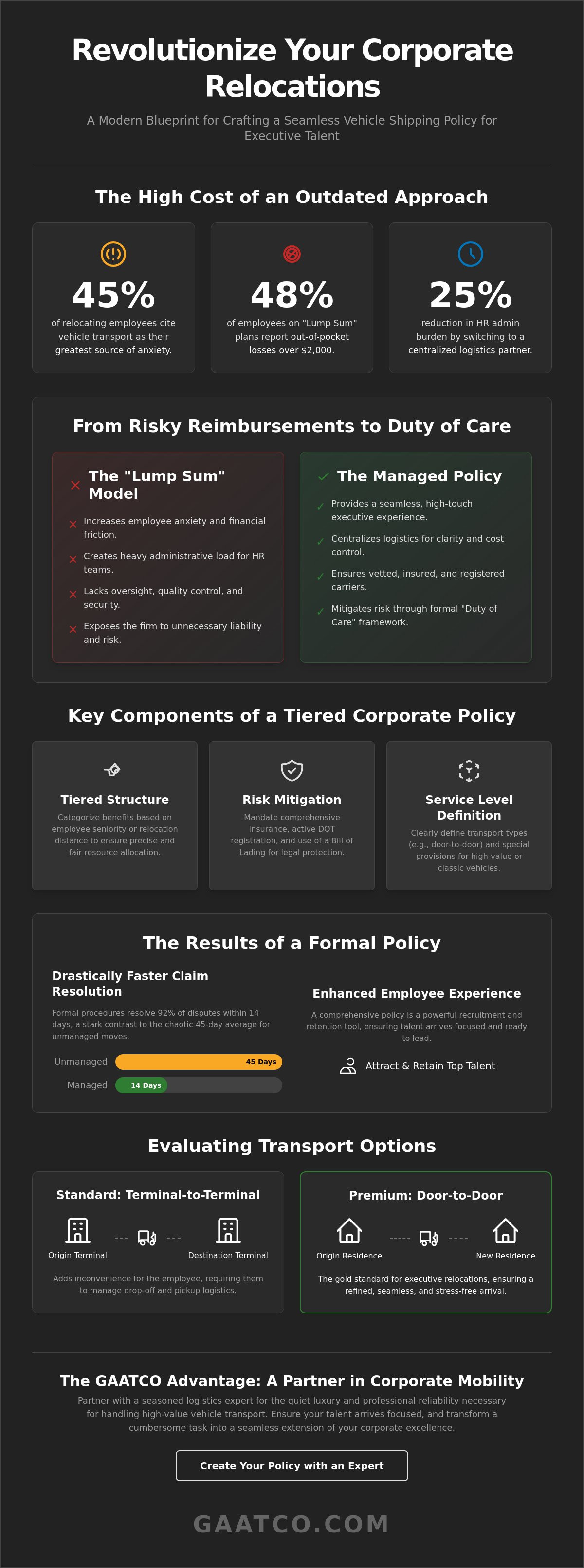
Relying on a "Lump Sum" model often proves counterproductive for modern enterprises. A 2023 industry study indicated that 48% of employees who received a flat relocation stipend reported out-of-pocket losses exceeding $2,000. This financial friction diminishes the employee's focus during a critical career milestone, and it's a risk most firms shouldn't take. Centralizing these services reduces the administrative burden on HR and procurement teams by approximately 25% based on internal efficiency benchmarks. Instead of managing dozens of individual invoices, a single logistics partnership provides clarity and oversight. We view every vehicle transport not as a transaction, but as a bespoke service that protects the individual's most valuable assets.
Corporate Liability and Risk Mitigation
Security is non-negotiable in corporate mobility. Every carrier we engage must maintain comprehensive insurance coverage and active Department of Transportation registration. The Bill of Lading acts as the primary legal record, documenting the vehicle's condition at both origin and destination. A clear policy establishes rigorous protocols for damage resolution. In 2022, logistics firms with formal claim procedures resolved 92% of disputes within 14 days; this stands in stark contrast to the 45-day average for unmanaged moves. By learning how to create a car shipping policy for corporate relocations, firms effectively shield themselves from unnecessary legal exposure.
Cost Control vs. Employee Experience
Balancing fiscal responsibility with a premium employee experience requires strategic planning. We leverage volume discounts on high-density corridors, such as the Dallas to Chicago route, where transport demand remains consistently high. Standardizing these rates prevents budget volatility and simplifies the procurement process. Providing reliable door-to-door service eliminates the inconvenience of terminal drop-offs, ensuring that the employee's arrival in their new city is as refined as their departure. For more details on our comprehensive approach, you may explore our corporate logistics services. This level of attention to detail is what defines a truly elite relocation program.
Key Components of a Tiered Corporate Shipping Policy
Developing a structured framework is the first step when determining how to create a car shipping policy for corporate relocations that remains scalable. A sophisticated policy categorizes benefits based on employee seniority or the total distance of the move, ensuring that resources are allocated with precision. For 2026, we anticipate that 78% of domestic relocations will require a tiered approach to manage rising fuel costs and logistical complexities in high-density areas. This system establishes clear expectations for "In-Scope" vehicles, which typically include daily-use sedans and SUVs, while providing specialized provisions for classic cars that require delicate handling.
A well-defined policy also functions as a recruitment tool. Organizations that offer comprehensive relocation support are better positioned to attract international talent and retain high-performing executives. By mandating specific transport types based on vehicle valuation, companies protect their liability and the employee's peace of mind. Logistics managers should set firm timelines for 2026, requiring at least 14 days of lead time for pickup to ensure a seamless transition between the old residence and the new corporate hub.
Standard Tier: Open Carrier Transport
The standard tier is designed for the efficient movement of mid-level employees to expansive metropolitan areas such as Phoenix or Orlando. Open carrier transport remains the industry benchmark for these moves, utilizing multi-car trailers that offer a reliable and cost-effective solution. While these vehicles are exposed to the elements, the safety protocols of modern logistics ensure a high level of protection. We recommend a mandatory shipping threshold of 500 miles; any distance shorter than this often permits a "drive-it" policy, whereas longer hauls necessitate professional transport to prevent unnecessary wear on the asset. This tier focuses on balancing budgetary constraints with the necessity of a timely delivery window.
Executive Tier: Bespoke Enclosed Transport
For C-suite transitions in prestigious hubs like New York or San Diego, an executive tier provides a level of service that mirrors the high-stakes nature of the move. This bespoke service utilizes climate-controlled, weather-proof trailers to safeguard high-value luxury sedans and vintage collections from road debris and temperature fluctuations. Speed is a critical component of this tier. While standard shipments may have a three-day pickup window, executive policies often prioritize expedited delivery to ensure the vehicle arrives precisely when the principal does. It is a discreet and dependable solution for those who require an uncompromising level of care. To explore our logistics capabilities, you may review our comprehensive service offerings and see how we manage these complex transitions.
When finalizing how to create a car shipping policy for corporate relocations, it's vital to integrate these tiers into the broader employee handbook. Clear definitions regarding vehicle size, weight limits, and insurance deductibles prevent ambiguity during the claims process. By 2026, the integration of real-time tracking will become a standard expectation for all tiers, allowing employees to monitor their assets with the same level of transparency they expect from a private charter flight.
Evaluating Service Levels and Transport Options
When determining how to create a car shipping policy for corporate relocations, the selection of service levels dictates the overall success of the employee experience. Terminal-to-terminal models often result in 48-hour delays at unsecured storage lots, which increases the risk of minor theft or environmental damage. In contrast, door-to-door service ensures a seamless transition. By 2026, human resources departments require more than a simple delivery window. They demand real-time GPS tracking with a 5-meter accuracy radius. This level of visibility mitigates the anxiety associated with moving high-value assets across the country.
A comprehensive policy must explicitly address the "cracked windshield" and "inoperable vehicle" clauses. Standard industry contracts frequently exclude glass damage caused by road debris, leaving the employee or the corporation to absorb the repair costs. Additionally, inoperable vehicle clauses can trigger surcharges of $200 or more if a vehicle fails to start during the loading process. GAATCO prioritizes transparent pricing to eliminate these hidden expenses. We avoid the 20% price inflation common in broker estimates that rely on low-ball figures to secure initial signatures; instead, we provide a fixed-cost structure that reflects the actual logistics required.
Door-to-Door Convenience in Dense Urban Hubs
Navigating the last mile in cities such as Boston, San Francisco, or Seattle requires meticulous planning. Local parking regulations in San Francisco often prohibit 75-foot transport trailers from entering specific residential zones. Our logistics team identifies these restricted access zones 72 hours before arrival to arrange alternative meeting points if necessary. This proactive approach includes dedicated support during the hand-off process, ensuring the employee is never left managing a complex vehicle exchange on a busy city street. Understanding how to create a car shipping policy for corporate relocations involves accounting for these regional nuances to maintain executive productivity.
Insurance and Enhanced Coverage Limits
Standard carrier insurance often limits liability to $100,000 per vehicle, which is insufficient for many modern executive fleets. For high-stakes shipments, we establish specialized handling protocols to prevent even minor abrasions or interior wear. Primary Insurance is the non-negotiable standard for corporate carriers, providing the first line of financial protection regardless of third-party negligence. We supplement these standards with corporate coverage extensions that protect the asset from the moment of pick-up until the keys are delivered. This commitment to safety and excellence serves as a non-negotiable pillar of our service model, bridging the gap between international standards and regional service nuances.
Implementing Your Policy: Hub-Specific Logistics
Effective implementation bridges the gap between administrative planning and the physical movement of assets. When determining how to create a car shipping policy for corporate relocations, the selection of a logistics partner with established routes in primary US business centers is the first priority. A partner with a dedicated network ensures that vehicles don't sit in transit hubs longer than necessary. We recommend integrating the vehicle shipping request directly into your broader HR relocation portal. This creates a seamless experience for the employee and ensures that data flows directly to the logistics team without manual intervention.
To maintain fiscal precision, HR departments should audit policy performance every 90 days. This frequency allows for adjustments based on the U.S. Energy Information Administration's fuel price indices, which frequently fluctuate by 10% to 15% in a single quarter. A premium policy isn't static; it evolves with market conditions to protect the corporate budget while maintaining service quality.
Navigating Regional Challenges: From NYC to Houston
Executing Door-to-Door Auto Shipping in the Northeast requires a nuanced understanding of local restrictions. In Manhattan, narrow streets and strict NYC Department of Transportation commercial vehicle ordinances often necessitate off-site loading zones. Conversely, the Texas Triangle, comprising Houston, Dallas, and Austin, presents challenges related to high-volume traffic corridors like I-10 and I-35. According to 2023 Texas Department of Transportation reports, congestion in these areas can add significant time to transit schedules if not managed by experienced dispatchers.
Planning for seasonal weather is also vital for maintaining reliability. Hubs like Denver and Chicago experience significant delays between January and March due to lake-effect snow or treacherous mountain passes. A comprehensive policy accounts for these regional variables by building in buffer days during winter months. This level of foresight is essential when considering how to create a car shipping policy for corporate relocations that remains dependable year-round.
Employee Communication and Transparency
Clarity is the cornerstone of a successful relocation. Employees need a dedicated point of contact who understands their specific move rather than a generic support queue. Providing a bespoke "Preparation Checklist" ensures that vehicles are ready for transport, which reduces the risk of transit delays. This checklist should include requirements such as maintaining a quarter-tank of fuel and removing all personal effects to comply with Department of Transportation safety standards.
Utilizing advanced tracking tools is a primary requirement to reduce the anxiety associated with moving high-value assets. These tools provide real-time updates, allowing employees to plan their arrival at the destination hub with confidence. Setting realistic expectations is equally important; for instance, a coast-to-coast transit typically requires 7 to 10 days, depending on the route and current seasonal demand. This transparency fosters trust and reinforces the company's commitment to employee well-being.
The GAATCO Advantage: A Partner in Corporate Mobility
For 20 years, GAATCO has operated at the intersection of logistical precision and corporate service. We understand that when you are determining how to create a car shipping policy for corporate relocations, you aren't simply looking for a vendor; you're seeking a discreet extension of your own operations. Our team manages the complexities of interstate transport so your executives can focus on their new roles without distraction. We act as a bridge between the rugged realities of the road and the sophisticated requirements of the boardroom, ensuring every transition is handled with quiet luxury and professional reliability.
Our commitment to excellence is reflected in our tailored solutions for various sectors. We provide specialized support for:
- Executive Relocations: White-glove service for high-value personal vehicles.
- Military Transfers: Disciplined coordination that meets the strict timing requirements of service members.
- Dealer Logistics: Efficient fleet movements between major hubs like Los Angeles, Chicago, and Atlanta.
We've streamlined our quote process to facilitate rapid corporate decision-making. By providing clear, comprehensive data upfront, we eliminate the back-and-forth that often delays relocation timelines. This efficiency is vital for maintaining momentum in fast-paced corporate environments where delays can impact a new hire's start date or an executive's productivity.
Bespoke Logistics for High-Stakes Relocations
High-stakes relocations require more than standard transport protocols. Our specialized handling involves a tiered vetting system where only the top 5% of carriers in major US cities meet our internal standards for safety and insurance coverage. We prioritize enclosed transport for premium fleets, ensuring every vehicle arrives in showroom condition. GAATCO maintains a 20-year history of safe, reliable auto shipping across the United States. This longevity provides a foundation of trust that helps companies master how to create a car shipping policy for corporate relocations with confidence. Our licensed and insured network ensures that every vehicle, from a standard sedan to a bespoke luxury car, receives the same level of meticulous attention.
Next Steps: Securing Your 2026 Relocation Strategy
Preparing for the 2026 fiscal cycle requires a proactive stance on mobility. We invite your HR or procurement team to initiate a partnership that moves beyond transactional shipping. By requesting a comprehensive logistics audit, we can analyze your current policy gaps and identify potential cost efficiencies in major transit corridors. Our experts provide the data necessary to refine your corporate standards, ensuring your relocation strategy is both resilient and sophisticated. To begin this process and secure a dedicated partner for your next executive move, we invite you to Request a Quote today. Let our seasoned experts handle the complexities of the road while you maintain focus on your organization's global growth.
Refining Your Corporate Mobility Strategy
A sophisticated relocation framework transforms a complex logistical challenge into a seamless executive benefit. By implementing tiered service levels and prioritizing hub-specific logistics, organizations ensure that every employee transition remains efficient. Mastering how to create a car shipping policy for corporate relocations allows your firm to mitigate risk while maintaining the high standards your leadership team expects. It's about more than just transport; it's about preserving the value of significant assets through a structured and reliable process.
GAATCO provides over 20 years of industry expertise to support your mobility program. We offer specialized handling for luxury and classic vehicles, ensuring high-value assets receive the meticulous care they require. Our network utilizes licensed and insured carriers across all 16 major US hubs, offering a comprehensive reach that ensures safety at every turn. We act as a discreet and dependable partner, managing the intricate details of vehicle logistics so your executives can focus on their new roles. Partner with GAATCO for your corporate relocation needs and request a bespoke quote today.
We're ready to help you build a mobility policy that reflects the excellence of your brand.
Frequently Asked Questions
How much does it typically cost to ship an employee vehicle across the country?
Cross-country vehicle transport costs typically range from $1,100 to $2,100 depending on the specific route and vehicle size. These figures fluctuate based on fuel indices and seasonal demand. While standard sedans fall on the lower end of this spectrum, larger SUVs often require a 25 percent premium due to weight and space requirements. We recommend budgeting for these variables to ensure a seamless transition for your executive team.
Should our corporate policy cover enclosed transport for all employees?
Enclosed transport is recommended for high-value assets or classic vehicles, but open-air transport remains the industry standard for 90 percent of corporate moves. When you determine how to create a car shipping policy for corporate relocations, you should consider tiering the benefits. Offering enclosed trailers for C-suite executives provides an extra layer of protection from road debris. This bespoke approach ensures that premium vehicles arrive in pristine condition.
What happens if a vehicle is damaged during a corporate relocation?
The carrier's cargo insurance typically covers damages that occur during transit, provided they're documented on the Bill of Lading. Employees must conduct a meticulous inspection at both origin and destination. If a discrepancy of even one centimeter is found, it should be noted immediately. Most professional carriers maintain a minimum of $100,000 in cargo insurance to protect against these rare occurrences, providing a reliable safety net for your staff.
Can we ship inoperable vehicles or motorcycles as part of a relocation package?
Most logistics providers can accommodate motorcycles and inoperable vehicles, though they require specialized equipment like winches or lift gates. Shipping a non-running car often incurs an additional fee of $150 to $200 because of the extra labor involved. Including these options in your policy provides a comprehensive solution for employees with diverse transportation needs. It's essential to confirm these requirements 48 hours before the scheduled pickup to ensure equipment availability.
How long does it take to ship a car from a hub like Atlanta to San Francisco?
A cross-country transit from Atlanta to San Francisco generally requires 7 to 10 days for delivery. Carriers typically cover 400 to 500 miles per day while adhering to Department of Transportation safety regulations. Factors such as weather conditions in the Midwest or traffic density in major hubs can impact this timeline. We provide dedicated tracking to ensure your staff remains informed throughout the entire journey, maintaining a calm and predictable experience.
Is door-to-door delivery always possible in cities like New York or Boston?
Narrow streets and local ordinances in cities like New York or Boston often prevent large transport trailers from reaching specific residential addresses. In these instances, drivers arrange a meeting at a nearby parking lot or wide thoroughfare. Approximately 15 percent of urban deliveries require this adjustment to ensure safety and compliance with municipal laws. This logistical nuance is a standard part of our premium service model and is handled with professional discretion.
What is the difference between an auto transport broker and a carrier like GAATCO?
An auto transport broker acts as a middleman to find carriers, whereas a direct carrier like GAATCO owns the equipment and manages the logistics directly. Understanding this distinction is vital when learning how to create a car shipping policy for corporate relocations. Working with a carrier offers a more direct line of communication and greater accountability. This structure minimizes the risk of miscommunication and ensures a more reliable, elite experience for the client.
How should an employee prepare their vehicle for corporate transport?
Employees should clean the vehicle thoroughly and remove all personal belongings to facilitate an accurate inspection. The fuel tank should be no more than one-quarter full to reduce weight and comply with safety protocols. Alarms must be disabled, and any loose exterior parts should be secured or removed. These simple steps ensure the transport process remains efficient and the vehicle stays secure during its transit across the country.


