
Entrusting a high-value vehicle to a carrier is not merely a logistical requirement; it is an exercise in significant trust where the safety of your asset remains the only acceptable metric of success. For many owners, the search for nationwide auto transport is often clouded by concerns over hidden fees and the physical security of their investment during transit. We recognize that the anxiety surrounding unreliable pickup windows and complex insurance clauses is a valid response to an industry that sometimes lacks transparency.
You deserve a relocation process that mirrors the quality of the vehicle being moved. This guide details how to navigate the complexities of long-distance shipping with the sophisticated logistics and elite care your asset deserves. We will explore the latest 2026 safety regulations, the critical distinctions between transport methods, and the precise steps required to ensure a seamless, damage-free delivery. By understanding the nuances of carrier vetting and insurance coverage, you can transform a complex logistical challenge into a managed, professional experience that prioritizes the integrity of your vehicle above all else.
Key Takeaways
- Gain a comprehensive understanding of the 2026 regulatory landscape, where FMCSA compliance serves as the foundation for secure vehicle relocation.
- Evaluate the strategic benefits of open transport versus the "quiet luxury" of enclosed carriers to determine the optimal protection for your specific asset.
- Navigate the complexities of nationwide auto transport by leveraging a sophisticated hub-and-spoke model that ensures efficient transit through major logistics nodes.
- Implement a professional preparation checklist, prioritizing a detailed pre-transport inspection to maintain total transparency throughout the shipping lifecycle.
- Identify the hallmarks of a trusted logistics advisor, from 20 years of operational expertise to specialized protocols for military and classic car transport.
Understanding Nationwide Auto Transport: The 2026 Logistics Landscape
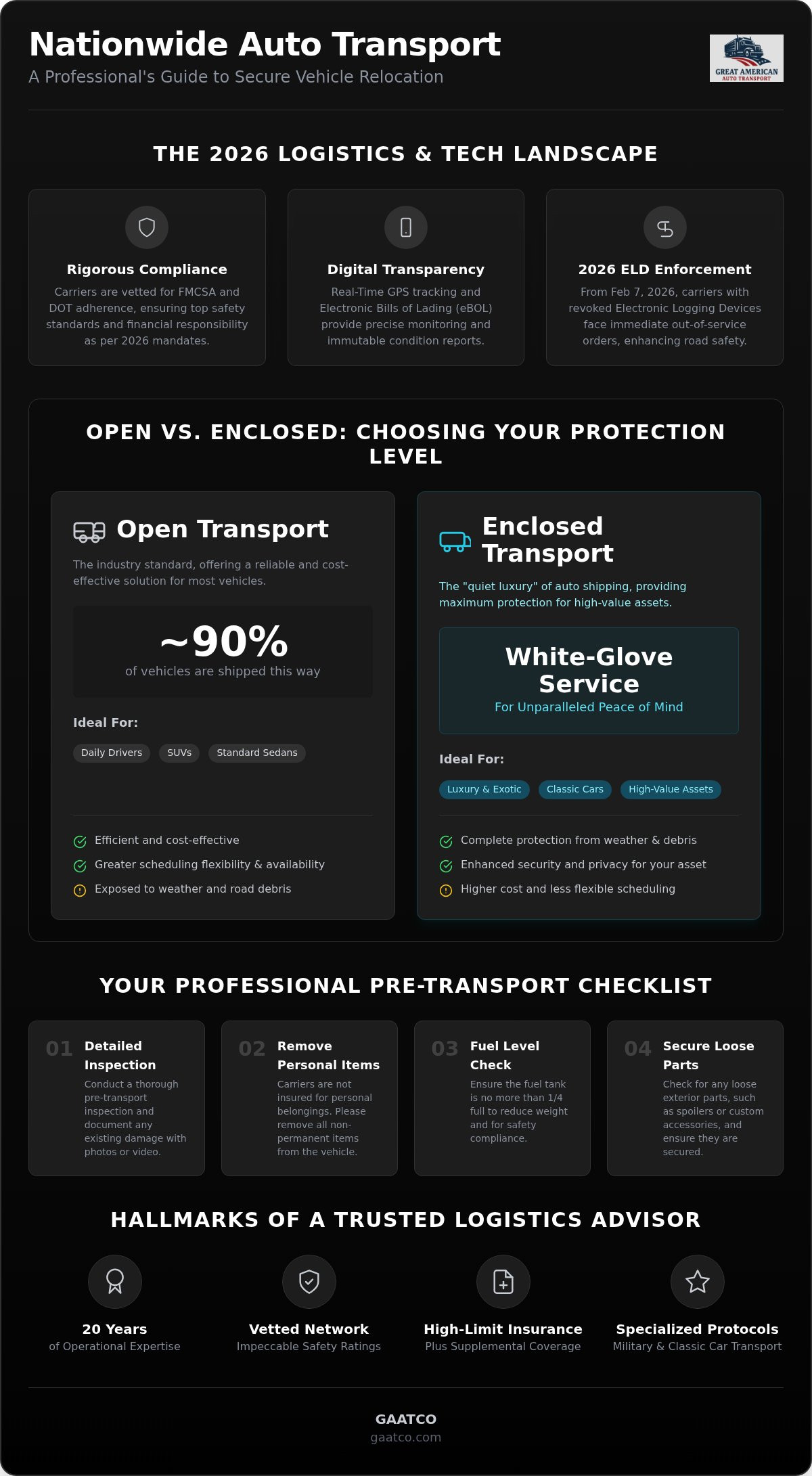
In 2026, nationwide auto transport has matured into a complex orchestration of vetted professional carriers and advanced logistics. It's no longer a simple point-to-point service but a global-standard network designed to protect high-value assets across vast distances. This infrastructure relies heavily on the oversight of the Department of Transportation (DOT) and the Federal Motor Carrier Safety Administration (FMCSA). These agencies ensure that every operator maintains rigorous safety standards, particularly with the 2026 mandates. For instance, as of February 7, 2026, enforcement officers have the authority to place vehicles out of service immediately if a carrier uses a revoked Electronic Logging Device.
The traditional distinction between an auto transport broker and a carrier is evolving toward integrated logistics solutions. Modern clients increasingly seek partners who manage the entire lifecycle of the shipment while maintaining the financial responsibility standards updated by the FMCSA on January 16, 2026. This shift is driven by a need for all-inclusive pricing that remains stable despite volatile fuel markets. A professional partner provides a bridge between the client's expectations and the operational realities of the road; they ensure that costs are transparent from the initial consultation to the final delivery.
To better understand the core mechanics of this industry, watch this helpful video:
The Role of Licensed and Insured Carriers
Verification of credentials is the first pillar of a secure relocation. Every legitimate carrier must possess valid MC and DOT numbers, which serve as a digital fingerprint of their safety record and authority. While standard cargo insurance typically covers basic liabilities, we often recommend supplemental gap coverage for high-value assets. GAATCO prioritizes a network of carriers who maintain high-limit policies and impeccable safety ratings, reflecting our 20-year commitment to reliability. This meticulous vetting process mitigates the risks associated with transit and provides the peace of mind that corporate and affluent clients require.
Technological Advancements in 2026 Shipping
The integration of technology has redefined transparency in the logistics sector. Real-time GPS tracking is now a standard expectation, allowing owners to monitor their vehicle's progress with precision. Additionally, the adoption of the Electronic Bill of Lading (eBOL) has streamlined digital damage inspections, creating an immutable record of the vehicle's condition at both pickup and delivery. This transition matches the 2026 regulatory shift where paper medical certificates are no longer accepted; all certifications must be verified electronically. These tools, combined with sophisticated route optimization software, have significantly reduced transit times between major coastal hubs. By leveraging these advancements, we ensure that every nationwide auto transport shipment moves with maximum efficiency.
Open vs. Enclosed Carriers: Selecting the Optimal Protection Level
Selecting the appropriate method for nationwide auto transport requires a balanced evaluation of asset value, environmental exposure, and logistical timing. It's a strategic decision that separates standard relocations from elite asset management. Approximately 90% of vehicles moved across the United States utilize open trailers. This high volume translates to greater flexibility in scheduling and more frequent departures from major shipping hubs. For the majority of daily drivers, SUVs, and standard sedans, this method provides a dependable and efficient solution that meets the needs of most corporate and individual clients.
Conversely, enclosed transport represents the "quiet luxury" tier of the industry, catering to the remaining 10% of high-value shipments. This method isn't merely about a roof; it's about a controlled environment. Enclosed carriers typically transport only 2-6 vehicles, allowing for more individualized attention. The equipment used is significantly more sophisticated, featuring hydraulic lift gates that prevent the steep angles associated with traditional ramps. This is critical for vehicles with low ground clearance. The Federal Motor Carrier Safety Administration mandates specific insurance and operating authorities for these carriers, and high-end providers often carry cargo insurance exceeding $1 million to reflect the value of the assets on board.
The Benefits of Open-Air Transport
Open-air transport remains the industry standard due to its unmatched cost-efficiency and availability. Because these trailers are ubiquitous, finding a nationwide auto transport pickup window that fits a tight schedule is often easier. Professional securement protocols involve four-point tie-downs and strategic positioning on the rack to minimize exposure to road elements. It's a robust system designed for the rigors of long-distance transit, offering:
- High-frequency routing between major metropolitan areas.
- Visual accessibility for easier inspections during transit.
- Reduced logistical lead times for urgent relocations.
White-Glove Enclosed Shipping for Elite Vehicles
For owners of classic, exotic, or luxury vehicles, enclosed shipping provides total peace of mind. These trailers offer a barrier against unpredictable weather, road salts, and debris. Beyond physical protection, they offer a level of discretion that's vital for high-profile relocations. Specialized handling protocols ensure that every touchpoint is managed with precision. This service often includes:
- Hydraulic lift gates for perfectly level loading and unloading.
- Soft-tie down systems that protect delicate suspension components.
- Climate-controlled environments to preserve interior materials.
If you're ready to secure a tailored logistics plan, you can explore the options available through GAATCO to ensure your vehicle receives the care it deserves.
Strategic Logistics: Navigating Major US Shipping Hubs
Seasonal fluctuations also dictate the flow of the logistics landscape. In states like Arizona and Florida, demand often surges during the winter months, particularly in cities like Phoenix and Orlando. This seasonal pressure requires a partner who understands how to navigate capacity shifts without compromising on service quality. Our team monitors these regional trends meticulously to maintain steady transit times, even when the market experiences high volatility in the Sunbelt states.
Optimizing Routes Between the Coasts
Shipping a vehicle between distant coastal points, such as Seattle and Miami, is a logistical marathon that requires precise timing. These routes often intersect challenging terrain, including the mountain passes near Denver, where winter weather can disrupt even the most disciplined schedules. We leverage GAATCO's deep regional expertise to anticipate these environmental hurdles. By planning around weather corridors and utilizing advanced route optimization, we successfully bypass the urban congestion typically found in Boston and Chicago. This proactive approach ensures that the "long-haul" segment of the journey remains as efficient as possible.
Door-to-Door Delivery: The Ultimate Convenience
The final-mile delivery is often the most complex phase of the relocation process. Navigating the narrow streets of San Francisco or the residential hills of San Diego requires extensive local knowledge and specialized equipment. When shipping a car to another state, it's vital to account for local residential restrictions that might prevent large multi-car trailers from entering certain neighborhoods. Our professionals coordinate safe, accessible meeting points when direct door-to-door access isn't feasible, ensuring a seamless transition from the interstate to your driveway. This commitment to detail is a hallmark of our specialized transport services, where every mile is managed with the same level of care as the first.
- Strategic routing through major hubs reduces unnecessary idle time.
- Local expertise facilitates smooth pickups in restricted urban environments.
- Real-time adjustments account for seasonal demand and weather patterns.
Preparing Your Vehicle for Nationwide Transport: A Professional Checklist
Preparation is a shared responsibility that ensures the safety of your asset throughout its nationwide auto transport journey. While our professional team handles the complex logistics, your attention to specific mechanical and aesthetic details serves as the first line of defense against transit complications. We recommend beginning this process at least 48 hours before the scheduled pickup window. This timeframe allows you to address fluid levels and battery health, ensuring the vehicle is in optimal condition for loading and unloading.
A thorough cleaning of the exterior is essential for a precise pre-transport assessment. Dust and road grime can easily obscure minor imperfections, such as small chips or scratches. By presenting a clean vehicle, you facilitate a transparent inspection process that accurately reflects the asset's current state. This clarity is vital for both the owner and the carrier; it establishes an undeniable baseline for the vehicle's condition before it enters the shipping lifecycle.
Regulations regarding personal items are strict. Auto carriers are licensed specifically for vehicle relocation, not as household goods movers. Leaving personal belongings inside the cabin not only adds unnecessary weight but also poses a risk of interior damage if items shift during transit. To maintain compliance and ensure the safety of your interior, all personal effects, including aftermarket GPS units and loose charging cables, should be removed.
The Inspection and Bill of Lading
The joint walk-around inspection is the most critical interaction between you and the driver. During this process, you'll collaboratively document the vehicle's condition on the Electronic Bill of Lading (eBOL). This digital record is the standard for modern nationwide auto transport, providing a clear chain of custody. We encourage you to take high-resolution photos of every angle and ensure they're timestamped. The eBOL serves as your primary legal protection; it's the definitive record used by insurance providers should a claim arise. You shouldn't sign an incomplete report, as your signature confirms the accuracy of the documented condition.
Final Preparations and Keys
Before the carrier arrives, ensure all alarms are disabled and toll tags are removed to prevent accidental charges. External accessories, such as bike racks or specialized antennas, should be detached to minimize the vehicle's profile. Industry standards dictate that the fuel tank should be at approximately one-quarter capacity. This provides enough fuel for necessary movement during loading while reducing the overall weight of the shipment. Finally, provide the driver with a complete set of keys, including those for the ignition and trunk. For a personalized consultation on your upcoming relocation, request a professional quote from our dedicated logistics team today.
Why GAATCO is the Trusted Advisor for Nationwide Logistics
Selecting a logistics partner for nationwide auto transport is a decision that extends beyond simple transit times; it's an investment in the security of a significant asset. With over 20 years of industry expertise, GAATCO has established itself as a discreet and dependable partner for both corporate entities and private collectors. Our commitment to safety and transparent communication serves as the foundation of our operations. We don't view vehicles as mere units in a system; instead, we treat every shipment with the meticulous attention to detail that high-stakes relocation demands. This "quiet luxury" of service means you can entrust the complexities of the road to a dedicated advisor who manages every variable on your behalf.
Our approach is rooted in a unified team of professionals who understand that reliability is non-negotiable. Whether you're relocating a single luxury sedan or managing a dealer-to-dealer fleet transfer, our infrastructure provides the stability required for a seamless experience. We invite you to experience a higher standard of auto relocation, where clear communication and operational excellence converge to protect your investment throughout its journey across the United States.
Military and Specialized Relocation Experts
We take particular pride in providing tailored solutions for service members during Permanent Change of Station (PCS) moves. Coordinating a relocation to bases near Nashville or Las Vegas requires a logistics partner who understands the critical urgency and specific protocols of military life. Our specialized services extend to the handling of inoperable vehicles, utilizing advanced winch equipment and expert techniques to ensure safe loading without further mechanical strain. This personalized support is what defines the GAATCO difference; we prioritize the human element behind the infrastructure, ensuring that your specific needs are met with precision and care.
Securing Your Nationwide Transport Quote
To ensure the highest level of service, we recommend booking your shipment well in advance. This proactive approach allows our team to secure preferred delivery windows and optimize routing for the most efficient transit. We provide customized outcomes based on the nuances of your specific route and vehicle type, ensuring that our pricing remains transparent and all-inclusive. By leveraging our expansive operational reach and regional expertise, we bridge the gap between complex logistical realities and your need for a dependable result. Request your professional auto transport quote today to begin a partnership built on two decades of elite service and safety.
- 20+ years of proven industry expertise and safety.
- Specialized handling for military, classic, and inoperable vehicles.
- Transparent, all-inclusive pricing models with no hidden fees.
- Dedicated logistics advisors for every step of the shipping lifecycle.
Elevating Your Vehicle Relocation Strategy
The landscape of nationwide auto transport in 2026 demands a sophisticated approach that balances regulatory compliance with meticulous operational care. By prioritizing the selection of the optimal carrier type and adhering to professional preparation protocols, you ensure that your vehicle remains a protected asset throughout its journey. We have explored how strategic routing through major logistics hubs and the integration of digital inspection tools have transformed the shipping experience into a transparent, managed process. Precision matters. Every detail counts.
Success in long-distance relocation depends on a partnership built on stability and specialized expertise. It's why GAATCO offers over 20 years of logistics expertise and a licensed and bonded carrier network to handle the complexities of the road so you don't have to. Our specialized military and classic car protocols provide the elite care your high-value assets deserve. It is time to move beyond the stress of logistics and experience the quiet luxury of a truly seamless relocation. Your journey begins with a trusted advisor.
Request a Professional Nationwide Transport Quote
Frequently Asked Questions
How much does it cost to ship a car across the country in 2026?
Costs for nationwide auto transport are influenced by several variables, including total mileage, vehicle dimensions, and the chosen protection level. While industry averages exist for standard sedans, fluctuations in fuel prices and seasonal demand in 2026 play a critical role in final estimates. Selecting an enclosed carrier typically results in a higher investment due to the specialized equipment and increased insurance coverage required for high-value assets.
Is my vehicle insured while it is being transported nationwide?
Every professional carrier in our network is required to maintain valid cargo insurance. It's essential to verify a carrier's MC and DOT numbers to ensure they're compliant with current federal regulations. For enclosed shipments, these limits often exceed $1,000,000 to provide adequate protection for luxury or classic vehicles. We recommend reviewing the specific policy details before pickup to understand the scope of coverage provided for your asset.
How long does it typically take to ship a car from New York to San Diego?
A cross-country shipment from New York to San Diego usually takes between 7 and 10 days. Professional drivers typically cover 400 to 500 miles per day while adhering to mandatory rest periods and safety protocols. Environmental factors, such as winter weather corridors in the Midwest or urban congestion in major hubs, can influence this timeline. We prioritize route optimization to ensure your vehicle arrives within the projected delivery window.
Can I ship personal belongings inside my car during transport?
Federal regulations and safety protocols generally prohibit the transport of personal belongings inside the vehicle. Auto carriers are licensed specifically for vehicle relocation; they aren't authorized to transport household goods. Additional items increase the vehicle's weight and aren't covered by the carrier's cargo insurance policy. To ensure a seamless inspection and maintain compliance, we advise removing all personal effects, including loose electronics and aftermarket accessories, before the driver arrives.
What is the difference between a broker and a carrier in auto transport?
An auto transport broker acts as a logistics advisor who vets carriers and coordinates the shipping lifecycle, whereas a carrier owns the physical equipment. Brokers provide a bridge to a vast network of specialized trailers, ensuring you receive the specific care your vehicle requires. This integrated approach allows for greater flexibility in scheduling and access to elite carriers who might not work directly with individual clients.
Do you offer door-to-door service in major cities like Houston and Atlanta?
We provide door-to-door service in major logistics nodes like Houston, Atlanta, and Dallas. This service is designed for maximum convenience, allowing the carrier to pick up and deliver the vehicle as close to your specified address as possible. If residential restrictions or narrow streets prevent a large multi-car trailer from entering your neighborhood, our team coordinates a safe, nearby meeting point to complete the transfer professionally.
How do I prepare my luxury or classic car for enclosed transport?
Preparing a high-value asset for nationwide auto transport begins with a detailed exterior cleaning to facilitate a precise inspection. You should ensure the fuel level is at approximately one-quarter tank and that all security alarms are fully disabled. It's also vital to remove toll tags and any external accessories. Documenting the vehicle's condition with high-resolution photos before it's loaded onto the enclosed trailer provides essential protection for your investment.
Can you ship an inoperable vehicle that doesn't steer or brake?
We can facilitate the shipment of inoperable vehicles, including those with steering or braking issues, by utilizing specialized winch equipment. It's critical to disclose the vehicle's exact condition during the initial consultation so we can assign a carrier with the necessary tools for safe loading. While these shipments require more intensive labor and specialized handling protocols, our team is experienced in managing the unique challenges of relocating non-running assets.


