

Consider the unsettling moment when your cross-country relocation is underway, yet the transport trailer you scheduled remains conspicuously absent. This silence from a logistics partner often signals a breakdown in the carrier-search process, leaving you to wonder what happens when a transport broker cannot find a carrier to fulfill your requirements. We recognize the profound anxiety that accompanies a lack of communication during such high-stakes transitions. It is a frustration born from a mismatch between logistical expectations and the complex realities of the current marketplace.
This guide serves as a sophisticated resource to help you navigate these operational delays with poise. We will examine the underlying mechanics of the auto transport industry, including how the 2026 FMCSA financial responsibility mandates impact broker reliability. You will learn exactly how to resolve a shipment delay when a broker fails to secure a carrier, equipped with a precise checklist to restore your timeline. Our goal is to provide the clarity and confidence required to secure a dependable transport partner who handles the complexities so you do not have to.
Key Takeaways
- Recognize the broker's role as a sophisticated logistics architect and understand why carrier assignments typically occur within a narrow 72-hour window.
- Identify the primary reasons for logistical delays, including how underpricing and remote locations dictate what happens when a transport broker cannot find a carrier.
- Learn to request a dispatch report to gain transparency into current market offers and determine if a carrier pay adjustment is necessary.
- Establish a more reliable shipping strategy by understanding how to transition from public load boards to a discreet, preferred carrier network.
- Secure your transport timeline by prioritizing transparent pricing models that reflect real-world operational costs rather than unrealistic initial quotes.
The Reality of the Auto Transport Marketplace: Why Carriers Stall
The auto transport industry operates on a rhythm that often surprises those accustomed to the immediate gratification of standard courier services. To understand what happens when a transport broker cannot find a carrier, one must first distinguish between the entity that organizes the logistics and the one that performs the physical labor. A freight broker serves as a logistics architect. They do not own a fleet of trucks; instead, they curate a network of independent operators to fulfill specific transport needs, such as enclosed car transport for high-value vehicles.
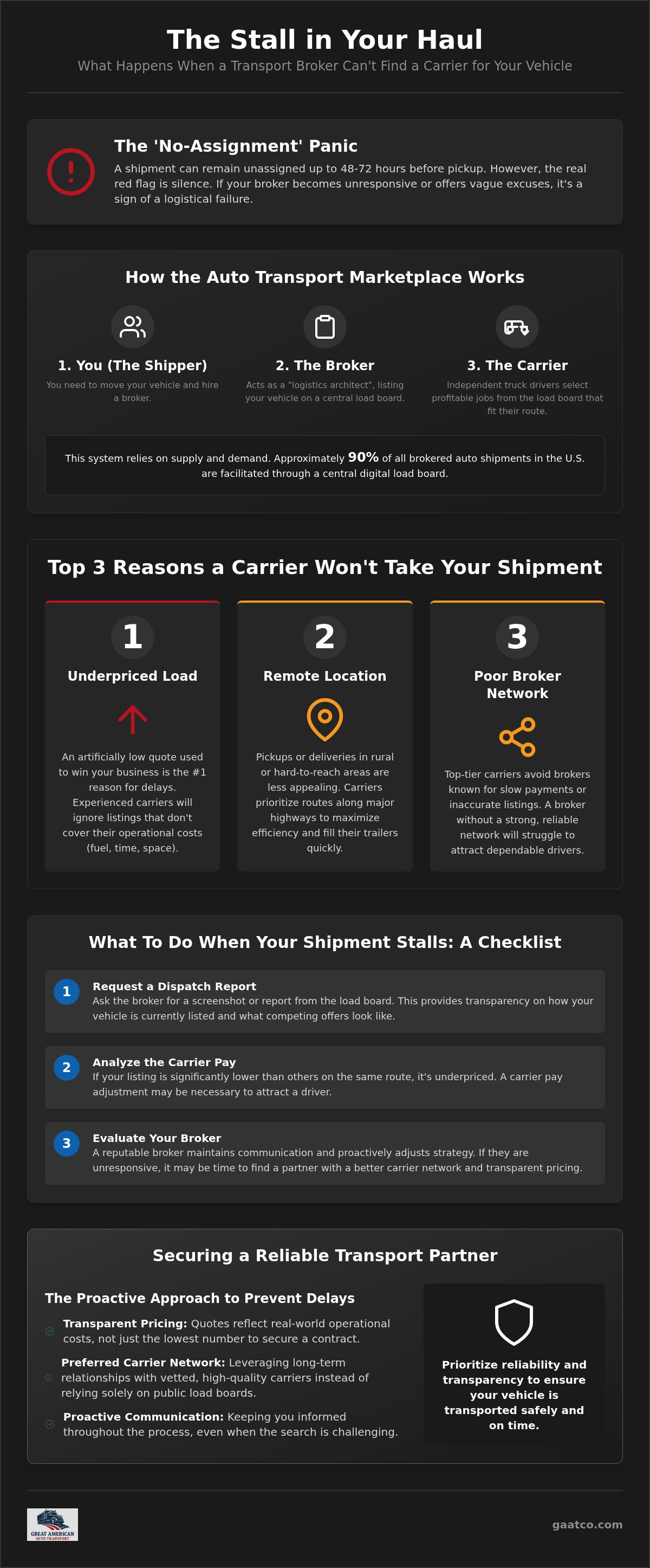
Many clients expect a guaranteed pickup date weeks in advance. However, the reality of carrier route planning is far more fluid. Most assignments occur within a "Dispatch Window," typically no more than 72 hours before the actual pickup. Drivers prioritize loads that fit their current geographic position and fuel efficiency goals, meaning they rarely commit to a specific vehicle until they're certain of their proximity. This short-term planning cycle is why a vehicle may appear unassigned even as the pickup date nears.
Understanding the Broker-Carrier Dynamic
Brokers act as the critical bridge between private shippers and the specialized drivers who operate transport trailers. This relationship relies heavily on professional reputation. Top-tier carriers, who prioritize safety and reliability, gravitate toward brokers known for prompt payment and precise manifests. If a broker lacks this established rapport or offers substandard rates, they'll struggle to attract high-quality drivers. This often results in a stalled search where the broker's listings are ignored by the most dependable operators in the market, who prefer to work with seasoned experts.
The 'No-Assignment' Panic: When to Worry
It's standard for a vehicle to remain unassigned until 48 hours before the scheduled window. However, a genuine logistical failure becomes apparent when communication ceases. If your broker becomes unresponsive or provides vague excuses, it may indicate they've underpriced your load. This pricing strategy is sometimes used to secure a contract with an artificially low quote that no carrier is willing to accept in a competitive market.
When this occurs, the shipment remains stagnant on public load boards. Understanding what happens when a transport broker cannot find a carrier requires recognizing that silence is the ultimate red flag. A reputable partner maintains transparency even during difficult searches. In contrast, a failing broker often retreats into a lack of updates, leaving the client stranded as their moving date approaches. This lack of professional accountability is precisely what sophisticated shippers seek to avoid by partnering with established logistics firms.
The Mechanics of Central Dispatch and Load Boards
Central Dispatch serves as the primary digital infrastructure for the United States auto transport industry, facilitating approximately 90% of all brokered shipments. When a broker lists a vehicle, it appears on a live load board accessible to thousands of verified carriers. To a driver stationed in a logistical hub like Houston or San Diego, your vehicle is one of hundreds of available data points. They see the vehicle model, the specific route, and the "carrier pay" offered. If the compensation is insufficient for the trailer space required, the listing remains untouched. This digital stagnation is precisely what happens when a transport broker cannot find a carrier; the listing simply fails to gain traction among the most reputable drivers.
Negotiation on these boards occurs in real-time. If a driver has a single remaining spot on a ten-car hauler, they might accept a slightly lower rate to fill the gap and maximize their fuel efficiency. Conversely, during periods of high demand, drivers will ignore any load that doesn't meet their strict profit margins. Professional brokers monitor these fluctuations constantly, adjusting offers to ensure the vehicle moves without compromising on the quality of the carrier selected for the task.
How Your Vehicle Listing Competes for Space
Load density is a primary driver of carrier interest. While routes like New York to Miami are saturated with trucks, they're also saturated with vehicles competing for those specific spots. Vehicle dimensions also play a critical role in this marketplace. A large SUV occupies more physical space and adds significantly more weight than a sedan, which often requires higher carrier pay to incentivize a driver. Additionally, if a vehicle is classified as inoperable, it requires specialized equipment such as a winch. Most carriers will bypass inoperable vehicles if easier, "roll-on" loads are available in the immediate vicinity.
Vetting for Reliability and Safety
At GAATCO, we recognize that the lowest price often carries the highest operational risk. Professional logistics requires a rigorous vetting process that extends far beyond a simple booking. We utilize a sophisticated carrier rating system to verify insurance limits and safety compliance in real-time. This is particularly vital given that the FMCSA received over 8,000 complaints related to broker fraud in 2025, a significant increase that underscores the need for expert oversight.
By utilizing historical performance data, our team identifies which carriers possess a proven track record of punctuality and care. We avoid "ghost brokers" who fail to verify if a carrier's cargo insurance is active or sufficient for high-value classic car transport. If you require a partner who prioritizes these non-negotiable operational pillars, you may wish to request a tailored quote for your next shipment. Our established expertise ensures your vehicle is positioned to attract the industry's most dependable operators.
Top 3 Reasons a Broker Cannot Find a Carrier
Identifying what happens when a transport broker cannot find a carrier often reveals a fundamental disconnect between the initial quote and the operational costs of the driver. Carriers are selective business owners who prioritize loads that offer the highest return on their time and fuel expenditure. While a broker might present a polished facade, the underlying reality of a stalled shipment usually stems from specific logistical barriers that prevent a listing from gaining traction in a competitive marketplace.
The Pricing Trap: Why Cheap Quotes Often Fail
The most prevalent cause of a failed carrier search is underpricing. Some brokers utilize a "bait and switch" tactic, providing an artificially low quote to secure a contract while knowing the rate won't attract a professional driver. In 2026, fluctuating fuel surcharges have made carrier margins tighter than ever, meaning drivers won't even consider a listing that falls below their minimum threshold. Market Rate is the precise price point that attracts a 5-star carrier within 48 hours of listing. When a broker fails to account for these real-world costs, the vehicle remains stagnant on the load board while more realistically priced shipments move ahead.
Geographic Hurdles: From Seattle to Orlando
Geography plays a decisive role in carrier availability. Drivers prefer established corridors such as the I-95 or I-10, where they can easily secure back-to-back loads. If a pickup or delivery is located in a "dead zone" far from major metropolitan hubs, carriers must perform a cost-benefit analysis. Deviating from a main highway for a rural detour incurs additional time and fuel, costs that must be covered by a geographic surcharge. GAATCO manages these regional nuances by leveraging 20 years of experience to position shipments along optimal routes, ensuring even remote locations are serviced by our licensed carrier network.
Finally, vehicle specifications and unrealistic timelines narrow the available pool of trucks. High-value assets requiring enclosed car transport or modified vehicles with low ground clearance require specialized equipment. If a client requests expedited service without the necessary surcharge to incentivize a driver to alter their route, the search will likely stall. A discreet and dependable partner avoids these pitfalls by providing transparent, all-inclusive pricing from the outset, ensuring your vehicle is never left waiting for a carrier that will never arrive.
Actionable Steps: What to Do When Your Shipment Stalls
When a shipment remains unassigned as your pickup window approaches, the first step is to transition from passive waiting to active oversight. Request a "Dispatch Report" from your current broker immediately. This document provides a transparent view of the "back end" of the load board, showing exactly what carrier pay is being offered to drivers. If the report reveals an offer significantly lower than the market rate, you've identified precisely what happens when a transport broker cannot find a carrier: they're prioritizing their own commission over your logistical needs.
You should also verify if your vehicle is being "double-listed." If a broker has posted your car multiple times or if multiple brokers are listing the same VIN, drivers will often bypass the load entirely. This creates an impression of administrative chaos and potential payment disputes. If your broker cannot provide a clear update or a dispatch report, it's time to consider firing the ineffective partner to reclaim your timeline before the delay becomes a disruption.
Price Adjustments vs. Strategic Flexibility
Breaking a logistical stalemate often requires a minor strategic shift. Adding a small "expedited" surcharge can provide the necessary incentive for a driver to prioritize your vehicle over others on a similar route. Beyond financial adjustments, consider geographic flexibility. If you're located in a rural area, offering to meet a driver in a nearby major metropolitan hub, such as Dallas or Phoenix, can secure a carrier who would otherwise avoid a time-consuming detour. There's a quiet luxury in maintaining a three-day window rather than a rigid 24-hour deadline; this breathing room allows for more meticulous carrier vetting and ensures a safer operational flow.
How to Switch Brokers Without Losing Time
If you decide to transition to a more capable partner, you must ensure your previous listing is completely removed from all load boards before the new broker begins their search. Drivers perceive double-listed vehicles as high-risk "problem loads" and will ignore them. When vetting a replacement, ask specific questions about their carrier vetting process and whether they utilize a preferred network to bypass the volatility of public boards. You can explore GAATCO's reliable auto transport services to understand how an established firm manages these complex transitions with discreet professionalism.
Switching to a seasoned expert doesn't mean starting from scratch. A professional team will analyze why the previous search failed, whether due to underpricing or route difficulty, and implement a corrected strategy immediately. If you're ready for a more dependable logistics partner, we invite you to request a customized quote from our team of specialists.
Why GAATCO’s 20-Year Legacy Prevents Carrier Delays
GAATCO has spent over two decades refining the operational flow of US-based vehicle logistics. While many brokers rely solely on the volatility of public load boards, our 20-year legacy has allowed us to cultivate a proprietary "Preferred Carrier" network. This exclusive circle of drivers prioritizes our manifests because they value our commitment to transparent pricing and professional communication. By bypassing the crowded public boards, we effectively eliminate the uncertainty of what happens when a transport broker cannot find a carrier, ensuring your vehicle is assigned to a vetted professional long before the pickup window closes.
Our focus remains on the specialized requirements of enclosed car transport and door-to-door auto shipping for luxury, classic, and military vehicles. We don't offer "bait" quotes; our pricing models reflect real-world market conditions, including current 2026 fuel surcharge trends. This transparency attracts the highest quality carriers who seek stability and fair compensation. We act as a discreet bridge between your high-stakes requirements and the complex operational realities of the American road, positioning ourselves as a partner rather than a mere service provider.
Our Meticulous Vetting Process
Safety is a non-negotiable pillar of our infrastructure. Our team verifies the insurance limits and operating authority of every carrier we assign, ensuring they meet the rigorous standards required for classic car transport. Seasoned logistics experts monitor every shipment in real-time, providing a level of oversight that a standard broker simply cannot match. This meticulous attention to detail ensures that only the industry's most reliable drivers handle your high-value assets. Our focus on safe and reliable transport naturally attracts the industry's best drivers, who prefer working with a firm that understands the technicalities of specialized vehicle securement and the critical urgency required for specialized transport.
Secure Your Transport with Confidence
Choosing GAATCO means partnering with a trusted advisor who understands the nuances of high-end service. Our 20+ years of industry experience allow us to predict and mitigate potential delays before they impact your schedule. You receive a realistic, professional quote that carriers will actually accept, preventing the logistical stagnation that defines what happens when a transport broker cannot find a carrier due to underpricing. We handle the complex logistics so you don't have to, providing a seamless experience from initial consultation to final delivery. To begin your journey with a partner who prioritizes reliability and safety, request a transparent auto transport quote from GAATCO today.
Restoring Your Logistical Timeline with Professional Oversight
The complexities of the auto transport marketplace require more than just a digital listing; they demand a sophisticated understanding of carrier motivations and real-time market rates. We've explored how transparent pricing and a meticulously vetted network serve as the primary safeguards against logistical stagnation. Understanding what happens when a transport broker cannot find a carrier empowers you to recognize the early signs of a failing search and take decisive action to protect your schedule.
By prioritizing a partner with over 20 years of industry experience and an A+ rated team of experts, you ensure your vehicle is positioned to attract the most reliable operators. Our licensed and insured carrier network operates with the discretion and precision your high-value assets deserve. You don't have to navigate these operational hurdles alone. We invite you to Request a Transparent Auto Transport Quote from GAATCO today and experience the peace of mind that comes from an elite logistical partnership. We're ready to secure your move with the confidence and expertise your journey requires.
Frequently Asked Questions
How long should I wait for a broker to find a carrier?
You should typically wait no more than five business days for a broker to secure a driver. Most professional assignments in major hubs like Chicago or Phoenix occur within 72 hours of your preferred pickup date. If your vehicle remains unassigned beyond this window, it's often a sign of a pricing mismatch. We recommend maintaining regular communication with your logistics partner to ensure your listing is competitive on the national load boards.
Can I book with two different transport brokers at the same time?
Booking with multiple brokers simultaneously is highly counterproductive. When your vehicle appears multiple times on the load board, it signals administrative instability to professional drivers. Carriers in cities like San Diego or Boston often bypass double-listed vehicles to avoid potential payment disputes or scheduling conflicts. This confusion is exactly what happens when a transport broker cannot find a carrier due to a lack of exclusive representation. Stick with one reputable partner.
Why did my transport price go up after the broker couldn't find a driver?
Price increases usually occur when the initial quote fails to meet current market rates. In 2026, fluctuating fuel surcharges and driver shortages have made carrier margins exceptionally tight. If a broker's "bait" quote doesn't attract interest in competitive markets like New York or San Francisco, they'll often request additional funds. This adjustment is necessary to incentivize a high-quality driver to prioritize your vehicle over other available loads on the same route.
What happens to my deposit if the broker never finds a carrier?
Your deposit should be fully refundable if a carrier is never assigned to your shipment. At GAATCO, we prioritize transparent financial protocols to protect our clients' interests. Most reputable firms only process payments once a licensed and insured driver is officially dispatched. If you're currently facing a stalled search in Orlando or Nashville, review your contract's cancellation clause to ensure you can reclaim your funds and pivot to a more reliable partner.
Is it harder to find a carrier for enclosed transport than open transport?
Finding an enclosed carrier is more difficult because these specialized trailers represent a smaller percentage of the national fleet. While open transport is readily available in hubs like Miami or Las Vegas, enclosed transport requires more lead time and higher carrier pay. These trailers offer premium protection for luxury and classic vehicles, making them highly sought after by discerning owners who demand the highest standards of safety and operational discretion.
Does the type of vehicle affect how quickly a carrier is found?
Vehicle dimensions and operational status significantly impact carrier availability. Large SUVs or modified trucks occupy more trailer space than standard sedans, requiring higher compensation to justify the load. Additionally, inoperable vehicles require trailers equipped with specialized winches, which are less common in cities like Houston or Denver. If your vehicle has unique specifications, it's vital to provide precise details to ensure your broker can attract a suitably equipped carrier.
What should I do if my pickup date has already passed?
If your pickup date has passed, you must immediately request a dispatch report from your broker. This report reveals the actual price offered to carriers versus what you were quoted. If the offer is too low for current demand in Atlanta or Seattle, your search will remain stagnant. This situation illustrates what happens when a transport broker cannot find a carrier due to unrealistic pricing. Consider transitioning to an expert team with 20 years of experience.
How can I tell if my broker is underpricing my shipment?
You can identify underpricing by a total lack of carrier inquiries or "bids" on your shipment. If your vehicle sits unassigned in a high-traffic area like Austin or Dallas for over a week, the offered rate is likely below the current market threshold. Professional brokers provide all-inclusive quotes that reflect real-world costs. If your current quote feels too good to be true, it likely won't attract the 5-star carriers your vehicle requires.


