Could a three-letter acronym be the silent catalyst for a significant delay in your next international relocation? Many service members find that the terminology within official Department of Defense documents feels increasingly disconnected from modern digital language. While social media platforms have popularized a specific interpretation, the professional pov meaning in the context of military logistics refers to the exacting standards of transporting a Privately Owned Vehicle. We recognize that managing a Permanent Change of Station involves a complex array of moving parts; any ambiguity regarding vehicle protocols can lead to unnecessary anxiety during an already demanding transition.
This article clarifies the essential distinctions between internet slang and official transport requirements to ensure your assets are handled with the precision they deserve. We will examine the specific preparation standards, mandatory documentation, and the strategic timelines required for a seamless vehicle relocation. By aligning your preparations with the 2024 Joint Travel Regulations, you can navigate your transition with the calm confidence of a seasoned professional. Our objective is to provide a comprehensive roadmap that transforms a complex logistical task into a refined and predictable process.
Key Takeaways
- Distinguish the professional pov meaning from common social media vernacular to ensure absolute clarity during high-stakes military relocations.
- Identify the precise regulatory standards required for your Privately Owned Vehicle to qualify for transport during a Permanent Change of Station.
- Master the critical preparation steps, including stringent fuel level and inspection requirements, to facilitate a seamless transition for your vehicle.
- Navigate the intricate logistics of shipping vehicles through major transit hubs with the expertise required for complex metropolitan environments.
- Evaluate the benefits of bespoke transport options, such as enclosed or open carriers, to ensure your vehicle receives a premium level of care and security.
Defining POV: From Social Media Slang to Professional Logistics
Understanding the duality of specific terminology is essential for those navigating the complexities of international relocation and high-stakes transport. While the acronym POV has become a staple of modern digital vernacular, its application within the logistics sector requires a much more precise and technical interpretation. For our clients who demand a comprehensive suite of transport services, distinguishing between these definitions is the first step in a successful move.
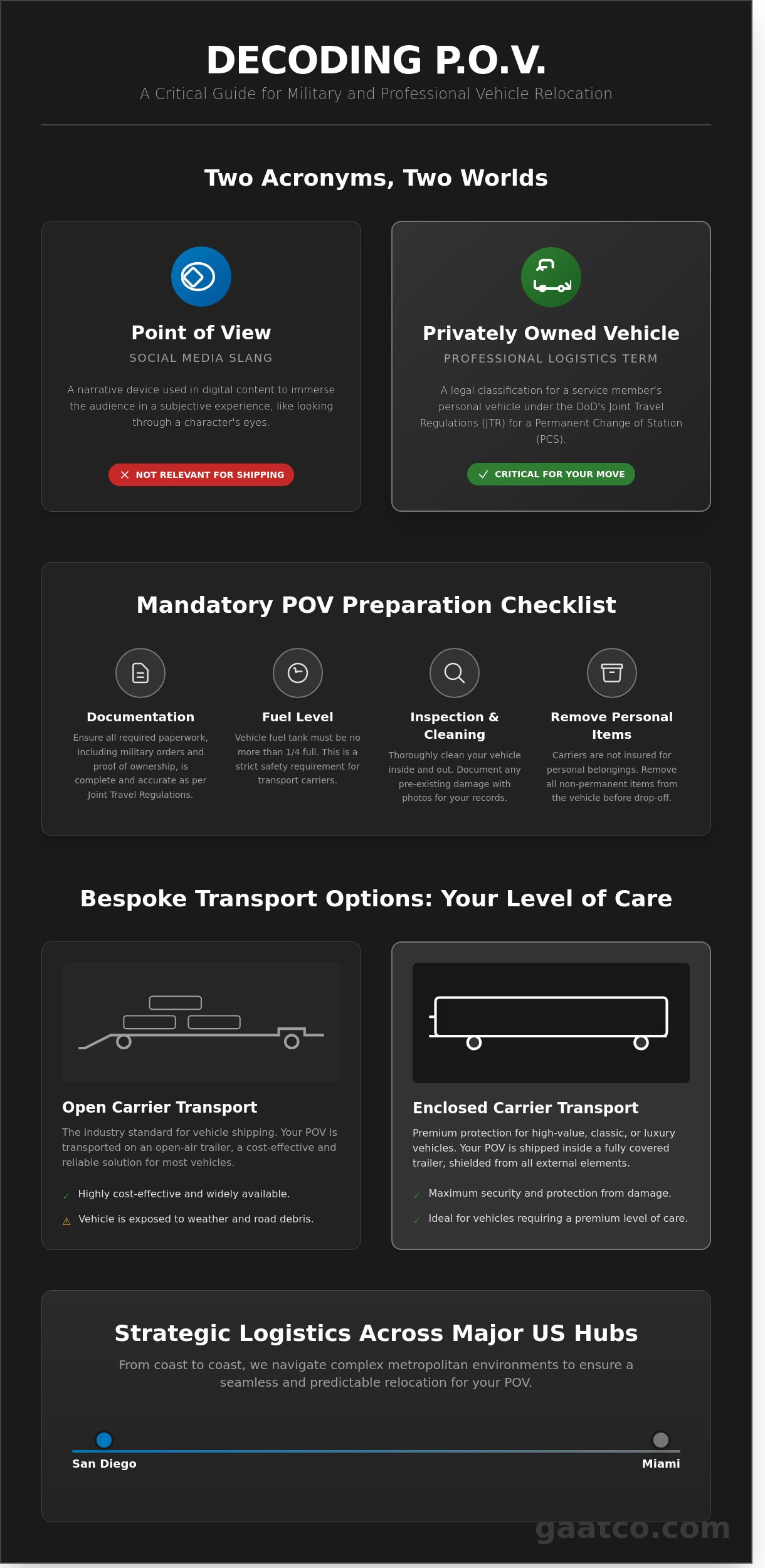
The confusion surrounding the pov meaning often stems from its rapid adoption across social media platforms where it serves as a narrative device. However, for a corporate executive or a service member, the term carries significant legal and financial weight in shipping contracts and government regulations. In professional circles, POV refers to a Privately Owned Vehicle, a category of transport that requires specialized handling and adherence to strict maritime and terrestrial standards.
To better understand the common usage of this term, watch this helpful video:
The Cultural Context of 'Point of View'
In the digital landscape of 2024, POV is most frequently used to denote a specific perspective in media. It helps creators frame content so the audience feels immersed in a particular situation. This definition is so pervasive that those entering the logistics space for the first time often find the professional acronym jarring. In digital media, POV refers to a subjective camera angle or narrative stance that invites the viewer to experience a scene from a specific character's perspective. While this usage is helpful for storytelling, it holds no relevance when reviewing a bill of lading or an export declaration.
The Logistics Context: Privately Owned Vehicles
In the professional sector, the term POV is strictly utilized by the Department of Defense (DoD) and premium transport firms to identify personal assets. It's a critical distinction that separates a client's personal car or motorcycle from commercial freight or government-issued equipment. When a service member receives orders for a Permanent Change of Station (PCS), the logistics of moving their personal car becomes a primary concern. This process involves specific documentation that isn't required for standard household goods.
Shipping a POV is a specialized category in the auto transport industry. It requires dedicated carriers and a deep understanding of customs protocols. The pov meaning in this context implies a level of care and precision that mirrors the standards of private aviation. We recognize that these vehicles aren't just machines; they're vital personal assets that require a seamless transition from one global location to the next. Official government shipping documents use this terminology to ensure that every vehicle is tracked, insured, and handled according to the highest industry benchmarks.
The Military Definition: Understanding Your Privately Owned Vehicle (POV)
In the specialized language of military logistics, the pov meaning refers specifically to a motor vehicle owned by a service member or their dependent that's intended for primary personal transportation. This definition is more than a simple acronym; it's a legal classification governed by the Joint Travel Regulations (JTR). Unlike commercial shipping, where a client might transport any number of vehicles, the military treats a POV as a critical asset required for a service member's operational readiness at a new duty station. It's a logistical pillar that ensures personnel remain mobile and functional upon arrival.
The distinction between a standard consumer car shipment and a military POV relocation lies in the level of oversight. The government views this process through a lens of strict accountability. Every vehicle must meet rigorous safety and mechanical standards before it's accepted into the transport network. This ensures that the global logistics chain remains efficient and that service members arrive at their destination with a reliable means of travel. It's a system built on the same principles of reliability and safety that define our own approach to high-stakes transport.
Official POV Classifications
Military regulations typically recognize standard passenger cars, station wagons, motorcycles, and light trucks or SUVs as POVs. However, the vehicle must be self-propelled and licensed for use on public highways. There are specific constraints regarding size; generally, a vehicle shouldn't exceed 20 measurement tons. If you've made significant modifications, such as lifted suspensions or oversized tires, the vehicle may no longer fit the standard shipping profile and could require specialized handling or additional fees.
- Proof of Ownership: You must present a valid title or a letter of authorization from a lienholder if the vehicle is financed.
- Registration: The vehicle must have a current, valid registration from a U.S. state or territory.
- Condition: Vehicles must be in safe operating condition with a clean interior and less than a quarter tank of fuel.
POV Shipping Entitlements
Entitlements for vehicle transport are typically triggered by a Permanent Change of Station (PCS) order. For most international assignments, the government authorizes the shipment of one POV at their expense. Understanding the pov meaning in the context of your orders is vital, as it dictates whether you're eligible for a government-funded move or if you must pursue a Personally Procured Move (PPM).
The process is managed through a Vehicle Processing Center (VPC), a dedicated facility where specialists inspect and process your vehicle for global transit. Recent updates to the POV shipping process by USTRANSCOM introduce enhanced tracking features to provide service members with greater visibility. These improvements reflect a commitment to the same level of precision we demand in our logistics and transport services. Adhering to the 21-day window for document submission and appointment scheduling is essential to ensure a seamless transition between duty stations.
Essential Requirements for Shipping Your POV During a PCS Move
Preparing a vehicle for international or domestic transport requires a level of precision that mirrors our own aviation logistics standards. While the pov meaning centers on personal ownership, the shipping process is governed by strict federal and military protocols designed to ensure safety and efficiency. Owners must ensure their vehicle is in a safe, operable condition before arriving at the designated Vehicle Processing Center (VPC). This preparation involves more than a simple drop-off; it requires a meticulous approach to mechanical and aesthetic readiness.
Fuel management is a non-negotiable safety pillar during transport. According to the Military Surface Deployment and Distribution Command (SDDC), vehicles must arrive with no more than one fourth of a tank of fuel. This standard minimizes fire hazards during transit and assists with the precise weight calculations necessary for cargo balance on vessels or aircraft. If a vehicle arrives with a full tank, the VPC staff may require the owner to drain the excess before acceptance, which can cause significant delays in a relocation timeline.
Cleanliness serves a dual purpose: safety and biosecurity. The United States Department of Agriculture (USDA) mandates that vehicles be free of soil, seeds, and plant matter to prevent the spread of invasive species across borders. A pristine exterior also allows for a comprehensive assessment of the vehicle's finish. We recommend a professional detailing service to ensure the undercarriage and wheel wells are free of debris. You'll find that a clean car facilitates a much faster turnover at the terminal.
All non-permanent items must be removed prior to shipment. This includes GPS units, air fresheners, toll passes, and any loose items in the trunk or glove compartment. Only items permanently bolted to the vehicle, such as a factory-installed spare tire or a secured roof rack, may remain. For those requiring bespoke logistics solutions for additional cargo, separate arrangements must be made to ensure compliance with transport regulations.
The POV Inspection Process
At the pickup point, a technician will perform a detailed survey of your vehicle, documenting every existing scratch, dent, or mechanical nuance on the DD Form 788. You'll want to wash the car immediately before this appointment to ensure every detail is visible for the report. A thorough inspection protects both the owner and the carrier by establishing an undisputed baseline of the vehicle's condition. Any discrepancies found upon delivery will be compared against this initial report to resolve claims efficiently.
Documentation Checklist
Reliability in logistics depends on flawless paperwork. You must provide the original title or a certified copy, a valid registration, and a government-issued photo ID. If the registered owner is not present, a notarized Power of Attorney is mandatory to authorize the shipment on their behalf. You'll also need to verify that your insurance remains active throughout the transit period. Understanding the pov meaning and its associated responsibilities ensures you're prepared for these administrative requirements well before your move date.
Strategic POV Shipping Across Major US Hubs: From San Diego to Miami
Executing the transport of a vehicle through high-traffic corridors like New York or Chicago presents distinct logistical hurdles. In these dense urban environments, narrow streets and strict municipal ordinances often prohibit large carriers from entering residential zones. We address these challenges by coordinating off-site loading points or utilizing smaller recovery vehicles to ensure a seamless transition. While the pov meaning is rooted in military move terminology, the discipline required to manage these transits is universal. Our team applies a rigorous standard of precision to every move, regardless of the destination's complexity.
Regional environmental factors also dictate our operational strategy. In the Pacific Northwest, consistent precipitation requires specific moisture-protection protocols during the loading phase. In contrast, transits through the Sun Belt require 24-hour monitoring of thermal exposure to protect sensitive vehicle components. By leveraging our established network in hubs like Seattle and Houston, we provide a reliable bridge between regional environmental demands and technical logistics.
Key Coastal Hubs: San Diego, Seattle, and Miami
Port cities serve as the primary gateways for international and cross-country POV transit. The Port of San Diego, for instance, processed over 400,000 vehicles in 2023, making it a critical node for West Coast operations. In sprawling metropolitan areas like Los Angeles or Miami, door-to-door service is a fundamental requirement rather than an optional luxury. We manage the intricate local geography of these regions with established expertise, ensuring that arrivals at major ports transition into ground transport without delay. Our local specialists understand the nuances of these high-volume regions, providing the calm confidence our clients expect.
- San Diego: Primary hub for Pacific fleet relocations and international arrivals.
- Seattle: Strategic gateway for North Pacific logistics and moisture-sensitive transport.
- Miami: Essential node for East Coast distribution and South American transit.
Maintaining a professional appearance is equally important for vehicles operating in these busy hubs. For small business owners in the San Diego area, Yeahgor provides premium commercial vehicle wraps and decals to ensure your fleet makes a lasting impression.
Inland Logistics: Dallas, Houston, and Atlanta
Texas and Georgia function as the central nervous system for nationwide distribution. Dallas and Houston provide essential connectivity between the southern border and the Midwest, while Atlanta serves as a primary transit point for 80 percent of the U.S. population within a two-day drive. We optimize these routes to ensure maximum efficiency when moving vehicles between inland military installations or corporate headquarters. The pov meaning in these contexts refers to a commitment to punctuality and vehicle integrity during long-haul transits. Our team ensures reliable timelines for moves involving Atlanta, Houston, or Dallas by utilizing primary interstate arteries and vetted secure staging facilities.
If you require a tailored logistics solution for your next vehicle relocation, request a bespoke quote from our specialists today.
Seamless POV Relocation with GAATCO’s Bespoke Transport Solutions
GAATCO applies an aviation-standard level of precision to the ground-based transport of your personal assets. While the pov meaning typically refers to a Privately Owned Vehicle within military and government circles, we treat these assets with the same care as a private jet. Our logistics network reflects over 20 years of operational history, providing a stable foundation for both domestic and international relocations. We exclusively partner with carriers who maintain top-tier safety ratings. This ensures every vehicle remains protected under comprehensive insurance policies throughout its journey across the continental United States or beyond.
Our commitment to excellence means we don't just move cars; we manage a sophisticated supply chain. We vet every carrier in our network against the Federal Motor Carrier Safety Administration (FMCSA) safety data. This rigorous screening process allows us to maintain a standard of reliability that high-net-worth individuals and corporate professionals expect. By choosing our services, you're opting for a partner that understands the high-stakes nature of luxury and professional logistics.
Tailored Solutions for Every Vehicle Type
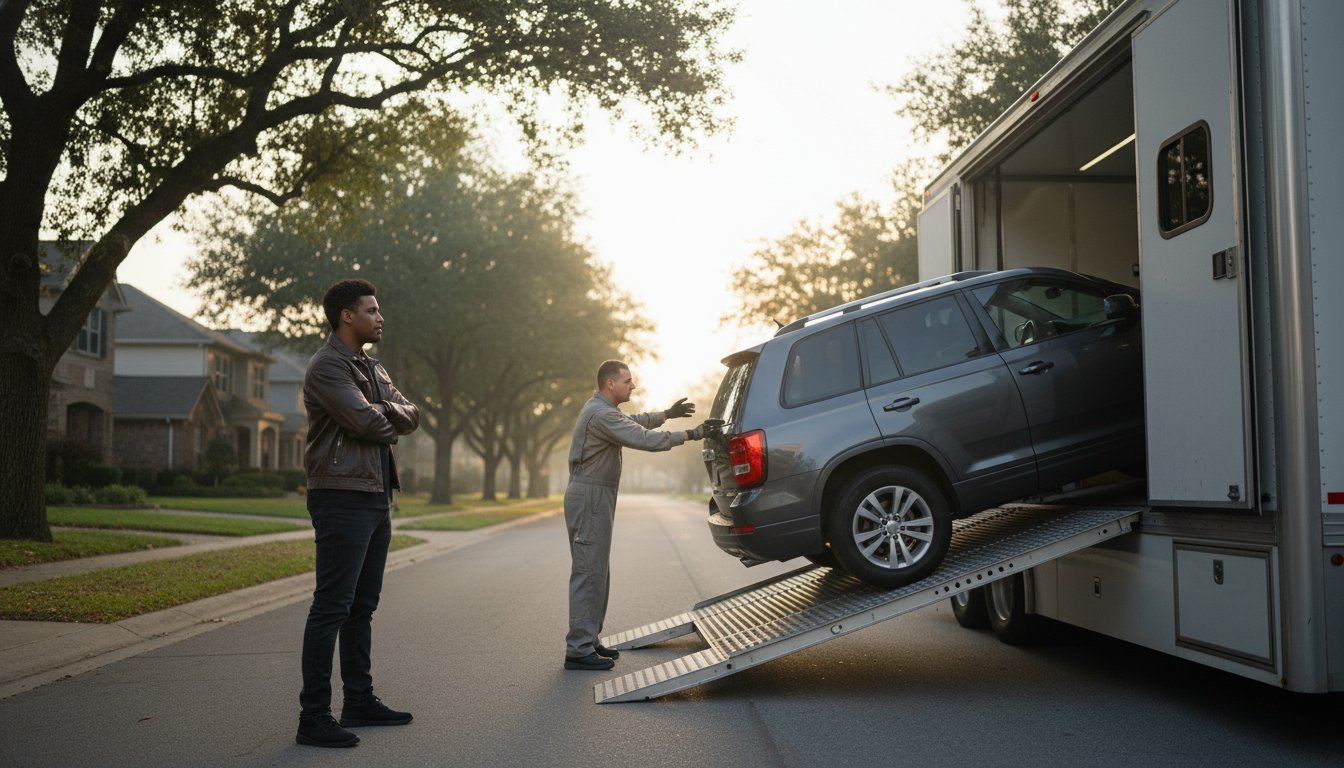
Every vehicle requires a specific logistical approach. For luxury sedans or classic collections that demand absolute protection from road debris and weather, we offer enclosed transport. This white-glove service ensures your asset arrives in showroom condition, shielded from the elements. Conversely, our open-carrier options provide a reliable and efficient method for daily-use SUVs and standard sedans. By utilizing GAATCO's specialized services, clients gain access to a network that prioritizes safety over speed. Our transport solutions include:
- Enclosed Transport: Hard-sided trailers for maximum security and climate protection.
- Open-Air Transport: Cost-effective, industry-standard shipping for everyday vehicles.
- Bespoke Scheduling: Flexible pickup and delivery windows to match your transition timeline.
- Verified Compliance: All carriers meet 49 CFR Part 390 requirements for commercial motor vehicle safety.
Requesting Your Bespoke POV Shipping Quote
Securing a precise estimate requires specific vehicle data, including the make, model, and any modifications like roof racks or lowered suspensions. These details allow our team to allocate the correct equipment for your specific needs. Our door-to-door delivery model removes the burden of terminal drop-offs, allowing busy professionals to focus on their relocation. We manage the complex logistics so you don't have to worry about the finer details of the pov meaning in your contract.
Transparency is a non-negotiable pillar of our business. We provide clear, comprehensive quotes that reflect the actual costs of professional transport without hidden fees. We encourage you to request a quote to see how our bespoke solutions fit your upcoming move. Our team of seasoned experts is ready to facilitate a transition that is as quiet, efficient, and sophisticated as the vehicles we transport.
Mastering Your Next Vehicle Relocation
Understanding the technical pov meaning within the Department of Defense framework is the initial step toward a successful Permanent Change of Station. While digital culture uses the term for personal perspectives, in the logistics sector, it represents the sophisticated movement of your personal vehicle across strategic hubs like San Diego and Miami. Managing these rigorous requirements demands a partner who understands the precision of military scheduling and the intrinsic value of your asset.
We've spent over 20 years perfecting our specialized auto transport expertise to provide a service that's both elite and dependable. Our licensed and insured carrier network offers total peace of mind, ensuring every transit adheres to the highest safety protocols. We provide dedicated support for military PCS and corporate relocations, handling the complex operational realities so you don't have to worry about the details. You've earned a relocation experience that's as seamless as it is secure.
Secure your bespoke POV shipping quote with GAATCO today.
We look forward to facilitating your next successful transition with the care and excellence you deserve.
Frequently Asked Questions
Is POV just a social media term or does it have a professional meaning?
While the term gained popularity on social media to denote a specific perspective, the professional pov meaning refers specifically to a Privately Owned Vehicle in government and defense logistics. This designation distinguishes a service member's personal automobile from a government-owned vehicle (GOV). It's a critical term used in official Permanent Change of Station (PCS) orders to define transportation rights and entitlements.
Can I ship personal items inside my POV during a military move?
You must remove almost all personal belongings before shipping your vehicle through the Global Privately Owned Vehicle Contract. Regulations strictly prohibit the transport of loose items, though you may keep a spare tire, a jack, and basic emergency tools. The Department of Defense requires the interior to be completely empty to prevent theft and ensure safety during transit.
Does the military pay for shipping my POV during a PCS?
The military typically pays for the shipment of one POV when a service member receives orders for an Outside Continental United States (OCONUS) move. For domestic moves within the 48 contiguous states, the government generally expects members to drive their vehicles unless medical or operational reasons prevent it. According to the Joint Travel Regulations, specific rank and dependency status determine these exact entitlements.
How much fuel should be in my tank when I drop off my POV for shipping?
You must ensure your fuel tank is at one-fourth capacity or less at the time of drop-off. This requirement, mandated by the International Maritime Dangerous Goods Code, minimizes fire hazards during sea transport. If your vehicle arrives with more than a 25% fuel level, the Processing Center's staff will require you to drain the excess before they accept the shipment for processing.
What is the difference between a POV and a commercial vehicle in transport?
A POV is a motor vehicle owned by an individual for personal transport, whereas a commercial vehicle is designed for business logistics or transporting cargo. In the context of military moves, understanding the pov meaning helps clarify that the government treats these as personal assets rather than fleet equipment. Commercial vehicles often require different customs documentation and higher insurance premiums than standard personal automobiles.
Can I track my POV shipment in real-time?
You can monitor your vehicle's journey through the official Vehicle Processing Center tracking portal. By entering your order number or VIN, you'll receive updates as the vehicle moves through 12 distinct status points, including port arrival and vessel departure. While it's not a GPS live-feed, these logistical milestones provide a transparent overview of the transit timeline and expected delivery date.
What happens if my POV is damaged during the shipping process?
You should conduct a thorough inspection and file a claim immediately if you discover damage upon pickup. The Military Claims Act provides a framework for seeking compensation for transit-related issues. You must document all discrepancies on the DD Form 788 before leaving the VPC lot. Statistics show that roughly 2% of shipped vehicles encounter minor cosmetic issues, which the government's contracted carriers typically resolve through standard settlement procedures.
How long does it typically take to ship a POV across the United States?
Domestic vehicle transit typically requires between 10 and 20 days depending on the specific route and carrier availability. For OCONUS shipments, such as moving a vehicle from the East Coast to Germany, the timeline extends to 30 or 45 days. These schedules account for port processing, ocean transit, and final safety inspections at the destination, ensuring a seamless arrival for the service member.


