According to the Rocky Mountain Insurance Information Association, Colorado hail storms resulted in over $5 billion in insured losses over the last decade, making vehicle exposure a significant financial risk. You recognize that transporting a luxury or performance vehicle through the Denver metropolitan area requires more than a simple carrier; it demands a comprehensive strategy against abrasive mountain debris and unpredictable weather. While the choice between open vs enclosed car transport denver often centers on initial cost, the true metric is the long-term preservation of your investment's integrity.
We've curated this 2026 guide to provide a bespoke roadmap through the intricacies of Colorado vehicle logistics. You'll gain a clear understanding of the price-to-protection ratio and the confidence that your vehicle will arrive in pristine condition. Our analysis examines the technical specifications of modern carriers, the nuances of specialized insurance, and the environmental factors that define the sophisticated logistics experience you expect.
Key Takeaways
- Understand how Denver’s unique "Mile High" geography and high-altitude logistics necessitate a more sophisticated approach to vehicle relocation.
- Evaluate the technical distinctions between open vs enclosed car transport denver to determine which engineering solution provides the appropriate level of security for your specific vehicle.
- Discover how to mitigate the risks of Colorado’s unpredictable severe weather and corrosive road treatments through strategic carrier selection.
- Learn to apply a professional decision framework that distinguishes between the logistical needs of daily-use SUVs and the bespoke requirements of exotic or vintage collections.
- Gain insight into how a dedicated logistics partner manages the complexities of the I-70 corridor to ensure a seamless and transparent transport experience.
Navigating the Denver Auto Transport Landscape
The Denver metropolitan area has seen a 1.2% annual population increase over the last decade, sparking a sharp rise in the demand for premium vehicle relocation services. As more professionals migrate to the Front Range, the complexity of moving high-value assets across Colorado's unique terrain becomes a primary concern. The "Mile High" geography presents specific logistical hurdles, including rapid elevation changes and unpredictable weather patterns that can shift within minutes. For many owners, the decision regarding open vs enclosed car transport denver hinges on a delicate balance between fiscal efficiency and the necessity for absolute vehicle security.
Selecting the appropriate method requires an understanding of the technical infrastructure involved in open vs. enclosed carrier logistics. While standard transport offers a reliable solution for many, the investment in a luxury or performance vehicle often warrants a more protected environment. This evaluation sets the stage for a professional approach to transport, ensuring that every relocation is handled with the same precision as a private aviation charter. We prioritize a seamless experience where the client's peace of mind remains the ultimate metric of success.
The Evolution of Car Shipping in Colorado
Denver's position at the intersection of I-25 and I-70 has solidified its status as a central hub for cross-country logistics. In recent years, the market has transitioned toward specialized transport to accommodate the rise in electric vehicles and premium SUVs. Colorado's EV market share reached 17% of new car sales in 2023, requiring carriers who understand the weight and battery safety requirements of these modern machines. Local expertise is vital when crossing the Continental Divide. Steep grades and sudden winter conditions demand a higher level of operational capability than standard flat-land shipping.
Defining Your Transport Priorities
A successful relocation begins with a clear assessment of your vehicle’s market value and your personal attachment to the asset. You should consider the following factors:
- The total replacement cost versus the transport investment.
- Specific timeline requirements for arrivals during Denver's peak summer or winter seasons.
- The potential exposure to road debris on high-altitude passes.
- The specific mechanical requirements of high-performance or low-clearance vehicles.
Our team at GAATCO provides a comprehensive suite of services designed to address these variables. A professional consultation helps identify the most secure path forward, allowing you to focus on your transition while we manage the intricate details of your vehicle's journey. By treating vehicle transport as a bespoke logistics operation, we ensure that every client receives the dedicated attention their property deserves.
Defining the Standards: Open vs. Enclosed Carrier Logistics
Selecting the appropriate method for vehicle relocation requires a clear understanding of the engineering and logistical frameworks that define the industry. When evaluating open vs enclosed car transport denver, the decision isn't merely about cost. It's about aligning the specific requirements of your vehicle with the mechanical capabilities of the transport equipment. The logistics of the Rocky Mountain region demand a nuanced approach to asset protection, particularly during seasons of unpredictable weather.
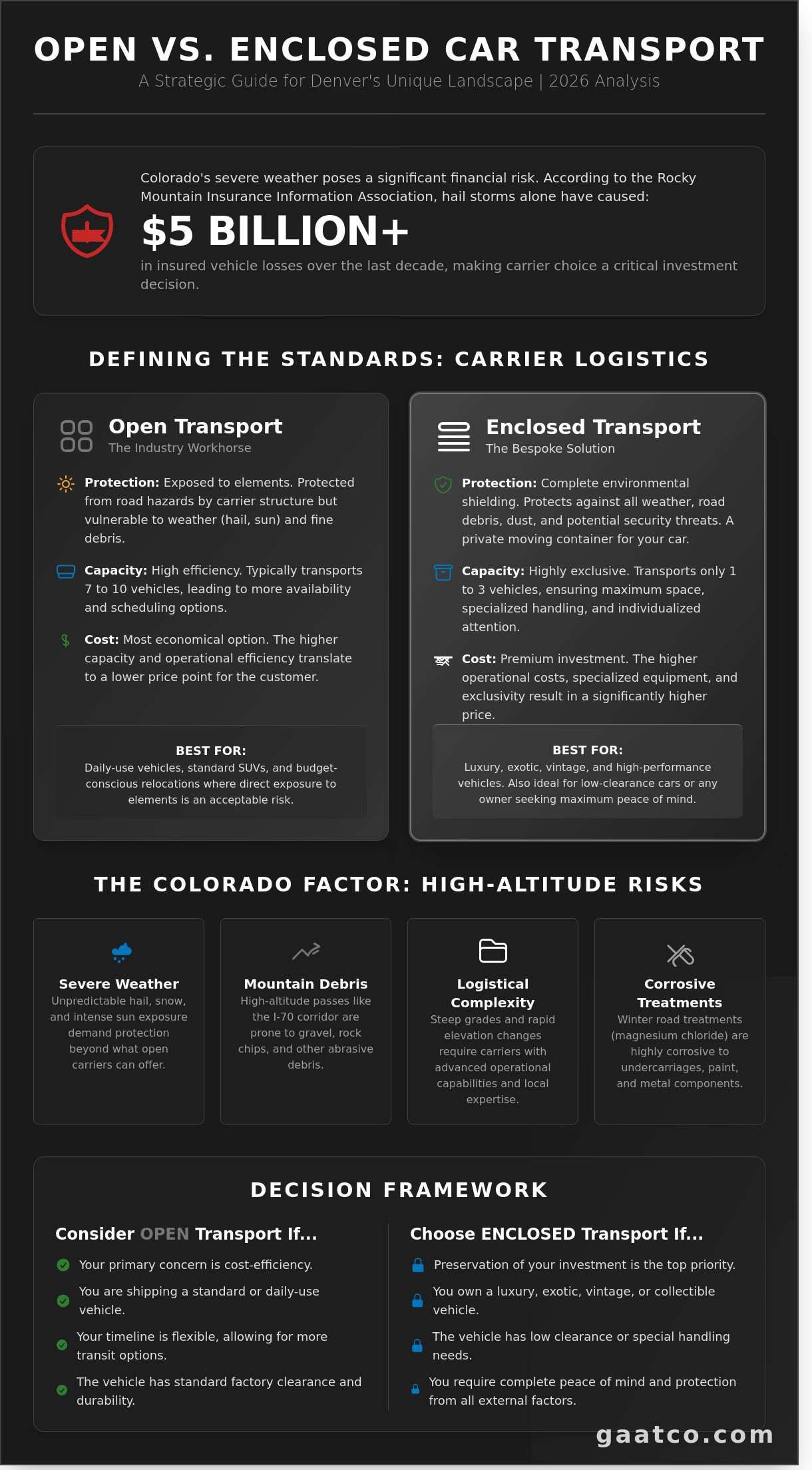
The primary distinction lies in the architecture of the trailer itself. Open carriers utilize a skeletonized steel frame designed for high-capacity efficiency, while enclosed units provide a fully shielded environment. Capacity varies significantly between these tiers. A standard open trailer typically accommodates between 7 and 10 vehicles across two levels. In contrast, enclosed trailers are designed for exclusivity, usually carrying only 1 to 3 vehicles to ensure maximum spacing and individualized attention during transit.
Open Transport: The Industry Workhorse
Open transport remains the most prevalent method for vehicle shipping because of its logistical availability and efficiency. These trailers use sophisticated tie-down systems, such as over-the-tire straps or frame-anchored chains, to secure the vehicle to the steel ramps. Licensed carriers follow strict safety protocols to ensure that every car remains stationary, even when traversing steep grades or uneven terrain. It's a reliable system that has served the automotive industry for decades.
While the vehicles remain exposed to the air, the structural design of the trailer offers a degree of protection from larger road debris. This method is the standard choice for daily drivers and fleet relocations where the primary goal is secure, timely delivery. The efficiency of the multi-car configuration allows for more frequent routes, which often results in faster scheduling for clients who don't require specialized climate protection.
Enclosed Transport: The Bespoke Experience
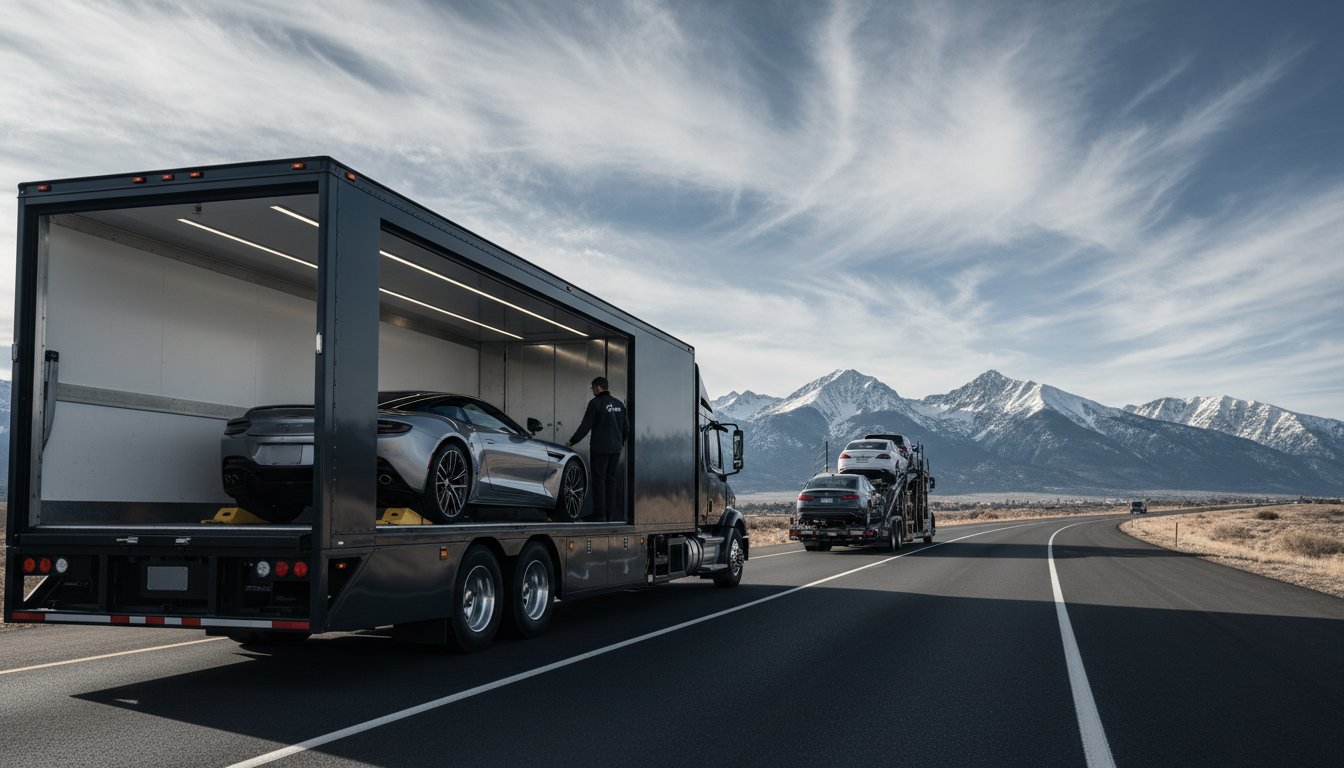
For owners of vintage, exotic, or high-value luxury assets, enclosed transport offers a more secluded and protected environment. These trailers come in two primary configurations: soft-sided, which uses heavy-duty vinyl curtains, and hard-sided, which features solid aluminum or composite walls for a 100% weather-proof seal. This level of protection is essential when considering Colorado's winter driving and road conditions, which can introduce corrosive salts and gravel to the vehicle's exterior.
The loading protocols for enclosed transport are significantly more advanced. Many premium trailers are equipped with hydraulic lift gates. This specialized equipment allows a vehicle to be raised into the trailer while remaining perfectly level, which is a non-negotiable requirement for vehicles with low ground clearance. Furthermore, these trailers often carry enhanced insurance limits and utilize individualized handling protocols that reflect the high-stakes nature of the cargo. If you require a higher degree of discretion and safety, exploring our bespoke logistics services can provide the peace of mind you deserve. This approach ensures that the vehicle arrives in the exact condition it was in when it left the showroom or gallery.
The Colorado Factor: Weather, Topography, and Vehicle Protection
Navigating the logistics of vehicle movement in the Rocky Mountain region requires a sophisticated understanding of localized environmental stressors. For those weighing the merits of open vs enclosed car transport denver, the decision often hinges on the unique atmospheric conditions of the Front Range. High-altitude environments present a specific challenge; UV radiation intensity increases by approximately 10% for every 1,000 feet of elevation gain. A vehicle transported across the state on an open trailer experiences significantly higher solar exposure than one at sea level, which can accelerate the degradation of clear coats and interior materials over long distances.
The I-70 corridor introduces additional variables that demand professional mitigation. Road maintenance crews utilize magnesium chloride and traditional salt mixtures to manage ice. These chemicals are highly effective for traction but notoriously corrosive to aluminum and steel components. When analyzing open-carrier vs. enclosed-carrier shipping, clients must consider whether the exposure to these de-icing agents aligns with their long-term preservation goals. Strategic carrier selection serves as the primary defense against these regional hazards.
Winter Logistics in the Rockies
The winter season in Colorado dictates a rigorous approach to transport timelines. Colorado Department of Transportation (CDOT) Chain Laws, particularly during Traction Law activations, can suddenly halt commercial traffic. These regulations ensure safety but often lead to unpredictable delivery windows. Protecting a vehicle's undercarriage from corrosive winter treatments is a priority for our clients. Enclosed transport remains the preferred choice for collectors during the months of November through April. It provides a seamless barrier against the brine and slush that define mountain transit.
- Adherence to CDOT Code 15 and Code 16 chain requirements ensures legal compliance.
- Elimination of contact with magnesium chloride spray prevents long-term oxidation.
- Climate-controlled environments protect sensitive electronics from extreme cold.
Summer Hazards and High-Plains Dust
Summer brings its own set of logistical complexities. Afternoon thunderstorms along the Front Range are frequently accompanied by severe hail. Between May and August, the region often sees multiple storms capable of producing one-inch diameter stones or larger. Open transit leaves a vehicle vulnerable to these rapid weather shifts. Additionally, constant infrastructure projects along I-25 contribute to high levels of road debris. The Colorado sandblast effect occurs when high-velocity wind drives fine granite dust and road grit against a vehicle's windshield and leading edges, potentially causing thousands of micro-pitted surfaces. Enclosed solutions mitigate these risks by providing a bespoke, fully sheltered environment for the entire journey.
Strategic Decision Framework: Selecting the Optimal Transport Method
Selecting the appropriate logistics solution requires a nuanced understanding of your vehicle's engineering and its current market equity. The choice between open vs enclosed car transport denver often rests on the intended use of the vehicle. Standard daily drivers, robust SUVs, and high-volume lease models are typically well-suited for open transport. These vehicles are designed to withstand environmental exposure, and the open-air method provides a reliable, cost-effective solution for moving functional assets across the Front Range.
For classic restorations, exotic supercars, or bespoke builds, enclosed transport is a non-negotiable requirement. These assets possess finishes and mechanical components that are sensitive to the micro-abrasions caused by road dust and debris. We recommend applying the 5% Value Threshold rule. If the cost of the transport premium is less than 5% of the vehicle's total valuation, the move to an enclosed carrier is the mathematically sound choice to preserve the asset's long-term value. For a vehicle valued at $150,000, a $750 premium for a climate-controlled environment is a minor investment in risk mitigation.
Before finalizing any agreement, you must audit the carrier's insurance documents. A professional carrier should provide a Certificate of Insurance that specifically lists cargo limits. In the Colorado market, ensure the policy covers transit through high-altitude corridors where weather patterns shift rapidly. Verify the MCS-90 endorsement to confirm the carrier meets federal financial responsibility requirements for public safety and environmental restoration.
Cost-Benefit Analysis for Denver Residents
Denver's climate presents specific challenges that influence the real cost of transport. Colorado road crews utilize magnesium chloride and crushed salt during the 30 to 40 annual snow events. On an open trailer, these chemicals can reach sensitive undercarriage components. While open transport saves approximately 30% on upfront costs, the potential for paint chips or corrosion cleaning can quickly erase those savings. Seasonal fluctuations also play a role; enclosed trailer availability often tightens by 20% during the winter months as collectors seek to avoid road salt. You can review our specific tier details and protection levels at GAATCO services to find the right balance for your fleet.
The Inspection Process: Bill of Lading Excellence
The Bill of Lading serves as the definitive legal record of your vehicle's condition. A professional handover in Denver should always occur in high-visibility conditions. We advise clients to clean the vehicle prior to arrival so that every surface is visible for the pre-transport report. For high-value enclosed shipments, documentation must be meticulous. Take high-resolution photographs of the odometer, the four corners of the exterior, and the interior upholstery. This level of detail ensures a seamless transition of responsibility and provides the necessary evidence should a claim arise during the logistics chain.
If you require a tailored logistics plan for your high-value vehicle, we invite you to request a bespoke transport quote from our expert team.
Bespoke Logistics with GAATCO: Your Denver Transport Partner
Selecting between open vs enclosed car transport denver is a decision that involves weighing vehicle value against environmental exposure. This choice requires a partnership with a logistics expert who understands the unique demands of the Rocky Mountain region. GAATCO brings over 20 years of refined experience to the table, navigating the intricate US logistics network with a level of precision typically reserved for private aviation. We've built our reputation on transparency and an authoritative approach to every vehicle move, ensuring that your asset's journey is as seamless as it is secure.
Our team manages the meticulous details of door-to-door delivery, acting as a trusted advisor rather than a mere service provider. We handle the complexities of scheduling, route planning, and carrier coordination so you don't have to. This commitment to excellence ensures that every client receives a dedicated logistics strategy tailored to their specific timeline and security requirements. Whether you're moving a single vintage collectible or a fleet of corporate vehicles, our seasoned experts remain calm under pressure and focused on the details that matter.
The GAATCO Difference in Colorado
Our presence in Colorado is defined by a network of carriers that meet our exacting standards. Every partner is 100% vetted, licensed, and carries high-limit insurance to protect your investment. We specialize in tailored solutions for military personnel transitioning to local bases or corporate executives relocating to Denver's growing business districts. Denver residents trust our understated, professional approach because we prioritize safety over volume. We don't just move cars; we manage complex logistics chains with a focus on non-negotiable excellence. Our local expertise allows us to anticipate weather patterns and mountain pass conditions that others might overlook.
Commence Your Seamless Journey
Your journey begins with a tailored quote designed for your specific vehicle's requirements. During your first consultation, our team will analyze your timeline, vehicle specifications, and the specific route challenges of the I-25 corridor. We provide a clear roadmap of the transport process, removing the ambiguity often found in the shipping industry. You'll work with a dedicated professional who ensures every detail is addressed before the carrier arrives at your door. This initial conversation establishes the foundation of trust necessary for a successful transport experience.
We invite you to experience a higher standard of automotive logistics. Request your bespoke Denver transport quote today and let our experts coordinate your next move with the quiet confidence and reliability you deserve.
Elevating Your Denver Automotive Logistics Strategy
Navigating the 5,280-foot elevation of the Mile High City requires a logistics plan that accounts for both topography and the unpredictable Colorado climate. Deciding between open vs enclosed car transport denver involves more than just a preference for visibility; it's a strategic choice based on vehicle value and the 300 days of intense high-altitude sunlight. While open transport remains a reliable standard for many, enclosed carriers provide a necessary sanctuary for assets requiring absolute climate control and debris protection.
GAATCO leverages over 20 years of industry-leading expertise to provide a sophisticated transport experience that mirrors the precision of private aviation. Our fully licensed and insured carrier network is built on a foundation of safety and reliability; we offer specialized handling for luxury and classic assets. We don't just move vehicles. We manage the complex operational realities so you can focus on your destination. Our team serves as a dedicated partner, ensuring every detail of your journey is handled with quiet confidence and professional rigor.
Experience seamless vehicle logistics-request your GAATCO quote today. We look forward to providing the elite service your vehicle deserves.
Frequently Asked Questions
Is open car transport safe for the Denver winter?
Open transport is a secure method for winter transit, though it exposes the vehicle to road salt and seasonal precipitation. National Weather Service data shows Denver receives 57 inches of snow annually, which means your vehicle will likely require a thorough cleaning upon arrival. While the structural integrity of the transport remains high, many clients choose enclosed options to avoid the corrosive effects of winter road chemicals.
How much more does enclosed transport cost in Denver?
Selecting an enclosed carrier typically requires a higher investment than standard open-air logistics. Industry data from the Federal Motor Carrier Safety Administration suggests that when evaluating open vs enclosed car transport denver, the premium for a fully protected trailer ranges from 30% to 50% above open transport rates. This additional cost secures your vehicle within a hard-sided container, shielding it from external environmental factors and road debris.
Do I need enclosed transport for my electric vehicle (EV)?
Enclosed transport isn't strictly required for electric vehicles, but it's often preferred for protecting sensitive battery systems from extreme temperature shifts. EVs are approximately 30% heavier than traditional cars, which impacts the logistics of the haul. We recommend enclosed trailers for high-performance electric models to ensure the sophisticated electronics remain in a climate-controlled and debris-free environment throughout the journey.
Can I ship personal items inside my car during transport?
Carriers generally prohibit the transport of personal belongings due to Department of Transportation weight restrictions and safety protocols. Most logistics providers allow a maximum of 100 pounds of soft goods, such as linens or clothing, provided they're secured in the trunk or below the window line. Items left in the cabin aren't covered by cargo insurance and can shift during transit, potentially causing interior damage.
What happens if my car is damaged by hail during open transport?
Standard carrier insurance typically excludes damage caused by "Acts of God," which includes severe hail storms. The Rocky Mountain Insurance Information Association indicates that Colorado ranks second in the United States for hail-related claims. If you're concerned about open vs enclosed car transport denver during peak storm months between May and August, an enclosed trailer provides the only definitive protection against atmospheric hazards.
How long does it typically take to ship a car to or from Denver?
Transcontinental shipments involving Denver usually take between 5 and 9 days to complete. This timeline is dictated by federal law, as drivers are restricted to 11 hours of operation within a 14-hour period to ensure road safety. Local or regional deliveries within a 500-mile radius are often finalized within 48 hours, depending on the specific route and current traffic patterns.
Is door-to-door service available in all Denver neighborhoods?
We provide door-to-door service across the Denver metro area, though certain historic districts or narrow residential streets may present accessibility challenges. Approximately 12% of our pickups occur at nearby retail parking lots or wider thoroughfares because a 75-foot transport trailer cannot safely navigate tight corners. Our dispatch team coordinates these logistics in advance to ensure a seamless and professional handover experience.
What insurance coverage is included in the GAATCO quote?
Every quote we provide includes comprehensive protection through our primary cargo insurance policy. This coverage typically offers up to $1,000,000 in liability and $250,000 in cargo limits to safeguard your asset against transit-related incidents. We maintain a transparent claims process and provide all relevant policy documentation before your vehicle is loaded, ensuring you have total peace of mind during the transport process.


