The Report-No-Later-Than Date is not merely a suggestion on a set of orders; it is a non-negotiable deadline that dictates the success of your next assignment. For many service members, the most complex variable in this transition is shipping a privately owned vehicle (POV) for a military move, especially when managing the nuances of continental United States relocations where government support is often limited. While the administrative burden of a Permanent Change of Station can feel overwhelming, the relocation of your primary asset requires a level of precision that mirrors your own professional standards.
We understand that the prospect of handing over your keys to a carrier during a high-stakes move often brings concerns regarding safety and strict military timelines. This guide provides the professional insights you require to master the logistics of vehicle transport with absolute confidence. You will learn how to interpret 2026 PCS regulations, prepare your vehicle for rigorous inspection, and select elite transport services that prioritize reliability. We will examine the critical differences between private carriers and government-arranged transport, ensuring your vehicle arrives at your new duty station without delay or damage.
Key Takeaways
- Distinguish between CONUS and OCONUS regulations to manage your relocation expectations and entitlements with professional clarity.
- Implement a meticulous preparation strategy, involving mechanical inspections and high-resolution photography, to ensure your vehicle remains in pristine condition.
- Conduct a sophisticated risk assessment to determine whether open or enclosed transport best serves your vehicle's specific protection requirements.
- Coordinate a tactical timeline for shipping a privately owned vehicle (POV) for a military move, aligning your vehicle's arrival with your household goods delivery.
- Recognize the value of an expert logistics partner that offers transparent communication and deep experience within the specialized niche of military transport.
What Is a POV in a Military Context and How Does Shipping Work?
A Privately Owned Vehicle (POV) is more than just a tool for commuting; it's a vital asset that provides stability during the upheaval of a relocation. Understanding What Is a POV in a Military Context and How Does Shipping Work? is the first step in managing your Permanent Change of Station (PCS) effectively. While the mission remains the priority, the safe transit of this asset requires a sophisticated approach to logistics. For many families, shipping a privately owned vehicle (POV) for a military move is the most efficient way to ensure their personal transportation is ready for use upon arrival at a new duty station.
To better understand your options for transporting your vehicle, watch this helpful overview:
The distinction between CONUS and OCONUS moves creates two very different operational realities. For overseas assignments (OCONUS), the government typically covers the cost to ship one POV to your new duty station. Families with multiple vehicles often find this entitlement insufficient, necessitating the use of private transport services to ensure the entire household remains mobile upon arrival. Private carriers act as a bridge, offering the flexibility that government contracts cannot always provide.
CONUS vs. OCONUS: Understanding Your Entitlements
Under the Joint Travel Regulations, moves within the continental United States (CONUS) place the logistical burden of vehicle relocation on the service member. While the military provides a mileage allowance for those who drive, many professionals find that the hidden costs of a cross-country trip, including fuel, lodging, and mechanical depreciation, outweigh the benefits. You are responsible for hiring a professional transport service if you choose not to drive the distance yourself. Shipping a privately owned vehicle (POV) for a military move is a strategic logistics choice for CONUS moves that allows you to focus on your family and your new command.
The Benefits of Private POV Shipping
Private transport offers a level of customization that government-managed Vehicle Processing Centers (VPCs) cannot match. Instead of driving hundreds of miles to a processing center, you can arrange for door-to-door service that aligns perfectly with your household goods pack-out. This flexibility is crucial for meeting a strict Report-No-Later-Than Date (RNLTD). By utilizing specialized transport services, you avoid the risks of road debris and mechanical failure during a long-distance transit. This methodical approach ensures your vehicle arrives in the same condition it was in when it left, ready for immediate use at your new destination.
- Mitigate excessive wear and tear on high-value vehicles during cross-country transits.
- Maintain control over your schedule to meet your specific RNLTD without compromise.
- Ensure clear, direct communication with the carrier throughout the entire shipping process.
Preparing Your Vehicle for a Strategic Relocation
Meticulous preparation is the hallmark of a successful relocation. When shipping a privately owned vehicle (POV) for a military move, the process begins long before the carrier arrives at your driveway. This stage isn't merely about meeting a checklist; it's about establishing a definitive baseline for your vehicle's condition and ensuring its operational safety during transit. A thorough mechanical inspection is paramount. You should verify that the battery is fully charged, tires are properly inflated, and there are no active fluid leaks. Professional carriers often refuse vehicles with visible leaks to protect other assets on the transport trailer.
Preparing your vehicle for shipment also requires a high level of documentation. High-resolution photography serves as your primary safeguard. Capture every angle of the exterior, including the roof and undercarriage, in clear daylight. These images act as indisputable evidence should a discrepancy arise upon delivery. Beyond the photos, you should maintain a folder of recent maintenance records. This level of detail demonstrates a commitment to the vehicle's integrity, which is essential when coordinating with elite transport services. It creates a transparent environment that protects both the owner and the carrier throughout the journey.
The Cleanliness Standard
A pristine exterior is a functional requirement for the Bill of Lading (BOL). Dirt and grime can obscure existing paint chips or minor dents, making it difficult for the carrier to perform an accurate inspection. Similarly, the interior must be detailed and vacated of all personal belongings. Loose items can become projectiles during transit, potentially damaging the upholstery or glass. It's also vital to remove toll tags and parking passes. Motion-sensitive sensors can trigger phantom charges as the truck passes through electronic gantries, creating unnecessary administrative hurdles during your move.
Technical Specifications for Pickup
Adhering to specific technical requirements ensures a seamless loading process. The industry standard for fuel is exactly one-quarter tank or less. This regulation reduces the overall weight of the transport and minimizes fire hazards without risking the fuel pump's health. Additionally, you must disable all alarm systems. A triggered alarm can drain a battery completely during a cross-country journey, leaving your vehicle inoperable at the destination. Always provide the carrier with a spare set of keys and a brief list of any unique operating instructions, such as specific procedures for electronic parking brakes or security codes. If you're seeking a partner to handle these complexities, exploring professional transport options can streamline your transition.
Open vs. Enclosed Transport: Choosing the Right Level of Protection
Selecting the appropriate transport method is a critical decision in the logistical chain of shipping a privately owned vehicle (POV) for a military move. It requires a calculated assessment of your vehicle's value, the transit route, and your personal threshold for risk. While the primary goal is always a damage-free delivery, the method you choose dictates the level of shielding your asset receives from environmental variables and road hazards. This choice isn't merely about cost; it's about matching the transport environment to the specific requirements of your vehicle.
Open Carrier Transport: The Reliable Standard
Open carrier transport remains the most prevalent choice for active-duty personnel relocating across the country. These multi-car trailers offer a balance of efficiency and reliability that suits daily drivers, such as modern sedans and SUVs. While the vehicle is exposed to the elements, the structural design of these trailers provides significant protection against the standard rigors of the road. Within the GAATCO network, we prioritize rigorous safety protocols to ensure that even our most accessible service tier maintains a high standard of care. Explore our Open Car Transport services to see how this method fits your tactical timeline.
Enclosed Carrier Transport: The Quiet Luxury Option
For those transporting high-performance vehicles, classic restorations, or premium luxury assets, enclosed carrier transport represents the pinnacle of logistical security. This option shields your vehicle within a fully covered trailer, eliminating risks from inclement weather, road debris, and prying eyes. It's the preferred choice for service members who view their vehicle as a significant investment rather than just a means of conveyance. This service level typically includes enhanced insurance coverage limits, providing an additional layer of financial reassurance for assets with high market valuations during a PCS.
Choosing between these tiers involves more than a simple price comparison. You must consider the seasonal weather patterns along your route and the potential for road hazards in varied geographic regions. Our team acts as a discreet partner in this process, offering professional guidance to help you determine which service aligns with your vehicle's specific needs. Whether you require the standard efficiency of an open trailer or the specialized discretion of an enclosed one, we ensure the operational flow is seamless and the communication remains transparent.
Every vehicle in our care receives meticulous attention, regardless of the chosen tier. We understand that a PCS move is a high-stakes transition, and the safety of your POV is a non-negotiable pillar of our service. By aligning the transport method with the specific requirements of your asset, you can focus on the mission at hand while we manage the complex realities of specialized logistics. Our commitment to reliability ensures that your vehicle arrives at your new duty station ready for immediate service.

Planning Your Tactical Timeline for a 2026 PCS Move
Precision in timing is as vital as the security of the transport itself. While some rigid guidelines suggest booking a month in advance, the strategic sweet spot for shipping a privately owned vehicle (POV) for a military move is typically two to three weeks before your departure. This window provides the ideal balance between securing a slot in our sophisticated logistics network and maintaining the flexibility required for volatile military orders. If you find yourself managing short-notice orders, expedited shipping options are available to ensure your vehicle's relocation doesn't lag behind your own transit.
Coordinating your vehicle's pickup with your household goods (HHG) pack-out requires a methodical approach. We recommend scheduling the vehicle collection shortly after your movers depart, allowing you to maintain mobility during the final days at your current post. For major cross-country routes, such as San Diego to Norfolk, private carriers typically achieve delivery within five to ten days. This is significantly faster than government-arranged alternatives, which can often span two to four weeks. By choosing a professional partner, you align your vehicle's arrival with your own Report-No-Later-Than Date (RNLTD) with greater accuracy.
Managing the Pickup and Delivery Window
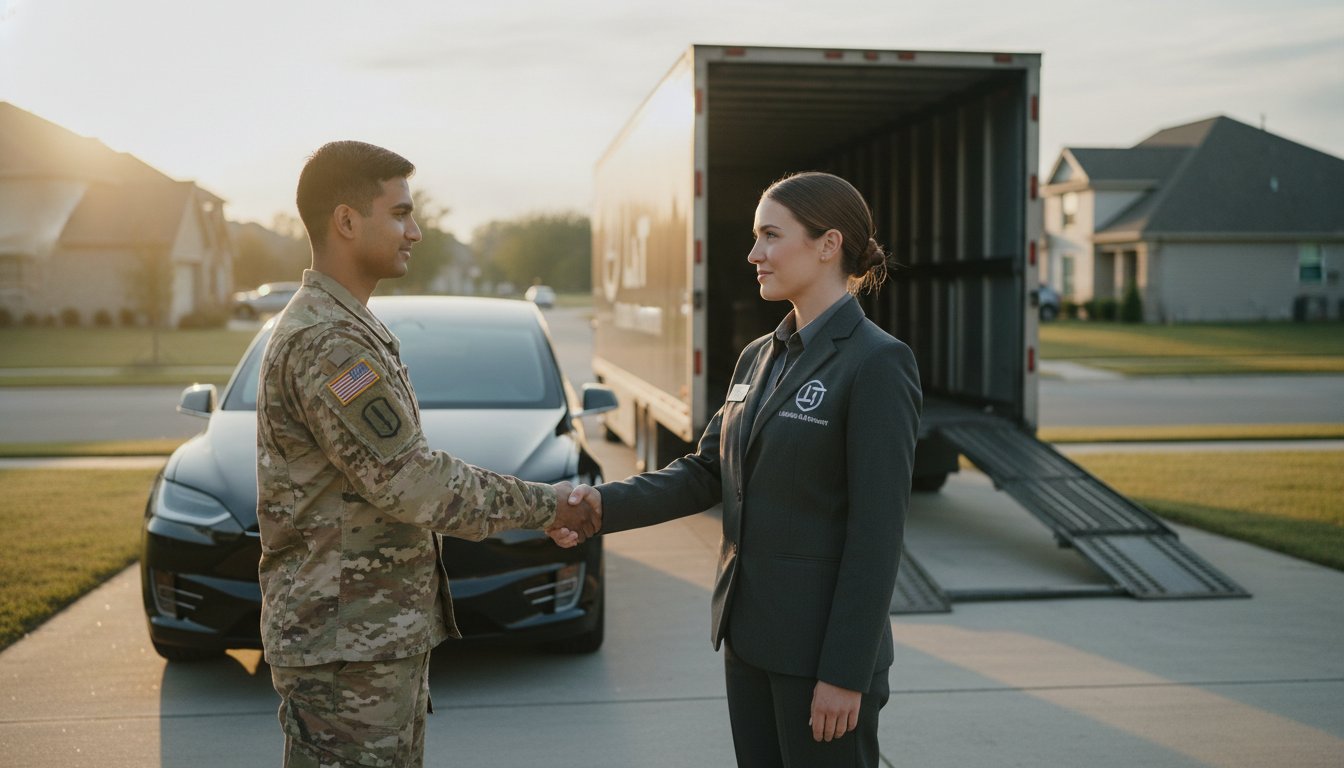
Operational realities often mean you may be in transit or already at your new post when your vehicle arrives. In these instances, designating a trusted agent to handle the pickup or delivery is a common and effective strategy. In high-traffic military corridors like San Antonio, Houston, or San Diego, our drivers maintain disciplined communication protocols to ensure a seamless hand-off. You'll receive consistent updates, allowing you to coordinate with your agent or prepare for your own arrival at the destination. This professional flow minimizes the friction often associated with complex relocations.
The Role of Real-Time Tracking
Maintaining visibility of your asset throughout its journey is a non-negotiable standard of elite transport. Real-time tracking provides the reassurance you need while you focus on the myriad other details of a PCS. This visibility reduces the inherent anxiety of the transition period, offering a clear window into the progress of your vehicle across the country. To begin aligning your relocation with our professional standards, you can Request a customized quote for your timeline through our secure portal.
When you require a partner who understands the critical urgency of military life, we are ready to assist. Secure your 2026 transport slot now to ensure your vehicle arrives exactly when and where you need it.
Why GAATCO is the Trusted Partner for Military Vehicle Shipping
Selecting a logistics partner for your relocation is a decision that impacts your peace of mind as much as your schedule. GAATCO has spent two decades refining the specialized art of vehicle relocation for the armed forces. We recognize that shipping a privately owned vehicle (POV) for a military move is a mission-critical task that demands more than just a truck and a driver. It requires a partner who understands the gravity of your orders and the precision required to meet them. Our commitment to maintaining a fully licensed, bonded, and insured operation ensures that your asset is protected by the highest industry standards of safety and transparency throughout its journey.
Our role extends beyond that of a simple service provider; we position ourselves as a discreet and dependable advisor to the military community. We understand the nuances of the "CONUS vs OCONUS" entitlement gap and provide the professional bridge families need when government provisions fall short. By offering a sophisticated approach to door-to-door delivery, we eliminate the need for inconvenient drop-offs at crowded processing centers. This methodical focus on customized outcomes ensures that your vehicle's transit is handled with the same level of discipline you bring to your own professional duties.
Professionalism and quiet luxury in auto transport
We believe that true expertise doesn't need to be loud or aggressive. Our brand voice is defined by an understated elegance that reflects the high-stakes nature of military life and the sophisticated expectations of our clients. Instead of relying on boastful marketing or hollow promises, we focus on delivering safe, reliable outcomes that speak for themselves. GAATCO has a distinguished 20-year history of serving military personnel with the discretion and reliability they deserve. This extensive experience allows us to remain calm under pressure, managing the complex realities of specialized transport so you can focus on the transition ahead. It's a level of service that treats your vehicle as the high-value asset it is, rather than just another piece of cargo.
Seamless Integration with Your Move
A PCS move involves a staggering number of variables, from housing transitions to new duty assignments. Our logistical infrastructure is designed to integrate seamlessly with your broader timeline, ensuring that shipping a privately owned vehicle (POV) for a military move is the most straightforward part of your relocation. You'll have direct access to our team of experts, ensuring that any questions regarding the mission are addressed with clarity and speed. We handle the operational flow with meticulous care, allowing you to dedicate your full attention to your new assignment and your family. When the mission requires absolute reliability and a partner who respects your time, trust GAATCO with your next PCS move to ensure a seamless arrival at your new destination.
Mastering Your Next Permanent Change of Station
Executing a successful PCS requires a blend of tactical foresight and professional support. By prioritizing meticulous vehicle preparation and selecting a transport tier that aligns with your asset's value, you ensure that your mobility is never compromised. We have explored how a disciplined timeline and a clear understanding of your entitlements can transform a complex logistical challenge into a seamless transition. Shipping a privately owned vehicle (POV) for a military move doesn't have to be a source of friction when you partner with experts who respect the high-stakes nature of your service. Your focus should remain on your new command while we manage the operational flow of your vehicle's relocation.
With over 20 years of industry expertise and a commitment to maintaining licensed and fully insured carriers, we provide the A+ rated professional logistics your career demands. Our team handles the intricate details of the journey with a level of care that reflects our deep respect for active-duty personnel. Secure your tactical vehicle transport quote with GAATCO today and experience a relocation defined by reliability and quiet luxury. We look forward to supporting your transition to your new duty station with the excellence you have earned. Safe travels on your next assignment.
Frequently Asked Questions
Can the military ship my POV for free during a CONUS move?
The government typically doesn't provide free shipping for a POV during a move within the continental United States. Service members are generally expected to drive their vehicles to their new duty station and receive a mileage allowance for the journey. If you prefer to avoid the significant wear and tear of a cross-country trip, hiring a private carrier is the most effective strategic choice to ensure your vehicle arrives safely.
What is the average time required to ship a car cross-country for a PCS?
Private carriers usually complete a domestic cross-country transit within 5 to 10 days. This timeline is considerably more efficient than government-managed options, which often require 2 to 4 weeks for delivery. While transit times vary based on the specific route and seasonal demand, our professional network prioritizes meeting your Report-No-Later-Than Date with disciplined precision and clear communication throughout the entire journey.
Does GAATCO offer a military discount for POV shipping?
We provide specialized pricing structures that recognize the unique requirements and sacrifices of active-duty personnel. Our team ensures that military members receive the highest level of service at competitive rates that respect your budget and your timeline. This approach reflects our commitment to being a dependable partner during the high-stakes period of a Permanent Change of Station, offering elite logistics without the need for boastful marketing.
Can I leave personal belongings in my car when shipping it for a military move?
You must vacate all personal belongings from the interior before the carrier arrives for pickup. Shipping a privately owned vehicle (POV) for a military move requires the car to be empty to comply with safety regulations and insurance policies. Items left inside can become projectiles or cause damage to the upholstery during transit, and they aren't covered by the carrier's insurance. Only the spare tire and jack should remain.
What happens if my vehicle is damaged during military transport?
If you notice any damage upon delivery, you must record it immediately on the Bill of Lading. This document is the primary legal record of the vehicle's condition at the time of hand-off. Because we work exclusively with fully insured carriers, the claims process is straightforward when supported by the high-resolution photos you captured during the pre-transport inspection. Our team acts as a discreet advisor to help resolve any issues promptly.
How do I handle vehicle delivery if I am already deployed or at my new post?
You can designate a spouse, friend, or fellow service member as your authorized agent to accept the vehicle on your behalf. This person will act as your representative to sign all necessary paperwork and verify the vehicle's condition upon arrival. Providing the carrier with the agent's contact details in advance ensures the delivery window is managed with professional clarity and no unnecessary delays during your transition.
Is enclosed shipping worth the extra cost for a military move?
Enclosed transport is an excellent investment for those transporting luxury, classic, or high-performance vehicles. It offers an exclusive layer of protection from environmental elements and road hazards during the journey. While open transport is the reliable industry standard for most daily drivers, the enclosed option provides the quiet luxury and security that high-value assets require. This service tier often includes higher insurance limits for added financial reassurance.
What documents do I need to provide for private military vehicle shipping?
You should prepare to present your official PCS orders, a valid government ID, and the vehicle's registration or title. If you don't own the vehicle outright, you'll need written permission from the lienholder to transport it across state lines. Organizing these documents early ensures that shipping a privately owned vehicle (POV) for a military move proceeds without administrative friction or logistical setbacks, allowing you to focus on your new assignment.


