
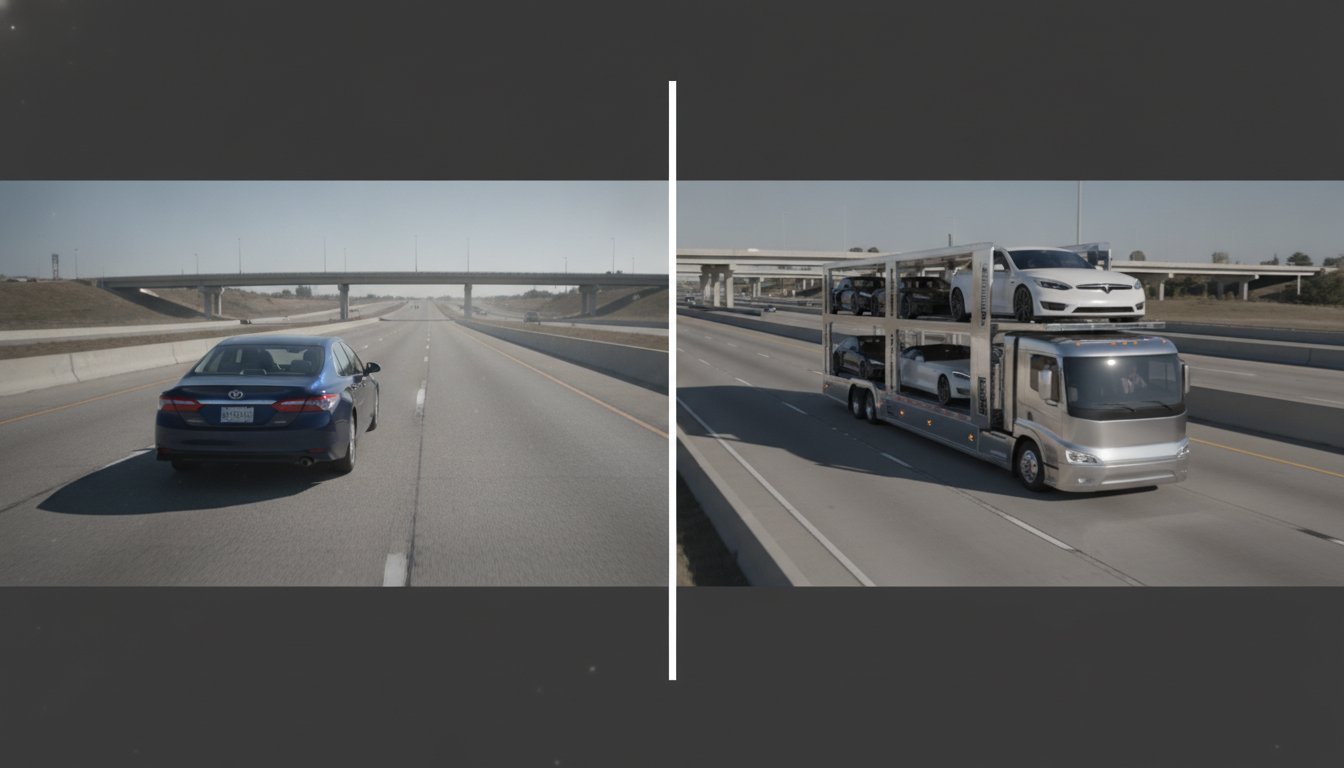
The open road often feels like the most economical path to a new city, but the hidden mathematics of a cross-country journey suggest that the obvious choice might be the most expensive one. You likely assume that handling the transit yourself will preserve a significant portion of your relocation budget. It's a natural conclusion when you only consider the immediate price of fuel. However, determining whether it is cheaper to drive or ship a car for a move requires a more sophisticated calculation that accounts for the true wear on your investment.
This professional cost analysis provides the clarity you need to make an informed decision for your upcoming relocation. We'll examine how the IRS standard mileage rate of 72.5 cents per mile and the 26.7 percent increase in airfares reshape the financial landscape. By looking at the logistical realities of depreciation and safety, we offer a framework to protect your vehicle's resale value and ensure a seamless transition to your new home. Our goal is to serve as a trusted advisor, handling the complex details so you can focus on the journey ahead.
Key Takeaways
- Address the fundamental question, is it cheaper to drive or ship a car for a move, by evaluating comprehensive financial variables and hidden expenditures.
- Quantify the significant impact of vehicle depreciation and mechanical wear that long-distance relocation imposes on your assets when analyzing is it cheaper to drive or ship a car for a move.
- Identify the 500-mile critical threshold and use our professional framework to decide is it cheaper to drive or ship a car for a move based on your unique relocation timeline.
- Compare the inherent limitations of personal auto insurance against the sophisticated cargo coverage and liability protection provided by professional carriers.
- Establish a strategic decision-making framework to ensure a seamless relocation while prioritizing personal safety and the preservation of vehicle resale value.
Quantifying the Investment: Driving Expenses vs. Professional Transport
Many relocation budgets are built on the assumption that a personal road trip is the most economical path. While the immediate cost of a tank of gasoline appears manageable, a professional analysis reveals that determining whether is it cheaper to drive or ship a car for a move involves a complex set of variables. One must look beyond the odometer to understand the true financial commitment required for a cross-country transit.
To better understand this concept, watch this helpful video:
The Baseline: Fuel, Lodging, and Sustenance
Fuel costs remain a primary concern, with national averages reaching $4.166 per gallon as of April 2026. For an ambitious route such as Seattle to Miami, these costs accumulate rapidly. Maintaining driver alertness requires high-quality lodging and nutritious dining, expenses that are often underestimated during the planning phase. Parking fees, regional tolls, and a necessary reserve for emergency maintenance further inflate the daily operational cost of the vehicle. These "soft costs" often turn a perceived saving into a significant financial burden.
Fixed Shipping Quotes: Eliminating Financial Uncertainty
Choosing a professional service eliminates the financial volatility inherent in long-distance travel. When you work with an auto transport broker or direct carrier, you receive a fixed quote that secures your budget against the budget creep of unexpected road delays. This transparency is a hallmark of premium logistics. Opting for open car transport provides an all-inclusive pricing structure that covers the specialized equipment and professional labor required for safe passage. This predictability allows you to allocate your resources with precision, avoiding the fluctuating prices of hotels or sudden mechanical failures on the highway.
For many clients, is it cheaper to drive or ship a car for a move depends on the distance and the value of their time. Long-haul relocations often reach a financial tipping point where the IRS standard mileage rate of 72.5 cents per mile makes shipping the more prudent choice. When you account for the 26.7 percent rise in airfare for your return or initial flight, the total investment in driving often exceeds the cost of a dedicated transport solution. We prioritize your financial stability by providing clear, upfront figures that reflect the reality of modern logistics.
The Hidden Costs of the Road: Depreciation and Mechanical Wear
While fuel prices are easily tracked at the pump, the most substantial cost of a cross-country move often remains invisible until you review your vehicle's valuation. Depreciation is a silent drain on your investment. Research indicates that depreciation accounts for 28.3 percent of the total cost of vehicle ownership. Adding 1,500 miles to your odometer in a single week does more than just move your car; it actively erodes its market value. When discerning whether is it cheaper to drive or ship a car for a move, you must weigh these long-term financial impacts against the immediate convenience of a road trip.
Mileage and Market Value
A vehicle's valuation is highly sensitive to mileage thresholds. For luxury or late-model cars, crossing a significant odometer milestone during a move can result in a lower resale bracket. This concern is even more acute for leased vehicles. Exceeding your annual mileage allowance during a relocation can trigger significant penalties. By choosing professional transport, you effectively freeze your vehicle’s mileage, preserving its future resale potential and ensuring you remain within the strict parameters of your lease agreement. It is a strategic move that protects the longevity of your automotive assets.
Mechanical Stress and Maintenance Intervals
Sustained high-speed driving over several days places unique stress on critical mechanical components. Tires, brakes, and engine fluids are pushed to their limits, often necessitating a post-trip service that adds hundreds of dollars to your relocation budget. A thorough pre-trip inspection is equally essential to prevent mechanical failure in unfamiliar geographic regions. These maintenance costs, when combined with the accelerated wear on your tires, often bridge the gap between a DIY move and professional service. Before committing to a multi-state drive, you might find it beneficial to request a professional transport quote to see how the numbers truly compare.
The road also presents physical risks to your vehicle's exterior. Gravel, road debris, and adverse weather conditions can cause permanent cosmetic damage. A single stone chip on a high-end finish can be costly to repair. We understand that your vehicle is a significant investment that deserves meticulous care. Professional handling ensures that your car bypasses the hazards of the highway, arriving at your new residence in the same pristine condition it left. This level of protection provides a sense of security that a solo drive simply cannot replicate.
Risk Mitigation: Safety, Insurance, and Professional Liability
Beyond the immediate financial calculations of fuel and depreciation, a sophisticated relocation strategy must prioritize the mitigation of risk. While a personal road trip carries the weight of individual liability, professional transport shifts the burden of safety to established experts. Legal resources such as Oberg Law Office underscore the importance of understanding local regulations and safety protocols to avoid complications. When assessing whether is it cheaper to drive or ship a car for a move, the potential cost of an uninsured incident on the highway often outweighs any perceived savings from a DIY approach. We believe that true value lies in the seamless protection of your automotive assets through rigorous operational standards.
Insurance Coverage: Personal vs. Professional
Personal auto insurance policies often contain limitations regarding long-distance transit and may carry high deductibles for highway incidents. In contrast, professional carriers are governed by strict FMCSA regulations. Most reputable carriers maintain at least $1,000,000 in liability coverage. Open carriers typically provide a minimum of $100,000 in cargo insurance, while enclosed options often extend this protection up to $1,000,000. Every transport is anchored by the Bill of Lading, a critical legal document that serves as both a receipt and an inspection record. This document ensures a transparent chain of custody and provides a clear framework for resolution if a rare discrepancy occurs. It's a level of security that a solo drive simply can't provide.
The Human Factor: Fatigue and Road Safety
The physical toll of multi-state travel shouldn't be underestimated. Long-distance driving introduces significant risks related to fatigue and mental exhaustion, particularly for those unaccustomed to spending ten or more hours behind the wheel daily. Professional operators are held to exacting standards to ensure public safety. For instance, as of January 10, 2026, a commercial driver's medical status must be verified through their digital Motor Vehicle Record, as paper copies are no longer sufficient. By outsourcing the drive, you eliminate the stress of navigating unfamiliar terrain and heavy commercial traffic. This decision allows you to focus on your family's comfort while our team handles the complex logistics.
Our commitment to safety extends to the meticulous protocols used during the loading and securing process. We utilize specialized equipment designed to stabilize the vehicle and prevent movement during transit. This professional infrastructure minimizes the risk of structural or cosmetic damage that can occur during a high-mileage journey. When you consider the statistical risks of the road, it's clear that professional transport is an investment in your peace of mind. Determining if is it cheaper to drive or ship a car for a move requires looking at these safety margins as essential components of your relocation budget.

The Decision Framework: When to Ship and When to Drive
Establishing a clear framework for your relocation helps cut through the noise of conflicting advice. While short distances might suggest a simple drive, the complexity of a move often demands a more structured approach. When you're deciding if is it cheaper to drive or ship a car for a move, distance serves as the primary catalyst for change. Most industry professionals recognize the 500-mile mark as the critical threshold where professional transport transitions from a luxury to a logistical necessity.
The 500-Mile Rule and Geographic Considerations
Routes between major commercial hubs like Dallas, Atlanta, and Chicago present unique challenges that go beyond simple mileage. Navigating heavy metropolitan traffic or crossing mountain passes during unpredictable weather adds layers of risk that aren't present on shorter journeys. It's also a matter of family logistics. Coordinating a household move is difficult enough without the added burden of managing a second vehicle across state lines. Shipping allows you to consolidate your focus on your family's transition while our team handles the heavy lifting. If you're managing multiple vehicles or specialized assets, you can request a quote to see how a unified transport plan simplifies your entire relocation timeline.
Time Management and Opportunity Cost
Your time is a finite resource with a specific professional value. A cross-country drive from the East Coast to the West Coast can easily consume five to seven days when you account for safe driving limits and necessary rest. You must ask what those days are worth to your career or your business. Corporate relocations almost exclusively utilize professional auto transport because the opportunity cost of a displaced executive is far higher than the price of shipping. Arriving at your new office refreshed and ready to perform is a strategic advantage that a grueling road trip simply can't offer.
For organizations planning a corporate move to the Georgia area, you may also need to visit Atlanta Container & Trailer to coordinate secure on-site storage for office equipment and commercial assets.
Specialized vehicles require an even higher level of consideration. High-value assets, such as those requiring enclosed car transport, or classic models that shouldn't be subjected to highway debris, demand a controlled environment. Even inoperable vehicles require specialized loading equipment that the average driver doesn't possess. By utilizing a professional service, you ensure these assets are handled with the meticulous attention to detail they require. Ultimately, determining if is it cheaper to drive or ship a car for a move is about more than just the immediate invoice; it's about making a choice that respects your time, your safety, and the integrity of your property.
GAATCO: Sophisticated Logistics for Your Vehicle Relocation
With over two decades of established expertise, our team at GAATCO provides a level of service that transcends basic transport. We operate as a discreet and dependable partner for individuals and corporations who require meticulous attention to detail during their relocation. When evaluating whether is it cheaper to drive or ship a car for a move, the answer often lies in the quality of the partner you choose. We offer a controlled professional environment where every variable is managed with precision, ensuring that your vehicle is treated as the significant investment it is.
Tailored Transport Solutions
Our operational infrastructure is designed to accommodate a diverse range of automotive needs with quiet luxury and authoritative care. For everyday sedans and SUVs, our Open Car Transport provides a highly efficient and cost-effective solution without compromising on our core pillars of safety and reliability. For clients relocating high-value assets, luxury models, or vintage collections, our premium enclosed trailers offer a sanctuary from the elements and road debris. We prioritize constant communication and transparent reporting throughout the transit process. This commitment ensures you remain informed from the initial pickup to the final delivery, reflecting our role as a trusted advisor.
Seamless Integration with Your Move
We understand that a relocation involves many moving parts, and our goal is to simplify your transition. Our logistics experts coordinate closely with your specific schedule to ensure that vehicle pickup and delivery are perfectly timed. This level of customization is particularly valuable in major metropolitan hubs like Houston, Miami, and Las Vegas, where navigating local traffic and regional nuances can be a significant hurdle for the uninitiated. Our Door-to-Door Auto Shipping removes the burden of terminal drop-offs, bringing our sophisticated service directly to your residence or place of business.
By choosing GAATCO, you're engaging a unified team of professionals committed to hassle-free logistics. We handle the complex operational realities of the road so you don't have to, providing a vital bridge between your relocation needs and the complexities of national transport. Determining if is it cheaper to drive or ship a car for a move becomes a simple calculation when you factor in the value of a stress-free experience. If you're ready to protect your vehicle's resale value and simplify your transition to a new city, we invite you to request a professional quote from GAATCO today. Experience the calm confidence that comes from working with a seasoned expert in specialized transport.
Strategic Clarity for Your Next Relocation
Identifying the most prudent path for your vehicle requires a sophisticated understanding of both visible and invisible costs. As we've examined, the true calculation extends far beyond the price of fuel to include the preservation of your vehicle's market value and the mitigation of road-related risks. Determining whether is it cheaper to drive or ship a car for a move ultimately hinges on your commitment to a seamless and secure transition.
Our team at GAATCO stands ready to serve as your trusted logistics advisor. With over 20 years of industry expertise and a network of fully licensed and insured carriers, we provide reliable door-to-door service in more than 15 major US hubs. We handle the intricate operational details so you can arrive at your new destination refreshed and focused on the future. You deserve the peace of mind that comes from professional handling. Request a Transparent Auto Transport Quote today and let us facilitate a sophisticated start to your next chapter.
Frequently Asked Questions
Is it actually cheaper to drive my car or ship it for a cross-country move?
Determining whether is it cheaper to drive or ship a car for a move often reveals that professional transport is the more prudent choice for long distances. While fuel is a visible expense, the IRS standard rate of 72.5 cents per mile accounts for depreciation and maintenance. When you add high-quality lodging and meals, the perceived savings of a solo drive quickly diminish for any relocation exceeding 500 miles.
How much does it cost to ship a car versus driving it myself?
The total cost of driving includes fuel, which averaged $4.166 per gallon in April 2026, alongside food and professional-grade lodging. Research indicates that a 1,000-mile journey costs roughly $725 in true vehicle operating expenses when factoring in wear and tear. Professional shipping provides a fixed quote that eliminates these fluctuating travel costs and the 26.7 percent increase in airfare required for your return or initial flight.
Will shipping my car prevent depreciation and wear-and-tear?
Professional transport effectively freezes your vehicle's mileage and prevents mechanical wear during the relocation process. Since depreciation accounts for 28.3 percent of the overall costs of vehicle ownership, avoiding a multi-state journey preserves significant resale value. This protection is especially critical for leased vehicles, as it helps you avoid the substantial financial penalties associated with exceeding annual mileage limitations.
What are the safety benefits of using a professional car shipping company?
Professional shipping eliminates the statistical risks of driver fatigue and highway accidents associated with long-distance travel. Carriers must adhere to strict safety regulations, including the 2026 requirement for digital medical status verification for all commercial drivers. By utilizing specialized loading equipment and experienced operators, you ensure your vehicle is secured against road hazards while you focus on your family's safety and comfort.
How long does it take to ship a car compared to driving it?
Shipping typically requires more time than a solo drive due to specialized routing and the coordination of multiple delivery points. While an individual might complete a cross-country trip in five days, a professional carrier may take seven to ten days to ensure safe passage. This allows you to fly to your new city in hours, arriving refreshed and ready to manage your new home or office.
Is my car insured while it is being transported by a carrier?
Your vehicle is covered by substantial cargo insurance that far exceeds the limits of standard personal auto policies. Reputable carriers maintain a minimum of $1,000,000 in liability coverage, and cargo insurance for open carriers typically starts at $100,000. This protection is legally anchored by the Bill of Lading, which serves as a detailed inspection record and provides a secure framework for your peace of mind.
Can I ship personal items inside my car to save on moving costs?
Most carriers allow you to place up to 100 pounds of personal items in the trunk, though these items aren't covered by the carrier's cargo insurance. Excessive weight can negatively impact the vehicle's suspension or lead to delays during regulatory inspections. We recommend keeping the passenger cabin clear to ensure the safest possible transport conditions and to maintain the integrity of your vehicle's interior.
What is the most cost-effective distance to start considering car shipping?
The 500-mile mark is the critical threshold for determining if is it cheaper to drive or ship a car for a move. Beyond this distance, the cumulative expenses of fuel, lodging, and accelerated vehicle depreciation begin to outweigh the cost of professional transport. For moves exceeding 1,000 miles, the logistical ease and financial predictability of shipping almost always provide a superior return on your investment.


