The final hundred miles of a classic car's journey to the concours lawn are often more critical than the hundreds of hours spent in the restoration shop. When you're shipping a classic car to a show, the transport process isn't just a delivery; it's the final stage of your vehicle's exhibition preparation. We recognize that for a dedicated collector, the anxiety of potential cosmetic damage or a missed registration window can be significant. You've invested in excellence, and you require a logistical partner who respects the heritage of your investment.
This guide details the professional protocols and logistical strategies required to ensure your vehicle arrives in pristine, show-ready condition. You'll learn how to navigate the latest 2026 FMCSA regulatory shifts, such as the transition to USDOT identifiers and the requirement for electronic driver inspection reports. We also preview the essential preparation steps and insurance considerations, like agreed-value policies, that provide peace of mind. Our team is here to ensure that your focus remains on the competition while we handle the complex operational realities of transit with measured, professional care.
Key Takeaways
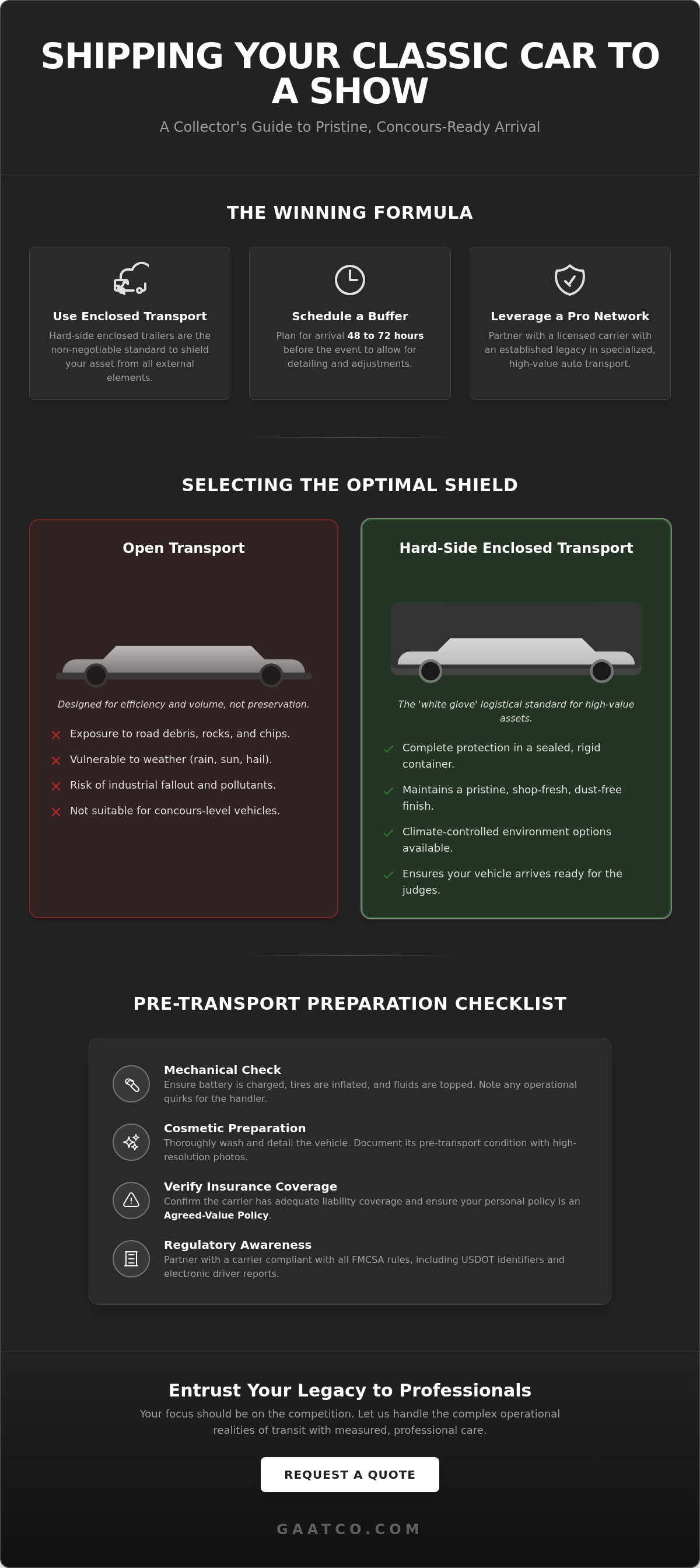
- Understand why hard-side enclosed trailers represent the non-negotiable standard for protecting high-value assets from external elements.
- Learn to implement a strategic delivery buffer by scheduling arrivals 48 to 72 hours before the event begins.
- Discover the essential mechanical and cosmetic protocols for preparing your vehicle for the rigors of professional transit.
- Master the specialized logistical requirements for shipping a classic car to a show to maintain its pristine, exhibition-ready condition.
- Identify how to leverage a licensed carrier network with an established legacy in the specialized auto transport industry.
The Logistics of Excellence: Why Show Car Shipping Demands a Specialized Approach
Transporting a high-value automotive asset is a specialized discipline that extends far beyond simple relocation. Shipping a classic car to a show requires a level of precision that standard auto transport protocols simply cannot replicate. For the serious collector, the stakes are both financial and emotional. A single cosmetic blemish or a minor mechanical mishap during transit can jeopardize months of meticulous restoration work. We view show car shipping as a white-glove logistical service, where the primary objective is the absolute preservation of the vehicle’s condition and its competitive potential.
Standard auto transport is designed for efficiency and volume. In contrast, specialized exhibition transport prioritizes the unique requirements of vintage and exotic collectibles. These vehicles often possess sensitive finishes, rare components, and idiosyncratic mechanical systems that demand expert handling. To better understand the technical nuances of this process, watch this helpful video:
The Concours Standard vs. Standard Transport
For vehicles destined for the judging lawn, cosmetic integrity is the non-negotiable key performance indicator. Standard transport methods often leave vehicles vulnerable to road debris, fluctuating weather, and industrial fallout. Our specialized transport services utilize equipment such as hard-side enclosed trailers to create a controlled environment. Additionally, we employ handlers who are intimately familiar with the nuances of vintage ignition and braking systems. This expertise ensures that your vehicle is moved with the respect its heritage deserves, preventing unnecessary mechanical stress before it reaches the judges.
Identifying Key Exhibition Hubs
Successful transport requires deep regional expertise, especially when navigating the logistics of major automotive events. Whether you are shipping a classic car to a show in Scottsdale or preparing for the high-stakes environment of Monterey Car Week, each location presents distinct challenges. Major Concours d'Elegance events in Miami or the Amelia Island Concours require precise scheduling to manage local traffic and event-specific load-in protocols. Indoor shows in metropolitan centers like New York or Chicago demand even tighter coordination. Our team manages these complex operational realities, allowing you to focus on the exhibition itself while we handle the intricate details of the journey.
Enclosed vs. Open Transport: Selecting the Optimal Shield for Your Investment
Selecting the method of conveyance is the most significant decision you'll make when shipping a classic car to a show. While standard transport serves the general automotive market, the exhibition circuit requires a higher tier of security and environmental control. We recommend Enclosed Car Transport as the non-negotiable standard for any vehicle intended for competition. This choice isn't merely about aesthetics; it's about adhering to federal transportation regulations while providing a physical barrier against the unpredictable variables of the open road.
Within the category of enclosed shipping, collectors should distinguish between hard-side and soft-side trailers. Soft-side trailers utilize heavy-duty vinyl curtains. These offer protection from sunlight and rain but don't provide the same structural defense or dust-free environment as a hard-side trailer. For a concours entry, the rigid walls of a hard-side carrier are essential to maintain a pristine, shop-fresh finish. The premium for this service is a strategic investment. It eliminates the risk of stone chips, industrial runoff, and weather-related wear that occurs on an open trailer. To ensure your investment is fully protected, you should always request a detailed quote that includes high-limit insurance coverage tailored to your vehicle's appraised value.
Anatomy of an Enclosed Carrier
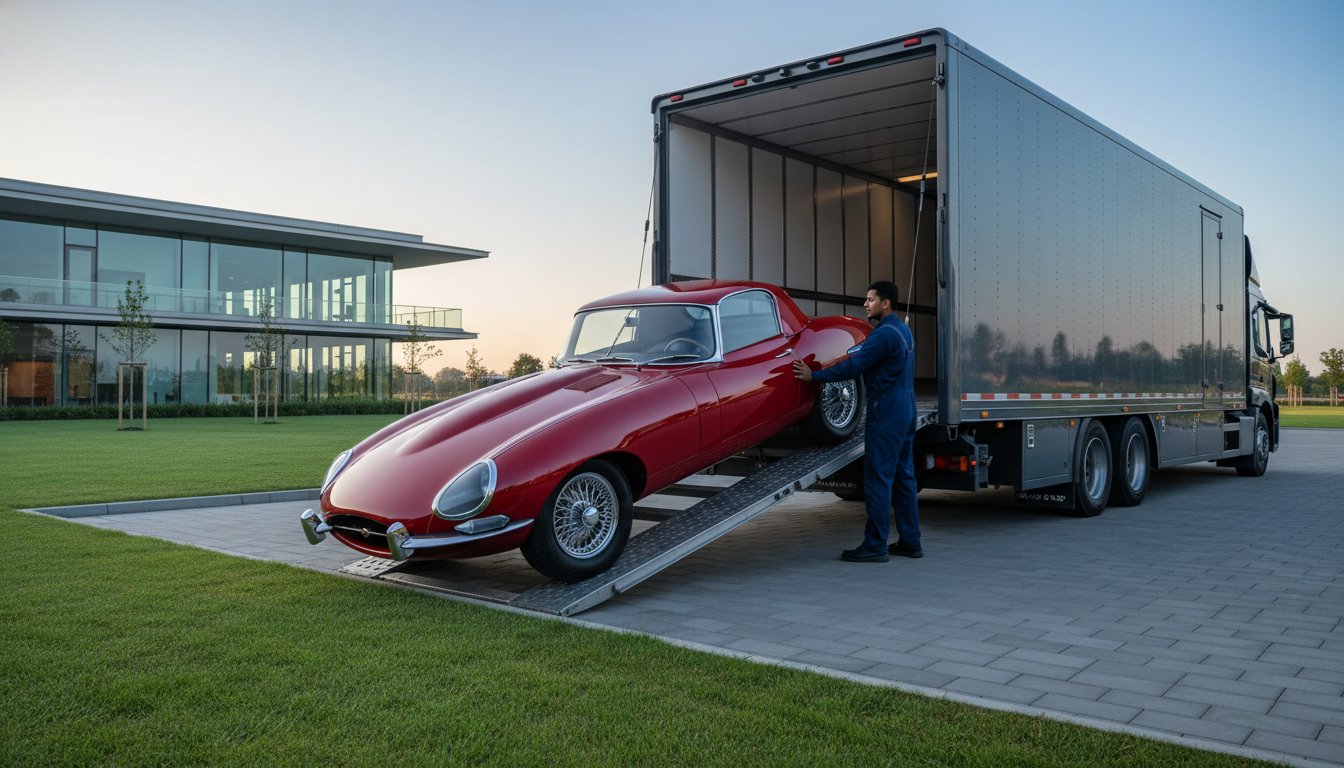
A professional enclosed carrier is a sophisticated piece of equipment designed for delicate assets. We prioritize trailers equipped with hydraulic liftgates. This feature is vital for low-clearance classic vehicles, as it allows for level loading and unloading without the risk of undercarriage damage. Inside the trailer, we utilize soft-tie down systems. Unlike traditional chains, these nylon straps secure the vehicle by its wheels or tires. This method prevents unnecessary stress on the frame and suspension components during transit. Furthermore, the sealed environment of a hard-side trailer provides a climate-consistent, dust-free space that preserves the integrity of high-end paint finishes and delicate interior materials.
When to Consider Open Transport
Open transport remains the most common method in the industry, accounting for approximately 95% of all vehicle shipments. It's a reliable and cost-effective solution for "driver-quality" classics or local club events where the stakes of a concours judging aren't present. However, the trade-off for this efficiency is total exposure to the elements. For a show car, the potential for road grime or minor debris damage often outweighs the savings. If you are shipping a classic car to a show with the intent of winning, the controlled environment of an enclosed trailer is the only way to ensure your vehicle arrives exactly as it left the detailing bay.
Orchestrating the Arrival: Timeline and Scheduling for Concours Events
Success at a premier automotive event is often determined long before the first judge approaches the vehicle. When you're shipping a classic car to a show, timing is just as critical as the method of transport itself. We advocate for a "Buffer Strategy," which dictates that your vehicle should arrive at the host city approximately 48 to 72 hours before the official registration begins. This window provides a necessary safety margin against unforeseen transit delays, such as weather patterns or traffic congestion, and allows the vehicle to acclimate to local humidity and temperature levels before the final preparation begins. It's a logistical insurance policy that protects your peace of mind.
For events with non-negotiable load-in windows in cities like San Diego, Dallas, or Orlando, our Expedited Vehicle Shipping becomes an essential logistical tool. This service prioritizes your specific timeline, ensuring the carrier meets strict appointment times at prestigious venues. By utilizing Door-to-Door Auto Shipping, we eliminate the complexities of terminal transfers. This approach simplifies the "last mile," delivering your investment directly to the designated preparation site or the event's staging area. It doesn't just save time; it reduces the number of times the vehicle is handled, which is vital for maintaining its pristine condition.
The Detailer’s Window
Even the most secure enclosed environment doesn't completely eliminate the need for a final touch-up. Scheduling an ample "detailer’s window" allows your team to conduct a thorough post-transit inspection and perform final concours-level detailing. It's vital to choose an unloading location that offers the space and lighting necessary for this work. This stage is where the vehicle's competitive edge is sharpened, ensuring that the paint, brightwork, and interior meet the exacting standards required to win. We coordinate closely with your chosen detailers to ensure the vehicle is available exactly when they need it.
Venue Coordination
Navigating the load-in protocols of a private estate or a major convention center requires meticulous coordination. We maintain active communication between our professional drivers and your event staff or restoration shop. This synergy is crucial for managing specific arrival times, especially in restricted access zones where staging space is limited. Our team understands the nuances of major exhibition hubs and the critical urgency of their schedules. Clear communication ensures a seamless transition from the carrier to the exhibition floor, maintaining the vehicle’s show-ready status throughout the final phase of its journey.
Preparing Your Classic for the Judges: A Pre-Transport Checklist
Meticulous preparation is the bridge between a vehicle's current state and its appearance on the judging lawn. When you're shipping a classic car to a show, the hand-off to the carrier is a critical moment for both documentation and physical safeguarding. This process isn't just about cleaning; it's about ensuring every mechanical and cosmetic detail remains static during the journey. Proper preparation prevents the shifting of internal components and ensures the vehicle is ready to be moved safely at each stage of the transit.
Before the trailer arrives, you should conduct a thorough mechanical sweep. Verify that fluid levels are correct and check for any active leaks that could compromise the trailer's interior or other vehicles. If your classic requires specialized starting instructions or has a unique ignition sequence, provide these in writing for the driver. We also recommend removing all loose parts, tools, and exhibition materials from the cabin and trunk. These items can shift during transit, potentially causing internal cosmetic damage that would be difficult to rectify before the show begins.
The Pre-Shipment Inspection
Every professional engagement begins with a rigorous pre-shipment inspection. We recommend conducting a high-resolution photographic survey of the vehicle’s current state. Capture every angle, including the undercarriage, wheels, and interior details. This record serves as a definitive safeguard, allowing you to distinguish between existing patina and any potential new wear. The Bill of Lading (BOL) should reflect these findings accurately. It acts as the formal record of condition and is your primary protection throughout the shipping process. Ensure you and the driver both sign and retain copies of this document.
Fuel and Battery Protocols
Safety and weight regulations require specific protocols for fuel and power systems. Carriers typically require a fuel level of one-quarter tank or less. This reduces the overall weight of the shipment and minimizes the risk of fumes or leaks within the enclosed environment. For vehicles with sensitive vintage electronics or those that will be in transit for several days, consider the battery's health. You may need to utilize a master kill switch or disconnect the battery to prevent drain. If a disconnect is necessary, ensure the driver knows how to safely reconnect the system for unloading. To coordinate your next exhibition transit with a team that understands these technical nuances, request a specialized transport quote today.
Cosmetic protection is the final layer of your preparation. While enclosed transport provides the primary shield, some collectors choose to use custom car covers or temporary protective films on high-impact areas. If you use a cover, it must be specifically designed for transport and securely fastened to prevent flapping, which can mar the paint. Our Classic Car Transport specialists can advise on the best practices for your specific finish, ensuring your vehicle arrives with its shop-fresh glow intact.
Entrusting Your Legacy to GAATCO: Professional Transport Solutions
GAATCO brings over 20 years of established expertise to the specialized auto transport sector. We've spent two decades refining the logistical infrastructure required to handle high-value automotive assets with the discretion they deserve. For the collector, shipping a classic car to a show isn't a routine transaction; it's a high-stakes transfer of a legacy. Our reputation is built on a foundation of reliability and a deep understanding of the emotional and financial investment each vehicle represents.
Our expansive operational reach is anchored by a licensed and insured carrier network. We prioritize safety by vetting every partner against rigorous standards, ensuring that your vehicle is always in the hands of a seasoned professional. This meticulous vetting process extends beyond mere compliance; we evaluate the handler’s experience with specific marques and eras. Transparent pricing is a cornerstone of our service. We provide clear, detailed estimates that reflect the actual operational realities of your specific route. This commitment to honesty ensures that you can plan your show season with confidence, knowing there won't be unexpected surcharges or logistical oversights.
A Human-Centric Approach to Logistics
We believe that sophisticated technology should support, not replace, human expertise. Each shipment is assigned a dedicated coordinator who understands the nuances of classic car transport. They serve as your single point of contact, bridging the gap between your requirements and the driver's operational flow. This approach transforms a standard service into a partnership. Our coordinators anticipate potential hurdles before they manifest, providing a discreet layer of protection that characterizes elite transport. You'll receive real-time communication and status updates from the initial pickup to the moment the vehicle arrives on the show floor. This level of personalized attention ensures that complex logistics are handled seamlessly, allowing you to remain calm under pressure while we manage the details.
Requesting Your Customized Transport Plan
Whether you're an individual owner preparing for a local event or a prestigious dealership managing a fleet for a national tour, we tailor our services to meet your unique needs. Our team handles everything from Enclosed Car Transport for concours entries to Door-to-Door Auto Shipping for maximum convenience. Initiating your strategy is straightforward. You can request a specialized transport quote for your next show through our secure online portal. We'll work with you to develop a comprehensive plan that respects your timeline and the heritage of your vehicle, ensuring a damage-free, on-time delivery every time.
Elevating Your Exhibition Strategy
The journey to a premier automotive event is a complex orchestration of timing, protection, and professional handling. By prioritizing hard-side enclosed transport and adhering to a strategic buffer for arrival, you ensure your vehicle's competitive potential remains intact. We've explored how meticulous preparation and clear documentation serve as the final safeguards for your investment. Mastering the logistics of shipping a classic car to a show allows you to transition seamlessly from the trailer to the judging lawn with absolute confidence in your vehicle's condition.
With over 20 years of specialized transport experience, our team provides the seasoned expertise required for high-stakes assignments. We utilize a network of licensed and insured carriers who specialize in enclosed transit for concours-level vehicles. This commitment to operational excellence ensures your legacy is handled with the discreet care it deserves. You can secure your show-ready transport with a professional quote from GAATCO and let our coordinators manage the intricate details of your next exhibition. We're ready to support your pursuit of automotive excellence.
Frequently Asked Questions
Is enclosed transport strictly necessary for a classic car show?
Enclosed transport is the professional standard for any vehicle intended for concours judging or high-level exhibition. While open transport is a functional method for daily drivers, it doesn't provide the essential barrier against road debris, industrial runoff, or fluctuating weather conditions. For a show entry, even minor cosmetic imperfections can impact your score. Utilizing a hard-side enclosed carrier ensures your vehicle remains in a climate-consistent, dust-free environment from the moment it leaves your garage until it reaches the venue.
How much insurance coverage does GAATCO provide for classic vehicle transport?
We provide insurance solutions that are specifically tailored to the "agreed-value" or "stated-value" of your automotive asset. Unlike standard carriers that may rely on baseline liability limits, we ensure our carrier network maintains high-limit cargo insurance suitable for multi-million dollar collectibles. It's vital that the coverage matches your vehicle's current appraised market value. We encourage clients to provide a recent appraisal so our team can verify that the logistical plan includes the necessary financial safeguards for your specific investment.
Can I ship spare parts or show displays inside the vehicle?
Federal transportation regulations and insurance protocols generally prohibit the shipment of personal items or loose equipment inside the vehicle. Items such as spare tires, tool kits, or exhibition displays can shift during transit, potentially causing significant internal damage to delicate upholstery or trim. Additionally, these items are not covered under standard cargo insurance policies. We recommend shipping your show materials through a separate logistics provider to ensure both your vehicle and your display equipment arrive safely and without incident.
What happens if the car show venue has limited access for large trailers?
We specialize in navigating the complex load-in requirements of private estates, historic hotels, and urban convention centers. If a venue cannot accommodate a full-sized car carrier, we coordinate a "last-mile" solution. This often involves unloading at a nearby staging area and utilizing a smaller, more maneuverable transport vehicle or conducting a supervised final drive to the show floor. Our coordinators manage these details in advance to ensure the process of shipping a classic car to a show remains seamless even in restricted environments.
How far in advance should I book transport for a major event like Monterey Car Week?
For premier events like Monterey Car Week or the Amelia Island Concours, we recommend initiating your booking at least four to six weeks in advance. These high-demand periods often see a surge in specialized transport requests, and early scheduling is the only way to guarantee a spot in a hard-side enclosed trailer. Early booking also allows our team to better coordinate your specific timeline and implement the "Buffer Strategy" discussed earlier in this guide. This ensures your vehicle arrives with ample time for final detailing.
Do I need to be present for the pickup and delivery of my classic car?
You or a designated representative must be present at both the origin and the destination to conduct the mandatory pre-shipment and post-shipment inspections. This individual is responsible for reviewing and signing the Bill of Lading, which serves as the official record of the vehicle's condition. During these hand-offs, it's essential to verify that all documented "patina" is accurately noted. This collaborative process is a cornerstone of our commitment to transparency and ensures that your vehicle’s integrity is protected throughout the entire transit process.
What specific documentation should I provide to the driver for my vintage vehicle?
Beyond the standard Bill of Lading, you should provide a concise set of mechanical instructions tailored to your vehicle's specific needs. This includes details on unique starting sequences, battery disconnect procedures, or specialized braking requirements. However, it's important to never leave original titles, registration documents, or high-value provenance records inside the car during transit. We recommend keeping these documents in your possession or shipping them via a secure courier to prevent loss or theft while shipping a classic car to a show.
How does GAATCO handle inoperable classic cars intended for display only?
We maintain a dedicated fleet of trailers equipped with heavy-duty winches and specialized loading equipment specifically for inoperable vehicle transport. Whether your classic is a static display piece or is currently undergoing a mechanical restoration, we can manage the loading and unloading process without the need for the engine to run. Our handlers are trained to secure these vehicles with the same level of care and precision as running entries, ensuring that your project or display piece arrives at the venue in its current state without further mechanical stress.


