
The settlement is signed, but the vehicle still needs to move, and pickup may involve two households that would rather not coordinate directly. Shipping a car during a divorce settlement can become more complicated when legal decisions, authorization, vehicle records, and transport timing are treated as one problem.
A clear plan can help before the car leaves its current location. Let the legal agreement guide decisions about ownership and authorization, then organize the shipment as a separate logistics process. Confirm who is coordinating at each end, agree on timing, and document the handoff.
This guide explains how to prepare for the move without confusing transport arrangements with settlement terms. You’ll learn what information to gather, how to record the vehicle’s condition, and how to choose between open and enclosed transport. Door-to-door shipping can coordinate separate pickup and delivery locations, while real-time tracking helps authorized contacts follow the vehicle’s progress. Preparing these details in advance makes it easier for everyone to understand their role, even when direct communication is limited.
Key Takeaways
- Keep ownership and settlement questions separate from arranging the vehicle’s physical move, and direct legal questions to your attorney.
- For shipping a car during a divorce settlement, organize the destination, vehicle details, authorized contacts, and pickup timing before scheduling the move.
- Compare open and enclosed transport based on the vehicle and the owner’s preferences, then choose the option that suits the shipment.
- Write down pickup and delivery addresses, named contacts, and a communication channel so everyone understands the handoff plan.
- Plan routes such as Atlanta to Miami or Seattle to San Diego with nationwide transport options, and use shipment tracking to follow progress.
Shipping a Car During a Divorce Settlement: Separate the Move from the Legal Decisions
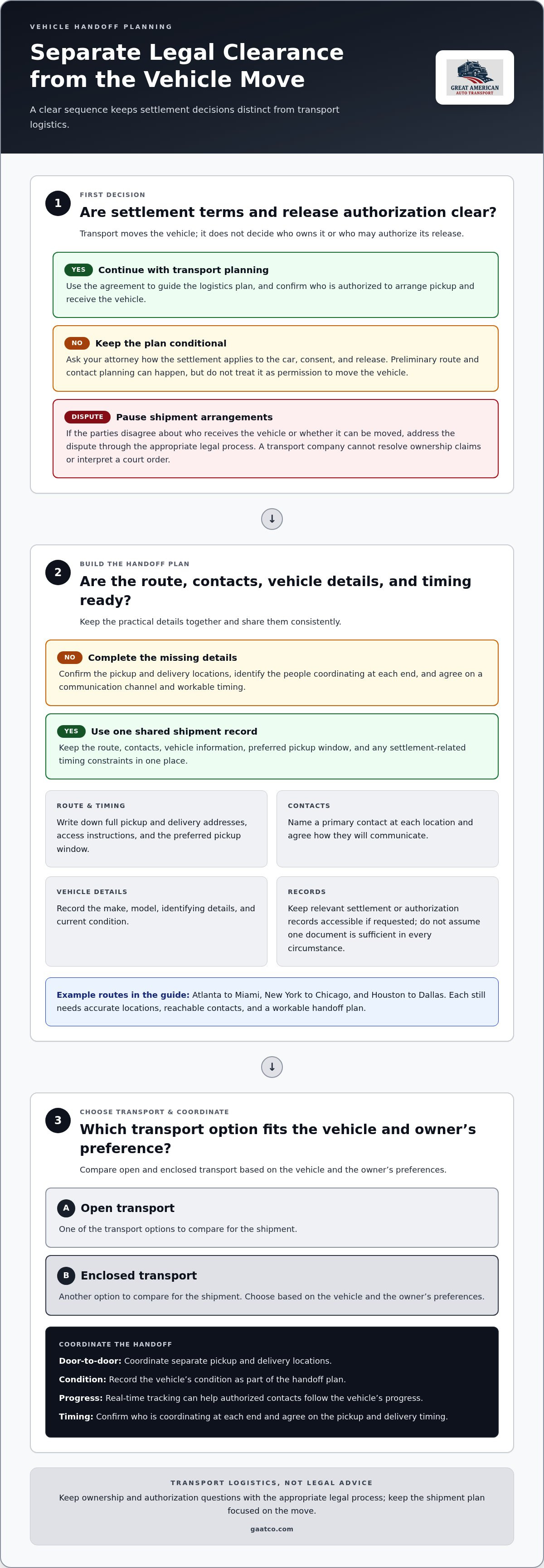
Car shipping is the physical transport of a vehicle from one location to another. It does not decide who owns the car, who should receive it, or whether someone has authority to arrange its release. Those questions belong to the settlement and applicable legal process, not the transport plan.
Even when the destination is clear, shipping a car during a divorce settlement can involve sensitive timing, limited communication, and a carefully coordinated handoff. Start by separating the property division described in a divorce settlement from the practical arrangements for moving the vehicle. This guide covers transport logistics, not legal advice or ownership determinations.
For a related perspective on vehicle arrangements during divorce, this video discusses lease transfers, a separate issue from shipping:
What needs to be decided before arranging the move?
Before turning a proposed move into a shipment, identify the vehicle and the plan for it. Write down the intended recipient, current pickup location, and destination. These details establish the practical outline of the transport, but they do not establish that the person arranging it has authority to release or receive the vehicle.
Ask your attorney how the settlement terms apply to the car and its transportation, including who may authorize pickup and who should coordinate with the other party. The answer can depend on the agreement, the circumstances of the case, and applicable state law. Do not assume that a settlement document, title, or informal message is sufficient authorization in every situation.
If the parties disagree about who receives the vehicle or whether it can be moved, pause the shipping arrangements and address the dispute through the appropriate legal process. A transport company can move a vehicle, but it cannot resolve competing ownership claims or interpret a court order.
When can transport planning begin?
Preliminary planning can begin before every handoff detail is final. Map the route, identify possible pickup and delivery contacts, and consider a scheduling window while keeping the plan conditional on required authorization. This allows useful preparation without treating it as permission to move the car.
For example, an interstate move from Atlanta to Miami involves coordinating two locations, the people available at each end, and a workable pickup window. You can outline those logistics in advance. Before the vehicle is released, resolve any authorization questions with your attorney and make sure everyone involved understands the handoff plan. Clear boundaries keep transport coordination focused on the move rather than reopening settlement decisions.
Prepare Settlement Documents, Contacts, and Vehicle Details for a U.S. Move
A concise preparation file can make a sensitive vehicle move easier to coordinate. Start with the route and destination, identify the people involved, collect vehicle details, and clarify who is authorized to arrange the shipment. This keeps transport information organized and legal decisions with the appropriate professionals.
A New York-to-Chicago move calls for clear pickup and delivery details across state lines. A Houston-to-Dallas route still requires accurate addresses, reachable contacts, and a workable handoff plan. In either case, shipping a car during a divorce settlement should proceed only after questions about authorization and settlement conditions have been addressed.
Which information should be ready for booking?
Prepare the practical details in one place so they can be shared consistently. Include the vehicle’s make, model, and condition; pickup and delivery addresses; and preferred timing. Record who will coordinate at each location and who is expected to receive the vehicle. Keep relevant settlement or authorization records accessible if requested, but do not assume any single document is sufficient in every circumstance.
- Route: Confirm the full pickup and delivery addresses, including access instructions that affect the handoff.
- Contacts: Name a primary contact at each end and agree on a communication channel.
- Vehicle: Provide accurate identifying details and describe its current condition.
- Timing: Share the preferred pickup window and note any settlement-related constraints.
For general information about commercial motor-carrier oversight, consult the Federal Motor Carrier Safety Administration (FMCSA). This reference does not determine who owns the car or who may authorize its release.
How should authorization and financing questions be handled?
Marital status or possession of the keys alone should not be treated as proof that one spouse can authorize a vehicle’s release. Ask your attorney how the settlement terms apply to ownership, consent, and the planned move. If authorization remains disputed, pause the shipment arrangement until the issue is addressed through the appropriate legal process.
A financed vehicle can raise separate questions about a loan, lien, registration, or insurance. Direct loan and lien concerns to the lender or an appropriate financial professional, and discuss registration questions with the relevant state agency. Ask your attorney how those matters intersect with settlement conditions. For coverage questions, speak with the insurer; do not assume a transport plan changes existing policy terms.
Once the route, contacts, and vehicle information are organized, review the U.S. vehicle transport services to identify an option suited to the move. Keep legal authorization separate from transport coordination, and communicate the same approved details to everyone involved.
Compare Open and Enclosed Car Shipping for Routes Such as Atlanta to Miami
Once the destination and authorization are clear, decide how the vehicle will travel. Open and enclosed transport differ in carrier format, not in what the settlement awards. Neither option is right for every move. Consider the vehicle, its condition, the route, and the owner’s preferences, then choose a transport arrangement that fits the shipment.
A clear choice can also simplify coordination between the person arranging pickup and the person receiving the vehicle. GAATCO offers both Open Car Transport Services and Enclosed Car Transport. Consider these options for a route such as Atlanta to Miami or Miami to New York, while keeping the schedule flexible until transport details are arranged.
When might open car transport suit the shipment?
Open transport moves vehicles on an open carrier. It is a standard vehicle-shipping option and may suit owners who are comfortable with this carrier format. Consider the vehicle type, its current condition, the route, and personal preferences. Base the choice on the shipment’s circumstances rather than assuming one method suits every car.
When might enclosed transport merit consideration?
Enclosed transport moves a vehicle inside an enclosed carrier. An owner may weigh this option based on the car’s value, condition, or preference for an enclosed format. It does not change ownership or resolve a disagreement about the vehicle. GAATCO’s open and enclosed transport services offer options to consider when planning the move.
Use this comparison to organize the decision:
- Vehicle: Consider its type, condition, and any particular concerns the owner has about transport.
- Route: Note the pickup and delivery locations, such as separate addresses in Atlanta and Miami, so the transport plan reflects the actual move.
- Preference: Decide whether an open or enclosed carrier better fits the owner’s comfort level and priorities.
- Coordination: Make sure the person arranging the shipment and the recipient understand which transport option has been selected.
For example, if a vehicle is moving from Miami to New York after one party relocates, the route alone does not dictate the carrier type. The decision can reflect the car and the owner’s preferences, while pickup timing and recipient details remain part of the separate handoff plan. If the vehicle’s condition raises questions about how it can be moved, include that information in the transport planning rather than making assumptions.
Keep the settlement decision distinct from the shipping decision. The settlement or legal process identifies who is meant to receive the vehicle and any relevant conditions; the transport selection addresses how it will be carried. Once the authorized arrangement is clear, comparing open and enclosed options gives both parties a defined plan to coordinate, even if they communicate through separate contacts.
Coordinate Pickup, Delivery, and Condition Records Across U.S. Cities
A defined handoff plan helps keep the move orderly, especially when pickup and delivery involve separate households. Put the essential instructions in writing before transport is arranged: pickup and delivery addresses, a named contact at each location, the preferred communication channel, and practical access details. For a move from Chicago to Phoenix or into San Diego, make clear who is responsible at each end instead of relying on assumptions or last-minute messages.
Door-to-Door Auto Shipping can be a practical option when the vehicle needs to move between separate residential locations. The plan can center on the actual pickup and delivery addresses. Share the information each authorized contact needs for the handoff, and keep settlement discussions separate from routine shipment updates where appropriate.
How can separated parties coordinate without direct contact?
If direct communication is uncomfortable or impractical, the parties can use a mutually accepted representative for routine logistics. Agree on that person’s role, then provide both sides with the same essential details: who will be present, where the vehicle will be handed over, and how updates will be relayed. Keep legal questions with the appropriate adviser; shipment messages should focus on the vehicle’s movement.
What should happen at pickup and delivery?
At both ends, the responsible contact should be ready to coordinate the handoff and record the vehicle’s condition. Make a dated written note and take clear photographs before pickup, then repeat the record at delivery to create a consistent reference if questions arise. Retain relevant transport documents and messages with the settlement-related records, while keeping the two types of communication distinct.
Before pickup, make sure the contact knows where the vehicle is located and how to reach the other authorized person if a logistical issue comes up. At delivery, the named recipient or representative should be ready to receive the car and note its observed condition. These steps create a practical record of what was handed over and when, without attempting to determine ownership or replace legal documentation.
Shipment visibility can reduce unnecessary back-and-forth. GAATCO provides real-time tracking, allowing authorized contacts to follow progress between origin and destination and share updates through the agreed channel. This can be useful when one person coordinates pickup in Chicago while another receives the vehicle in Phoenix or San Diego. Tracking informs logistics conversations; it does not replace the handoff plan or any authorization required for the move.
For shipping a car during a divorce settlement, clarity at each stage matters: confirm the contacts, keep condition records, and make sure both ends understand their roles. Learn about GAATCO vehicle shipping after the authorized handoff details are in place.
Arrange Nationwide Car Shipping and Keep the Settlement Process Moving
With the legal questions addressed, shipment contacts identified, route established, and transport option selected, the physical move can proceed as a distinct logistical task. Keeping these details organized helps everyone understand what has been decided and what still needs coordination. The transport plan does not determine ownership; it carries out the agreed move.
GAATCO provides vehicle transport nationwide across the USA, including routes involving Seattle and San Diego. Its network of licensed and insured carriers transports vehicles that are fully insured during transport. Transparent pricing with no hidden fees helps clarify the shipping arrangement.
What to expect from a coordinated transport plan
Door-to-Door Auto Shipping connects the agreed pickup and delivery locations, which is useful when a vehicle is moving between separate residences. Provide the route and relevant vehicle details, and ensure the people coordinating each end share an understanding of the handoff. For instance, a move from Seattle to San Diego can be planned around the two locations and designated contacts without assuming a specific pickup or delivery date.
Real-time tracking provides shipment updates during transport, helping authorized contacts follow progress and share practical information. It supports coordination but does not replace the written handoff plan or promise a particular outcome. Keep settlement terms and shipment updates distinct so routine transport communication stays focused on the vehicle’s journey.
How to take the next step with GAATCO
To request a tailored quote, prepare the route, vehicle details, and preferred timing. Include the pickup and delivery locations and identify who will coordinate at each end. These details help frame the transport request and clarify the options for the move. If the settlement includes conditions relevant to authorization or timing, keep those questions with your attorney and share the approved practical instructions needed for shipment coordination.
GAATCO’s nationwide service and network of licensed, insured carriers support vehicle moves across the USA. Open and enclosed transport are available, and door-to-door service can align the shipment with the agreed locations. Vehicles are fully insured during transport, and real-time tracking helps authorized contacts follow progress.
Shipping a car during a divorce settlement can feel more manageable when legal decisions remain with the appropriate advisers and transport details are prepared separately. Review the vehicle transport options, then request a tailored car shipping quote with your route, vehicle information, and preferred timing. A considered plan gives each contact a clear role as the vehicle moves toward its agreed destination.
Give the Vehicle Move a Clear Next Step
A vehicle transfer can become one defined task in a larger period of change. Treat the transport date as a planning point, not a substitute for resolving settlement questions. Once the relevant decisions are settled, a concise shared schedule can help everyone focus on what happens next, who is responsible, and where updates should go.
For shipping a car during a divorce settlement, turn the agreed plan into a practical transport request. Keep legal questions with your attorney and let the shipment details guide the logistics. GAATCO’s nationwide network of licensed and insured carriers, vehicle insurance during transport, real-time tracking, and door-to-door pickup and delivery support a coordinated move.
When you are ready to arrange transport, review GAATCO’s nationwide auto transport options. With a clear plan in place, you can prepare for the vehicle’s next journey and focus on the handoff details that matter.
Frequently Asked Questions
Can I ship a car before my divorce is final?
Whether the vehicle may be moved depends on your circumstances, applicable law, and any court or settlement requirements. Ask your attorney about authorization before arranging transport. If the move is cleared, prepare the route, vehicle information, pickup contact, and recipient in advance. A planned Atlanta-to-Miami relocation still needs an agreed handoff plan, even if divorce proceedings are ongoing.
Does shipping a car during divorce transfer ownership?
No. Shipping moves the car; it does not transfer title or decide who owns it. Ownership, title changes, and settlement terms are separate legal matters that may depend on state law and the details of the case. Before arranging a move, ask your attorney which steps or documents apply to the vehicle. Keep transport records separate from ownership paperwork so the shipment does not create confusion about the legal transfer.
Can someone else arrange pickup if my spouse and I do not communicate directly?
A mutually accepted representative can relay practical shipment details if the parties agree to that role. Clarify who may coordinate, who will be present, and how updates should be passed along. Share only information needed for the handoff, such as vehicle access and the pickup address. This approach can help with moves involving San Francisco, Orlando, Boston, Nashville, Denver, Austin, Las Vegas, or Phoenix while keeping settlement discussions with legal counsel.
How much does it cost to ship a car during a divorce settlement?
Pricing is provided by quote for the shipment. GAATCO offers transparent pricing with no hidden fees. When requesting a quote, share the pickup and delivery locations, vehicle information, and preferred timing. Keep financial questions about the settlement separate from the transport quote.
Is a financed car harder to ship during a divorce?
A loan or lien may introduce separate authorization questions, but financing does not by itself determine who can arrange transport. Review the financing documents and ask your attorney or relevant financial contact how the loan and settlement terms affect the planned move. A Houston-to-Dallas shipment still requires practical pickup and delivery coordination, but transport does not automatically change loan obligations, lien terms, or ownership.
Can I track a car shipped to another state during a divorce?
Yes. GAATCO provides real-time shipment tracking, which helps customers follow a vehicle’s progress during transport. Decide in advance who should receive or share updates, especially if one person coordinates pickup and another receives the car. Tracking can support communication on routes such as New York to Chicago or Seattle to San Diego. It does not determine ownership or replace settlement or legal requirements.


