
A premium transport experience is defined by the absence of uncertainty. For many owners of high-value assets, the primary concern is not merely the price but the clarity of who's actually responsible for the vehicle during its journey. Understanding the pros and cons of booking vehicle transport directly with a carrier is essential for anyone seeking to bypass the noise of the brokerage market. While intermediaries serve a function in the broader industry, a direct relationship with the entity owning the trucks provides a level of accountability that is often lost in translation.
You likely recognize the anxiety that stems from not knowing which driver will arrive at your door or who holds the insurance bond in the event of a claim. GAATCO understands that your vehicle is more than just cargo; it's a significant investment that requires a transparent chain of custody. This guide will navigate the complexities of the auto shipping industry and demonstrate why direct carrier relationships offer unparalleled accountability for your vehicle. We will provide a clear framework for identifying a legitimate carrier and a precise understanding of the liability chain, ensuring you have the confidence that your asset remains in safe, expert hands.
Key Takeaways
- Distinguish between logistics coordinators and asset-based transporters to understand who physically manages your vehicle throughout its journey.
- Evaluate the pros and cons of booking vehicle transport directly with a carrier to determine if direct driver communication aligns with your specific logistical requirements.
- Discover why the "Carrier with Brokerage Authority" model represents a superior standard for maintaining national reach without sacrificing direct accountability.
- Master a professional framework for verifying transport partners by utilizing the FMCSA’s SAFER system and requesting official insurance documentation.
- Gain a precise understanding of the liability chain to ensure your high-value asset remains protected by established safety protocols and transparent oversight.
Decoding the Auto Transport Ecosystem: Brokers vs. Carriers
The auto transport industry operates through a sophisticated network that remains largely invisible to the average consumer. To evaluate the pros and cons of booking vehicle transport directly with a carrier, one must first identify the primary actors within this ecosystem. The market is divided between intermediaries who coordinate logistics and asset-based entities that physically move the vehicles. While both play a role in maintaining national coverage, their operational priorities and levels of accountability differ significantly.
Most logistics firms rely on "Central Dispatch," a digital load board where brokers post shipments for independent drivers to claim. This creates a fragmented experience where the person you speak with isn't the person driving the truck. GAATCO bridges this gap. With over 20 years of experience, we operate as a professional entity with a dedicated fleet, ensuring that the high standards of a direct service provider are met without the uncertainty of third-party assignments.
The Role of the Auto Transport Broker
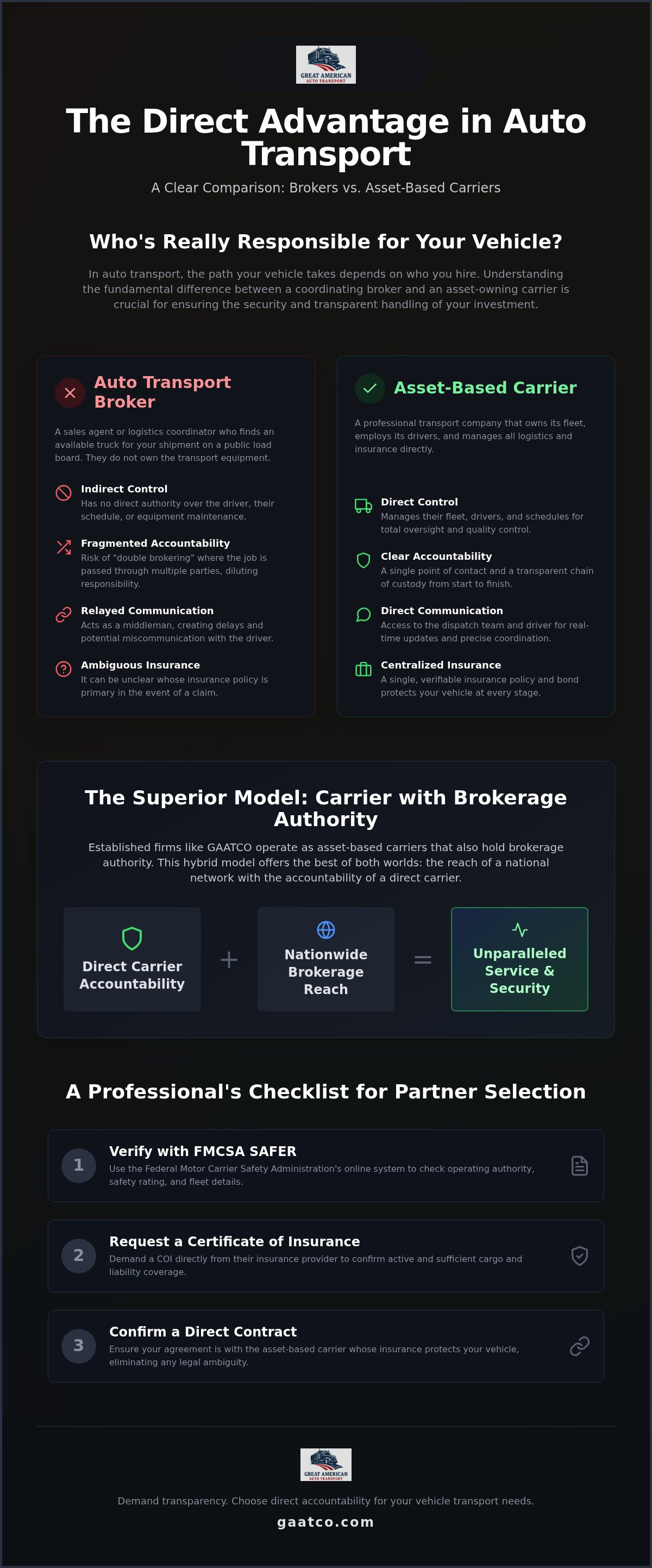
An Auto transport broker functions as a specialized sales agent. Their primary value lies in their ability to scan the national market to find a truck for a specific route. They offer expansive geographic reach, yet they often lack direct control over a driver’s specific schedule or equipment maintenance. A significant concern in this model is "double brokering," where a shipment is passed between multiple intermediaries. This dilution of responsibility can lead to confusing communication and a lack of accountability if issues arise during transit.
The Asset-Based Carrier: Direct Control
Asset-based carriers represent the physical backbone of the industry. They own the specialized equipment required for secure transit, ranging from standard multi-car open-air haulers to fully protected enclosed units. An asset-based carrier is a company that maintains its own fleet, DOT authority, and insurance policies. When you book directly, your contract is with the professionals actually handling the keys. This arrangement eliminates the middleman layer, allowing for direct communication with the dispatch team and the driver. It ensures that the safety protocols promised at the time of booking are the exact standards practiced during the journey. By choosing this path, clients gain a transparent view of the logistics process, which is a hallmark of elite service in a complex market.
The Advantages of Booking Directly with a Vehicle Carrier
Accountability serves as the cornerstone of any premium service. When evaluating the pros and cons of booking vehicle transport directly with a carrier, the most immediate benefit is the elimination of the intermediary. This structural shift creates a direct line of responsibility between the asset owner and the transport provider. By removing the broker, you eliminate the additional commission often hidden within a quote. This results in transparent, all-inclusive pricing where every dollar contributes directly to the specialized labor and equipment required for your shipment.
Direct engagement also streamlines the insurance process. In the rare event of a claim, you deal with a single company from pickup to delivery. There's no ambiguity regarding whose policy is active or which entity holds the bond. This centralized liability provides a level of financial security that fragmented brokerage models simply cannot match. If you require a detailed assessment for a high-value shipment, you may request a personalized consultation to discuss your specific requirements.
Logistical Transparency and Real-Time Coordination
Booking directly removes the "telephone game" that often occurs when a broker must relay messages between a client and an independent driver. You gain access to the dispatch team and the driver, allowing for real-time updates and precise coordination. This direct link is vital for managing expedited shipping surcharges. Because carriers control their own fleets, they can provide firm, guaranteed windows rather than the broad estimates typically offered by sales agents. You receive peace of mind knowing exactly who is behind the wheel and whose insurance covers your vehicle at every mile.
Bespoke Handling for High-Value and Military Transport
Certain shipments demand a level of expertise that goes beyond standard logistics. For instance, Military Vehicle Shipping requires strict adherence to base access protocols. Brokers often overlook these nuances, leading to delays at the gate. A direct carrier understands these requirements and ensures the driver possesses the necessary credentials for seamless entry.
Similarly, Classic Car Transport necessitates specialized equipment and handling techniques. Direct carriers maintain their own enclosed trailers and hydraulic lift gates, ensuring that low-clearance vehicles are loaded with surgical precision. We also maintain specialized winches and equipment for inoperable vehicle transport, providing a comprehensive solution for assets that cannot move under their own power. This dedicated focus on specialized cargo ensures that your investment receives the meticulous care it deserves.
Potential Drawbacks and Geographic Limitations
Establishing a complete perspective on the pros and cons of booking vehicle transport directly with a carrier requires an objective analysis of the logistical constraints inherent in asset-based shipping. While the direct model offers superior accountability, it is subject to the physical realities of fleet management. One primary challenge involves geographic reach. A single carrier, regardless of its reputation, cannot maintain an active presence in every remote corner of the United States simultaneously.
Major metropolitan hubs such as Dallas and San Diego benefit from high route density. This allows for consistent scheduling and frequent departures. However, transport to or from rural locations often presents a hurdle for direct carriers who must maintain profitability through optimized loads. Small carriers may lack the infrastructure to service these outliers without significant lead times, making them less ideal for clients in isolated regions.
The Challenge of Route Density
High-traffic corridors, such as the route from New York to Miami, enjoy high carrier availability and competitive scheduling. In contrast, rural shipments lack the volume necessary to fill a multi-car trailer quickly. GAATCO leverages over 20 years of industry experience to navigate these complexities. We utilize sophisticated route planning to minimize downtime for clients in less-traveled regions, ensuring that even complex logistical paths remain efficient and reliable.
Managing Scheduling and Flexibility
There's often a trade-off between the cost-efficiency of a standard route and the urgent need for expedited pickup. Dealerships frequently require shortened delivery windows to maintain inventory flow; this demand tests the limits of any physical fleet. While direct carriers offer more control, they are bound by the physical constraints of their fleet's current location. In a "truck down" scenario involving mechanical failure, an established firm with a robust infrastructure can re-route assets more effectively. This provides a layer of reliability that independent, single-truck operators simply cannot offer, ensuring your vehicle stays on schedule despite unforeseen mechanical challenges.
The Hybrid Advantage: Why Established Firms Offer the Best of Both Worlds
The decision-making process regarding the pros and cons of booking vehicle transport directly with a carrier often culminates in a search for a partner who offers both absolute accountability and logistical resilience. While a single carrier may be limited by its fleet's physical location, a "Carrier with Brokerage Authority" removes these constraints. This hybrid status allows an established firm to maintain the direct oversight of an asset-based provider while utilizing a secondary, rigorously vetted network to bridge any geographic gaps. It's a model that prioritizes the client's timeline over the physical limitations of a single truck.
This approach ensures that your high-value asset is never "stuck" if a primary vehicle encounters a delay. By operating as both the carrier and the coordinator, a firm like GAATCO maintains a single point of contact for the client, eliminating the fragmented communication that plagues traditional brokerage. You receive the security of a direct relationship backed by the contingency options of a national infrastructure. If you're ready to secure a transport solution that balances reach with reliability, you can consult with the experts at GAATCO to finalize your logistics.
Combining Direct Control with National Reach
GAATCO utilizes its own specialized fleet for core routes between major hubs, ensuring that our internal safety standards are met on every mile. For more remote destinations, we extend our reach through a partner network that has been vetted with the same scrutiny we apply to our own drivers. This ensures that Door-to-Door Auto Shipping remains a seamless experience, regardless of the destination's complexity. We maintain transparent pricing across this entire network, ensuring that you aren't subjected to the hidden markups or sudden fee increases common with digital-only intermediaries.
Mitigating Risk through Professional Oversight
An established firm's reputation is its most valuable asset, built over decades of successful deliveries. We apply a "white-glove" standard to every shipment, treating a standard sedan with the same meticulous care reserved for luxury collectibles. GAATCO's 20-year history provides a level of operational stability that "digital-only" brokers simply cannot match. We don't just post your vehicle on a load board and hope for the best. Instead, we manage the entire lifecycle of the transport, providing a level of professional oversight that treats your vehicle as our own priority. This commitment to core operational values serves as a non-negotiable pillar of our service, ensuring a consistent, elite customer experience every time.
A Professional Framework for Selecting Your Transport Partner
Selecting the right partner is the final, most critical step in evaluating the pros and cons of booking vehicle transport directly with a carrier. This process requires a systematic approach to due diligence that moves beyond surface-level reviews or price comparisons. A professional firm welcomes this scrutiny, as it distinguishes established assets from less reliable intermediaries. Your first priority should be the verification of the company's Motor Carrier (MC) and Department of Transportation (DOT) numbers through the FMCSA's SAFER system. This database provides a transparent record of a company's safety rating and operating authority, allowing you to confirm they're licensed to move your specific type of cargo.
Once credentials are confirmed, you must analyze the company's "Terms and Conditions" with a meticulous eye. Look specifically for hidden fees or non-refundable deposits. Legitimate carriers typically don't require an upfront "booking fee" before a truck is assigned. Instead, they favor transparent pricing models where costs are clearly articulated from the start. Finally, evaluate the level of professional communication. A seasoned expert doesn't just provide a price; they offer a logistical strategy that accounts for the nuances of your specific route and vehicle type.
Verifying Credentials and Insurance Coverage
There's a significant difference between basic liability insurance and comprehensive cargo insurance. While liability is a legal requirement for the carrier, cargo insurance is what actually protects your vehicle against damage during transit. This is especially vital for Enclosed Car Transport, where high-value assets require higher coverage limits. You should always request a Certificate of Insurance (COI) directly from the provider. A professional firm will provide a document that lists their insurance agent's contact information, allowing you to verify that the policy is active and the cargo limits are sufficient for your vehicle's value. This step is essential to spot "fly-by-night" entities that may lack the financial backing to handle a significant claim.
Critical Questions for Your Logistics Advisor
Before finalizing your decision, engage with the company's advisors to gauge their industry expertise. Ask about their specific protocols for luxury, classic, or military vehicles. For example, inquire about their base access credentials or the specific equipment used for inoperable vehicle transport. A carrier that owns its fleet can answer these technical questions with precision, whereas a broker may provide vague or generalized responses. If the company cannot explain their loading procedures or driver vetting process in detail, they likely lack the direct control you require. When you're ready to partner with a team that values your asset as much as you do, you can Request a Quote to begin your customized transport plan.
Securing Your Asset with Professional Oversight
Choosing the right logistics path requires a careful balance between direct accountability and operational flexibility. By weighing the pros and cons of booking vehicle transport directly with a carrier, you can move past the aggressive sales tactics of the brokerage market and prioritize the safety of your high-value investment. A hybrid model, which combines the direct control of an asset-based fleet with the reach of a vetted partner network, offers the most resilient solution for modern transport needs.
GAATCO provides this stability through over 20 years of specialized logistics expertise. We ensure every shipment meets our non-negotiable standards for safety and reliability. As a licensed, bonded, and fully insured provider, we offer A+ professional vetting for all partner carriers to maintain a consistent, elite experience. You don't have to handle the complexities of transport alone. Experience the GAATCO Difference: Request Your Professional Transport Quote and secure your vehicle's journey with confidence.
Frequently Asked Questions
Is it always cheaper to book directly with a car carrier?
While booking directly removes the intermediary's commission, it isn't always the lowest numerical price. Direct carriers base their fees on operational costs like fuel surcharges and equipment maintenance rather than market speculation. This often leads to more stable, all-inclusive quotes. You avoid the hidden markups that brokers apply to secure their profit margin, ensuring that your investment goes entirely toward the specialized labor and safety protocols required for secure transit.
How can I tell if a company is a broker or a carrier?
You can verify a company's status by checking their Motor Carrier (MC) and DOT numbers through the FMCSA's SAFER system. A legitimate carrier'll be listed with Authorized For Hire status and will have active insurance on file. Brokers are listed as Property or Broker and don't own the physical trucks. Analyzing the pros and cons of booking vehicle transport directly with a carrier begins with this fundamental verification of their asset-based authority.
What happens if my vehicle is damaged during transport with a direct carrier?
If damage occurs during transit with a direct carrier, you deal directly with their internal claims department. You must document any issues on the Bill of Lading at the time of delivery. Because there's no broker involved, the liability chain is clear and unambiguous. The carrier's cargo insurance policy covers the repair costs, provided the damage is noted during the final inspection. This direct accountability is a significant advantage over fragmented brokerage models.
Do direct carriers offer door-to-door delivery in major cities like Houston or Seattle?
Yes, professional carriers provide door-to-door auto shipping in major metropolitan hubs like Houston, Seattle, and Dallas. They navigate local zoning laws to deliver as close to your residence as safely possible. In dense urban areas like New York or San Francisco, the driver may coordinate a nearby meeting point if narrow streets prohibit a large multi-car trailer. This service ensures your vehicle remains under the carrier's direct supervision from the initial pickup to the final drop-off.
Can a direct carrier handle my military PCS move to a base?
A direct carrier with specialized experience can certainly handle military vehicle shipping for a PCS move. Unlike brokers who may assign a driver without proper credentials, an established firm like GAATCO ensures their drivers have the necessary identification for base access. This prevents logistical delays at the gate. We understand the unique requirements of military personnel and provide the reliable, door-to-door solutions needed during a high-stakes relocation to bases near cities like San Diego or Nashville.
What are the specific insurance requirements I should look for in a carrier?
You should look for a carrier that maintains substantial cargo insurance, which is distinct from basic liability coverage. While liability is a legal requirement, cargo insurance protects your vehicle against damage during transport. Request a Certificate of Insurance to verify the coverage limits, especially for enclosed car transport. A professional carrier will have at least $750,000 in liability, though many elite firms carry significantly more to protect high-value assets during their journey across the United States.
Why do some carriers also have brokerage authority?
Understanding the pros and cons of booking vehicle transport directly with a carrier often leads to the discovery of hybrid models. Some carriers maintain brokerage authority to ensure clients have national coverage even in remote regions. This allows a firm to use its own fleet for core routes between cities like Atlanta and Miami while utilizing a vetted partner network for rural areas. This strategy prevents delays due to physical fleet limitations in less-traveled corridors.
How far in advance should I book with a direct carrier for a classic car?
It's best to book classic car transport at least two to four weeks in advance. Early scheduling ensures your vehicle secures a spot on a preferred enclosed route with limited capacity. When considering the pros and cons of booking vehicle transport directly with a carrier, remember that direct providers need time to optimize their fleet's flow. Early booking allows us to coordinate the specialized handling and lift-gate equipment required for low-clearance vintage automobiles.


