While many providers treat vehicle transport as a simple commodity, the reality is that 74% of transport delays in 2025 were caused by a fundamental lack of integrated logistics. You shouldn't have to settle for a car delivery service that operates with the frustrating uncertainty of a legacy courier. You deserve a partner who views your vehicle through the same lens of precision and safety that governs private aviation. It's understandable to feel uneasy when handing over the keys to a high-value asset, especially when faced with the industry's history of hidden surcharges and vague delivery timelines.
This definitive guide will show you how to secure a seamless, door-to-door experience that prioritizes the integrity of your investment above all else. We'll detail the essential benchmarks for bespoke vehicle logistics in 2026, ensuring you have the clarity and peace of mind required for national transport. From rigorous insurance vetting to the implementation of real-time communication protocols, we provide the roadmap for a professional journey that's as refined as the vehicle itself.
Key Takeaways
- Understand the evolution of vehicle logistics from terminal-based shipping to a sophisticated, door-to-door car delivery service designed for modern efficiency.
- Learn how to evaluate the structural differences between open and enclosed transport to determine the optimal level of protection for your high-value asset.
- Master the intricacies of seamless delivery, including how to navigate logistical challenges such as residential accessibility and final inspections.
- Discover the meticulous preparation steps and documentation required to ensure a secure and professional transit from origin to destination.
- Identify the critical importance of transparent, fixed-rate pricing and established expertise when selecting a partner for national vehicle transport.
What Defines a Professional Car Delivery Service?
Professional vehicle transport is a sophisticated, managed logistics solution designed to meet the rigorous demands of individual collectors and corporate entities. It's no longer merely about moving a machine from one point to another. Instead, a modern car delivery service functions as a dedicated partner that preserves the integrity of a high-value asset. This process involves a seamless coordination of licensed, insured, and thoroughly vetted carriers to ensure every transit meets international safety standards.
The industry has moved away from the outdated terminal-to-terminal model. In that older system, vehicles often sat in unsecured lots for days at a time. Today, the standard is door-to-door delivery. This transition minimizes handling and provides a bespoke experience where the vehicle remains under constant supervision. To understand how these arrangements are secured, one should investigate what is an auto transport broker? because these professionals manage the complex FMCSA regulatory requirements that govern the industry.
The Evolution of National Auto Transport
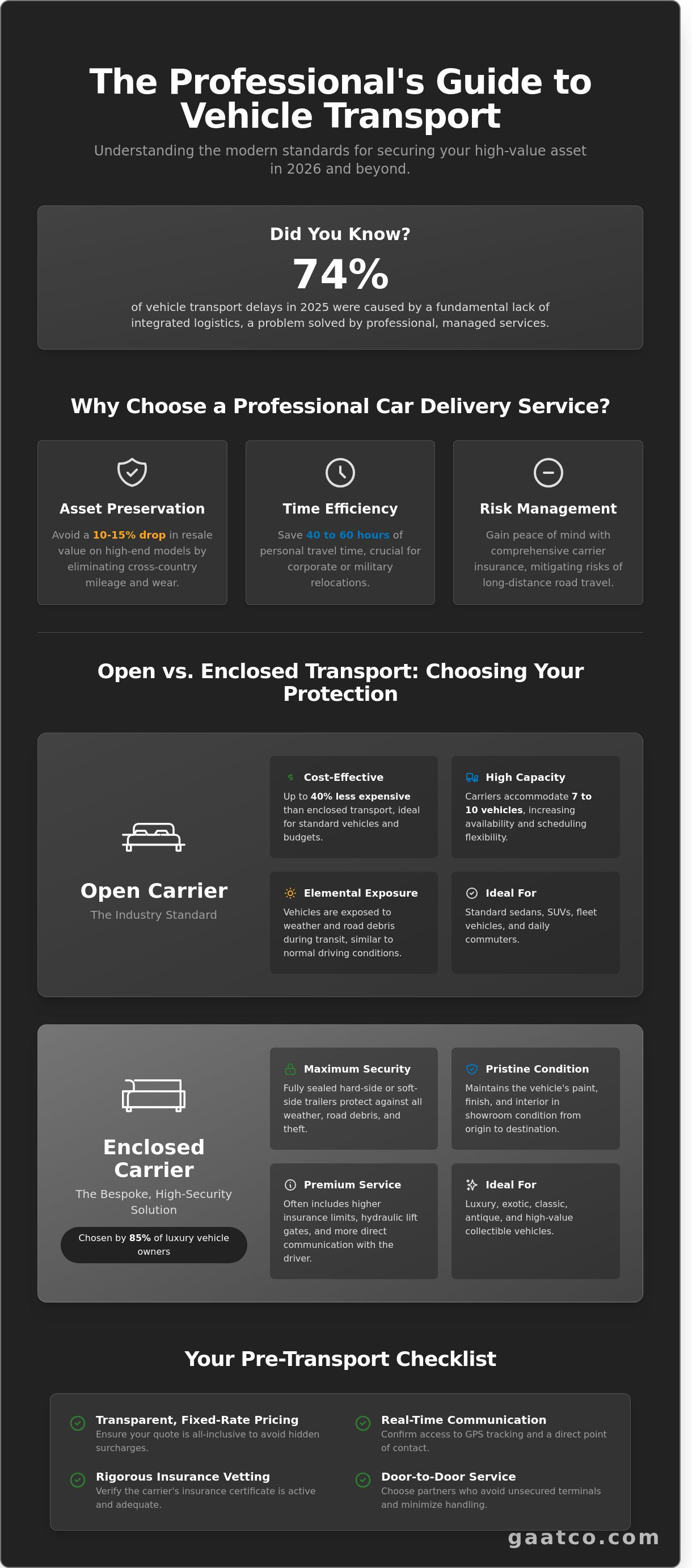
Digital logistics platforms have revolutionized how we view transparency. By 2026, real-time GPS tracking and instant communication have become baseline expectations rather than luxury add-ons. Clients now demand 100% visibility throughout the journey. Market data from 2024 shows that 85% of luxury vehicle owners now opt for premium service tiers, such as enclosed transport, to protect their investments from environmental hazards. These tiers offer a level of exclusivity and security that standard open-carrier options cannot match.
Core Benefits of Outsourcing Vehicle Relocation
Outsourcing vehicle transport is a strategic decision that mitigates significant wear and tear. Driving a car across the country adds hundreds of miles to the odometer; this can trigger a 10% to 15% drop in resale value for certain high-end models. Professional hauling eliminates this depreciation. It's also a matter of safety. Professional carriers utilize specialized equipment to secure vehicles, removing the risks associated with long-distance road travel and driver fatigue.
- Time Efficiency: For corporate relocations or military PCS moves, outsourcing saves approximately 40 to 60 hours of travel time.
- Asset Preservation: Enclosed trailers maintain the pristine condition of the paint and interior.
- Risk Management: Comprehensive insurance coverage provided by a professional car delivery service offers peace of mind that personal insurance often lacks during transit.
A logistics partner handles the intricate details. They manage the scheduling, verify carrier credentials, and provide a single point of contact. This approach allows the owner to focus on their move while the experts handle the machinery. It's a relationship built on trust and technical precision.
Open vs. Enclosed Transport: Choosing the Right Protection
Selecting the appropriate transport method requires a calculated assessment of your vehicle's value and your personal risk tolerance. The structural difference between these two options is fundamental. Open-air trailers use a skeletal steel frame, while enclosed trailers provide a fully sealed environment. Each method serves a distinct purpose within the logistics ecosystem, balancing the need for efficiency with the requirement for preservation.
Open Carrier Transport: The Industry Standard
Open carriers are the primary workhorse of the automotive logistics sector. These multi-car trailers typically accommodate 7 to 10 vehicles, which allows operators to distribute fuel and labor costs across multiple units. This efficiency translates to a lower price point for the consumer, often costing 40% less than enclosed alternatives. This method is the preferred choice for 2024 fleet liquidations and everyday commuter vehicles. Standard safety protocols involve securing the wheels with industrial-grade nylon straps or chains to prevent lateral movement. For additional peace of mind, owners should review the consumer protection guidelines provided by the FMCSA to understand their rights during interstate transit.
Enclosed Transport: The Bespoke Solution
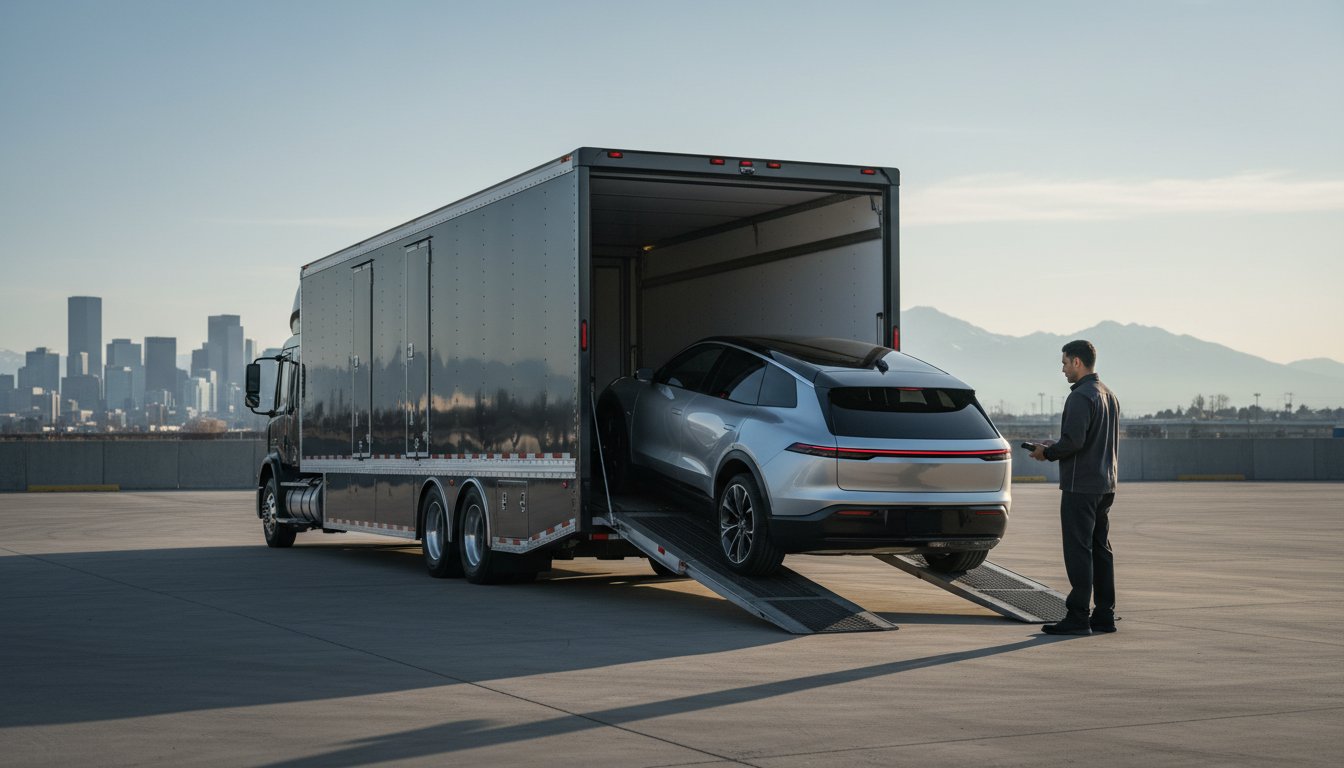
For high-value assets, enclosed transport offers a level of security that mirrors the exclusivity of private aviation. You must choose between hard-side trailers, which feature solid aluminum or composite walls, and soft-side trailers that use heavy-duty vinyl curtains. Hard-side containers provide the most robust defense against road debris and inclement weather. Specialized equipment is a hallmark of this service. Hydraulic lift gates are essential for vehicles with less than 5 inches of ground clearance, as they keep the car level during loading. This prevents the undercarriage damage often associated with traditional ramps. A premium car delivery service using enclosed trailers typically carries enhanced insurance limits, often exceeding $1,000,000 in cargo coverage. This ensures that classic or exotic assets are protected against even the most improbable contingencies.
The choice ultimately hinges on the environmental factors of the route and the specific needs of the vehicle. If you're moving a vehicle through regions prone to seasonal hail or heavy salt spray, the additional 50% investment in an enclosed trailer is a logical insurance policy. Our team understands that every asset requires a tailored approach to ensure a seamless transition between locations. By aligning your budget with the technical requirements of your vehicle, you can secure a car delivery service that delivers both value and security.
The Logistics of Seamless Door-to-Door Delivery
Selecting a premium car delivery service involves more than a simple transaction; it's a coordinated logistical operation that prioritizes the safety of your asset. The process begins with a comprehensive quote based on current fuel indices and route density. Once the contract is initialized, the journey moves from the initial scheduling to a meticulous final inspection at the destination. This seamless flow depends on clear communication and a deep understanding of transport regulations.
Accessibility is a primary consideration for residential deliveries. Large multi-car carriers, often stretching 80 feet in length, cannot always maneuver through narrow suburban streets or under low-hanging trees. In approximately 15% of residential cases, drivers must coordinate a meeting at a nearby staging area, such as a wide commercial parking lot. This ensures the vehicle is loaded or unloaded on level ground without risking property damage or violating local zoning ordinances.
The Bill of Lading (BOL) serves as the foundational document of the delivery contract. It's a legally binding record that captures the vehicle's exact condition at the point of origin. Our protocol requires a detailed walk-around where every pre-existing mark is noted. This document protects both the client and the carrier, acting as the definitive reference point should any discrepancies arise during the final handover.
For time-sensitive requirements, expedited shipping surcharges provide a solution for urgent relocation. These fees typically range from 20% to 45% above standard rates. This premium doesn't just buy speed; it secures priority placement on a trailer and often bypasses the standard consolidation wait times that can add days to a journey.
Vetting Carriers for Safety and Compliance
Safety remains a non-negotiable pillar of our operational philosophy. We verify that every transport partner maintains active DOT and FMCSA licensing. Clients should consult the FMCSA consumer advisory on auto transporters to identify the hallmarks of a legitimate operator. It's vital to distinguish between a broker’s $75,000 surety bond and a carrier’s cargo insurance, which should offer at least $250,000 in coverage for open transport and significantly more for enclosed trailers. We analyze historical performance data to ensure our partners maintain a safety rating above the 90th percentile.
Navigating the Pickup and Delivery Windows
Guaranteed dates are rare in the logistics industry because 5% of all transcontinental shipments face delays due to weather or infrastructure issues. Instead, we utilize three-day pickup windows to account for these variables. Our communication protocol ensures the driver contacts the client 24 hours before arrival, with a final confirmation two hours prior to the meeting. During the final delivery inspection, it's essential to compare the vehicle against the original BOL. We recommend performing this check in daylight to ensure the 100% accuracy of the condition report before the final sign-off.
Preparing Your Vehicle for a Professional Move
A meticulous approach to vehicle preparation ensures a hassle-free experience, mirroring the precision required in bespoke aviation logistics. We view the transit of a high-value asset as a coordinated operation where every detail is paramount. Before the carrier arrives, you must gather essential documentation. This includes the vehicle registration, proof of insurance, and a valid form of identification. Having these documents ready prevents 15% of common delays during the initial handover process.
Ensuring mechanical integrity is equally vital for a successful move. The car delivery service requires the vehicle to be in operable condition unless you've specifically booked a non-running transport. A functional braking system and steering mechanism are non-negotiable for safe loading. We recommend a professional mechanical review at least 48 hours before the scheduled pickup to confirm the vehicle starts reliably and maintains its structural integrity under transit conditions.
The "clean car" rule is a standard industry protocol that facilitates a proper pre-ship inspection. A layer of dust or road grime can easily obscure minor imperfections. A thorough wash allows the carrier to document the vehicle's exact state with total clarity. This transparency protects your investment and ensures that the Bill of Lading (BOL) serves as an accurate record of the vehicle’s condition at the point of origin.
The Pre-Transport Inspection Checklist
Digital evidence remains your most effective safeguard. You should capture at least 15 high-resolution photos of the exterior, including the undercarriage and roof, along with detailed shots of the interior upholstery. If you notice existing chips or mechanical quirks, it's vital the driver notes them explicitly on the BOL. You should also remove all personal items and aftermarket accessories, such as detachable GPS units or roof racks. Insurance providers typically exclude coverage for personal belongings left inside the cabin, which can lead to significant liability gaps if an incident occurs.
Technical Adjustments for Transit
Safety protocols dictate that the fuel level stays at approximately 1/4 tank. This specific volume minimizes fire risks while reducing the overall weight of the transport, which is critical for carrier compliance with Department of Transportation weight limits. You'll need to deactivate all toll tags and alarm systems. Active alarms can drain a battery during a cross-country haul, while toll tags often trigger incorrectly as the trailer passes through electronic gates. Check tire pressure and inspect for fluid leaks before the carrier arrives. A leak that drips onto a vehicle loaded below yours can cause damage that's difficult to remediate. For a truly seamless car delivery service, these technical details must be managed with the same rigor we apply to flight manifests.
Why GAATCO is the Trusted Partner for National Transport
GAATCO has refined the complexities of high-stakes vehicle logistics since our founding in 2004. We apply the same meticulous precision required for private aviation to every car delivery service we facilitate. Our team understands that moving a vehicle isn't just about transport; it's about protecting a significant financial and emotional investment. We've spent over 20 years building a network that prioritizes safety and punctuality as non-negotiable pillars of our operation.
We've eliminated the typical frustrations of the transport industry by offering transparent, fixed-rate pricing. You won't encounter hidden fuel surcharges or last-minute administrative fees. The price we quote is the final price you pay. This transparency is backed by our rigorous carrier vetting process. Only the top 5% of carriers in the United States meet our internal benchmarks for safety, equipment maintenance, and driver experience. We verify every DOT safety rating and insurance certificate manually to ensure your vehicle is in the safest hands available.
Our logistics experts design bespoke solutions for diverse and demanding requirements. We assist military families during PCS moves with 100% compliance with Department of Defense relocation timelines. Classic car collectors trust us for climate-controlled transport that preserves the integrity of vintage components and original paintwork. Dealerships utilize our specialized services to move inventory across state lines within 48 to 72 hours, maintaining a seamless flow of stock for their showrooms.
A Dedicated Approach to Client Relations
Communication is the foundation of our service. You'll have direct access to a logistics expert who manages the entire journey. We don't use automated call centers; instead, you're paired with a professional who understands the nuances of your specific route. Your advisor provides real-time status updates every 24 hours, ensuring you're informed at every stage. We build transport plans that respect the unique requirements of your vehicle, whether it's a low-clearance sports car or a luxury SUV.
Security and Excellence as Standard
Safety is the core of the GAATCO experience. We provide comprehensive insurance coverage that starts at $500,000 for open transport and reaches $2,000,000 for enclosed shipments. These figures significantly exceed the $100,000 industry minimum. Our team also manages the logistics for inoperable or oversized vehicles using specialized hydraulic lift gates and heavy-duty winches. This attention to detail ensures a seamless transition from pickup to delivery.
Elevating Your Vehicle Logistics Strategy for 2026
Securing a premier car delivery service requires more than just a simple booking. It demands a partnership with a logistics expert who understands the nuances of enclosed transport and the precision of door-to-door delivery. As you navigate the complexities of vehicle relocation, the distinction between standard shipping and a bespoke transit experience becomes clear. GAATCO brings over 20 years of industry experience to every transport, ensuring your asset is handled with the same care as a private aircraft.
Our network consists exclusively of A+ rated licensed and insured carriers, providing a foundation of safety that's non-negotiable. Whether you require our specialized military division for a strategic relocation or our classic car division for a rare investment, our team manages every detail. We've refined our processes to eliminate the stress of vehicle movement. This allows you to focus on your destination while we manage the complex machinery of transport.
The transition to your new location should be seamless and sophisticated. Trust a partner that views logistics as an art form rather than a mere transaction. Request Your Bespoke Auto Transport Quote today and experience the difference of elite care. We look forward to moving you toward your next chapter with confidence.
Frequently Asked Questions
How much does a professional car delivery service cost in 2026?
In 2026, a premium car delivery service typically commands a fee between $1.10 and $1.70 per mile for standard open transport. For a 2,500-mile journey, clients should anticipate a bespoke quote ranging from $2,750 to $4,250. These rates reflect the rising operational costs of global logistics and the specialized equipment required for secure transit. Luxury or enclosed options often require an additional 40% premium to ensure maximum protection for the asset.
Is my vehicle insured while it is on the transport trailer?
Every reputable carrier maintains a minimum of $1,000,000 in public liability insurance and $100,000 in cargo insurance to protect your vehicle. We ensure that every asset is covered under the carrier's primary policy throughout the duration of the transit. Before the journey begins, owners receive a copy of the insurance certificate for their records. This comprehensive coverage provides peace of mind, although we recommend verifying your personal policy's stance on long-distance transport.
Can I leave personal items inside my car during delivery?
Transport regulations generally prohibit personal items, though most carriers permit up to 100 pounds of goods secured within the trunk. These items aren't covered by the carrier's insurance policy, and excess weight can lead to fines of $500 or more at Department of Transportation weigh stations. Keeping the cabin clear ensures a seamless inspection process during pickup. It also prevents potential damage to the interior during the motion of the transport trailer.
How long does it typically take to ship a car across the country?
A cross-country journey of 2,800 miles typically requires between 7 and 10 days for completion. Drivers are limited by federal law to 11 hours of driving within a 14-hour window, which dictates the pace of the logistics chain. While weather and traffic can cause minor adjustments, a dedicated schedule is provided at the outset. This timeline ensures the safety of the driver and the integrity of the vehicle throughout the transit.
What is the difference between a broker and a carrier in auto transport?
A broker acts as a logistics coordinator who identifies the best route and price, while a carrier owns the fleet and performs the physical transport. Approximately 95% of car delivery service transactions begin with a broker who utilizes a network of over 15,000 vetted carriers. The broker manages the administrative complexities and ensures compliance with safety standards. Meanwhile, the carrier focuses on the technical execution and the physical safety of the vehicle.
Do I need to be present for the pickup and delivery of my vehicle?
You or a designated representative over the age of 18 must be present to sign the Bill of Lading at both pickup and delivery. This document serves as a formal record of the vehicle's condition, noting any existing marks or imperfections. If you can't attend, a trusted agent can manage the process to ensure the 22-point inspection is completed accurately. This step is a non-negotiable pillar of our commitment to transparency and meticulous detail.
What happens if my vehicle is damaged during the delivery process?
If damage occurs, it's essential to note the specific issues on the Bill of Lading before signing for the delivery. You should then submit a formal claim with photographic evidence to the carrier's insurance provider within 24 hours. Statistics show that less than 3% of professional transports involve damage claims, but our team assists in navigating the resolution process. This structured approach ensures that any necessary repairs are handled with the seriousness and urgency they deserve.
Can you ship a car that does not run (inoperable)?
We can transport inoperable vehicles provided they roll, steer, and brake effectively. This specialized service requires a winch and additional labor, typically adding a $150 to $300 surcharge to the standard logistics fee. It's vital to disclose the vehicle's status during the booking phase so we can deploy a carrier with the appropriate mechanical equipment. This ensures a safe and efficient loading process without compromising the vehicle's structural integrity.


