For the true connoisseur, the transit of a vintage vehicle is not merely a logistical necessity but a critical phase of its preservation. You have likely invested significant time and resources into maintaining the flawless finish and mechanical integrity of your automotive legacy, which makes the prospect of transport a source of understandable concern. The fear of cosmetic damage from road debris or the anxiety of a mechanical complication during the loading process can weigh heavily on any collector. Masterfully preparing a classic car for enclosed transport requires a disciplined approach that transcends basic maintenance.
We recognize that your vehicle represents a unique intersection of heritage and high-stakes value. This guide provides the meticulous preparation protocols required to ensure your vintage or exotic vehicle remains pristine throughout its journey. By following these professional standards, you will gain a comprehensive understanding of the logistical nuances involved in high-end shipping. We will examine the essential steps for thorough condition documentation, the mechanical requirements for secure transit, and the specific insurance liabilities that every owner must verify to ensure complete peace of mind.
Key Takeaways
- Understand the essential protocols for preparing a classic car for enclosed transport to safeguard its pristine condition and mechanical health.
- Learn how the "Clean to Inspect" rule facilitates a precise condition report and why specialized fluid management is a non-negotiable safety requirement.
- Discover how to secure specialty components and remove personal effects to prevent internal scuffing or damage during transit.
- Master the documentation audit process to ensure your Bill of Lading serves as a robust legal shield for your automotive legacy.
- Distinguish between the protective capabilities of hard-sided versus soft-sided trailers to select the ideal sanctuary for your vehicle.
The Strategic Advantage of Enclosed Transport for Classic Vehicles
The initial phase of preparing a classic car for enclosed transport involves adopting a mindset of total preservation. For the discerning collector, a vehicle is far more than a means of conveyance; it is a historical artifact and a significant financial asset. Standard shipping methods often treat vehicles as mere cargo, but enclosed transport provides a climate-shielded, hard-sided sanctuary designed specifically for automotive legends. This specialized service ensures your vehicle remains isolated from the unpredictable variables of the open road, such as gravel, inclement weather, and oily road mist.
In the luxury transport market, the distinction between soft-sided and hard-sided trailers is vital. While soft-sided trailers offer a degree of coverage, their canvas walls can allow fine dust and moisture to permeate the interior. Hard-sided trailers, however, provide a rigid, impenetrable shell that eliminates the risk of "trailer flap" and ensures a consistent environment. This level of care is essential for maintaining the integrity of micro-surfaces and preventing the subtle micro-abrasions that occur when debris strikes a vehicle at highway speeds.
To better understand this concept, watch this helpful video:
Environmental Protection and Security
Vintage paints, particularly delicate nitrocellulose lacquers and early acrylics, are highly susceptible to environmental degradation. Enclosed transit shields these finishes from acidic rain, road salt, and harsh UV exposure, which can cause premature fading or oxidation. Beyond weather protection, a fully enclosed and locked environment offers a superior layer of security for high-value assets. This discretion is a hallmark of professional transport services, ensuring your vehicle is never exposed to prying eyes during overnight stops. Additionally, climate-controlled options mitigate the risk of condensation, which can lead to mold growth in vintage leather or corrosion in sensitive electrical components.
Specialized Handling and Equipment
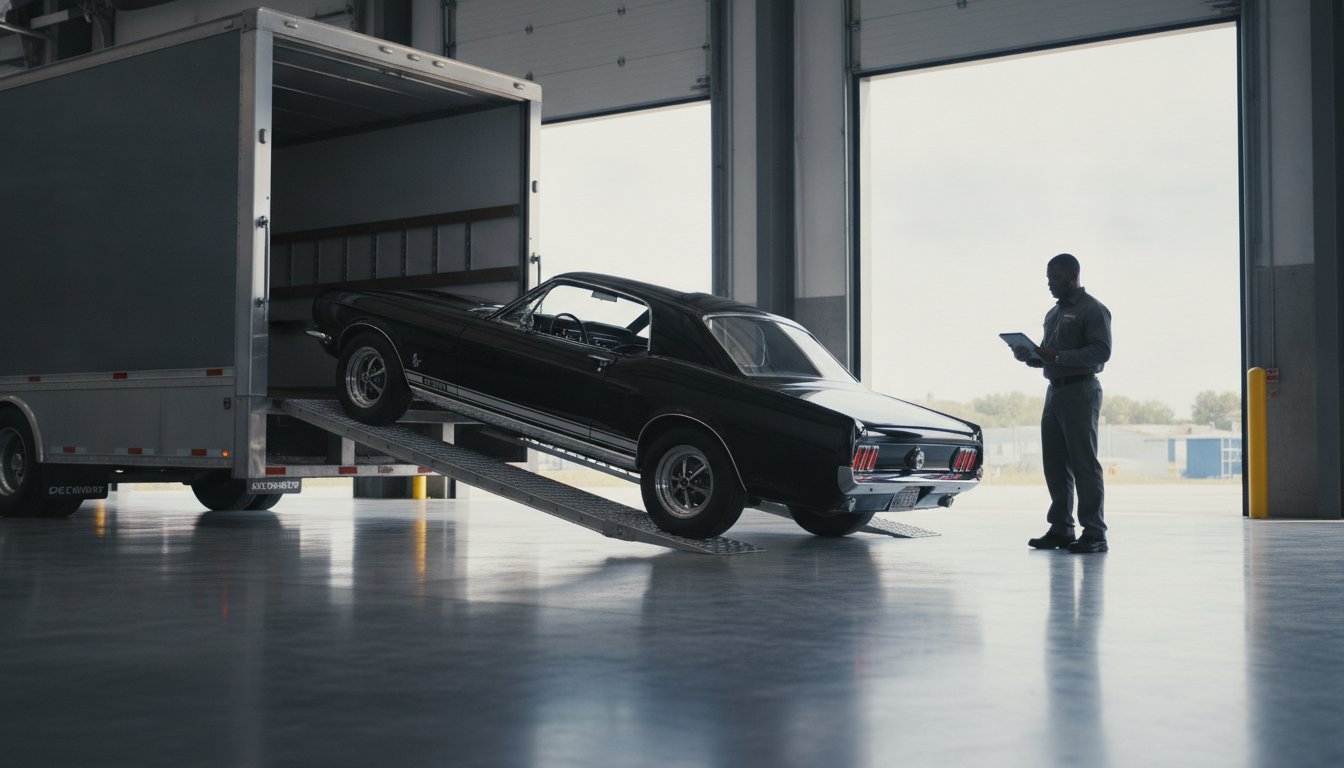
The logistical nuances of classic car transport require equipment that far exceeds standard towing capabilities. Many vintage and exotic vehicles feature exceptionally low ground clearance, making traditional loading ramps a significant hazard. Professional enclosed carriers utilize hydraulic lift gates, which keep the vehicle perfectly level during the loading process to prevent undercarriage damage. Once inside, our team employs soft-tie securement protocols. These non-abrasive straps wrap around the tires rather than the chassis, protecting original suspension components from undue stress. This meticulous attention to detail is executed by drivers who are specifically trained in the delicate art of classic car logistics, providing a level of expertise that prioritizes the safety of your automotive legacy above all else.
Mechanical and Exterior Preservation Protocols
The process of preparing a classic car for enclosed transport begins with a meticulous cleaning, though this step serves a purpose far beyond aesthetics. In the professional logistics industry, we adhere to the "Clean to Inspect" rule. A spotless exterior is a legal necessity for the Bill of Lading, as it allows both the owner and the driver to document the vehicle's condition with absolute precision. Dust, road grime, or water spots can easily mask minor stone chips or swirl marks, leading to ambiguity should a claim arise. By presenting a pristine surface, you establish a clear, undeniable baseline for the vehicle’s state at the moment of handover.
Fluid management is another critical pillar of transport safety. We recommend maintaining approximately one-quarter tank of fuel. This level provides sufficient volume for loading and unloading maneuvers while significantly reducing the overall weight of the shipment. It also minimizes the risk of fuel expansion or vapor buildup within the enclosed environment. Simultaneously, you should perform a thorough diagnostic check for active leaks. Identifying existing oil or coolant drips is vital to prevent cross-contamination within the trailer; even in a high-end environment, fluid from one vehicle must not compromise the finish of another. If you have specific concerns regarding your vehicle's mechanical condition, our team can provide a bespoke transport consultation to address your requirements.
Optimizing tire pressure is a final but essential step for securement. Tires should be inflated to the manufacturer’s recommended levels to ensure the vehicle sits correctly on its suspension during winching. Under-inflated tires can allow the vehicle to shift or bounce, potentially loosening the soft-tie downs that keep it stationary. Maintaining proper pressure ensures the securement straps remain taut and effective throughout the journey.
The Exterior Detail and Diagnostic
During your final detail, pay close attention to protruding elements that may be vulnerable to vibration. Retractable antennas should be lowered, and fixed antennas or delicate hood ornaments should be removed and stored securely. If your vehicle features a convertible top, ensure it's fully latched and that all weather stripping is pressurized. This prevents air pressure changes during transit from affecting the interior seals. These small steps are vital when preparing a classic car for enclosed transport to maintain its structural integrity.
Mechanical Readiness for Loading
While the vehicle will spend the majority of its journey stationary, it must be mechanically prepared for the loading process. Ensure the battery is fully charged and securely mounted; a dead battery during winching can complicate the loading rhythm and create unnecessary risks. You must also disable all aftermarket alarm systems. These systems are prone to being triggered by the natural motion of the trailer, which leads to battery drain and driver distraction. Finally, verify the integrity of the braking system. A functional parking brake is essential for secondary securement once the vehicle is positioned on the trailer floor.
Securing the Intangibles: Interior and Specialty Components
While the exterior defines a vehicle's silhouette, the interior is where its heritage is most palpable. Preparing a classic car for enclosed transport necessitates a thorough sweep of the cabin to maintain the vehicle's weight profile and protect original upholstery. Loose objects, regardless of their size, pose a risk of interior scuffing during the subtle shifts of transit. Even within the stable environment of a hard-sided trailer, sudden elevation changes or braking can turn a seemingly harmless item into a projectile that may damage delicate gauges or glass. We prioritize the preservation of every square inch of your cabin, from the headliner to the floorboards.
For clients utilizing our classic car transport services for seasonal relocation, it's vital to understand the logistical boundaries regarding personal cargo. Industry standards and federal regulations generally prohibit auto transporters from carrying household goods. While it's a common practice to leave up to 100 pounds of items in the trunk, these belongings are not covered by the carrier's insurance. Furthermore, excess weight can alter the vehicle's center of gravity during the loading process. To ensure the highest level of safety, we recommend that the trunk remain empty of everything except the spare tire and factory jack.
High-end finishes like Burr Walnut veneers and vintage Connolly leather require specific environmental considerations. Although enclosed trailers provide a shield against direct UV rays and road debris, temperature fluctuations can still occur during transcontinental journeys. Ensuring all windows are fully sealed and locked helps maintain a consistent micro-climate within the cabin. This small step prevents the rapid expansion or contraction of materials that often leads to the cracking of vintage wood lacquers or the drying of aged hides.
Interior Inventory and Protection
Before handover, remove all electronic accessories such as toll tags, garage door openers, and loose charging cables. These items can vibrate against the dashboard or center console, causing permanent marks on soft-touch surfaces. We also recommend the use of protective seat covers and disposable floor mats during the loading phase. These barriers provide an extra layer of security against the transfer of oils or dust, ensuring the interior remains in concours condition upon arrival.
Specialty Parts and Modifications
If your vehicle features custom spoilers, ground effects, or aftermarket mirrors, verify that they're securely fastened. Components that are designed for high-speed downforce may experience different stress patterns during transit. Additionally, provide our team with a brief, written set of starting instructions if your vehicle has a finicky vintage carburetor or a unique ignition sequence. This ensures that the driver can move the vehicle with the same level of care and precision that you would yourself. Finally, remember to disable any GPS tracking or valet modes that might interfere with the logistical flow of the journey.

The Documentation Audit: Establishing a Condition Baseline
Establishing a meticulous condition baseline is the final safeguard before your vehicle enters its secure transit environment. While previous steps focused on physical readiness, the documentation audit creates a legal and digital shield for your investment. The Bill of Lading (BOL) serves as the definitive record of your car's state at the moment of handover. When preparing a classic car for enclosed transport, you must treat the pre-load inspection as a collaborative effort between yourself and the driver. This mutual agreement ensures that every existing detail is acknowledged, leaving no room for ambiguity upon delivery.
We recommend conducting this inspection during daylight hours or under high-intensity LED lighting to ensure no detail is overlooked. Once the driver arrives, walk around the vehicle together, noting any imperfections on the BOL. Once both parties sign this document, it becomes a binding record. We suggest storing a digital scan of the signed BOL and all supporting media in a dedicated cloud-based folder. This ensures you have immediate access to your records from any device, providing an extra layer of security for your automotive legacy.
To experience our commitment to transparent documentation and professional care first-hand, you can request a quote for your upcoming shipment. Our team prioritizes clear communication to ensure your peace of mind throughout the entire process.
The Photographic Evidence Protocol
High-resolution photography should be captured from a 360-degree perspective in consistent lighting. Beyond the body panels, you should photograph the odometer, dashboard, and engine bay to verify the mechanical state before transit. It's equally vital to capture close-ups of the undercarriage and wheel wells, as these areas are often neglected in standard inspections. Ensure all images are time-stamped; this creates an indisputable chronological record of the vehicle's pre-transport condition, which is essential for any potential insurance inquiries.
Insurance Verification and Coordination
Before the trailer arrives, it's essential to review the GAATCO insurance policy limits. Professional enclosed carriers typically maintain cargo insurance ranging from $250,000 to $1,000,000 or more, which significantly exceeds the federal liability minimum of $750,000. However, you should also notify your private "Agreed Value" insurance provider of the transport dates. It's important to understand that carrier liability generally covers damage caused by transit negligence, while your comprehensive classic car policy may provide broader coverage for your vehicle's specific appraised value. Coordinating between these two entities ensures you're never under-insured during a high-stakes journey.
Entrusting Your Automotive Legacy to GAATCO
Once you've completed the rigorous protocols for preparing a classic car for enclosed transport, the final and most critical step is selecting a logistical partner who mirrors your dedication to excellence. At GAATCO, we don't simply move vehicles; we manage the specialized transit of automotive history. Our commitment to white-glove service is built upon twenty years of industry experience, providing a foundation of safety and reliability that affluent collectors and corporate clients have come to depend on. We understand that the final handover is a moment of significant trust, and we honor that by maintaining transparent communication from the initial inquiry to the final delivery.
When the trailer arrives at your door, you can expect a seamless and professional transition. Our network consists exclusively of licensed and insured carriers who specialize in high-value transport. The driver, a seasoned expert in classic car logistics, will perform a final walk-through with you to confirm the condition documented in your Bill of Lading. This is the moment where your preparation pays off. With the vehicle clean, documented, and mechanically ready, the loading process becomes a quiet, controlled operation. You'll see the precision of hydraulic liftgates and the careful application of soft-tie securement, ensuring your vehicle remains stationary and protected within its hard-sided sanctuary.
The GAATCO Professional Difference
Our approach is defined by a focus on customized outcomes rather than standardized procedures. We recognize that an air-cooled Porsche requires different considerations than a pre-war Rolls-Royce, and our team is trained to handle these nuances with discreet authority. By working with us, you're leveraging an expansive operational reach that bridges the gap between complex global standards and the personalized care of local service. It's the quiet confidence of a trusted advisor handling the logistics so you don't have to, providing the peace of mind that comes from established expertise in a niche field.
Final Steps and Booking
Transitioning from preparation to transit is a straightforward process with our dedicated support team. To begin, we recommend reviewing your customized quote for enclosed transport to ensure all specific requirements, such as climate control or liftgate service, are accurately reflected. Once your booking is confirmed, we will coordinate the precise pickup windows and delivery logistics. As the arrival date approaches at the destination, our team remains available to provide updates, ensuring that the return of your vehicle is as effortless and pristine as its departure. Our goal is a simple one: a vehicle delivered in the exact condition it was received, backed by the integrity of a team that respects your automotive legacy.
Securing the Future of Your Automotive Legacy
Mastering the protocols for preparing a classic car for enclosed transport ensures that your vehicle’s journey is as refined as its history. By adhering to the "Clean to Inspect" rule and establishing a rigorous documentation baseline, you transform a logistical necessity into a professional preservation strategy. These steps protect the mechanical integrity and aesthetic perfection of your investment; they provide a clear record that safeguards your interests from the initial handover to the final delivery.
The final element of a successful transit is the selection of a partner who values your vehicle as much as you do. With over 20 years of industry expertise and a network of licensed, fully insured carriers, GAATCO provides an A+ rated door-to-door service tailored to the needs of the discerning collector. We handle the complex operational details so you don't have to. Your automotive legacy deserves nothing less than the highest standards of safety and discretion. To begin your journey with a partner who understands the nuances of luxury logistics, Request a Specialized Enclosed Transport Quote today. We look forward to ensuring your vehicle remains pristine.
Frequently Asked Questions
Is enclosed transport worth the extra cost for a classic car?
Enclosed transport is a justifiable investment for any vehicle where preservation is the primary objective. It provides a climate-shielded environment that prevents micro-abrasions and UV damage associated with open-air shipping. While the cost is higher, the protection of original paint and delicate interiors often outweighs the price difference. It is the preferred choice for collectors who view their vehicles as historical assets rather than simple transportation.
How much gas should be in the tank for transport?
You should maintain approximately one-quarter tank of fuel when preparing a classic car for enclosed transport. This volume ensures the driver has sufficient fuel for the loading and unloading process while minimizing the total weight on the trailer. Keeping the fuel level low also reduces the risk of expansion or vapor issues within the sealed trailer environment, which is a critical safety consideration for long-distance journeys.
Can I put personal items in my classic car during shipping?
It is best to remove all personal items before shipping. Auto transport carriers aren't licensed to transport household goods, and items left in the cabin aren't covered by the carrier's insurance. While some drivers may allow up to 100 pounds of items in the trunk, these belongings can shift during transit and potentially cause interior damage. Emptying the car ensures the weight profile remains stable for secure loading.
What happens if my classic car is inoperable?
Inoperable vehicles can be transported using specialized equipment like winches. If your classic car doesn't run, you must notify us in advance so we can dispatch a trailer equipped with the necessary loading tools. There is typically an additional fee ranging from $100 to $200 for this specialized handling. This ensures the vehicle is moved safely without risking damage to the chassis or suspension components during the loading phase.
How do I document pre-existing damage correctly?
Documenting damage requires a systematic photographic and written approach. Use high-resolution photography to capture the vehicle from 360 degrees under consistent, bright lighting. Focus on the undercarriage, wheel wells, and any existing stone chips. These details must also be recorded on the Bill of Lading. This dual-layered record serves as an indisputable baseline of the vehicle's condition, which is essential for ensuring complete peace of mind upon delivery.
Does my personal car insurance cover my vehicle during transport?
Your personal insurance may provide coverage, but the carrier’s cargo insurance is the primary protection during transit. Federal regulations mandate a minimum of $750,000 in liability coverage, though professional enclosed carriers often maintain policies between $250,000 and $1,000,000. It’s wise to notify your "Agreed Value" insurance provider of the transport dates to confirm if they offer supplemental coverage while the vehicle is in a third party's care.
How long does enclosed transport usually take across the country?
Cross-country enclosed transport typically spans seven to ten days depending on the specific route and weather conditions. This timeframe accounts for the meticulous loading procedures and the steady, measured pace required to ensure the safety of high-value cargo. Our team provides regular updates throughout the journey, bridging the gap between the logistical complexities of long-distance transit and your need for reliable, predictable delivery timelines.
What is a Bill of Lading and why is it important?
The Bill of Lading is the most important legal document in the shipping process. It acts as both a receipt for the vehicle and a detailed report of its physical condition at the time of pickup. By signing this document, both you and the driver agree on the pre-transport state of the car. It is the definitive record used to verify that the vehicle has been delivered in the exact condition it was received.


