
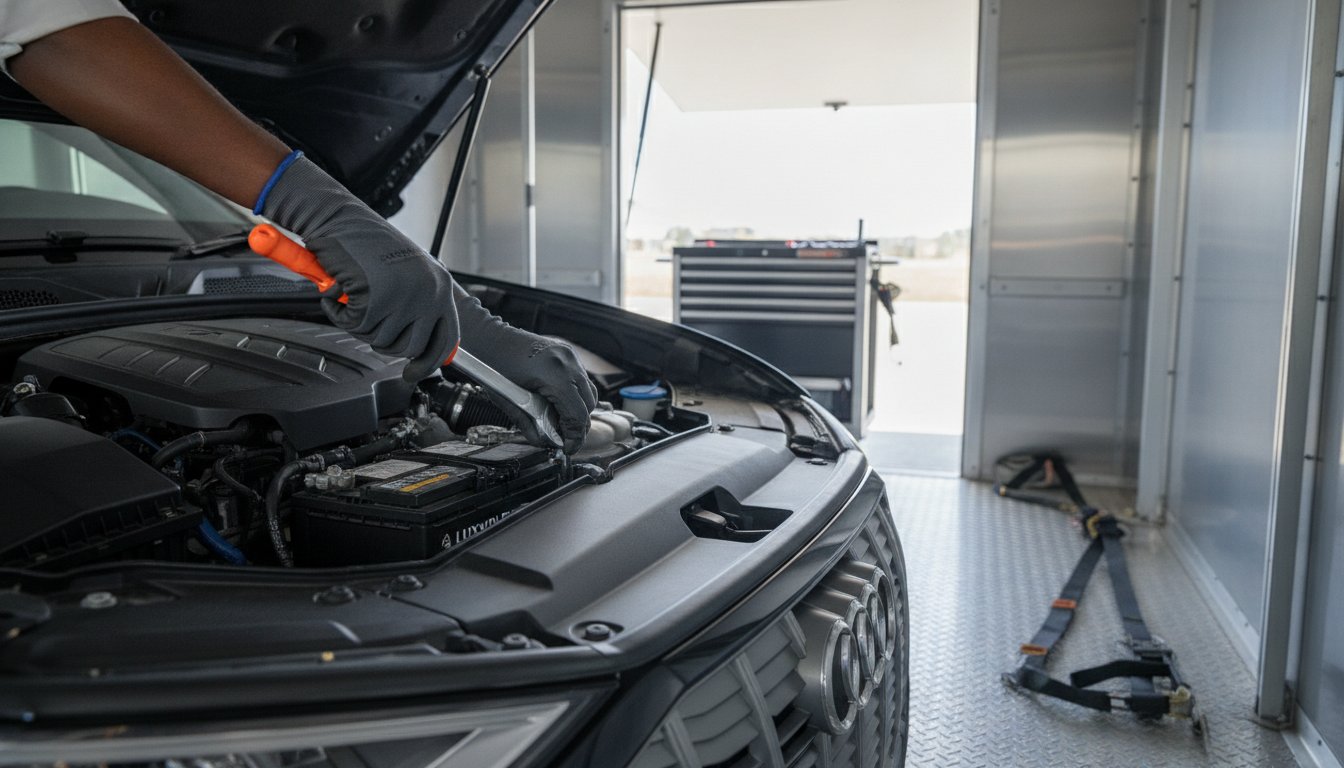
A single overlooked terminal can transform a seamless vehicle relocation into a series of expensive electronic failures and logistical delays. We recognize that for owners of high-performance or luxury vehicles, the prospect of tampering with complex electrical systems is often met with hesitation. You're likely concerned about triggered alarms mid-transit or the frustration of resetting sophisticated on-board computers upon delivery. This guide provides the technical clarity you require, detailing exactly how to disconnect a car battery for transport to ensure your vehicle remains protected and compliant with professional carrier standards.
Mastering this process is essential as we move through 2026, especially with updated safety protocols like the IMDG Code 42-24 and new battery management acts in regions such as New Jersey and California. You'll learn the precise sequence for terminal removal, the specific safety precautions for modern lithium-ion systems, and the refined techniques our experts use to maintain total electrical integrity. By following these professional protocols, you ensure your vehicle arrives at its destination in peak condition, ready for the road ahead.
Key Takeaways
- Understand the strategic necessity of circuit disconnection to prevent anti-theft alarm triggers and parasitic power drain caused by transit vibrations.
- Identify the essential insulated tools and safety protocols required to maintain the sophisticated electrical integrity of your vehicle during the preparation phase.
- Master the precise technical sequence of how to disconnect a car battery for transport, ensuring the negative terminal is prioritized to mitigate the risk of accidental short-circuiting.
- Prepare for the nuances of modern vehicle electronics by securing radio codes and protecting digital memory settings before the power source is removed.
- Learn how professional logistics specialists coordinate battery management to ensure your vehicle remains in peak operational condition upon arrival at its final destination.
The Strategic Importance of Battery Disconnection for Vehicle Transport
Disconnecting the electrical circuit of a vehicle is a fundamental preparation step that ensures the safety and efficiency of the shipping process. This procedure involves the deliberate isolation of the Automotive battery to prevent any unintended electrical activity while the car is in motion. Understanding how to disconnect a car battery for transport is not merely a technical recommendation; it is a critical safety protocol that mitigates the risk of electrical short circuits during the complex phases of loading and unloading. Many professional carriers mandate this practice for specific long-distance routes to maintain the highest operational standards for Open Car Transport and other specialized logistics.
To better understand the mechanical fundamentals of this process, please view the following instructional video:
Preventing Parasitic Drain on Multi-Car Carriers
Modern Electronic Control Units (ECUs) and sophisticated security modules are designed to remain in a state of perpetual readiness, drawing a small but consistent amount of power from the system. This phenomenon, known as parasitic draw, can be significantly exacerbated by the extreme temperature fluctuations encountered during cross-country transit. If a vehicle remains stationary on a multi-car carrier for several days, these background systems can deplete the battery charge entirely. Arriving at a destination with a non-responsive engine necessitates emergency jump-starts or the use of specialized winching equipment. These interventions not only delay the delivery process but can also cause voltage spikes that damage sensitive electrical components, ultimately compromising the seamless door-to-door experience that clients expect.
The Alarm Factor: A Logistics Perspective
The physical realities of road transport present unique challenges for modern vehicle security systems that stationary storage does not. Road undulations, bridge joints, and the natural vibrations of a heavy-duty trailer often mimic the physical sensations of a forced entry or a break-in attempt. This can activate highly sensitive motion or tilt sensors within the anti-theft system. A vehicle with an active alarm may sound its siren repeatedly across thousands of miles, leading to total battery exhaustion before the journey concludes. Such incidents create a substantial distraction for the transport professional, potentially impacting the safety of the entire load. By mastering how to disconnect a car battery for transport, you ensure that your vehicle remains a silent, secure passenger throughout its relocation.
Beyond the battery itself, disconnection serves as a preventative measure against fire hazards. In the rare event of a minor collision or extreme mechanical vibration, a live electrical system could potentially spark if a wire casing is rubbed thin. By removing the power source, you eliminate this risk entirely. This level of meticulous attention to detail is what distinguishes a professional transport preparation from a casual relocation, ensuring the integrity of your vehicle's complex electrical architecture remains intact.
Essential Tools and Safety Protocols for Battery Maintenance
Precision is the hallmark of professional vehicle maintenance. Before addressing the physical terminals, mastering the specifics of how to disconnect a car battery for transport requires more than just a wrench; it demands a commitment to a controlled environment. Adhering to Essential Tools and Safety Protocols is paramount when handling lead-acid components, as they contain corrosive sulfuric acid and can emit explosive hydrogen gas. Always perform this task in a well-ventilated area, far from any potential ignition sources or flammable materials. If you prefer a completely hands-off experience, our team provides professional transport services that prioritize these meticulous safety standards.
The "Negative First" rule stands as a non-negotiable pillar of automotive safety. By disconnecting the negative (black) terminal before the positive (red) one, you break the ground circuit. This prevents an accidental electrical arc should your tool touch a metal part of the car while loosening the positive terminal. When you follow the correct sequence for how to disconnect a car battery for transport, you protect the vehicle’s sophisticated electrical architecture from sudden voltage surges.
The Professional Toolkit for Vehicle Prep
A standard 10mm socket wrench is the most common tool required for modern battery terminals, though some European or vintage models may require 12mm or 13mm sizes. We recommend utilizing insulated tools, which feature a non-conductive coating to provide an extra layer of protection against accidental shorts. Before the vehicle is loaded, use a dedicated wire brush to remove any visible terminal corrosion. This ensures that when the battery is reconnected at its destination, the connection is clean and reliable. High-quality safety goggles and nitrile or insulated gloves are essential to protect against chemical irritants and electrical contact.
Personal Safety and Vehicle Protection
Personal preparation is as vital as the tools you select. Remove all metal jewelry, including rings and watches, as these can facilitate a dangerous electrical bridge between a live terminal and the vehicle chassis. To protect the exterior of your vehicle, consider placing a protective fender cover or a thick cloth over the paintwork to prevent accidental scratches or acid drips. Finally, ensure the vehicle is firmly in "Park" with the emergency brake fully engaged. This stability is crucial for safety during the disconnection process and provides a secure baseline for the transport professional during the loading phase. These small, disciplined steps reflect the high standards of care required for elite vehicle logistics.
Step-by-Step Guide: How to Disconnect a Car Battery for Transport
Executing the disconnection process requires a methodical approach that respects the vehicle's engineering. The first objective is to locate the power source. While many traditional vehicles house the battery within the engine bay, high-performance and luxury models frequently utilize the trunk or the area beneath the rear passenger seats to optimize weight distribution. Once identified, ensure the ignition is completely off and all electronic accessories are deactivated. This preparation is the baseline for understanding how to disconnect a car battery for transport with the precision expected of a professional logistics operation.
The Negative Terminal: Your Primary Safety Step
The negative terminal, typically marked with a minus sign (-) and a black cable, serves as the vehicle's ground. You must loosen the nut on the negative terminal clamp using your socket wrench. If the clamp is stubborn due to oxidation, a gentle lateral wiggle or the application of a dedicated terminal cleaner may be necessary. Once the clamp is free, lift it entirely off the terminal post. It's vital to tuck the cable end into a secure position where it cannot accidentally spring back. For added security during the vibrations of Enclosed Car Transport, use a heavy-duty zip tie to anchor the cable away from the battery tray. This prevents the cable from shifting back into contact during transit, a common oversight in amateur preparations.
Managing the Positive Connection
With the ground circuit safely broken, you can proceed to the positive (+) terminal, identified by a plus sign and a red cable. Follow the same loosening procedure as the negative side. After removal, the positive terminal requires immediate insulation. We recommend using specialized terminal caps or a clean, dry rag to cover the post. This secondary layer of protection is essential because even a disconnected battery can pose a risk if a conductive object bridges the gap between the posts. While some professional carriers may only require the negative terminal to be isolated, disconnecting both provides the highest level of security for long-distance transit.
The final phase involves a meticulous inspection of the battery housing. Verify that the hold-down bracket is tightened and that the battery itself is firmly seated in its tray. A battery that shifts during transport can cause structural damage to the tray or even crack the battery casing, leading to hazardous leaks. By verifying these details, you ensure the vehicle is prepared for the rigors of the road. This disciplined execution ensures that your vehicle remains a stable and safe component of the transport load, reflecting the sophisticated care we bring to every relocation. Mastering how to disconnect a car battery for transport is the final physical step before addressing the digital needs of your vehicle's on-board systems.

Managing Vehicle Electronics and Terminal Security Post-Disconnection
Completing the physical disconnection is only the first phase of professional vehicle preparation. Once you've mastered how to disconnect a car battery for transport, you must turn your attention to the digital architecture that governs your vehicle's performance and comfort. Modern luxury and high-performance cars are essentially mobile data centers; removing their primary power source triggers a series of electronic resets that require foresight to manage. If you're concerned about the technical complexities of shipping a high-value vehicle, we recommend you request a professional transport quote to ensure every detail is handled with expert care.
The Sophisticated Electronic Reset
Modern Engine Control Units (ECUs) utilize volatile memory to store "learned" data, such as fuel-trim maps and transmission shift patterns tailored to your driving style. While a standard vehicle might only lose its clock settings, a performance-tuned machine may require a brief re-learning period of several miles once power is restored at the destination. We suggest documenting your personalized settings—including seat memory positions, mirror angles, and climate control preferences—before the circuit is broken. Most importantly, verify that you have access to your vehicle's unique radio and infotainment security codes. High-end anti-theft systems will lock these units once they detect a power loss, and retrieving these codes after the fact can be a cumbersome process involving dealership verification.
Terminal Isolation Techniques for Long-Haul Shipping
The mechanical environment of Open Car Transport involves consistent vibrations that can cause unrestrained cables to shift. It's a professional best practice to use specialized terminal covers or heavy-duty rubber caps to isolate the battery posts completely. Simply moving the cable aside isn't enough; you must ensure it's physically impossible for the terminal to vibrate back into contact with the battery or the vehicle's chassis. We utilize high-tension zip ties to anchor cables to fixed points within the engine bay, ensuring they remain stationary throughout the journey.
A critical but often overlooked detail is the integrity of the battery hold-down bracket. The rigors of the road, particularly on uneven surfaces, can exert significant force on a battery. If the bracket is loose, the battery can bounce within the tray, potentially cracking the casing or damaging surrounding components. Before finalizing your preparation, verify that the battery is immovably seated. Regarding the use of "memory savers" or small internal battery backups plugged into the OBD-II port, we generally advise against them for long-distance transport. These devices are designed for short-duration maintenance and can fail or cause unexpected electrical draws during an extended relocation. By prioritizing physical security and digital documentation, you ensure your vehicle's transition is as seamless as its performance.
GAATCO’s Professional Approach to Seamless Vehicle Logistics
At GAATCO, we understand that the technical nuances of vehicle preparation are as vital as the transit itself. While the previous sections detail the precise steps for how to disconnect a car battery for transport, our role is to provide the high-level oversight that transforms these tasks into a cohesive logistics strategy. With over 20 years of refined experience across the United States, we operate as a dedicated partner for affluent and corporate clients who require a discreet, dependable service. Our team offers expert guidance to ensure your vehicle is fully prepared for Open Car Transport, maintaining a steady and measured rhythm from the initial consultation to the final delivery.
A critical distinction we address is the difference between a vehicle with a disconnected battery and one that is truly inoperable. If your vehicle is unable to start due to a mechanical failure or a completely removed power source, it requires our specialized Inoperable Vehicle Transport protocols. We utilize heavy-duty winching equipment and precise loading techniques to handle these vehicles with the same level of care as an operable unit. This attention to detail ensures that your vehicle's structural and electrical integrity remains uncompromised, regardless of its starting condition. Every carrier in our expansive network is fully licensed and insured, providing the absolute peace of mind necessary for shipping classic, military, or high-value assets.
Customized Solutions for Every Vehicle Type
We believe that luxury and classic vehicles require a bespoke approach to logistics. For owners of elite automobiles, our team often recommends Enclosed Car Transport to provide a secondary layer of protection against environmental elements. Whether you are relocating a vintage collection to San Diego or shipping a modern performance vehicle to Houston, we tailor our preparation advice to suit the specific engineering of your car. This customized focus ensures that the steps you take to manage the battery and electronics align perfectly with professional carrier standards, preventing any mid-transit complications or delays.
Requesting Your Specialized Transport Quote
Securing elite logistics should be a seamless experience. Our online quote request process is designed with transparency and professional clarity in mind. We utilize sophisticated pricing models that account for vehicle dimensions, total mileage, and your required service level without hidden fees or aggressive marketing tactics. By understanding how to disconnect a car battery for transport and partnering with a seasoned logistics advisor, you ensure a hassle-free experience that prioritizes the health of your vehicle. Precision is our standard. We invite you to experience the calm confidence that comes from twenty years of established expertise in the specialized transport industry.
Ensuring a Secure Transition for Your Vehicle
Mastering the "negative first" sequence and proper terminal isolation effectively prevents mid-transit electrical hazards and alarm disruptions. By securing your vehicle's digital settings and anti-theft codes before power is lost, you'll ensure a seamless delivery experience without the frustration of locked infotainment systems. Understanding how to disconnect a car battery for transport is a vital component of professional vehicle preparation that protects your automotive investment.
At GAATCO, we've brought over 20 years of refined logistics expertise to every shipment. Our network of fully licensed and insured carriers specializes in the delicate handling of luxury and inoperable vehicles, ensuring that your assets are managed by the industry's highest standards. We handle the complex operational realities so you don't have to. Secure your professional vehicle transport quote from GAATCO today. Trust your vehicle to a partner that values precision and reliability above all else.
Frequently Asked Questions
Do I need to disconnect my battery for a short 300-mile transport?
Disconnection is generally optional for short distances, though it remains a recommended best practice for sensitive luxury models. For a 300-mile journey, the risk of significant parasitic drain is lower than on cross-country routes. However, trailer vibrations can still trigger anti-theft sensors. We suggest consulting your advisor to determine if your specific vehicle requires this precaution to ensure it remains silent and secure during transit.
Will disconnecting the battery damage my car's computer (ECU)?
Disconnecting the battery will not cause physical damage to your Engine Control Unit, as these systems are designed to survive power cycles. You'll likely lose volatile data such as clock settings, radio presets, and "learned" driving habits. Upon delivery, the car may require a brief re-learning period of several miles to recalibrate its fuel-trim maps and transmission shift points for optimal performance.
What should I do if my car has a specialized high-voltage EV battery?
You should never attempt to disconnect a high-voltage propulsion battery in an electric or hybrid vehicle. These systems require specialized technician training and high-voltage safety gear. For transport, carriers typically only require the 12-volt auxiliary battery to be managed. Current 2026 regulations focus on the State of Charge (SoC), often requiring it to be at 30% or less for specific transport modes.
Can I leave the battery connected if I disable the alarm system manually?
Manually disabling the alarm reduces noise disruptions but doesn't prevent parasitic power draw from other on-board modules. Even with the alarm off, modern ECUs and telematics systems continue to pull current from the battery. If your vehicle will be in transit for more than a few days, professional disconnection is the only way to guarantee a healthy battery upon arrival at your destination.
How do I secure the loose battery cables so they don't move during shipping?
Use heavy-duty, non-conductive zip ties to anchor the disconnected cable ends to a fixed, non-moving part of the engine bay. It's essential to ensure the terminals cannot vibrate back into contact with the battery posts or the metal chassis. Utilizing specialized rubber terminal caps provides a secondary layer of insulation, which is a hallmark of professional preparation for high-value vehicle logistics.
Will I need tools to reconnect the battery when my car is delivered?
You'll typically need a 10mm socket wrench to reattach the terminals once your vehicle arrives. It's a prudent habit to keep a small, insulated wrench in your glove compartment for this purpose. When reconnecting, always attach the positive (red) terminal first, followed by the negative (black) ground cable. This sequence is the reverse of how to disconnect a car battery for transport and prevents accidental electrical arcs.
Does GAATCO provide tools for battery disconnection at the pickup site?
GAATCO doesn't provide mechanical tools at the pickup site, as our expertise lies in the sophisticated coordination and secure movement of your vehicle. Preparation tasks should be completed before the carrier arrives to maintain a disciplined and efficient loading schedule. This allows our team of professionals to focus on the technical security of the vehicle on the trailer rather than basic mechanical maintenance.
What happens if my battery dies during transport because it wasn't disconnected?
If a battery fails during transit, the vehicle may be reclassified as inoperable, which requires specialized equipment for unloading. This often necessitates the use of a jump-starter or a winch, both of which introduce unnecessary risks to your car's electrical system and paintwork. Learning how to disconnect a car battery for transport prevents these logistical complications and ensures your vehicle is ready to drive immediately upon delivery.


