True vehicle tracking is a sophisticated synergy of GPS precision and elite professional coordination, not just a flickering dot on a digital map. Shipping a high-value asset often brings a sense of unease, especially when communication is sparse or delivery windows remain frustratingly vague. You deserve to know the exact status of your investment without dealing with glitchy portals or waiting hours for a callback. Understanding how to track your vehicle during transport is the first step toward reclaiming your peace of mind and ensuring your car's safety.
We've designed this guide to help you discover the most reliable methods to monitor your vehicle's journey, from satellite-enabled real-time location data to direct lines of communication with the professionals handling your car. You'll learn how modern logistics providers utilize advanced telematics and comply with the latest 2026 FMCSA digital trail requirements to provide an elite level of transparency. We will walk you through the technical nuances of GPS hardware and the operational flow that transforms a complex move into a seamless, stress-free experience.
Key Takeaways
- Distinguish between satellite-enabled GPS tracking and traditional digital portals to select the optimal level of oversight for your vehicle's relocation.
- Understand the influence of mandatory driver rest periods and Department of Transportation regulations on real-time arrival estimates and data accuracy.
- Master professional communication protocols with carriers and coordinators to maintain a clear line of sight during the critical 'In Transit' phase.
- Discover the most reliable methods for how to track your vehicle during transport while ensuring the discretion and security of your high-value asset.
- Gain insight into the 2026 logistics landscape where enhanced digital documentation standards provide an unprecedented level of shipping transparency.
Understanding the Vehicle Tracking Landscape in 2026
In the current logistics environment, the term "In Transit" describes the crucial window from the moment a carrier secures your vehicle until it reaches its final destination. By 2026, the auto transport industry has undergone a significant digital transformation, moving away from fragmented communication toward integrated transparency. A modern vehicle tracking system now serves as the backbone of professional operations, combining satellite data with sophisticated software to provide constant oversight. This evolution reflects a broader shift where data-driven insights are used to protect both the carrier and the client's investment.
Learning how to track your vehicle during transport is no longer a luxury for the few; it's a standard expectation for anyone moving high-value assets. Elite carriers distinguish themselves by offering automated system updates that supplement the nuanced insights of a dedicated logistics coordinator. While automated pings provide geographic coordinates, manual status reporting offers the necessary context, such as weather delays or traffic patterns. This dual approach ensures that technical data is always grounded in human expertise, providing a more complete picture than a simple map icon could ever offer.
To better understand the technology behind these updates, watch this helpful video:
The 'Black Hole' of Logistics: Why Visibility Matters
The period following the initial pickup often feels like a psychological "black hole" for owners. Once the keys are handed over, the physical distance can create a sense of powerlessness. Professional firms recognize this gap and use real-time tracking to maintain a continuous thread of connection. The Bill of Lading remains the essential legal document during this phase, acting as the foundational record for the vehicle's condition and location. However, digital visibility provides the emotional reassurance that a traditional paper trail cannot. It's about replacing uncertainty with verified, accessible location data that keeps you informed at every milestone.
Modern Standards for Elite Vehicle Transport
Today's industry leaders define transparency through the seamless integration of Electronic Logging Devices (ELD) and real-time portal access. Since the FMCSA's 2026 updates, which tightened digital signature requirements and record-keeping for vehicle inspections, the accuracy of transport data has reached new heights. These regulations have turned logistics into a high-precision field where every movement is documented. Sophisticated owners prioritize companies that invest in these infrastructures because they understand that safety and visibility are inseparable. A transparent shipping experience reflects a carrier's commitment to operational excellence, especially when handling specialized enclosed car transport or door-to-door logistics.
The 3 Primary Methods of Tracking Your Vehicle in Transit
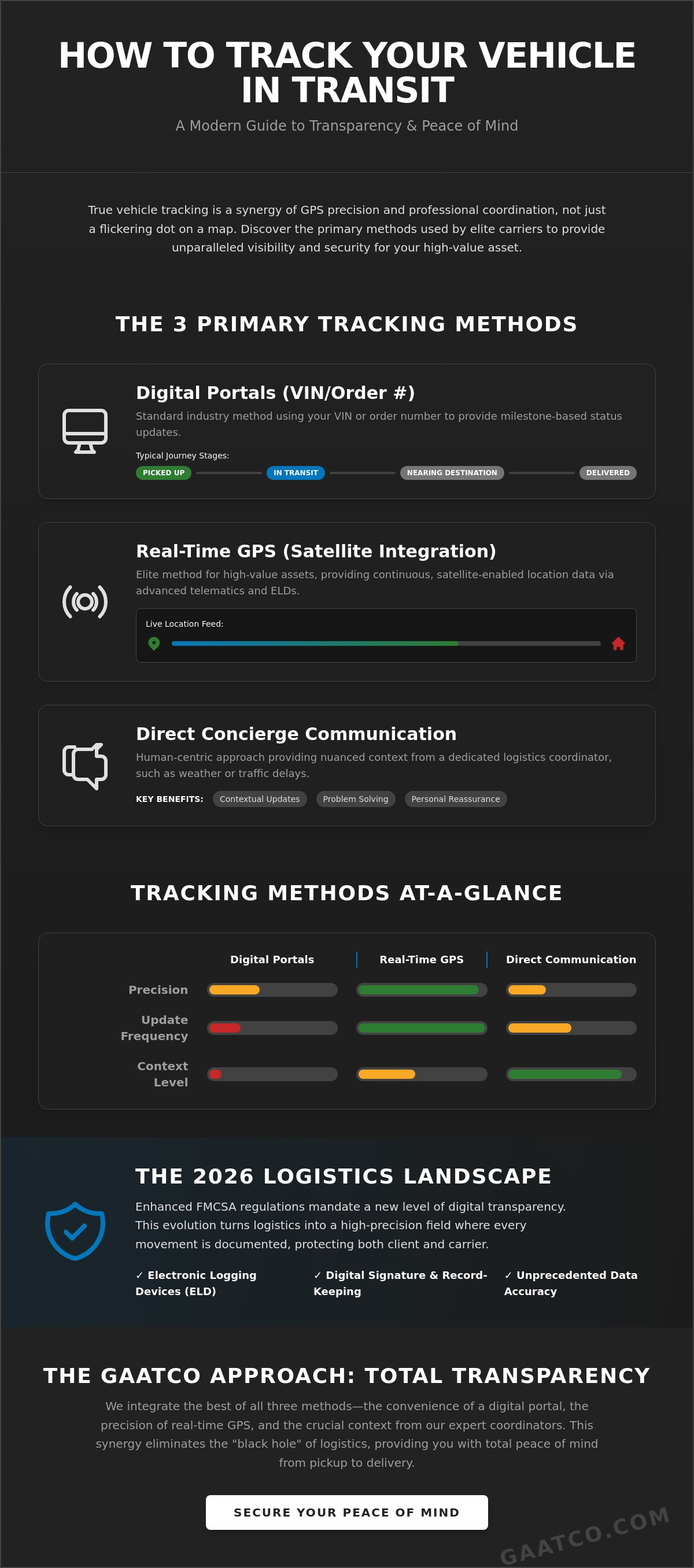
Selecting the appropriate methodology for oversight depends largely on the value of your asset and the level of transparency you require. Understanding how to track your vehicle during transport involves evaluating three distinct systems: digital portals, satellite integration, and direct concierge communication. Each method offers a different degree of granularity. While a standard move might only require milestone updates, a high-stakes relocation often demands the continuous geographic footprint provided by sophisticated satellite hardware. By aligning your tracking choice with your specific logistics needs, you ensure a controlled and predictable experience from pickup to delivery.
VIN and Order Number Tracking Portals
Most professional logistics frameworks provide clients with access to a dedicated digital portal. To utilize these systems, you'll typically need your 17-digit Vehicle Identification Number (VIN), which serves as a unique identifier across all shipping documentation. These portals categorize the journey into specific phases: "Pending" indicates the booking is being processed; "Dispatched" means a carrier has been assigned; and "In Transit" confirms the vehicle is on the road. It's important to recognize that these automated systems may experience slight delays in refreshing when a transport vehicle travels through remote or rural areas with limited data connectivity.
Satellite and GPS-Integrated Logistics
For those utilizing Enclosed Car Transport, satellite-based tracking offers the most precise level of visibility available. This technology integrates high-end GPS hardware with advanced fleet management software to provide a live geographic location. Unlike portal updates that only trigger at certain waypoints, GPS systems can offer pings as frequently as every few minutes or at set four-hour intervals. This infrastructure is particularly vital for classic or exotic vehicles, where maintaining a constant digital "eyes-on" status is a non-negotiable requirement for the owner's peace of mind.
Personalized Communication with Your Coordinator
The human-centric approach remains the gold standard for accuracy in complex logistics. A dedicated logistics coordinator acts as a bridge between the client and the professional driver, offering nuanced updates that machines cannot capture. Direct check-ins allow for real-time adjustments based on traffic patterns or weather conditions. You can often opt for customized text or email alerts that notify you the moment your vehicle reaches a key milestone. This personalized touch ensures that you aren't just monitoring a data point, but are in constant contact with the experts managing your shipment. If you prefer this high-touch approach, you may request a personalized shipping quote to see how our team handles your specific requirements.
Real-Time GPS vs. Status Updates: Managing Expectations
While a digital marker moving across a map provides visual comfort, it rarely tells the full story of a journey. Understanding how to track your vehicle during transport requires a nuanced grasp of the variables that influence modern logistics. A "live" dot on your screen doesn't account for the mandatory rest periods required by Department of Transportation regulations. Professional carriers utilize tracking not just for client visibility, but as part of their broader safety management controls to ensure compliant and secure operations. When a vehicle appears stationary, it's often a sign that the driver is adhering to these critical safety standards, ensuring they remain alert for the next leg of the trip.
Geographic location is also heavily influenced by regional complexities. Navigating the dense corridors of New York or the expansive interchanges of Houston can significantly alter update frequencies. In these metropolitan hubs, a professional driver must prioritize safe maneuvering over immediate data transmission. Consequently, your tracking portal might show a vehicle stationary for several hours while the carrier navigates local traffic or prepares for a safe delivery window. It's important to view these pauses as a necessary part of a controlled, professional delivery process rather than a lapse in service.
There's a distinct difference in reporting detail between Open and Enclosed carrier options. Enclosed transport, often reserved for high-value assets, typically includes more sophisticated, hardware-integrated tracking systems. These units offer a higher frequency of pings compared to standard open trailers, where updates might be limited to major milestones. This discrepancy is a key consideration for owners who require constant, granular oversight of their vehicle's environment and precise location data at all times.
The Realities of Long-Haul Logistics
Long-haul logistics involve more than just simple mileage. Cross-country routes are subject to seasonal weather diversions in cities like Seattle or Chicago, which can force a driver to take a safer, albeit longer, path. You shouldn't expect manual updates during a driver's active hours behind the wheel, as their primary focus is the safety of your asset. Managing expectations for cross-country routes involves understanding that while the GPS provides the "where," the logistical context provides the "why." Regional deliveries may offer more frequent pings due to shorter distances, but the same principles of safety and regulatory compliance apply.
Service Level Impacts on Tracking
Service levels directly dictate the depth of reporting you receive. For Classic Car Transport, enhanced reporting protocols are often the standard, ensuring every movement is documented with precision. Expedited shipping surcharges frequently cover the administrative overhead required for more frequent human-led touchpoints and faster data refreshing. Additionally, high-limit insurance policies often mandate specific tracking standards to maintain coverage. This makes visibility a non-negotiable pillar of the transport contract, bridging the gap between the client's need for transparency and the carrier's commitment to operational security.
Proactive Communication: How to Work with Your Carrier
Digital tools offer a geographic baseline, but the human element provides the necessary context for a truly transparent experience. Understanding how to track your vehicle during transport involves establishing a professional rapport with the team managing your asset. A seasoned logistics coordinator acts as your primary advocate, translating complex operational data into clear, actionable updates. This collaborative approach ensures that you're never left guessing about the status of your shipment. While the technology provides the "where," your coordinator provides the "why," bridging the gap between raw data and real-world conditions.
Effective Communication Protocols
Maintaining a steady flow of information requires a disciplined approach to avoid what we call "tracking fatigue." We recommend a standard check-in frequency that aligns with the length of the journey. For a cross-country move, a brief update every 48 hours is typically sufficient to maintain oversight without disrupting the driver's focus on safety. When requesting an updated ETA, it's helpful to ask specific questions to gain a clearer picture of the progress:
- What is the current weather forecast for the route ahead?
- Are there any known traffic or construction delays impacting the timeline?
- Has the vehicle passed the most recent scheduled milestone?
The driver will typically initiate a direct contact window 24 hours prior to arrival. This final communication is essential for coordinating the logistics of the delivery and ensuring a seamless handover.
Handling Logistics Hurdles Professionally
Occasionally, technical glitches or remote terrain may cause a temporary pause in GPS data. If your tracking portal stops updating, don't panic. Reach out to your coordinator to verify the vehicle's status through their direct link with the carrier. If you notice a discrepancy between a verbal update and the digital map, trust the professional on the ground. Drivers may take alternate routes for safety or to avoid congestion that the tracking software hasn't yet processed. When utilizing Door-to-Door Auto Shipping, proactive communication regarding local access is vital. Ensure the driver is aware of any low-hanging trees, weight-restricted bridges, or narrow residential streets that could impede a large trailer. The final mile tracking protocol for urban deliveries relies on precise, synchronized communication between the driver and the recipient to ensure a safe and discreet vehicle handover.
For a logistics experience that prioritizes both technical precision and human expertise, contact our team of specialists today to discuss your transport needs.
The GAATCO Approach: Transparent Logistics for Total Peace of Mind
With over two decades of experience in high-stakes vehicle relocation, Great American Transport Company (GAATCO) has refined the art of the transparent journey. We understand that our clients require more than just a delivery; they demand a discreet and dependable partnership. Our commitment to professional tracking standards ensures that you're never left wondering about the status of your investment. By bridging the gap between sophisticated global logistics and the specific nuances of regional service, we provide a seamless experience that prioritizes both safety and communication. Learning how to track your vehicle during transport is an essential part of the process, and we ensure that information is always accessible and accurate.
Why Sophisticated Owners Choose GAATCO
Sophisticated owners choose GAATCO because we offer a level of quiet luxury and meticulous attention to detail that is rare in the transport industry. We don't just move cars; we manage the relocation of valuable assets with a human-centric approach. Behind our advanced digital infrastructure is a dedicated team of professionals who monitor every mile. Whether you're coordinating a move in the vibrant streets of Miami, the historic corridors of Boston, or the coastal neighborhoods of San Diego, our regional expertise ensures that local challenges are handled with poise. This blend of elite service and local knowledge allows us to maintain the highest standards of reliability across the United States. Knowing how to track your vehicle during transport gives you peace of mind, but our team provides the underlying security that makes tracking a simple formality.
Secure Your Vehicle's Journey Today
Scheduling your professional vehicle transport is a straightforward process designed around your schedule and requirements. We utilize a licensed and insured carrier network that adheres to our non-negotiable pillars of safety and transparency. Our pricing models are built on real-time market data to ensure a stable agreement without the volatility often found in lesser services. Whether you require Classic Car Transport or specialized door-to-door logistics, our operational flow is optimized for your peace of mind. To begin your journey with a partner who understands the nuances of high-end service, we invite you to request a customized transport quote from our experts today.
Elevating Your Transport Experience with Unparalleled Visibility
Achieving total peace of mind during a high-stakes relocation requires more than just access to a digital map. It's about a sophisticated understanding of how to track your vehicle during transport by balancing real-time data with the expertise of seasoned logistics professionals. By recognizing the impact of modern regulatory safety standards and the importance of proactive communication, you transform a complex logistical event into a controlled and predictable experience. This level of transparency ensures that every milestone is met with precision and every concern is addressed with authoritative clarity.
Great American Transport Company brings over 20 years of industry-leading expertise to every shipment. Our fully licensed and insured carrier network is specifically tailored to the rigorous demands of luxury and classic vehicle logistics. We handle the intricacies of the journey so you don't have to manage the complexities alone. Secure your professional vehicle transport quote today and experience the confidence that comes from working with a trusted advisor. We look forward to ensuring your asset's journey is as seamless as the final delivery.
Frequently Asked Questions
Can I track my car in real-time using GPS during transport?
Real-time GPS tracking is available through specialized hardware integrated into the transport trailer, though its availability often depends on the selected service level. While many standard carriers provide milestone updates, elite enclosed transport options frequently include continuous satellite positioning. This technology allows you to see the precise geographic location of your vehicle at any given moment, providing a high level of transparency for high-value assets during their journey.
What does 'in transit' actually mean for my car shipment?
The status 'in transit' signifies that your vehicle has been successfully loaded onto the carrier and is currently navigating the route toward its destination. This phase begins immediately following the initial pickup and the formal completion of the Bill of Lading. It encompasses the entire journey, including necessary stops for driver rest periods and logistical adjustments required by federal safety regulations to ensure a secure delivery.
Why hasn't my vehicle tracking status updated in the last 24 hours?
A stationary tracking status often reflects mandatory driver rest periods or travel through regions with limited satellite connectivity. Department of Transportation regulations require drivers to adhere to strict hours-of-service limits to ensure road safety. If your vehicle appears to be in the same location for 24 hours, it's typically a sign that the professional handling your car is following these essential safety protocols before resuming the trip.
Do I need a special app to track my car while it's being shipped?
Most professional logistics firms utilize secure web-based portals rather than requiring you to download a specific mobile application. You'll typically receive a unique tracking link or booking ID that allows you to monitor progress through any standard browser. This approach ensures that you have instant access to data without the need for additional software, maintaining a streamlined and efficient communication flow for your convenience.
How often should I expect updates from my auto transport carrier?
You should generally expect formal status updates every 24 to 48 hours during a long-haul journey. While automated systems might ping more frequently, human-verified updates provide the most accurate context regarding weather or traffic conditions. Understanding how to track your vehicle during transport involves balancing these technical pings with the nuanced reporting provided by your dedicated logistics coordinator at key milestones throughout the relocation.
Can I contact the driver directly to find out where my car is?
Direct communication with the driver is typically established within the final 24-hour delivery window to coordinate the physical handover. For general inquiries during the transit phase, it's more effective to contact your logistics coordinator. This allows the driver to remain focused on the safe operation of the vehicle while the coordinator provides you with comprehensive data from the tracking system and carrier network.
Will tracking my vehicle prevent delivery delays?
Tracking provides essential visibility into the journey but doesn't physically prevent delays caused by external factors like severe weather or road construction. Its primary value lies in transparency and the ability to adjust your schedule based on accurate arrival estimates. Real-time data allows for proactive planning, ensuring that you're prepared for the vehicle's arrival despite any unavoidable logistical hurdles encountered on the road.
What should I do if the tracking shows my car is in the wrong city?
If your vehicle appears to be in an unexpected city, it's often due to the carrier's optimized routing or the use of regional logistics hubs. Professional transport routes are designed for efficiency and safety, which may involve paths that aren't the most direct geographic line. If you have concerns about the specific location shown, your logistics coordinator can provide the operational context behind the current route and verify the timeline.


