
A single overlooked detail during vehicle handover can compromise the security of your most valued automotive assets. You likely feel a certain level of anxiety when considering the logistics of relocation, particularly when vague preparation requirements lead to confusion over insurance coverage. It's a valid concern in a year defined by significant regulatory shifts, such as the FMCSA's transition to unified USDOT identifiers. Understanding exactly how to prepare a car for shipping is the first step in transforming a complex logistical hurdle into a sophisticated, damage-free transfer.
We're here to provide a clear, professional roadmap that aligns with the highest industry standards for safety and reliability. You'll discover how to secure your liability protection and ensure a successful handover through meticulous attention to detail. This guide details the essential mechanical protocols, the nuances of the Bill of Lading, and the specific documentation required to meet the latest 2026 compliance standards for a seamless transport experience.
Key Takeaways
- Performing a professional-grade exterior wash is essential to reveal the chassis condition, ensuring every detail is accurately captured for liability protection.
- Mastering how to prepare a car for shipping involves maintaining fuel levels at precisely one-quarter tank to optimize weight distribution and operational safety.
- Secure your assets by removing all personal belongings from the interior, as these items remain outside the scope of standard carrier insurance coverage.
- Recognize the legal weight of the Bill of Lading as the definitive record of vehicle condition during the collaborative final inspection with your driver.
- Facilitate a secure handover by disabling anti-theft systems and documenting all specialized operational requirements before the vehicle departs for transit.
The Strategic Importance of Meticulous Vehicle Preparation
Professional vehicle transport is more than a simple transit service; it's a sophisticated asset transfer that requires a strategic baseline of readiness. When you understand how to prepare a car for shipping, you're not just following a checklist. You're engaging in a proactive risk management strategy that ensures the legal and physical security of your vehicle. Meticulous preparation is the primary factor that determines the success of insurance outcomes should an unforeseen incident occur. It creates an undeniable record of condition that protects your interests from the moment of handover.
Efficiency at major logistical hubs like Atlanta or Dallas depends heavily on the readiness of the cargo. Carriers operating in these high-volume environments maintain strict schedules to ensure timely delivery across their networks. A vehicle that's properly prepared allows for a seamless loading process, preventing delays that often arise from non-compliance with Department of Transportation standards. By adhering to professional protocols, you facilitate a smoother operational flow for the specialized teams handling your transport.
To better understand the nuances of this process, watch this helpful overview of professional standards:
Defining the Baseline Condition
The foundation of a secure transport experience is the establishment of a clear baseline condition. A clean vehicle is a non-negotiable requirement for an accurate pre-shipment inspection. Dust, dirt, or road grime can easily obscure microscopic paint chips, abrasions, or hairline fractures in the chassis. When the exterior is pristine, both you and the carrier can reach a mutual, documented understanding of the vehicle's state. This clarity is vital when signing the Bill of Lading, which serves as the definitive legal record of your car’s condition before it's loaded onto the transport equipment.
Preparation as a Safety Protocol
Safety protocols extend beyond the physical protection of your own vehicle. Ensuring your car is in a safe operational state protects other high-value assets sharing the car carrier trailer. Undetected fluid leaks, for instance, can cause significant damage to vehicles positioned on lower decks. Additionally, securing or removing loose components like aftermarket spoilers or specialized antenna arrays prevents aerodynamic hazards during high-speed transit. Our team of professionals at GAATCO prioritizes these details to maintain a controlled and secure environment for every vehicle under our care, ensuring that your car is ready for a dignified and safe journey.
Exterior and Interior Readiness: A Step-by-Step Protocol
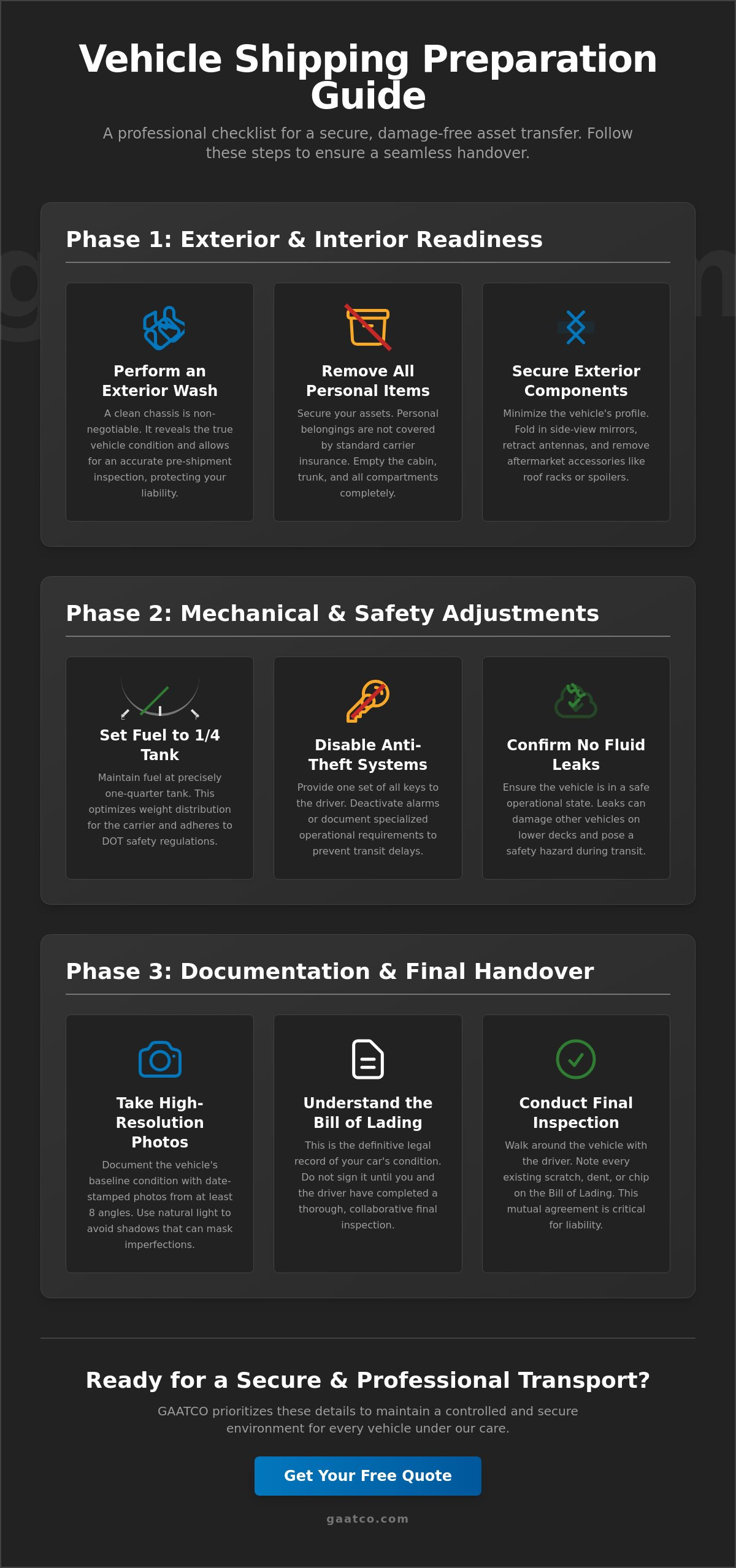
Preparing a vehicle for transport is an exercise in precision. When you're determining how to prepare a car for shipping, the visual and physical state of the vehicle at pickup dictates the entire liability framework. A professional-grade exterior wash is the first non-negotiable step. It isn't merely about aesthetics. Removing road film and environmental debris reveals the true state of the chassis, allowing for a transparent assessment of the paintwork and structural integrity before the carrier takes possession.
Beyond cleanliness, you must minimize the vehicle's physical profile to ensure a secure fit on the transport equipment. Retract or remove all non-fixed antennas. Fold in side-view mirrors to prevent them from becoming snag points during the loading process. If your vehicle features aftermarket accessories, such as specialized roof racks or spoilers that extend beyond standard dimensions, these should be removed. This ensures the vehicle fits safely within the allocated space on a specialized transport trailer.
The Professional Standard for Documentation
High-resolution photography serves as your primary defense in the rare event of a claim. Capture date-stamped imagery from at least eight angles, focusing specifically on the roof, the undercarriage, and all four quarter-panels. Natural lighting is essential because shadows can easily mask existing imperfections or create illusions of damage. For those shipping under military orders or corporate relocation, following official guidance on shipping your vehicle can provide additional layers of procedural security. Store these digital files in a cloud-based folder for immediate comparison during the delivery inspection.
Interior De-Cluttering and Security
The interior requires equal attention to detail. Thoroughly vacuum and sanitize the cabin to ensure no loose debris shifts during transit, which could cause internal abrasions or odors. Remove all non-permanent electronics, including GPS units, dash cams, and toll transponders. These items are often targets for theft and are typically excluded from carrier insurance policies. Ensure the glovebox contains only the necessary registration and insurance documents. By streamlining the interior, you eliminate variables that could complicate the transport process. If you're ready to secure a slot for your vehicle, you can request a bespoke quote to begin the process with our dedicated team of professionals.
Mechanical Adjustments for Secure Transit
A vehicle's mechanical integrity is the silent pillar of a successful transport operation. While your car won't be driven for the duration of the journey, it must remain in a state of operational readiness for the critical loading and unloading phases. Learning how to prepare a car for shipping requires a focus on four key mechanical areas: fuel levels, battery health, fluid containment, and tire pressure. These adjustments ensure that the vehicle remains stable and safe, particularly in high-traffic transit hubs where precision is paramount. Adjusting tire pressure to the manufacturer’s recommended PSI is equally important. Properly inflated tires provide the necessary traction and stability for the vehicle to remain stationary during the vibrations of long-distance transit.
The Rationale Behind Fuel and Fluid Limits
Maintaining a fuel level of exactly one-quarter tank is a professional standard for several reasons. It significantly reduces the overall weight of the transport trailer, allowing the carrier to remain within strict Department of Transportation weight limits. This reduction is vital for efficiency and safety. It also minimizes the presence of flammable vapors, a critical consideration for both open and enclosed car transport. As noted in this Forbes guide to shipping a car, excessive fuel adds unnecessary bulk and risk. Reputable carriers enforce a strict "No Leak" policy. Any active discharge of oil, coolant, or brake fluid can compromise the finish of other vehicles on the trailer. This leads to liability complications that thorough preparation easily avoids.
Battery and Ignition Readiness
A fully charged battery and a functional ignition system are essential for the carrier's driver to maneuver the vehicle safely. The vehicle must start promptly to facilitate loading at busy terminals in cities like Houston or New York. If you're shipping an electric vehicle, ensure the state of charge is between 45% and 50%, balancing the need for operational power with safety regulations regarding high-capacity batteries. The parking brake must also be in peak condition. It serves as the primary mechanical lock that prevents movement while the vehicle is secured on the trailer bed. If you have concerns about an older or classic vehicle's mechanical state, our specialized transport team can provide guidance on managing inoperable vehicle transport protocols. This meticulous attention to mechanical detail reflects the high-stakes nature of specialized transport and ensures your asset is handled with the care it deserves.
Managing Liability: Documentation and Personal Belongings
Managing liability is a cornerstone of professional vehicle transport. It transforms a simple delivery into a secure asset transfer, ensuring that your interests remain protected throughout the journey. While physical readiness is paramount, the legal framework governing the transport is equally critical. Understanding how to prepare a car for shipping involves a disciplined approach to documentation and a clear grasp of insurance boundaries. This phase of preparation establishes the legal baseline for the entire operation, providing peace of mind for owners of high-value assets and classic automobiles alike.
The Bill of Lading: Your Primary Protective Instrument
The Bill of Lading (BOL) serves as the definitive legal contract between the owner and the carrier. It's the most significant document you'll sign during the process. When the carrier arrives for pickup in major transit points like Seattle or Miami, you must conduct a meticulous joint inspection. Every existing blemish, regardless of size, should be noted on the BOL. This document acts as the official record of the vehicle's condition at the point of handover. If any discrepancies arise upon delivery, the BOL is the primary evidence used to resolve insurance claims. A signature on a clean BOL without noted damage at delivery typically waives the right to future claims; therefore, your presence and attention to detail during both pickup and drop-off are non-negotiable.
The Policy on Personal Belongings
A common point of confusion involves items left inside the cabin. Federal Motor Carrier Safety Administration (FMCSA) regulations strictly prohibit auto transporters from carrying "household goods." Consequently, personal items are generally excluded from carrier insurance policies. Leaving belongings inside the vehicle introduces unnecessary risks, including potential theft or internal damage if items shift during transit. You must differentiate between vehicle-specific accessories, such as a spare tire or a factory jack, and personal property. To maintain a secure and compliant transport environment, ensure the cabin is entirely cleared of non-permanent items before the driver takes possession.
For those utilizing Door-to-Door Auto Shipping, it's essential to verify that your local streets can accommodate the dimensions of a large transport trailer. Some residential areas have restrictive narrow lanes or low-hanging trees that prevent direct access. In these instances, our team will coordinate a convenient, nearby location for a safe and professional handover. If you're shipping a high-value asset, we also recommend verifying that any specialized insurance riders or "agreed value" policies are active and documented. Our team of experts is ready to assist you in securing a bespoke transport solution that prioritizes both safety and legal clarity.
The Final Handover: Ensuring a Seamless Transition
The moment of handover represents the culmination of your meticulous efforts. It's the critical juncture where your preparation meets our professional execution. Conducting a final, collaborative walk-through with the carrier's driver ensures a shared alignment on the vehicle's condition before the journey begins. This transparent exchange is the final essential step in mastering how to prepare a car for shipping. In dense urban environments like New York or Chicago, these logistics require heightened coordination. Large transport trailers often face restricted access on narrow residential streets, so you should be prepared to meet the driver at a pre-arranged, accessible location that allows for a safe and dignified loading process.
During this final interaction, provide the driver with a complete set of keys. This includes the primary ignition key along with any necessary keys for the trunk, glovebox, or locking gas caps. It's also a professional courtesy to ensure the driver is aware of the FMCSA’s latest 2026 standards regarding English proficiency, which facilitates clear communication during this technical exchange. By maintaining a steady and measured approach during the handover, you reinforce the security of your asset and set the stage for a successful delivery.
Alarm Systems and Specialized Controls
Sophisticated security features require clear communication to prevent operational delays. You must disable all anti-theft and alarm systems before the vehicle is loaded. If your vehicle features custom security protocols or kill switches that cannot be fully deactivated, provide the driver with clear, written instructions on their operation. For owners of modern luxury vehicles, ensure that air suspension systems are set to 'transport mode' to prevent the system from attempting to level the vehicle while it's secured on the trailer. This attention to detail is particularly vital for classic car transport, where the nuances of older ignition systems or specialized starting procedures must be clearly understood by the specialized handling team.
Confirming Contact and Delivery Logistics
The final phase of preparation involves a rigorous verification of all logistical data. Double-check the accuracy of the delivery address and ensure that the primary contact phone numbers are correct. Discuss potential delivery windows with the driver and establish a protocol for off-site unloading if your destination presents geographic challenges. These final confirmations eliminate the variables that often lead to frustration in high-stakes transport. You can take the final step toward a sophisticated and stress-free relocation by requesting a professional quote from our team. At GAATCO, we act as your trusted advisor, handling the complex logistics of vehicle readiness so you don't have to.
Securing Your Automotive Legacy
A meticulous approach to vehicle readiness transforms a complex logistical task into a seamless, high-end service experience. By establishing a clear baseline condition through professional documentation and ensuring mechanical stability, you mitigate the risks inherent in long-distance transit. These protocols don't just protect the physical chassis; they secure your legal standing and provide the peace of mind required when handling valuable assets. Mastering how to prepare a car for shipping is the definitive way to ensure your vehicle is accepted by the carrier and protected throughout its journey.
Our team brings over 20 years of logistical expertise to every transport, operating a fully licensed and insured carrier network designed for precision. We provide specialized solutions for luxury and classic vehicles, acting as a discreet partner for your most critical relocation needs. You're invited to Request a Sophisticated Auto Transport Quote Today to begin your journey with a partner who understands the nuances of elite service. We look forward to facilitating a secure and successful handover for your vehicle.
Frequently Asked Questions
Can I leave a few personal items in the trunk during shipping?
Professional carriers are not licensed to transport household goods, and FMCSA regulations dictate that personal items remain outside the scope of carrier insurance. While some operators may permit up to 100 lbs of items secured below the window line or in the trunk, we recommend removing all belongings. This practice ensures the security of your assets and prevents weight limit violations that could delay the transport process.
Why is it recommended to have only a quarter tank of gas?
Maintaining a fuel level of exactly one-quarter tank is a strategic safety and weight management protocol. This specific volume significantly reduces the overall weight of the transport trailer and minimizes the presence of flammable vapors in enclosed environments. It is a critical aspect of how to prepare a car for shipping that ensures the carrier remains compliant with strict Department of Transportation weight regulations.
What happens if my car has an active leak during the inspection?
An active leak of oil, coolant, or brake fluid typically results in a refusal of transport until the mechanical issue is resolved. Professional carriers maintain a "No Leak" policy to protect other high-value vehicles on the trailer from chemical damage. If a leak is detected, you must have the vehicle repaired or coordinate for specialized inoperable vehicle transport where containment protocols are utilized.
Do I need to be present for the pickup and delivery of my vehicle?
You or a designated representative over the age of 18 must be present at both the pickup and delivery locations. This presence is required to perform a collaborative inspection of the vehicle and sign the Bill of Lading, which serves as the definitive legal record of condition. Without a signed document from both parties, resolving potential insurance claims for transit-related damage becomes exceptionally difficult.
How do I handle the preparation for an inoperable vehicle?
Preparation for an inoperable vehicle requires early communication with our team to ensure the dispatch of a trailer equipped with a winch or specialized loading equipment. You should still perform a thorough cleaning and document the vehicle's condition despite its mechanical state. Be aware that shipping a non-running vehicle typically incurs an additional fee between $150 and $300 due to the specialized labor and equipment required.
Should I wash my car before the carrier arrives for pickup?
A professional-grade exterior wash is a prerequisite for an accurate pre-shipment inspection. A clean surface allows the driver to document every existing blemish or microscopic chip on the Bill of Lading with absolute clarity. When the chassis is obscured by road film or dirt, it's impossible to establish the transparent baseline condition necessary for comprehensive liability protection during the journey.
What documents must I provide to the driver at the time of handover?
You must provide the driver with a complete set of keys and have the vehicle's registration and insurance documents available for verification if requested. The driver will provide the Bill of Lading, which you'll review and sign after the joint inspection is complete. Ensuring these documents are ready facilitates a professional and efficient handover, which is a hallmark of how to prepare a car for shipping correctly.
How do I disable my car alarm for the duration of the transport?
Disabling the alarm system is essential to prevent battery drainage and unnecessary disruptions during the transit phase. You can typically deactivate the system through the vehicle's onboard settings menu or via the key fob. If your vehicle features a specialized kill switch or a complex security system that cannot be fully disabled, you must provide the driver with clear, written instructions for its management.


