Transporting an inoperable vehicle is not merely a logistical task; it is a high-stakes engineering operation that requires meticulous planning and specialized machinery. You likely recognize that moving a car that cannot move under its own power introduces significant risks, including the fear of mechanical damage during loading and the frustration of unforeseen surcharges. When you are determining how to ship a non-running car, it's essential to look beyond standard towing services and seek a partner who understands the sophisticated requirements of inoperable transport.
This professional guide provides the clarity you deserve by detailing the elite protocols and specialized equipment necessary to ensure a seamless, damage-free delivery across the United States. We'll explore the critical distinctions between winch and liftgate operations, the transparency of modern pricing structures, and the rigorous standards that define a truly capable carrier. You will discover why only a small fraction of the carrier market possesses the specialized liftgate technology required for certain non-rolling assets. By the end of this article, you'll have the confidence to manage your vehicle's journey with the same level of care that went into its original acquisition.
Key Takeaways
- Understand the critical distinction between inoperable and salvage designations to ensure your vehicle is assigned the correct insurance valuation and carrier equipment.
- Learn how to ship a non-running car safely by identifying the industrial-grade winches and soft-strap tie-downs required to preserve the vehicle’s mechanical integrity during loading.
- Evaluate the protective advantages of open versus enclosed transport methods to determine the most secure environment for your specific project or high-value classic vehicle.
- Prepare for the logistical nuances of inoperable transport by accurately documenting the vehicle's condition on the Bill of Lading to avoid unforeseen delays.
- Discover the benefits of partnering with a seasoned logistics advisor who utilizes a vetted network specifically trained in the complexities of non-running vehicle recovery.
Defining the Inoperable Vehicle: Why Logistics Differ for Non-Running Cars
Understanding how to ship a non-running car begins with a precise definition of the task at hand. In the logistics industry, a non-running vehicle is any automobile that cannot be driven onto a transport trailer under its own power. This classification isn't merely a status update; it's a signal to the carrier that specialized equipment and additional labor will be required for a successful recovery. When a vehicle is stationary, the physics of loading change entirely, shifting from a simple drive-on procedure to a controlled mechanical pull. This distinction is the primary reason why standard transport quotes often don't apply to inoperable assets.
The difference between an inoperable vehicle and a salvage vehicle is also critical for both carrier selection and insurance valuation. An inoperable car might be a pristine classic with a faulty starter, whereas a salvage vehicle often possesses structural compromises or flood damage. Correctly identifying your car's status ensures that the car carrier trailer dispatched to your location is equipped with the necessary winch capacity and safety gear. Misrepresenting this status can lead to on-site delays or "dry run" fees if the driver arrives without the means to secure the load.
To better understand the technical nuances of this process, watch this helpful video:
The RSB Standard: Rolling, Steering, and Braking
Carriers categorize non-runners based on the RSB standard, which stands for Rolling, Steering, and Braking. If your vehicle can perform these three basic functions, the loading process is relatively straightforward. A professional driver will utilize an industrial-grade winch to guide the car up the ramps. However, seized engines or locked transmissions present a higher tier of logistical complexity. If the wheels cannot turn, the friction involved in dragging the car can damage both the vehicle and the trailer. Furthermore, functional brakes are a non-negotiable safety requirement for winching on inclined ramps; they allow the operator to hold the vehicle in place should any part of the winch assembly need adjustment during the pull.
Total Inoperability and Structural Damage
When a vehicle's mechanical state falls below the RSB standard, it enters a category of increased difficulty. Cars with significant frame damage, missing wheels, or seized axles may require a forklift or a specialized flatbed for transport. Total Inoperability is a state where the vehicle lacks the mechanical integrity to be pulled by a standard winch. It's also vital to identify if you have the keys. A steering column that is locked in a turned position without a key to release it can make it nearly impossible to align the car with the trailer ramps. By providing these details upfront, you allow your logistics partner to select the most appropriate inoperable vehicle transport solution for your specific needs.
Specialized Loading Technology: The Mechanics of Inoperable Transport
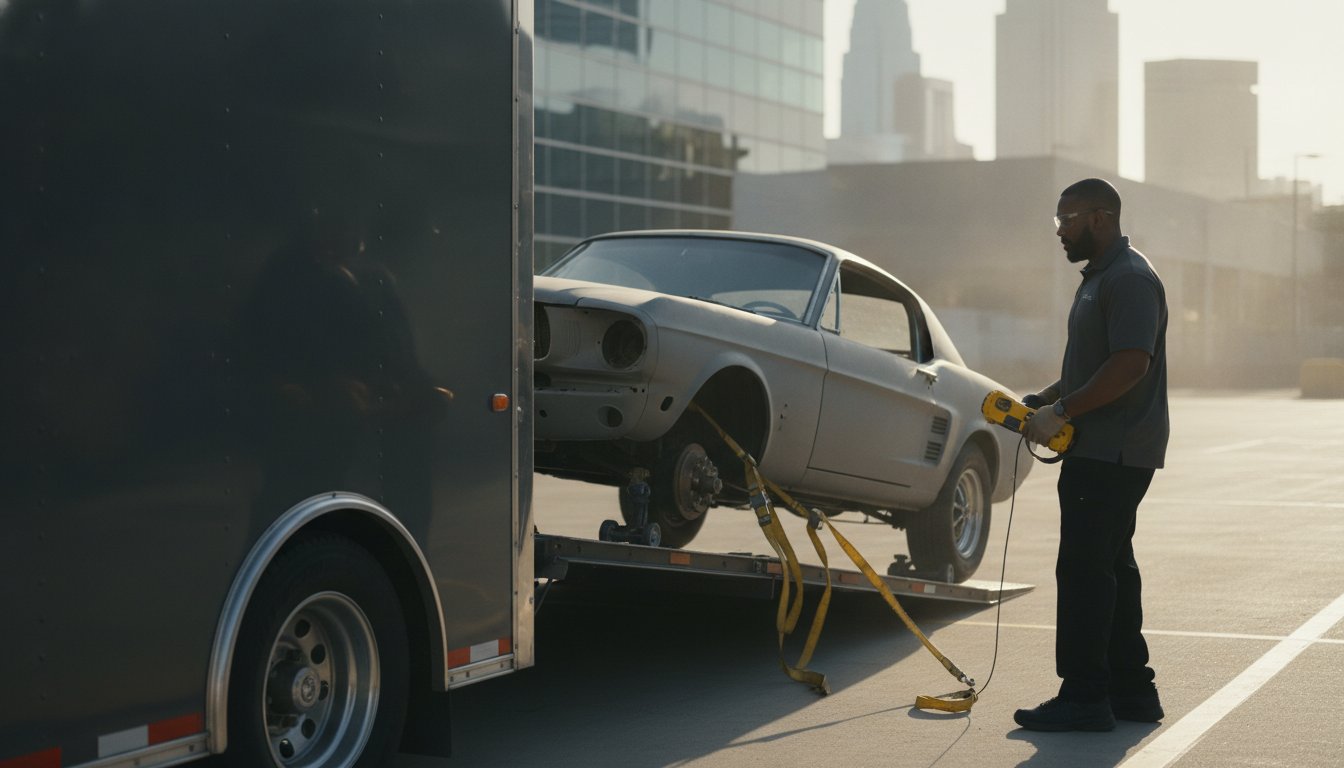
The physical transition of a stationary vehicle onto a transport deck requires more than just raw power; it demands a sophisticated understanding of mechanical advantage. When you are researching how to ship a non-running car, the focus should quickly shift to the specific technology the carrier employs. Professional transport teams utilize industrial-grade winches to safely guide vehicles onto the trailer. These systems are essential for maintaining a slow, controlled ascent, particularly when the car lacks the ability to assist with its own momentum.
The Role of the Winch in Vehicle Recovery
The choice between electric and hydraulic winches is a technical decision based on the vehicle's mass. While electric winches are common for standard sedans, hydraulic systems offer the consistent torque required for heavy SUVs or trucks. Beyond the power source, the point of attachment is the most critical safety factor. A seasoned operator will identify a secure attachment point on the vehicle frame to prevent structural stress or cosmetic damage to the undercarriage. This process requires rigorous safety protocols to protect both the equipment and the bystanders during the high-tension loading phase. Understanding these technical nuances is a key part of learning how to ship a car that cannot move under its own power; to learn more about Jealco International, Inc., one can explore the industrial components that make this specialized recovery possible.
To further protect the integrity of the vehicle, the use of soft-strap tie-downs is mandatory. Unlike metal chains that can mar delicate finishes or bend suspension components, soft straps distribute pressure evenly. This is particularly vital for non-running classic cars where the undercarriage may be fragile or recently restored.
Advanced Solutions for Low-Clearance Projects
For vehicles with compromised suspension or extremely low ground clearance, traditional ramps often pose a risk of scraping. Hydraulic liftgates offer a superior, level-plane loading solution. These platforms descend to the pavement, allowing the vehicle to be winched onto a flat surface before being raised vertically to the trailer deck. This technology eliminates the steep angles associated with ramps, making it ideal for high-value restorations or project cars with incomplete assemblies. Owners who are determining how to ship a non-running car with a lowered profile often find that liftgate-equipped trailers are the only suitable choice.
Managing the tension and physics of winching a stationary mass is a specialized skill. Carriers must possess specific training to handle the unexpected shifts in weight that can occur during the process. This level of expertise ensures that your asset remains secure from the moment it leaves your driveway until it reaches its final destination. If you require a tailored approach for a complex move, you can explore our specialized inoperable vehicle transport options to find the right fit for your needs.
Choosing Your Carrier: Open vs. Enclosed Methods for Project Vehicles
Selecting the correct transport modality is perhaps the most significant decision you'll make when determining how to ship a non-running car. It isn't merely a matter of budget; it's a choice that defines the logistical infrastructure and protective measures surrounding your asset. While many entry-level providers treat inoperable vehicles as simple cargo, a professional approach recognizes the unique needs of project cars and high-value restorations. The method you choose often dictates the type of loading equipment available at your doorstep, making it a foundational element of the transport plan.
When Open Transport Suffices
Open car transport remains the industry standard for daily driver vehicles awaiting mechanical repair. It's a pragmatic and reliable solution for sedans or SUVs with resilient factory finishes that don't require protection from the elements. You can explore the GAATCO services to see how our open carrier network spans major hubs, providing a dependable bridge for your vehicle's recovery. If your car has missing windows or compromised door seals, however, you must carefully consider the exposure to road debris. It's also wise to consult official vehicle status regulations to ensure your non-runner meets the legal requirements for transport on public thoroughfares, as some jurisdictions have specific rules for stored or inoperable assets.
The Case for Enclosed Protection
For the discerning collector or the meticulous restorer, enclosed car transport offers a necessary sanctuary. This method is essential for "barn finds" with delicate original patina or freshly painted restoration shells that haven't yet been fully assembled. Enclosed trailers are more than just a shield against weather; they frequently feature advanced winching and hydraulic liftgate systems as standard equipment. These trailers provide a controlled environment where the tension and physics of moving a stationary mass are managed with extreme precision.
When you're deciding how to ship a non-running car of significant value, the increased insurance limits and white-glove handling of an enclosed service provide the peace of mind that a standard open trailer cannot match. Our team acts as a discreet partner, helping you weigh the level of protection against your long-term investment goals. We ensure that every logistical detail, from the ground clearance measurements to the final tie-down protocols, is handled with the quiet confidence that comes from decades of specialized expertise.

Preparation and Pricing: Managing the Logistics of a Non-Runner
Managing the expectations of cost and preparation is a hallmark of professional logistics. When you're determining how to ship a non-running car, it's vital to recognize that the financial structure differs from standard transport. This isn't just about the mileage; it's about the technical labor and specialized equipment required to move a stationary object. A successful transport begins with an accurate assessment of the vehicle's condition and the environment where it currently resides. The pickup location must be accessible to large multi-car carriers or, if space is restricted, a specialized recovery flatbed may be required to facilitate the initial move.
If the cost of shipping a non-runner becomes prohibitive, especially for vehicles with severe structural damage, selling the car for cash might be the most logical choice. Residents in the Georgia area can visit Windward Auto Removal Service to discover how easy it is to sell junk or totaled vehicles for immediate payment.
A critical area often overlooked in industry guides is the scope of insurance coverage. While standard policies cover the vehicle during transit, you must verify that your coverage specifically includes the loading and unloading phases. For inoperable vehicles, these are the periods of highest risk due to the tension involved in winching. It's essential that your documentation, particularly the Bill of Lading, meticulously records the vehicle's condition at the point of pickup. This transparent record serves as your primary protection and ensures that all parties are aligned on the vehicle's mechanical state before it's secured for its journey.
Essential Preparation Steps for Owners
Professional preparation minimizes on-site delays and reduces the risk of peripheral damage. We recommend that owners take the following steps before the carrier arrives:
- Clear the interior: Remove all loose parts or "boxes of spares" that often accompany project cars to prevent shifting during transit.
- Maximize tire pressure: Inflate tires to their maximum recommended pressure. This reduces the rolling resistance, making it significantly easier for the winch to guide the car onto the trailer.
- Manage the electrical system: If the vehicle still has power but the electrical system is compromised, disconnect the battery to prevent potential shorts.
Understanding the Inoperable Surcharge
Carriers apply an inoperable fee to account for the physical labor and specialized machinery involved in the recovery. Winching a vehicle onto a deck is a time-intensive process that can take significantly longer than simply driving a functional car onto the trailer. The weight of the vehicle and the complexity of the pickup environment are the primary factors that influence this surcharge. To ensure you have a clear understanding of the investment required, you should request a transparent auto transport quote that includes all specialized handling fees upfront. This level of clarity allows you to proceed with the confidence that there are no hidden costs associated with your vehicle's inoperable status.
Our team of advisors is available to discuss the nuances of your specific transport needs, ensuring that every detail of the inoperable vehicle transport process is handled with the discretion and expertise you expect from a premium service provider.
Sophisticated Solutions: Why GAATCO is the Preferred Partner for Complex Transport
GAATCO stands as a bridge between your vehicle's current state and its intended destination. With over 20 years of refined industry experience, we manage the most challenging inoperable vehicle recoveries with a level of precision that standard carriers simply cannot replicate. Our network of licensed and insured carriers is vetted specifically for their expertise in handling non-running assets, ensuring that the technical requirements discussed in previous sections are met with absolute competence. We provide comprehensive door-to-door delivery solutions in major markets such as Houston, San Diego, and New York, bridging the gap between local nuances and global standards. When you are determining how to ship a non-running car, our collective team of professionals serves as your primary resource for navigating these complex operational realities.
A Legacy of Reliability and Safety
Our team prioritizes the safety of your vehicle through a rigorous process of carrier selection and insurance verification. We understand that a non-running car often represents a significant emotional or financial investment, and we treat it as such. GAATCO has been a trusted name in the industry since 2004, specializing in safe vehicle relocation for the most discerning clients. By acting as a dedicated partner, we handle the complex logistics so you don't have to worry about the mechanical intricacies of the move. This persona as a discreet and dependable advisor allows us to provide a reassuring emotional style for affluent and corporate audiences who require absolute reliability. We maintain a controlled professional environment where every detail is managed with meticulous attention to detail.
Seamless Door-to-Door Execution
We coordinate the entire process with a steady, measured rhythm, from the initial consultation to the final offloading at your destination. Our expertise extends beyond individual collectors to include military personnel and high-volume dealerships nationwide. When you are evaluating how to ship a non-running car, the reliability of your partner is the most critical factor in a damage-free outcome. Our commitment to transparent pricing and meticulous planning ensures a hassle-free experience that respects both your time and your property. Whether you are moving a classic restoration or a modern vehicle awaiting repair, our operational reach ensures a consistent level of seriousness across all service lines. Visit the GAATCO homepage to begin your journey with a professional logistics advisor who understands the nuances of high-end service and the critical urgency of specialized transport.
Securing Your Asset’s Future with Precision Logistics
Navigating the complexities of inoperable vehicle relocation requires a partner who treats your asset with the same reverence as you do. Throughout this guide, we've explored the technical distinctions between rolling and seized vehicles and why enclosed transport offers a necessary sanctuary for high-value restorations. Mastering how to ship a non-running car is ultimately about aligning with a team that possesses the technical mastery and specialized winch and liftgate capabilities required for a damage-free delivery. Accurate preparation and transparent pricing are the final pillars that ensure your vehicle's journey is as seamless as it is secure.
With over 20 years of industry expertise and a vetted network of licensed and fully insured carriers, we manage every logistical detail with discreet professionalism. Your peace of mind is our priority. We invite you to Request a Professional Inoperable Transport Quote to begin a transition defined by reliability and safety. Trust in a process that respects the structural integrity of your investment. We look forward to facilitating your vehicle's next chapter with the quiet confidence it deserves.
Frequently Asked Questions
Can you ship a car that does not start or run?
Yes, you can certainly ship a car that doesn't start or run through our specialized inoperable vehicle transport services. While standard carriers require vehicles to be driven onto the trailer, we utilize professional recovery equipment to accommodate non-running assets. This process ensures that your vehicle is safely secured regardless of its mechanical state or engine functionality, providing a reliable solution for restoration projects and mechanical failures alike.
How much extra does it cost to ship a non-running car?
Carriers apply an inoperable surcharge to account for the additional time, specialized machinery, and physical labor required for recovery. This fee covers the deployment of industrial winches and the expertise of the operator. Because winching a stationary mass is more complex than driving a functional vehicle, this adjustment ensures that the transport is executed with the necessary precision and safety protocols required for high-value assets.
Does the car need to have wheels to be shipped?
A vehicle typically needs wheels to meet the industry standard for rolling, which allows for a traditional winch recovery. If your car is missing wheels or has seized axles, it requires advanced solutions such as a forklift or a specialized flatbed. It's essential to disclose the absence of wheels during the quoting process so we can dispatch a carrier equipped with the appropriate heavy lifting technology to manage the move.
What equipment is used to load a non-running vehicle?
Professional transporters primarily use industrial-grade winches to guide stationary vehicles onto the carrier deck. For high-value or low-clearance project cars, we often utilize hydraulic liftgates that provide a level-plane loading solution. These tools, combined with soft-strap tie-downs, prevent structural stress and protect the undercarriage of the vehicle throughout the entire loading and unloading phases, ensuring the mechanical integrity of your investment remains intact.
Can I ship extra parts inside my non-running project car?
While it's common for project cars to include boxes of spare parts, we generally advise against shipping extra items inside the vehicle. Loose parts can shift during transit, causing interior damage or affecting the carrier’s weight distribution. If parts must be included, they must be securely packaged and disclosed beforehand to ensure compliance with weight limits and insurance regulations. This transparency helps maintain the safety of the entire load.
Do I need to be present when the carrier picks up my inoperable vehicle?
You or a designated representative must be present during the pickup to sign the Bill of Lading and verify the vehicle's condition. This is a critical step in professional logistics, as it establishes a formal record of the car's state before transport begins. If you can't be there personally, your representative should be someone you trust to handle the documentation with the meticulous attention to detail that your vehicle deserves.
Is a non-running car covered by the carrier’s insurance?
Inoperable vehicles are covered by the carrier’s insurance policy, but you should verify that the coverage extends to the loading and unloading phases. These moments involve the highest tension and risk for a non-running car. Our network consists of fully insured carriers who understand the specific liability requirements associated with transporting stationary assets and high-value restoration projects, providing the reassurance that affluent collectors and corporate clients require.
Can you ship a non-running car with a locked steering wheel?
Shipping a vehicle with a locked steering wheel is possible, though it presents significant logistical challenges for the operator. When determining how to ship a non-running car that cannot steer, carriers may need to use wheel dollies or specialized flatbeds to align the vehicle with the trailer ramps. You must inform your logistics advisor of this condition early to ensure the correct equipment is dispatched to your location for a seamless recovery.


