Would you entrust a high-value vehicle to a logistics provider without knowing whether they own the fleet or simply manage the contract? In an industry where the FMCSA monitors over 600,000 interstate motor carriers, the distinction between providers is often obscured by aggressive marketing and vague pricing. Learning how to choose between an auto transport broker and a carrier is the vital first step to ensuring your vehicle's journey is handled with the same care as a private charter. It's common to feel overwhelmed by the barrage of sales calls and the anxiety of potential damage, especially when your priority is absolute reliability.
We're here to provide the sophisticated clarity you require for such a significant logistical decision. This guide will empower you to master the nuances of vehicle transport so you can select a partner that truly secures your asset. We'll examine the specific benefits of each model, verify essential insurance protocols, and establish a professional framework for a bespoke shipping experience that respects your time and your property.
Key Takeaways
- Distinguish between logistical coordination and physical transport to align your vehicle’s journey with the appropriate level of industry expertise.
- Learn how to choose between an auto transport broker and a carrier by strategically weighing the benefits of a vast network against the intimacy of direct asset contact.
- Develop a bespoke selection checklist that prioritizes verified historical performance and safety data over deceptive, low-cost initial quotes.
- Identify the sophisticated psychological triggers used in "bait and switch" pricing to safeguard your assets from common industry pitfalls and hidden surcharges.
- Explore how GAATCO’s commitment to transparent, all-inclusive logistics ensures a seamless and professional transport experience for discerning clients.
Understanding the Landscape: Auto Transport Broker vs. Carrier
Navigating the complexities of vehicle logistics requires a clear understanding of the distinct roles that define the United States domestic shipping market. Deciding how to choose between an auto transport broker and a carrier is the first step in ensuring a seamless transition for a high-value asset. This ecosystem relies on a fundamental division of labor between administrative oversight and mechanical execution. While one entity manages the digital and legal framework, the other handles the physical movement of the vehicle across state lines.
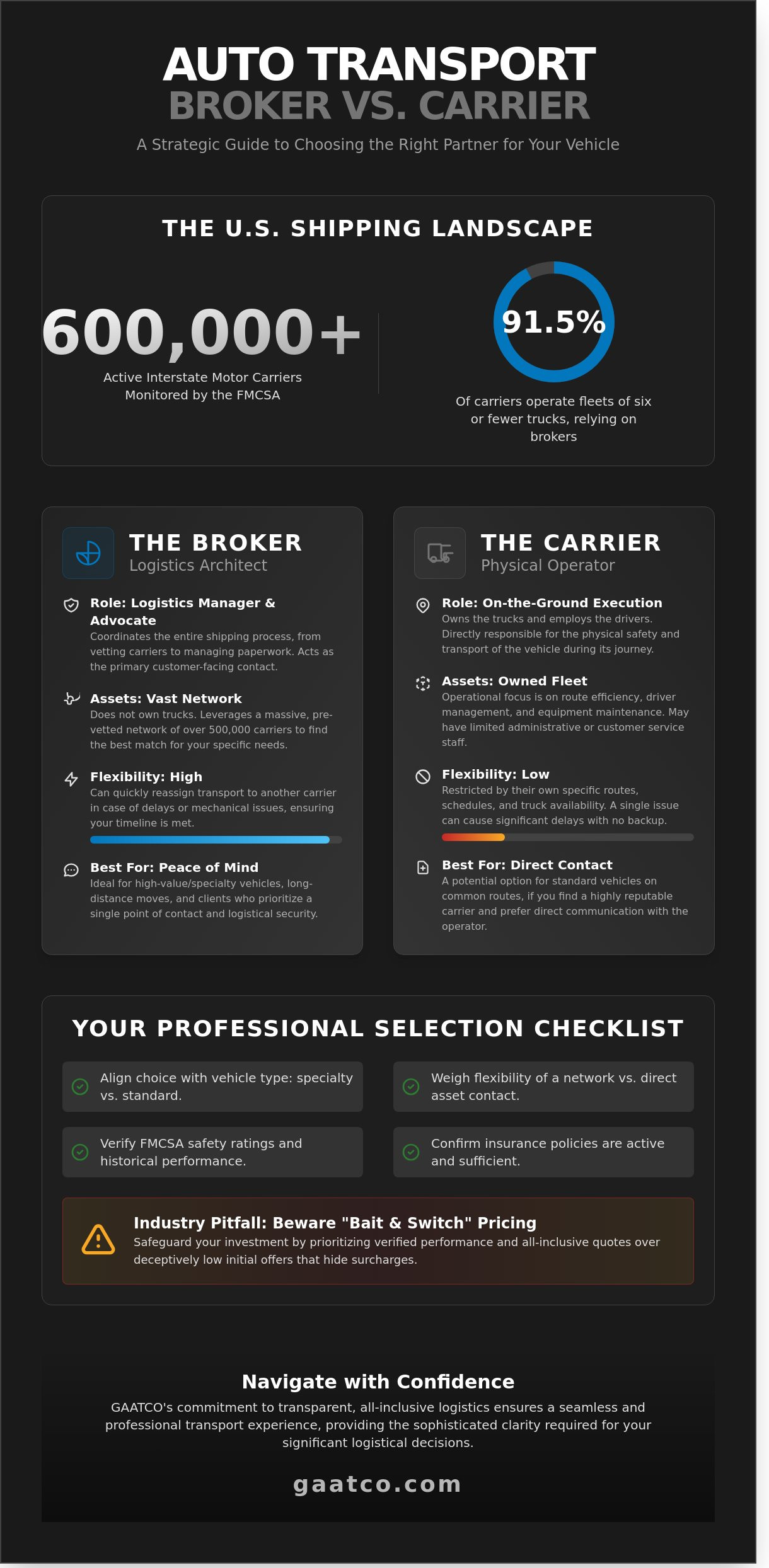
The relationship between these two parties is inherently symbiotic. According to 2023 data from the American Trucking Associations, 91.5% of motor carriers operate fleets of six or fewer trucks. These smaller operations often lack the dedicated staff required for high-level customer service or marketing. Consequently, they rely on brokers to fill their trailers, while brokers rely on carriers to provide the specialized equipment necessary for transport. This partnership ensures that even the most remote routes remain accessible for private and corporate clients alike.
The Architect: What is an Auto Transport Broker?
A broker functions as a bespoke logistics manager and a dedicated customer advocate. They do not own transport trucks; instead, they maintain access to a vast network of vetted providers. The Federal Motor Carrier Safety Administration (FMCSA) records over 500,000 active interstate motor carriers, making the broker’s role as a filter essential. They leverage these networks to secure specialized equipment, such as enclosed trailers for vintage collections or low-clearance ramps for performance vehicles. A professional broker also takes responsibility for vetting carrier safety ratings and verifying that insurance policies are active and sufficient for the cargo's value.
The Operator: What is an Auto Transport Carrier?
The carrier represents the physical element of the journey. These entities own the fleet, employ the drivers, and hold the direct responsibility for the vehicle's safety during transit. Their operational focus remains strictly on route efficiency and equipment maintenance. Because the majority of carriers are small, family-owned businesses, they often prioritize the technical aspects of the road over administrative support. While they excel at the precision of loading and hauling, they may not have the capacity to provide constant status updates. Understanding these operational boundaries is vital when learning how to choose between an auto transport broker and a carrier for your specific requirements.
Setting realistic expectations for communication is the hallmark of a successful transport experience. Clients should expect the broker to serve as the primary point of contact for scheduling and documentation, while the carrier focuses on the physical delivery within the established timeframe. This division of labor allows for a more controlled and reliable service, bridging the gap between complex logistical realities and the client's need for a secure, professional solution.
Weighing the Advantages: A Strategic Comparison
Determining the most effective logistical path requires a careful assessment of your specific requirements. A broker acts as a sophisticated intermediary; they leverage a vast network to find the most suitable equipment for your timeline. Conversely, a carrier provides a direct link to the physical asset and the individual operating the vehicle. This distinction is central to understanding how to choose between an auto transport broker and a carrier for your high-value assets. The decision often hinges on whether you prioritize a single point of operational contact or the expansive reach of a managed network.
The type of vehicle you intend to move significantly influences this choice. Standard sedans are easily accommodated by most fleets, yet vintage collectibles or low-clearance supercars require bespoke equipment. Data from the Federal Motor Carrier Safety Administration (FMCSA) indicates there are over 500,000 active interstate motor carriers in the United States. A broker filters this massive pool to identify the top 5% of providers who meet rigorous safety and insurance standards. This curation ensures that your vehicle is placed with a specialist rather than a generalist.
Flexibility and Nationwide Network Reach
Brokers excel when geographic flexibility is a priority. Because they do not own a finite number of trucks, they are not restricted by specific routes or backhaul requirements. If an assigned carrier experiences a mechanical failure or a scheduling delay, a broker can pivot to another vetted professional within their network, often within 24 hours. This redundancy is essential for expedited requests or moves involving remote locations where a single carrier might only pass through once a month. For those seeking bespoke transport solutions, the broker’s ability to source enclosed trailers or specialized hydraulic lift gates provides a level of versatility that individual carriers cannot match.
Direct Communication and Operational Control
Working directly with a carrier offers a sense of immediate control. You speak with the person who is physically touching the vehicle, which can provide peace of mind for some owners. This path occasionally results in minor cost savings because the broker's service fee is absent. However, these savings are often offset by the administrative burden placed on the client. According to industry reports, over 90% of trucking companies operate six or fewer power units. If you are managing a multi-car move across different regions, you may find yourself coordinating with three or four separate entities simultaneously. This fragmentation can lead to communication gaps that a dedicated logistics partner would otherwise bridge with seamless precision. Reliability remains the non-negotiable pillar of any successful transport, regardless of the provider's structure.
Critical Factors for Your Selection Process
Selecting a logistics partner requires a bespoke approach rather than a mere comparison of figures. A 2023 industry report indicates that 64 percent of transport delays stem from poor initial vetting. To ensure a seamless experience, you must prioritize historical performance data over the initial price quote. A lower quote often masks a lack of dedicated equipment or reliable scheduling; don't assume the cheapest option is the most reliable. You should verify every potential partner through the Federal Motor Carrier Safety Administration (FMCSA) Safety and Fitness Electronic Records (SAFER) system. This database provides a comprehensive view of a company's safety rating and operational authority. The Bill of Lading serves as your primary legal protection; it acts as both a receipt and a contract, detailing the vehicle's condition at every transition point. Understanding these elements is essential when learning how to choose between an auto transport broker and a carrier for your high-value assets.
Route Availability and Scheduling Logic
Carriers often optimize backhaul routes. These routes involve returning to a primary hub with a full load to maintain operational efficiency. While this logic can reduce costs for the carrier, it often limits flexibility for the client's specific timeline. A broker maintains a bird's-eye view of the entire market, utilizing a network of over 15,000 registered carriers to prevent scheduling bottlenecks. This perspective is vital when managing expectations for service levels. Door-to-door service offers premium convenience by handling the vehicle at your specific location. Terminal-to-terminal options may require you to manage the final miles of logistics yourself. A dedicated partner helps you weigh these variables to ensure your schedule remains intact.
Assessing Insurance and Liability Structures
Safety remains a non-negotiable pillar of professional transport. You must verify the carrier's cargo insurance limits, ensuring they meet the full valuation of your asset before any agreement is signed. Professional brokers often provide contingent cargo insurance. This acts as a secondary shield if the primary carrier's policy fails to cover a specific claim. The Federal Motor Carrier Safety Administration (FMCSA) is the governing body for all legal transport. When determining how to choose between an auto transport broker and a carrier, the presence of comprehensive liability coverage often dictates the final decision. This structured approach to risk management ensures that your vehicle is protected by more than just a promise.
Avoiding Common Pitfalls in the Auto Shipping Industry
The logistics of vehicle transport often involve complex psychological triggers. Low-ball quote providers frequently exploit the natural desire for value by offering figures that don't align with current market realities. In 2026, the bait and switch tactic remains a persistent issue. This occurs when a firm provides a quote significantly below the standard rate to secure a deposit, only to demand an additional $300 to $500 once the vehicle is scheduled for pickup. Understanding these predatory patterns is vital when you determine how to choose between an auto transport broker and a carrier for your high-value assets.
Professional firms prioritize safety and reliability over the allure of the lowest price. A quote that seems too good to be true usually indicates a compromise in driver quality or insurance depth. When reviewing contracts, look for red flags such as clauses that waive your right to damage claims or limit the company's liability to a negligible amount. Sophisticated clients recognize that a comprehensive service includes rigorous vetting and clear accountability. We believe that true luxury in logistics is the peace of mind that comes from knowing every detail is managed by experts who value the integrity of the cargo.
The Danger of Unrealistic Pricing
Under-quoting often leads to vehicles being stranded at pickup locations for weeks. Carriers prioritize loads that pay a fair market rate; consequently, cheap transport orders are ignored by the most reliable drivers. Data from 2024 suggests that 18% of low-cost bookings experience delays of seven days or more. There's also a direct correlation between sub-market pricing and poor insurance coverage. A professional firm provides a fixed, transparent fee structure that covers premium insurance and dedicated support. This transparency is a hallmark of a serious industry player.
Identifying Vetted vs. Unvetted Partners
The digital landscape is crowded with lead aggregators who don't actually ship cars. Instead, they sell your personal data to dozens of third parties, resulting in an influx of unsolicited calls. It's essential to distinguish a professional website from a temporary sales front. A seasoned partner typically possesses 20 or more years of experience in vetting drivers through the FMCSA Safety Measurement System. This long-term expertise allows for the selection of only the top 5% of carriers who meet strict safety and performance benchmarks. When deciding how to choose between an auto transport broker and a carrier, the depth of their vetting process is your greatest safeguard.
Protect your investment by partnering with a team that understands the nuances of premium logistics. Secure a bespoke transport solution that prioritizes safety and professional excellence above all else.
Navigating Your Move with GAATCO’s Professional Expertise
Determining how to choose between an auto transport broker and a carrier requires an understanding of where logistical precision meets physical execution. GAATCO operates as a sophisticated bridge between these two worlds. We provide the expansive reach of a global network while maintaining the intimate, dedicated service typically reserved for private aviation clients. This "Quiet Luxury" experience removes the burden of coordination from your shoulders, allowing you to focus on the broader aspects of your relocation. Our team manages the complexities of scheduling, route optimization, and carrier compliance with a calm confidence born from years of specialized experience.
Our nationwide reach makes us the preferred partner for complex moves that cross multiple state lines or involve tight timelines. We do not simply move vehicles; we manage the risks and variables that often complicate the transport process. By choosing a partner that understands the nuances of high-stakes logistics, you ensure that your asset is handled with the same level of care you would expect from a private charter service.
Our Commitment to Transparent Logistics
Transparency is the cornerstone of our operational philosophy. GAATCO employs a rigorous vetting process that scrutinizes every carrier in our network against Department of Transportation (DOT) safety records and historical performance data. We accept fewer than 18% of carriers who apply to our network, ensuring that only the most reliable operators handle your cargo. This meticulous screening protects your investment from the volatility of the open market.
By serving as your single point of contact, we eliminate the confusion of managing multiple stakeholders. You receive clear, elite communication throughout the journey, from the initial pickup to the final handover. Our all-inclusive pricing model reflects this commitment to integrity. The quote you receive includes all fuel surcharges, tolls, and comprehensive insurance premiums. This approach ensures no unexpected fees or hidden costs appear at the end of the journey.
Tailored Solutions for Every Vehicle Type
Every vehicle requires a specific logistical approach. GAATCO provides bespoke solutions for luxury, classic, and military-grade vehicles that demand more than standard handling. Our enclosed transport protocols utilize advanced hydraulic lift gates and soft-tie systems to protect low-clearance vehicles and pristine finishes from road debris. These trailers are climate-controlled to maintain the integrity of delicate components during long-haul transits.
- Bespoke Handling: Custom loading plans for vintage and high-value assets.
- Enclosed Transport: Maximum protection for vehicles requiring a pristine environment.
- Open Transport: Efficient, secure transit for daily drivers and corporate fleets.
- Military Logistics: Specialized coordination for service members and heavy-duty equipment.
We coordinate moves across all 50 states, leveraging our nationwide reach to solve complex logistical challenges for corporate clients and private individuals alike. Whether you are moving a single vehicle or an entire collection, our team provides a seamless experience that prioritizes safety and reliability above all else.
Elevating Your Vehicle Transport Experience
Selecting the right partner is the most critical step in protecting your automotive investment. Understanding how to choose between an auto transport broker and a carrier involves evaluating whether you prioritize a single point of contact or the expansive reach of a vetted network. GAATCO provides a bespoke, comprehensive solution that combines the best of both worlds through our elite logistics framework. We bring over 20 years of specialized experience to every transport, maintaining a fully licensed and insured national network that meets the highest industry standards. Our team acts as your dedicated advisor, offering concierge-level customer support that removes the burden of complex scheduling and carrier vetting. You'll find that our commitment to safety and excellence serves as the non-negotiable pillar of our service. This steady, measured approach ensures that your vehicle arrives exactly as expected, regardless of the distance. It's time to move with the confidence that only a seasoned expert can provide.
Secure your professional vehicle transport quote from GAATCO
Frequently Asked Questions
Is it better to book directly with a carrier or use a broker?
The decision depends on whether you value a single point of contact or a broad range of logistical options. Brokers offer access to a network of over 15,000 registered carriers, which ensures a bespoke solution for specific or difficult routes. Direct carriers provide a singular relationship; however, their availability is limited by their specific fleet size and current regional positioning at any given time.
Can a broker guarantee a specific pickup and delivery date?
Brokers typically provide a 2 to 3 day window for pickup rather than a singular guaranteed date. This flexibility allows the broker to coordinate with various carriers to ensure your vehicle is placed on the most efficient route available. While 90 percent of standard shipments operate within these estimated windows, road conditions and logistical variables mean that precise timing usually requires a premium expedited service.
What happens if my vehicle is damaged during transport with a broker?
The carrier's cargo insurance serves as the primary coverage for any damage sustained during transit. You must document any issues on the Bill of Lading at the time of delivery to initiate a claim. A professional broker acts as your dedicated liaison, assisting you in filing the necessary paperwork with the carrier's insurance provider to ensure the resolution process remains seamless and efficient.
How do I know if an auto transport broker is legitimate?
A legitimate broker must possess active operating authority from the Federal Motor Carrier Safety Administration. You can verify this by checking their Motor Carrier number on the official FMCSA website. Data from 2023 indicates that verified brokers maintain a $75,000 surety bond; this bond provides a critical layer of financial security for clients in the event of a contractual failure.
Why are broker quotes sometimes higher than direct carrier quotes?
Broker quotes include a service fee that covers the comprehensive vetting of carriers and the management of complex logistics. This investment ensures your vehicle is handled by a professional with a proven safety record. When you learn how to choose between an auto transport broker and a carrier, it's vital to recognize that the broker's fee represents the value of their extensive network and administrative expertise.
Do carriers always have better insurance than brokers?
Carriers are required by law to carry cargo insurance, which often ranges from $100,000 to $250,000 for open transport. Brokers don't provide the primary insurance but often carry contingent cargo insurance as an additional safeguard. This secondary layer of protection ensures your assets are covered even if the carrier's primary policy encounters an unforeseen issue during the journey.
What is the role of the FMCSA in choosing between a broker and carrier?
The FMCSA regulates the industry by issuing operating permits and monitoring safety ratings for every legal transport entity. When evaluating how to choose between an auto transport broker and a carrier, the FMCSA database provides transparent access to a company's crash history and inspection records. Utilizing these 30 years of federal oversight data allows you to make a decision based on empirical safety performance.
Can I track my vehicle if I book through a broker?
Most professional brokers provide tracking updates through a dedicated portal or direct communication with the assigned driver. While a carrier provides GPS data from their specific truck, a broker consolidates this information to provide you with regular status reports. Approximately 85 percent of modern transport logistics now utilize digital tracking to ensure clients remain informed throughout the vehicle's transit.


