The transfer of a high-value vehicle between private parties is far more than a simple transaction; it is a precise logistical operation where the transport phase represents the highest point of vulnerability. While finding the right buyer or the ideal car is a triumph, the reality of how to arrange transport for a private car sale often introduces a layer of friction that can jeopardize the entire agreement. Whether you are navigating a cross-country purchase or managing a local handover, the coordination of professional shipping serves as the essential bridge of trust between two parties who may never meet in person.
It's natural to feel a sense of trepidation regarding the security of your title or the physical integrity of the vehicle during transit. We understand that the hand-off is the moment where logistical confusion typically peaks and concerns about secure delivery are most acute. This guide provides a sophisticated framework to master these complexities, ensuring a seamless transition from one owner to the next. You'll gain a clear understanding of the necessary documentation, the division of responsibilities, and the protocols required for a damage-free delivery that honors the value of your investment.
Key Takeaways
- It's vital to recognize the shift in logistical responsibility that occurs when you're transitioning from a dealership environment to a private vehicle transaction.
- Ensure the legal integrity of your transfer by securing the vehicle title and drafting a comprehensive bill of sale that includes all relevant identifiers.
- Select the most appropriate shipping method by evaluating your vehicle's specific requirements against the distinct advantages of open and enclosed transport.
- You'll master how to arrange transport for a private car sale by establishing a clear communication protocol between the seller and the professional carrier.
- Mitigate operational risks by following a meticulous preparation checklist designed to facilitate a secure and damage-free vehicle hand-off.
The Unique Challenges of Private Party Vehicle Logistics
The transition from a showroom environment to a private transaction involves more than just a change in scenery; it represents a fundamental shift in logistical responsibility. In a traditional dealership setting, the infrastructure for vehicle relocation is pre-established and often included in the final invoice. However, understanding how to arrange transport for a private car sale requires the buyer and seller to act as their own logistics coordinators. This process is not merely about moving a vehicle from point A to point B. It's about establishing a secure chain of custody between two private individuals who must rely on professional precision to bridge the distance.
To better understand the nuances of managing a private sale, watch this helpful overview of the process:
A professional transport provider serves as an essential, neutral third party in these high-stakes exchanges. When our carriers arrive for pickup, they conduct a rigorous inspection and document the vehicle's condition on the Bill of Lading. This document provides an objective record that protects the seller from false damage claims and ensures the buyer receives a vehicle that matches its advertised condition. Establishing a clear point of contact at both the origin and destination is the most effective way to ensure this verification occurs without delay. Without a dedicated professional at the helm, the hand-off can quickly become a source of unnecessary stress for both parties.
Defining Roles: Who Arranges the Transport?
The question of who manages the shipping contract is a common point of negotiation in private sales. By industry standard, the individual receiving the vehicle typically assumes the responsibility for scheduling and payment. This arrangement is logical because the buyer has the greatest interest in the timing and quality of the delivery. Both parties must confirm that the vehicle title is ready for transfer and that the selected carrier maintains the necessary insurance limits to cover the full value of the asset. We recommend that the buyer shares the carrier's details with the seller early in the process to maintain transparency and build mutual confidence.
The Risk of Residential Pickups and Deliveries
Private sales often originate in quiet, residential neighborhoods that weren't designed for 75-foot transport trailers. Navigating the narrow corridors of historic districts in cities like Boston or the steep inclines of San Francisco presents significant operational challenges. While we specialize in Door-to-Door Auto Shipping, there are instances where a large carrier cannot safely reach a specific driveway. In these cases, identifying a nearby accessible location, such as a wide commercial thoroughfare or a large parking lot, is vital. Clear communication regarding these local nuances prevents delivery delays and ensures the safety of the vehicle and the surrounding property.
Essential Documentation for a Seamless Ownership Transfer
Successfully managing how to arrange transport for a private car sale requires more than just selecting a carrier. It demands a meticulous alignment of legal documentation and logistical records. The primary objective is to create a transparent paper trail that protects both the buyer's investment and the seller's liability. Before the carrier arrives, the seller must ensure the vehicle title is clear of all liens and ready for endorsement. This document is the definitive proof of ownership, and any errors in the transfer can lead to significant delays in registration or even transport.
A comprehensive Bill of Sale acts as the legal cornerstone of the transaction. It should explicitly state the Vehicle Identification Number (VIN), the final purchase price, and the contact information for both parties. As noted by the Washington State Department of Licensing, filing a report of sale is a critical step for the seller to release themselves from future civil or criminal liability associated with the vehicle. Beyond these legalities, the seller should provide a complete set of keys and any necessary alarm codes to the driver. This ensures the vehicle can be safely loaded and unloaded without triggering security protocols that could drain the battery or delay the schedule.
Bridging the Gap Between DMV and Transport
One of the most overlooked aspects of private logistics is ensuring the name on the transport order aligns with the documentation provided to state authorities. Carriers often require that the person releasing the vehicle is authorized to do so by the owner of record. Additionally, federal law mandates an odometer disclosure for most vehicles. We recommend documenting the mileage at the exact moment the car is loaded onto the trailer. This provides a definitive baseline for the buyer, ensuring that the vehicle's condition and mileage remain consistent from the point of origin to the final destination. Ensuring the buyer has proof of insurance before the vehicle is offloaded is another vital step in a professional handover.
The Bill of Lading: Your Legal Safeguard
While the title handles ownership, the Bill of Lading (BOL) governs the physical transit. This document serves as your primary receipt and a detailed condition report. Before the vehicle is secured, you must conduct a meticulous walk-around inspection with the driver. Every existing cosmetic imperfection, no matter how minor, should be noted. Modern standards favor the digital BOL, which allows for real-time photo documentation that is instantly accessible to all parties. If you have questions about specific documentation requirements for your upcoming move, the team at GAATCO is available to provide expert guidance on the nuances of secure vehicle relocation.
Selecting the Right Transport Method for Your New Acquisition
The decision regarding the mode of transit is a strategic one, reflecting both the financial value and the emotional significance of the acquisition. When determining how to arrange transport for a private car sale, the discerning buyer must weigh the balance between operational efficiency and maximum protection. While the majority of vehicles move via open infrastructure, certain assets require a more specialized environment to ensure they arrive in the same condition as documented during the initial sale. Selecting the right carrier is less about finding the lowest price and more about identifying the service level that mitigates the specific risks associated with your vehicle's profile.
Insurance implications also vary significantly between these methods. While all legitimate carriers must maintain liability coverage, the limits on enclosed trailers are typically higher to accommodate the increased value of their cargo. It's a prudent practice to request a copy of the carrier's insurance certificate to ensure the policy is active and the coverage is sufficient for your specific vehicle. Before finalizing your selection, you should verify the registration of any transporter or broker through official federal channels. This step ensures that the entity handling your investment adheres to the strict safety and financial standards required for interstate commerce.
Open Carrier Transport: Efficiency and Reliability
Open Car Transport serves as the logistical backbone of the industry. It is the standard choice for everyday sedans and SUVs, utilizing multi-car trailers that operate with high frequency along major corridors. For instance, routes between New York and Miami see a steady flow of these carriers, providing a reliable and cost-effective solution for private buyers. Approximately 95% of all automobiles are shipped via this method because of its expansive reach and frequent scheduling. While these vehicles are exposed to weather and road debris, the risk is professionally managed through rigorous loading protocols and oversight by experienced drivers who understand the nuances of secure vehicle placement.
Enclosed Carriers: The Specialized Choice for High-Value Sales
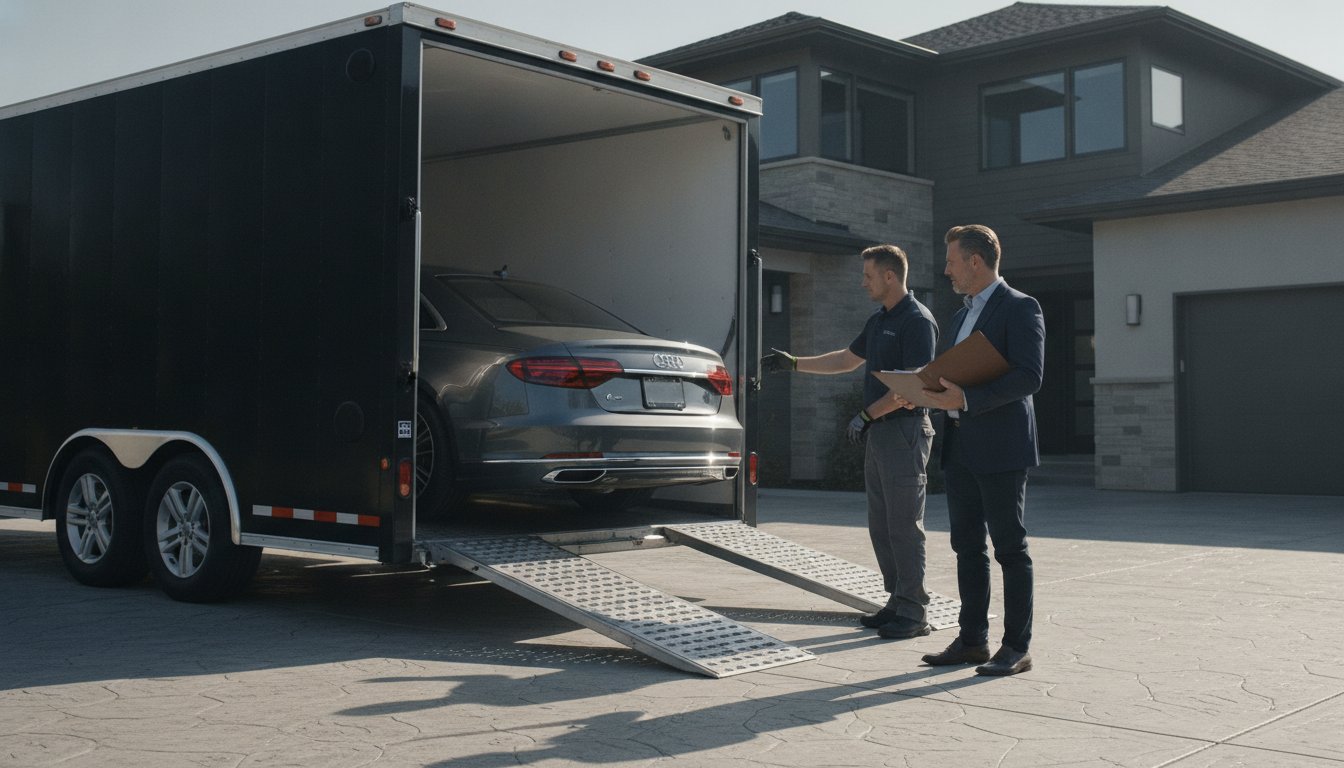
For luxury, classic, or exotic investments, Enclosed Car Transport offers a level of discretion and security that open trailers cannot match. These specialized trailers protect the vehicle from environmental elements and prying eyes, maintaining the pristine finish of high-value acquisitions. Many of these carriers are equipped with hydraulic lift gates, which are necessary for low-clearance sports cars that might otherwise be damaged by the steep angles of standard ramps. This white-glove service is the preferred choice for private collectors who view their vehicles as more than mere transportation; they are assets that require a climate-controlled and fully shielded environment. Choosing the right method is the final step in ensuring your specialized transport solution aligns with the unique needs of your new vehicle.

Coordinating the Hand-off: A Checklist for Buyers and Sellers
Mastering how to arrange transport for a private car sale requires more than a signed contract; it demands a synchronized effort between the buyer, the seller, and the professional carrier. This three-way coordination represents the most critical phase of the logistics chain, where the theoretical details of the sale meet the physical realities of transport. While the buyer often initiates the shipping contract, the seller acts as the essential point of origin. Establishing a direct line of communication between the seller and the driver ensures that pickup windows are respected and that the carrier has the necessary logistical access to the vehicle's location.
Effective coordination begins several days before the carrier arrives. Both parties should agree on a primary communication channel, whether through direct calls or digital messaging, to provide real-time updates on the driver's proximity. This transparency reduces the anxiety often associated with residential pickups and ensures that the vehicle is positioned for a seamless loading process. By viewing the transport as a collaborative partnership, buyers and sellers can mitigate the friction that occasionally arises during long-distance transactions.
Preparation Steps for the Seller
The seller's primary responsibility is to present the vehicle in a state that allows for a transparent and accurate inspection. A clean exterior is vital, as road grime or dust can obscure minor cosmetic imperfections that must be documented on the Bill of Lading. We recommend maintaining the fuel level at approximately one-quarter tank. This provides enough fuel for the driver to maneuver the vehicle onto the trailer while minimizing unnecessary weight. Additionally, all personal belongings must be removed from the cabin, and any loose aftermarket accessories should be secured or detached to prevent damage from wind resistance during transit. If the vehicle possesses mechanical quirks, such as a specific ignition sequence or a sensitive alarm system, providing a brief written guide for the driver is a hallmark of a professional handover.
Receiving the Vehicle: The Buyer’s Responsibility
Upon the vehicle's arrival, the buyer assumes the role of the final inspector. This stage requires a side-by-side comparison of the vehicle's current condition against the digital or paper condition report generated at the point of origin. It's essential to conduct this walk-around in adequate lighting to ensure no detail is missed. If you suspect any new damage occurred during the journey, it must be noted explicitly on the Bill of Lading before providing your final signature. This documentation serves as the definitive legal record for any subsequent insurance inquiries. Once the inspection is complete and the delivery is finalized in the carrier’s tracking system, the logistics of the sale are officially concluded. To ensure your next acquisition is managed with this level of meticulous care, you can request a professional transport quote from our experienced team.
Why GAATCO is the Trusted Partner for Private Transactions
Selecting a logistics partner for a private vehicle acquisition is a decision rooted in the need for absolute reliability. At GAATCO, we have spent over 20 years refining our framework for high-stakes vehicle relocation, positioning ourselves as a discreet and dependable partner for the most discerning clients. We understand that when you are determining how to arrange transport for a private car sale, the primary requirement is a transparent process that eliminates the ambiguity of the secondary market. Our commitment to professional excellence is reflected in our transparent pricing model, which ensures that our clients are never surprised by hidden broker fees or unexpected surcharges at the point of delivery.
Every carrier within our expansive network is meticulously vetted, licensed, and insured to meet the highest safety standards in the industry. We view ourselves as more than a service provider; we are a bridge between your specific needs and the complex operational realities of interstate transport. By prioritizing the physical security of your investment, we offer a sense of quiet confidence that allows you to focus on the excitement of your new acquisition while we manage the intricate details of the journey.
Regional Expertise in Major US Markets
Our operational reach is defined by a sophisticated understanding of regional nuances across the United States. Navigating the logistical density of major hubs like Houston, Dallas, and Seattle requires more than just a fleet of trucks. It requires local knowledge. Our team understands the specific challenges of residential pickups in these metropolitan areas, from local traffic patterns to municipal restrictions on large transport trailers. This geographic advantage allows us to provide smoother coordination and more accurate timing for our Door-to-Door Auto Shipping services. Whether your vehicle is moving between two coastal cities or across the heart of the country, our vetted network across all 50 states ensures a consistent level of elite service.
A Human-Centric Approach to Complex Logistics
While our infrastructure is built on advanced logistics, our service remains fundamentally human-centric. We provide a dedicated support team that serves as a central point of coordination for both the buyer and the seller, managing the communication flow that is so vital in private transactions. This personalized attention ensures that quirks, preferences, and specific delivery requirements are never lost in transit. The GAATCO promise is one of stability and long-term experience, offering a professional environment where your vehicle is handled with the meticulous care it deserves. If you are ready to secure your purchase with a partner who understands the nuances of high-end service, you can request a customized transport quote from GAATCO today.
Elevating Your Private Vehicle Acquisition
Navigating the logistical nuances of a private transaction requires a disciplined focus on documentation and synchronized communication. By aligning the legal transfer with professional shipping protocols, you ensure that the vehicle's integrity is preserved from the seller's driveway to your own. Mastering how to arrange transport for a private car sale transforms a potentially complex hand-off into a controlled, professional operation that honors the financial and emotional value of your investment.
As you conclude your purchase, our team stands ready to facilitate the final phase of your journey with the discretion and precision you expect. With over 20 years of industry experience, GAATCO utilizes only licensed and fully insured carriers to deliver our A+ rated door-to-door service. We manage the intricate details of coordination and carrier verification so you can enjoy the transition with absolute peace of mind. Secure your private sale with a professional GAATCO transport quote and proceed with the confidence that your new asset is in expert hands. We look forward to ensuring your vehicle arrives exactly as intended.
Frequently Asked Questions
Who is responsible for paying for transport in a private car sale?
The buyer typically assumes responsibility for the costs and coordination of vehicle logistics. While the buyer and seller can negotiate these terms, the individual receiving the asset has the greatest incentive to ensure the shipping method meets their specific standards for safety and timing. Establishing this responsibility early in the negotiation prevents confusion and ensures a professional hand-off at the point of origin.
Can I ship personal belongings inside the car during a private sale transport?
Carriers are legally prohibited from transporting household goods within a vehicle due to federal weight and licensing regulations. Items left inside are not covered by the carrier's insurance policy and can shift during transit, which may cause interior damage or compromise the vehicle's security. We recommend removing all personal effects to ensure a clean inspection and a weight-compliant shipment that adheres to professional standards.
What happens if the car is damaged during a private party shipment?
If damage is suspected, you must document the specific issues on the Bill of Lading at the time of delivery before the driver departs. This document serves as the primary legal evidence for an insurance claim against the carrier's policy. Following this notation, you should contact your transport provider immediately to initiate the formal claims process and provide the supporting photo documentation captured during the pickup and delivery inspections.
How do I verify that a car shipping company is legitimate?
Legitimacy is verified by confirming the provider's Motor Carrier and DOT numbers through the Federal Motor Carrier Safety Administration database. A reputable company will maintain a high rating with the Better Business Bureau and offer transparent insurance documentation upon request. This verification process is a critical step in understanding how to arrange transport for a private car sale while protecting your financial interests and the vehicle's safety.
Do I need to be present for the pickup and delivery of the vehicle?
Either you or a designated representative must be present at both the pickup and delivery locations. This presence is required to perform the joint physical inspection with the driver and sign the Bill of Lading, which establishes the vehicle's condition at each stage. If you cannot be there personally, ensure your representative understands the importance of documenting the vehicle's condition meticulously to avoid disputes later.
How long does it typically take to ship a car across the country?
Cross-country transit typically requires between seven and ten days, depending on the specific route and prevailing weather conditions. While drivers prioritize efficiency, they must adhere to federal hours-of-service regulations to ensure the safe delivery of your vehicle. Your transport coordinator will provide a more precise window based on current logistical flow and the specific distance between the seller's location and your destination.
Is insurance included in the car transport quote for a private sale?
A professional transport quote includes the carrier's cargo insurance, which protects your vehicle against transit-related damage from the moment of loading until the final offloading. This coverage is a standard component of how to arrange transport for a private car sale with a reputable provider. It's prudent to confirm the specific coverage limits to ensure they align with the full market value of your new acquisition.
Can I ship a car that doesn't run if I bought it from a private seller?
You can ship an inoperable vehicle, provided the carrier is equipped with a winch or specialized loading equipment. When arranging logistics for a non-running car, you must disclose the vehicle's condition during the quoting process. This ensures the dispatch team assigns a trailer capable of safely managing the loading and unloading process without the use of the vehicle's engine, preserving the integrity of the asset.


