
The assumption that a DIY move is the most fiscally responsible path often dissolves when faced with the complex logistics of a cross-country journey. While the initial quote for a trailer might seem modest, the cumulative cost of renting a u-haul truck and car trailer vs shipping often reveals a surprising parity. You've likely considered the independence that comes with managing your own transport, yet the hidden variables of fuel efficiency, overnight accommodations, and the physical strain of navigating a heavy rig can quickly erode those perceived savings.
We understand that your vehicle is more than just a machine; it's a significant investment that requires meticulous care. This guide provides a sophisticated break-even evaluation to help you make a choice that aligns with both your budget and your peace of mind. You'll discover how professional auto transport eliminates the risks of trailer sway and mechanical wear, offering a streamlined experience that allows you to focus on your transition. This exploration covers everything from 2026 mileage rates to the logistical advantages of door-to-door service, ensuring your relocation remains a seamless, high-end endeavor.
Key Takeaways
- Evaluate the comprehensive cost of renting a u-haul truck and car trailer vs shipping by accounting for dynamic fuel prices and mileage surcharges that often exceed initial estimates.
- Identify the critical 500-mile threshold where professional transport becomes the more efficient and cost-effective logistical choice for long-distance relocations.
- Protect your vehicle's long-term value by avoiding the mechanical strain and suspension wear inherent in DIY towing across major interstate corridors.
- Mitigate safety risks such as trailer sway and complex highway maneuvering by leveraging the expertise of licensed carriers specialized in multi-car logistics.
- Choose between open and enclosed transport options to ensure your asset arrives in pristine condition without the burden of managing rental equipment returns.
The True Cost of DIY: Beyond the U-Haul Rental Receipt
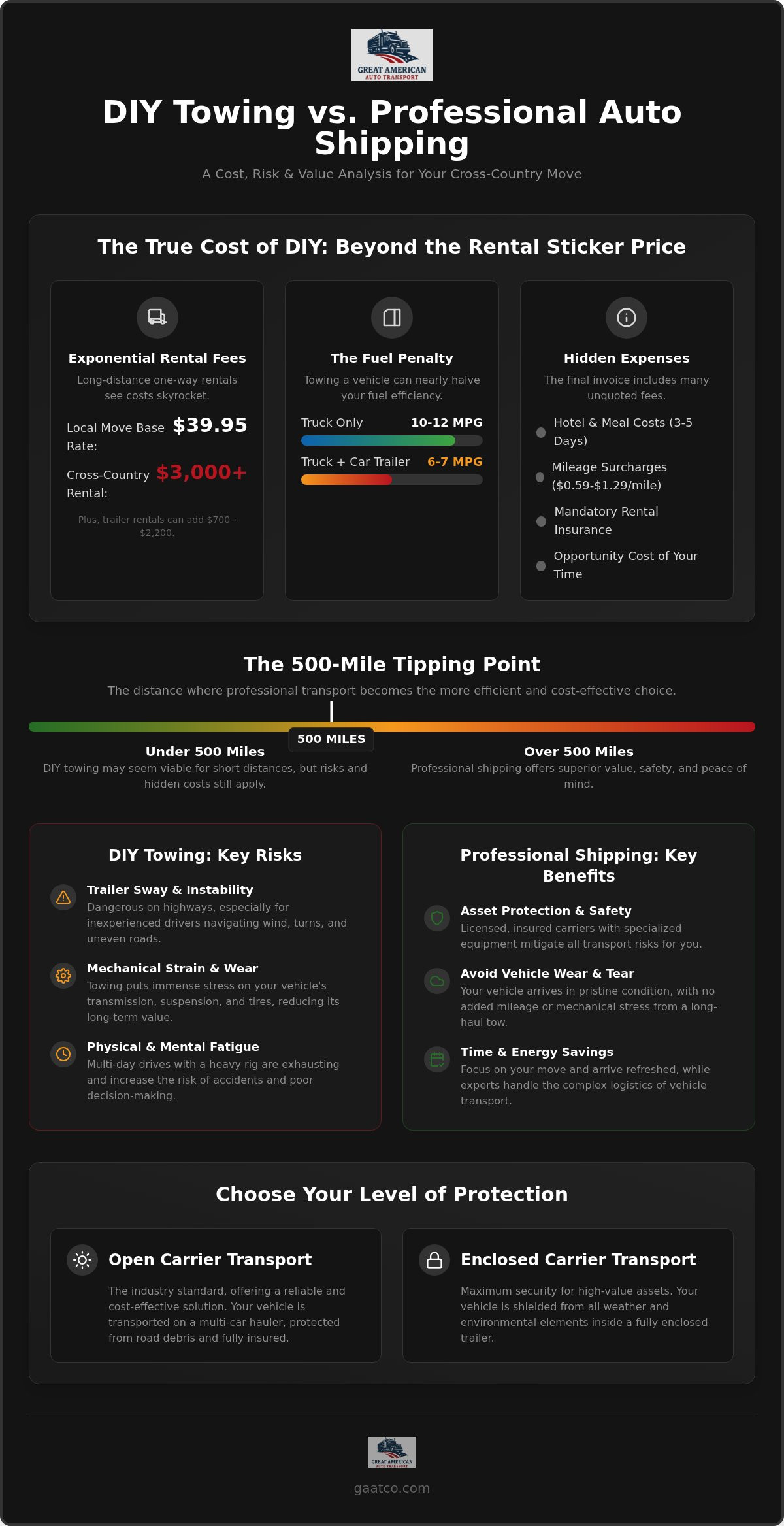
The advertised daily rate of a rental truck is merely the starting point of a complex financial equation. For those examining the cost of renting a u-haul truck and car trailer vs shipping, the discrepancy between the initial quote and the final invoice is often substantial. A look at the U-Haul company history reveals a business model built on accessible, high-volume equipment, yet the financial burden for a cross-country move shifts heavily toward the consumer through tiered mileage fees and equipment surcharges. In 2026, while a base local rate might sit at $39.95 for a 20-foot truck, one-way long-distance rentals frequently exceed $3,000 before a single gallon of fuel is purchased.
Beyond the base rental, the "Mileage Tax" serves as a significant hidden expense. For local moves, fees typically range from $0.59 to $1.29 per mile. On a long-distance route, these costs are often bundled into a flat rate with a strict mileage allowance. If your route requires a detour or you face unexpected road closures, exceeding that allowance results in punitive per-mile charges. When you add the cost of a car trailer rental, which can range from $700 to over $2,200 for one-way trips, the financial advantage of DIY begins to thin.
The Fuel Penalty of Towing
Towing a 4,000-pound vehicle behind a fully loaded moving truck fundamentally alters the aerodynamics and mechanical load of the journey. A standard rental truck typically achieves approximately 10 to 12 miles per gallon. However, adding an auto-transport trailer can reduce this efficiency to as low as 6 or 7 miles per gallon. With 2026 fuel price averages remaining a significant variable, a 1,000-mile trip might require three or four additional fuel stops compared to a standalone drive. Terrain also plays a decisive role. Navigating mountainous regions with a heavy trailer increases the strain on the truck's engine and braking systems, leading to even higher consumption and a slower, more arduous pace.
Ancillary DIY Expenses
The logistical reality of a DIY move extends far beyond the equipment itself. Towing a vehicle necessitates specific hardware, including hitch installations and light wiring, which are rarely included in the base rental price. Mandatory rental insurance and environmental fees add another layer of expense. Beyond the hardware, one must account for the human element of the journey. A cross-country drive with a trailer is physically demanding and typically requires more time than a standard commute.
- Hotel stays and meals for a 3 to 5-day itinerary.
- One-way drop-off fees that can double the initial equipment cost.
- The opportunity cost of personal time spent behind the wheel.
For those seeking a professional alternative for their household items, especially within the South Australian market, Anspach Removals & Storage provides expert furniture moving services that eliminate the physical burden of a DIY transition.
When you calculate the cost of renting a u-haul truck and car trailer vs shipping, the value of professional transport services becomes clear. Relieving yourself of these hidden burdens allows for a more refined and focused transition. Professional logistics providers handle the complexities, ensuring your vehicle arrives without the unnecessary wear and tear of a thousand-mile tow.
Professional Auto Shipping: Analyzing the Value of Expertise
While the DIY route presents an illusion of control, professional auto transport provides a level of operational efficiency that individual rentals cannot match. Multi-car carriers maximize resources, spreading the overhead of fuel and labor across several vehicles. This economy of scale often bridges the gap in the cost of renting a u-haul truck and car trailer vs shipping, especially when you factor in the common moving expenses that many owners overlook. Professional dispatching ensures that drivers follow optimized routes, significantly reducing the risk of fatigue-related incidents that often plague inexperienced drivers handling heavy towing equipment for the first time.
When comparing the total cost of renting a u-haul truck and car trailer vs shipping, the investment in professional expertise often yields a superior return in both time and safety. By delegating the heavy lifting to a specialized team, you bypass the physical and mental strain of a multi-day drive, allowing you to arrive at your destination refreshed and ready for your new chapter.
Open vs. Enclosed Carriers
The choice of transport method allows for a customized level of asset protection tailored to your vehicle's specific needs. For daily drivers, Open Car Transport remains the standard for efficiency and reliability. However, for classic, exotic, or high-value luxury vehicles, Enclosed Car Transport offers a secluded environment away from road debris and weather elements. Unlike the basic coverage provided by rental companies, professional shipping operates under a formal Bill of Lading, which serves as both a receipt and a contract, ensuring rigorous standards for insurance and accountability.
The Door-to-Door Convenience Factor
One of the most significant advantages of professional service is Door-to-Door Auto Shipping. This model eliminates the logistical hurdle of navigating a massive 40-foot rental truck and trailer through narrow residential streets or finding a secure rental hub for equipment return. This streamlined approach offers several benefits:
- It saves hours of local transit time that would otherwise be spent at rental offices.
- It avoids the mechanical risks of improper loading onto a tow dolly by an amateur.
- It ensures safe delivery directly to your residence or place of business under professional supervision.
By delegating these complexities to seasoned experts, you preserve your time and maintain the integrity of your vehicle. If you're ready to explore a more refined relocation experience, you might consider requesting a personalized quote to see how professional logistics can simplify your transition.
Risk Assessment: Safety, Liability, and Wear-and-Tear
While previous sections detailed the direct financial outlays, the comprehensive cost of renting a u-haul truck and car trailer vs shipping must account for the physical and mechanical risks inherent in DIY towing. A 1,000-mile journey with a loaded trailer is not merely a drive; it is a high-stakes logistical operation that places immense pressure on both the driver and the equipment. Inexperienced operators often underestimate the "Sway Factor," a dangerous oscillation caused by crosswinds, passing semi-trucks, or sudden steering corrections. Managing a 40-foot combined rig requires a specialized skill set that most personal vehicle owners haven't had the opportunity to develop, significantly increasing the likelihood of road incidents.
The physical toll on the driver is equally significant. Navigating a heavy, less responsive vehicle leads to accelerated fatigue. This exhaustion, combined with the slower speeds required for safe towing, often extends a two-day trip into a four-day ordeal. When you weigh the cost of renting a u-haul truck and car trailer vs shipping, you must consider the value of your own safety and the high probability of encountering hazardous road conditions without the benefit of professional training. For those who prefer to rely on expert assistance for such journeys, Dependable Towing & Recovery Services provides specialized long-distance solutions that prioritize the safety and security of your vehicle.
Mechanical strain is a quiet but persistent expense. If you utilize a tow dolly, your vehicle's rear tires remain in contact with the pavement for the duration of the trip. This results in thousands of unnecessary rotations, leading to uneven tire wear and potential strain on the suspension system. Beyond mechanical issues, a towed vehicle is a stationary target for road debris. Rocks, salt, and asphalt fragments kicked up by the rental truck's tires can cause significant paint chips or windshield cracks. Professional enclosed car transport eliminates these variables, ensuring your asset remains in a climate-controlled, debris-free environment, thereby preserving its market value and aesthetic integrity.
Insurance and Peace of Mind
Liability gaps represent a major financial vulnerability in DIY moves. Many owners mistakenly believe their personal auto insurance will cover a vehicle while it is attached to a rental hitch. In reality, most standard policies exclude coverage for towed vehicles in this context. While rental companies offer basic protection like SafeTow, these plans often have restrictive limits and complex claim processes. In contrast, professional carriers operate with comprehensive cargo insurance and a formal Bill of Lading. This document serves as a legal safety net, clearly documenting the vehicle's condition and transferring the burden of liability to the licensed carrier. Choosing a professional transport solution provides a level of certainty that a rental agreement simply cannot match.
The Break-Even Point: When to Ship vs. When to Tow
Determining the precise moment to transition from a DIY approach to professional transport requires a cold analysis of logistical variables. For journeys under 500 miles, the immediate control of a rental might appear attractive. However, once a route exceeds this distance, the cumulative cost of renting a u-haul truck and car trailer vs shipping begins to favor the latter. This shift occurs because the fixed costs of professional transport are amortized over longer distances, while DIY expenses like fuel, lodging, and mileage surcharges continue to scale linearly. The vehicle value equation also serves as a decisive factor. If the price of professional transport represents less than 1% of the car's total market value, shipping serves as a prudent investment in asset preservation rather than a mere convenience.
Seasonal variables in 2026 also dictate the safety profile of your move. Winter weather across northern corridors introduces significant risks for inexperienced drivers handling heavy trailers. Ice and high winds can turn a standard relocation into a hazardous ordeal, potentially leading to accidents that far exceed the cost of any professional service. Balancing truck capacity against trailer weight is equally critical; an overloaded rental truck struggling through winter terrain is a recipe for mechanical failure and delayed timelines.
Calculating Your Break-Even Distance
To find your personal tipping point, you must move beyond the base rental receipt and look at the total operational outlay. This calculation should be handled with the same precision as any corporate logistical audit. We recommend a three-step approach to ensure your decision is both fiscally sound and stress-free:
- Step 1: Total all projected DIY costs, including the rental fee, 2026 fuel estimates, hotel stays, and meals.
- Step 2: Obtain a customized shipping quote to establish a professional baseline for comparison.
- Step 3: Factor in the value of your own time. A cross-country tow typically requires 2 to 4 days of intensive driving that could be better spent on professional or personal obligations.
Market Factors in 2026
The 2026 transport market is defined by volatile fuel surcharges and high demand in major hubs like Houston, Phoenix, and Atlanta. Rental equipment availability in these regions can be unpredictable, often leading to last-minute price spikes or the unavailability of specific trailer models. Professional carriers mitigate these fluctuations through established networks and optimized routing. While expedited shipping surcharges can increase the final price, the reliability of a guaranteed delivery window often outweighs the uncertainty of a DIY journey. If you're managing a complex relocation, choosing a partner for specialized vehicle relocation ensures that your asset is handled with the expertise it deserves, regardless of market conditions.
The GAATCO Standard: Seamless Logistics for Discerning Owners
Navigating the complexities of vehicle relocation requires more than just equipment; it demands a partner who anticipates challenges before they arise. At GAATCO, we've spent over 20 years refining a standard of service that prioritizes the security of your asset and the value of your time. While the cost of renting a u-haul truck and car trailer vs shipping might initially seem comparable on paper, our approach eliminates the logistical friction and hidden surcharges that often plague DIY endeavors. We believe in transparent, upfront pricing that reflects the true scope of the project, ensuring there are no surprises upon delivery. Our team serves as a bridge between your specific needs and the complex operational realities of the modern transport industry.
The human element is what truly distinguishes an elite transport experience. Our dedicated support specialists aren't just coordinators; they're experts who understand the high stakes of specialized relocation. We operate with a calm confidence that comes from established expertise in major hubs like Houston, Miami, and San Diego. By choosing a professional partner, you transition from the inherent stress of managing a heavy trailer to the ease of a managed logistical flow, where licensed and insured carriers handle every detail with meticulous care.
Tailored Solutions for Every Vehicle
Our team recognizes that a daily commuter requires a different protocol than a vintage masterpiece. We provide specialized Classic Car Transport that utilizes enclosed carriers to protect against the environmental variables and road debris discussed in previous sections. For our service members, we offer dedicated support for military vehicle shipping, understanding the unique urgency and precision required for PCS moves. Additionally, our dealer-to-dealer logistics provide high-volume efficiency for professionals who require reliable, door-to-door solutions between regional offices or showrooms.
Your Next Steps for a Stress-Free Move
Transitioning from "DIY stress" to "professional ease" begins with a clear understanding of your specific requirements. To ensure maximum accuracy and a seamless experience, we encourage you to request a quote with detailed vehicle specifications. Once your transport is scheduled, preparing your vehicle for pickup is a straightforward process that ensures a smooth handover:
- Clean the exterior to allow for a thorough condition report during the inspection.
- Remove all personal items and any non-permanent exterior accessories or racks.
- Maintain approximately a quarter-tank of fuel to balance mobility with weight efficiency.
- Document the vehicle's current condition with clear, high-resolution photographs.
In the landscape of 2026, prioritizing your safety and the preservation of your vehicle is the most sophisticated choice an owner can make. When you evaluate the total cost of renting a u-haul truck and car trailer vs shipping, the investment in professional logistics pays dividends in time recovery and peace of mind. We invite you to experience a relocation where every detail is handled with the seriousness it deserves, allowing you to focus on the opportunities that await at your destination.
Elevating Your Relocation Strategy
Selecting the most efficient method for vehicle relocation requires a balance of financial precision and logistical foresight. While a DIY approach may appear accessible, the comprehensive cost of renting a u-haul truck and car trailer vs shipping often reveals that professional transport is the more strategic investment. By accounting for 2026 fuel volatility, potential mechanical wear, and the significant value of your own time, the advantages of a managed solution become undeniable. A relocation shouldn't be defined by the stress of the journey but by the success of the arrival.
Our team provides a seamless transition that prioritizes the safety of your vehicle and your peace of mind. With 20+ years of industry expertise and a network of licensed and insured carriers, we deliver an A+ rated door-to-door service tailored to your specific needs. Choosing a professional partner allows you to bypass the physical strain of a multi-day drive and ensures your asset arrives in pristine condition. We invite you to Request a Professional Auto Transport Quote from GAATCO and discover how our sophisticated logistics can simplify your upcoming move. We look forward to facilitating your next successful transition.
Frequently Asked Questions
Is it cheaper to rent a U-Haul and tow my car or ship it?
Determining the most cost-effective method depends on the total distance of your relocation. While a local rental fee appears low, the cumulative cost of renting a u-haul truck and car trailer vs shipping often reaches parity on routes between hubs like Atlanta and Houston. Once you account for 2026 fuel surcharges, overnight accommodations, and equipment fees, professional transport frequently emerges as the more fiscally prudent and less stressful alternative.
Will towing my car on a U-Haul trailer add miles to the odometer?
Utilizing a full auto transport trailer ensures that all four wheels remain off the pavement, preventing any mileage accumulation on your odometer. However, if you choose a tow dolly, your vehicle's rear tires remain in contact with the road. This can lead to mechanical wear and, in certain older models with mechanical odometers, may result in recorded mileage. Professional shipping entirely avoids these risks by securing your vehicle on a specialized carrier.
Does my car insurance cover me if I tow a car with a rental truck?
Most standard personal auto insurance policies don't extend coverage to a vehicle while it's being towed by a rental truck. This creates a significant liability gap that often requires the purchase of supplemental rental insurance. In contrast, professional carriers provide comprehensive cargo insurance and a formal Bill of Lading. This legal document ensures that the carrier assumes responsibility for your asset from the moment of pickup in cities like Miami or San Diego.
What is the risk of trailer sway when towing a car yourself?
Trailer sway represents a critical safety risk for those unaccustomed to handling heavy, articulated loads. External factors such as crosswinds or the aerodynamic wake of passing semi-trucks can cause a trailer to oscillate uncontrollably. Without professional training, correcting this motion is difficult and can lead to severe accidents. Professional multi-car carriers mitigate this risk through advanced equipment and seasoned drivers who specialize in navigating complex interstate corridors safely.
How long does professional car shipping take compared to driving?
Driving a rental rig allows for immediate transit, but it often requires three to five days of intensive labor for a cross-country journey. Professional shipping typically spans seven to ten days, as carriers optimize routes between major hubs like Phoenix and Boston. This timeline allows you to focus on your transition while experts handle the logistics. The trade-off is a significantly more refined and less physically demanding relocation experience.
Can GAATCO ship an inoperable vehicle that I can’t tow myself?
GAATCO maintains the specialized equipment required for inoperable vehicle transport, a service that standard rental trailers can't safely provide. Moving a non-running car requires winches and specific loading protocols to prevent further mechanical damage. Our team handles these complex logistics with precision, ensuring that even vehicles with mechanical failures are relocated securely to their destination. This provides a dependable solution for owners who can't manage the physical demands of DIY towing.
Is enclosed car transport worth the extra cost for a standard SUV?
While open carriers are excellent for daily drivers, enclosed car transport offers a superior level of protection for high-value SUVs or new purchases. This service shields your vehicle from road debris, salt, and unpredictable weather conditions during transit between cities like Seattle and Orlando. If your vehicle represents a significant financial investment, the added security and higher insurance limits of an enclosed trailer provide a reassuring level of asset preservation.
How do fuel prices in 2026 affect the cost of DIY towing?
Volatile fuel prices in 2026 significantly impact the cost of renting a u-haul truck and car trailer vs shipping. Towing a heavy vehicle can reduce a rental truck's fuel efficiency to as low as six miles per gallon. On a long-distance route from Dallas to Chicago, these fuel expenses can exceed $1,000. Professional carriers mitigate these costs through logistical efficiency, often making shipping the more predictable and economical choice for discerning owners.


