
Imagine the silence of your garage after your 1967 Shelby Mustang is loaded for a journey across three time zones. It isn't just a vehicle; it's a preserved piece of history and a significant financial investment that requires specialized classic car transport services to navigate the risks of the open road. You've likely spent years perfecting its restoration or maintaining its original patina, so the anxiety regarding road debris or inexperienced handling is a natural part of the collector's experience.
This guide details the professional standards and logistical precision required to ensure your automobile is treated as a masterpiece rather than mere cargo. We'll examine the critical differences between transport methods, the impact of the 2026 Motus registration system on carrier vetting, and how to ensure your insurance coverage reflects the true market value of your collection. By understanding these operational nuances, you can secure the peace of mind that comes from a seamless, door-to-door relocation.
Key Takeaways
- Understand why high-value vintage vehicles require bespoke logistics and specialized equipment rather than standard freight methods to preserve mechanical integrity.
- Identify the optimal protection level for your investment by contrasting the environmental security of enclosed carriers with the efficiency of open classic car transport services.
- Master the 2026 standards for carrier vetting by verifying USDOT credentials and the new Motus registration requirements for total operational transparency.
- Prepare your vehicle for a seamless door-to-door relocation using a meticulous pre-transport protocol that prioritizes the Bill of Lading as a critical legal record.
- Discover how to navigate the logistical complexities of major US metropolitan hubs through regional expertise and strategic route planning in cities like New York and Miami.
The Fundamentals of Classic Car Transport Services: Why Specialized Handling is Essential
Transporting a vintage automobile is far more than a simple logistical task; it's an act of preservation. Unlike standard vehicle relocation, classic car transport services operate within a specialized niche that utilizes bespoke equipment and white-glove protocols. These services are designed specifically to mitigate the unique risks associated with high-value assets, treating each vehicle as a piece of history rather than mere freight. For the discerning collector, this specialized approach serves as a critical risk-management strategy to protect both the aesthetic and mechanical integrity of their investment.
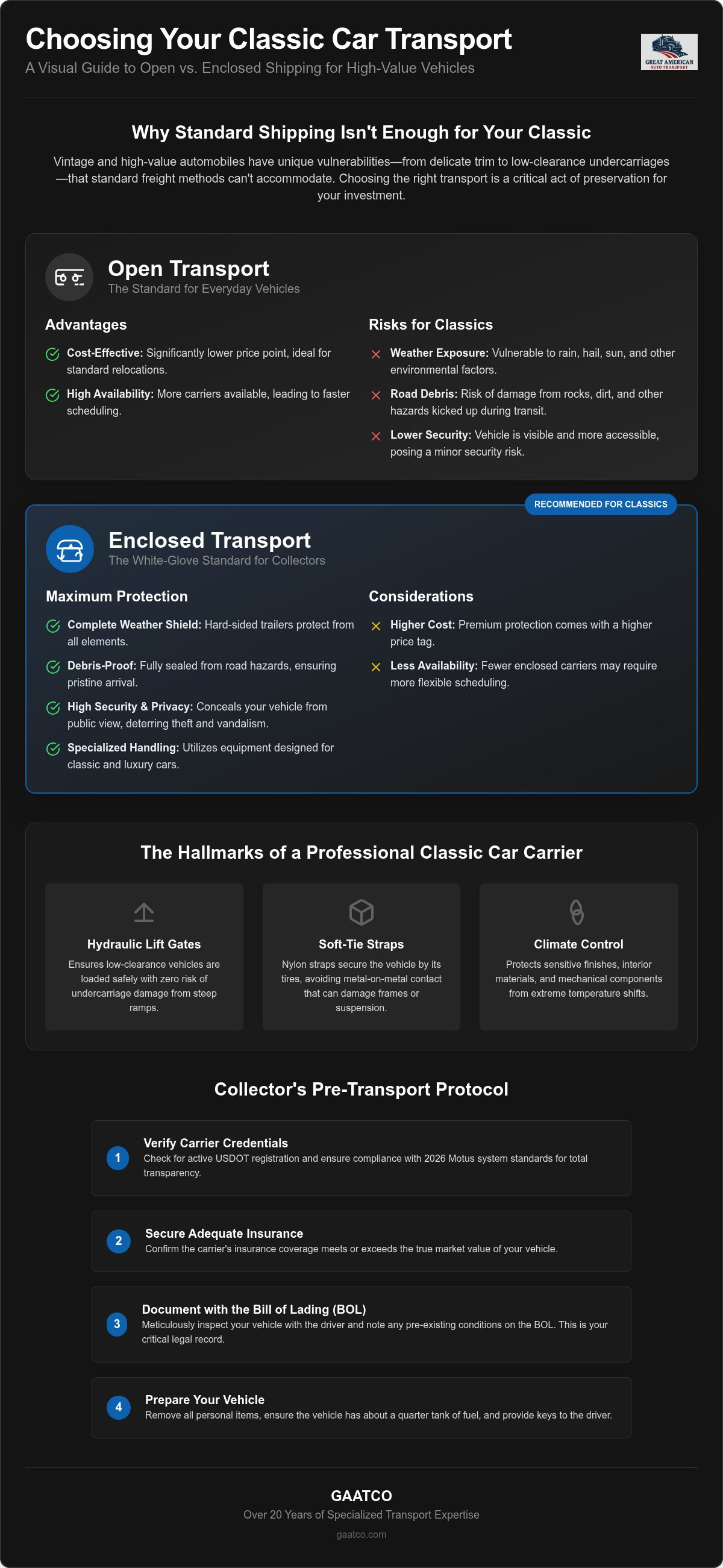
Standard freight methods, while efficient for modern daily drivers, often lack the precision required for vintage builds. Standard carriers frequently rely on metal-to-metal contact or aggressive tie-down methods that can damage original trim or stress aging frames. In contrast, specialized providers utilize soft-tie nylon straps and climate-controlled environments to ensure the vehicle remains in the exact condition it was in when it left the garage. Whether you're working through an auto transport broker or directly with a carrier, understanding these fundamental differences is the first step toward a successful relocation.
To better understand this concept, watch this helpful video:
The Distinction Between Standard and Collector Vehicle Logistics
The Role of Professional Experience in Vehicle Safety
Success in this field is built on a foundation of stability and established expertise. Our team at GAATCO leverages over 20 years of industry experience to navigate the complexities of moving rare and high-value automobiles. This history informs every decision we make, from route selection to the specific equipment used for each move. Our drivers aren't just operators; they're enthusiasts who understand the nuances of non-standard ignition systems, manual chokes, and finicky braking systems. This level of seasoned expertise provides a psychological peace of mind that only comes from working with a licensed, insured, and deeply established carrier. You can explore our full range of specialized transport solutions to see how we tailor our approach to your specific collection.
Enclosed vs. Open Carriers: Determining the Optimal Protection for Your Investment
Selecting the appropriate trailer type is a pivotal decision that balances logistical efficiency with the necessary level of protection for your vehicle. While most standard relocations utilize open-air trailers, professional classic car transport services typically recommend enclosed options for high-value or delicate assets. This choice isn't merely about cost; it's a strategic decision based on the vehicle's vulnerability to environmental factors and its total market value. A well-informed collector evaluates these methods through the lens of risk mitigation and long-term preservation.
The Case for Enclosed Transport: Maximum Security and Privacy
For show-quality vehicles or rare survivors, enclosed transport is the industry standard. Hard-sided trailers provide a total barrier against road salt, industrial fallout, and unpredictable weather patterns. Beyond physical protection, these units offer a level of privacy that discourages unwanted attention during transit. This is particularly valuable for high-profile acquisitions where discretion is a priority.
The technical advantages of enclosed units extend to the specialized equipment used inside. Professional carriers utilize hydraulic lift-gates to maintain a level loading surface, which is essential for cars with low ground clearance. Once inside, vehicles are secured using soft-tie downs and nylon straps rather than metal chains. This prevents the structural stress and paint abrasions often associated with standard hauling. Research indicates that enclosed carriers typically provide significantly higher insurance limits, often ranging from $250,000 to over $1,000,000 per shipment. Adherence to Federal Motor Carrier Safety Administration (FMCSA) regulations ensures that these high-limit policies are backed by rigorous federal safety standards.
When to Consider Open Car Transport for Classic Drivers
Open car transport remains a viable and professional choice for "daily driver" classics or vehicles that already see regular road use. While these vehicles are exposed to the elements, the method is highly cost-effective and offers greater scheduling flexibility due to the higher volume of open carriers on the road. For a cross-country journey, choosing an open carrier can result in a 30% to 60% reduction in cost compared to enclosed alternatives.
Our team at GAATCO ensures safety on open trailers through strategic vehicle placement. We often position classic cars on the top deck to minimize exposure to road debris and fluid leaks from other vehicles. We maintain full transparency regarding GAATCO’s open carrier transport fees, allowing you to make an informed financial decision without sacrificing professional handling. If you're weighing the benefits of these two methods for your next relocation, you may request a personalized quote to see which logistics plan aligns with your specific needs.
Evaluating Carrier Credentials: What Every Collector Should Demand in 2026
Vetting a provider of classic car transport services requires more than a cursory glance at a polished website. In 2026, the Federal Motor Carrier Safety Administration (FMCSA) has centralized oversight through the Motus platform, making it simpler for collectors to verify a carrier's operational authority. Every legitimate carrier must maintain an active USDOT number and Motor Carrier (MC) number. These identifiers serve as the legal foundation of the industry, and their absence is an immediate disqualifier for any high-stakes relocation.
Collectors must distinguish between standard liability insurance and comprehensive cargo insurance. While liability covers damage the carrier might cause to third parties, cargo insurance is what protects your vehicle. High-value collector cars often require coverage limits that far exceed the standard industry offerings. When transporting classic cars safely, you should verify that the policy reflects the current market appraisal of your asset. Professional carriers will proactively share these details to establish a foundation of trust before the first mile is driven.
Verifying Insurance and Liability Limits
You shouldn't simply take a carrier's word regarding their coverage. Request a Certificate of Insurance (COI) and ask to be named as "additionally insured" for the duration of the transit. This direct link to the provider's policy ensures you're notified of any changes in status. Budget services often hide significant gaps in their fine print, such as exclusions for cosmetic damage or high deductibles that shift the risk back to the owner. Before signing, ensure the policy covers the vehicle during the loading and unloading phases, as these are the moments of highest risk.
The Importance of a Transparent Pricing Structure
A "low-ball" estimate is frequently a red flag for a broker who hasn't secured a reliable carrier. Professional auto transport quotes are built on a transparent hierarchy of logistical factors. Mileage is the primary driver, but vehicle dimensions and current fuel surcharges are equally influential. Large vintage cruisers or modified trucks occupy more space on a trailer, which naturally impacts the total cost.
Be wary of providers who introduce "expedited shipping surcharges" after an initial agreement has been reached. A reputable partner like GAATCO prioritizes fixed, transparent pricing that accounts for the specialized care required. We believe that "hassle-free" logistics are a vital component of the total service value. This commitment to stability has been a hallmark of our operations for over 20 years, providing a discreet and dependable experience for the most demanding collectors.
The Pre-Transport Protocol: Meticulous Preparation for Seamless Delivery
A successful relocation begins weeks before the carrier arrives at your driveway. For high-value assets, a meticulous protocol ensures that every party understands the vehicle's exact state, reducing the potential for disputes or mechanical surprises. The cornerstone of this process is the Bill of Lading (BOL). This document serves as the definitive legal record of the vehicle's condition at the point of pickup and delivery. You should never allow a vehicle to be loaded without a thorough, joint inspection recorded on this form.
Before engaging classic car transport services, perform a comprehensive mechanical inspection. Note any existing fluid leaks, as these can damage other vehicles if your car is positioned on an upper deck. If your vehicle is currently non-running, it's vital to communicate this during the planning phase. Shipping inoperable classic vehicles requires specialized winching equipment and different loading logistics than a standard move. Our team at GAATCO is seasoned in these complexities, ensuring that even the most delicate projects are handled with steady, professional care.
Documenting Vehicle Condition and Mechanical Nuances
Detailed documentation is your strongest protection. We recommend taking high-resolution photographs of the exterior, interior, and undercarriage in neutral lighting. Beyond aesthetics, collectors should provide a "cheat sheet" for the driver. Vintage automobiles often possess unique starting procedures, hidden kill switches, or finicky chokes that aren't intuitive to those accustomed to modern ignitions. Providing this information ensures the vehicle is handled correctly during every transition. Additionally, remove all loose parts, aftermarket accessories, and personal belongings. These items are typically not covered by carrier insurance and can shift during transit, causing interior damage.
Final Preparations Before the Carrier Arrives
Adhering to the "quarter-tank" fuel rule is a standard industry requirement for safety and weight management. A nearly empty tank reduces the overall weight of the load and minimizes the risk of fuel vapor accumulation within an enclosed trailer. Ensure that all windows are fully sealed and convertible tops are securely latched to prevent pressure changes from affecting the cabin.
The final hand-off during door-to-door auto shipping should be a calm, unhurried process. This is the moment to walk the driver through the mechanical nuances you documented earlier. By following this disciplined approach, you transform a complex logistics event into a controlled, predictable experience. To begin coordinating your next move with our expert team, you can request a quote for a customized transport plan.
Strategic Logistics Across Major US Metros: The GAATCO Advantage
Executing successful classic car transport services in the United States requires more than just a fleet of trailers; it demands an intimate understanding of regional geography and urban infrastructure. Navigating dense metropolitan hubs like New York, Chicago, and San Francisco presents unique obstacles that standard logistics providers often overlook. In these environments, the sheer scale of an 80-foot transport rig clashes with narrow historic streets and restrictive local ordinances. Our team anticipates these challenges, utilizing two decades of operational data to plan routes that prioritize safety over the path of least resistance.
Our regional expertise extends deep into the southern and eastern corridors, with established logistical footprints in Houston, Dallas, Atlanta, and Miami. These markets are central to the collector community, yet they each require a nuanced approach to timing and residential access. Localized knowledge is the difference between a seamless delivery and a frustrated afternoon spent coordinating around municipal restrictions. By maintaining a unified team of professionals who understand these regional variations, we ensure that your vehicle's relocation is handled with the same level of precision, regardless of the destination.
Navigating Urban Challenges for Door-to-Door Delivery
If your automotive logistics involve flying into Georgia to supervise a high-value delivery, utilizing a professional service like Airport Transfer Atlanta can ensure your personal travel is as meticulously managed as your vehicle's transport.
The final mile is often the most complex phase of a cross-country move. In older coastal cities like Boston and Seattle, low-hanging trees and steep inclines can pose a direct threat to the rooflines of enclosed trailers. We manage these variables by conducting pre-trip surveys and securing necessary local permits before our drivers even enter the city limits. While some carriers default to "terminal-to-terminal" options to avoid these difficulties, we prioritize the convenience of door-to-door delivery. We only suggest alternative meeting points when a residential street is physically inaccessible for a heavy-duty carrier.
Our logistics strategies are equally refined for the unique climates of the Southwest and West Coast. In hubs such as Phoenix, Las Vegas, and San Diego, we account for extreme temperature shifts that can affect vintage cooling systems and tire pressures. This level of meticulous planning ensures that your vehicle arrives in the same pristine condition it left your garage, regardless of the environmental stressors encountered along the way.
The GAATCO Commitment to Professional Excellence
GAATCO's 20-year legacy is built on a foundation of quiet luxury and authoritative reliability. We don't view ourselves as a mere service provider, but as a discreet partner in the preservation of your automotive history. Our mission is centered on the absolute safety of your asset, utilizing a sophisticated infrastructure to handle the complex logistics so you don't have to. Every move we coordinate is a testament to our commitment to professional excellence and operational transparency. We invite you to request a customized quote for your specific route and experience the peace of mind that comes from working with a seasoned industry expert.
Securing the Future of Your Automotive Legacy
Entrusting a vintage automobile to a carrier is a significant decision that requires a balance of logistical precision and specialized care. We've explored how professional classic car transport services utilize bespoke equipment and rigorous vetting to mitigate the risks of long-distance transit. From the environmental security of enclosed trailers to the legal protection of a meticulous Bill of Lading, every detail serves a single purpose: the absolute preservation of your investment.
Success in collector vehicle relocation is defined by the expertise of the team managing the move. GAATCO offers over 20 years of specialized experience, providing a discreet partnership for national collectors who demand excellence. As a fully licensed and insured carrier, we provide A+ rated door-to-door service that navigates even the most complex urban environments with ease. We invite you to Request a Professional Classic Car Transport Quote today. Let our team handle the complexities of your next relocation so you can focus on the road ahead.
Frequently Asked Questions
How much does it cost to ship a classic car cross-country in 2026?
Shipping a classic car cross-country in 2026 typically costs between $1,100 and $2,500 depending on the level of protection required. Open transport for a 2,500-mile journey averages $1,100 to $1,500, while enclosed transport ranges from $1,600 to $2,500. Factors such as seasonal demand during summer months can increase these rates by $250 to $375. We suggest requesting a personalized quote to account for your specific vehicle dimensions and desired delivery timeline.
Is enclosed transport really necessary for a vintage vehicle?
Enclosed transport is recommended for high-value assets but isn't strictly mandatory for all vintage vehicles. If your car features original paint or high market value, the premium for an enclosed carrier is a justified investment in risk mitigation. This method shields the vehicle from road salt and debris. However, open classic car transport services remain a professional choice for "daily driver" classics that already see regular road use and don't require climate-controlled environments.
What insurance coverage does GAATCO provide during classic car transit?
GAATCO utilizes licensed carriers that provide comprehensive security for every shipment. For classic car transport services, insurance limits for enclosed carriers typically range from $250,000 to over $1,000,000 to reflect the true market value of rare collections. We encourage collectors to request a Certificate of Insurance naming them as additionally insured. This ensures total transparency and provides peace of mind that your financial interest is fully protected against unforeseen incidents during the transit process.
Can I ship personal items or spare parts inside my classic car?
You shouldn't ship personal items or spare parts inside your vehicle because they aren't covered by carrier insurance. Loose items can shift during transit, potentially causing interior damage to your upholstery or dashboard. Additionally, excess weight can lead to regulatory issues at federal weigh stations. For safety and compliance, we require vehicles to be empty of personal belongings, though a spare tire and jack properly secured in their factory locations are perfectly acceptable.
How long does it typically take to transport a vehicle from New York to San Francisco?
Transporting a vehicle from New York to San Francisco generally takes between 7 and 10 days once the car is loaded. This timeline accounts for the 2,900-mile distance while adhering to federal driver safety regulations regarding hours of service. While we prioritize efficiency, the safety of your vehicle remains our primary mission. Factors such as extreme weather or seasonal traffic in major hubs like Chicago can occasionally influence the final delivery date.
What happens if my classic car is damaged during the shipping process?
If damage occurs, you must document the issues immediately on the Bill of Lading during the delivery inspection. This document is the definitive legal record of the vehicle's condition. Take high-resolution photographs of the damage and compare them against the pickup photos. Our team maintains a transparent process for handling claims, ensuring that licensed and insured carriers fulfill their obligations. Prompt reporting is essential for a successful resolution with the insurance provider.
Do I need to be present for the pickup and delivery of my vehicle?
It's highly recommended that you or a designated representative be present for both pickup and delivery. This presence allows for a thorough joint inspection and the signing of the Bill of Lading. If you're unavailable, your representative must have the authority to confirm the vehicle's condition and accept the hand-off. This step is vital for door-to-door auto shipping to ensure that all mechanical nuances and cosmetic details are accurately recorded by both parties.
Can GAATCO transport inoperable classic cars that do not steer or roll?
GAATCO can transport inoperable classic cars, but vehicles that do not steer or roll require specialized recovery equipment. Standard winches are insufficient for cars with seized axles or missing wheels; therefore, we must coordinate for a forklift or heavy-duty winch capabilities. It's essential to disclose these specific mechanical failures during the planning phase. This ensures we assign a carrier with the proper technical infrastructure to handle the vehicle without causing further structural or mechanical damage.


