
A picture car arriving after its scheduled call time can unsettle an entire day of production. Shipping a vehicle for a film or television production means coordinating more than a route: the transport method, production calendar, location access, and handoff all need to work together.
That planning matters whether you’re moving a standard production vehicle or a valuable classic. Open transport is a practical option for standard vehicles, while enclosed transport offers added protection from weather and road exposure. A clear plan helps the production team align pickup and delivery with shoot dates and site requirements, and prepare each vehicle for a straightforward handoff.
This guide explains how to match open or enclosed transport to each vehicle, organize scheduling and access details, and prepare for pickup and delivery. GAATCO coordinates customized vehicle transport with licensed and insured carriers and door-to-door delivery across the United States, helping production logistics stay aligned with the schedule.
Key Takeaways
- Build the transport plan around confirmed production milestones, vehicle locations, and site access requirements.
- Choose open or enclosed transport based on each vehicle’s condition, value, route, and protection priorities.
- For shipping a vehicle for a film or television production, create a clear inventory and coordinate pickup and delivery windows early.
- Prepare for a smoother handoff with dated condition photographs, keys, vehicle identification, and authorized contact details.
- Use vehicle and route details to shape a customized shipment plan, with open transport as a practical starting point for standard vehicles.
Why shipping a vehicle for a film or television production needs a production-led plan
Production vehicle shipping is the planned transport of vehicles to or between filming locations, coordinated around the production’s schedule, access requirements, and vehicle use. A production move differs from a routine relocation because a vehicle may be needed for a specific scene, staged at a particular location, or made available to a department during prep. Start with the production plan, then build the transport arrangements around it.
In Atlanta, where a production may use several locations, the intended use of each vehicle helps determine when and where it needs to arrive. A picture car may be central to a scene, while background vehicles help establish the setting. Production support vehicles serve practical needs on location. Those roles affect delivery priority, coordination, and who should receive each vehicle.
Which production vehicles may need transport?
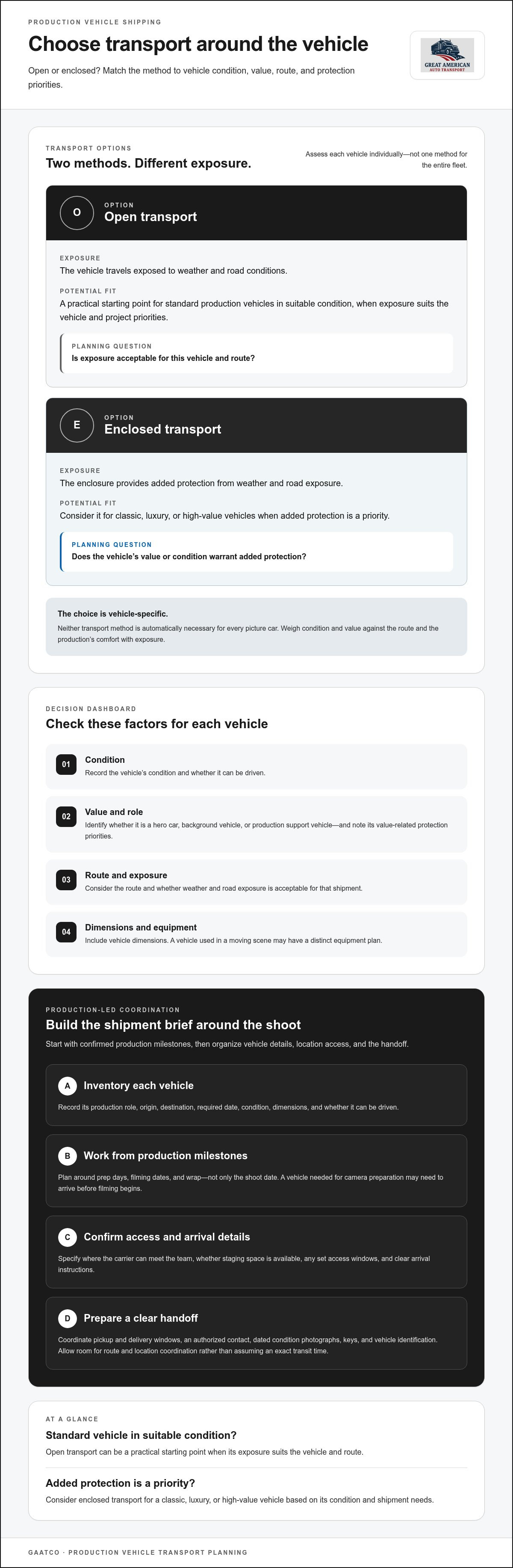
Build an inventory that identifies each vehicle, its production role, origin, destination, and required date. Include hero cars, background vehicles, and support vehicles, even when they have different priority levels. Record each vehicle’s condition, dimensions, and whether it can be driven, since those details inform shipment planning. A vehicle used in a moving scene may also have a distinct equipment plan. A process trailer, for example, is associated with filming actors in a vehicle while it is in motion.
Why production timing changes the shipping brief
Plan pickup and delivery around prep days, filming dates, and wrap, rather than treating the shoot date as the only milestone. A vehicle needed for camera preparation may need to arrive before filming begins. If a vehicle is moving between locations, coordinate the handoff at both ends of the route.
Access details matter just as much. Record where the carrier can meet the production team, whether there is suitable staging space, and which authorized contact will be available for the handoff. If a location has set access windows, include clear arrival instructions to reduce confusion on delivery day.
Build flexibility into the schedule instead of assuming an exact transit time. Share the required arrival window and key milestones when arranging transport, then allow room for route and location coordination. A customized plan based on vehicle details, route, and timing gives the production team a clearer framework for managing transport alongside the rest of the shoot.
Open or enclosed transport: how to choose for production vehicles
The right carrier type depends on the vehicle and the shipment’s priorities, not simply on its role in a production. Open transport is a practical starting point for standard vehicles. Enclosed transport may suit vehicles when limiting weather and road exposure is a higher priority. Neither option is automatically necessary for every picture car.
Compare the trade-offs against each vehicle’s condition and value, the route, and the production’s comfort with exposure. For shipping a vehicle for a film or television production, assess each vehicle individually instead of choosing one method for the entire fleet.
| Consideration | Open transport | Enclosed transport |
|---|---|---|
| Exposure | Vehicle travels exposed to weather and road conditions. | Enclosure provides added protection from weather and road exposure. |
| Potential fit | Standard production vehicles when open transport suits their condition and project priorities. | Classic, luxury, or high-value vehicles when additional protection is a priority. |
| Planning question | Is exposure acceptable for this vehicle and route? | Does the vehicle’s value or condition warrant added protection? |
When open car transport may suit a production shipment
For a standard vehicle in suitable condition, open transport can be a practical choice. Consider the route and the production’s exposure preferences alongside the vehicle itself. GAATCO’s open transport service is a practical starting point for standard vehicle shipments, with vehicle details and schedule informing the wider logistics plan.
When enclosed transport may be worth considering
Enclosed transport is an option when additional protection from weather and road exposure matters. Consider it for a classic, luxury, or high-value vehicle, particularly if its condition or role makes exposure a concern. Make the decision based on the specific vehicle and shipment, rather than assuming every production vehicle needs an enclosed carrier.
Transport planning is separate from a production’s responsibilities for commercial vehicle use. Wrapbook outlines DOT requirements for film productions, which production teams can consult when considering those requirements. For an overview of GAATCO’s vehicle transport services, review the options and consider how they align with each vehicle’s needs.
How to coordinate vehicle shipping with a film or television production schedule
Route, vehicle, and timing details shape a shipment plan. For shipping a vehicle for a film or television production, work backward from confirmed production milestones and provide a clear brief for every vehicle. The procurement and management of picture cars can involve coordination across production roles, so include transport details in that planning rather than leaving them until the handoff.
Build the shipment brief around production dates and locations
Use a consistent record for each vehicle, then coordinate the details as one shipment plan. This gives the transport team the information needed to account for vehicle requirements and production timing.
- Inventory the vehicles. Record the count, make, model, dimensions, condition, and operability of each vehicle. Note its production role and any handling considerations.
- Map the route. Provide the origin and destination for each vehicle, including whether it will travel directly to a filming location or between sites.
- Set the production windows. List prep days, filming dates, wrap, and the preferred arrival window. Align pickup and delivery with confirmed milestones, leaving room for schedule flexibility rather than assuming an exact transit time.
- Document access requirements. Share location instructions, access constraints, and available staging space. A set with a designated vehicle entrance may require different coordination from a location with limited room for carrier access.
- Name the handoff contacts. Provide reliable contact information for the authorized pickup and delivery contacts, and clarify who will receive the vehicle at each end.
Plan for handoffs across U.S. production markets
Local access can shape the final leg of a shipment. In Atlanta, for example, identify the specific set entrance, practical staging area, and person coordinating arrival. On a route connecting Atlanta with New York, provide the same details for both locations, including site access arrangements and handoff contacts. Door-to-door delivery can support location-based planning, while the shipment details inform how the route and delivery are arranged.
Keep the transport team informed if a filming date, destination, access window, or vehicle assignment changes. A timely update allows the plan to adapt to the revised production brief. Timing depends on the vehicle, route, and shipment requirements, so avoid building the schedule around an assumed fixed transit duration. Instead, coordinate a delivery window that gives the production team time to receive and stage the vehicle before it is needed.
How to prepare production vehicles for pickup and delivery
A clear readiness process helps protect the vehicle record and prevent confusion across a production fleet. Before shipping a vehicle for a film or television production, assign each vehicle its own notes, keys, and handoff details. Share anything that could affect loading or access in advance, including non-running status, unusual dimensions, or location restrictions.
Create a consistent vehicle readiness checklist
Use the same checklist for every vehicle and keep each record tied to its vehicle identification details. This makes similar cars easier to distinguish and gives authorized representatives a consistent reference at pickup and delivery.
- Photograph the vehicle from multiple angles before carrier handoff. Date the images and capture visible existing damage, along with any areas that need particular attention.
- Record the odometer reading and fuel or charge status. Note whether the vehicle is operable and can be accessed and loaded as planned.
- Remove production equipment and personal items unless the shipment arrangements specifically account for them. Set aside the correct keys and record the make, model, and vehicle identification details.
- Keep vehicle-specific instructions together, including unusual dimensions or access needs. Communicate these details before pickup so they can inform the shipment plan.
Make pickup and delivery handoffs clear
Assign a named representative at both ends of the shipment. Provide each person’s reachable contact number, arrival instructions, and any restrictions that could affect carrier access. This is especially useful when a location has a designated entrance or limited staging space.
At pickup, review the condition record with the carrier and document the vehicle’s visible condition. Repeat the review at delivery, noting any differences before the vehicle is accepted. Keep the dated photographs and handoff notes with the vehicle’s file so the production team has a consistent record.
Confirm who is responsible for the keys and who is authorized to complete each handoff. If the production changes a location, representative, or access window, promptly share the update with the transport team. Clear communication keeps vehicle details aligned with the actual pickup and delivery conditions.
Prepare your vehicle and route details for a tailored shipment plan through GAATCO’s vehicle transport request.
Arrange production vehicle shipping with GAATCO
A well-prepared quote request turns the production schedule into a practical transport brief. Vehicle type, condition, route, timing, and transport preference all help shape a shipment plan. For standard production vehicles, GAATCO’s open transport service is a practical starting point. Enclosed transport is another option when added protection is a project priority.
Accurate information matters, especially when a production is coordinating several vehicles or locations. A complete brief helps align transport planning with the project’s requirements instead of treating each vehicle as an isolated move. GAATCO brings more than 20 years of industry experience to customized vehicle transport, with licensed and insured carriers and door-to-door delivery across the United States.
What information to include when requesting a quote
Gather the details below before submitting a request. If vehicles have different origins, destinations, or production dates, list each shipment separately so the distinctions are clear.
- Pickup and delivery: Provide the full origin and destination details, including filming locations where applicable.
- Vehicle information: Share the number of vehicles and each vehicle’s make, model, dimensions, condition, and operability.
- Production timing: Include the preferred pickup window and relevant prep, filming, or wrap dates. Note the desired arrival window rather than relying on an assumed fixed transit time.
- Access and handoff: Describe location restrictions, staging considerations, and the contact person authorized to coordinate pickup and delivery.
- Transport preference: Indicate whether open or enclosed transport is preferred and which vehicle or project requirements inform that choice.
Move from production plan to transport request
Before submitting, review the shipment details against the current production plan. Confirm that vehicle assignments, locations, access instructions, and timing reflect the latest schedule. If a vehicle is not running or has unusual dimensions, include that information in the request so it can inform planning from the outset.
For coordinators shipping a vehicle for a film or television production, clear details provide a useful foundation for matching transport arrangements to vehicle and project needs. Submit your project information through GAATCO’s vehicle shipping quote request to begin planning the shipment.
Put your production vehicle plan in motion
Successful production transport begins with a plan built around the shoot. Match open or enclosed transport to each vehicle’s needs, align pickup and delivery windows with confirmed production milestones, and prepare clear condition records and handoff details. These steps help reduce uncertainty as vehicles move between locations.
Shipping a vehicle for a film or television production calls for a shipment plan shaped by accurate vehicle, route, and schedule information. GAATCO brings more than 20 years of industry experience, licensed and insured carriers, and door-to-door delivery across the United States to vehicle transport planning.
Share your production’s vehicle details, locations, and preferred timing to get started. Request a vehicle shipping quote for your production and take the next step toward coordinating transport around your schedule. With a thoughtful plan in place, your team can move forward with greater clarity and focus on the work ahead.
Frequently Asked Questions
How do you ship a vehicle for a film or television production?
Start with a vehicle inventory that records pickup and delivery locations, preferred timing, condition, dimensions, and access details. Compare open and enclosed transport based on each vehicle’s needs, then assign authorized contacts for both handoffs. Photograph vehicle condition before pickup and allow flexibility around the production calendar. For shipping a vehicle for a film or television production, a clear brief helps keep transport coordination aligned as shoot dates and locations approach.
Should production vehicles travel on an open or enclosed carrier?
Open transport can suit standard production vehicles, while enclosed transport may be preferable when added protection from weather and road exposure is a priority. Consider each vehicle’s value, condition, route, and role in the production, along with project preferences. A standard background vehicle and a valuable classic car may call for different choices. Compare the practical trade-offs vehicle by vehicle rather than assuming one method suits the entire shipment.
How far in advance should I arrange film production vehicle transport?
Begin planning as soon as routes and production dates are sufficiently clear. The timing needed depends on shipment details, including the vehicle, route, carrier scheduling, and location access, so a universal lead-time estimate may not fit every project. Share preferred pickup and delivery windows when requesting a quote, and communicate schedule changes promptly. Build flexibility into the production plan instead of relying on an exact transit duration.
Can multiple vehicles be shipped for one production?
Yes, multiple vehicles can be included in a transport plan, with arrangements shaped by the vehicles, routes, timing, and carrier logistics. Create an individual record for each one, noting its condition, dimensions, operability, pickup details, and delivery contact. Then share the full vehicle count and overall production schedule. This gives the shipment plan a clearer view of how separate vehicle needs fit the production’s wider logistics.
What information should I provide to arrange production vehicle shipping?
Provide each vehicle’s make, model, dimensions, condition, and operability, plus the pickup and delivery locations and preferred dates. Include production milestones, access instructions, handoff contacts, and any schedule constraints or vehicle-specific requirements. GAATCO serves routes involving Atlanta, Miami, New York, Houston, Dallas, San Diego, San Francisco, Seattle, Orlando, Boston, Nashville, Denver, Austin, Chicago, Las Vegas, and Phoenix. Detailed information helps shape a transport plan and quote around your project.
How should a vehicle be prepared before a carrier picks it up?
Photograph the vehicle’s interior and exterior, record visible existing damage, and note its odometer and fuel or charge status. Have the correct keys and vehicle identification details ready for the authorized handoff contact. Remove production equipment and personal items unless shipment arrangements account for them. Tell the transport team in advance if the vehicle is not running, has unusual dimensions, or faces restricted access at pickup or delivery.
Can production schedules change after vehicle transport is arranged?
Yes, production schedules and locations can change, so share updates as soon as they are known. Changes to pickup timing, delivery location, access instructions, or vehicle availability can affect coordination. Keep the transport team and production representative aligned on the latest details, and treat timing as a planned window rather than a guaranteed arrival time. Building flexibility into the schedule can help the team adjust as production plans develop.


