Could a subtle oversight in fluid levels be the primary catalyst for mechanical failure when your vehicle ascends the 11,000-foot peaks of the Eisenhower Tunnel? Recent industry data from 2025 suggests that approximately 15% of transit-related insurance claims in the Rocky Mountain region stem from environmental factors rather than physical collisions. To properly prepare car for transport denver, owners must look beyond standard logistics and address the specific atmospheric challenges and pressure shifts unique to the Mile High City.
We understand that entrusting a luxury vehicle to the volatile conditions of the Colorado mountains often feels like a high-stakes gamble against the elements. This 2026 guide provides the sophisticated protocols required to ensure your vehicle remains pristine during professional transit across the Front Range. You will master the bespoke cleaning standards, comprehensive documentation strategies, and specialized winterization techniques necessary for a seamless, damage-free delivery. This meticulous approach serves as a vital bridge between complex operational realities and the elite level of service you expect for your automotive investments.
Key Takeaways
- Understand how Denver’s 5,280-foot elevation necessitates specific mechanical considerations to mitigate risks during high-altitude, long-haul transit.
- Master the meticulous protocols required to prepare car for transport denver, ensuring your vehicle adheres to the essential "roll-steer-brake" and fuel-weight standards.
- Implement rigorous exterior cleaning and professional photography techniques to facilitate a flawless Bill of Lading inspection and protect your asset.
- Gain strategic insights into navigating the logistical complexities of the I-70 mountain corridor and managing the nuances of seasonal weather shifts.
- Identify the distinct safety advantages of engaging a dedicated specialist with two decades of refined expertise in Colorado’s unique transport landscape.
The Essential Foundation of Vehicle Preparation in Denver
Preparing a vehicle for long-haul transit is far more than a simple checklist. It's a calculated risk-mitigation strategy designed to protect a significant asset during its journey. When you prepare car for transport denver, you aren't just cleaning a seat or checking the oil. You're ensuring that the mechanical integrity of the vehicle remains uncompromised across varying climates and elevations. For luxury car owners, this meticulous routine provides a necessary psychological anchor. It transforms a complex logistical event into a controlled, predictable process where nothing is left to chance.
The GAATCO standard for door-to-door relocation relies on this foundation of readiness. We believe that excellence in transport begins long before the vehicle is secured. This proactive approach ensures that every transition is seamless and every detail is accounted for. It's the difference between a standard move and a premium relocation experience that respects the value of your time and property.
To better understand the nuances of this process, we recommend viewing this instructional guide:
The Role of Altitude in Fluid and Tire Management
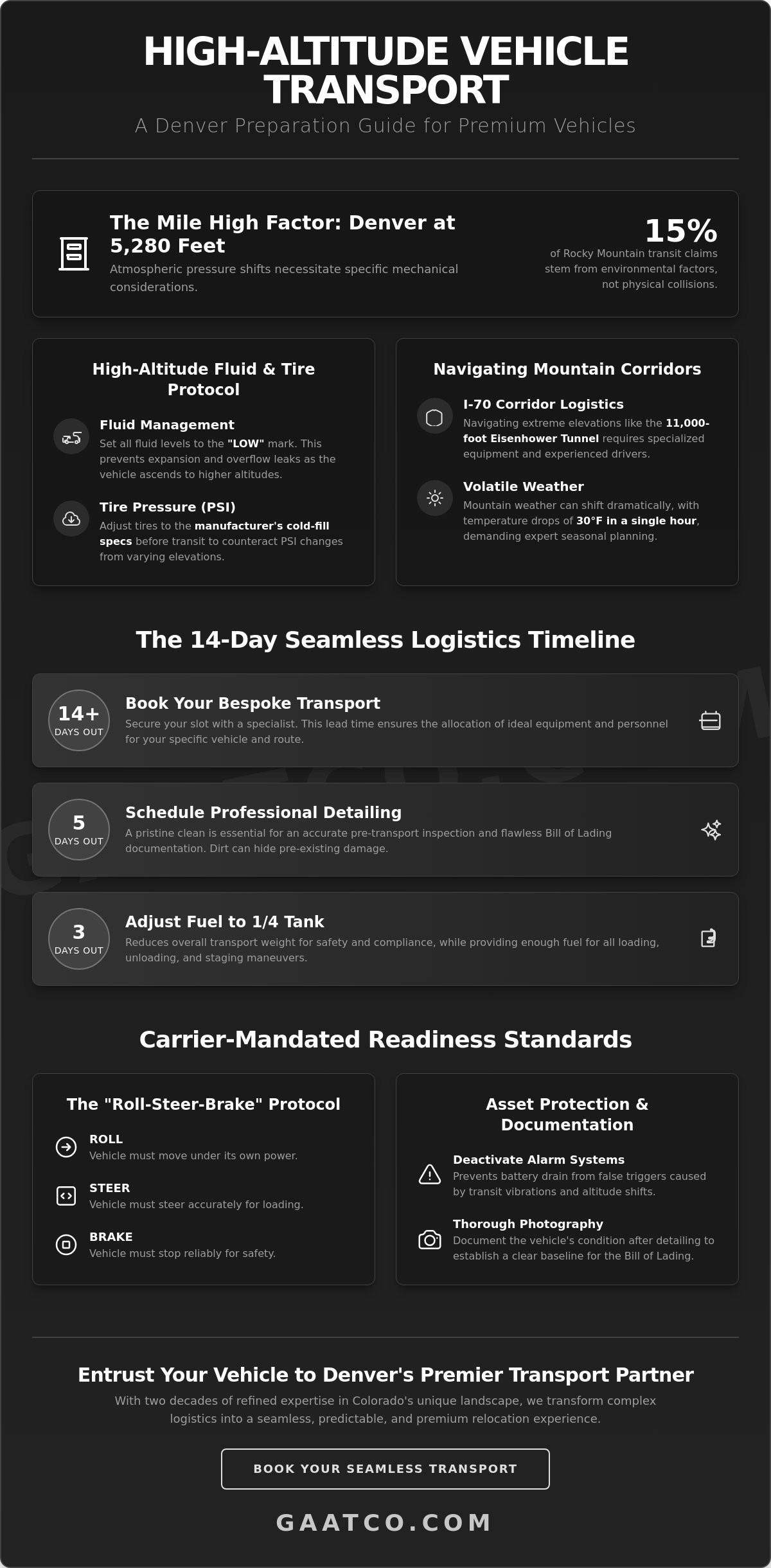
Denver sits at an elevation of 5,280 feet. This height introduces specific variables that sea-level locations don't face. Atmospheric pressure affects tire PSI significantly. As a vehicle moves from the Mile High City to lower elevations, the internal pressure of the tires changes. We recommend adjusting your tires to the manufacturer's cold-fill specifications before loading them onto modern car carrier trailers. Fluids also require professional attention. High-altitude environments can cause expansion leaks if reservoirs are overfilled. A meticulous check of the cooling system is vital, especially for vehicles heading into the Rockies where temperatures can fluctuate by 30 degrees in a single hour. Maintaining fluids at the "low" mark rather than the "max" mark prevents overflow during these pressure shifts.
Establishing a Timeline for Seamless Logistics
A successful relocation requires a structured 7-day countdown. This timeline allows for a comprehensive assessment without the stress of a looming deadline. By day five, you should coordinate with a premium Denver-based detailing service. A clean car isn't just about aesthetics. It's necessary for an accurate pre-transport inspection. Dirt can hide small scratches or dents that need to be documented for insurance purposes. By day three, ensure your fuel tank is at exactly one-quarter capacity to reduce weight while still allowing for loading maneuvers.
The final step in your preparation involves securing your logistics partner. Booking your bespoke transport service at least 14 days in advance ensures that your specific scheduling needs are met. This lead time allows us to allocate the ideal equipment and personnel for your specific vehicle type. It's how we maintain the high standards of safety and reliability that define our reputation in the Denver market and beyond.
Mechanical and Interior Readiness for High-Altitude Transit
Achieving a seamless transition to the Mile High City requires more than a simple booking. It demands a level of mechanical precision that mirrors the pre-flight checklists of private aviation. When you prepare car for transport denver, the vehicle must maintain a "roll-steer-brake" status. This means the car must move under its own power, steer accurately, and stop reliably. Carriers prioritize this condition to ensure safety during the steep loading angles required for multi-car trailers. Sophisticated alarm systems present a hidden risk during long-haul transit. The constant vibration of the trailer and the 5,280-foot elevation change can trigger sensitive sensors. This leads to a depleted battery upon arrival. You should deactivate all anti-theft systems or provide the driver with clear instructions on how to silence them. Our team provides bespoke logistics solutions that mirror the standards of private aviation, ensuring every detail of your vehicle's journey is managed with professional discretion.The 1/4 Tank Protocol and Battery Maintenance
Adhering to the 1/4 tank rule is a matter of logistical precision rather than a mere suggestion. A full tank of fuel in a standard luxury sedan adds approximately 120 pounds of unnecessary weight. Across a full carrier, this cumulative mass can exceed 1,000 pounds, potentially violating Department of Transportation weight limits. Maintaining a lower fuel level also minimizes safety risks during transit while providing enough reserves for the driver to maneuver the vehicle. Battery health is equally vital, especially during the 2026 Colorado winter season where temperatures frequently drop below 10 degrees Fahrenheit. For electric vehicles, maintaining a 50% state of charge is the industry benchmark. This level prevents the lithium-ion cells from deep-cycling during cold snaps while remaining within safety parameters for transport.Personal Property and Interior Sanitization
The interior of your vehicle should remain a pristine environment. U.S. Customs and Border Protection mandates that owners not use your car as a container for personal effects. Items left inside are not insured by the carrier and can become dangerous projectiles during sudden stops or elevation shifts. To ensure a premium experience when you prepare car for transport denver, follow these specific steps:- Remove all toll tags and parking passes to prevent accidental charges or theft.
- Secure or remove loose electronics, including dash cams and charging cables.
- Wipe down all surfaces with a high-quality leather or interior cleaner to prevent dust from settling during the journey.
- Verify that the spare tire and emergency kit are securely fastened in their designated compartments.
Exterior Protection and Rigorous Documentation Standards
To prepare car for transport denver, you must begin with a thorough exterior cleaning. Dust, mountain road salt, or seasonal grime can obscure micro-scratches during the initial inspection. A pristine surface allows our logistics specialists to create an undisputed record of your vehicle's condition before it enters our custody. We recommend high-resolution photography from a 360 degree perspective, ensuring you capture the roof and the lower valance. These areas are frequently overlooked but remain critical for low-clearance luxury assets that require precise handling during the loading process.
A meticulous approach to documentation protects the integrity of your investment. Our team utilizes advanced imaging to catalog the exact state of every panel. This process provides a clear baseline for the Bill of Lading, which serves as the primary legal document throughout the transit. By establishing this rigorous standard, we eliminate ambiguity and maintain the quiet confidence our clients expect from a premium transport partner.
The Pre-Transport Detail and Inspection
Cleaning your vehicle is a functional requirement for a precise Bill of Lading. When you prepare a car for shipping, you provide the baseline for all subsequent quality checks. Convertible tops require specific attention; we ensure all latches are mechanically secure to prevent wind buffeting at highway speeds. For specialized modifications, such as aftermarket spoilers or carbon fiber splitters, we often recommend temporary protective wraps to mitigate potential debris impact. Our drivers are trained to handle low-clearance vehicles with specialized ramps, ensuring that even the most aggressive aerodynamic profiles remain untouched during the transition to enclosed trailers.
Insurance Verification and Bill of Lading Accuracy
In the 2026 logistics environment, GAATCO utilizes a fully digital Bill of Lading system to ensure a transparent, time-stamped record of your vehicle's state. You should verify our primary insurance coverage limits, which are tailored to the valuation of high-end Denver assets, before the carrier arrives. Our bespoke transport services provide comprehensive protection that bridges the gap between your private policy and our professional liability. When you prepare car for transport denver, the final sign-off on the digital inspection report at the pickup site is the most critical step. This electronic signature confirms the accuracy of the baseline data, ensuring a seamless and secure experience from the Front Range to your final destination.
- Undercarriage Review: Inspect for fluid leaks that could affect other vehicles or the trailer bed.
- Roof Documentation: Use a step-ladder to photograph the roof surface, especially for SUVs and trucks.
- Digital Archiving: Store all pre-transport photos in a dedicated cloud folder for immediate access upon delivery.
Navigating Denver’s Unique Geographic and Seasonal Challenges
Transporting a vehicle from the Mile High City requires more than a standard logistics plan. The I-70 mountain corridor serves as a primary artery for transit, yet it remains one of the most unpredictable stretches of highway in the United States. To properly prepare car for transport denver, owners must account for rapid elevation changes and sudden weather shifts that can trigger mandatory closures. During the seasonal "Snowbird" migration, typically occurring between October and December, demand for professional transport services often increases by approximately 20 percent. This surge requires a strategic approach to scheduling to ensure a seamless transition to warmer climates.
Environmental factors in Colorado demand specific preventative measures. The state’s road maintenance protocols rely heavily on magnesium chloride and road salt. These chemicals are highly corrosive to a vehicle's undercarriage and paint finish. Additionally, Denver’s high altitude exposes vehicles to intense UV radiation. With UV intensity rising approximately 4 percent for every 1,000 feet of elevation, a car waiting for pickup at 5,280 feet faces significantly harsher exposure than at sea level. Applying a high-quality ceramic coating or utilizing a dedicated car cover while awaiting the carrier is a prudent step for any collector or luxury car owner.
Winter Preparation for Rocky Mountain Transit
Owners should verify that anti-freeze mixtures are rated for temperatures as low as -30 degrees Fahrenheit. This is essential if the route includes mountain passes like the Eisenhower Tunnel, where temperatures plummet far below city averages. We recommend enclosed transport to shield the vehicle from the abrasive road debris common on Colorado highways during winter months. It's also vital to monitor the Colorado Department of Transportation's "Chain Law" status. These regulations can create 4 to 6 hour delays for carriers, directly impacting your scheduled pickup window.
Strategic Pickup Locations in the Denver Metro Area
Logistics in dense urban environments like LoDo or the refined streets of Cherry Creek present distinct challenges. Narrow residential corridors and strict HOA regulations often prevent large multi-car carriers from entering specific neighborhoods. To prepare car for transport denver effectively, identify a nearby commercial lot or a broad thoroughfare for the exchange. Our team utilizes extensive local knowledge to coordinate these details, ensuring that even the most restricted suburban enclaves receive dedicated, door-to-door service without logistical friction. This specialized attention to detail ensures the safety of the vehicle and the efficiency of the transit schedule.
Entrusting Your Vehicle to Denver’s Premier Transport Partner
Since 2006, GAATCO has refined a logistical framework that prioritizes precision and asset protection. Choosing the right partner is the most critical step when you prepare car for transport denver, as the local landscape requires specific expertise. Unlike generic brokers who function as digital clearinghouses, we operate as dedicated transport specialists. Brokers often outsource assignments to the lowest bidder, which can lead to inconsistent service standards. We maintain direct oversight of our logistics chain, ensuring that every vehicle receives the high-touch care it deserves during its journey across the Front Range.
Our 20 years of experience in Colorado has taught us how to manage the unique variables of the region, from unpredictable weather patterns to the technical demands of high-altitude transport. We view vehicle relocation as a form of stewardship rather than a simple transaction. This philosophy ensures that your car isn't just another unit in a queue; it's a valuable asset managed by professionals who understand the nuances of luxury and performance automotive care. Our steady growth since our founding reflects a consistent track record of reliability for high-net-worth individuals and corporate entities alike.
The GAATCO Commitment to Safety and Elegance
We approach vehicle relocation with an understated elegance that mirrors the standards of private aviation. Our team doesn't rely on aggressive marketing tactics; instead, we focus on a human-centric service model that addresses the complexities of sophisticated logistics. We apply flight-level precision to ground operations, treating every vehicle with the same meticulous attention to detail required for air cargo. This commitment to safety is a non-negotiable pillar of our business, providing clients with peace of mind regardless of the transport distance.
Our logistics machinery is designed to be seamless and discreet. We understand that our clients value their time and privacy, so we handle the intricate details of scheduling and route optimization behind the scenes. Whether we're moving a single vintage car or a corporate fleet, the level of care remains uniform. We bridge the gap between complex operational realities and your need for a simple, stress-free experience.
Initiating Your Bespoke Transport Journey
Starting the process is straightforward and transparent. You can begin by obtaining a transparent transport quote through our secure online portal, where we provide clear information without hidden fees. Once your booking is confirmed, our team will coordinate the pickup details. On the day of transport, ensure you have the following items ready for our professional carrier:
- A complete set of keys, including the ignition, trunk, and glove box.
- The original or a high-quality copy of the vehicle registration and insurance documents.
- A signed copy of the Bill of Lading, which serves as your official receipt and inspection report.
- Confirmation that the vehicle is ready for its final pre-load inspection.
As you prepare car for transport denver, remember that documentation is the foundation of a professional relocation. Our drivers will walk you through the final inspection to document the vehicle's condition before it's secured for transit. GAATCO’s Denver presence represents the gold standard of vehicle relocation in 2026, combining two decades of logistical expertise with a commitment to bespoke client service.
Securing Your Vehicle’s Future in the Mile High City
Mastering the logistics of high-altitude transit requires more than just basic maintenance. You've learned that adjusting fluid levels for Denver's 5,280-foot elevation and securing meticulous documentation are the essential pillars of a successful move. Protecting your investment from unpredictable seasonal shifts requires a dedicated approach to both exterior shielding and interior readiness. When you prepare car for transport denver, you're not just following a checklist; you're preserving a premium asset against the unique rigors of the Front Range.
GAATCO brings over 20 years of industry expertise to every shipment, ensuring a seamless transition that mirrors the standards of private aviation. Our network of licensed and fully insured carriers provides an A+ rated door-to-door service tailored to your specific requirements. We handle the complexities of logistics so you can focus on your next chapter with complete peace of mind. Our team stands ready to deliver the sophisticated care your vehicle deserves. Request your bespoke Denver vehicle transport quote today and experience a higher standard of relocation. We look forward to facilitating your journey with the precision and excellence you expect.
Frequently Asked Questions
Do I need to wash my car before shipping it from Denver?
Yes, we require a clean exterior to facilitate a precise pre-transport inspection. When you prepare car for transport denver, road salt and Colorado grime can obscure 85% of minor cosmetic imperfections. A pristine surface allows our logistics team to document the vehicle's condition with absolute clarity. This meticulous approach ensures your asset remains protected and any existing marks are noted before the journey begins.
How much gas should I leave in the tank for transport?
You should maintain a fuel level of approximately one-quarter tank at the time of pickup. This specific volume provides sufficient fuel for loading maneuvers while minimizing unnecessary weight on the transport vessel. Reducing a full tank to 25% capacity can decrease vehicle weight by 90 pounds. This reduction enhances the overall safety and balance of the carrier during steep mountain ascents through the Rockies.
Can I leave personal items in my trunk during a Denver move?
We recommend removing all personal effects from the vehicle before the scheduled pickup date. Federal Motor Carrier Safety Administration regulations generally prohibit the transport of household goods within a vehicle on a car carrier. Items left inside aren't covered by transit insurance, and they pose a secondary risk of interior damage during the 6% grades found on Interstate 70. Safety remains our non-negotiable pillar for every transport.
What happens if my car is damaged during mountain transit?
Our commitment to safety is absolute, yet we maintain a rigorous protocol for the rare occurrence of transit damage. You must document any discrepancies on the Bill of Lading immediately upon delivery. According to 2026 industry standards, clients have a 48-hour window to file a formal claim. Our dedicated logistics specialists handle these bespoke cases with the calm confidence and precision your high-value asset deserves.
How does Denver’s altitude affect my vehicle during shipping?
Denver's elevation of 5,280 feet necessitates careful attention to tire pressure and fluid levels. As the carrier traverses mountain passes exceeding 11,000 feet, atmospheric pressure drops significantly. We suggest ensuring your tires are inflated to the manufacturer's exact specifications. This preparation helps prevent seal failures or pressure-related issues as the vehicle transitions through the variable climates of the Rocky Mountain corridor during its journey.
Is enclosed transport necessary for Denver winters?
Enclosed transport is the premium choice for vehicles moving through Colorado between November and April. Denver road crews utilize magnesium chloride and salt brines that can cause 15% faster oxidation on exposed undercarriages. A bespoke enclosed trailer provides a seamless shield against these corrosive elements. This service ensures your vehicle arrives in showroom condition, regardless of the 40 inches of average annual snowfall typical for the region.
How far in advance should I book my Denver car transport?
You should book your transport services 14 to 21 days in advance to ensure a seamless experience. Demand for logistics in the Denver region often increases by 30% during peak relocation seasons. Early scheduling allows our team to curate a tailored transport plan that aligns with your specific timeline. This lead time guarantees the availability of our most elite carriers and highly trained operators for your vehicle.
What documents do I need to provide to the driver at pickup?
When you prepare car for transport denver, you must have three primary documents ready for the logistics professional. These include a valid vehicle registration, proof of insurance, and the keys to the vehicle. The driver will also provide a Bill of Lading for your signature. This document serves as a formal contract and condition report, acting as the definitive record of your vehicle's status at the point of origin.


