

Selling your car before a cross-country move can cost more than keeping it, once you account for replacing it and getting around while you shop. In the selling-a-car-versus-shipping-it-across-the-country decision when moving, replacement cost is a key comparison: buying a vehicle in a new U.S. A dealer sale or trade-in may also bring 10 to 20% below market value, while shipping lets you keep the vehicle you already know.
When moving, selling a car vs shipping it across the country comes down to your car’s value and condition, the cost of replacing it, your moving distance, and how much convenience matters during the transition.
This article compares the full trade-offs of selling and buying again with shipping your current car. You’ll see which costs to include, how timing and transport options affect the decision, and a practical way to choose the route that best fits your move.
Key Takeaways
- Compare the full cost of replacing your car, including the sale proceeds and the expense of getting around while you shop, with the cost of transporting your current vehicle.
- Assess how route distance, vehicle type, transport method, and timing can affect a shipping estimate.
- Weigh the convenience of keeping a familiar vehicle against the time involved in selling yours and finding a replacement after the move.
- Plan around pickup and delivery timing, and choose open or enclosed transport according to your vehicle and priorities.
Comparing car shipping costs with selling and replacing a vehicle
Compare the full cost of keeping your vehicle with the proceeds from selling it and the expenses of buying a replacement. Distance, transport type, travel arrangements, and requirements in your destination state all affect whether **selling a car vs shipping it across the country when moving** makes the most financial sense for your specific situation.
Shipping Costs by Distance and Transport Type
Cross-country transport commonly involves routes of 1,000 miles or more, and longer distances affect the overall quote. Open car transport is generally the lower-cost option; an enclosed carrier offers added protection and typically costs more. State taxes, registration, and emissions requirements also affect bringing a vehicle to a new state: registration timing and testing rules vary by state, so identify the destination’s requirements and include related expenses in your comparison.
Additional Travel Costs of Shipping
Shipping means arranging your own travel while your vehicle is in transit. Include any rental period, airport transfers, and the expected vehicle arrival date in your plans. These expenses may narrow the difference between shipping and driving.
Driving Costs Versus Shipping Costs
Driving avoids arranging separate vehicle transport, but fuel is only one part of the trip budget. Add lodging, meals, and time away to compare the options fairly. Before shipping, review the written quote and service terms, document the vehicle’s condition, and understand the insurance and claims process. These steps clarify the arrangements and help prevent misunderstandings.
Selling and Replacement-Car Expenses
A replacement vehicle in a new U.S. market often comes with unexpected dealership fees, higher purchase prices, and local taxes. Dealer sales and trade-ins may yield 10 to 20% below market value. To sell privately, gather the title and maintenance records, agree on payment, complete a bill of sale, and follow state title-transfer procedures. Title, tax, and registration costs can range from $300 to $700, depending on the state.
| Option | Direct costs | Other considerations |
|---|---|---|
| Ship | Transport and interim travel | Transport type and delivery timing |
| Drive | Fuel, lodging, and meals | Time and road distance |
| Sell and replace | Sale value, purchase, registration | Buying gap and state rules |
Choose by comparing your vehicle’s value, full travel costs, replacement needs, and destination-state requirements.
Car shipping cost estimates
A useful estimate starts with your route, vehicle, and preferred carrier type. Cross-country distance matters, as do route accessibility and the pickup and delivery locations. When considering shipping your car, provide accurate details so the estimate reflects your vehicle and destination.
Open and enclosed transport are distinct options, not interchangeable price labels. An open carrier transports vehicles exposed to outdoor conditions, while an enclosed carrier carries them inside a covered trailer. Owners moving a classic car may value that added protection differently from someone shipping a daily driver. Vehicle size, condition, and pickup access also shape the transport arrangements.
The Federal Highway Administration reports average annual travel of 13,476 miles per year. That figure can help frame how regularly a vehicle is used, but it does not determine an individual shipping cost. A car that must arrive by a specific date may require different scheduling from one with flexible delivery timing.
For a useful estimate, note the pickup and destination addresses, vehicle make and model, whether it runs, and your preferred transport type. Compare the quote details with your plans, including the route, vehicle condition, and carrier requested. Keep personal belongings out of the vehicle, as auto carriers transport vehicles, not household cargo.
If you are deciding whether to ship your car, compare the transport quote with your full alternative travel plan, not fuel alone. Flights, local transportation, and time without your vehicle can affect your overall budget. Consider the available transport options alongside your route and vehicle needs before choosing.
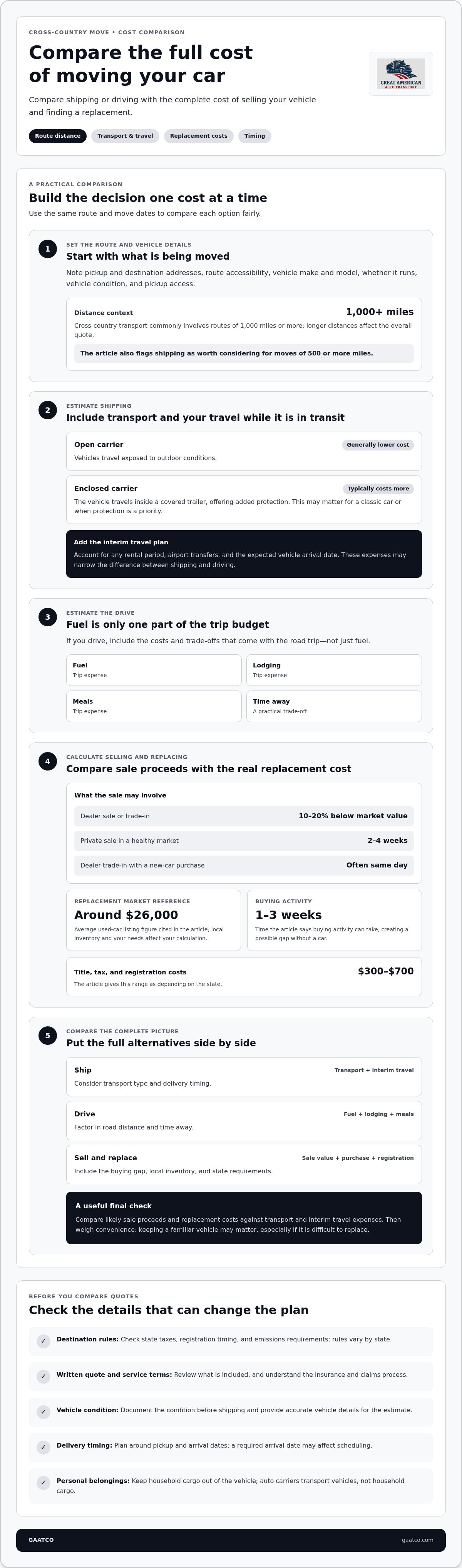
Comparing shipping a car with selling and buying another
The decision is not simply a transport quote versus a sale price. Compare the net amount you would receive, the replacement vehicle’s purchase cost, and the time without a car. A used-car listing averages around $26,000, while buying activity can take one to three weeks. Those figures help frame the replacement plan, but your vehicle’s condition and the local inventory matter more to your personal calculation.
A private sale may take two to four weeks in a healthy market, which can complicate a move with fixed dates. A dealer trade-in as part of a new-car purchase can often be completed the same day, offering a faster transition but potentially less value. For older or unwanted vehicles that are not worth transporting, specialized vehicle buying services like Oriental Car Removal offer an alternative to clear the car quickly and recoup funds before relocation. Compare the expected sale proceeds with the replacement’s total cost, including registration and transportation while you shop. Remember that the advertised asking price may differ from what you actually pay.
Shipping may make more sense when you know and value your current vehicle, particularly if it is a classic car or has features that would be difficult to replace. Enclosed transport carries the vehicle inside a covered trailer, which may matter if you prioritize added protection. For a long-distance move, compare shipping quotes with the financial and practical costs of selling, shopping, and arranging delivery of another car.
Use a simple decision sequence: estimate your current vehicle’s likely sale proceeds; identify a realistic replacement and its purchase costs; then compare those figures with transport and interim travel expenses. Consider shipping a car when moving 500 or more miles, especially if retaining your vehicle avoids a rushed purchase. If replacement is already planned, a trade-in may suit a tight schedule. The stronger option is the one that preserves the most value while matching your move date and transportation needs.
How long does cross-country car shipping take?
Cross-country transport involves two timing considerations: arranging pickup and transporting the vehicle to its destination. Driving coast to coast across the United States can take as little as a few days or as long as a week. Shipping schedules depend on route distance, pickup access, delivery location, and carrier coordination. Plan for pickup and delivery separately rather than assuming the vehicle will arrive as soon as it is collected.
Start by setting your move-in date and deciding when you need the car at your new address. Coordinate pickup with your departure and arrange for someone to release the vehicle. Someone must be present at pickup and delivery to provide the keys and sign inspection reports. If you cannot attend either handoff, arrange an authorized person in advance and share the relevant timing details.
Build a buffer into plans that depend on the car arriving immediately. A delayed handoff can affect work, appointments, and rental-car arrangements, while a flexible arrival window gives you more options. Keep essential items with you, not in the vehicle, and plan transportation for your first days after arrival. This helps keep your household moving schedule separate from the vehicle’s transport schedule.
Selling and replacing the vehicle also takes time. Active shopping for a replacement typically takes one to three weeks, while a private sale may take two to four weeks in a healthy market. A dealer trade-in during a new-car purchase can often be completed the same day. Compare those timelines with your move dates: keeping the current vehicle avoids searching after arrival, while selling requires planning the purchase and interim transportation. For a move with a fixed arrival date, request a vehicle transport quote as part of your scheduling plan.
GAATCO: Open Car Transport
GAATCO helps people moving to or from select cities transport a vehicle instead of selling and replacing it. Open Car Transport Services suit standard moves when open-car shipping fits your priorities; Enclosed Car Transport offers a covered option for vehicles that call for a different arrangement. Door-to-Door Auto Shipping coordinates pickup and delivery around your relocation, and Military & Student Vehicle Shipping Services support military and student moves.
Consider transport when you would rather keep your current car than shop for a replacement after arrival. Your route, vehicle, and preferred pickup and delivery arrangements help shape the transport plan. Review the options and choose the service that fits your move.
Visit GAATCO’s website to discuss your vehicle transport needs.
Make Your Move With a Clear Plan
The decision about selling a car vs shipping it across the country when moving is also a decision about continuity. Keeping your current vehicle means staying with a car you know, while selling may make sense if a replacement already fits your plans. Choose the option that supports your arrival, budget, and priorities instead of adding a rushed vehicle purchase to an already complex move.
GAATCO offers Open Car Transport Services, Enclosed Car Transport, and Door-to-Door Auto Shipping. The right arrangement depends on your vehicle and how you want pickup and delivery coordinated. Share your route and moving schedule with GAATCO to clarify the next step.
Contact GAATCO to discuss your move, and move forward with a vehicle plan that feels considered and well aligned with your new destination.
Frequently Asked Questions
Should You Sell or Ship Your Car?
Choose based on whether keeping your current vehicle matters more than replacing it after arrival. When weighing selling a car vs shipping it across the country when moving, compare likely sale proceeds with replacement needs, transport arrangements, and how well your car suits your new location. A vehicle with features or accessibility adaptations you rely on can be difficult to replace. If you plan to buy another car anyway, selling may better fit your next step.
How Much Does It Cost to Ship a Car?
Shipping costs depend on the route, vehicle size, and transport type, so there is no single figure for every move. GAATCO provides transparent pricing by quote, with no hidden fees. For a useful quote, provide accurate pickup and delivery locations, vehicle details, and your preferred transport option. Open and enclosed transport are different service choices, so specify which you are considering.
What is Cross-Country Car Shipping?
Cross-country car shipping means transporting a vehicle by carrier between distant locations in the United States instead of driving it yourself. It can suit a move when you need your vehicle at your destination but do not want to make the drive. Open and enclosed carriers are available options; your vehicle type and preferences help determine which fits.
What does it cost to ship a car across the United States?
Pricing is based on the specific shipment, not a universal nationwide rate. For a route involving Atlanta, Miami, New York, Houston, Dallas, San Diego, San Francisco, Seattle, Orlando, Boston, Nashville, Denver, Austin, Chicago, Las Vegas, or Phoenix, provide the actual pickup and delivery locations. Compare the quote’s transport type and vehicle details with your moving plan before setting your budget.
What affects car shipping prices, including distance, vehicle size, and transport type?
Distance, vehicle size, and the choice between open and enclosed transport affect the shipment’s price. A longer route requires a different transport plan from a shorter one, while larger vehicles take up different carrier space than compact cars. Pickup and delivery access also matter when arranging transport. Provide accurate vehicle and location details so the quote reflects the shipment you need.
What are the pros and cons of selling a car before moving versus shipping it?
Selling removes the need to transport your current vehicle, but it means arranging another vehicle if you need one after arrival. Shipping preserves access to a car whose condition, controls, or configuration already suit you, while requiring coordination around pickup and delivery. For example, someone with a specially adapted vehicle may value continuity; someone planning to change vehicles may prefer to sell.


