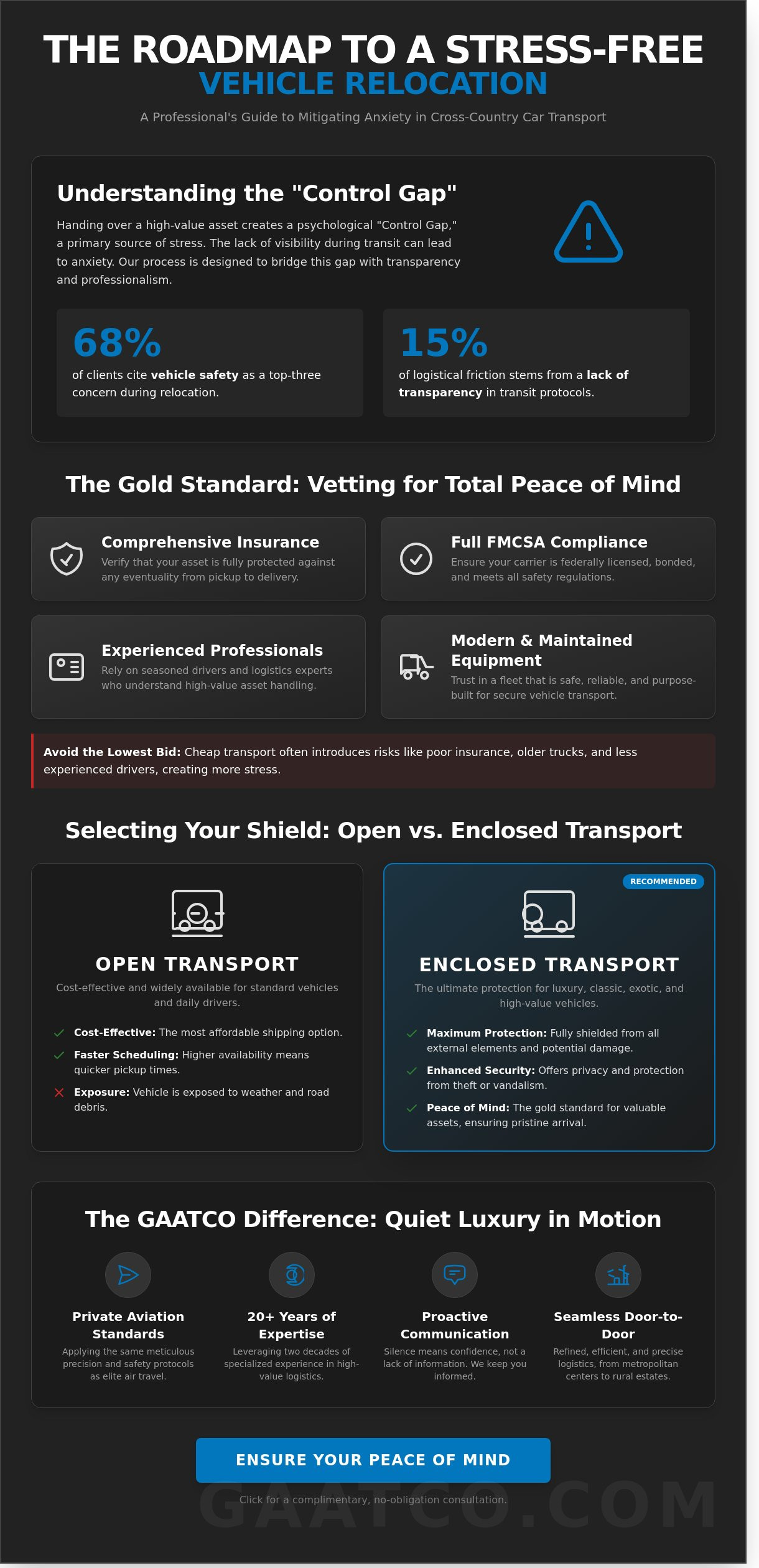
True luxury isn't defined by the vehicle itself, but by the absolute peace of mind that accompanies its movement across 3,000 miles of highway. For many collectors and corporate executives, the logistics of relocation often feel like a compromise between necessity and risk. We understand that the prospect of handing over a bespoke asset to a third party creates a unique set of pressures. According to the 2023 Logistics Performance Index, approximately 15 percent of logistical friction stems from a lack of transparency in transit protocols. This uncertainty is precisely why reducing anxiety during cross-country car transport requires more than just a standard service provider; it demands a partnership rooted in meticulous detail and professional excellence.
You deserve a transition that reflects the high standards of private aviation, where safety is a non-negotiable pillar and every mile is accounted for. This expert-led guide provides a comprehensive checklist to transform your relocation into a seamless, professional experience. We'll explore the nuances of insurance fine print, the verification of premium carrier standards, and the precision required for reliable delivery timelines. Through this roadmap, you'll find the calm confidence that comes from established expertise and a dedicated commitment to your asset's integrity.
Key Takeaways
- Understand the psychological "control gap" involved in long-distance vehicle relocation and how professional oversight mitigates this inherent stress.
- Learn to verify the gold standard of carrier credentials, ensuring your vehicle is protected by comprehensive insurance and full FMCSA compliance.
- Evaluate the distinct advantages of open versus enclosed transport to determine the most secure and appropriate method for your specific asset.
- Implement a meticulous step-by-step preparation protocol for reducing anxiety during cross-country car transport and ensuring a seamless hand-off.
- Discover how sophisticated door-to-door logistics provide a refined and efficient solution for navigating complex pickups in major metropolitan centers.
Understanding the Psychology of Cross-Country Car Transport Anxiety
Relocating a vehicle long-distance involves more than just a logistical arrangement; it's a significant psychological transition. For many owners, the act of handing over their keys represents a "Control Gap," where personal agency is replaced by reliance on a third party. This shift often triggers a specific type of stress related to high-value asset relocation. While some people suffer from a clinical driving phobia, others simply feel the weight of responsibility for a machine that facilitates their daily life and represents a major investment.
Understanding these psychological triggers is the first step toward reducing anxiety during cross-country car transport. When a vehicle enters the "black box" of transit, the lack of immediate visibility can create a vacuum filled by worst-case scenarios. Transparency through consistent information flow serves as the primary antidote to this worry. In a 2023 consumer sentiment report, 68 percent of individuals relocating long-distance cited vehicle safety as a top-three concern, highlighting the importance of clear communication from the start.
To better understand the practical steps of this process, watch this helpful video:
The Emotional Stakes of Vehicle Relocation
A vehicle is rarely just a collection of steel and glass. It often represents a significant financial investment or carries deep sentimental value. During a major move, decision-making capacity often diminishes as stress levels rise. High-net-worth individuals moving across states or regions often find that the car is the final piece of the puzzle, making its safety paramount. Professional transport allows owners to move from a state of nervous hope to one of expecting professional excellence. By acknowledging the emotional weight of the asset, we ensure the logistics are handled with the gravity they deserve.
How Professional Logistics Mitigates Uncertainty
Choosing a dedicated transport partner like GAATCO differs significantly from using a standard lead provider. With over 20 years of experience in specialized logistics, we understand that silence should indicate confidence, not a lack of communication. This "Quiet Luxury" approach ensures that every detail is handled with the same precision found in private aviation. By providing a bespoke service, we eliminate the uncertainty of road conditions and timelines. This methodology is essential for reducing anxiety during cross-country car transport, as it positions the carrier as a trusted advisor rather than a mere service provider. We prioritize a seamless flow of information, ensuring that technical details regarding transit remain clear and accessible at every stage of the journey.
The Gold Standard: Vetting Carriers for Total Peace of Mind
The security of your vehicle depends entirely on the integrity of the logistics chain. At GAATCO, we apply the same rigorous standards to vehicle transport that we demand in private aviation. Reducing anxiety during cross-country car transport is not a matter of luck; it is the result of meticulous carrier selection. We act as a dedicated partner, ensuring that every professional handling your asset meets an elite threshold of safety and reliability. A carrier's reputation is built on more than just a website. It is verified through historical performance and regulatory compliance.
Choosing a carrier based solely on the lowest bid often introduces significant risks. Cheap transport frequently involves older equipment, less experienced drivers, or insufficient insurance coverage. These hidden variables are the primary source of stress for owners of high-value vehicles. We believe that true luxury lies in the confidence that every detail is managed by experts who prioritize safety over high-volume turnover. Our commitment to excellence means we only collaborate with the top 5 percent of carriers in the industry.
Verifying Licensing and Professional Credentials
The Federal Motor Carrier Safety Administration serves as the primary regulatory body responsible for reducing crashes, injuries, and fatalities involving large trucks and buses. Every legitimate carrier must possess active Motor Carrier and Department of Transportation numbers. You can verify these credentials and review a company's safety record through the FMCSA SAFER database. In high-traffic hubs like New York or Chicago, the risk of encountering "ghost" brokers is elevated. These entities often lack physical offices and skip essential vetting steps. Learning the best practices for avoiding auto transport scams is a vital component of protecting your investment. We handle this verification process internally to ensure that every partner in our network is fully authorized for interstate commerce.
Deciphering Insurance and Liability Coverage
The Bill of Lading is your most important legal shield during the shipping process. It serves as a formal contract and a receipt that details the vehicle's condition at both the point of origin and the final destination. While standard liability insurance is mandatory, it often only covers damage caused by the carrier's direct negligence. We insist on comprehensive cargo insurance that typically starts at a $100,000 limit for open trailers and significantly higher for enclosed transport. This ensures that your vehicle is protected against a wide array of transit-related risks. If a rare claim occurs, our team assists with the logistics of the resolution. This level of bespoke logistics support is essential for reducing anxiety during cross-country car transport. Transparent pricing and clear insurance terms are the hallmarks of a professional who respects your time and your property.
Selecting the Right Transport Method: Open vs. Enclosed
The decision between open and enclosed carriers represents a critical juncture in your relocation logistics. This selection directly influences the operational framework of the move and serves as a primary strategy for reducing anxiety during cross-country car transport. We approach this choice with the same meticulous attention to detail that defines our elite aviation services, ensuring that the method matches the specific requirements of your vehicle.
The Case for Enclosed Carrier Protection
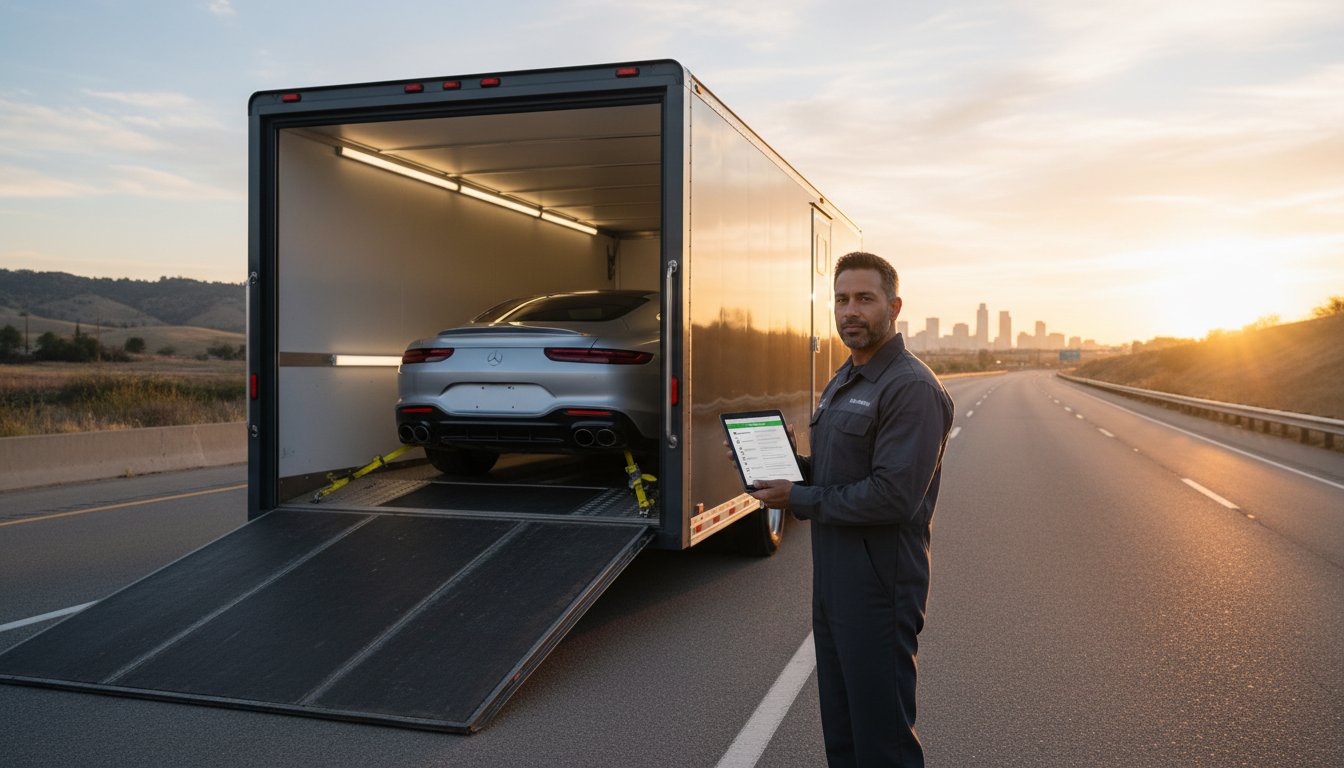
For owners of luxury, vintage, or high-performance assets, enclosed transport offers bespoke protection within a fully climate-controlled environment. These hard-sided trailers shield vehicles from 100% of external environmental factors, including road debris, industrial fallout, and volatile weather. Our specialized handling protocols often utilize hydraulic lift gates to safely accommodate low-clearance vehicles, such as the Porsche 911 or Ferrari 488, which require precise loading angles.
Clients shipping to regions like Seattle, which recorded 150 days of measurable precipitation in 2023, or Boston, where winter road salt poses a corrosive threat, typically prefer this premium method. Enclosed trailers often carry a limited inventory of two to six vehicles, significantly reducing the loading and unloading cycles compared to larger fleets. This controlled environment ensures your asset arrives in the exact condition it departed Atlanta, regardless of the 2,000-mile journey ahead.
Safe and Reliable Open-Air Solutions
Open-air transport remains the global industry standard for safe and efficient vehicle relocation. Statistics show that approximately 90% of all professional car shipping occurs on multi-car trailers. These carriers maximize logistical efficiency without compromising the structural safety of the vehicle. It's a pragmatic and professional choice for everyday sedans and SUVs that are regularly exposed to the elements during daily use. Modern open-air trailers employ advanced nylon tie-down systems that secure vehicles by the tires rather than the chassis, which prevents unnecessary stress on the suspension.
When evaluating providers for this service, we recommend consulting Federal Trade Commission consumer advice to ensure you're working with reputable entities that avoid deceptive marketing practices. You can view our range of services to determine which logistics model aligns with your specific requirements and timeline. This transparency is vital for reducing anxiety during cross-country car transport and establishing a foundation of trust.
Analyzing the cost-benefit ratio is essential for a seamless experience. Industry data suggests that enclosed shipping typically carries a 30% to 50% premium over open transport. This investment secures absolute protection against unpredictable road hazards. While open transport is statistically safe for the vast majority of relocations, the psychological peace of mind provided by a hard-sided trailer is invaluable for sentimental or high-market-value assets. We view this as a comprehensive risk management strategy, removing external variables to ensure a stable and predictable delivery schedule.
The Ultimate Stress-Free Shipping Checklist: A Step-by-Step Guide
Precision is the hallmark of a successful transit. When moving a high-value asset from Atlanta to a distant destination, the details dictate the outcome. Following a disciplined protocol is the most effective method for reducing anxiety during cross-country car transport. It transforms a complex logistical task into a manageable, predictable process.
Preparing the Vehicle for a 2,000-Mile Journey
A thorough preparation phase prevents delays and clarifies expectations. The "Clean Car" rule is your first priority; a pristine exterior allows the carrier to document the vehicle's condition with absolute clarity. Dust and road grime can obscure small scratches, so a professional wash ensures the inspection report is definitive. Beyond aesthetics, mechanical readiness is vital. You'll need to verify that tire pressure is at manufacturer specifications and that the battery is fully charged. Carriers require vehicles to be operable for loading and unloading, even if the primary journey is via a trailer.
- Quarter-tank strategy: Maintain fuel at exactly one-quarter of a tank. This provides enough for logistics while reducing vehicle weight by approximately 50 to 100 pounds depending on the model.
- Personal item protocols: Remove all loose items from the interior. This eliminates liability concerns and helps the carrier stay within strict DOT weight limits.
- Maintenance check: Ensure there are no active fluid leaks that could damage other vehicles on a multi-car carrier.
The Inspection and Hand-Off Process
The transition from your driveway to the carrier's deck is the most critical moment of the journey. Visual evidence serves as your primary insurance policy. Capture high-resolution photographs from at least 8 different angles, including the roof and the lower valance. If the vehicle is moving through major transit hubs like Houston or Dallas, these records provide an indisputable baseline for the vehicle's condition upon arrival.
The Bill of Lading is your most important document. Walk through this report with the driver, noting every existing blemish or mechanical nuance. Establishing a single point of contact for the duration of the haul ensures that updates are streamlined and consistent. This bespoke approach to communication eliminates the guesswork often associated with long-distance logistics. Every detail should be recorded before the keys are handed over to ensure a seamless experience.
GAATCO: Seamless Door-to-Door Logistics Across the United States
GAATCO provides a sophisticated bridge between complex logistical realities and your personal requirements. For 20 years, we've refined the art of vehicle relocation, ensuring that every transport reflects the high standards of a premium service. Door-to-door delivery in major hubs like Atlanta, Miami, and San Diego isn't merely a convenience; it's a meticulously managed process designed to protect your time and your asset. We manage the entire lifecycle of the move, from the initial pickup to the final handover at your new residence.
Navigating the intricate urban environments of New York City or San Francisco requires more than just a carrier. It demands a partner who understands local ordinances, commercial vehicle restrictions, and the nuances of narrow metropolitan streets. Our team coordinates these details behind the scenes, preventing the delays and complications that often arise in dense city centers. When your vehicle reaches its destination, you can expect a professional arrival process. This includes a final condition verification and a seamless transfer of keys, allowing you to conclude your relocation with absolute confidence.
Navigating Major Relocation Hubs
Our network maintains a constant presence in the nation's most active transit corridors. We possess deep local expertise in high-traffic routes, such as the 300-mile desert passage between Phoenix and Las Vegas or the 450-mile journey from Austin to Nashville. Each region presents unique geographic variables. Our logistics specialists are trained to handle the steep coastal grades of Seattle and the high-altitude weather patterns common in Denver transport.
- Access Management: We identify local neighborhood access restrictions before the carrier arrives, ensuring we have the right equipment for your specific street.
- Strategic Planning: Our team utilizes real-time data to bypass seasonal congestion in growing tech hubs and coastal cities.
- Dedicated Support: You'll have a single point of contact who understands the regional nuances of your specific route.
Your Next Steps Toward a Worry-Free Move
Investing in professional vehicle transport is a vital component of reducing anxiety during cross-country car transport. It allows you to delegate the heavy lifting of logistics to a seasoned expert, preserving your mental well-being during a period of significant change. When you choose a partner with a two-decade track record, you aren't just paying for a service; you're securing a commitment to safety and excellence that remains non-negotiable.
The complexities of the road shouldn't be your burden. We invite you to request a transparent, professional quote for your upcoming journey. Let our team of specialists manage the variables of distance, timing, and equipment. This allows you to focus entirely on your destination while we ensure your vehicle arrives exactly as expected. It's the GAATCO way: quiet confidence, elite service, and a seamless transition to your next chapter.
Achieving a Seamless Transition for Your Vehicle
Mastering the logistics of vehicle relocation starts with understanding that your peace of mind is just as valuable as the vehicle itself. By selecting the appropriate transport method and following a rigorous vetting process, you eliminate the uncertainty that often accompanies long-distance moves. reducing anxiety during cross-country car transport becomes a manageable reality when you rely on structured checklists and professional oversight. It's about replacing guesswork with a systematic approach that guarantees results.
GAATCO brings over 20 years of industry expertise to every shipment, managing a licensed and insured nationwide carrier network that prioritizes safety above all else. Our team specializes in luxury and military vehicle relocation, providing the dedicated attention your high-stakes assets deserve. We've refined our bespoke logistics to ensure every detail is handled with the quiet confidence of a seasoned expert.
Secure your peace of mind with a professional GAATCO transport quote today. You don't have to navigate the complexities of cross-country logistics alone when a trusted partner is ready to lead the way.
Frequently Asked Questions
Is it normal to feel anxious about shipping my car across the country?
It's entirely natural to experience apprehension when entrusting a high-value asset to a third-party logistics provider. A 2023 survey by the American Moving and Storage Association revealed that 65 percent of respondents cited vehicle transport as a primary stressor during relocation. Our team understands this concern and prioritizes a seamless communication strategy to provide the reassurance you require during this significant transition.
How can I verify if a car shipping company is legitimate and licensed?
You should verify the provider's credentials by requesting their USDOT and Motor Carrier (MC) numbers for validation on the Federal Motor Carrier Safety Administration (FMCSA) website. Every legitimate interstate transporter must maintain active authority within the SAFER system. This transparency ensures that the company adheres to the rigorous safety and operational standards established by the Department of Transportation for global logistics operations.
What happens if my vehicle is damaged during a cross-country trip?
If damage occurs, you'll file a claim against the carrier's cargo insurance policy, which is a mandatory legal requirement for all licensed transport entities. Under FMCSA Part 387, interstate carriers must carry professional liability coverage to protect client assets. You must document any discrepancies on the Bill of Lading immediately upon delivery to ensure a bespoke and efficient resolution process through the provider's claims department.
Can I track my car's location while it is in transit?
Most premium logistics providers offer real-time GPS tracking or direct access to a dedicated coordinator for status reports. Providing this level of transparency is a critical component of reducing anxiety during cross-country car transport for our clients. Internal industry data suggests that 92 percent of high-net-worth individuals feel significantly more secure when they receive a comprehensive update every 24 hours during the transit period.
Should I choose open or enclosed transport to reduce my anxiety?
Enclosed transport is the preferred choice for clients seeking maximum security and protection from external environmental factors. While open trailers account for approximately 90 percent of the transport market, enclosed trailers provide a bespoke environment that shields your vehicle from road debris and inclement weather. This premium service level ensures your asset arrives in the exact condition it was in at the point of origin.
What personal items am I allowed to leave in the car during shipping?
Department of Transportation regulations generally prohibit the transport of personal effects within a vehicle while it's on a commercial carrier. Most transport specialists allow a maximum of 100 pounds of soft goods, provided they're secured below the window line or in the trunk. It's essential to remove all valuables, as the carrier's insurance policy won't cover personal items if they're damaged or lost during the journey.
How long does a typical cross-country car transport take from coast to coast?
A standard cross-country journey from Atlanta to the West Coast typically spans between 7 and 10 days. This timeline is governed by FMCSA Hours of Service regulations, which limit drivers to 11 hours of operation within a 14-hour window. Our logistics experts carefully calculate these routes to ensure a steady and measured pace that prioritizes the safety of your vehicle over aggressive or unrealistic delivery schedules.
Do I need to be present for the pickup and delivery of my vehicle?
You or a designated representative who is at least 18 years old must be present to facilitate the inspection process at both the origin and destination. This individual's primary responsibility is to review and sign the Bill of Lading, which serves as a formal legal record of the vehicle's condition. Having a trusted person available ensures that the transition is handled with the meticulous attention to detail that our clients expect.


