Booking a motorcycle shipment should not feel like a gamble. Yet for many Denver riders, the experience of entrusting a prized machine to an unfamiliar carrier brings a familiar set of concerns: will it arrive without a scratch, will the pickup window hold, and what exactly does the insurance actually cover? These are not unreasonable questions. They are the questions that define the difference between a professional motorcycle shipping denver operation and a transactional marketplace that treats your bike as just another item on a manifest.
Your instinct to approach this carefully is well-founded. A motorcycle, whether it's a meticulously maintained classic or a high-performance touring bike, represents a significant investment of both capital and personal attachment. The logistics required to move it safely to or from the Denver metropolitan area demand regional expertise, purpose-built equipment, and a level of accountability that a booking algorithm simply cannot guarantee.
This article outlines precisely what professional motorcycle transport in Denver looks like in practice: the standards that distinguish a qualified carrier, the service options available to you, and how to secure a seamless door-to-door experience with complete confidence in the outcome.
Key Takeaways
- Denver's position as the primary logistics gateway for the Rocky Mountain region introduces unique transit considerations that only carriers with genuine regional expertise are equipped to navigate safely.
- The choice between open and enclosed transport is not simply a matter of cost — it is a decision that should reflect the value, condition, and specific vulnerabilities of your motorcycle.
- Professional motorcycle shipping denver requires verifying a carrier's DOT and FMCSA licensing, understanding the precise terms of their insurance coverage, and confirming clear claim procedures before any agreement is signed.
- A thorough pre-shipment inspection and targeted mechanical preparation are non-negotiable steps that protect both your motorcycle and your ability to file a successful claim should any issue arise in transit.
- With over two decades of specialized vehicle logistics experience, GAATCO offers Denver riders a door-to-door service model built on licensed, insured handling and a demonstrated commitment to the safe transport of high-value machines.
The Strategic Importance of Professional Motorcycle Shipping in Denver
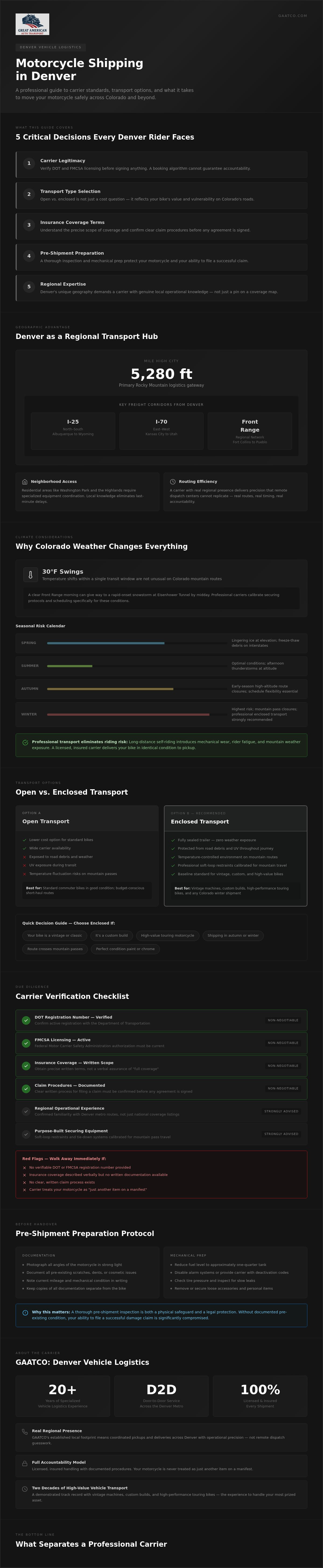
Denver occupies a position in the national logistics network that few cities can match. Situated at the precise intersection of north-south and east-west freight corridors, the Mile High City functions as the primary distribution gateway for the entire Rocky Mountain region and the broader Front Range. For motorcycle owners, this geographic reality carries practical consequences that extend well beyond simple distance calculations.
The case for professional motorcycle shipping denver services is not built on convenience alone. It is built on the specific demands of this terrain, this climate, and these roads.
Denver as a Regional Transport Hub
The I-25 and I-70 corridors that radiate outward from Denver are among the most logistically significant arterials in the American West, connecting the metro area to markets stretching from Albuquerque to Chicago. This infrastructure advantage means that a carrier with genuine regional presence can offer Denver residents routing efficiency that a national broker operating from a remote dispatch center simply cannot replicate. GAATCO's established regional footprint allows the team to coordinate pickups and deliveries across the Denver metro area with the kind of local precision that reflects real operational familiarity, not just a pin on a coverage map.
Local infrastructure matters here in ways that are easy to underestimate. Residential streets in neighborhoods like Washington Park or the Highlands present access considerations that differ substantially from suburban or rural pickup environments. A carrier that knows these distinctions coordinates the right equipment from the outset, eliminating the friction that leads to delays and last-minute logistics adjustments.
Navigating the Colorado Climate
Colorado's weather is not merely unpredictable; it operates on its own compressed timeline. A clear morning along the Front Range can give way to a rapid-onset snowstorm at Eisenhower Tunnel by midday, and temperature swings of thirty degrees within a single transit window are not unusual. These conditions place specific demands on a carrier's securing protocols and scheduling discipline.
Professional-grade tie-down systems and soft-loop restraints calibrated for mountain pass travel are not optional features in this environment. They are baseline requirements. Seasonal considerations further shape the picture: late spring shipments may encounter lingering ice at elevation, while late autumn bookings demand scheduling flexibility to account for early-season closures on high-altitude routes.
Riding a motorcycle across state lines for a long-distance relocation might appear to save money at first glance. In practice, it introduces mechanical wear, rider fatigue, and exposure to precisely the kind of unpredictable mountain weather described above. Entrusting the transit to a licensed, insured professional carrier eliminates those variables entirely, delivering your motorcycle in the same condition it left your driveway.
Specialized Equipment: Enclosed vs. Open Transport for Denver Riders
The equipment a carrier deploys is not a minor operational detail. It is the single most consequential variable in determining whether your motorcycle arrives in the condition it left. Choosing between enclosed and open transport is a decision that deserves the same deliberate consideration you would apply to any significant asset management choice, and the right answer depends entirely on your motorcycle's value, its condition, and the specific demands of your transit route.
The Advantages of Enclosed Carrier Transport
Enclosed transport places your motorcycle inside a fully sealed trailer, shielded from road debris, precipitation, temperature fluctuations, and UV exposure throughout the entire journey. For Denver riders shipping a vintage machine, a custom build, or a high-value touring motorcycle, this level of protection is not an upgrade; it's a baseline standard. Colorado's interstate corridors generate significant road debris, particularly during spring and autumn when freeze-thaw cycles loosen surface aggregate. An enclosed carrier eliminates that exposure entirely.
The security advantages extend beyond weather protection. Enclosed trailers restrict visual access to the cargo, reducing opportunistic risk during overnight stops or extended transit windows. For motorcycles with irreplaceable custom components or collector-grade finishes, that discretion carries genuine value. GAATCO's enclosed transport option is specifically calibrated for high-value and classic vehicles, reflecting more than two decades of experience handling machines where condition preservation is non-negotiable.
Air-ride suspension systems, where equipped, further reduce vibration transfer during transit, a meaningful consideration for motorcycles with sensitive electronics, precision-tuned suspension components, or fragile bodywork. Hydraulic lift gates allow handlers to load and unload without improvised ramps, eliminating one of the most common sources of transit damage.
Open Transport: A Reliable and Efficient Solution
Open-air transport remains a thoroughly professional and widely used method for motorcycle shipping in Denver, particularly for standard street bikes, commuter motorcycles, and shorter interstate hauls. The cost differential is real, and for motorcycles without exceptional collector value or custom modifications, open transport delivers dependable results when executed by a qualified carrier.
Professional securing on an open trailer relies on soft-loop tie-down systems that anchor the motorcycle without contacting painted surfaces or chrome components. Proper load distribution and frame-point contact are what separate a professional operation from a cut-rate alternative. The trailer itself should be purpose-built for two-wheeled vehicles, not adapted from general freight equipment.
- Choose enclosed transport for vintage, custom, or high-value motorcycles; long-haul routes crossing multiple climate zones; or any shipment where cosmetic condition is paramount.
- Choose open transport for standard production motorcycles in good mechanical condition; regional or shorter-distance shipments; and situations where cost efficiency is the primary consideration.
Neither method is inherently superior. The right choice is the one that matches your motorcycle's specific profile. If you're weighing these options for an upcoming shipment, requesting a quote from GAATCO allows you to discuss your motorcycle's requirements directly and identify the transport method that genuinely fits.
Selecting a Reputable Carrier: Beyond the Basic Quote
A quote is not a credential. It is a number, and numbers can be engineered to win business regardless of the operational reality behind them. When you are evaluating motorcycle shipping denver options, the carrier selection process demands a level of scrutiny that extends well beyond comparing figures on a spreadsheet. The questions that matter most concern licensing, insurance architecture, and the quality of communication you receive before a single wheel leaves your driveway.
The Importance of Licensing and Insurance
Every legitimate motor carrier operating in interstate commerce is required to hold active registration with the Federal Motor Carrier Safety Administration and a valid DOT number. These are not optional credentials. Verifying them takes less than five minutes through the FMCSA's publicly accessible Safety and Fitness Electronic Records system, and that verification step is non-negotiable before any agreement is signed.
Insurance is where the details become genuinely consequential. Basic carrier liability coverage, the minimum required by federal regulation, is frequently insufficient to fully protect a high-value motorcycle in the event of transit damage. The distinction between basic carrier liability and a comprehensive declared-value arrangement is one that many shippers only discover after a claim has been filed. Before committing to any carrier, ask directly:
- What is the per-vehicle insurance limit applicable to your specific shipment?
- Does coverage apply during loading and unloading, or only while the vehicle is in transit?
- What documentation is required to initiate a claim, and what is the expected resolution timeline?
A carrier that cannot answer these questions clearly is a carrier that has not thought carefully about your interests.
Professional Communication and Transparency
The operational standards of a carrier are often most legible in the quality of their communication. Precise pickup windows, proactive transit updates, and a named point of contact are not premium features; they are the baseline indicators of a professionally managed operation. Their absence is a signal worth heeding.
Automated freight marketplaces complicate this picture considerably. Platforms that aggregate bids from large pools of unverified subcontractors may present an attractive surface-level price, but they introduce a fundamental accountability gap. When your motorcycle is assigned to a carrier you never vetted, operating under terms you did not negotiate, the recourse available to you in the event of a problem is substantially diminished.
GAATCO's approach to motorcycle shipping is structured around direct client relationships and transparent pricing. There are no intermediary layers obscuring who handles your motorcycle or what standards govern that handling. For Denver riders entrusting a significant machine to a carrier, that clarity is not a minor convenience. It is the foundation of a professional engagement.
Preparation Protocol: Securing Your Motorcycle for Transit
The quality of a carrier's equipment and credentials matters enormously. What is equally consequential, and far more within your direct control, is the condition in which your motorcycle arrives at the point of pickup. A disciplined preparation protocol protects your machine, establishes a clear evidentiary baseline, and ensures that the professional motorcycle shipping denver process proceeds without the ambiguity that complicates claims and delays resolution.
Documentation and Inspection
Before the carrier arrives, conduct a thorough walkthrough of your motorcycle in good lighting and create a comprehensive photographic record. Capture every panel, the tank, both wheels, the undercarriage, and any existing scratches, scuffs, or stress marks. Date-stamp every image. This record is not a formality; it is the evidentiary foundation upon which any transit damage claim rests.
The Bill of Lading is the single most critical document in the shipping process because it functions as the legally binding record of your motorcycle's condition at both pickup and delivery, making it the definitive instrument for resolving any dispute that arises in transit. Review it carefully at pickup, confirm that every pre-existing condition you documented is noted, and never sign a blank or incomplete form. At delivery, repeat the inspection before signing the delivery receipt. Any discrepancy between the two documents should be recorded in writing on the spot, with the driver present.
Physical Preparation and Safety
Fuel level is a regulatory consideration, not merely a practical one. Most professional carriers require that the fuel tank be reduced to approximately one quarter capacity prior to loading. This threshold minimizes fire risk during transit and is consistent with standard carrier safety protocols. If your tank is full, drain it or ride the motorcycle down to the appropriate level before the scheduled pickup window.
Beyond fuel, several physical steps reduce the risk of transit damage considerably:
- Fold or remove mirrors to reduce the motorcycle's lateral footprint and eliminate a common point of contact damage during loading and unloading.
- Secure or remove loose accessories including saddlebags, tank bags, GPS mounts, and any aftermarket components that are not permanently fixed. Personal items left on the motorcycle are not covered under carrier liability.
- Check tire pressure and inflate to the manufacturer's recommended specification. Properly inflated tires distribute load correctly on the trailer and reduce stress on the sidewalls during securing.
- Inspect the battery and ensure it holds a charge. A motorcycle that cannot be moved under its own power creates handling complications at both ends of the transit.
- Clean the motorcycle thoroughly before the carrier arrives. A clean surface allows both you and the driver to identify and document pre-existing condition accurately. Attempting a surface inspection on a dusty or road-dirty machine introduces unnecessary ambiguity into the Bill of Lading.
These steps take less than an hour to complete and substantially reduce the variables that create friction during an otherwise straightforward shipment. If you're preparing for an upcoming move and want to confirm exactly what your carrier will require at pickup, request a quote from GAATCO and discuss your motorcycle's specific profile directly with the team before your scheduled date.
GAATCO: Two Decades of Excellence in Denver Vehicle Logistics
There is a particular confidence that comes only from accumulated experience. Over twenty years of managing specialized vehicle logistics across the Rocky Mountain region has given GAATCO's team a depth of operational knowledge that no algorithm, aggregator, or recently launched booking platform can replicate. That history is not a marketing credential. It is the practical foundation upon which every motorcycle shipping denver engagement is built, from the initial quote conversation to the moment your machine is returned to your care at the destination.
The distinction between a transactional freight service and a genuine logistics partner becomes most apparent in the details that clients never have to think about. Carrier vetting, equipment matching, route sequencing, and documentation accuracy are handled before any question is raised. That is the quiet luxury of working with a team whose institutional knowledge runs deeper than its most recent booking.
Our Commitment to the Denver Community
GAATCO's service footprint extends across the full Denver metropolitan area, from Boulder and Longmont in the north to Highlands Ranch and Castle Rock in the south, encompassing the access considerations, neighborhood logistics, and infrastructure nuances that vary considerably across this geography. Military clients relocating to or from Buckley Space Force Base receive specialized support calibrated to the precise requirements of a Permanent Change of Station move, where timelines are non-negotiable and documentation standards are exacting. Local dealerships benefit from GAATCO's dealer-to-dealer transport capability, which streamlines inventory relocation with the same professional standards applied to individual client shipments. Whether the client is a private collector, an active-duty service member, or a dealership managing fleet logistics, the service framework adapts without compromising its core standards.
Experience the GAATCO Difference
Every carrier within GAATCO's network is vetted against the same licensing and insurance criteria outlined throughout this guide. Purpose-built equipment, soft-loop securing systems, and enclosed transport options for high-value machines are not premium add-ons; they're the baseline of how the team operates. Door-to-door delivery eliminates the terminal transfers and intermediate handling points that introduce unnecessary risk into an otherwise straightforward shipment.
What clients consistently find is that the process requires very little of them beyond the preparation steps they have already completed. The logistics are managed. The communication is clear. The motorcycle arrives as it left.
If you're ready to move forward, request a professional motorcycle shipping quote from GAATCO and speak directly with a team that has spent two decades earning the trust of Denver riders, one careful shipment at a time.
Your Next Shipment Deserves This Standard
Professional motorcycle shipping denver comes down to three things: the right carrier credentials, equipment matched to your machine's specific needs, and a preparation process that leaves nothing to chance. Each of those elements has been outlined here in practical detail, and each one is within your control before a single arrangement is made.
What you bring to this process is a well-prepared motorcycle and a clear set of questions. What GAATCO brings is more than 20 years of specialized vehicle logistics experience, fully licensed and insured carriers, and an A-rated door-to-door service model built around protecting machines that matter to their owners.
The logistics don't have to be complicated. They simply have to be handled by people who know what they're doing.
When you're ready to move forward with confidence, request your customized motorcycle shipping quote from the experts at GAATCO and let a team with genuine regional expertise take it from there.
Frequently Asked Questions About Motorcycle Shipping in Denver
How much does it cost to ship a motorcycle to or from Denver?
Shipping costs vary based on several factors: the distance of the haul, whether you choose open or enclosed transport, your motorcycle's dimensions and weight, and the specific pickup and delivery locations within the Denver metro area. Seasonal demand and fuel conditions also influence pricing. Because no two shipments are identical, the most accurate way to understand your cost is to request a direct quote tailored to your motorcycle's specific profile and transit requirements.
How long does the motorcycle shipping process usually take?
Transit times depend primarily on the distance involved and the route between origin and destination. Regional shipments within the Mountain West typically move faster than cross-country hauls, which may span several days depending on routing and scheduling. Your carrier should provide a clear estimated delivery window at the time of booking. Factors such as weather conditions along Colorado's high-altitude corridors can occasionally affect scheduling, which is why working with a carrier that communicates proactively throughout the process matters considerably.
Is my motorcycle insured while it is in transit with GAATCO?
All carriers within GAATCO's network are fully licensed and insured, meeting the federal requirements governing interstate motorcycle shipping denver operations. Before your shipment is confirmed, it's advisable to ask specifically about the per-vehicle coverage limit applicable to your motorcycle, whether that coverage extends through loading and unloading, and what documentation is required to initiate a claim. Clients with high-value or classic machines should discuss their motorcycle's declared value directly with the team to ensure the coverage arrangement is appropriate.
What is the difference between door-to-door and terminal-to-terminal shipping?
Door-to-door shipping means the carrier picks up your motorcycle directly from your specified location and delivers it to your chosen destination, without requiring you to transport it to a depot or staging facility. Terminal-to-terminal arrangements require you to drop off and collect the motorcycle at designated carrier terminals, which introduces additional handling and personal logistics on your end. GAATCO's service model is built around door-to-door delivery, eliminating the intermediate transfer points that add both inconvenience and unnecessary handling risk.
Do I need to be present for the pickup and delivery of my motorcycle?
In most cases, yes. Your presence at both pickup and delivery allows you to review and sign the Bill of Lading accurately, confirm the motorcycle's documented condition, and address any discrepancies on the spot with the driver present. If your schedule doesn't permit you to be there personally, a designated representative who can conduct the inspection and sign on your behalf is generally an acceptable alternative. Confirm this arrangement with your carrier in advance so the appropriate documentation is prepared.
Can I ship additional gear or personal items with my motorcycle?
Most professional carriers, including GAATCO, do not accept personal belongings or loose gear as part of a motorcycle shipment. Items left on or with the motorcycle are not covered under carrier liability, and unsecured objects can shift during transit and cause damage to the motorcycle itself. Saddlebags, tank bags, and removable accessories should be detached and transported separately. Permanently fixed components are generally acceptable, but confirm specifics with your carrier before the scheduled pickup date.
What happens if my motorcycle is damaged during transport?
If you identify damage at delivery, note it in writing on the delivery receipt before signing, with the driver present. Your pre-shipment photographs and the Bill of Lading serve as the evidentiary foundation for any claim, which is precisely why both documents deserve careful attention before transit begins. Contact your carrier promptly and follow their documented claim procedure. Delays in reporting or signing a clean delivery receipt without inspection can complicate the resolution process, so a thorough walkthrough at delivery is always the right approach.
Does GAATCO offer specialized shipping for classic or vintage motorcycles?
Yes. GAATCO's enclosed transport option is specifically suited to classic, vintage, and high-value motorcycles where condition preservation is the primary concern. Enclosed carriers shield the motorcycle from road debris, weather exposure, and UV contact throughout the entire journey, and hydraulic lift gates allow for careful loading without improvised ramps. With more than two decades of experience handling high-value vehicles, the team understands the particular requirements of irreplaceable machines and structures each engagement accordingly. Request a quote to discuss your classic motorcycle's specific needs directly.


