

A mechanical problem after delivery calls for clear records and a prompt response. If the vehicle seems unsafe to drive, stop using it. Note the symptoms, photograph visible leaks or warning lights, and keep the delivery paperwork. Knowing what to do if you find mechanical problems after delivery can help you explain the issue and record when it appeared.
A concern may not be obvious at a glance, so a clear account of what happened helps you decide what to do next. This guide explains how to document symptoms, arrange an appropriate inspection, and discuss the problem without assuming its cause. It also covers transport when the vehicle needs to be moved safely.
Key Takeaways
- Identify whether the vehicle was bought from a dealer or a private seller, since the purchase terms shape the options available.
- Review the sale documents and any written return policy before deciding how to raise a return request.
- Compare the reported fault with the warranty’s coverage, exclusions, and claim process to understand what may apply.
- Keep communications focused on the vehicle’s condition, the timing of the problem, and the remedy you are seeking.
How do I document a vehicle's mechanical problems after delivery?
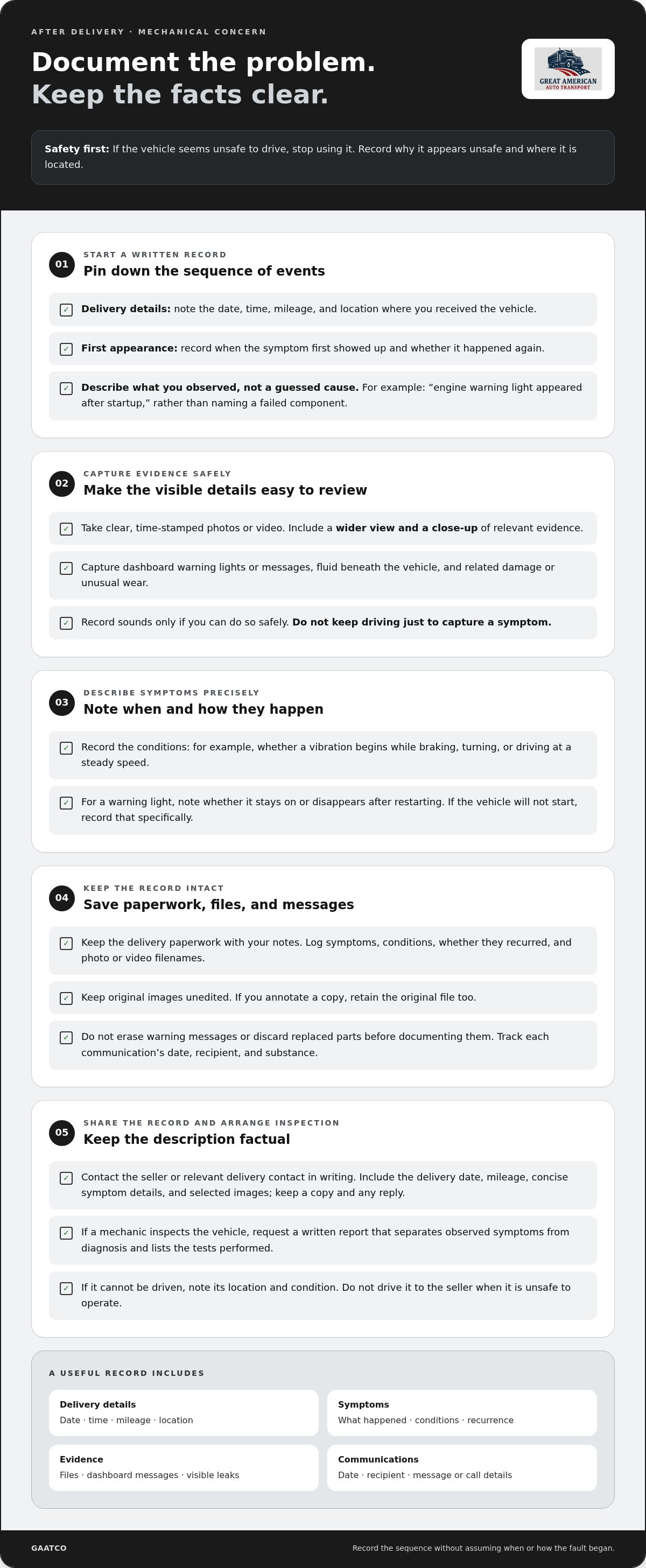
Start a written record as soon as you notice a problem. Note the delivery date and time, the vehicle’s mileage, and when the symptom first appeared. Describe what you observed without diagnosing the cause. For example, write “engine warning light appeared after startup” rather than “the engine control unit failed.” If the vehicle will not start, record that specifically.
Take clear, time-stamped photos or video to document visible evidence. Capture the dashboard warning light, any fluid beneath the vehicle, and damage or unusual wear that may relate to the concern. Include a wider view and a close-up. Record sounds only if you can do so safely, and do not keep driving just to capture a symptom.
Keep the delivery paperwork with your notes. A simple log can include:
- Delivery details: date, time, mileage, and the location where you received the vehicle.
- Symptoms: what happened, under what conditions, and whether it recurred.
- Evidence: photo or video filenames, dashboard messages, and visible leaks.
- Communications: the date, recipient, and substance of each message or call.
Describe each symptom so another person can understand when it occurs. For example, note whether a vibration begins while braking, turning, or driving at a steady speed. Record whether a warning light stays on or disappears after restarting. Keep original images unedited; if you annotate a copy, retain the original file too.
Contact the seller or relevant delivery contact in writing and explain the issue plainly. Include the delivery date, mileage, a concise description of the symptoms, and selected images. Keep a copy of your message and any reply. If a mechanic inspects the vehicle, request a written report that separates observed symptoms from the diagnosis and lists the tests performed.
Do not erase warning messages or discard replaced parts before documenting them. If the vehicle appears unsafe to operate, stop driving and record why, such as brake problems or a severe fluid leak. If it cannot be driven, note its location and condition. These records help establish the sequence of events without assuming when or how the fault began.
Can I return a car if I discover mechanical problems after delivery?
A mechanical problem does not automatically mean the seller will accept a return. Start with the purchase agreement, any separate return policy, and written messages exchanged before payment. These documents set out the terms for that sale. Look for details about returns, disclosed defects, inspection opportunities, and remedies if the vehicle develops a fault.
The seller type matters because dealership and private sales can involve different written terms and processes. Do not assume every vehicle or purchase comes with a return period. Review the documents you received, including any description of the vehicle’s condition. If the seller advertised a particular feature, compare that statement with the fault you found.
Before requesting a return, contact the seller in writing. Identify the vehicle, explain the problem plainly, and state the remedy you are requesting. For example, ask whether the seller will accept the vehicle back, arrange a repair, or discuss another resolution. Attach the relevant sale document or advertisement, and keep a copy of your message. A clear request records what you asked for and when.
- Review the sale terms: Find the signed agreement, return policy, and written condition disclosures.
- Clarify the fault: Use a mechanic’s written findings to describe the issue, rather than guessing at its cause.
- Preserve the vehicle’s condition: Avoid repairs or modifications before discussing them with the seller, unless needed for safety.
- Record the response: Save emails, texts, inspection reports, and any proposed resolution.
If the seller declines a return, ask for the reason in writing and compare it with the terms you signed. Keep the discussion factual. A report identifying a failed alternator, for example, is more useful than a general claim that the car is defective. If the seller proposes a repair, document its scope and the agreed arrangements before authorizing the work.
When the vehicle cannot be driven safely, do not drive it to the seller simply to make a return request. Keep it parked and document its condition. If moving the car becomes necessary, vehicle transport options can help you consider a non-driving alternative. Separate that transport decision from the return discussion, and retain records for each.
If you have a discolored, swollen, painful, or warm leg after childbirth, call a healthcare professional. People with pain or discomfort that does not seem normal after childbirth are advised to call their doctor. These health concerns are separate from a vehicle return discussion. Keep relevant records separate, and do not let a seller dispute delay seeking care when symptoms prompt a call.
Signs of sepsis can include chills, clammy or sweaty skin, fast breathing, a fast heart rate, confusion, fever, and extreme pain or discomfort. The page advises avoiding cycling and high-impact sports such as running or CrossFit during the initial return to exercise after childbirth.
What warranty rights apply to mechanical problems discovered after vehicle delivery?
To begin a warranty claim, identify which written coverage applies. A vehicle may have a manufacturer’s warranty, a dealer-provided warranty, or a separate service contract, each with its own terms. A seller’s return policy is separate, so requesting a warranty repair does not automatically establish a right to return the car.
Find the warranty booklet, purchase agreement, and any service contract. Check the covered components, exclusions, claim procedure, and conditions for authorized repairs. For example, an engine warranty may cover specified engine components, while a service contract may list covered systems and exclusions. Follow the document’s actual wording rather than relying on its title.
Compare the reported problem with the warranty’s scope. A mechanic’s written diagnosis can identify the affected part and distinguish it from related symptoms. If the car has a warning light and loses power, record both observations, then compare the diagnostic findings with the coverage language. Keep maintenance invoices and prior repair records together, as the warranty documents may require records relevant to the claim.
- Identify the coverage: Note whether the document comes from the manufacturer, dealer, or service-contract provider.
- Check the claim process: Find the required contact method, inspection steps, and repair-authorization instructions.
- Review exclusions: Compare the stated exclusion with the diagnosed defect, not merely the symptom.
- Preserve claim records: Save the diagnosis, invoices, submitted forms, and written responses.
Contact the warranty administrator named in the documents before authorizing work that may be covered. Provide the vehicle identification details, delivery date, current mileage, and mechanic’s findings. Ask for the claim decision and its basis in writing. If coverage is declined, compare the explanation with the clause cited. A written response can clarify whether the decision concerns an exclusion, a procedure, or a component outside the stated coverage.
Do not treat routine maintenance, a repair estimate, and warranty approval as interchangeable. An estimate describes proposed work; approval addresses the claim under the applicable coverage. Keep copies of both, along with any replaced-part records provided by the repair facility. This gives you a clear record if you need to follow up or clarify which repair the administrator authorized.
If the vehicle cannot be driven to an inspection or repair location, arrange inoperable vehicle transport rather than driving it in an unsafe condition.
These are separate medical concerns, not questions about vehicle coverage. Postpartum depression needs treatment, and people experiencing it are advised to talk to their doctor right away. After delivery, a systolic blood pressure reading of 140 mm Hg or higher is a reason to call a doctor right away. After delivery, a diastolic blood pressure reading of 90 mm Hg or higher is also a reason to call a doctor right away.
The page states that losing more than a liter of blood after delivery is abnormal and warrants immediate medical intervention. Seek medical care for these concerns. Direct vehicle warranty questions to the administrator named in the applicable coverage documents.
GAATCO: Open Car Transport
GAATCO provides Open Car Transport for owners who need to move a vehicle after a delivery-related mechanical concern. Once you have addressed the seller or warranty process, transport can help get the car to another location for inspection or repair. Open transport is one option; Enclosed Car Transport and Door-to-Door Auto Shipping are also available for different shipping needs.
Choose transport based on the vehicle’s condition and destination. If the mechanical problem makes the car unsafe or unable to operate, explain that when arranging transport. Transport moves the vehicle; it does not replace a mechanic’s assessment or determine warranty coverage.
For details about arranging vehicle shipping, visit GAATCO’s website.
Move Forward With a Clear Plan
After discussing the vehicle’s condition with the seller or warranty administrator, consider how it needs to reach its next destination. A car that cannot be driven safely may need transport to an inspection or repair location. Keeping transport decisions separate from the coverage discussion helps you manage each matter clearly. When deciding what to do if you find mechanical problems after delivery, plan the vehicle’s movement around its condition rather than driving it for convenience.
GAATCO can help arrange vehicle transport when relocation is the next practical step. Share your concerns and the vehicle’s circumstances to discuss the appropriate arrangement. Contact GAATCO to discuss your concerns, and take the next step with a considered plan.
Frequently Asked Questions
What should I do immediately after finding a mechanical problem after delivery?
First, move occupants away from traffic and stop the vehicle in a safe place. If you notice smoke, a fuel odor, or a rising temperature gauge, switch off the engine and do not restart it. Check the owner’s manual for the warning indicator’s meaning, then decide whether the vehicle can remain parked safely. When deciding what to do if you find mechanical problems after delivery, avoid making the situation worse.
How do I get an independent inspection and estimate for a vehicle defect?
Arrange a mechanic’s inspection and request a written report that separates observed symptoms from the diagnosis and lists the tests performed. A repair estimate describes proposed work; warranty approval is a separate decision.


