

The lowest shipping quote is not automatically the lowest-cost way to move a car cross-country. How to move a car cross-country for under $1,000 in 2026 comes down to comparing transport quotes, considering available discounts, and choosing timing with care.
It makes sense to look for a firm price target before committing, especially when a move involves several major expenses. This article explains how route, transport type, discounts, and booking dates can affect your options, and how to compare quotes on a like-for-like basis.
Cross-country car shipping means transporting your vehicle on a carrier rather than driving it yourself. Understanding the difference helps you weigh the time, logistics, and costs involved and choose an arrangement that suits your move.
Key Takeaways
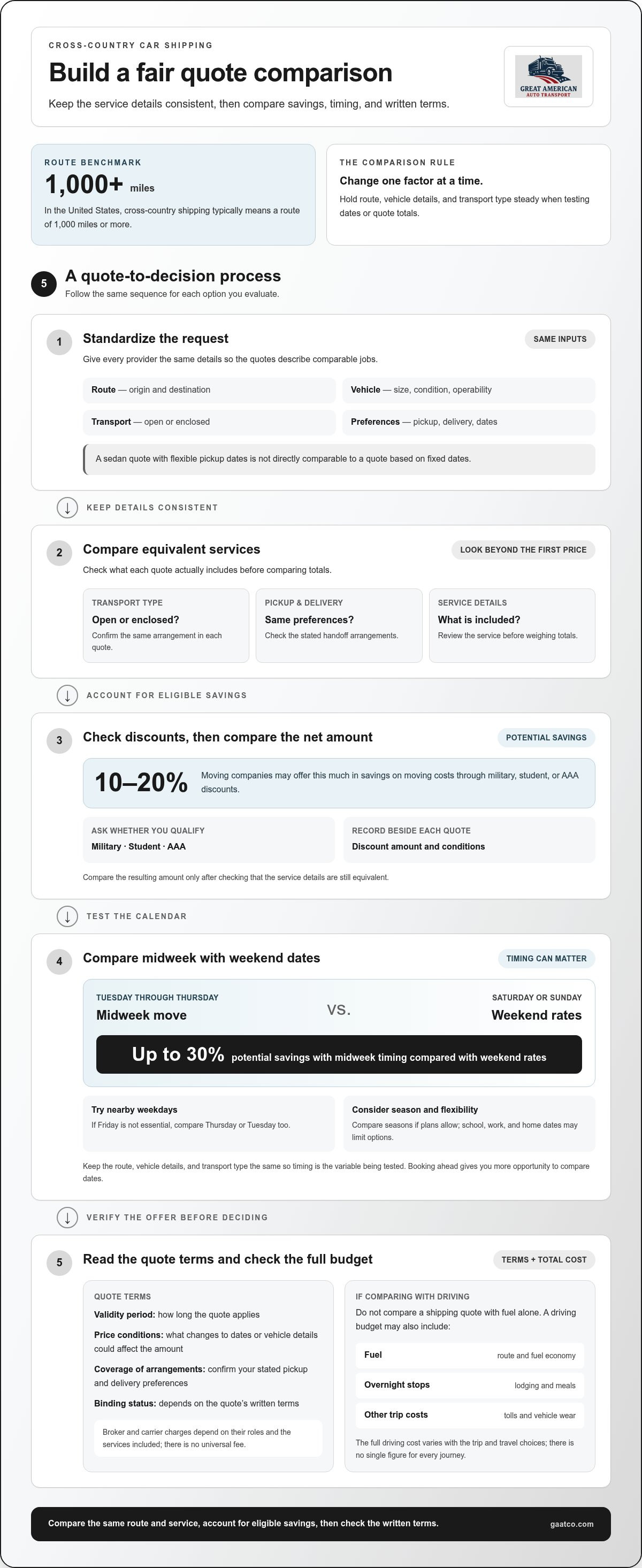
- Compare quotes using the same route, transport type, pickup and delivery preferences, and timing so you can assess the options fairly.
- Check whether military, student, or AAA discounts apply, and compare the total after any eligible savings.
- Consider a Tuesday-through-Thursday move; midweek timing can save up to 30% compared with weekend rates.
- Use route length to frame your comparison: cross-country car shipping in the United States typically refers to trips of 1,000 miles or more.
Comparing quotes and finding discounts
Compare quotes using the same route, vehicle details, transport type, and preferred timing. A quote for a sedan with flexible pickup dates, for example, is not directly comparable to one based on fixed dates.
Getting Vehicle Shipping Quotes
To get comparable vehicle-shipping quotes, provide consistent details for each request: origin, destination, vehicle size and condition, transport type, and preferred dates. Be clear about whether the vehicle is operable, since its condition can affect the transport arrangements and quoted amount.
Driving and shipping involve different considerations: driving concerns the operator and vehicle on the road, while shipping concerns the transport arrangement. For a self-driven vehicle, follow applicable driver, registration, and insurance requirements in states along the route; for carrier transport, coordinate the vehicle handoff and shipment details.
Comparing Shipping Quotes
Compare equivalent auto-shipping services rather than choosing solely by the lowest initial figure. Check whether each quote is for open or enclosed transport, uses the same pickup and delivery preferences, and reflects comparable dates. Review what the service includes before weighing the totals.
Ask about discounts that apply to your circumstances. Moving companies may offer military, student, and AAA discounts that save 10% to 20% on moving costs. For a fair comparison, note the discount and any conditions beside each quote, then compare the resulting amount with the same service details.
Fees and Quote Terms
Broker and carrier charges depend on each party’s role and the services included in the quote, so there is no universal fee. Whether a quote is binding depends on its written terms, including its validity period and any conditions that could change the price.
Read the terms alongside the route and vehicle information you submitted. Check whether the quote covers your stated pickup and delivery arrangements and whether changing the dates or vehicle details could affect the price. This helps you distinguish a complete offer from an estimate with conditions before deciding what fits your budget.
Booking early and moving off-peak
Flexible dates can help lower the cost of a vehicle move. Moving Tuesday through Thursday can save up to 30% compared with weekend rates. If your arrival schedule allows it, compare midweek dates with Saturday or Sunday before settling on a pickup window. The difference is especially useful when your moving calendar has room to shift by several days.
Booking ahead gives you more opportunity to compare dates and choose a suitable travel window. Set your preferred pickup and delivery dates, then consider nearby alternatives. If Friday pickup is not essential, for example, compare quotes for Thursday or Tuesday as well. Keep the route and transport details the same so timing is the only variable.
Season can also affect your options. If your plans are flexible, compare dates in different seasons. School calendars, work start dates, and home handovers can limit flexibility, so decide which commitments matter most before selecting a shipping window.
Separate pickup timing from your own travel plans. If you’re driving to your destination, coordinate your departure with the vehicle handoff rather than assuming both journeys will line up exactly. Keep the route, vehicle details, and transport type consistent when comparing date options.
For a date-specific comparison, submit your route and preferred timing through a vehicle shipping quote request. Include alternate weekdays if your schedule permits, then compare the resulting terms before booking.
Definition of cross-country car shipping
In the United States, cross-country car shipping typically describes a vehicle transport route of 1,000 miles or more. The driving cost adds fuel, lodging, meals, tolls, and vehicle wear; route mileage, fuel economy, overnight stops, and toll roads shape the total. Those expenses vary with the trip and the driver’s travel choices, so there is no single figure that fits every journey.
With shipping, the vehicle travels on a carrier rather than being driven by its owner. You arrange pickup and delivery while the carrier moves the car along the agreed route. A trip from the East Coast to the West Coast is cross-country, while a shorter regional trip may not be. This distinction helps you compare carrier transport with the effort of driving the entire route.
When weighing the driving option, consider more than fuel. A long route may involve overnight lodging, meals away from home, tolls, and time away from work. A long drive also adds mileage and wear to the tires and other vehicle components. These costs and practical considerations make driving more involved than a fuel estimate alone suggests.
Insurance is another consideration. Review your auto policy and transport documents to understand what each says about the vehicle during the trip. Driving coverage and shipment coverage may address different circumstances, so don’t assume they’re the same. Compare the route and expected driving expenses alongside the relevant insurance terms. This gives you a clearer basis for choosing whether to drive or arrange transport, especially if you want the vehicle to arrive without adding a long journey to its mileage.
What is the cheapest way to move a car cross country in 2026?
Driving the vehicle yourself may avoid a separate transport arrangement, but the full cost depends on the route, fuel use, overnight stops, and added mileage. To move a car cross-country for under $1,000 in 2026, compare that complete driving budget with available transport choices, not just one headline figure. A low rental rate can become less attractive once towing costs and equipment are included.
Check which rental period matches your itinerary, then account for the vehicle needed to tow the trailer.
Some additional expenses come before departure. Add each one to the rental total before deciding whether a trailer is the cheaper option.
A moving truck involves a different calculation. Truck and fuel figures alone don’t represent the full cost of a move. Compare the route, vehicle, rental time, fuel, and any towing requirements together.
For a carrier comparison, use the same route, vehicle details, and timing in a vehicle shipping quote request. That gives you a defined transport option to weigh against driving or towing. The cheapest method is the one with the lowest overall cost for your specific plan, not simply the lowest advertised rental charge.
The total varies with the route, fuel use, overnight stops, and added mileage, so there is no single cost for a cross-country drive.
GAATCO: Open Car Transport
GAATCO offers Open Car Transport for owners comparing carrier shipping with driving or towing. It can suit a move where you want your car transported separately while you travel to your destination. Door-to-Door Auto Shipping provides pickup and delivery at your doorstep. Enclosed Car Transport is also available, along with Military Vehicle Shipping for military-related moves.
To find out whether open transport suits your route and budget, request a quote with your origin, destination, vehicle details, and preferred timing. Compare the service details with your other moving expenses rather than assuming one budget will work for every route.
For details or to discuss your transport needs, visit GAATCO.
Set Your Priorities for the Move Ahead
A sub-$1,000 target depends on route and transport details, so treat it as a planning goal rather than an assumed quote. As you decide how to move a car cross country for under $1,000 in 2026, identify what matters most: keeping the vehicle’s mileage low, coordinating its arrival with your own travel, or choosing a transport arrangement that suits the car. That priority can guide your next decision more effectively than focusing on a single headline figure.
Before arranging transport, write down your route, timing preferences, and essential vehicle details. A clear request makes it easier to discuss a suitable option with GAATCO and understand how it fits your move. You can contact GAATCO to discuss car shipping and outline what you need.
A considered plan gives you a stronger starting point for your move. Choose the arrangement that fits your priorities, then move forward with confidence.
Frequently Asked Questions
It can be, if you plan around the biggest expenses: distance, belongings, travel, and vehicle transport. A move from Atlanta to Miami differs from one continuing to Orlando or Nashville. List the major expenses first and set aside part of your budget for timing changes and essential arrival costs. The more belongings and services you include, the less room remains for other expenses.
Can I move out of state for under $1,000?
Yes, a small out-of-state move can fit a limited budget if you reduce what you transport and handle suitable tasks yourself. Moving from Dallas to Houston differs from relocating from Austin to a distant state. Start with essential belongings, travel arrangements, and vehicle costs. A detailed list of what must move helps show whether your budget covers the actual scope.
Can I ship a non-running car across the country?
Yes. GAATCO offers Inoperable Vehicle Transport for vehicles that cannot be driven. When arranging transport from New York or Boston, describe the vehicle’s condition clearly, including whether it starts, rolls, steers, or brakes. This information helps define loading and delivery requirements. Keep the keys and relevant operating details ready for the handoff.
How Much Does It Cost to Ship a Car in 2026?
There is no single price that applies to every shipment in 2026. The quote depends on route, vehicle size and condition, transport type, and timing. For example, a shipment from San Diego to San Francisco differs from one traveling to Seattle. The price depends on the case and is provided after a quote request; compare quotes with matching shipment details.
How should I prepare my car for cross-country shipping?
Before pickup, remove personal belongings, clean the vehicle, and take clear photos of its visible condition. Tell GAATCO about mechanical issues or operating limitations, especially if the car cannot start or move normally. For a vehicle traveling from Chicago toward Denver, Phoenix, or Las Vegas, keep the keys and shipment details accessible for the handoff.
Is My Car Insured While Transporting it Across the Country?
GAATCO states that vehicles have full insurance coverage during transport. Keep your shipment documents and vehicle-condition records together for reference at delivery. Transport coverage is distinct from your personal auto policy while driving. For example, a Phoenix-to-Las Vegas shipment involves carrier transit, while driving the route yourself involves the terms of your own policy.


