Does the movement of an inoperable vehicle from a private collection to a transport carrier represent a simple haul, or is it a delicate engineering maneuver requiring absolute precision? For many owners, the challenge of how to ship a non-running car introduces a unique set of anxieties regarding potential damage during the winching process and the transparency of specialized handling fees. We understand that your vehicle, regardless of its mechanical state, remains a significant asset that demands a high level of logistical sophistication and care.
You probably recognize that standard transport methods are often insufficient for vehicles that can't move under their own power. This guide provides the clarity you need by detailing the precise logistics, specialized equipment, and professional preparation necessary to transport an inoperable vehicle safely across the United States. We'll examine the essential 'Roll, Steer, Brake' assessment, the importance of meticulous documentation, and the specific carrier capabilities that ensure a damage-free delivery to your chosen destination.
Key Takeaways
- Understand the critical industry distinction between mechanical engine failure and total immobility to ensure your carrier arrives with the appropriate specialized equipment.
- Explore the sophisticated mechanics of professional winching systems and the rigorous safety protocols used to protect your vehicle's structural integrity during the loading process.
- Evaluate the advantages of open versus enclosed transport to select the optimal level of protection for your high-value restoration or classic automotive asset.
- Discover the strategic preparation steps for how to ship a non-running car, focusing on the legal significance of the Bill of Lading and the necessity of clear site logistics.
- Gain professional insight into the logistical factors that influence inoperable surcharges, allowing for a more transparent and predictable relocation experience.
Defining Inoperable: What Qualifies as a Non-Running Car?
Identifying the specific mechanical state of your vehicle is the primary step in understanding how to ship a non-running car with professional precision. In the specialized world of automotive logistics, we don't merely categorize a car as "broken." Instead, we evaluate its physical interaction with the transport environment. A vehicle with a simple engine failure that still rolls and steers represents a vastly different operational profile than a collision-damaged unit with a seized drivetrain.
This nuanced distinction dictates the choice of carrier and the specific route logistics required for a seamless transit. The transport of disabled vehicles is an exercise in controlled physics; every mechanical limitation must be accounted for to prevent secondary damage during the loading phase. Our professionals focus on these details to ensure that the transport plan is as sophisticated as the vehicle itself.
To better understand this concept, watch this helpful video:
The 'Roll, Steer, and Brake' (RSB) Standard
For a carrier to utilize a standard winch system, the vehicle must meet the "Roll, Steer, and Brake" standard. This means the tires must hold air to minimize friction, the steering rack must allow for direction changes on the loading ramp, and the brakes must function to maintain control during the transition. If your vehicle lacks these capabilities, the logistics become more complex. Functional brakes are essential for the driver to maintain safety as the vehicle crests the ramp and settles onto the trailer bed. Without RSB functionality, a standard multi-car carrier might be unable to facilitate the load safely, requiring a transition to more specialized equipment.
Total Inoperability: Parts Cars and Collision Damage
Vehicles involved in significant collisions or those being moved as "parts cars" often present greater challenges than a simple mechanical failure. Seized axles, missing wheels, or compromised frames mean the car cannot be winched in a traditional manner. When determining how to ship a non-running car that lacks basic mobility, the logistical strategy shifts from standard winching to heavy-lifting solutions. In these high-stakes scenarios, the necessity for forklifts or specialized flatbeds becomes non-negotiable. It's vital to communicate these specific failures to our transport coordinators early in the process. Providing clear, detailed information regarding the vehicle's physical state allows us to deploy the correct technical resources, ensuring your vehicle is handled with the discreet care it deserves.
Specialized Equipment: How Carriers Load a Non-Running Vehicle
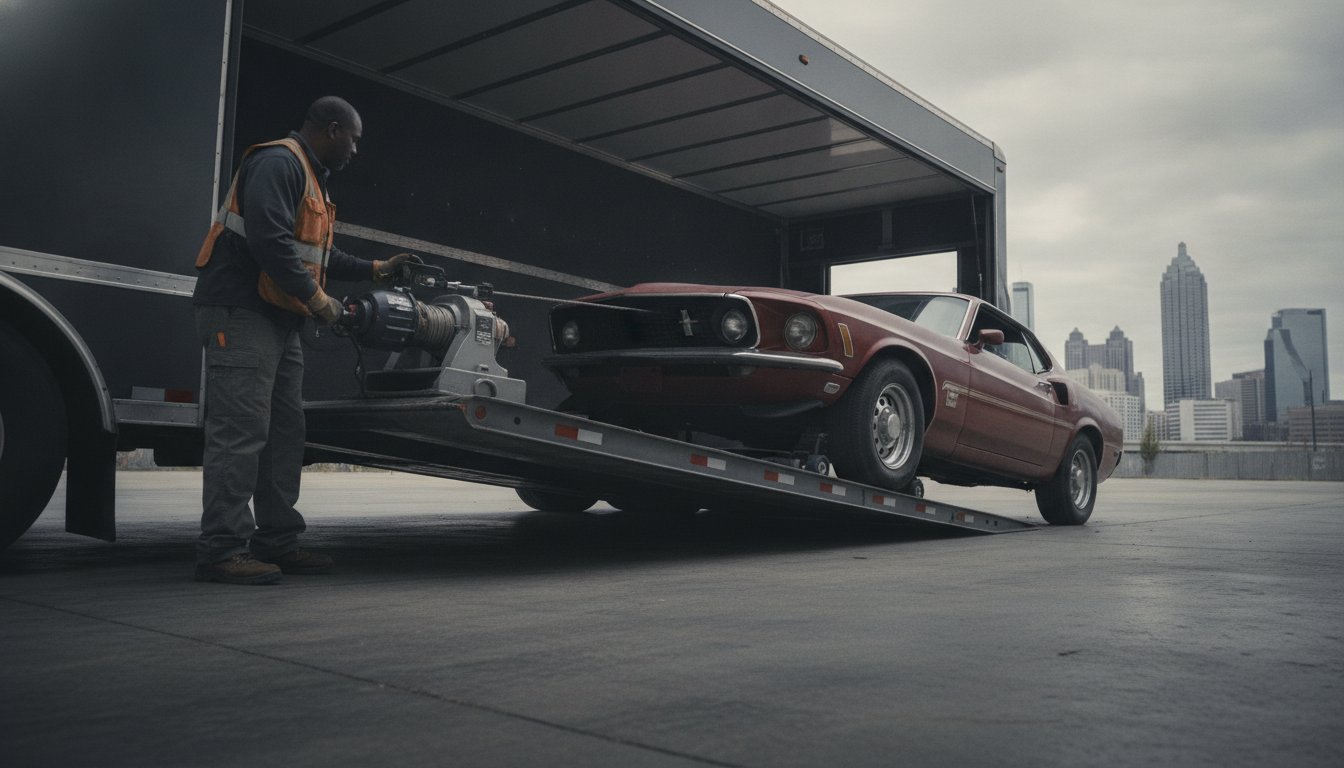
Loading an inoperable vehicle is a process that demands more than mere force; it requires a calculated application of specialized equipment to maintain the vehicle's structural integrity. While a standard vehicle is driven onto a trailer, the methodology for how to ship a non-running car relies heavily on advanced winching systems. Professional carriers utilize high-tensile strength cables and precise tension controls to guide the vehicle up the loading ramps. This transition is the most critical phase of the journey, where the risk of secondary damage is highest if the operator lacks the necessary expertise or equipment.
Safety is not a matter of choice but a strict requirement under Federal Motor Carrier Safety Administration (FMCSA) regulations, which govern the securement of all cargo. We adhere to these standards by ensuring that every non-runner is fastened using professional-grade straps and chains that account for the vehicle's unique weight distribution. It is vital to distinguish professional loading from "drag loading," a practice where a vehicle is pulled across a surface without the wheels turning. Drag loading is never an acceptable professional practice, as it causes irreparable harm to the tires, suspension, and drivetrain components. For vehicles with locked wheels, we employ wheel dollies or skates, which allow the car to glide onto the carrier without abrasive contact with the trailer bed.
The Role of the Professional Winch
Modern auto transport has evolved beyond simple hand-operated winches to sophisticated hydraulic systems that offer superior control. A professional operator identifies a reinforced frame point or a dedicated tow eye to attach the winch cable, avoiding fragile components like bumpers or steering linkages. During the controlled ascent, the operator monitors the vehicle's alignment constantly. This ensures the car remains centered on the ramps, preventing any contact with the trailer's structural pillars. If you require this level of technical precision for your vehicle, you may request a customized transport quote to discuss your specific mechanical needs with our team.
Forklifts and Liftgates: Advanced Loading Solutions
In certain scenarios, such as moving salvage vehicles or "parts cars" that cannot roll even with dollies, a forklift becomes an essential tool. This requires a coordinated effort between the pickup site and the carrier to ensure the equipment is available and the operator is skilled in automotive handling. For high-value, low-clearance vehicles that are inoperable, we often recommend enclosed carriers equipped with hydraulic liftgates. These liftgates remain level with the ground, eliminating the steep angles of traditional ramps and providing a horizontal transition that protects the undercarriage from impact. The availability of such specialized equipment can influence your transport timeline, making early communication regarding your vehicle's condition vital for operational efficiency.
Comparing Transport Methods: Open vs. Enclosed for Inoperable Cars
Choosing the correct trailer is a decision that balances the specific vulnerability of the vehicle with the mechanical requirements of the transport itself. When determining how to ship a non-running car, you must evaluate the asset's risk profile beyond its mechanical failure. A modern SUV with a failed transmission requires different considerations than a 1960s barn find with a compromised chassis and exposed interior. The logistical reality is that while open transport is a common solution, not every carrier in this category possesses the specialized winch equipment necessary for an inoperable load. This equipment requirement directly influences the inoperable surcharge, as the carrier must dedicate additional time and specialized hardware to ensure a safe loading sequence. Our role as a trusted advisor is to ensure these technical details are managed seamlessly so you don't have to worry about the mechanics of the move.
Open Transport: Practicality for Project Vehicles
For many owners of non-running sedans or modern SUVs, Open Car Transport offers a practical and efficient solution. These standard open-air trailers are highly capable, provided they are equipped with a functioning winch system. It's essential to verify this capability before the carrier arrives at the pickup location. While this method exposes the vehicle to the elements, it remains a reliable choice for vehicles with intact glass and weather-sealed cabins. When calculating the total investment, owners should weigh the base transport rate against the specialized handling fee required for winching. This transparency ensures that the logistics remain professional and predictable from the initial quote to final delivery. We ensure that every carrier assigned to such a task is fully vetted for their equipment's operational flow and reliability.
Enclosed Transport: The Elite Choice for Restorations
Enclosed transport represents the gold standard for high-value restorations and delicate automotive assets. If a vehicle has missing windows, a compromised convertible top, or an exposed interior, the protection offered by a hard-sided trailer is non-negotiable. This method preserves the current state of a "barn find" or a project in mid-restoration, shielding it from road debris and inclement weather during transit. Beyond physical protection, enclosed trailers often carry higher insurance limits, providing an additional layer of security for luxury or classic assets that are currently inoperable. This discreet service ensures that your vehicle arrives in the exact condition it was in when it left your possession, maintaining the integrity of your investment. This level of customization is what distinguishes a premium service provider from a standard hauler, offering peace of mind to the most discerning collectors.

Preparing Your Non-Running Vehicle for Professional Transport
Successful relocation begins long before the carrier arrives. When considering how to ship a non-running car, the preparation phase is where you ensure the safety of your asset and the efficiency of the carrier's team. The Bill of Lading serves as the primary legal document for condition reporting, acting as both a formal receipt for the vehicle and a meticulous record of its physical state at the moment of exchange. Beyond legalities, you must ensure the vehicle is staged in a location that allows for the safe deployment of loading equipment. A clear, unobstructed path is essential for the carrier's large truck to maneuver and align its winch system with precision.
Project vehicles often accompany a collection of spare components or disassembled engine parts. It's vital to secure these loose items within the trunk or cabin to prevent movement during transit. Documentation remains your strongest safeguard; we recommend capturing high-resolution photographs of the vehicle from multiple angles, specifically noting any pre-existing structural issues or cosmetic imperfections. This level of detail provides a clear baseline for all parties involved, ensuring a transparent and professional experience. Our team prioritizes this meticulous attention to detail to maintain the high standards our clients expect.
Mechanical and Fluid Management
Preparing the mechanical aspects of an inoperable vehicle simplifies the loading process significantly. We recommend inflating the tires to their maximum recommended PSI to reduce rolling resistance during the winching process. Carriers prioritize safety and environmental cleanliness, so they may refuse vehicles with active fluid drips that could contaminate the trailer or other cargo. If the battery still holds a partial charge but the vehicle doesn't start, it's best to disconnect it to prevent electrical issues during the journey. If you are unsure about your vehicle's readiness, you can request a professional transport assessment to ensure every detail is addressed.
Accessibility and Clearance Logistics
The physical environment of the pickup site dictates the feasibility of the load. A winch-equipped carrier requires significant space to align with the non-runner. Narrow residential driveways or low-hanging trees can present insurmountable obstacles for large multi-car trailers. If your location poses such challenges, arranging for a 'terminal-to-terminal' drop-off may be the most efficient path forward. This allows the carrier to operate in a controlled environment designed for heavy logistics, ensuring that the process of how to ship a non-running car remains safe and discreet. Our professionals handle these complex logistics so you don't have to manage the operational hurdles yourself.
Navigating the Logistics: Why Professional Oversight Matters
Managing the final stages of vehicle relocation requires a synthesis of technical knowledge and logistical oversight. When you're determining how to ship a non-running car, the expertise of your partner becomes the determining factor in a successful outcome. It's not merely about moving an object from one point to another; it's about orchestrating a sequence of specialized events that protect your investment. We prioritize a steady and measured approach to ensure every transition is handled with the seriousness it deserves.
Transparent Pricing for Specialized Hauls
The industry standard 'Inoperable Surcharge' is often a point of curiosity for clients. This fee isn't a penalty but a reflection of the increased operational resources required to handle a vehicle that cannot move under its own power. Loading a non-runner involves specific costs that aren't present in standard transport:
- Additional labor hours for the driver to safely coordinate the loading sequence.
- The deployment and maintenance of specialized hydraulic winching equipment.
- Specific trailer positioning that often limits the carrier's capacity for other cargo.
Full disclosure of your vehicle's mechanical state is essential for an accurate quote. By providing details on steering or braking issues, you enable us to provide a precise request-quote that eliminates the possibility of hidden fees or on-site delays. Clear communication serves as the foundation of our professional relationship, ensuring that technical details regarding logistics are clear and accessible without losing their sophisticated edge.
The GAATCO Commitment to Safety
With over 20 years of expertise in specialized vehicle relocation, our team understands that standard service is insufficient for inoperable assets. We've cultivated an expansive network of licensed and insured carriers who are specifically vetted for their proficiency in handling non-running vehicles. This vetting process ensures that every driver possesses the technical acumen to manage complex loading scenarios without compromising safety. This persona of a seasoned expert is what we bring to every shipment, providing a reassuring style for our corporate and private audiences alike.
Our role at GAATCO is to act as your trusted advisor, bridging the gap between your needs and the complex realities of the transport industry. We manage the intricacies of door-to-door delivery, coordinating with local authorities and equipment providers when necessary to ensure a discreet transition. This comprehensive oversight provides the peace of mind that comes from knowing every detail is handled with meticulous care. Let our professionals handle the infrastructure of your move while you focus on the future of your automotive asset. Initiating your specialized transport request is the final step in ensuring that the challenge of how to ship a non-running car is resolved with the elegance and reliability your vehicle deserves.
Securing Your Automotive Asset for the Journey Ahead
The successful relocation of an inoperable vehicle relies on more than just mechanical force; it requires a sophisticated understanding of specialized logistics and safety protocols. By identifying the specific mobility of your asset and preparing the site for a winch-equipped carrier, you eliminate the risks associated with standard transport methods. You've learned that the distinction between a simple engine failure and total immobility dictates the choice of equipment and the transparency of the resulting surcharge.
When you're ready to address the complexities of how to ship a non-running car, our team stands as a discreet and dependable partner. We bring over 20 years of specialized transport experience and a strictly vetted, licensed, and insured carrier network to every relocation. Our specialized inoperable vehicle handling protocols ensure that your asset is treated with the meticulous care it deserves from pickup to final delivery.
Request a Professional Inoperable Transport Quote
We look forward to providing the calm confidence and operational excellence required for your next specialized transport project.
Frequently Asked Questions
How much extra does it cost to ship a car that doesn't run?
Shipping an inoperable vehicle typically involves a specialized handling surcharge to account for the additional labor and equipment required during the loading process. This fee ensures that the carrier can dedicate the necessary time and technical resources to facilitate a safe, controlled transition onto the trailer. When you inquire about how to ship a non-running car, our team provides transparent details regarding these costs to ensure a predictable and professional experience.
Can you ship a car with a seized engine or no transmission?
We can certainly facilitate the transport of vehicles with seized engines or missing transmissions provided they meet basic mobility standards. As long as the unit can still roll, steer, and brake, a winch-equipped carrier can manage the relocation with precision. This makes the process of how to ship a non-running car accessible for restoration projects and classic assets that are currently undergoing mechanical overhauls. For those transporting a European vehicle for specialized maintenance, you can find out more about expert repair services from Euro Performance Auto Shop LLC.
Does the transport company provide the winch for loading?
Specialized carriers within our network provide the professional winching systems required for loading inoperable vehicles. Whether utilizing a hand-operated or hydraulic system, the driver is responsible for the controlled ascent of the vehicle onto the trailer bed. We verify that each assigned carrier possesses the correct hardware to handle your specific mechanical needs, ensuring a seamless and discreet operational flow from start to finish.
Can I ship a car that doesn't have any wheels?
Relocating a vehicle without wheels is a complex logistical task that requires specialized lifting equipment, such as a forklift or a flatbed trailer. Standard winching isn't possible in these scenarios, so the pickup and delivery sites must have the infrastructure to support heavy lifting. Disclosing this condition early allows our professionals to coordinate the necessary technical resources to maintain the integrity of the vehicle's frame during the move.
Is my non-running car insured during transport?
All vehicles handled by our professional network are covered under the carrier's primary cargo insurance policy. This protection extends to inoperable units, providing coverage for any damage that might occur during the loading, transit, or unloading phases. We prioritize safety and reliability, ensuring that every asset in our care is backed by a licensed and insured partner who understands the high-stakes nature of specialized transport.
Do I need to be present when the non-running car is picked up?
Your presence, or that of a trusted representative, is required at both the origin and destination to facilitate the vehicle inspection. This ensures that the Bill of Lading accurately reflects the vehicle's condition before and after transit. Being present allows for a professional exchange of documentation and provides an opportunity to discuss any specific handling nuances with the driver, reinforcing the security of your automotive investment.
What if the car becomes inoperable after I already booked the shipment?
You should contact your logistics coordinator immediately if your vehicle's mechanical status changes after the initial booking. Since standard carriers often lack the specialized equipment for non-runners, we must reassign the task to a winch-equipped professional. Early notification prevents on-site delays and ensures that the carrier arriving at your location is fully prepared to manage the specific complexities of an inoperable load safely.
Can I ship extra parts inside the non-running car?
Shipping spare parts inside the vehicle is generally permissible, provided they're securely fastened and don't exceed weight limitations. We recommend placing all extra components in the trunk or securing them within the cabin to prevent movement that could cause interior damage. It's a professional courtesy to inform your coordinator of these items to ensure the total weight remains within the carrier's operational specifications for the journey.


