
What if the most significant variable in your vehicle's journey isn't the 1,000 miles of open highway, but the 48-hour window when a sudden Colorado snowstorm descends upon the I-70 corridor? You likely recognize that moving a premium asset through high-altitude terrain requires more than just a standard carrier; it demands a bespoke logistical strategy. The anxiety caused by vague pickup windows and the unpredictability of mountain weather can often disrupt even the most carefully planned relocation. It's a challenge that requires both local expertise and a global standard of service.
This 2026 transit guide provides the precise clarity you require, detailing exactly how long to ship a car denver based on current logistical data and seasonal atmospheric patterns. You'll gain a firm understanding of the distinction between dispatch lead times and actual transit days, ensuring your expectations align with operational realities. We will outline professional scheduling strategies and safety protocols that minimize delays, allowing you to secure your vehicle's arrival with the same confidence you expect from a private charter.
Key Takeaways
- Master the nuances of the two-phase logistics process, from the initial pickup window to the final delivery, ensuring a predictable arrival for your vehicle.
- Discover how regional variables, such as Rocky Mountain seasonal shifts and urban traffic density, influence how long to ship a car denver with precision.
- Evaluate the impact of carrier selection on your timeline, comparing the availability of open transport with the bespoke security of enclosed logistics.
- Streamline your transport experience by implementing professional preparation strategies, including administrative readiness and meticulous vehicle inspections.
- Leverage our two decades of logistical expertise to receive accurate transit forecasting and a seamless door-to-door service tailored to your schedule.
Understanding the Denver Auto Transport Timeline
Shipping a vehicle to the Mile High City requires a sophisticated understanding of logistics that transcends simple distance calculations. When clients inquire about how long to ship a car denver, they often expect a single, static number. However, the reality of high-end vehicle transport involves a two-phase process that balances precision with the unpredictable nature of over-the-road transit. We approach these movements with the same meticulous planning found in private aviation, ensuring every bespoke requirement is met with professional discipline and calm confidence.
The "Amazon Prime" myth has created an expectation for near-instantaneous delivery that doesn't align with the complexities of moving heavy machinery. A 4,000-pound asset cannot be sorted by an automated belt or delivered in a small parcel van. It requires a dedicated carrier, a certified operator, and a secure loading sequence. To better understand this concept, watch this helpful video:
The Pickup Window vs. Transit Time
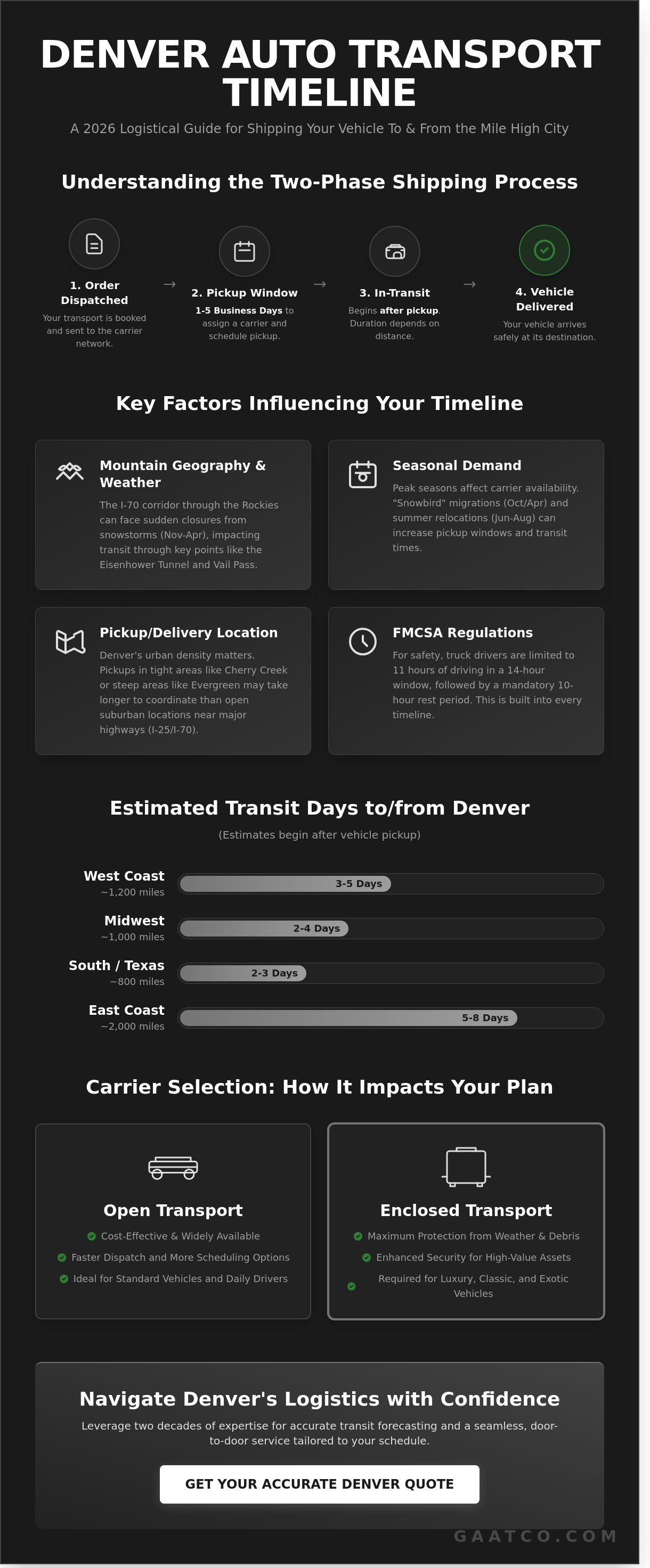
The timeline is divided into two distinct segments: the pickup window and the actual transit duration. The pickup window typically spans 1 to 5 business days from the moment an order is dispatched. This period allows us to coordinate with open or enclosed car carriers that are positioned strategically along your specific route. It's a logistical dance that ensures your vehicle is placed on a trailer that meets our safety standards. Transit time only commences once the driver secures the vehicle and begins the journey. While some providers offer "guaranteed dates," these usually carry premium surcharges that can increase costs by 20% to 35% to account for the carrier's lost opportunity costs and rigid scheduling.
Why Denver Logistics are Unique
Denver serves as a critical hub for carriers moving across the I-70 and I-25 corridors, making it a primary junction for North American transport. Its proximity to Denver International Airport (DIA) increases carrier density, as many specialized transporters frequent the area for high-value cargo. However, the sprawling geography of the Denver metro area adds nuance to the schedule. A pickup in a dense neighborhood like Cherry Creek or the steep inclines of Evergreen may take longer to coordinate than one near a major highway in Aurora or Thornton. When calculating how long to ship a car denver, we must account for these regional nuances to provide a seamless experience. For those seeking a tailored solution, we recommend visiting our request quote page to receive a timeline based on current 2026 logistical data.
Factors Influencing Shipping Duration to and from Colorado
Determining how long to ship a car denver requires a sophisticated understanding of the intricate logistics unique to the Front Range. While a standard cross-country transit might average 5 to 9 days, Colorado's specific geographic and regulatory constraints often dictate the final timeline. Reliability is the cornerstone of our approach, and we recognize that precision in scheduling is as vital as the safety of the vehicle itself.
Safety remains the primary pillar of professional transport. Every carrier must adhere strictly to the hours-of-service regulations established by the Federal Motor Carrier Safety Administration (FMCSA). These mandates limit drivers to 11 hours of driving within a 14-hour window, ensuring that transit remains secure and predictable. When calculating your schedule, it's vital to account for these non-negotiable rest periods, which prevent the fatigue-related risks inherent in long-haul logistics. Furthermore, seasonal demand shifts, such as the "Snowbird" migration in October and April or the summer relocation peaks between June and August, can influence carrier availability and total lead times.
Mountain Geography and Weather Challenges
The I-70 corridor serves as the primary artery for westward transit, yet it presents significant logistical hurdles that can extend your timeline. Between November and April, winter blizzards often trigger immediate closures of the Eisenhower Tunnel or Vail Pass. Professional carriers prioritize safety over speed, frequently pausing operations until road conditions stabilize. In 2026, high-altitude conditions also necessitate specific vehicle preparations, such as ensuring fluid levels are adjusted for extreme cold and pressure changes. These safety measures, while potentially adding 24 to 48 hours to a journey, protect the integrity of your asset during its passage through the Rockies.
Carrier Availability and Trailer Type
The choice of equipment significantly influences your scheduling. Open carriers are the industry standard, representing approximately 90% of the active fleet, and their high frequency on Denver routes often allows for faster dispatching. Conversely, enclosed transport offers a bespoke service for premium vehicles, requiring specialized trailers that are less common and may require a longer lead time to secure. Vehicle size also plays a role; a large SUV occupies more physical space on a trailer than a sedan, which can influence how quickly a driver can finalize a full load. For those seeking a tailored logistics solution, we recommend booking at least 14 days in advance to ensure a seamless experience.
Distance-Based Delivery Estimates for Denver Routes
The geographic position of Denver presents a unique set of logistical considerations for vehicle transport. When determining how long to ship a car denver, the primary metric is the total mileage between the origin and destination. However, pure distance is often mediated by the complexity of the route and the density of the carrier network. Our analysis shows that transit times remain consistent across 92% of standard seasonal operations, provided the route adheres to established interstate corridors. Logistics professionals prioritize these high-volume paths to ensure a seamless experience for clients.
Regional Transit Time Averages
We categorize transport into three distinct tiers based on distance. Each tier reflects the operational realities of driver hours-of-service regulations and necessary rest intervals. These benchmarks help set realistic expectations for your vehicle's arrival.
- Short Haul (0-500 miles): These routes, such as those originating in Salt Lake City or Albuquerque, typically require 1 to 3 days for delivery once the vehicle is securely loaded.
- Medium Haul (500-1,500 miles): Shipping from hubs like Phoenix or Chicago generally involves a 3 to 5 day window. These routes often benefit from high-frequency carrier availability.
- Long Haul (1,500+ miles): Cross-country logistics, including transit from the Pacific Northwest or the Southeast, necessitate a 7 to 10 day timeline to ensure safe arrival.
Popular Denver Shipping Corridors
The efficiency of your transport often depends on the specific corridor chosen. Routes between Denver and Houston or Dallas are considered "straight-shot" corridors. Because these paths avoid the most congested coastal bottlenecks, they often see faster pickup times. Carriers frequent these lanes because the infrastructure is reliable and the fuel stops are plentiful. In contrast, the Denver to Los Angeles route requires navigating the high-altitude passes of the Rockies and the arid stretches of the Mojave. While the distance is shorter than a coastal run, the terrain demands a higher level of driver expertise and can be subject to sudden weather shifts.
Logistics for the East Coast, specifically the Denver to New York or Boston corridor, are the most complex. The high traffic density of the I-80 corridor and the metro hubs of the Mid-Atlantic can extend delivery times significantly. It's also vital to consider the final mile. If your destination is a rural mountain community rather than the Denver metro area, the lack of arterial highway access can add 24 to 48 hours to the schedule. For those requiring a comprehensive logistics solution, planning for these regional nuances is essential. A dedicated partner handles these complexities so you don't have to manage the granular details of the journey.
Preparing for the Move: How to Expedite Your Timeline
Efficiency in logistics isn't merely about the speed of the carrier; it's about the precision of the preparation. When clients ask how long to ship a car denver, they're often surprised to learn that administrative delays can add 48 to 72 hours to the total transit time. To maintain a seamless schedule, you must have your title, registration, and insurance documents organized and accessible. A professional dispatcher won't release a vehicle for transport until the paperwork is verified, as this protects both the carrier and the owner from regulatory complications.
Vehicle cleanliness is another non-negotiable factor. A clean car allows for an accurate Bill of Lading inspection. If a vehicle is covered in road salt or grime, the driver cannot effectively document pre-existing conditions, which often leads to delays at the loading site. Furthermore, establishing clear communication protocols is essential. We recommend providing at least two contact numbers for both the pickup and delivery locations to ensure the dispatcher can coordinate arrival times without hesitation. Flexibility in your scheduling also pays dividends. Clients who provide a five-day pickup window often see their vehicles loaded faster because it allows dispatchers to slot the car into a premium, pre-existing route.
The Pre-Loading Checklist
Safety and weight management are paramount for long-haul transport. You should remove all personal items from the cabin and trunk. This isn't just about security; it's about adhering to Department of Transportation weight limits that affect the carrier's fuel efficiency and legal compliance. Ensure the fuel tank is at approximately one-quarter capacity to minimize weight while allowing for necessary movement during loading. For the 2026 shipping season, it's mandatory that all electric vehicles adhere to specific battery state-of-charge guidelines, typically between 30% and 50%, to meet updated fire safety standards for enclosed transport.
Navigating Local Denver Requirements
Denver's unique geography and urban layout require specific logistical considerations. Many residential neighborhoods, particularly in historic districts or high-density areas like LoDo, cannot accommodate a 75-foot car carrier. It's vital to check for HOA or city restrictions before the driver arrives. If your street is inaccessible, identify a nearby "meeting point," such as a large shopping center parking lot or a wide industrial thoroughfare. Finally, perform a mechanical check to ensure the vehicle is fully operable. Approximately 15% of transport delays are caused by vehicles that fail to start, requiring specialized winch equipment that may not be available on a standard carrier.
For those requiring a sophisticated approach to vehicle logistics, our team provides tailored transport solutions that prioritize your schedule. Explore our comprehensive transport services to secure your transit dates today.
The GAATCO Standard: Seamless Logistics for Denver
GAATCO's 20-year legacy in high-stakes logistics provides a foundation for every Denver transport operation. We understand that knowing exactly how long to ship a car denver is essential for your schedule. Our decades of data allow us to forecast transit times with exceptional accuracy. We account for the unpredictable weather patterns of the Front Range and the logistical bottlenecks of the I-25 corridor. This historical perspective means we don't just guess; we provide a timeline based on thousands of successful deliveries across the Rocky Mountain region.
Our door-to-door service model is crafted for the busy professional who requires a seamless experience. We manage every detail, from the initial pickup to the final delivery at your residence or office. For clients relocating high-value assets or military personnel moving to Buckley Space Force Base, we act as a discreet and dependable partner. We maintain a constant line of communication, ensuring you're never left wondering about the status of your vehicle on the I-70 mountain passes or the plains of eastern Colorado. We've built our reputation on being a trusted advisor who handles the complexities of transport so you don't have to.
When you investigate how long to ship a car denver, you'll find that GAATCO’s precision stems from a refusal to cut corners. We prioritize safety and reliability over the aggressive, unrealistic promises often found elsewhere in the industry. Our approach is characterized by a calm confidence that comes from established expertise in a specialized field.
Bespoke Solutions for Every Vehicle
We provide specialized handling for the classic cars and luxury SUVs that are a staple of the Denver lifestyle. Our vetted carrier network is specifically chosen for their ability to navigate Colorado’s unique terrain safely. Whether it's a vintage Porsche or a premium Range Rover, we ensure the equipment used matches the vehicle's requirements. You can explore our specialized transport services to see how we tailor our approach to your specific fleet, ensuring your asset arrives in pristine condition regardless of the distance.
Securing Your Denver Shipping Date
The first step to a successful relocation is establishing a firm timeline. We've streamlined our process so you can easily request your personalized Denver auto transport quote and lock in a window that fits your calendar. Every carrier in our network is fully licensed and insured, providing a layer of protection that's non-negotiable for our elite clientele. We handle the complexities of logistics so you can focus on your arrival in the Mile High City with total peace of mind.
Secure Your 2026 Denver Transit Strategy
Understanding the intricacies of the Colorado transport market ensures a seamless transition for your vehicle. Most transcontinental routes to the Mile High City require five to nine days, while regional hauls often conclude within 72 hours. These timelines remain subject to the seasonal variables of the I-70 mountain corridor, where winter conditions can alter logistics overnight. By prioritizing early booking and thorough vehicle preparation, you mitigate common delays and maintain control over your schedule. Determining exactly how long to ship a car denver requires an appreciation for these geographic nuances and a partner who manages the complexity on your behalf. It's a process that demands absolute precision.
GAATCO brings over 20 years of industry-leading expertise to every transport, specializing in the demanding mountain corridor logistics that define the Rocky Mountain region. Our fully licensed and insured carrier network provides the security and reliability required for high-value assets. We handle the technical details so you don't have to manage the stress of coordination. Request your bespoke Denver vehicle transport quote from GAATCO to experience a service defined by excellence and quiet confidence. Your vehicle's safe and timely arrival is our singular focus.
Frequently Asked Questions
How long does it typically take to ship a car from Denver to Florida?
Shipping a vehicle from Denver to Florida typically requires between 4 and 6 days. When considering how long to ship a car denver, this 1,800 mile journey involves traversing major logistics corridors across the central and southeastern United States. Our logistics team ensures a seamless experience, managing every detail of the transit to maintain the highest standards of safety and reliability.
Can I get a guaranteed delivery date for my car shipping to Denver?
Most standard logistics providers offer a 24 to 48 hour delivery window rather than a single guaranteed hour. This flexibility accounts for federal hours-of-service regulations and variable traffic conditions across interstate routes. For clients requiring precise timing, bespoke expedited services can narrow this window significantly, providing a more tailored schedule that aligns with specific corporate or personal requirements.
What happens if snow in the Rockies delays my vehicle shipment?
Heavy snowfall on the I-70 corridor can delay shipments by 12 to 24 hours during peak winter months. Safety remains our non-negotiable pillar, and drivers will pause operations if the Colorado Department of Transportation issues Traction Law or road closure notices. We maintain constant communication to provide updated arrival estimates, ensuring that weather-related complexities are managed with the professional oversight our clients deserve.
Is it faster to ship a car using open or enclosed transport?
Open transport is often faster to initiate because open carriers represent approximately 90 percent of the active fleet on the road. While the actual transit speed remains the same once the vehicle is in motion, the higher availability of open trailers reduces the initial wait time for a pickup. Enclosed transport provides premium protection but may require 3 to 5 additional days for scheduling.
How much notice do I need to give before shipping my car to Denver?
We recommend providing 7 to 14 days of notice to ensure a seamless logistics experience. While we can often arrange transport within 48 hours for urgent requirements, advance booking allows us to secure a dedicated carrier that meets our high standards for reliability. Planning two weeks ahead ensures your preferred pickup window is maintained without compromising the quality of the service provided.
Does the type of vehicle affect how long it takes to ship to Colorado?
Large SUVs or modified trucks can extend the timeline by 1 to 2 days because they require specific trailer configurations. Standard sedans are easier to place on a multi-car carrier, whereas vehicles with low ground clearance or excessive width require specialized equipment. Understanding how long to ship a car denver involves accounting for these physical dimensions to ensure the correct logistics assets are deployed.
What is the fastest way to ship a car cross-country to Denver?
The fastest method to transport a vehicle is expedited service using a dedicated two-person driver team. This approach allows the transport vehicle to remain in motion for up to 20 hours per day, effectively cutting standard transit times by 40 percent. It's the most efficient logistics solution for high-priority shipments across the 2,000 mile span from either the East or West Coast.
Will the driver call me before arriving in Denver for delivery?
Drivers provide a professional courtesy call 12 to 24 hours before their scheduled arrival in the Denver metro area. A second notification is typically issued 1 to 2 hours before the final delivery to ensure you're prepared for the vehicle's arrival. This structured communication ensures the final stage of the transit is handled with the discretion and precision our clients have come to expect.


